Book: Mindfulness for Everyday Living – A Guide for Mental Health Practitioners

Book Title:

Mindfulness for Everyday Living – A Guide for Mental Health Practitioners.

Author(s): Patrick R. Steffen (Editor).

Year: 2020.

Edition: First (1st).

Publisher: Springer.

Type(s): Hardcover and Kindle.

Synopsis:

This book presents practical approaches for integrating mindfulness principles into daily life. It examines how to incorporate mindfulness principles into interventions across various fields and with different client populations. In addition, the volume describes how to teach clients to integrate mindfulness techniques into daily living – from general stress reduction and compassionate positive living to working with children with medical conditions or autism to mindful parenting and healthy marriages.

The book explains key concepts clearly and succinctly and details practical daily approaches and use. Each chapter presents cutting-edge research that is integrated into effective, proven interventions that represent the gold standard of care and are simple and powerful to use, and concludes with recommendations on how each individual can create his or her own personalized mindfulness approach that matches his or her needs and situation. This book is a must have resource for clinicians, therapists, and health professionals as well as researchers, professors, and graduate students in clinical psychology, psychotherapy/counselling, psychiatry, social work, and developmental psychology.

Book: Managing Depression with Mindfulness for Dummies

Book Title:

Managing Depression with Mindfulness for Dummies.

Author(s): Robert Gebka.

Year: 2016.

Edition: First (1st).

Publisher: Tyndale Momentum.

Type(s): Paperback and Kindle.

Synopsis:

If you suffer from depression, you know that it is not something you can simply snap yourself out of. Depression is a potentially debilitating condition that must be treated and managed with care, but not knowing where to turn for help can make an already difficult time feel even more harrowing. Thankfully, Managing Depression with Mindfulness For Dummies offers authoritative and sensitive guidance on using evidence based and NHS approved Mindfulness Based Interventions similar to Cognitive Behavioural Therapy (CBT) to help empower you to rise above depression and discover a renewed sense of emotional wellbeing and happiness. The book offers cutting edge self-management mindfulness techniques which will help you make sense of your condition and teach you how to relate differently to negative thought patterns which so often contribute to low mood and depression.

The World Health Organisation predicts that more people will be affected by depression than any other health problem by the year 2030. While the statistics are staggering, they offer a small glimmer of hope: you are not alone. As we continue to learn more about how depression works and how it can be treated, the practice of mindfulness proves to be an effective tool for alleviating stress, anxiety, depression, low self-esteem, and insomnia. With the tips and guidance offered inside, you′ll learn how to apply the practice of mindfulness to ease your symptoms of depression and get your life back.

  • Heal and recover from depression mindfully.
  • Understand the relationship between thinking, feeling, mood, and depression.
  • Reduce your depression with effective mindfulness practices.
  • Implement positive changes and prevent relapse.

Whether you are struggling with low mood or simply wish to learn mindfulness as a way of enriching your life, Managing Depression with Mindfulness For Dummies serves as a beacon of light and hope on your journey to rediscovering your sense of wellbeing, joy and happiness.

Book: Everyday Mindfulness for OCD

Book Title:

Everyday Mindfulness for OCD: Tips, Tricks, and Skills for Living Joyfully.

Author(s): Jon Hershfield (MFT) and Shala Nicely (LPC).

Year: 2017.

Edition: First (1st).

Publisher: New Harbinger.

Type(s): Paperback and Kindle.

Synopsis:

If you have been diagnosed with OCD, you already understand how your obsessive thoughts, compulsive behaviour, and need for rituals can interfere with everyday life. Maybe you have already undergone therapy or are in the midst of working with a therapist. It is important for you to know that life does not end with an OCD diagnosis. In fact, it is possible to not only live with the disorder, but also live joyfully. This practical and accessible guide will show you how.

In Everyday Mindfulness for OCD, you will discover how you can stay one step ahead of your OCD. You will learn about the world of mindfulness, and how living in the present moment non-judgmentally is so important when you have OCD. You will also explore the concept of self-compassion; what it is, what it is not how to use it, and why people with OCD benefit from it. Finally, you will discover daily games, tips, and tricks for outsmarting your OCD, meditations and mindfulness exercises, and much, much more.

Living with OCD is challenging; but it does not have to define you. If you are tired of focusing on how you are living with OCD is and are looking for fun ways to make the most of your unique self, this book will be a breath of fresh air.

Book: Mindfulness for Everyday Living

Book Title:

Mindfulness for Everyday Living – A Guide for Mental Health Practitioners.

Author(s): Patrick R. Steffen (Editor).

Year: 2020.

Edition: First (1st).

Publisher: Springer.

Type(s): Paperback and eBook.

Synopsis:

This book presents practical approaches for integrating mindfulness principles into daily life. It examines how to incorporate mindfulness principles into interventions across various fields and with different client populations. In addition, the volume describes how to teach clients to integrate mindfulness techniques into daily living – from general stress reduction and compassionate positive living to working with children with medical conditions or autism to mindful parenting and healthy marriages.

The book explains key concepts clearly and succinctly and details practical daily approaches and use. Each chapter presents cutting-edge research that is integrated into effective, proven interventions that represent the gold standard of care and are simple and powerful to use, and concludes with recommendations on how each individual can create his or her own personalised mindfulness approach that matches his or her needs and situation.

This book is a must have resource for clinicians, therapists, and health professionals as well as researchers, professors, and graduate students in clinical psychology, psychotherapy/counselling, psychiatry, social work, and developmental psychology.

Book: Mindfulness for Children

Book Title:

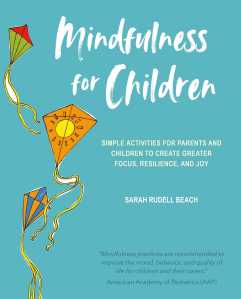
Mindfulness for Children: Simple Activities for Parents and Children to Create Greater Focus, Resilience, and Joy.

Author(s): Sarah Rudell Beach.

Year: 2020.

Edition: First (1st).

Publisher: CICO Books.

Type(s): Paperback and Kindle.

Synopsis:

Simple and fun mindfulness activities to do with children up to age 11 to build beneficial life-long skills that promote resilience, joy, focus, and calm, and improve overall wellbeing.

Helping children to be more mindful is a powerful gift. By being mindful they will learn to recognize and manage their emotions, be more able to calm down when they are upset, become better at focusing on important tasks, and more able to interact with others with empathy and generosity. These are fundamental skills that children will need throughout their life, but that they often aren’t taught explicitly. Think of how often we demand that children “pay attention” or “calm down”, without ever having shown them how to do so. Now parents can with mindfulness expert Sarah Rudell Beach. Parents first learn how to be more mindful themselves before teaching their children basic mindfulness skills. With easy-to-follow activities, chapter by chapter children learn to Soothe, Focus, Feel, Pause, Appreciate, and Connect. Each activity includes variations for different age groups, along with “emergency” how-to’s for particularly stressful moments.

What are the Hidden Downsides of Mindfulness?

“Mindfulness and other types of meditation are usually seen as simple stress-relievers – but they can sometimes leave people worse off.” (Wilson, 2020, p.15).

Read this interesting article by Claire Wilson in the New Scientist about the dowsides of mindfulness.

Reference

Wilson, C. (2020) The Hidden Downsides of Mindfulness. New Scientist. 22 August 2020, pp.15

Book: Constructive Psychotherapy

Book Title:

Constructive Psychotherapy: A Practical Guide: Practices, Processes and Personal Revolutions.

Author(s): Michael J. Mahoney.

Year: 2003.

Edition: First (1st).

Publisher: Guildford Press.

Type(s): Hardcover and Paperback.

Synopsis:

An invaluable teaching text and clinical resource, this is a book about how to do psychotherapy – how to apply the science of change to the complexities of helping people develop new meanings in their lives.

Explaining constructivist principles and illuminating what a skilled clinician actually does in day-to-day practice, Michael J. Mahoney shows how to nurture the therapeutic relationship while implementing such creative interventions as centering techniques, problem solving, pattern work, meditation and embodiment exercises, drama and dream work, and spiritual exploration.

Appendices feature reproducible client forms, handouts, and other useful materials.

Book: Basics of Psychotherapy

Book Title:

Basics of Psychotherapy: A Practical Guide to Improving Clinical Success.

Author(s): Richard B. Makover.

Year: 2017.

Edition: First (1st), Illustrated Edition.

Publisher: American Psychiatric Association Publishing.

Type(s): Paperback.

Synopsis:

Today’s psychotherapists come from many disciplines – psychiatry, psychology, social work, psychiatric nursing, and a variety of counseling professions – but they are united by a common goal: to deliver an effective therapeutic service to those in need.

Psychotherapy texts usually focus on a single methodology or perhaps survey a variety of treatments. What many clinicians may need instead is an examination of the core principles, ideas, and practices that underlie and unify the hundreds of therapies in current use. Basics of Psychotherapy meets this need with a thorough examination of these common elements and of how they function to promote successful outcomes. The challenges to successful practice have never been greater: the demand for psychotherapy services often outstrips the supply, third-party and government payers continue to call for lower costs, computer-based therapies threaten to compete with human resources, and clinicians of all types confront the illusory appeal of using drugs to achieve quick fixes. In this difficult environment, successful practitioners must provide efficient and effective therapeutic results.

Each central chapter takes up a fundamental topic and examines it in detail: What is psychotherapy? What is the psychotherapy relationship? What is an initial evaluation? What is a formulation? What is a treatment plan? Other chapters review the essential technical aspects common to any psychotherapy and provide valuable advice on how to deal with typical clinical challenges. Throughout the book, Dr. Makover emphasizes the importance of the therapeutic alliance – what it is, what supports it, how to maintain it, how to repair it when necessary – and the collaborative partnership between therapist and patient that must exist for any treatment to succeed.

The book concludes with a discussion of career development and of how self-directed learning can build a collection of skills and capacities that will meet every practice challenge. Clinicians who understand the foundations of psychotherapy covered in this book will be more efficient and effective, regardless of which approach they chose to employ. Basics of Psychotherapy is written in a clear, straightforward style that reads easily and conveys its ideas with engaging simplicity. Every point is skillfully illustrated by clinical examples. Scripted excerpts of therapy sessions not only reproduce the dialogue; they also contain notes and commentary that explain exactly what is happening between therapist and patient. Tables and illustrations summarise the topics explained in the text. This practical and up-to-date book should be of use to the beginning therapist and the experienced clinician alike.

Book: Psychotherapy – A Practical Guide

Book Title:

Psychotherapy – A Practical Guide.

Author(s): Jeffrey Smith.

Year: 2016.

Edition: First (1st).

Publisher: Springer.

Type(s): Paperback and Kindle.

Synopsis:

This title combines the many schools of thought on psychotherapy into one reader-friendly guide that coaches psychotherapists through the various techniques needed as the field expands. Unlike any other book on the market, this text considers all of the simultaneous advances in the field, including the neurobiology of emotions, the importance of the therapeutic relationship, mindfulness meditation, and the role of the body in healing. Written with genuine respect for all traditions from CBT to psychodynamics, the book unifies views of psychopathology and cure based on the notion of the mind-brain as an organ of affect regulation. The book accounts for the tasks that characterize psychotherapist activity in all therapies, how they are performed, and how they result in therapeutic change. The book also reviews the various pathologies seen in general practice and guides the reader to the specific therapist-patient interactions needed for their resolution.

With its big-picture focus on clinical practice, Psychotherapy: A Practical Guide is a concise resource for students, psychotherapists, psychologists, residents, and all who seek to integrate what is new in psychotherapy.

Book: Minding Closely – The Four Applications of Mindfulness

Book Title:

Minding Closely – The Four Applications of Mindfulness.

Author(s): B. Alan Wallace.

Year: 2012.

Edition: First (1st), Illustrated Edition.

Publisher: Snow Lion Publications.

Type(s): Paperback and Kindle.

Synopsis:

Bringing his experience as a monk, scientist, and contemplative, Alan Wallace offers a rich synthesis of Eastern and Western traditions along with a comprehensive range of meditation practices interwoven throughout the text.

The guided meditations are systematically presented, beginning with very basic instructions, which are then gradually built upon as one gains increasing familiarity with the practice.