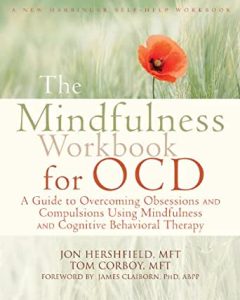
Book: The Mindfulness Workbook For OCD

Book Title:

The Mindfulness Workbook For OCD.

Author(s): Jon Hershfield (MFT) and Tom Corboy (MFT).

Year: 2014.

Edition: First (1st).

Publisher: New Harbinger.

Type(s): Paperback and Kindle.

Synopsis:

If you have obsessive-compulsive disorder (OCD), you might have an irrational fear of being contaminated by germs, or obsessively double-check things. You may even feel like a prisoner, trapped with your intrusive thoughts. Despite the fact that OCD can have a devastating impact on a person’s life, getting real help can be a challenge.

If you have tried medications without success, it might be time to explore further treatment options. You should know that mindfulness-based approaches have been proven-effective in treating OCD and anxiety disorders.

They involve developing an awareness and acceptance of the unwanted thoughts, feelings, and urges that are at the heart of OCD. Combining mindfulness practices with cognitive behavioral therapy (CBT), The Mindfulness Workbook for OCD offers practical and accessible tools for managing the unwanted thoughts and compulsive urges that are associated with OCD.

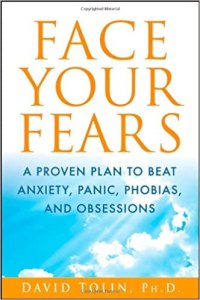
Book: Face Your Fears

Book Title:

Face Your Fears – A Proven Plan to Beat Anxiety, Panic, Phobias, and Obsessions.

Author(s): David Tolin, PhD.

Year: 2012.

Edition: First (1st), Illustrated Edition.

Publisher: John Wiley & Sons.

Type(s): Hardcover.

Synopsis:

Reclaim your life from crippling anxiety with this revolutionary step-by-step approach Nearly a third of all people will suffer from severe or debilitating fears – phobias, panic attacks, obsessions, worries, and more over the course of a lifetime.

Now Dr. David Tolin – a renowned psychologist and scientist at the Institute of Living and Yale featured on such programmes as The OCD Project, Hoarders, The Dr. Oz Show , and Oprah – offers help for nearly every type of anxiety disorder.

Dr. Tolin explains what fear really is, why you should face, not avoid, your fear, and how to beat your fear using gradual exposure techniques.

Practical action steps and exercises help you learn this unique approach to facing fear without crutches or other unhelpful things found in many other programs in order to achieve a life that is free of debilitating anxieties. Self–help guide that gives you the tools to take charge and overcome your fears Written by a leading authority on anxiety and based on the latest research provides a practical, step-by-step plan for beating many different kinds of fears—including social anxiety, posttraumatic stress disorder (PTSD), obsessive–compulsive disorder, panic disorder, and phobias Face Your Fears will change the way you think about fear and what to do about it.

This up-to-date, evidence-based, and user-friendly self-help guide to beating phobias and overcoming anxieties walks you step by step through the process of choosing courage and freedom over fear.

Could a Robot Improve the Way We Treat OCD?

A robot that mimics obsessive compulsive disorder (OCD) could help us understand the condition (Lewis et al., 2019).

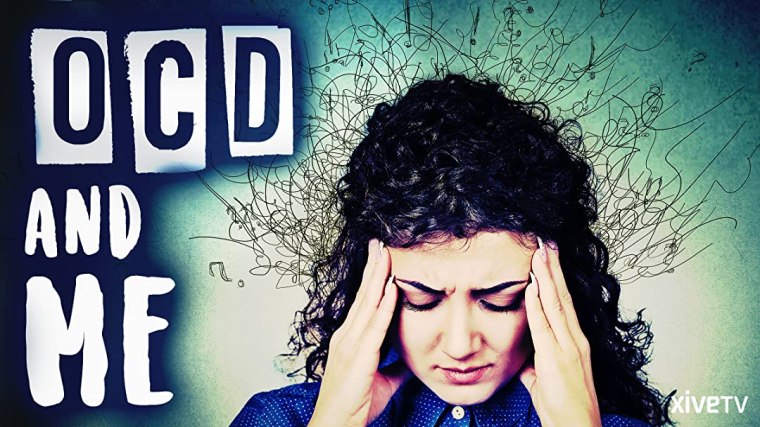
OCD involves obsessive worrying that compels people to carry out rituals like repeated handwashing, and generates anxiety if they cannot complete these compulsions.

Researchers recreated this in a robot they programmed to achieve three goals:

  • Eat;
  • Avoid bumping into things; and
  • Groom.

The robot eats by touching light patches on the floor, replenishing its energy. It grooms by going to, and bumping into, a solid post – a behaviour that causes damage and runs down its energy if performed excessively.

To recreate a compulsive drive, the robot’s target grooming level was set beyond what it could
achieve, prompting the robot to run out of energy 95% of the time.

Treatment for OCD often involves exposing someone to the things that trigger their obsessive thoughts and preventing them from responding.

In future, showing people with OCD how the robot might improve may help them accept such stressful
treatment (Lewis et al., 2019).

There is some concern that the robot’s quirks might reinforce the idea that the condition is all down to weird behaviours, instead of distressing, obsessive thoughts. We have been studying people for years, though, so maybe robots do have a role.

Reference

Lewis, M., Fineberg, N. & Canamero, L. (2019) A Robot Model of OC-Spectrum Disorders: Design Framework, Implementation, and First Experiments. Computational Psychiatry. 3, pp.40-75. https://doi.org/10.1162/cpsy_a_00025

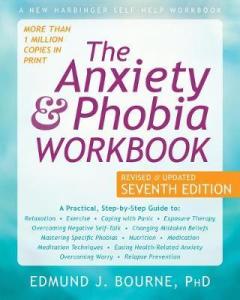
Book: The Anxiety and Phobia Workbook

Book Title:

The Anxiety and Phobia Workbook.

Author(s): Edmund J. Bourne, PhD.

Year: 2020.

Edition: Seventh (7th), Revised and Updated Edition.

Publisher: New Harbinger Publications.

Type(s): Paperback and Kindle.

Synopsis:

Celebrating 30 years as a classic in its field and recommended by therapists worldwide, The Anxiety and Phobia Workbook is an unparalleled, essential resource for people struggling with anxiety and phobias.

Living with anxiety, panic disorders, or phobias can make you feel like you aren’t in control of your life. Tackle the fears that hold you back with this go-to guide. Packed with the most effective skills for assessing and treating anxiety, this evidence-based workbook contains the latest clinical research. You’ll find an arsenal of tools for quieting worry, ending negative self-talk, and taking charge of your anxious thoughts, including:

  • Relaxation and breathing techniques; and
  • New research on exposure therapy for phobiasLifestyle, exercise, mindfulness and nutrition tips.

Written by a leading expert in cognitive behavioural therapy (CBT), this fully revised and updated seventh edition offers powerful, step-by-step treatment strategies for panic disorders, agoraphobia, generalised anxiety disorder (GAD), obsessive-compulsive disorder (OCD), post-traumatic stress disorder (PTSD), worry, and fear.

You will also find new information on relapse prevention after successful treatment, and updates on medication, cannabis derivatives, ketamine, exposure, nutrition, spirituality, the latest research in neurobiology, and more.

Whether you suffer from anxiety and phobias yourself, or are a professional working with this population, this book provides the latest treatment solutions for overcoming the fears that stand in the way of living a meaningful and happy life.

This workbook can be used on its own or in conjunction with therapy.

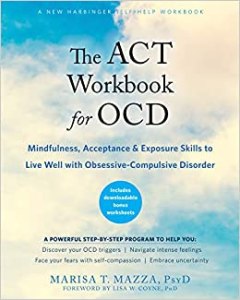
Book: The ACT Workbook for OCD

Book Title:

The ACT Workbook for OCD: Mindfulness, Acceptance, and Exposure Skills to Live Well with Obsessive-Compulsive Disorder.

Author(s): Marisa T. Mazza.

Year: 2020.

Edition: First (1st), Workbook Edition.

Publisher: New Harbinger.

Type(s): Paperback and Kindle.

Synopsis:

Stand up to your OCD! The ACT Workbook for OCD combines evidence-based acceptance and commitment therapy (ACT) with exposure and response prevention (ERP) for the most up-to-date, effective treatment for obsessive-compulsive disorder (OCD).

If you are one of the millions of people who suffer from OCD, you may experience obsessive, intrusive, or even disturbing thoughts. You may engage in compulsive or ritualistic behaviours, such as checking to make sure you have locked the front door, or endlessly washing your hands for fear of germs or contamination. And you may be tempted to give up if treatment just does not work for you.

Whether you have just received a diagnosis, or have suffered for years, this workbook can help. Using the powerful and proven-effective treatments in this guide, you will learn what type of OCD you suffer from (such as harm OCD), how to identify the underlying mechanisms of your OCD, move through triggering incidents while staying present and connected to your values, be more aware and flexible, tolerate uncertainty, and commit to behaviours that ultimately allow you to lead a full, rewarding life.

Once you realise what really matters to you, you will find the motivation needed to start on the path to psychological well-being.

If you are ready to be courageous, take a risk, and stand up to your OCD symptoms, this workbook can help guide you, every step of the way.

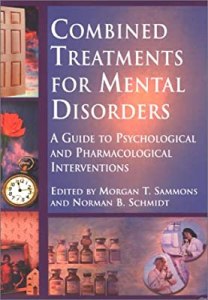
Book: Combined Treatments for Mental Disorders

Book Title:

Combined Treatments for Mental Disorders: A Guide to Psychological and Pharmacological Interventions.

Author(s): Morgan T. Sammons and Norman B. Schmidt (editors).

Year: 2001.

Edition: First (1st).

Publisher: American Psychological Association.

Type(s): Hardcover.

Synopsis:

An exploration of the best way to integrate pharmaceuticals and pyschotherapy in the treatment of mental disorders. Combined treatment is relatively common, but because of biases in the fields of medicine and psychology that champion one form over another, many clinicians are not fully informed about use of both modalities. This practical volume seeks to end this situation.

As this text reveals, exclusive reliance on one mode of treatment may result in a practitioner being unable to address many clients’ needs. Each chapter closely examines the combined treatment for a different disorder, such as insomnia, depression, schizophrenia, and obsessive-compulsive disorder. Different disorders are addressed in separate chapters in relation to combined treatments which many clinicians may not be fully informed of. The social and ethical ramifications of prescriptive authority for pyschologists is also addressed in relation to its increasing relevance. A practical guide for clinicians both experienced and non-experienced in the psychological and pharmacological fields.

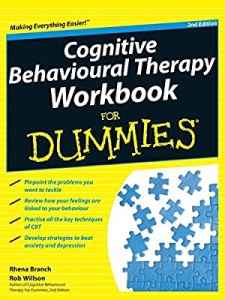
Book: Cognitive Behavioural Therapy Workbook For Dummies

Book Title:

Cognitive Behavioural Therapy Workbook For Dummies.

Author(s): Rhena Branch and Rob Wilson, PhD.

Year: 2012.

Edition: Second (2nd).

Publisher: John Wiley and Sons Inc.

Type(s): Paperback and Kindle.

Synopsis:

Dozens of practical exercises and easy to perform techniques for banishing negative thoughts before they take hold.

Whether you are trying to overcome anxiety and depression, boost self-esteem, beat addiction, lose weight, or simply improve your outlook, cognitive behavioural therapy (CBT) offers a practical, sensible approach to mastering your thoughts and thinking constructively.

In this updated and expanded edition of the companion workbook to their bestselling Cognitive Behavioural Therapy For Dummies, professional therapists Rhena Branch and Rob Wilson show you, step-by-step, how to put the lessons provided in their book into practice. Inside you will find a huge number of hands-on exercises and techniques to help you remove roadblocks to change and regain control over your life.

Cognitive Behavioural Therapy Workbook For Dummies, Second Edition:

  • Develops the ideas and concepts that presented in the bestselling Cognitive Behavioural Therapy For Dummies, Second Edition and provides exercises to put those ideas into practice
  • Features a range of hands-on CBT exercises and techniques for beating anxiety or depression, boosting your self-esteem, losing weight, or simply improving your outlook on life

Book: Cognitive Behavioural Therapy For Dummies

Book Title:

Cognitive Behavioural Therapy For Dummies.

Author(s): Rhena Branch and Rob Wilson, PhD.

Year: 2019.

Edition: Third (3rd).

Publisher: Joh Wiley and Sons Inc.

Type(s):Paperback.

Synopsis:

Retrain your thinking and your life with these simple, scientifically proven techniques! Cognitive behavioral therapy, or CBT for short, is often cited as the gold standard of psychotherapy. Its techniques allow you to identify the negative thought processes that hold you back and exchange them for new, productive ones that can change your life.

Increasingly popular among healthcare professionals, the CBT approach can be used by anyone to overcome common problems ranging from depression or anxiety to more complex disorders like OCD, PTSD and addiction. CBT can also be used to simply developing a healthier, more productive outlook on life.

This book shows you how you can easily incorporate the techniques of CBT into your day-to-day life and produce tangible results. You will learn how to take your negative thoughts to boot camp and retrain them, establishing new habits that tackle your toxic thoughts and retool your awareness, allowing you be free of the weight of past negative thinking biases.

  • Move on: take a fresh look at your past and maybe even overcome it.
  • Mellow out: relax yourself through techniques that reduce anger and stress Lighten up: read practical advice on healthy attitudes for living and ways to nourish optimism.
  • Look again: discover how to overcome low self-esteem and body image issues Whatever the issue, do not let your negative thoughts have the last say.

Misophonia: Quirk of Human Behaviour or Mental Health Condition?

Introduction

By analogy with misogyny and misanthropy, misophonia ought to mean hatred of noise.

In fact, it is a recent coinage used to label the phenomenon of strong aversive reactions to sounds originating in other people’s oral or nasal cavities, such as chewing, sniffing, slurping, and lip smacking.

A report of a large series of cases seen in the Netherlands suggests that misophonia is well on its way to becoming a new psychiatric disorder (see below) (Jager et al., 2020).

Some commentators have expressed concern at the creeping medicalisation of quirks of human behaviour (BMJ, 2020).

What is Misophonia?

  • It is also known as Selective Sound Sensitivity Syndrome.
  • Misophonia is a disorder in which certain sounds trigger emotional or physiological responses that some might perceive as unreasonable given the circumstance.
  • Those who have misophonia might describe it as when a sound “drives you crazy.”
  • Their reactions can range from anger and annoyance to panic and the need to flee.

Research Paper Title

Misophonia: Phenomenology, comorbidity and demographics in a large sample.

Objective

Analyse a large sample with detailed clinical data of misophonia subjects in order to determine the psychiatric, somatic and psychological nature of the condition.

Methods

This observational study of 779 subjects with suspected misophonia was conducted from January 2013 to May 2017 at the outpatient-clinic of the Amsterdam University Medical Centres, location AMC, the Netherlands. The researchers examined DSM-IV diagnoses, results of somatic examination (general screening and hearing tests), and 17 psychological questionnaires (e.g. SCL-90-R, WHOQoL).

Results

The diagnosis of misophonia was confirmed in 575 of 779 referred subjects (74%). In the sample of misophonia subjects (mean age, 34.17 [SD = 12.22] years; 399 women [69%]), 148 (26%) subjects had comorbid traits of obsessive-compulsive personality disorder, 58 (10%) mood disorders, 31 (5%) attention-deficit (hyperactivity) disorder, and 14 (3%) autism spectrum conditions. 2% reported tinnitus and 1% hyperacusis. In a random subgroup of 109 subjects the researchers performed audiometry, and found unilateral hearing loss in 3 of them (3%). Clinical neurological examination and additional blood test showed no abnormalities. Psychological tests revealed perfectionism (97% CPQ>25) and neuroticism (stanine 7 NEO-PI-R). Quality of life was heavily impaired and associated with misophonia severity (rs (184) = -.34 p = < .001, p = < .001).

Limitations

This was a single site study, leading to possible selection–and confirmation bias, since AMC-criteria were used.

Conclusions

This study with 575 subjects is the largest misophonia sample ever described.

Based on these results the researchers propose a set of revised criteria useful to diagnose misophonia as a psychiatric disorder.

References

BMJ 2020;369:m1843.

Jager, I., de Koning, P., Bost, T., Denys, D. & Vulink, N. (2020) Misophonia: Phenomenology, comorbidity and demographics in a large sample. PloS One. https://doi.org/10.1371/journal.pone.0231390.

Misophonia: Quirk of Human Behaviour or Mental Health Condition?

Introduction

By analogy with misogyny and misanthropy, misophonia ought to mean hatred of noise.

In fact, it is a recent coinage used to label the phenomenon of strong aversive reactions to sounds originating in other people’s oral or nasal cavities, such as chewing, sniffing, slurping, and lip smacking.

A report of a large series of cases seen in the Netherlands suggests that misophonia is well on its way to becoming a new psychiatric disorder (see below) (Jager et al., 2020).

Some commentators have expressed concern at the creeping medicalisation of quirks of human behaviour (BMJ, 2020).

What is Misophonia?

  • It is also known as Selective Sound Sensitivity Syndrome.
  • Misophonia is a disorder in which certain sounds trigger emotional or physiological responses that some might perceive as unreasonable given the circumstance.
  • Those who have misophonia might describe it as when a sound “drives you crazy.”
  • Their reactions can range from anger and annoyance to panic and the need to flee.

Research Paper Title

Misophonia: Phenomenology, comorbidity and demographics in a large sample.

Objective

Analyse a large sample with detailed clinical data of misophonia subjects in order to determine the psychiatric, somatic and psychological nature of the condition.

Methods

This observational study of 779 subjects with suspected misophonia was conducted from January 2013 to May 2017 at the outpatient-clinic of the Amsterdam University Medical Centres, location AMC, the Netherlands. The researchers examined DSM-IV diagnoses, results of somatic examination (general screening and hearing tests), and 17 psychological questionnaires (e.g. SCL-90-R, WHOQoL).

Results

The diagnosis of misophonia was confirmed in 575 of 779 referred subjects (74%). In the sample of misophonia subjects (mean age, 34.17 [SD = 12.22] years; 399 women [69%]), 148 (26%) subjects had comorbid traits of obsessive-compulsive personality disorder, 58 (10%) mood disorders, 31 (5%) attention-deficit (hyperactivity) disorder, and 14 (3%) autism spectrum conditions. 2% reported tinnitus and 1% hyperacusis. In a random subgroup of 109 subjects the researchers performed audiometry, and found unilateral hearing loss in 3 of them (3%). Clinical neurological examination and additional blood test showed no abnormalities. Psychological tests revealed perfectionism (97% CPQ>25) and neuroticism (stanine 7 NEO-PI-R). Quality of life was heavily impaired and associated with misophonia severity (rs (184) = -.34 p = < .001, p = < .001).

Limitations

This was a single site study, leading to possible selection–and confirmation bias, since AMC-criteria were used.

Conclusions

This study with 575 subjects is the largest misophonia sample ever described.

Based on these results the researchers propose a set of revised criteria useful to diagnose misophonia as a psychiatric disorder.

References

BMJ 2020;369:m1843.

Jager, I., de Koning, P., Bost, T., Denys, D. & Vulink, N. (2020) Misophonia: Phenomenology, comorbidity and demographics in a large sample. PloS One. https://doi.org/10.1371/journal.pone.0231390.