Mental Health Care, Policy, and COVID-19: The Renewed Role for Psychiatric and Addiction Nursing

Research Paper Title

Mental Health Care, Policy, and COVID-19: The Renewed Role for Psychiatric and Addiction Nursing.

Background

Kovner (2020) has importantly highlighted the role that health care workers play in the 21st century to fight pandemics, such as the recent COVID-19 outbreak, in Canada and around the world. The heroic actions, determination, selflessness, and compassion of nurses and many health care providers worldwide have become the highlighted story of COVID-19 pandemic (Kovner, 2020). This is particularly significant, as 2020 has been called the Year of the Nurse and the Midwife by the World Health Organization and the International Council of Nurses to celebrate the birth of renowned nurse Florence Nightingale on her 200th anniversary. While this year has already signified the critical position of nurses in primary care, policy, and clinical practice, the role of psychiatric nurses and their contributions to primary care have often been overlooked by society, government policy makers, and many academics.

This is particularly true, as most provinces/states do not have dedicated bachelors’ degrees in psychiatric nursing, except for British Columbia (BC), Alberta, Saskatchewan, and Manitoba in Canada. Additionally, BC remains the only province/State in North America that has a fellowship program in Addiction nursing (Jozaghi & Dadakhah-Chimeh, 2018). Momentously, it was also the first province/state in North America to enact a provincial ministry dedicated to mental health and addiction (BC Gov News, 2017). This is remarkably significant in the current pandemic as many North American are asked to work from home, have been laid off, ordered to self-isolate, or practice social distancing. The cumulative effects of financial strain and self-isolation have already been reflected in a higher frequency of police calls for mental health and domestic assault cases in many provinces, territories, and states (Hong, 2020; Seebruch, 2020). The latest research also highlights a projected increase in suicide cases in North America linked to the COVID-19 pandemic (McIntyre & Lee, 2020). Self-isolation measures and the ongoing opioid crisis have also caused sharp increases in mortalities linked to synthetic opioids to their highest levels (Johnston, 2020). Finally, some researchers have warned about the potential misuse of alcohol during the current pandemic (Clay & Parker, 2020).

Therefore, the rise in mental health and domestic abuse calls, potential suicides, overdose deaths, and alcohol abuse serves as a reminder that COVID-19 is not our only health crisis. We must tackle and plan for the potential tsunami of mental health and addiction cases. While the Federal government in Canada has promised investment to improve long-term care, Kovner (2020) rightly pointed out that COVID-19 pandemic is about politics and policy and we similarly urge the governments and municipalities to invest to improve public health. More importantly, dedicated mental health care and training in psychiatric and addiction nursing is long overdue. We also recommend that cities, states, and federal housing agencies to increase funding for dedicated mental health and harm reduction programs during the current pandemic for people who have mental health or substance use disorders.

Reference

Dadakhah-Chimeh, Z. & Jozaghi, E. (2020) Mental Health Care, Policy, and COVID-19: The Renewed Role for Psychiatric and Addiction Nursing. Policy, Politics& Nursing Practice. doi: 10.1177/1527154420957305. Online ahead of print.

The Nurse-Patient Relationship: Aggressive Behaviour in a Mental Health Setting

Research Paper Title

Aggressive Behaviour: Nurse-Patient Relationship in Mental Health Setting.

Background

Mental disorder is known to be as a loss of existential paradigm; individual’s functioning is lacking in all areas. Therefore, it is difficult to point out what the patients exactly need because their needs are set on a broad range of a difficult boundary.

The level of care that follows will be complex and multifactorial because nursing will challenge the interaction with the individual as a whole: behaviours and relations with family members.

At this stage exploring interpersonal conflicts, with past and present aggression behaviours will be crucial.

Methods

The aim of this paper is to investigate the professional experience in a work context where the patient’s clinical condition poses a daily challenge from a physical and emotional perspective.

Narrative investigation is performed here in order to explore the psychological load of the professional’s psychological experience and its implication in facing aggressive situations.

Moreover, this investigation highlights the importance of some professional and personal resources that can be made available to the operator.

Results

These tools could improve the understanding of the subjective experience of acute events guiding the individual through an exploration of the phenomenology of what happened decreasing the intimate stress load.

Conclusions

A constant updating, the knowledge of de-escalation techniques and sharing the experience in dedicated settings could be important allies in the management of risk events.

Reference

Moriconi, S., Balducci, P.M. & Tortorella, A. (2020) Aggressive Behavior: Nurse-Patient Relationship in Mental Health Setting. Pyschiatria Danubina. 32(Suppl 1), pp.207-209.

How can Psychiatric Mental Health Nurse Practitioners Meet Rural Mental Health Challenges?

Research Paper Title

Psychiatric Mental Health Nurse Practitioners Meeting Rural Mental Health Challenges.

Background

To describe the current rural mental health system crisis in the United States and how psychiatric mental health nurse practitioners (PMHNPs) can holistically mitigate this systemic issue.

Methods

Respective to the objective, relevant literature is reviewed.

Results

PMHNPs have successfully increased access to care in under-served rural communities by practising at the fullest extent of their scope without mandated supervision, utilising telepsychiatry practice, while expanding PMHNP rural mental health education and research to meet and absolve pressing rural mental health challenges.

Conclusions

Current evidence supports that rural mental health care improves when PMHNPs have full scope of practice, utilise telepsychiatry, engage in related scholarly activity, and have formalised education and training for rural health care delivery, which collectively answer the professional and moral call serving the under-served rural population with mental illness.

Reference

Finley, B.A. (2020) Psychiatric Mental Health Nurse Practitioners Meeting Rural Mental Health Challenges. Journal of the American Psychiatric Nurses Association. 26(1):97-101. doi: 10.1177/1078390319886357. Epub 2019 Nov 15.

Is More Clarification is Needed of Mental Health Practitioner’s Engagement Experiences in Early Intervention Settings?

Research Paper Title

Mental Health Practitioner Experiences of Engaging With Service Users in Community Mental Health Settings: A Systematic Review and Thematic Synthesis of Qualitative Evidence.

What is Known on the Subject?

Engagement is regarded as important and beneficial for service users and mental health services A universal definition of engagement is not yet fully agreed upon.

What this paper adds to existing knowledge?

Based upon their experience, mental health staff use varied engagement approaches to fit with the changeable and unique needs of people who use services (service users). Mental health staff demonstrate qualities such as persistence and adaptability to successfully engage with service users.

What are the implications for practice?

Irrespective of professional background, the role of community mental health staff is not restricted to any single approach. Practical help and social support are as seen as important as clinical treatment to establish successful engagement. Little is known about the engagement experiences of mental health staff working in early intervention settings as most studies in this review focused on the perspectives of staff based in assertive outreach or community mental health teams. There is a need to further understand staff experiences of engagement with service users in early intervention settings. Role descriptions and expectations of community mental health workers should account for the wide-ranging flexible approach required in order to deliver appropriate interventions. This may involve a focus on engagement in training programmes.

Background

Effective mental health care is dependent on engaging service users, but some individuals do not actively attend appointments, and may stop engaging with mental health services. Quantitative studies reveal some salient factors that seem to predict engagement, but these studies miss the nuances of good clinical practice in this area. A number of qualitative studies of health professionals’ experiences and understanding of effective engagement have been published.

This review aimed to systematically identify, evaluate and synthesise results from these studies with a view to informing effective practice in this area.

Methods

Electronic databases MEDLINE, EMBASE, CINAHL, PsychINFO and AMED were searched (PROSPERO systematic review protocol registry (www.crd.york.ac.uk/prospero/; ID CRD42017083976). Of 799 records, ten papers met the inclusion criteria. All papers were subjected to quality appraisal based on the CASP checklist and data systematically extracted. A thematic synthesis of included studies examining mental health practitioners’ experiences of engagement in community mental health settings was conducted.

Results

Mental health practitioners see engaging service users as depending upon complex, multi-dimensional phenomena which should include individualised person-centred approaches as well as practical, social and clinical support. Mental health practitioners demonstrate qualities such as determination and adaptability to establish and maintain engagement with service users.

Conclusions

As a core aspect of nurse education, registered mental health nurses and other professionals would benefit from systematic guidance regarding engagement strategies. Most studies in this review focused on assertive outreach or community mental health teams, more clarification is needed of practitioner’s engagement experiences in early intervention settings.

Reference

Henderson, P., Fisher, N.R., Ball, J. & Sellwood, W. (2020) Mental Health Practitioner Experiences of Engaging With Service Users in Community Mental Health Settings: A Systematic Review and Thematic Synthesis of Qualitative Evidence. Journal of Psychiatric and Mental Health Nursing. doi: 10.1111/jpm.12628. Online ahead of print.

Psychiatric Nurses & Personal Initiative: What are the Factors to Consider?

Research Paper Title

Personal and organisational factors related to initiative behaviour among psychiatric nurses.

Background

To identify the degree of personal initiative (PI) among psychiatric nurses and to examine the influence of personal and organisational characteristics on their PI.

Methods

Ninety-seven nurses completed a questionnaire on PI, work climate, self-efficacy toward initiatives and innovations, nursing work environment, and actual initiative at work.

Results

Differences in actual initiative at work according to the level of education, and negative association between PI and age were found.

Self-efficacy and work climate explained 56% of PI; self-efficacy, work climate, and age explained 30% of initiative behaviour.

Conclusions

Investing in young nurses, fostering higher education, and creating a supportive work environment can help in conversion of innovative vision into actual initiatives.

Reference

Hendel, T., Chor, R., Kigli-Shemesh, R. & Kagan, I. (2020) Personal and organizational factors related to initiative behavior among psychiatric nurses. Perspectives in Psychiatric Care. doi: 10.1111/ppc.12471. [Epub ahead of print].

Stacey Dooley: On the Psych Ward (2020)

Introduction

Every year thousands of young people are brought to mental health units across the UK to seek treatments.

Latest estimates put the number of people who suffer from a mental condition at 1 in 3 and most first experience mental health problems when they are young.

Refer to Stacey Dooley: Back on the Psych Ward (2021).

Outline

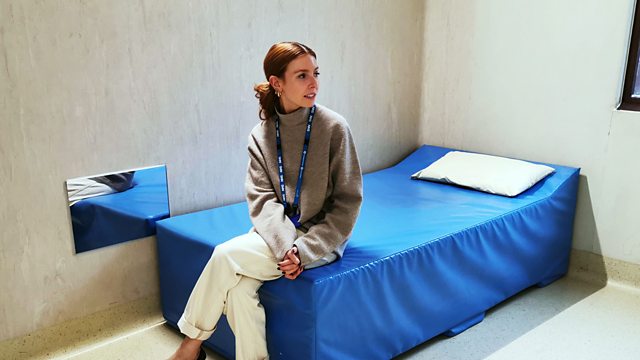
Stacey is going to work in Springfield Hospital, one of the oldest mental health units in the UK, to see what life is really like on the front line of mental health services. More than just observing, she will be working directly with staff, dealing with patients, and taking part in making incredibly tough decisions on what is best for patients.

Stacey meets Rachelle who has been diagnosed with EUPD (Emotionally Unstable Personality Disorder). Still in her 20s, she’s had a troubled life already – full of suicide attempts and self-harm. She opens up to Stacey about her struggles with her illness, and her hope that she will soon get the talking therapy that she believes could be the solution to her problems. The doctors here agree that this is not the best place for Rachelle to be, and they are hoping she will get a place at a specialist unit in Cambridge where she can make real progress in coping with her condition.

Stacey also spends time in a special acute assessment unit where patients can self-refer. She meets 19-year-old Kyle, who has come to Springfield in the midst of a severe depression and incident of self-harm. As Stacey takes part in a discussion with staff about whether to admit him to the hospital or support him in the community, Stacey experiences for herself just how difficult the decisions and the judgement calls are that the team have to make.

Police have brought Laura to the 136 unit, so called because it is the local designated place of safety as defined under section 136 of the Mental Health Act. She has been sectioned after being found on a motorway bridge, threatening to jump. She opens up to Stacey as they talk, trying to explain her thinking and her ongoing struggles with depression and her eating disorder – all stemming from traumas earlier in her short life.

Production & Filming Details

Benzodiazepine Use during Hospitalisation

Research Paper Title

Let’s Talk About Benzodiazepine Use: Inpatient Psychiatric Nurses Initiating the Conversation.

Abstract

Inpatient psychiatric nurses regularly dispense pro re nata (PRN) medication to individuals during their psychiatric hospitalisation.

International studies indicate that 66% to 90% of patients receive PRN medications during hospitalisation, a large percentage of which are benzodiazepines (BZDs).

Although clear opportunities exist for nursing intervention to reduce BZD use, there is little recent US literature on inpatient psychiatric nurses’ proactive approach to the issue.

The current article examines the factors that support BZD use during inpatient hospitalisation, including nurses’ attitudes around BZD use, the perceived effectiveness of the medication to address difficult situations, and the barriers to using alternative nonpharmacological methods.

Suggestions are presented for how nurses might begin dialogues with patients around BZD use and alternative strategies to manage distress.

It is recommended that the specialty initiate a research agenda for reducing BZD use during inpatient psychiatric treatment and champion the issue as a focus for systematic improvement efforts.

Reference

Delaney, K.R. (2020) Let’s Talk About Benzodiazepine Use: Inpatient Psychiatric Nurses Initiating the Conversation. Journal of Psychosocial Nursing and Mental Health Services. 58(1), pp.33-38. doi: 10.3928/02793695-20191218-07.