What is Suicide Prevention?

Introduction

Suicide prevention is a collection of efforts to reduce the risk of suicide. These efforts may occur at the individual, relationship, community, and society level. Suicide is often preventable.

Refer to Coping (Psychology), Suicide Awareness, and Suicide Ideation.

Beyond direct interventions to stop an impending suicide, methods may include:

  • Treating mental illness.
  • Improving coping strategies of people who are at risk.
  • Reducing risk factors for suicide, such as poverty and social vulnerability.
  • Giving people hope for a better life after current problems are resolved.
  • Call a suicide hotline number.

General efforts include measures within the realms of medicine, mental health, and public health. Because protective factors such as social support and social engagement – as well as environmental risk factors such as access to lethal means – play a role in suicide, suicide is not solely a medical or mental-health issue.
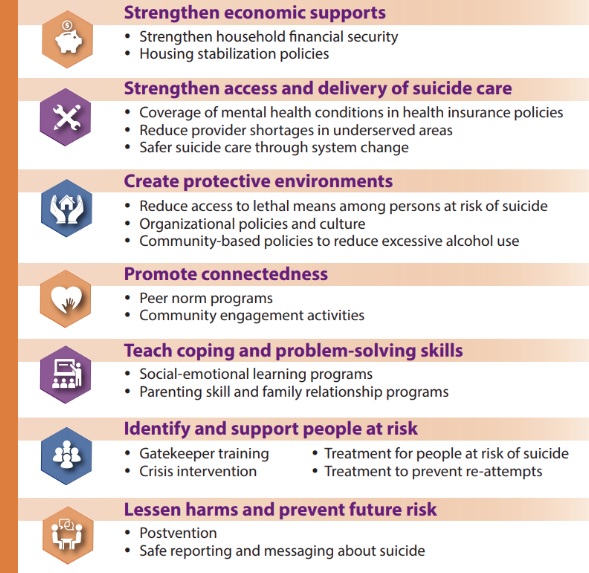
Suicide prevention measures suggested by the US Centres for Disease Control and Prevention.

Interventions

Lethal Mean Reduction

Means reduction ⁠- ⁠reducing the odds that a suicide attempter will use highly lethal means -— ⁠is an important component of suicide prevention. This practice is also called “means restriction”.

It has been demonstrated that restricting lethal means can help reduce suicide rates, as delaying action until the desire to die has passed. In general, strong evidence supports the effectiveness of means restriction in preventing suicides. There is also strong evidence that restricted access at so-called suicide hotspots, such as bridges and cliffs, reduces suicides, whereas other interventions such as placing signs or increasing surveillance at these sites appears less effective. One of the most famous historical examples of means reduction is that of coal gas in the United Kingdom. Until the 1950s, the most common means of suicide in the UK was poisoning by gas inhalation. In 1958, natural gas (virtually free of carbon monoxide) was introduced, and over the next decade, comprised over 50% of gas used. As carbon monoxide in gas decreased, suicides also decreased. The decrease was driven entirely by dramatic decreases in the number of suicides by carbon monoxide poisoning. A 2020 Cochrane review on means restrictions for jumping found tentative evidence of reductions in frequency.

In the United States, firearm access is associated with increased suicide completion. About 85% of attempts with a gun result in death while most other widely used suicide attempt methods result in death less than 5% of the time. Although restrictions on access to firearms have reduced firearm suicide rates in other countries, such restrictions are difficult in the United States because the Second Amendment to the United States Constitution limits restrictions on weapons.

Crises Hotline

Crisis hotlines connect a person in distress to either a volunteer or staff member. This may occur via telephone, text messaging, online chat, or in person. Even though crisis hotlines are common, they have not been well studied. One study found a decrease in psychological pain, hopelessness, and desire to die from the beginning of the call through the next few weeks; however, the desire to die did not decrease long term.

Social Intervention

In the United States, the 2012 National Strategy for Suicide Prevention promotes various specific suicide prevention efforts including:

  • Developing groups led by professionally trained individuals for broad-based support for suicide prevention.
  • Promoting community-based suicide prevention programmes.
  • Screening and reducing at-risk behaviour through psychological resilience programs that promotes optimism and connectedness.
  • Education about suicide, including risk factors, warning signs, stigma related issues and the availability of help through social campaigns.
  • Increasing the proficiency of health and welfare services at responding to people in need. e.g. sponsored training for helping professionals, increased access to community linkages, employing crisis counselling organisations.
  • Reducing domestic violence and substance abuse through legal and empowerment means are long-term strategies.
  • Reducing access to convenient means of suicide and methods of self-harm. e.g. toxic substances, poisons, handguns.
  • Reducing the quantity of dosages supplied in packages of non-prescription medicines e.g. aspirin.
  • School-based competency promoting and skill enhancing programmes.
  • Interventions and usage of ethical surveillance systems targeted at high-risk groups.
  • Improving reporting and portrayals of negative behaviour, suicidal behaviour, mental illness and substance abuse in the entertainment and news media.
  • Research on protective factors & development of effective clinical and professional practices.

Media Guidelines

Recommendations around media reporting of suicide include not sensationalizing the event or attributing it to a single cause. It is also recommended that media messages include suicide prevention messages such as stories of hope and links to further resources. Particular care is recommended when the person who died is famous. Specific details of the method or the location are not recommended.

There; however, is little evidence regarding the benefit of providing resources for those looking for help and the evidence for media guidelines generally is mixed at best.

TV shows and news media may also be able to help prevent suicide by linking suicide with negative outcomes such as pain for the person who has attempted suicide and their survivors, conveying that the majority of people choose something other than suicide in order to solve their problems, avoiding mentioning suicide epidemics, and avoiding presenting authorities or sympathetic, ordinary people as spokespersons for the reasonableness of suicide.

Medication

The medication lithium may be useful in certain situations to reduce the risk of suicide. Specifically it is effective at lowering the risk of suicide in those with bipolar disorder and major depressive disorder. Some antidepressant medications may increase suicidal ideation in some patients under certain conditions.

Counselling

There are multiple talk therapies that reduce suicidal thoughts and behaviours including dialectical behaviour therapy (DBT). Cognitive behaviour therapy for suicide prevention (CBT-SP) is a form of DBT adapted for adolescents at high risk for repeated suicide attempts. The brief intervention and contact technique developed by the World Health Organisation (WHO) also has shown benefit.

The WHO recommends “specific skills should be available in the education system to prevent bullying and violence in and around the school”.

Coping Planning

Coping planning is an strengths-based intervention that aims to meet the needs of people who ask for help, including those experiencing suicidal ideation. By addressing why someone asks for help, the risk assessment and management stays on what the person needs, and the needs assessment focuses on the individual needs of each person. The coping planning approach to suicide prevention draws on the health-focused theory of coping. Coping is normalised as a normal and universal human response to unpleasant emotions and interventions are considered a change continuum of low intensity (e.g. self-soothing) to high intensity support (e.g. professional help). By planning for coping, it supports people who are distressed and provides a sense of belongingness and resilience in treatment of illness. The proactive coping planning approach overcomes implications of ironic process theory. The biopsychosocial strategy of training people in healthy coping improves emotional regulation and decreases memories of unpleasant emotions. A good coping planning strategically reduces the inattentional blindness for a person while developing resilience and regulation strengths.

Strategies

The traditional approach has been to identify the risk factors that increase suicide or self-harm, though meta-analysis studies suggest that suicide risk assessment might not be useful and recommend immediate hospitalization of the person with suicidal feelings as the healthy choice. In 2001, the US Department of Health and Human Services, published the National Strategy for Suicide Prevention, establishing a framework for suicide prevention in the US The document, and its 2012 revision, calls for a public health approach to suicide prevention, focusing on identifying patterns of suicide and suicidal ideation throughout a group or population (as opposed to exploring the history and health conditions that could lead to suicide in a single individual). The ability to recognise warning signs of suicide allows individuals who may be concerned about someone they know to direct them to help.

Suicide gesture and suicidal desire (a vague wish for death without any actual intent to kill oneself) are potentially self-injurious behaviours that a person may use to attain some other ends, like to seek help, punish others, or to receive attention. This behaviour has the potential to aid an individual’s capability for suicide and can be considered as a suicide warning, when the person shows intent through verbal and behavioural signs.

A United States Army suicide prevention poster.

Specific Strategies

Suicide prevention strategies focus on reducing the risk factors and intervening strategically to reduce the level of risk. Risk and protective factors, unique to the individual can be assessed by a qualified mental health professional.

Some of the specific strategies used to address are:

  • Crisis intervention.
  • Structured counselling and psychotherapy.
  • Hospitalisation for those with low adherence to collaboration for help and those who require monitoring and secondary symptom treatment.
  • Supportive therapy like substance abuse treatment, psychotropic medication, Family psychoeducation and Access to emergency phone call care with emergency rooms, suicide prevention hotlines, etc.
  • Restricting access to lethality of suicide means through policies and laws.
  • Creating and using crisis cards, an easy-to-read uncluttered card that describes a list of activities one should follow in crisis until the positive behaviour responses settles in the personality.
  • Person-centred life skills training. e.g. problem solving.
  • Registering with support groups like Alcoholics Anonymous, Suicide Bereavement Support Group, a religious group with flow rituals, etc.
  • Therapeutic recreational therapy that improves mood.
  • Motivating self-care activities like physical exercise’s and meditative relaxation.

Psychotherapies that have shown most successful or evidence based are dialectical behaviour therapy (DBT), which has shown to be helpful in reducing suicide attempts and reducing hospitalisations for suicidal ideation and cognitive behavioural therapy (CBT), which has shown to improve problem-solving and coping abilities.

After a Suicide

Postvention is for people affected by an individual’s suicide. This intervention facilitates grieving, guides to reduce guilt, anxiety, and depression and to decrease the effects of trauma. Bereavement is ruled out and promoted for catharsis and supporting their adaptive capacities before intervening depression and any psychiatric disorders. Postvention is also provided to minimise the risk of imitative or copycat suicides, but there is a lack of evidence based standard protocol. But the general goal of the mental health practitioner is to decrease the likelihood of others identifying with the suicidal behaviour of the deceased as a coping strategy in dealing with adversity.

Risk Assessment

Warning Signs

Warning signs of suicide can allow individuals to direct people who may be considering suicide to get help.

Behaviours that may be warning signs include:

  1. Talking about wanting to die or wanting to kill themselves.
  2. Suicidal ideation: thinking, talking, or writing about suicide, planning for suicide.
  3. Substance abuse.
  4. Feelings of purposelessness.
  5. Anxiety, agitation, being unable to sleep, or sleeping all the time.
  6. Feelings of being trapped.
  7. Feelings of hopelessness.
  8. Social withdrawal.
  9. Displaying extreme mood swings, suddenly changing from sad to very calm or happy.
  10. Recklessness or impulsiveness, taking risks that could lead to death, such as driving extremely fast.
  11. Mood changes including depression.
  12. Feelings of uselessness.
  13. Settling outstanding affairs, giving away prized or valuable possessions, or making amends when they are otherwise not expected to die (as an example, this behaviour would be typical in a terminal cancer patient but not a healthy young adult).
  14. Strong feelings of pain, either emotional or physical considering oneself burdensome.
  15. Increased use of drugs or alcohol.

Additionally, the National Institute for Mental Health includes feeling burdensome, and strong feelings of pain – either emotional or physical – as warning signs that someone may attempt suicide.

Direct Talks

An effective way to assess suicidal thoughts is to talk with the person directly, to ask about depression, and assess suicide plans as to how and when it might be attempted. Contrary to popular misconceptions, talking with people about suicide does not plant the idea in their heads. However, such discussions and questions should be asked with care, concern and compassion. The tactic is to reduce sadness and provide assurance that other people care. The WHO advises to not say everything will be all right nor make the problem seem trivial, nor give false assurances about serious issues. The discussions should be gradual and specifically executed when the person is comfortable about discussing their feelings. ICARE (Identify the thought, Connect with it, Assess evidences for it, Restructure the thought in positive light, Express or provide room for expressing feelings from the restructured thought) is a model of approach used here.

Screening

The US Surgeon General has suggested that screening to detect those at risk of suicide may be one of the most effective means of preventing suicide in children and adolescents. There are various screening tools in the form of self-report questionnaires to help identify those at risk such as the Beck Hopelessness Scale and Is Path Warm?. A number of these self-report questionnaires have been tested and found to be effective for use among adolescents and young adults. There is however a high rate of false-positive identification and those deemed to be at risk should ideally have a follow-up clinical interview. The predictive quality of these screening questionnaires has not been conclusively validated so it is not possible to determine if those identified at risk of suicide will actually die by suicide. Asking about or screening for suicide does not create or increase the risk.

In approximately 75% of completed suicides, the individuals had seen a physician within the year before their death, including 45 to 66% within the prior month. Approximately 33 to 41% of those who completed suicide had contact with mental health services in the prior year, including 20 percent within the prior month. These studies suggest an increased need for effective screening. Many suicide risk assessment measures are not sufficiently validated, and do not include all three core suicidality attributes (i.e. suicidal affect, behaviour, and cognition). A study published by the University of New South Wales has concluded that asking about suicidal thoughts cannot be used as a reliable predictor of suicide risk.

Underlying Condition

The conservative estimate is that 10% of individuals with psychiatric disorders may have an undiagnosed medical condition causing their symptoms, with some estimates stating that upwards of 50% may have an undiagnosed medical condition which if not causing is exacerbating their psychiatric symptoms. Illegal drugs and prescribed medications may also produce psychiatric symptoms. Effective diagnosis and if necessary medical testing which may include neuroimaging to diagnose and treat any such medical conditions or medication side effects may reduce the risk of suicidal ideation as a result of psychiatric symptoms, most often including depression, which are present in up to 90-95% of cases.

Risk Factors

All people can be at risk of suicide. Risk factors that contribute to someone feeling suicidal or making a suicide attempt may include:

  • Depression, other mental disorders, or substance abuse disorder.
  • Certain medical conditions.
  • Chronic pain.
  • A prior suicide attempt.
  • Family history of a mental disorder or substance abuse.
  • Family history of suicide.
  • Family violence, including physical or sexual abuse.
  • Having guns or other firearms in the home.
  • Having recently been released from prison or jail.
  • Being exposed to others’ suicidal behaviour, such as that of family members, peers, or celebrities.
  • Being male.

Support Organisations

Many non-profit organisations exist, such as the American Foundation for Suicide Prevention in the United States, which serve as crisis hotlines; it has benefited from at least one crowd-sourced campaign. The first documented programme aimed at preventing suicide was initiated in 1906 in both New York, the National Save-A-Life League and in London, the Suicide Prevention Department of the Salvation Army.

Suicide prevention interventions fall into two broad categories: prevention targeted at the level of the individual and prevention targeted at the level of the population. To identify, review, and disseminate information about best practices to address specific objectives of the National Strategy Best Practices Registry (BPR) was initiated. The Best Practices Registry of Suicide Prevention Resource Centre is a registry of various suicide intervention programmes maintained by the American Association of Suicide Prevention. The programs are divided, with those in Section I listing evidence-based programmes: interventions which have been subjected to in depth review and for which evidence has demonstrated positive outcomes. Section III programmes have been subjected to review.

If you or someone you know displays sign or symptoms of suicidal thoughts or actions these prevention organisations are available:

  • Befrienders Worldwide.
  • American Foundation for Suicide Prevention.
  • Campaign Against Living Miserably.
  • Crisis Text Line.
  • International Association for Suicide Prevention.
  • The Jed Foundation.
  • National Suicide Prevention Lifeline.
  • Samaritans.
  • SOSAD Ireland.
  • Suicide Prevention Action Network USA.
  • The Trevor Project.
  • Trans Lifeline.

Economics

In the United States it is estimated that an episode of suicide results in costs of about $1.3 million. Money spending on appropriated interventions is estimated to result in a decrease in economic losses that are 2.5 fold greater than the amount spent.
What is the Relationship Between Antidepressants and Suicide Risk?

Introduction

The relationship between antidepressant use and suicide risk is a subject of medical research and has faced varying levels of debate.

This problem was thought to be serious enough to warrant intervention by the US Food and Drug Administration (FDA) to label greater likelihood of suicide as a risk of using antidepressants. Some studies have shown that the use of certain antidepressants correlate with an increased risk of suicide in some patients relative to other antidepressants. However, these conclusions have faced considerable scrutiny and disagreement: A multinational European study indicated that antidepressants decrease risk of suicide at the population level, and other reviews of antidepressant use claim that there is not enough data to indicate antidepressant use increases risk of suicide.

Youth/Young Adults

People under the age of 25 with depression antidepressants could increase the risk of suicidal thoughts and behaviour. In 2004, the FDA along with the Neuro-Psychopharmacologic Advisory Committee and the Anti-Infective Drugs Advisory Committee, concluded that there was a causal link between newer antidepressants and paediatric suicidality. Federal health officials unveiled proposed changes to the labels on antidepressant drugs in December 2006 to warn people of this danger.

A 2016 review of selective serotonin reuptake inhibitors (SSRIs) and serotonin-norepinephrine reuptake inhibitors (SNRIs) which looked at four outcomes – death, suicidality, aggressive behaviour, and agitation – found that while the data was insufficient to draw strong conclusions, adults taking these drugs did not appear to be at increased risk for any of the four outcomes, but that for children, the risks of suicidality and for aggression doubled. The authors expressed frustration with incomplete reporting and lack of access to data, and with some aspects of the clinical trial designs.

Warnings

The FDA requires “black box warnings” on all SSRIs, which state that they double suicidal ideation rates (from 2 in 1,000 to 4 in 1,000) in children and adolescents. It remains controversial whether increased risk of suicide is due to the medication (a paradoxical effect) or part of the depression itself (i.e. the antidepressant enables those who are severely depressed – who ordinarily would be paralysed by their depression – to become more alert and act out suicidal urges before being fully recovered from their depressive episode). The increased risk for suicidality and suicidal behaviour among adults under 25 approaches that seen in children and adolescents. Young patients should be closely monitored for signs of suicidal ideation or behaviours, especially in the first eight weeks of therapy. Sertraline, tricyclic agents and venlafaxine were found to increase the risk of attempted suicide in severely depressed adolescents on Medicaid.

Increased Risk for Quitting Medication

A 2009 study showed increased risk of suicide after initiation, titration, and discontinuation of medication. A study of 159,810 users of either amitriptyline, fluoxetine, paroxetine or dothiepin found that the risk of suicidal behaviour is increased in the first month after starting antidepressants, especially during the first 1 to 9 days.

Prevalence

On 06 September 2007, the US Centres for Disease Control and Prevention reported that the suicide rate in American adolescents, (especially girls, 10 to 24 years old), increased 8% (2003 to 2004), the largest jump in 15 years, to 4,599 suicides in Americans ages 10 to 24 in 2004, from 4,232 in 2003, giving a suicide rate of 7.32 per 100,000 people that age. The rate previously dropped to 6.78 per 100,000 in 2003 from 9.48 per 100,000 in 1990. Jon Jureidini, a critic of this study, says that the US “2004 suicide figures were compared simplistically with the previous year, rather than examining the change in trends over several years”. It has been noted that the pitfalls of such attempts to infer a trend using just two data points (years 2003 and 2004) are further demonstrated by the fact that, according to the new epidemiological data, the suicide rate in 2005 in children and adolescents actually declined despite the continuing decrease of SSRI prescriptions. “It is risky to draw conclusions from limited ecologic analyses of isolated year-to-year fluctuations in antidepressant prescriptions and suicides.

One promising epidemiological approach involves examining the associations between trends in psychotropic medication use and suicide over time across a large number of small geographic regions. Until the results of more detailed analyses are known, prudence dictates deferring judgment concerning the public health effects of the FDA warnings.” Subsequent follow-up studies have supported the hypothesis that antidepressant drugs reduce suicide risk.

Suicide Risk

In those under the age of 25 antidepressants appear to increase the risk of suicidal thoughts and behaviours. In the United States they contain a black box warning regarding this concern.

A 2016 review found a decreased suicidal events in older adults.

What are the Factors Associated with Suicide in Chinese Adults?

Research Paper Title

Factors associated with suicide risk among Chinese adults: A prospective cohort study of 0.5 million individuals.

Background

Suicide is a leading cause of death in China and accounts for about one-sixth of all suicides worldwide. The objective of this study was to examine the recent distribution of suicide and risk factors for death by suicide. Identifying underlying risk factors could benefit development of evidence-based prevention and intervention programmes.

Methods

The researchers conducted a prospective study, the China Kadoorie Biobank, of 512,715 individuals (41% men, mean age 52 years) from 10 (5 urban, 5 rural) areas which are diverse across China in geographic locations, social economic developmental stages, and prevalence of disease patterns. After the baseline measurements of risk factors during 2004 to 2008, participants were followed up for suicide outcomes including suicide and possible suicide deaths. Risk factors, such as sociodemographic factors and physical and mental health status, were assessed by semi-structured interviews and self-report questionnaires.

Suicide and possible suicide deaths were identified through linkage to the local death registries using ICD-10 codes. The researchers conducted Cox regression to calculate hazard ratios (HRs) for suicide and for possible suicide in sensitivity analyses.

Results

During an average follow-up period of 9.9 years, 520 (101 per 100,000) people died from suicide (51.3% male), and 79.8% of them lived in rural areas. Sociodemographic factors associated with increased suicide risk were male gender (adjusted hazard ratios [aHR] = 1.6 [95% CI 1.4 to 2.0], p < 0.001), older age (1.3 [1.2 to 1.5] by each 10-yr increase, p < 0.001), rural residence (2.6 [2.1 to 3.3], p < 0.001), and single status (1.7 [1.4 to 2.2], p < 0.001). Increased hazards were found for family-related stressful life events (aHR = 1.8 [1.2 to 1.9], p < 0.001) and for major physical illnesses (1.5 [1.3 to 1.9], p < 0.001). There were strong associations of suicide with a history of lifetime mental disorders (aHR = 9.6 [5.9 to 15.6], p < 0.001) and lifetime schizophrenia-spectrum disorders (11.0 [7.1 to 17.0], p < 0.001). Links between suicide risk and depressive disorders (aHR = 2.6 [1.4 to 4.8], p = 0.002) and generalized anxiety disorders (2.6 [1.0 to 7.1], p = 0.056) in the last 12 months, and sleep disorders (1.4 [1.2 to 1.7], p < 0.001) in the past month were also found.

All HRs were adjusted for sociodemographic factors including gender, age, residence, single status, education, and income. The associations with possible suicide deaths were mostly similar to those with suicide deaths, although there was no clear link between possible suicide deaths and psychiatric factors such as depression and generalised anxiety disorders. A limitation of the study is that there is likely underreporting of mental disorders due to the use of self-report information for some diagnostic categories.

Conclusions

In this study, the researchers observed that a range of sociodemographic, lifestyle, stressful life events, physical, and mental health factors were associated with suicide in China. High-risk groups identified were elderly men in rural settings and individuals with mental disorders. These findings could form the basis of targeted approaches to reduce suicide mortality in China.

Reference

Yu, R., Chen, Y., Li, L., Chen, J., Guo, Y., Bian, Z., Lv., Yu, C., Xie., Huang, D., Chen, Z. & Fazel, S. (2021) Factors associated with suicide risk among Chinese adults: A prospective cohort study of 0.5 million individuals. PLoS Med. doi: 10.1371/journal.pmed.1003545. eCollection 2021 Mar.

New Insights on Suicide Care from a Nursing Perspective

Research Paper Title

Suicide care from the nursing perspective: A meta-synthesis of qualitative studies.

Background

To explore nurses’ experiences of suicide care and to identify and synthesize the most suitable interventions for the care of people with suicidal behaviour from a nursing perspective. A qualitative meta-synthesis.

Methods

Comprehensive search of five electronic databases for qualitative studies published between January 2015 and June 2019.

The PRISMA statement was used for reporting the different phases of the literature search and the Critical Appraisal Skills Programme (CASP) qualitative research checklist was used as an appraisal framework. Data synthesis was conducted using Sandelowski and Barroso’s method.

Results

Seventeen articles met the inclusion criteria. The data analysis revealed 13 subcategories from which four main categories emerged: ‘Understanding suicidal behaviour as a consequence of suffering’, ‘Nurses’ personal distress in suicide care’, ‘The presence of the nurse as the axis of suicide care’ and, ‘Improving nurses’ relational competences for a better therapeutic environment’.

Conclusions

Further training of nurses on the therapeutic relationship, particularly in non-mental health care work settings, and monitoring of the emotional impact on nurses in relation to suicide is required to promote more effective prevention and care.

Impact

This review provides new insights on how suicide is interpreted, the associated emotions, the way suicide is approached and proposals for improving clinical practice from the point of view of nurses. The results demonstrate that the nurse-patient relationship, ongoing assessment, and the promotion of a sense of security and hope are critical in nursing care for patients who exhibit suicidal behaviour. Consequently, to promote an effective nursing care of suicide, nurses should be provided with further training on the therapeutic relationship. Thus, health institutions do not only provide the time and space to conduct an adequate therapeutic relationship, but also, through their managers, they should supervise and address the emotional impact that is generated in nurses caring for patients who exhibit suicidal behaviour.

Reference

Clua-Garcia, R., Casanova-Garrigos, G. & Moreno-Poyato, A.R. (2021) Suicide care from the nursing perspective: A meta-synthesis of qualitative studies. Journal of Advanced Nursing. doi: 10.1111/jan.14789. Online ahead of print.

Interoceptive Impairment & Non-Suicidal Self-Injury

Research Paper Title

A multi-measure examination of interoception in people with recent nonsuicidal self-injury.

Background

Self-injurious behaviors (SIB) are highly dangerous, yet prediction remains weak. Novel SIB correlates must be identified, such as impaired interoception. This study examined whether two forms of interoceptive processing (accuracy and sensibility) for multiple sensations (general, cardiac, and pain) differed between people with and without recent nonsuicidal self-injury (NSSI).

Methods

Participants were adults with recent (n = 48) NSSI and with no history of SIBs (n = 55). Interoceptive sensibility was assessed with self-reports. Interoceptive accuracy for cardiac sensations was assessed using the heartbeat tracking task. Interoceptive accuracy for pain was assessed with a novel metric that mirrored the heartbeat tracking test.

Results

Participants with recent NSSI reported significantly lower interoceptive sensibility for general sensations relative to people without SIBs. Groups did not differ on interoceptive sensibility for cardiac sensations or pain. Groups also did not differ on interoceptive accuracy for cardiac sensations. The NSSI group exhibited significantly lower interoceptive accuracy for pain compared with the No SIB group.

Conclusions

Interoceptive impairment in people with NSSI may vary by interoceptive domain and sensation type. Diminished interoceptive accuracy for sensations relevant to the pathophysiology of self-injury may be a novel SIB correlate.

Reference

Forrest, L.N. & Smith, A.R. (2021) A multi-measure examination of interoception in people with recent nonsuicidal self-injury. Suicide & Life-Threatening Behaviour. doi: 10.1111/sltb.12732. Online ahead of print.

What are the Correlates of Suicidal Ideation & Behaviours Among Former Military Personnel Not Enrolled in the Veterans Health Administration?

Research Paper Title

Correlates of Suicidal Ideation and Behaviours Among Former Military Personnel Not Enrolled in the Veterans Health Administration.

Background

The current study sought to explore suicidal concomitants, both demographic and psychological, among former military personal.

Methods

The sample included 645 veterans who are at increased risk for suicide but have not yet pursued Veterans Health Administration (VHA) services.

Results

Descriptive statistics revealed that these veterans are primarily young Caucasian males who served in the US Army.

In terms of psychological characteristics, the current sample reported clinically significant levels of depression, post-traumatic stress, and insomnia.

Furthermore, respondents acknowledged use of various substances and high levels of perceived burdensomeness and thwarted belongingness.

Conclusions

The demographic and psychological makeup of the researchers sample was somewhat similar to that of VHA-connected veterans except that their sample was slightly more educated and reported less physical pain.

Reference

Raines, A.M., Allan, N.P., Franklin, C.L., Huet, A. Constans, J.I. & Stecker, T. (2020) Correlates of Suicidal Ideation and Behaviors Among Former Military Personnel Not Enrolled in the Veterans Health Administration. Archives of Suicide Research. 24(4), pp.517-533. doi: 10.1080/13811118.2019.1660286. Epub 2019 Dec 2.

Book: Reasons to Stay Alive

Book Title:

Reasons to Stay Alive.

Author(s): Matt Haig.

Year: 2015.

Edition: First (1st).

Publisher: Canongate Books Ltd.

Type(s): Hardcover, Paperback, Audiobook, and Kindle.

Synopsis:

Aged 24, Matt Haig’s world caved in. He could see no way to go on living. This is the true story of how he came through crisis, triumphed over an illness that almost destroyed him and learned to live again.

A moving, funny and joyous exploration of how to live better, love better and feel more alive, Reasons to Stay Alive is more than a memoir. It is a book about making the most of your time on earth.

“I wrote this book because the oldest clichés remain the truest. Time heals. The bottom of the valley never provides the clearest view. The tunnel does have light at the end of it, even if we haven’t been able to see it . . . Words, just sometimes, really can set you free.”

Book: Suicide Prevention Handbook

Book Title:

Suicide Prevention Handbook: A Mental Health Guide For Saving Lives.

Author(s): Ben Oakley.

Year: 2020.

Edition: First (1st).

Publisher: Independently Published.

Type(s): Paperback and Kindle.

Synopsis:

The book includes our detailed four-step guide for suicide prevention:

  • Warning Signs include social signs, personal signs and planning signs.
  • Risk Factors include isolation and social inequality, violence or abuse, self-harm and mental health disorders.
  • Intervention includes social intervention, personal intervention including exactly what to say to start a mental health conversation and how to seek help.
  • Coping Strategies include distraction, grounding and relaxation.

With real-world examples and concrete ways of how to help yourself or another.

Many mental health advocates and organisations recommend you talk about mental health but they don’t tell you how to get the conversation started. This book provides you with Conversation Starters, Direct Questions, Indirect Questions, Example Lists, Guidance and ways to move a conversation from negative emotions to positive ones.

Along with the extensive four-step suicide prevention handbook, there is a guide to writing your own suicide prevention life plan with tips on creating priorities, goals, action plans and how to write it.

You’ll also find a list of UK mental health organisations, what not to say, myths debunked and a series of essays about the misconception of man.

Supreme Movement is a mental health awareness social enterprise in the United Kingdom whose mission is to raise awareness of mental health issues, specifically suicide and self-harm among males.

Ben Oakley is an established non-fiction author, researcher, mental health advocate and founder of Supreme Movement.

Book: Cognitive Behavioural Therapy for Depression

Book Title:

Cognitive Behavioral Therapy for Depression: Retrain your Brain from Wrong Behaviors, Irrational Beliefs and Negative Ways of Thinking. Open Yourself to Life, Happiness and the Freedom of Change.

Author(s): John Rich.

Year: 2019.

Edition: First (1st).

Publisher: Independently Published.

Type(s): Hardcover and Kindle.

Synopsis:

Depression is said to affect more than 300 million people globally, from all age categories. This particular mental disorder is incredibly common, and yet incredibly challenging for people to face, overcome, and heal from. Depression is considered to be a serious and even life-threatening condition as it can progress into more advanced stages that lead to thoughts surrounding self-harm and suicidal ideation.

Learning how to face, navigate, overcome, and heal from depression is important in your ability to protect yourself from the painful symptoms that depression can present in your life. If you have been looking for natural, healthy ways to overcome depression, cognitive behavioural therapy may be exactly what you are looking for.

Cognitive Behavioural Therapy (CBT) is a form of psychotherapy that is used to intentionally rewire the way your brain works through the power of specific thought processes and skills that are instilled within the individual that is healing from depression. As you learn how to navigate depression with CBT skills in tow, you will begin to realise how capable you are of overcoming this painful, dreadful, and often traumatising mental disorder that you might be facing in your life right now.

For some people, CBT is the only therapy that they need to support them in healing from depression. For others, CBT works in conjunction with lifestyle changes and even antidepressants to support a holistic form of therapy that helps the patient heal from depression in the immediate present while also being able to overcome episodes in the future.

The book seeks to shine a light on the power of CBT and how this particular psychotherapy can support you in having a healthier life, free of the struggles of depression. The goal is for you to learn to overcome depression in a way that supports you with increasing your mental strength, mental stamina, and emotional intelligence, while also improving your natural emotional resistance.

Some of what you will learn in Cognitive Behavioural Therapy for Depression includes:

  • What CBT is and how it works.
  • Who founded CBT and how.
  • What depression is and the specific symptoms to look for.
  • How you can use self-awareness to overcome depression.
  • How CBT works to heal depression.
  • How CBT supports mental and emotional strength and resiliency.
  • The exact steps for executing CBT in your own life.
  • How to monitor your CBT to make sure it is actually working.
  • How to use CBT to instantly boost your mood.
  • How to use CBT to boost your mood in the long term.
  • Natural methods for overcoming and healing depression.
  • And more!.

If you are ready to relieve yourself from the grasp of depression and heal yourself and your life, grab your copy of Cognitive Behavioural Therapy for Depression today to get started!

Book: Critical Suicidology

Book Title:

Critical Suicidology: Transforming Suicide Research and Prevention for the 21st Century.

Author(s): Jennifer White, Ian Marsh, Michael J. Kral, and Jonathan Morris (Editors).

Year: 2015.

Edition: First (1st).

Publisher: UBC Press.

Type(s): Paperback and EPUB.

Synopsis:

This book is a must-read for practitioners, policy makers, and researchers working in mental health services, psychology, counselling, social work, psychiatry, medicine, philosophy, sociology, suicidology, feminism, anthropology, critical disability studies, and cultural studies.