Book: The PTSD Workbook

Book Title:

The PTSD Workbook: Simple, Effective Techniques for Overcoming Traumatic Stress Symptoms.

Author(s): Mary Beth Williams and Soili Poijula.

Year: 2016.

Edition: Third (3rd).

Publisher: New Harbinger.

Type(s): Paperback and Kindle.

Synopsis:

Post-traumatic stress disorder (PTSD) is an extremely debilitating condition that can occur after exposure to a terrifying event. But whether you are a veteran of war, a victim of domestic violence or sexual violence, or have been involved in a natural disaster, crime, car accident, or accident in the workplace, your symptoms may be getting in the way of you living your life.

PTSD can often cause you to relive your traumatic experience in the form of flashbacks, memories, nightmares, and frightening thoughts. This is especially true when you are exposed to events or objects that remind you of your trauma. Left untreated, PTSD can lead to emotional numbness, insomnia, addiction, anxiety, depression, and even suicide. So, how can you start to heal and get your life back?

In The PTSD Workbook, Third Edition, psychologists and trauma experts Mary Beth Williams and Soili Poijula outline techniques and interventions used by PTSD experts from around the world to conquer distressing trauma-related symptoms. In this fully revised and updated workbook, you’ll learn how to move past the trauma you’ve experienced and manage symptoms such as insomnia, anxiety, and flashbacks.

Based in cognitive behavioural therapy (CBT), this book is extremely accessible and easy-to-use, offering evidence-based therapy at a low cost. This new edition features chapters focusing on veterans with PTSD, the link between cortisol and adrenaline and its role in PTSD and overall mental health, and the mind-body component of PTSD. Clinicians will also find important updates reflecting the new DSM-V definition of PTSD.

This book is designed to give you the emotional resilience you need to get your life back together after a traumatic event.
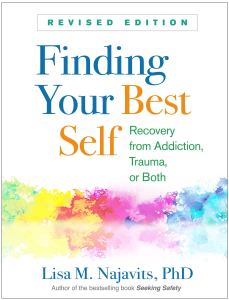
Book: Finding Your Best Self

Book Title:

Finding Your Best Self: Recovery from Addiction, Trauma, or Both.

Author(s): Lisa M. Najavits (PhD).

Year: 2019.

Edition: Second (2nd).

Publisher: Guildford Press.

Type(s): Hardcover, Paperback, and Kindle.

Synopsis:

Addiction and trauma are two of the most common and difficult issues that people face. In this motivating book, leading expert Lisa Najavits explains the link between addiction and trauma and presents science-based self-help strategies that you can use no matter where you are in your recovery. Every chapter features inspiring words from people who have “been there,” plus carefully designed reflection questions, exercises, and other practical tools. Learn how you can:

  • Build coping skills so that the future is better than the past.
  • Keep yourself safe and find support.
  • Set your own goals and make a plan to achieve them at your own pace.
  • Choose compassion over self-blame and shame.
  • Move toward your best self – the person you want to be.

If you are a family member or friend seeking to support a loved one – or a helping professional – this book is also for you. Now in a convenient large-size format, the revised edition features added materials for professional and peer counsellors. First edition title: Recovery from Trauma, Addiction, or Both.

Mental health professionals, see also the author’s Seeking Safety: A Treatment Manual for PTSD and Substance Abuse, which presents an evidence-based treatment approach developed specifically for PTSD and substance abuse.

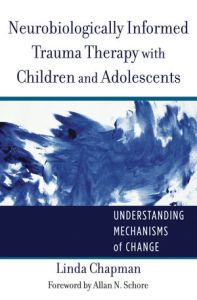
Book: Neurobiologically Informed Trauma Therapy with Children & Adolescent

Book Title:

Neurobiologically Informed Trauma Therapy with Children and Adolescents: Understanding Mechanisms of Change (Norton Series on Interpersonal Neurobiology).

Author(s): Linda Chapman.

Year: 2014.

Edition: First (1st).

Publisher: W.W. Norton & Company.

Type(s): Paperback and Kindle.

Synopsis:

The model of treatment developed here is grounded in the physical, psychological, and cognitive reactions children have to traumatic experiences and the consequences of those experiences. The approach to treatment utilises the integrative capacity of the brain to create a self, foster insight, and produce change. Treatment strategies are based on cutting-edge understanding of neurobiology, the development of the brain, and the storage and retrieval of traumatic memory. Case vignettes illustrate specific examples of the reactions of children, families, and teens to acute and repeated exposure to traumatic events.

Also presented is the most recent knowledge of the role of the right hemisphere (RH) in development and therapy. Right brain communication, and how to recognise the non-verbal symbolic and unconscious, affective processes will be explained, along with examples of how the therapist can utilise art making, media, tools, and self to engage in a two-person biology. 30 illustrations; 8 pages of colour.

Linking PTSD, Trauma, & ASD

Research Paper Title

Heightened risk of posttraumatic stress disorder in adults with autism spectrum disorder: The role of cumulative trauma and memory deficits.

Background

Individuals with Autism Spectrum Disorder (ASD) are known to be at increased risk of exposure to traumas such as maltreatment and abuse, however less is known about possible susceptibility towards the development of Posttraumatic Stress Disorder (PTSD) and associated risk factors.

This study investigated the rates of trauma exposure and PTSD, and the role of cumulative trauma exposure and memory as risk factors for PTSD in adults who self-reported having received an ASD diagnosis, compared to a typically developing (TD) comparison group.

Methods

Questionnaires assessing self-reported frequency of trauma exposure (LEC), PTSD symptomology (PCL-S) and memory (EMQ- R and BRIEF-A) were completed online by 38 ASD adults and 44 TD adults.

Results

Rates of trauma exposure and PTSD symptomatology were significantly higher in the ASD group, compared to the TD group, with deficits in working memory and everyday memory mediating this association. Interestingly, a cumulative effect of trauma exposure on PTSD symptom severity was only found in the ASD group.

Conclusions

High rates of trauma and probable PTSD in ASD adults highlight the importance of routine screening. Cumulative trauma exposure and memory deficits may act to increase risk of PTSD in ASD; longitudinal research is called for.

Reference

Rumball, F., Brook, L., Happe, F. & Karl, A. (2021) Heightened risk of posttraumatic stress disorder in adults with autism spectrum disorder: The role of cumulative trauma and memory deficits. Research in Developmental Disabilities. doi: 10.1016/j.ridd.2020.103848. Online ahead of print.

Complementary Medicine & Integrative Health Approaches to Trauma Therapy & Recovery

Research Paper Title

Introduction to the special issue: Complementary medicine and integrative health approaches to trauma therapy and recovery.

Abstract

The popularity of complementary and integrative health (also complementary integrated health; CIH) approaches has significantly increased in recent years.

According to the National Centre for Complementary and Integrative Health (NCCIH), part of the National Institutes of Health, about 1 in 3 adults and 1 in 9 children used CIH approaches to healing.

Some reports estimate that the use of CIH approaches will continue to increase (Clarke et al., 2015) as these therapies are cost effective and also due to the difficulties in finding trained mental health professionals (Simon et al., 2020).

For the purpose of this special issue, the researchers use the NCCIH’s definition of CIH as “a group of diverse medical and health care systems, practices, and products that are not presently considered to be part of conventional medicine” (Barnes et al., 2004, p. v). However, the integration of these therapies into the health system has not followed the same pattern despite the fact that patients report the need to discuss CIH therapies with their doctors or are actually using them (de Jonge et al., 2018; Jou & Johnson, 2016; Stapleton et al., 2015). This inability to keep up with the demand or patients’ preference is possibly due to providers’ lack of understanding and/or knowledge of these therapies, as well as scientific skepticism (Ali & Katz, 2015; Fletcher et al., 2017).

Using data from the 2012 National Health Interview Survey, Jou & Johnson (2016) identified patterns of CIH use in the United States and reasons for patients’ nondisclosure of the use of these therapies. Patients’ fear of disclosure due to perceived scepticism or disapproval from their provider was frequently attributed as a cause of patients’ nondisclosures to providers about the use of these therapies (Eisenberg et al., 2001; Jou & Johnson, 2016; Thomson et al., 2012).

The arrival of patient-centred care models is beginning to shift the ways we understand the patient’s role in treatment engagement. Patient-centred approaches often emphasize the use of preventative and holistic wellness models that go beyond the use of evidence-based treatments. This approach also seeks to be culturally responsive, which is a key factor in addressing health disparities in the United States (American Psychological Association [APA], 2019).

The Institute of Medicine, in its report on CIH therapies, highlighted the importance of engaging patients in their own care, including having a decision about therapeutic options (Bondurant et al., 2005). Likewise, the Race and Ethnicity Guidelines in Psychology (APA, 2019) recommend psychologists engage the patient’s cultural beliefs, or what Kleinman called the “explanatory belief model” (Kleinman, 1978)- for example, by “aim[ing] to understand and encourage indigenous/ ethnocultural sources of healing within professional practice” (APA, 2019, p. 24).

Reference

Mattar, S. & Frewenm P.A. (2020) Introduction to the special issue: Complementary medicine and integrative health approaches to trauma therapy and recovery. Psychological Trauma. 12(8):821-824. doi: 10.1037/tra0000994.

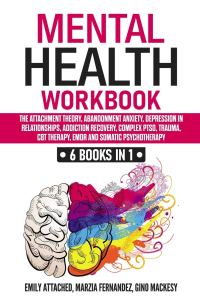
Book: Mental Health Workbook: 6 Books in 1

Book Title:

Mental Health Workbook: 6 Books in 1: The Attachment Theory, Abandonment Anxiety, Depression in Relationships, Addiction Recovery, Complex PTSD, Trauma, CBT Therapy, EMDR and Somatic Psychotherapy.

Author(s): Emily Attached, Marzia Fernandez, and Gino Mackesy.

Year: 2020.

Edition: First (1st).

Publisher: Independently Published.

Type(s): Hardcover, Paperback, Audiobook, and Kindle.

Synopsis:

This Book includes: 6 Manuscripts

  1. Attachment Theory Workbook.
  2. Abandonment Recovery Workbook.
  3. The Addiction Recovery Workbook.
  4. Complex PTSD, Trauma and Recovery.
  5. EMDR and Somatic Psychotherapy.
  6. Somatic Psychotherapy.

Book 1: Attachment Theory Workbook

You can start to redress the balance to build stronger relationships with those close to you, with chapters that cover:

  • How anxiety disorder develops.
  • How to become self-disciplined with your emotions.
  • Learning to communicate effectively.
  • How positive reinforcement works.
  • How your physical health affects your mental state.
  • Dealing with conflict.
  • Empathetic listening and its link to happiness.
  • And more…

Book 2: Abandonment Recovery Workbook

You will learn how to cope with the feelings of abandonment through chapters that examine:

  • What affecting abandonment.
  • Abandonment anxiety.
  • How abandonment can change a life.
  • Depression in Relationships.
  • Building healthier relationships.
  • The power of forgiveness.

Book 3: The Addiction Recovery Workbook

In this book, you will find the necessary help to get you on the road to recovery, with chapters that cover:

  • How to replace your addiction and find the peace you crave.
  • Educating yourself about your addiction.
  • What to avoid when you are developing new habits.
  • Exercise, hydration and a non-toxic lifestyle.
  • Getting creative to life healthier.

Book 4: Complex PTSD, Trauma and Recovery

In this book, you will finally find new ways to tackle your trauma, with chapters that focus on:

  • How depression is defined.
  • How you can avoid exacerbating the problem.
  • A range of trauma treatment exercises.
  • Trauma and the link to mental health.
  • Understanding anxiety.
  • Complex PTSD.

Books 5 and 6: EMDR and Somatic Psychotherapy

You’ll discover how it could help you, with chapters that cover:

  • The principles of EMDR and Somatic Psychotherapy.
  • The basic concepts of Somatic Psychotherapy and EMDR Therapy.
  • Examining the neurobiology of stress and trauma.
  • How the brain works and how it is affected by trauma.
  • Somatic Psychotherapy explained.

Psychological Trauma: Metaphor and Psychiatrists Beliefs

Research Paper Title

A frog in boiling water? A qualitative analysis of psychiatrists’ use of metaphor in relation to psychological trauma.

Background

Tensions about the definition, diagnostics, and role of psychological trauma in psychiatry are long-standing. This study sought to explore what metaphor patterns in qualitative interviews may reveal about the beliefs of psychiatrists in relation to trauma.

Methods

A qualitative inquiry using systematic metaphor analysis of 13 in-depth interviews with Australian psychiatrists.

Results

Three themes were identified: a power struggle between people, trauma, and psychiatry; trauma is not a medical condition; and serving the profession to protect society.

Conclusions

Metaphors present trauma as a powerful force that people can manage in different ways. Psychiatrists may view trauma as a social rather than medical issue. Psychiatrists experience role pressure associated with trauma including incongruence with risk management expectations of their roles.

Reference

Isobel, S., McCloughen, A. & Foster, K. (2020) A frog in boiling water? A qualitative analysis of psychiatrists’ use of metaphor in relation to psychological trauma. Australasian Psychiatry. doi: 10.1177/1039856220946596. Online ahead of print.

Themes & Psychiatrists’ Use of Metaphor in Relation to Psychological Trauma

Research Paper Title

A frog in boiling water? A qualitative analysis of psychiatrists’ use of metaphor in relation to psychological trauma.

Background

Tensions about the definition, diagnostics, and role of psychological trauma in psychiatry are long-standing. This study sought to explore what metaphor patterns in qualitative interviews may reveal about the beliefs of psychiatrists in relation to trauma.

Methods

A qualitative inquiry using systematic metaphor analysis of 13 in-depth interviews with Australian psychiatrists.

Results

Three themes were identified:

  1. A power struggle between people, trauma, and psychiatry;
  2. Trauma is not a medical condition; and
  3. Serving the profession to protect society.

Conclusions

Metaphors present trauma as a powerful force that people can manage in different ways. Psychiatrists may view trauma as a social rather than medical issue. Psychiatrists experience role pressure associated with trauma including incongruence with risk management expectations of their roles.

Reference

Isobel, S., McCloughen, A. & Foster, K. (2020) A frog in boiling water? A qualitative analysis of psychiatrists’ use of metaphor in relation to psychological trauma. Australasian Psychiatry. doi: 10.1177/1039856220946596. Online ahead of print.

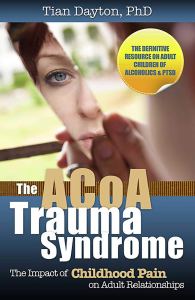
Book: The ACOA Trauma Syndrome

300300

Book Title:

The ACOA Trauma Syndrome: The The Impact of Childhood Pain on Adult Relationships.

Author(s): Tian Dayton.

Year: 2012.

Edition: First (1st).

Publisher: Health Communications.

Type(s): Paperback and Audiobook.

Synopsis:

The ACoA syndrome is a post-traumatic stress reaction in which pain from the stress of growing up with parental addiction emerges years even decades later in adult relationships.

Adult Children of Alcoholics suffer from a post-traumatic stress created by their dysfunctional family situations.

Through insightful analysis and thoughtful examination, bestselling author and renowned psychologist Tian Dayton shows ACoAs how and why this family trauma has such a profound effect on adult relationships and provides the tools for marshalling resilience and restoring health and happiness.

Dr. Dayton explores how our brains and bodies process childhood trauma and how those traumas can become the catalyst for unhealthy, self-medicating behaviours including drug and alcohol abuse, food issues, and sex, gambling, and shopping addictions.

Readers who have experienced previous trauma will learn how they developed PTSD and how they can heal both personally and interpersonally.

Psychotraumatology: What Have We Learned?

Research Paper Title

A decennial review of psychotraumatology: what did we learn and where are we going?

Background

On 06 December 2019 the reviewers started the 10th year of the European Journal of Psychotraumatogy (EJPT), a full Open Access journal on psychotrauma.

This editorial is part of a special issue/collection celebrating the 10 years anniversary of the journal where the reviewers will acknowledge some of their most impactful articles of the past decade.

In this editorial the editors present a decennial review of the field addressing a range of topics that are core to both the journal and to psychotraumatology as a discipline.

These include neurobiological developments (genomics, neuroimaging and neuroendocrine research), forms of trauma exposure and impact across the lifespan, mass trauma and early interventions, work-related trauma, trauma in refugee populations, and the potential consequences of trauma such as PTSD or Complex PTSD, but also resilience.

The reviewers address innovations in psychological, medication (enhanced) and technology-assisted treatments, mediators and moderators like social support and finally how new research methods help them to gain insights in symptom structures or to better predict symptom development or treatment success. We aimed to answer three questions

  1. Where did we stand in 2010?
  2. What did we learn in the past 10 years?
  3. What are our knowledge gaps?

The reviewers conclude with a number of recommendations concerning top priorities for the future direction of the field of psychotraumatology and correspondingly the journal.

Reference

Olff, M., Amstadter, A., Armour, C., Birkeland, M.S., Bui, E., Cloitre, M., Ehlers, A., Ford, J.D., Greene, T., Hansen, M., Lanius, R., Roberts, N., Rosner, R. & Thoresen, S. (2019) A decennial review of psychotraumatology: what did we learn and where are we going? European Journal of Psychotraumatology. 10(1):1672948. doi: 10.1080/20008198.2019.1672948. eCollection 2019.