Book: Psychiatry Disrupted

Book Title:

Psychiatry Disrupted: Theorising Resistance and Crafting the (R)evolution.

Author(s): Bonnie Burstow, Brenda A LeFrancois, and Shaindl Diamond.

Year: 2014.

Edition: First (1st).

Publisher: McGill-Queen’s University Press.

Type(s): Paperback and EPUB.

Synopsis:

There is growing international resistance to the oppressiveness of psychiatry. While previous studies have critiqued psychiatry, Psychiatry Disrupted goes beyond theorising what is wrong with it to theorizing how we might stop it. Introducing readers to the arguments and rationale for opposing psychiatry, the book combines perspectives from anti-psychiatry and critical psychiatry activism, mad activism, antiracist, critical, and radical disability studies, as well as feminist, Marxist, and anarchist thought.

The editors and contributors are activists and academics – adult education and social work professors, psychologists, prominent leaders in the psychiatric survivor movement, and artists – from across Canada, England, and the United States.

From chapters discussing feminist opposition to the medicalisation of human experience, to the links between psychiatry and neo-liberalism, to internal tensions within the various movements and different identities from which people organise, the collection theorises psychiatry while contributing to a range of scholarship and presenting a comprehensive overview of resistance to psychiatry in the academy and in the community.

A courageous anthology, Psychiatry Disrupted is a timely work that asks compelling activist questions that no other book in the field touches.


Book: Decolonising Global Mental Health

Book Title:

Decolonizing Global Mental Health: The Psychiatrisation of the Majority World.

Author(s): China Mills.

Year: 2014.

Edition: First (1st).

Publisher: Routledge.

Type(s): Paperback.

Synopsis:

Decolonising Global Mental Health is a book that maps a strange irony.

The World Health Organisation (WHO) and the Movement for Global Mental Health are calling to ‘scale up’ access to psychological and psychiatric treatments globally, particularly within the global South. Simultaneously, in the global North, psychiatry and its often chemical treatments are coming under increased criticism (from both those who take the medication and those in the position to prescribe it).

The book argues that it is imperative to explore what counts as evidence within Global Mental Health, and seeks to de-familiarise current ‘Western’ conceptions of psychology and psychiatry using postcolonial theory. It leads us to wonder whether we should call for equality in global access to psychiatry, whether everyone should have the right to a psychotropic citizenship and whether mental health can, or should, be global.

As such, it is ideal reading for undergraduate and postgraduate students, as well as researchers in the fields of critical psychology and psychiatry, social and health psychology, cultural studies, public health and social work.

Book: The Cognitive Behavioural Workbook for Weight Management

Book Title:

The Cognitive Behavioural Workbook for Weight Management: A Step-by-Step Programme (A New Harbinger Self-Help Workbook).

Author(s): Michele Laliberte, Randi E. McCabe, and Valerie Taylor.

Year: 2009.

Edition: First (1st), Illutstrated Edition.

Publisher: New Harbinger Publications.

Type(s): Paperback and Kindle.

Synopsis:

We all think we know what we have to do to manage our weight, and blame ourselves when we do not meet the goals we have set. In reality, we need to understand the biology behind the body’s regulation of weight to achieve the control we are hoping for. And we need strategies for overcoming obstacles: the stress of daily life, emotional upsets, and people who sabotage our efforts or attack our self-esteem.

The Cognitive Behavioural Workbook for Weight Management is a different kind of weight management guide that focuses on helping you stay disciplined and dedicated to your weight management goals by using cognitive behavioural therapy. This approach has been used by therapists for years to treat a diverse range of mental health conditions, and researchers have found that it also helps people make healthy changes that last.

This workbook includes exercises and worksheets to help you design a customised weight management strategy most likely to be effective for you based on the habits and lifestyle you have now. You’ll set specific goals to improve your body image and your health, and follow a realistic weight management plan designed specifically for you. It is possible to feel good about yourself as you work toward a healthier lifestyle. This book will show you how.

Learn to:

  • Manage situational, emotional, and interpersonal eating triggers.
  • Overcome body image difficulties and critical thoughts.
  • Make changes toward weight management that you actually enjoy.
  • Use support from friends and family to bolster success.

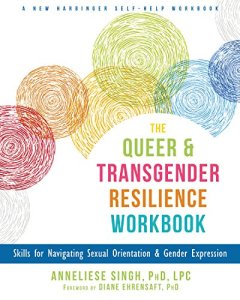
Book: The Queer and Transgender Resilience Workbook

Book Title:

The Queer and Transgender Resilience Workbook: Skills for Navigating Sexual Orientation and Gender Expression (New Harbinger Self-Help Workbook).

Author(s): Anneliese A. Singh (PhD, LPC) and Diane Ehrensaft (PhD).

Year: 2018.

Edition: First (1st) Workbook Edition.

Publisher: New Harbinger Publications.

Type(s): Paperback and eTextbook.

Synopsis:

How can you build unshakable confidence and resilience in a world still filled with ignorance, inequality, and discrimination? The Queer and Transgender Resilience Workbook will teach you how to challenge internalised negative messages, handle stress, build a community of support, and embrace your true self.

Resilience is a key ingredient for psychological health and wellness. It’s what gives people the psychological strength to cope with everyday stress, as well as major setbacks. For many people, stressful events may include job loss, financial problems, illness, natural disasters, medical emergencies, divorce, or the death of a loved one. But if you are queer or gender non-conforming, life stresses may also include discrimination in housing and health care, employment barriers, homelessness, family rejection, physical attacks or threats, and general unfair treatment and oppression – all of which lead to overwhelming feelings of hopelessness and powerlessness. So, how can you gain resilience in a society that is so often toxic and unwelcoming?

In this important workbook, you will discover how to cultivate the key components of resilience: holding a positive view of yourself and your abilities; knowing your worth and cultivating a strong sense of self-esteem; effectively utilising resources; being assertive and creating a support community; fostering hope and growth within yourself, and finding the strength to help others. Once you know how to tap into your personal resilience, you’ll have an unlimited well you can draw from to navigate everyday challenges.

By learning to challenge internalised negative messages and remove obstacles from your life, you can build the resilience you need to embrace your truest self in an imperfect world.

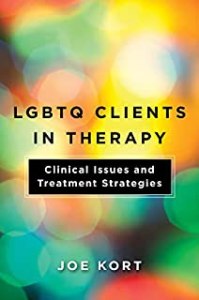
Book: LGBT Clients in Therapy

Book Title:

LGBTQ Clients in Therapy: Clinical Issues and Treatment Strategies.

Author(s): Joe Kort.

Year: 2018.

Edition: First (1st).

Publisher: W.W. Norton & Company.

Type(s): Paperback and Kindle.

Synopsis:

All the answers clinicians need to work effectively with LGBTQ clients.

A therapist who treats LGBTQ clients often must be more than “gay friendly.” Clinical experience, scientific research, and cultural understanding are advancing rapidly, and the task of being LGBTQ informed is ever-changing in today’s world.

This book covers topics such as how to avoid making the common mistake of believing that “a couple is a couple,” thus treating LGBTQ couples the same as their heterosexual counterparts; how to treat clients struggling in “mixed” orientation marriages and relationships (straight and LGBTQ spouses in the same couple); and how to work with all clients who have non-heteronormative sexual behaviours and practices. Perhaps most importantly, the book discusses covert cultural sexual abuse (the trauma suffered from having to suppress one’s own sexual and gender identity) as well as the difficult process of coming out to family and friends.

A therapist’s job is to help clients and their identities through their own lens and not anyone else’s – especially the therapist’s. The gay affirmative principles put forward in this book will help you build a stronger relationship with your LGBTQ clients and become the go-to therapist in your area.

Book: LGBT Psychology and Mental Health

Book Title:

LGBT Psychology and Mental Health – Emerging Research and Advances.

Author(s): Richard Ruth and Erik Santacruz (Editors).

Year: 2017.

Edition: First (1st).

Publisher: Praeger.

Type(s): Hardcover and Kindle.

Synopsis:

This cutting-edge guide spotlights some of the most exciting emerging discoveries, trends, and research areas in LGBT psychology, both in science and therapy.

LGBT Psychology and Mental Health: Emerging Research and Advances brings together concise, substantive reviews of what is new or on the horizon in science and in key areas of clinical practice. It will equip professionals at institutions with mental health programmes that deal with lesbian, gay, bisexual and transgender issues with information and insight to help psychologists, mental health clinicians, and counsellors better serve the LGBT populations that, increasingly, are seeking their services.

The book begins with introductory chapters that present an overview of the field, chronicle the relationship between the LGBT community and the field of psychology in past decades, and identify emerging issues covered in the volume. It then addresses subjects such as social psychology and LGBT populations, health disparities and LGBT populations, the evolution of developmental theory related to the LBGT populations, emerging policy issues in LGBT health and psychology, and recent efforts to make the field of psychology more trans-inclusive and affirmative.

Chapters are also dedicated to examining contemporary, LGBT-affirmative psychoanalysis and treating addictions and substance abuse in the LGBT community. The book concludes with chapters that address how the concept of intersectionality can serve as a way to better understand LGBT members who possess multiple cultural identities and the unique stressors they experience in daily life. The final chapter summarises issues that bridge the contributions provided by the authors, and it highlights current issues of focal concern in order to project future directions for the field of LGBT psychology in the next two decades.

It presents a concise history of LGBT psychology as well as coverage of current LGBT psychology in various subfields, including social, developmental, psychoanalytical, minority psychology, and women’s psychology Addresses issues in the LGBT community ranging from health disparities (physical, biological, and psychological illnesses that disproportionately affect the LGBT community) to addictions and substance abuse, stressors, and emerging policy issues Includes contributors who are well-known trailblazers and noted experts in the field

Book: Integrated Group Therapy for Bipolar Disorder and Substance Abuse

Book Title:

Integrated Group Therapy for Bipolar Disorder and Substance Abuse.

Author(s): Roger D. Weiss and Hilary S. Connery.

Year: 2011.

Edition: First (1st).

Publisher: Guildford Press.

Type(s): Paperback and Kindle.

Synopsis:

Packed with practical clinical tools, this book presents an empirically supported treatment expressly designed for clients with both bipolar disorder and substance use disorders. Integrated group therapy teaches essential recovery behaviours and relapse prevention skills that apply to both illnesses.

The volume provides a complete session-by-session overview of the approach, including clear guidelines for setting up and running groups, implementing the cognitive-behavioral treatment techniques, and troubleshooting frequently encountered problems.

In a large-size format for easy reference and photocopying, the book features more than 30 reproducible handouts, forms, and bulletin board materials.

Book: Internet Addiction in Children and Adolescents

Book Title:

Internet Addiction in Children and Adolescents: Risk Factors, Assessment, and Treatment.

Author(s): Kimberly S. Young and Cristiano Nabuco de Abreu (Editors).

Year: 2017.

Edition: First (1st).

Publisher: Springer Publishing Co Inc.

Type(s): Paperback and Kindle.

Synopsis:

This is the first book to thoroughly examine how early and easy access to the Internet and digital technologies impacts children and adolescents. Experts in the field examine the research that shows the social, cognitive, developmental, and academic problems that can result when children spend excessive time in front of screens. As a whole, the book provides an invaluable resource for those who need to assess, treat, and prevent Internet addiction in children and adolescents.

Internet Addiction in Children and Adolescents:

  • Provides tools that help predict a child’s level of risk for media-related problems.
  • Examines how to diagnose and differentiate Internet addiction from other psychiatric conditions.
  • Explores evidence-based treatment approaches and how to distinguish pathology from normal development.
  • Shows how to create inpatient treatment programs and therapies to address media addiction.
  • Highlights the psychological, social, and family conditions for those most at risk.
  • Evaluates the effects of the excessive use of electronic games and the Internet on brain development.
  • Explores the physical risks that result from excessive media use and strategies for combating the problem.
  • Examines school-based initiatives that employ policies and procedures designed to increase awareness of excessive media use and help educators identify students who misuse technology, and that provide strategies of intervention and communication with parents.
  • Identifies signs of problem Internet behavior such as aggressive behavior, lying about screen use, and a preference for screen time over social interactions.
  • Outlines the risk factors for developing Internet addiction.
  • Provides strategies for treatment and prevention in family, school, and community settings.

Practitioners and researchers in psychology, social work, school counseling, child and family therapy, and nursing will appreciate this book’s thorough review of Internet addiction among children and adolescents. The book also serves as an engaging supplement in courses on media psychology, addiction counseling, abnormal psychology, school counseling, social issues, and more.

Book: Internet Addiction

Book Title:

Internet Addiction: Prevalence, Risk Factors and Health Effects.

Author(s): Margaret Adams (Editor).

Year: 2016.

Edition: First (1st).

Publisher: Nova Science Publishers.

Type(s): Hardcover and Kindle.

Synopsis:

According to the World Health Organisation, pathological addiction is the psychic, and sometimes even physical, condition arising from the interaction between a living organism and an exogenous substance, characterised by behavioural responses and other reactions that always include a compulsive need to take the substance continuously or periodically, in order to get its psychic effects and/or to avoid the distress related to its withdrawal.

This book presents a review on Internet addiction, which is considered an emergent problem especially amongst adolescents, and examines the risk factors and health effects of this addiction.

Book: The International Encyclopedia of Depression

Book Title:

The International Encyclopedia of Depression.

Author(s): Richard E. Ingram, PhD (Editor).

Year: 2009.

Edition: First (1st).

Publisher: Springer Publishing Company, LLC..

Type(s): Hardcover and Kindle.

Synopsis:

There is no more central topic to mental health professionals than depression.

In the last 20 years, theory and research in depression has grown rapidly. The wealth of information now available on depression is enormous, but has not been summarized into a comprehensive encyclopedia until now.

The entries in this book include: behavioral treatment, cognitive theories, cognitive therapy, epidemiology, heredity, personality disorders, double depression, and prevention.

In summarising the vast amount of information on depression, The International Encyclopedia of Depression serves as an important resource for researchers, patients, students, and educated laypeople. This book presents holistic, interdisciplinary coverage of an important but misunderstood medical disorder.

You can find a copy of the book here.