Book: The Origins and Course of Common Mental Disorders

Book Title:

The Origins and Course of Common Mental Disorders.

Author(s): David Goldberg and Ian Goodyer.

Year: 2005.

Edition: First (1st).

Publisher: Routledge.

Type(s): Hardcover, Paperback, and Kindle.

Synopsis:

Why are some people more vulnerable to common mental disorders than others?

What effects do genes and environments exert on the development of mental disorders?

The Origins and Course of Common Mental Disorders describes the nature, characteristics and causes of common emotional and behavioural disorders as they develop across the lifespan, providing a clear and concise account of recent advances in our knowledge of the origins and history of anxious, depressive, anti-social, and substance related disorders.

Combining a lifespan approach with developments in neurobiology, this book describes the epidemiology of emotional and behavioural disorders in childhood, adolescence and adult life. David Goldberg and Ian Goodyer demonstrate how both genes and environments exert different but key effects on the development of these disorders and suggest a developmental model as the most appropriate for determining vulnerabilities for psychopathology. Divided into four sections, the book covers the:

  • Nature and distribution of common mental disorders.
  • Biological basis of common disorders.
  • Human life cycle relevant to common disorders.
  • Developmental model.

This highly readable account of the origins of emotional and behavioural disorders will be of interest to behavioural science students and all mental health professionals including psychiatrists, psychologists, social workers, nurses, and counsellors.

Book: Models for Mental Disorder: Conceptual Models in Psychiatry

Book Title:

Models for Mental Disorder: Conceptual Models in Psychiatry.

Author(s): Peter Tyrer.

Year: 2013.

Edition: Fifth (5th).

Publisher: Wiley-Blackwell.

Type(s): Paperback and Kindle.

Synopsis:

Models for Mental Disorder, first published in 1987, anticipated the
move towards integration of psychiatric services into multidisciplinary teams (doctor, psychologist, nurse, social worker, etc) and the need to bring together the different philosophies of mental illness.

Peter Tyrer has identified four different models of mental disorder that are relevant to clinical practice: the disease, psychodynamic, cognitive-behavioural and social models.

Each model is described and reviewed, with reference to case studies and
illustrations, to show how it relates to mental health disorders and can be
used to interpret and manage these disorders.

The book has been widely read and is often used for training purposes so that
each professional can understand and appreciate that differences in viewpoint
are often a consequence of one or more models being used in a different way
rather than a fundamental schism in approach.

Since the fourth edition was published in 2005, the disciplines of mental health
have moved even closer together with the growth of assertive outreach and
more integrated community teams. This, combined with the greater awareness
of mental health among users of services, which leads to more penetrating and
informed questions at interviews with professionals, has emphasized the need
for a wider understanding of these models.

  • The only book to describe the models framing mental health diagnosis and management.
  • A great review for those wanting a better grasp of psychiatric disorders and for integration of concepts for treatment planning.
  • New information on formal classifications of mental disorder.
  • New information on mindfulness and mentalisation regarding the dynamic model.
  • Clearly written in a style which includes some humour and a conversational presentation – a joy to read for the beginner and more experienced practitioner alike.
  • Features a teaching exercise for use when training students in the various models.

Book: A Clinician’s Guide to Mental Health Conditions in Adults with Autism Spectrum Disorders: Assessment and Interventions

Book Title:

A Clinician’s Guide to Mental Health Conditions in Adults with Autism Spectrum Disorders: Assessment and Interventions.

Author(s): Eddie Chaplin, Debbie Spain, and Jane McCarthy.

Year: 2019.

Edition: First (1st).

Publisher: Jessica Kingsley Publishers.

Type(s): Paperback and Kindle.

Synopsis:

This comprehensive and much-needed guide addresses the issues faced by clinicians in assessing and treating the range of mental health conditions, which can affect adults with Autism Spectrum Disorder (ASD). Its particular focus on adults fills a notable gap in the ASD professional literature, with an extensive array of contributors from across the psychology and healthcare professions.

Covering a wide variety of common co-occurring mental health conditions including mood disorders, anxiety, psychosis, OCD, personality disorders, and eating disorders, this guide also explores broader issues to do with promoting positive mental health and wellbeing. Authoritative and detailed, this is an essential resource for all clinicians and professionals looking to understand and tailor their approach to mental health in autistic adults, and the need for specific methods and strategies to enhance assessment and treatment.

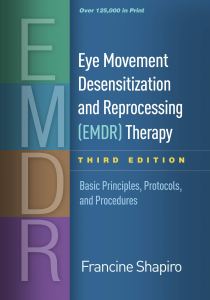
Book: Eye Movement Desensitisation and Reprocessing (EMDR) Therapy: Basic Principles, Protocols, and Procedures

Book Title:

Eye Movement Desensitization and Reprocessing (EMDR) Therapy: Basic Principles, Protocols, and Procedures

Author(s): Francine Shapiro.

Year: 2018.

Edition: Third (3rd).

Publisher: Guildford Press.

Type(s): Hardcover and Kindle.

Synopsis:

The authoritative presentation of Eye Movement Desensitisation and Reprocessing (EMDR) therapy, this ground-breaking book – now revised and expanded – has enhanced the clinical repertoires of more than 125,000 readers and has been translated into 10 languages. Originally developed for treatment of posttraumatic stress disorder (PTSD), this evidence-based approach is now also used to treat adults and children with complex trauma, anxiety disorders, depression, addictive behaviour problems, and other clinical problems. EMDR originator Francine Shapiro reviews the therapy’s theoretical and empirical underpinnings, details the eight phases of treatment, and provides training materials and resources. Vivid vignettes, transcripts, and reproducible forms are included.

New to This Edition

  • Over 15 years of important advances in therapy and research, including findings from clinical and neurophysiological studies.
  • New and revised protocols and procedures.
  • Discusses additional applications, including the treatment of complex trauma, addictions, pain, depression, and moral injury, as well as post-disaster response.
  • Appendices with session transcripts, clinical aids, and tools for assessing treatment fidelity and outcomes.

EMDR therapy is recognised as a best practice for the treatment of PTSD by the US Departments of Veterans Affairs and Defence, the International Society for Traumatic Stress Studies, the World Health Organisation, the UK National Institute for Health and Care Excellence (NICE), the Australian National Health and Medical Research Council, the Association of the Scientific Medical Societies in Germany, and other health care associations/institutes around the world.

Book: Complex PTSD: From Surviving to Thriving

Book Title:

Complex PTSD: From Surviving to Thriving: A Guide and Map for Recovering from Childhood Trauma.

Author(s): Pete Walker.

Year: 2013.

Edition: First (1st).

Publisher: CreateSpace Independent Publishing Platform.

Type(s): Paperback, Audiobook, and Kindle.

Synopsis:

I have Complex PTSD (CPTSD) and wrote this book from the perspective of someone who has experienced a great reduction of symptoms over the years. I also wrote it from the viewpoint of someone who has discovered many silver linings in the long, windy, bumpy road of recovering from CPTSD. I felt encouraged to write this book because of thousands of e-mail responses to the articles on my website that repeatedly expressed gratitude for the helpfulness of my work. An often echoed comment sounded like this: At last someone gets it. I can see now that I am not bad, defective or crazy…or alone!

The causes of CPTSD range from severe neglect to monstrous abuse. Many survivors grow up in houses that are not homes – in families that are as loveless as orphanages and sometimes as dangerous. If you felt unwanted, unliked, rejected, hated and/or despised for a lengthy portion of your childhood, trauma may be deeply engrained in your mind, soul and body. This book is a practical, user-friendly self-help guide to recovering from the lingering effects of childhood trauma, and to achieving a rich and fulfilling life. It is copiously illustrated with examples of my own and my clients’ journeys of recovering.

This book is also for those who do not have CPTSD but want to understand and help a loved one who does. This book also contains an overview of the tasks of recovering and a great many practical tools and techniques for recovering from childhood trauma. It extensively elaborates on all the recovery concepts explained on my website, and many more. However, unlike the articles on my website, it is oriented toward the layperson. As such, much of the psychological jargon and dense concentration of concepts in the website articles has been replaced with expanded and easier to follow explanations. Moreover, many principles that were only sketched out in the articles are explained in much greater detail.

A great deal of new material is also explored. Key concepts of the book include managing emotional flashbacks, understanding the four different types of trauma survivors, differentiating the outer critic from the inner critic, healing the abandonment depression that come from emotional abandonment and self-abandonment, self-reparenting and reparenting by committee, and deconstructing the hierarchy of self-injuring responses that childhood trauma forces survivors to adopt.

The book also functions as a map to help you understand the somewhat linear progression of recovery, to help you identify what you have already accomplished, and to help you figure out what is best to work on and prioritise now. This in turn also serves to help you identify the signs of your recovery and to develop reasonable expectations about the rate of your recovery. I hope this map will guide you to heal in a way that helps you to become an unflinching source of kindness and self-compassion for yourself, and that out of that journey you will find at least one other human being who will reciprocally love you well enough in that way.

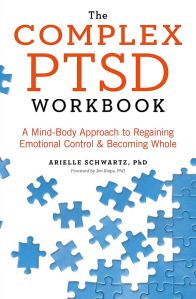
Book: The Complex PTSD Workbook

Book Title:

The Complex PTSD Workbook: A Mind-Body Approach to Regaining Emotional Control and Becoming Whole.

Author(s): Arielle Schwartz.

Year: 2020.

Edition: First (1st).

Publisher: Sheldon Press.

Type(s): Paperback, Audiobook, and Kindle.

Synopsis:

Those affected by complex PTSD commonly feel as though there is something fundamentally wrong with them – that somewhere inside there is a part of them that needs to be fixed. Though untrue, such beliefs can feel extremely real and frightening. Difficult as it may be, facing one’s PTSD from unresolved childhood trauma is a brave, courageous act – and with the right guidance, healing from PTSD is possible.

Clinical psychologist Dr Arielle Schwartz has spent years helping those with C-PTSD find their way to wholeness. She also knows the territory of the healing firsthand, having walked it herself. This book provides a map to the complicated, and often overwhelming, terrain of C-PTSD with Dr. Schwartz’s knowledgeable guidance helping you find your way.

In The Complex PTSD Workbook, you’ll learn all about C-PTSD and gain valuable insight into the types of symptoms associated with unresolved childhood trauma, while applying a strength-based perspective to integrate positive beliefs and behaviours.

Examples and exercises through which you’ll discover your own instances of trauma through relating to PTSD experiences other than your own, such as the following:

  • Information about common PTSD misdiagnoses such as bipolar disorder, ADHD, anxiety disorders, major depressive disorder, and substance abuse, among others.
  • Explorations of common methods of PTSD therapy including somatic therapy, EMDR, CBT, DBT, and mind-body perspectives.
  • Chapter takeaways that encourage thoughtful consideration and writing to explore how you feel as you review the material presented in relation to your PTSD symptoms.

The Complex PTSD Workbook aims to empower you with a thorough understanding of the psychology and physiology of C-PTSD so you can make informed choices about the path to healing that is right for you and discover a life of wellness, free of C-PTSD, that used to seem just out of reach.

Book: PTSD F*cking Hurts (Write That Sh*t Down)

Book Title:

PTSD Fcking Hurts (Write That Sht Down): A Guided Journal for Depression, PTSD, Mental Recovery, With Prompts to Help you through Emotional Healing, With Prompts and Activities.

Author(s): Sami’s Mental Health Journals.

Year: 2020.

Edition: First (1st).

Publisher: Independently Published.

Type(s): Paperback.

Synopsis:

A great Guided & Prompted Journal workbook for people suffering from PTSD or Complex PTSD (CPTSD). It is a perfect Journal for yourself if you are seeking a great book to help write down your thoughts. It will guide you throughout activities, Prompts, and questions you need to answer honestly in the journey of recovery, With space for notes.

It will also be a gift for someone who suffers from PTSD, or with having a hard psychologic experience.

Book: The PTSD Workbook

Book Title:

The PTSD Workbook: Simple, Effective Techniques for Overcoming Traumatic Stress Symptoms.

Author(s): Mary Beth Williams and Soili Poijula.

Year: 2016.

Edition: Third (3rd).

Publisher: New Harbinger.

Type(s): Paperback and Kindle.

Synopsis:

Post-traumatic stress disorder (PTSD) is an extremely debilitating condition that can occur after exposure to a terrifying event. But whether you are a veteran of war, a victim of domestic violence or sexual violence, or have been involved in a natural disaster, crime, car accident, or accident in the workplace, your symptoms may be getting in the way of you living your life.

PTSD can often cause you to relive your traumatic experience in the form of flashbacks, memories, nightmares, and frightening thoughts. This is especially true when you are exposed to events or objects that remind you of your trauma. Left untreated, PTSD can lead to emotional numbness, insomnia, addiction, anxiety, depression, and even suicide. So, how can you start to heal and get your life back?

In The PTSD Workbook, Third Edition, psychologists and trauma experts Mary Beth Williams and Soili Poijula outline techniques and interventions used by PTSD experts from around the world to conquer distressing trauma-related symptoms. In this fully revised and updated workbook, you’ll learn how to move past the trauma you’ve experienced and manage symptoms such as insomnia, anxiety, and flashbacks.

Based in cognitive behavioural therapy (CBT), this book is extremely accessible and easy-to-use, offering evidence-based therapy at a low cost. This new edition features chapters focusing on veterans with PTSD, the link between cortisol and adrenaline and its role in PTSD and overall mental health, and the mind-body component of PTSD. Clinicians will also find important updates reflecting the new DSM-V definition of PTSD.

This book is designed to give you the emotional resilience you need to get your life back together after a traumatic event.

Book: A Sociology of Mental Health and Illness

Book Title:

A Sociology of Mental Health and Illness.

Author(s): Anne Rogers and David Pilgrim.

Year: 2020.

Edition: Sixth (6th).

Publisher: Open University Press.

Type(s): Paperback and Kindle.

Synopsis:

How do we understand mental health problems in their social context?

A former BMA Medical Book of the Year award winner, this book provides a sociological analysis of major areas of mental health and illness. The book considers contemporary and historical aspects of sociology, social psychiatry, policy and therapeutic law to help students develop an in-depth and critical approach to this complex subject. New developments for the sixth edition include:

  • Brand new chapter on ageing and older people.
  • Updated material on social class, ethnicity, user involvement, young people and adolescence.
  • New coverage on prisons legalism and the rise of digital mental health management and delivery.

A classic in its field, this well-established textbook offers a rich, contemporary and well-crafted overview of mental health and illness unrivalled by competitors and is essential reading for students and professionals studying a range of medical sociology and health-related courses. It is also highly suitable for trainee mental health workers in the fields of social work, nursing, clinical psychology and psychiatry.

Book: Anatomy of an Epidemic

Book Title:

Anatomy of an Epidemic: Magic Bullets, Psychiatric Drugs, and the Astonishing Rise of Mental Illness in America.

Author(s): Robert Whitaker.

Year: 2010.

Edition: First (1ed).

Publisher: Crown Publishing Group.

Type(s): Hardcover and Kindle.

Synopsis:

The award-winning author of Mad in America presents a controversial assessment of the rise in mental illness-related disabilities that considers if drug-based care may be fuelling illness rates throughout the past half century.