On This Day … 01 September

Events

  • 1939 – Adolf Hitler signs an order to begin the systematic euthanasia of mentally ill and disabled people.
  • 2004 – Random Acts of Kindness Day (New Zealand).

Aktion T4

Aktion T4 was a postwar name for mass murder by involuntary euthanasia in Nazi Germany. The name T4 is an abbreviation of Tiergartenstraße 4, a street address of the Chancellery department set up in early 1940, in the Berlin borough of Tiergarten, which recruited and paid personnel associated with T4. Certain German physicians were authorised to select patients “deemed incurably sick, after most critical medical examination” and then administer to them a “mercy death” (Gnadentod). In October 1939, Adolf Hitler signed a “euthanasia note”, backdated to 01 September 1939, which authorised his physician Karl Brandt and Reichsleiter Philipp Bouhler to implement the programme.

The killings took place from September 1939 until the end of the war in 1945; from 275,000 to 300,000 people were killed in psychiatric hospitals in Germany and Austria, occupied Poland and the Protectorate of Bohemia and Moravia (now the Czech Republic). The number of victims was originally recorded as 70,273 but this number has been increased by the discovery of victims listed in the archives of the former East Germany. About half of those killed were taken from church-run asylums, often with the approval of the Protestant or Catholic authorities of the institutions.

The Holy See announced on 02 December 1940 that the policy was contrary to divine law and that “the direct killing of an innocent person because of mental or physical defects is not allowed” but the declaration was not upheld by some Catholic authorities in Germany. In the summer of 1941, protests were led in Germany by the Bishop of Münster, Clemens von Galen, whose intervention led to “the strongest, most explicit and most widespread protest movement against any policy since the beginning of the Third Reich”, according to Richard J. Evans.

Several reasons have been suggested for the killings, including eugenics, racial hygiene, and saving money. Physicians in German and Austrian asylums continued many of the practices of Aktion T4 until the defeat of Germany in 1945, in spite of its official cessation in August 1941. The informal continuation of the policy led to 93,521 “beds emptied” by the end of 1941. Technology developed under Aktion T4 was taken over by the medical division of the Reich Interior Ministry, particularly the use of lethal gas to kill large numbers of people, along with the personnel of Aktion T4, who participated in Operation Reinhard. The programme was authorised by Hitler but the killings have since come to be viewed as murders in Germany. The number of people killed was about 200,000 in Germany and Austria, with about 100,000 victims in other European countries.

And now something slightly more positive.

Random Acts of Kindness Day

Random Acts of Kindness Day is a day to celebrate and encourage random acts of kindness.

“It’s just a day to celebrate kindness and the whole pay it forward mentality”, said Tracy Van Kalsbeek, executive director of the Stratford Perth Community Foundation, in 2016, where the day is celebrated on 04 November 4.

It is celebrated on 01 September in New Zealand and on 17 February in the US.

Background

  • The Random Acts of Kindness Foundation (RAK) was founded in 1995 in the US.
  • It is a non-profit headquartered in Denver, Colorado.
  • Random Acts of Kindness (RAK) day began in 2004 in New Zealand.

What is a Random Act of Kindness

A random act of kindness is a nonpremeditated, inconsistent action designed to offer kindness towards the outside world.

Suggested Activities

  • Pay for the person behind you in the drive-thru.
  • Let someone go ahead of you in line.
  • Buy extra at the grocery store and donate it to a food pantry.
  • Buy flowers for someone (postal worker, grocery store clerk, bus driver, etc.).
  • Help someone change a flat tire.
  • Post anonymous sticky notes with validating or uplifting messages around for people to find.
  • Compliment a colleague on their work.
  • Send an encouraging text to someone.
  • Take muffins to work.
  • Let a car into the traffic ahead of you.
  • Wash someone else’s car.
  • Take a gift to new neighbors and introduce yourself.
  • Pay the bus fare for the passenger behind you.

Website

Does COVID-19 Fear, Mental Health, and Substance Misuse Conditions among University Social Work Students Ignore Nationality?

Research Paper Title

COVID-19 Fear, Mental Health, and Substance Misuse Conditions Among University Social Work Students in Israel and Russia.

Background

In December 2019, cases of pneumonia of unknown etiology but with acute respiratory distress syndrome (ARDS) and other serious complications were reported in Wuhan, Hubei Province, China. One month later, a novel coronavirus was identified by the Chinese Centre for Disease Control and Prevention (CDC) from the throat swab sample of a patient and was subsequently named “COVID-19” by the World Health Organisation (WHO) (Nanshan et al. 2020). At the end of June 2020, approximately 500,000 deaths worldwide have been linked to COVID-19 (Johns Hopkins University of Medicine 2020).

Following many cases reported by Chinese authorities, the WHO declared the new coronavirus pneumonia epidemic a public health emergency of international concern. Among the early virus characteristics reported were strong human-to-human transmission and fast transmission speed, mainly spread through respiratory droplets and contact (Nanshan et al. 2020). In response, Chinese authorities moved to a strategy of regional blockade aimed to stop the spread of the epidemic (Chen et al. 2020) as well as quarantine. “Quarantine” is one of the oldest and most effective tools of controlling communicable disease outbreaks. It means the restriction of movement among people presumed to have been exposed to a contagious disease but are not ill, either because they did not become infected or because they are still in the incubation period. The second tool that is widely used to prevent the spread of the pandemic is “social distancing.” It is designed to reduce interactions between people in a community where individuals may be infectious but have not yet been identified, and hence not yet isolated (Burdorf et al. 2020).

Once countries dealing with COVID-19 implemented quarantine and social distancing, the need for social workers and other health care professionals greatly increased due to mental health problems experienced by the general public. Studies have found that widespread outbreaks of infectious diseases, such as COVID-19, are associated with psychological distress and mental illness (Bao et al. 2020). Such conditions include stress, anxiety, depression, insomnia, anger, fear, stigma (Lin 2020; Pakpour and Griffiths 2020; Torales et al. 2020), and substance misuse (Baillie et al. 2010) on individual, family, community, and national levels (Harper et al. 2020; Kang et al. 2020). Older adults, especially with chronic health conditions, have been identified as extremely vulnerable to COVID-19. However, those dealing with the infection, such as medical and allied health personnel including those affiliated with social work, have received considerable attention for their “front line” efforts combating this disaster.

Israel and Russia pursue a similar policy to combat the COVID-19: strict quarantine or self-isolation, the abolition of all events with a large number of people, the closure of schools and universities, the cessation of aviation and railway travel and closed borders, the mandatory use of masks, etc. At the end of June 2020, there were 22,800 confirmed cases and 314 deaths in Israel and in Russia, 626,779 cases and 8958 deaths (JHUM 2020). Based on the dearth of information about student mental health during the COVID-19 pandemic (Grubic et al. 2020), The researchers hypothesized fear, mental health, and substance misuse among university students are similar regardless of nationality. For this purpose, social work students from Israel and Russia were studied.

Reference

Yehudai, M., Bendar, S., Gritsenko, V., Konstantinov, V., Reznik, A. & Isralowitz, R. (2020) COVID-19 Fear, Mental Health, and Substance Misuse Conditions Among University Social Work Students in Israel and Russia. International Journal of Mental Health Addiction. 1–8.
doi: 10.1007/s11469-020-00360-7 [Epub ahead of print].

What are the Challenges to Engaging in Late-Life Mental Health Research?

Research Paper Title

Engaging in Late-Life Mental Health Research: a Narrative Review of Challenges to Participation.

Background

This narrative review seeks to ascertain the challenges older patients face with participation in mental health clinical research studies and suggests creative strategies to minimise these obstacles.

Recent Findings

Challenges to older adults’ engagement in mental health research include practical, institutional, and collaboration-related barriers applicable to all clinical trials as well as more personal, cultural, and age-related patient barriers specific to geriatric mental health research.

Universal research challenges include:

  1. Institutional barriers of lack of funding and researchers, inter-researcher conflict, and sampling bias;
  2. Collaboration-related barriers involving miscommunication and clinician concerns; and
  3. Practical patient barriers such as scheduling issues, financial constraints, and transportation difficulties.

Challenges unique to geriatric mental health research include:

  1. Personal barriers such as no perceived need for treatment, prior negative experience, and mistrust of mental health research;
  2. Cultural barriers involving stigma and lack of bilingual or culturally matched staff; and
  3. Chronic medical issues and concerns about capacity.

Summary

Proposed solutions to these barriers include increased programmatic focus on and funding of geriatric psychiatry research grants, meeting with clinical staff to clarify study protocols and eligibility criteria, and offering transportation for participants.

To minimise stigma and mistrust of psychiatric research, studies should devise community outreach efforts, employ culturally competent bilingual staff, and provide patient and family education about the study and general information about promoting mental health.

Reference

Newmark, J., Gebara, M.A., Aizenstein, H. & Karp, J. (2020) Engaging in Late-Life Mental Health Research: a Narrative Review of Challenges to Participation. Current Treatment Options in Psychiatry. doi: 10.1007/s40501-020-00217-9. Online ahead of print.

Person-Centred Approach: Mental Health Needs & COVID-19

Research Paper Title

Person-Centered Approach to the Diverse Mental Healthcare Needs During COVID 19 Pandemic.

Background

In this COVID-19 pandemic, many mental health problems arose.

The mental health difficulties are sufficiently significant to disturb the peace and wellbeing of the people involved.

A poor population’s mental health needs are complex (elderly individuals, those with chronic co-morbidity, youth and disadvantaged population, emergency care professionals, police officers, and patients with pre-existing mental health issues).

In resource-scarce environments, in the light of the person-centered treatment paradigm, there is an immediate need to plan to meet the emerging challenge.

Reference

Kar, S.K. & Singh, N. (2020) Person-Centered Approach to the Diverse Mental Healthcare Needs During COVID 19 Pandemic. SN Comprehensive Clinical Medicine. 15;1-3. doi: 10.1007/s42399-020-00428-4. Online ahead of print.

PLA Navy Personnel in Relation to Attitudes & Barriers to Mental Healthcare

Research Paper Title

Attitudes and perceived barriers to mental healthcare in the People’s Liberation Army Navy: study from a navy base.

Background

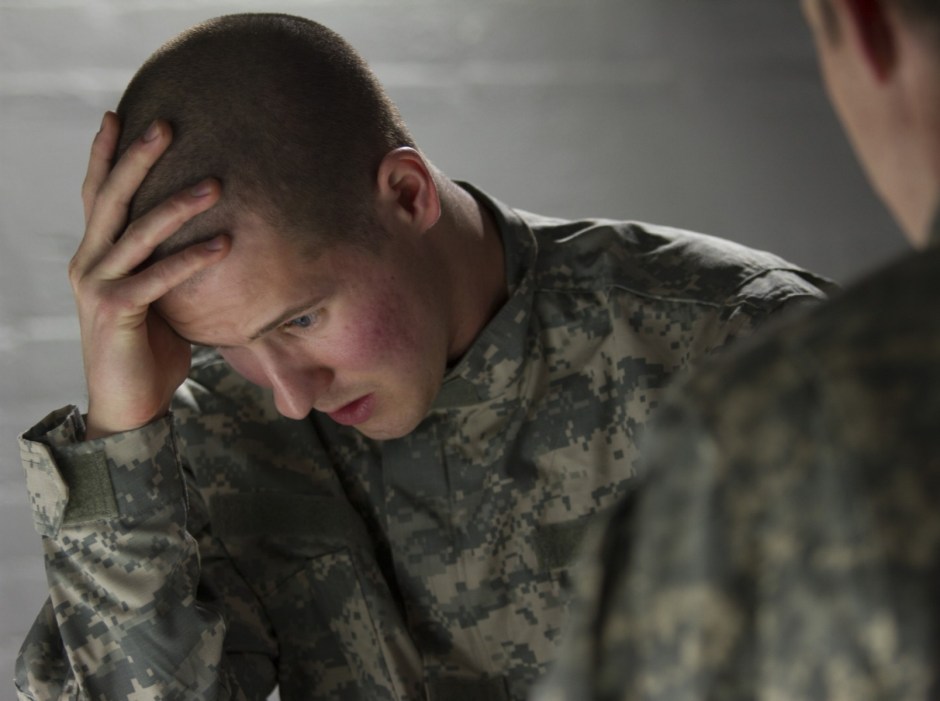
The People’s Liberation Army (PLA, China) Navy is increasingly conducting military operations other than war overseas. Factors such as confrontations with pirates, special environments and long sailing times have resulted in mental health problems. However, the navy’s actual utilisation of mental health services is low.

This study examined members’ rate of willingness to seek help and the factors that act as barriers to willingness to seek mental health services in the PLA Navy.

Methods

This cross-sectional study was conducted at the Zhoushan Base, operated by the East Sea Fleet, between March 2019 and April 2019.

The researchers distributed a 12-item questionnaire to examine participants’ attitudes and perceived barriers to mental healthcare. They recruited 676 navy personnel. Participants’ willingness to seek help if they had mental health problems was also assessed.

Results

The response rate was 99%. A total of 88.44% of the sample reported being willing to seek help. Univariate analysis suggested that those not willing to seek help were more likely to agree with the items, ‘Mental healthcare does not work’ and ‘My unit leadership might treat me differently’ and all organisational barriers, and they were more likely to have concerns about ’embarrassment’ and ‘being weak’ than those willing to seek help.

After controlling for demographic characteristics, binary logistic regression analyses confirmed that a lack of knowledge regarding the location of mental health clinics and being perceived as weak were the main factors preventing participants’ willingness from seeking help.

Conclusions

Extensive efforts to decrease organisational barriers and stigma towards mental healthcare should be a priority for researchers and policymakers to improve the usage of mental health services.

Psychoeducation aimed at de-stigmatising mental health problems should be delivered and the accessibility and availability of mental health services should be increased.

Reference

Gu, R-P., Liu, X.R> & Ye, X.F. (2020) Attitudes and perceived barriers to mental healthcare in the People’s Liberation Army Navy: study from a navy base. BMJ Military Health. doi: 10.1136/bmjmilitary-2019-001396. Online ahead of print.

Linking New Interests & Activities with Anxiety & Depression in Retirement for Navy Veterans

Research Paper Title

The impact of socio-demographic features on anxiety and depression amongst navy veterans after retirement: a cross-sectional study.

Background

Retirement from work may trigger various changes in everyday life that affect mental health.

The current cross-sectional study, conducted with 231 veterans, examines the relationship between socio-demographic features and both anxiety and depression in navy veterans after retirement.

Methods

Spielberg’s State-Trait Anxiety Inventory (STAI) was used for anxiety assessment, and the Beck Depression Inventory (BDI) was used for depression assessment.

The analysis was performed with the Statistical Package for Social Sciences (SPSS), version 20.0.

Results

It was found that the mean score of state anxiety was 41 and trait anxiety, 38.

Severe depression was found in 6.5% of the veterans, moderate in 8.3% and mild in 21.7%.

The presence of a serious health problems was an independent predictor of both anxiety and depression’s more serious symptoms.

Conclusions

Inversely, the stability in terms of retirement choice was negatively related to depression, while the development of new interests and activities after retirement was negatively related to both anxiety and depression.

Further, life satisfaction after retirement was a predictor of lower current anxiety levels among veterans.

Reference

Georgantas, D., Tsounis, A., Vidakis, I., Malliarou, M. & Sarafis, P. (2020) The impact of socio-demographic features on anxiety and depression amongst navy veterans after retirement: a cross-sectional study. BMC Rsearch Notes. 13(1), pp.122. doi: 10.1186/s13104-020-04966-x.

Developing a Behavioural Health Readiness & Suicide Risk Reduction Review for Military Personnel

Research Paper Title

Development of the US Army’s Suicide Prevention Leadership Tool: The Behavioural Health Readiness and Suicide Risk Reduction Review (R4).

Background

Although numerous efforts have aimed to reduce suicides in the US Army, completion rates have remained elevated.

Army leaders play an important role in supporting soldiers at risk of suicide, but existing suicide-prevention tools tailored to leaders are limited and not empirically validated.

The purpose of this article is to describe the process used to develop the Behavioral Health Readiness and Suicide Risk Reduction Review (R4) tools for Army leaders that are currently undergoing empirical validation with two US Army divisions.

Methods

Consistent with a Secretary of the Army directive, approximately 76 interviews and focus groups were conducted with Army leaders and subject matter experts (SMEs) to obtain feedback regarding existing practices for suicide risk management, leader tools, and institutional considerations.

In addition, reviews of the empirical literature regarding predictors of suicide and best practices for the development of practice guidelines were conducted. Qualitative feedback, empirical predictors of suicide, and design considerations were integrated to develop the R4 tools.

A second series of 11 interviews and focus groups with Army leaders and SMEs was also conducted to validate the design and obtain feedback regarding the R4 tools.

Results

Leaders described preferences for:

  • Tool processes (e.g. incorporating engaged leadership, including multiple risk identification methods);
  • Formatting (e.g. one page);
  • Organisation (e.g. low-intermediate-high risk scoring system);
  • Content (e.g. excluding other considerations related to vehicle safety, including readiness implications); and
  • Implementation (e.g. accounting for leadership judgement, tailoring process to specific leadership echelons, consideration of institutional barriers).

Evidence-based predictors of suicide risk and practice guideline considerations (e.g. design) were integrated with leadership feedback to develop the R4 tools that were tailored to specific leadership echelons.

Leaders provided positive feedback regarding the R4 tools and described the importance of accounting for potential institutional barriers to implementation. This feedback was addressed by including recommendations regarding the implementation of standardized support meetings between different echelons of leadership.

Conclusions

The R4 development process entailed the simultaneous integration of leadership feedback with evidence-based predictors of suicide risk and design considerations.

Thus, the development of these tools builds upon previous Army leadership tools by specifically tailoring elements of those tools to accommodate leader preferences, accounting for potential implementation barriers (e.g. institutional factors), and empirically evaluating the implementation of those tools.

Future studies should consider utilising a similar process to develop empirically based resources that are more likely to be incorporated into the routine practice of leaders supporting soldiers at risk of suicide, very often located at the company level and below.

Reference

Curley, J.M., Penix, E.A., Srinivasan, J., Sarmiento, D.S., McFarling, L.H., Newman, J.B. & Wheeler, L.A. (2020) Development of the U.S. Army’s Suicide Prevention Leadership Tool: The Behavioral Health Readiness and Suicide Risk Reduction Review (R4). Military Medicine. 185(5-6), pp.e668-e677. doi: 10.1093/milmed/usz380.

What are the Key Tenets for Developing a Unit-Based Army Resilience Programme?

Research Paper Title

The Process of Developing a Unit-Based Army Resilience Programme.

Background

The researchers review military doctrine, military public health data, medical literature, and educational literature with the intent of condensing key precepts into a succinct, pragmatic description of the essential steps for leaders looking to build a resilience programme to provide secondary prevention services.

Results

Although there continues to be a shortage of high-level evidence in support of specific preventive programmes, there are numerous large-scale reviews of prevention and health promotion efforts.

When combined with population-specific analyses, several essential concepts emerge as most relevant for smaller-scale prevention programmes.

Conclusions

The key tenets that programme leaders should embrace to optimise programme effectiveness include:

  • Utilisation of an instructional design approach;
  • Focus on evidence-based practices, and
  • Teaching resilience skills in order to decrease risk factors and increase protective factors for improved mental health outcomes.

Reference

Dragonetti, J.D., Gifford, T.W. & Yang, M.S. (2020) The Process of Developing a Unit-Based Army Resilience Program. Current Psychiatry Reports. 22(9), pp.48. doi: 10.1007/s11920-020-01169-w.

Suicide Screening and Prevention

Reseach Paper Title

Suicide Screening and Prevention.

Background

Suicide is a major public health problem not only in the United States (US) but in many western nations as well.

In the US, it is the 10th leading cause of death, accounting for nearly 44,000 deaths each year. Suicide is also the seventh leading cause of years of potential loss of life, surpassing liver disease, diabetes, and HIV.

Each year, nearly half a million individuals present to the emergency departments in the US following attempted suicide.

Data indicate that nearly 1 out of every 7 young adults admits to having some type of suicidal ideation at some point in their lives and at least 5% have made a suicide attempt.

Suicide has repercussions way beyond the affected individual. It costs the US healthcare system over $70 billion, and untold billions of dollars are lost by the families who are affected, in terms of loss of earning.

Suicides are at an all-time high and affect both genders. Men are nearly 3.5 times more likely than women to commit suicide, and on average 123 people kill themselves every day.

The World Health Organisation (WHO) has predicted that in the next 2 years, depression will be the leading cause of disability globally. Depression is not only a North American phenomenon but is now being diagnosed in almost every nation. The annual prevalence of major depressive disorders in North America is 4.5%, but this is a gross underestimate because many individuals do not seek medical help. Depression is a serious medical disorder and associated with a high risk of suicide. Data reveals that more than 90% of individuals with a major depressive disorder do see a healthcare provider within the first 12 months of the episode and at least 45% of suicide victims have had some contact with a primary health care provider within the 4 weeks of suicide.

This indicates that if their healthcare providers are more vigilant and alert, suicide could be prevented in these individuals. These grim statistics have led to a National Strategy for Suicide Prevention in the US.

Considering that many individuals who commit suicide have a mental health disorder and have visited their primary caregiver, the focus now is on health care providers to become aware of the factors that increase the risk of suicide and to refer these individuals to mental health professionals for some type of intervention.

The current United States Preventive Services Task Force (USPSTF) recommendations are that primary caregivers should screen adolescents and adults for depression only when there are appropriate systems in place to ensure adequate diagnosis, treatment, and follow-up.

Aetiology

Many factors have been identified in individuals who commit suicides or have attempted suicide. These factors include the following:

  • Advanced age.
  • Availability of a firearm.
  • Chronic illness.
  • A family history of suicides.
  • Financial difficulties.
  • Negative life experiences.
  • Loss of job.
  • Marital status divorced.
  • Medications.
  • Mental illnesses such as depression, anxiety, post-traumatic stress disorder (PTSD).
  • Pain that is continuous.
  • A physical illness that has led to disability.
  • Race: white.
  • Gender: Male.
  • Social media.
  • Stress.
  • A sense of no purpose in life.

Other Risk Factors for Suicide

Over the years, several other factors have been identified that increases the risk of suicide and they include:

  • Major childhood adverse events, for example, sexual abuse.
  • Discriminated for being gay, lesbian, transgender or bisexual.
  • Having access to lethal means.
  • A long history of being bullied.
  • Chronic sleep problems.

In Males and Older Individuals

  • Loss of job or unemployment.
  • Low income.
  • Neurosis.
  • Social isolation.
  • Spousal loss, bereavement.
  • Affective disease.
  • Functional impairment.
  • Physical illness.

Military Personnel

  • Traumatic brain injury.
  • PTSD.
  • Other mental health issues.

The most important thing to understand is that having just one risk factor has very limited predictive value. Millions of Americans have one of these factors at any one point in time, but very few attempt suicide and even fewer die as a result. One has to look at the entire clinical picture to increase the predictive values of these risk factors.

Function

Which type of mental health disorder is associated with an increased risk of suicide?

Accumulated data reveal that many types of mental health disorders have been associated with an increased risk of suicide and they include the following:

  • Major depression.
  • Schizophrenia.
  • Substance abuse.
  • Alcoholism.
  • Post-traumatic stress disorder.
  • Bipolar disorder.
  • Personality disorders.
  • Emotional stress.
  • Medications and Suicides.

You can read further @ https://www.ncbi.nlm.nih.gov/books/NBK531453/.

Reference

O’Rourke, M.C., Jamil, R.T. & Siddiqui, W. (2020) Suicide Screening and Prevention. Treasure Islan, Florida: StatPearls Publishing.

Public Media: What about Mental Health Nurses?

Research Paper Title

Swedish Mental Health Nurses’ Experiences of Portrayals of Mental Illness in Public Media.

Background

News reporting about mental illness lack perspectives of the mentally ill themselves and it is almost exclusively psychiatrists who are accessed when healthcare staff is consulted.

The perspective of mental health nurses might contribute to the public understanding of mental illness.

The purpose of this study was to describe mental health nurses’ experiences of how mental illness is portrayed in media.

Methods

Eight semi-structured interviews were conducted with qualified mental health nurses.

Results

A qualitative content analysis resulted in three categories:

  1. Negative portrayals of mental illness;
  2. Inconclusive images of mental illness; and
  3. Biased dissemination of different perspectives.

Conclusions

The conclusion of this study is that mental health nurses experience media portrayals of mental illness as negative and misleading with too much emphasis on the medical perspective while a holistic mental health nursing perspective is heavily obscured.

Mental health nurses need to take a more prominent role in public reporting on mental health to resolve the current lack of relevant facts regarding mental illness.

Further research is needed regarding portrayals of mental illness in social media and how the current lack of perspectives affects public perceptions of mental illness.

In addition, further studies regarding the viewpoints of journalists reporting on mental illness are required.

Reference

Lilieqvist, M., Kling, S., Hallen, M. & Jormfeldt, H. (2020) Swedish Mental Health Nurses’ Experiences of Portrayals of Mental Illness in Public Media. Issues in Mental Health Nursing. 41(4), pp.348-354. doi: 10.1080/01612840.2019.1658244. Epub 2019 Nov 25.