Symptoms of Anxiety Disorders

Anxiety can arise suddenly, as in panic, or gradually over minutes, hours, or days.

Anxiety can last for any length of time, from a few seconds to years.

It ranges in intensity from barely noticeable qualms to a full-blown panic attack, which may cause shortness of breath, dizziness, an increased heart rate, and trembling (tremor).

Anxiety disorders can be so distressing and interfere so much with an individual’s life that they can lead to depression.

Individuals may develop a substance use disorder.

Individuals who have an anxiety disorder (except for certain very specific phobias, such as fear of spiders) are at least twice as likely to have depression as those without an anxiety disorder.

Sometimes individuals with depression develop an anxiety disorder.

Causes of Anxiety Disorders (Physical Disorder or Drug)

Anxiety can also be caused by a general medical disorder or the use or discontinuation (withdrawal) of a drug.

General medical disorders that can cause anxiety include the following:

  • Heart disorders, such as:
    • Heart failure; and
    • Abnormal heart rhythms (arrhythmias)
  • Hormonal (endocrine) disorders, such as:
    • An overactive adrenal gland (hyperadrenocorticism); or
    • Thyroid gland (hyperthyroidism); or
    • A hormone-secreting tumour called a pheochromocytoma.
  • Lung (respiratory) disorders, such as:
    • Asthma; and
    • Chronic obstructive pulmonary disease (COPD).

Even fever can cause anxiety.

Anxiety may occur in dying people as a result of fear of death, pain, and difficulty breathing.

Drugs that can trigger anxiety include the following:

  • Alcohol;
  • Stimulants (such as amphetamines);
  • Caffeine;
  • Cocaine;
  • Many prescription drugs, such as corticosteroids; and
  • Some over-the-counter weight-loss products, such as those containing:
    • The herbal product guarana;
    • Caffeine; or
    • Both.

Withdrawal from alcohol or sedatives, such as benzodiazepines (used to treat anxiety disorders), can cause anxiety and other symptoms, such as insomnia and restlessness.

Causes of Anxiety Disorders

The causes of anxiety disorders are not fully known, but the following may be involved:

  • Genetic factors (including a family history of an anxiety disorder);
  • Environment (such as experiencing a traumatic event or stress);
  • Psychologic makeup; and/or
  • A physical condition.

An anxiety disorder can be triggered by environmental stresses, such as the breakup of a significant relationship or exposure to a life-threatening disaster.

When an individual’s response to stresses is inappropriate or an individual is overwhelmed by events, an anxiety disorder can arise. For example, some individuals find speaking before a group exhilarating. But others dread it, becoming anxious with symptoms such as sweating, fear, a rapid heart rate, and tremor. Such individuals may avoid speaking even in a small group.

Anxiety tends to run in families. Doctors think some of this tendency may be inherited, but some is probably learned by living with anxious individuals.

Did You Know?

  • Anxiety disorders are the most common type of mental health disorder.
  • Individuals with an anxiety disorder are more likely than other individuals to have depression.

How Does Anxiety Affect Performance?

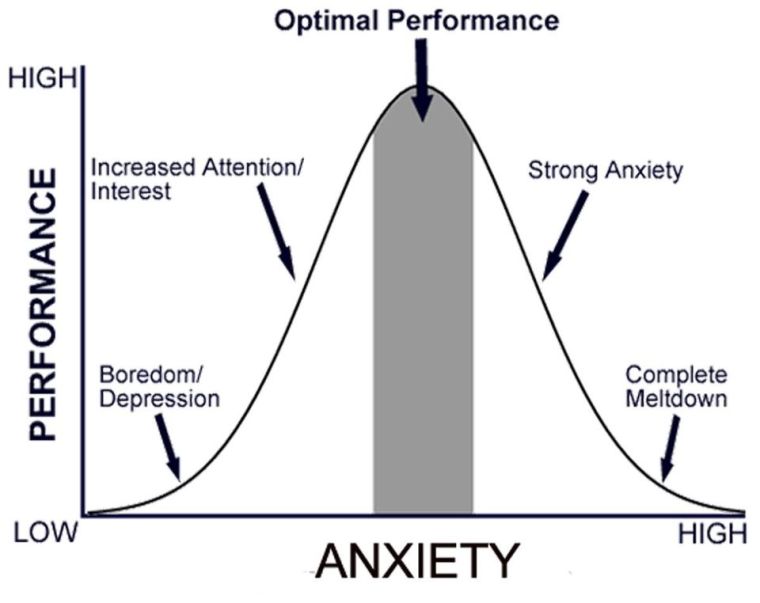
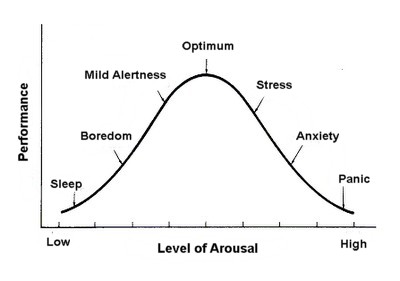
The effects of anxiety on performance can be shown on a curve.

As the level of anxiety increases, performance efficiency increases proportionately, but only up to a point.

As anxiety increases further, performance efficiency decreases.

Before the peak of the curve, anxiety is considered adaptive because it helps people prepare for a crisis and improve their functioning.

Beyond the peak of the curve, anxiety is considered maladaptive because it produces distress and impairs functioning.

The Yerkes-Dodson Law

The Yerkes–Dodson law is an empirical relationship between arousal and performance, originally developed by psychologists Robert M. Yerkes and John Dillingham Dodson in 1908.

The law dictates that performance increases with physiological or mental arousal, but only up to a point.

Levels of Arousal (or Anxiety)

Research suggests that different tasks require different levels of arousal for optimal performance. For example:

  • Difficult or intellectually demanding tasks may require a lower level of arousal (to facilitate concentration); whereas
  • Tasks demanding stamina or persistence may be performed better with higher levels of arousal (to increase motivation).

Because of task differences, the shape of the curve can be highly variable (Diamond et al., 2007).

  • For simple or well-learned tasks, the relationship is monotonic, and performance improves as arousal increases.
  • For complex, unfamiliar, or difficult tasks, the relationship between arousal and performance reverses after a point, and performance thereafter declines as arousal increases.

What is the Relationship to Glucocorticoids?

A 2007 review of the effects of stress hormones (glucocorticoids, GC) and human cognition revealed that memory performance versus circulating levels of glucocorticoids does manifest an upside down U shaped curve and the authors noted the resemblance to the Yerkes-Dodson curve.

For example, long-term potentiation (LTP) (the process of forming long-term memories) is optimal when glucocorticoid levels are mildly elevated whereas significant decreases of LTP are observed after adrenalectomy (low GC state) or after exogenous glucocorticoid administration (high GC state).

This review also revealed that in order for a situation to induce a stress response, it has to be interpreted as one or more of the following:

  • Novel;
  • Unpredictable;
  • Not controllable by the individual; and/or
  • A social evaluative threat (negative social evaluation possibly leading to social rejection).

It has also been shown that elevated levels of glucocorticoids enhance memory for emotionally arousing events but lead more often than not to poor memory for material unrelated to the source of stress/emotional arousal (Lupien et al, 2007).

References

Diamond, D.M., Campbell, A.M., Park, C.P., Halonen, J. & Zoladz, P.R. (2007). The Temporal Dynamics Model of Emotional Memory Processing: A Synthesis on the Neurobiological Basis of Stress-Induced Amnesia, Flashbulb and Traumatic Memories, and the Yerkes–Dodson Law. Neural Plasticity. 2007: 60803. http://dx.doi.org/10.1155/2007/60803.

Lupien, S.J., Maheu, F., Tu, M., Fioco, A. & Schramek, T.E. (2007) The effects of stress and stress hormones on human cognition: Implications for the field of brain and cognition. Brain and Cognition. 65(3), pp.209-237. https://doi.org/10.1016/j.bandc.2007.02.007.

Yerkes, R.M. & Dodson, J.D. (1908) The Relation of Strength of Stimulus to Rapidity of Habit-Formation. Journal of Comparative Neurology and Psychology. 18, pp.459-482.


Mental Health & Social Support

Everyone requires a social network to satisfy the human need to be cared for, accepted, and emotionally supported, particularly in times of stress.

Research has shown that strong social support may significantly improve recovery from both physical and mental illnesses.

Changes in society have diminished the traditional support once offered by neighbours and families.

As an alternative, self-help groups and mutual aid groups have sprung up throughout the country.

Some self-help groups, such as Alcoholics Anonymous and Narcotics Anonymous, focus on addictive behaviour.

Others act as advocates for certain segments of the population, such as the disabled and older people, or provide support for family members of people who have a severe mental illness.

Identifying Mental Illness

Mental illness cannot always be clearly differentiated from normal behaviour.

For example, distinguishing normal bereavement from depression may be difficult in people who have had a significant loss, such as the death of a spouse or child, because both involve sadness and a depressed mood.

In the same manner, deciding whether a diagnosis of anxiety disorder applies to people who are worried and stressed about work can be challenging because most people experience these feelings at some time.

The line between having certain personality traits and having a personality disorder can be blurry.

Thus, mental illness and mental health are best thought of as being on a continuum.

Any dividing line is usually based on the following:

  • How severe the symptoms are;
  • How long symptoms last; and
  • How much symptoms affect the ability to function in daily life.

Can We Identify Genetic Overlap & Novel Risk Loci for Attention-Deficit/Hyperactivity Disorder & Bipolar Disorder?

Research Paper Title

Identification of genetic overlap and novel risk loci for attention-deficit/hyperactivity disorder and bipolar disorder.

Background

Differential diagnosis between childhood onset attention-deficit/hyperactivity disorder (ADHD) and bipolar disorder (BD) remains a challenge, mainly due to overlapping symptoms and high rates of comorbidity.

Despite this, genetic correlation reported for these disorders is low and non-significant.

Here the researchers aimed to better characterise the genetic architecture of these disorders utilising recent large genome-wide association studies (GWAS).

Methods

They analysed independent GWAS summary statistics for ADHD (19,099 cases and 34,194 controls) and BD (20,352 cases and 31,358 controls) applying the conditional/conjunctional false discovery rate (condFDR/conjFDR) statistical framework that increases the power to detect novel phenotype-specific and shared loci by leveraging the combined power of two GWAS.

Results

They observed cross-trait polygenic enrichment for ADHD conditioned on associations with BD, and vice versa.

Leveraging this enrichment, they identified 19 novel ADHD risk loci and 40 novel BD risk loci at condFDR <0.05.

Further, they identified five loci jointly associated with ADHD and BD (conjFDR < 0.05). Interestingly, these five loci show concordant directions of effect for ADHD and BD.

Conclusions

These results highlight a shared underlying genetic risk for ADHD and BD which may help to explain the high comorbidity rates and difficulties in differentiating between ADHD and BD in the clinic.

Improving our understanding of the underlying genetic architecture of these disorders may aid in the development of novel stratification tools to help reduce these diagnostic difficulties.

Reference

O’Connell, K.S., Shadrin, A., Bahrami, S., Smeland, O.B., Bettella, F., Frei, O., Krull, F., Askeland, R.B., Walters, G.B., Davíðsdóttir, K., Haraldsdóttir, G.S., Guðmundsson, Ó.Ó., Stefánsson, H., Fan, C.C., Steen, N.E., Reichborn-Kjennerud, T., Dale, A.M., Stefánsson, K., Djurovic, S. & Andreassen, O.A. (2019) Identification of genetic overlap and novel risk loci for attention-deficit/hyperactivity disorder and bipolar disorder. Molecular Psychiatry. doi: 10.1038/s41380-019-0613-z. [Epub ahead of print].

Primary Mental Health Integration Requires Considerable Organisational Investments

Research Paper Title

Time and Organizational Cost for Facilitating Implementation of Primary Care Mental Health Integration.

Background

Integrating mental health services into primary care settings is complex and challenging. Although facilitation strategies have successfully supported implementation of primary care mental health integration and other complex innovations, we know little about the time required or its cost.

The objective of this study was to examine the time and organisational cost of facilitating implementation of primary care mental health integration.

Methods

One expert external facilitator and two internal regional facilitators who helped healthcare system stakeholders, e.g., leaders, managers, clinicians, and non-clinical staff, implement primary care mental health integration at eight clinics.

Implementation facilitation tailored to the needs and resources of the setting and its stakeholders.

The researchers documented facilitators’ and stakeholders’ time and types of activities using a structured spreadsheet collected from facilitators on a weekly basis. We obtained travel costs and salary information. We conducted descriptive analysis of time data and estimated organisational cost.

Results

The external facilitator devoted 263 h (0.09 FTE), including travel, across all 8 clinics over 28 months. Internal facilitator time varied across networks (1792 h versus 1169 h), as well as clinics. Stakeholder participation time was similar across networks (1280.6 versus 1363.4 person hours) but the number of stakeholders varied (133 versus 199 stakeholders).

The organisational cost of providing implementation facilitation also varied across networks ($263,490 versus $258,127). Stakeholder participation accounted for 35% of the cost of facilitation activities in one network and 47% of the cost in the other.

Conclusions

Although facilitation can improve implementation of primary care mental health integration, it requires substantial organisational investments that may vary by site and implementation effort.

Furthermore, the cost of using an external expert to transfer facilitation skills and build capacity for implementation efforts appears to be minimal.

Reference

Ritchie, M.J., Kirchner, J.E., Townsend, J.C. Pitcock. J.A., Dollar, K.M. & Liu, C.F. (2019) Time and Organizational Cost for Facilitating Implementation of Primary Care Mental Health Integration. Journal of General Internal Medicine. doi: 10.1007/s11606-019-05537-y. [Epub ahead of print].

What is the Relationship of Post-traumatic Stress Disorder to End-of-life Care Received by Dying Veterans?

Research Paper Title

The Relationship of Post-traumatic Stress Disorder to End-of-life Care Received by Dying Veterans: a Secondary Data Analysis.

Background

Post-traumatic stress disorder (PTSD) can be exacerbated by subsequent trauma, but it is unclear if symptoms are worsened by impending death

PTSD symptoms, including hyperarousal, negative mood and thoughts, and traumatic re-experiencing, can impact end-of-life symptoms, including pain, mood, and poor sleep.

Thus, increased symptoms may lead to increased end-of-life healthcare utilisation.

Therefore, the purpose of this study was to determine if veterans with PTSD have increased end-of-life healthcare utilisation or medication use and to examine predictors of medication administration.

Methods

Secondary analysis of a stepped-wedge design implementation trial to improve end-of-life care for Veterans Affairs (VA) inpatients. Outcome variables were collected via direct chart review. Analyses included hierarchical, generalized estimating equation models, clustered by medical center.

Veterans, inpatient at one of six VA facilities, dying between 2005 and 2011.

Emergency room (ER) visits, hospitalisations, and medication administration in the last 7 days of life.

Results

Of 5341 veterans, 468 (8.76%) had PTSD.

Of those, 21.4% (100/468) had major depression and 36.5% (171/468) had anxiety. Veterans with PTSD were younger (mean age 65.4 PTSD, 70.5 no PTSD, p < 0.0001) and had more VA hospitalisations and ER visits in the last 12 months of life (admissions: PTSD 2.8, no PTSD 2.4, p < 0.0001; ER visits: 3.2 vs 2.5, p < 0.0001).

PTSD was associated with antipsychotic administration (OR 1.52, 95% CI 1.06-2.18). Major depression (333/5341, 6.2%) was associated with opioid administration (OR 1.348, 95% CI 1.129-1.609) and benzodiazepines (OR 1.489, 95% CI 1.141-1.943).

Anxiety disorders (778/5341, 14.6%) were only associated with benzodiazepines (OR 1.598, 95% CI 1.194-2.138).

Conclusions

PTSD’s association with increased end-of-life healthcare utilisation and increased antipsychotic administration in the final days of life suggests increased symptom burden and potential for terminal delirium in individuals with PTSD.

Understanding the burden of psychiatric illness and potential risks for delirium may facilitate the end-of-life care for these patients.

Reference

Bickel, K.E., Kennedy, R., Levy, C., Burgio, K.L. & Bailey, F.A. (2019) The Relationship of Post-traumatic Stress Disorder to End-of-life Care Received by Dying Veterans: a Secondary Data Analysis. Journal of General Internal Medicine. doi: 10.1007/s11606-019-05538-x. [Epub ahead of print].

Strategies used by Families to Cope with Chronic Mental Illnesses

Research Paper Title

Strategies used by families to cope with chronic mental illnesses: Psychometric properties of the family crisis oriented personal evaluation scale.

Background

This study was aimed at investigating the psychometric properties of the Family Crisis Oriented Personal Evaluation Scale (F-COPES) for Turkish society, which assesses the coping skills of caregivers of individuals with chronic mental illnesses.

Methods

The study was conducted with 153 family caregivers of patients with a chronic mental illness admitted to the inpatient and outpatient units of two university hospitals and İzmir Schizophrenia Solidarity Association.

For the language validity, the translation-back translation method was performed, for the content validity, expert opinions were obtained, for the construct validity, exploratory and confirmatory factor analysis was performed.

For the reliability analysis, Cronbach α reliability coefficient was calculated and the test-retest reliability analysis was performed.

Results

The content validity index of the scale was 0.96.

The Cronbach’s α reliability coefficient for the overall scale was .80. Factor loadings of the subscales ranged between 0.56 and 0.69 for the Acquiring Social Support subscale, between 0.43 and 0.74 for the Reframing subscale, between 0.53 and 0.74 for the Seeking Spiritual Support subscale.

The model fit indexes were as follows: χ2  = 176.369, df = 116, χ2 /df = 1.52, RMSEA = 0.059, CFI = 0.90, IFI = 0.91, GFI = 0.88.

Conclusions

The results of the present study show that the levels of psychometric properties of F-COPES in Turkish society are acceptable.

It is thought that it would be useful to use the F-COPES in the assessment of coping behaviours of individuals who give care to patients with a chronic mental illness and that it can be used as measurement tool in studies to be conducted with caregivers of patients with a chronic mental illness to assess their coping skills.

Reference

Sari, A. & Çetinkaya Duman, Z. (2019) Strategies used by families to cope with chronic mental illnesses: Psychometric properties of the family crisis oriented personal evaluation scale. Perspectives in Psychiatric Care. doi: 10.1111/ppc.12457. [Epub ahead of print].