How to Listen

To listen and communicate non-judgmentally is one of the five basic steps in mental health first aid. It is a term you will find used throughout the website.

This website cannot train you to be a counsellor or a therapist, but you can develop some basic listening skills that will be useful in many situations.

Are You Really Listening?

Most of the time we do not really listen to what others are saying. This is not because we are being rude or uncaring. Usually when we are in conversation with someone else, we find ourselves going off on other trains of thought because something that has been said has reminded us of other things. Other times we are thinking about our reply and only giving the speaker part of our attention.

When we are listening to the other person, part of our mind is thinking about our own reactions to what they are saying. This is a normal response, and in everyday situations it usually works well.

In a situation where a person is distressed or having a mental health crisis, it is very important to pay more attention and put non-judgemental listening skills into practice.

Being An Effective Listener

While you are paying attention to the feelings of the other person, it is important to be aware of your own feelings and thoughts.

Attending to a person who may be distressed may bring up a number of responses, such as fear, irritation, sadness, or a sense of being overwhelmed.

These are normal responses to a difficult situation. However, it is important that the listener continues to be open to listening respectfully, and attempts to avoid reacting to what is being shared.

That means focusing on the distressed person, and understanding how it feels to be in their place.

This may be difficult, depending on the relationship between the listener and the distressed person. Sometimes it is especially difficult if the person is a close friend or relative. If you feel that your relationship is preventing you from being an effective listener, it may be best to get the help of someone else who is not so close to the person. However, in a crisis you may not have this option.

Remember that during a crisis, you are offering the distressed person a place of safety based on respect. acceptance, and understanding – and you may be saving their life.

After the conversation, you may feel unsettled, shocked, confused, or angry. You may wish to share this with someone, to acknowledge your own experience. In doing so, you should maintain the person’s privacy by withholding their name or any details that could identify them. This is not the same as accessing appropriate assistance for the person if they need it (e.g. if they are suicidal) when you will need to reveal their identity.

Always remember that you are human, and that feeling a mixture of emotions is a normal human response.

When Does a Mental Health Condition Become a Disability?

1.0 Introduction

A mental health condition is considered a disability if it has a long-term effect on your normal day to-day activity, and this is defined under the Equality Act 2010.

The condition is ‘long term’ if it lasts, or is likely to last, 12 months.

‘Normal day-to-day activity’ is defined as something the individual does regularly in a normal day. This includes things like using a computer, working set times or interacting with people.

Currently, the law considers the effects of an impairment on the individual. For example, someone with a mild form of depression with minor effects may not be covered. However, someone with severe depression with significant effects on their daily life is likely to be considered as having a disability.

2.0 Where Does the Equality Act 2010 Apply?

The Equality Act 2010 applies in England, Wales, and Scotland.

It does not apply in Northern Ireland, where individuals are protected by the Disability Discrimination Act 1995.

3.0 Definition of Disability under the Equality Act 2010

An individual is classed as disabled under the Equality Act 2010 if they have a physical or mental impairment that has a ‘substantial’ and ‘long-term’ negative effect on their ability to do normal daily activities.

In order to be protected by the Act, a person must have an impairment that meets the Act’s definition of disability, or be able to establish that any less favourable treatment or harassment is because of another person’s disability or because of a perceived disability.

4.0 Factors to Consider in Determining Disability

Factors to consider include:

  • The individual must have an impairment that is either physical or mental;
  • The impairment must have adverse effects which are substantial;
  • The substantial adverse effects must be long-term; and
  • The long-term substantial adverse effects must be effects on normal day-to-day activities.

4.1 What Does Substantial and Long-term Mean?

  • ‘Substantial’ is more than minor or trivial, for example, it takes much longer than it usually would to complete a daily task like getting dressed.
  • ‘Long-term’ means 12 months or more, for example, a breathing condition that develops as a result of a lung infection.

4.2 What is an Impairment?

With regards to disability, an impairment refers to an individual’s ability to carry out normal day-to-day activities and, importantly, the effect that an impairment has on this ability.

A disability can arise from a wide range of impairments which can be:

  • Sensory impairments, such as those affecting sight or hearing.
  • Impairments with fluctuating or recurring effects such as rheumatoid arthritis, myalgic encephalitis (ME), chronic fatigue syndrome (CFS), fibromyalgia, depression and epilepsy.
  • Progressive, such as motor neurone disease, muscular dystrophy, and forms of dementia;
  • Auto-immune conditions such as systemic lupus erythematosis (SLE).
  • Organ specific, including respiratory conditions, such as asthma, and cardiovascular diseases, including thrombosis, stroke and heart disease.
  • Developmental, such as autistic spectrum disorders (ASD), dyslexia and dyspraxia;
  • Learning disabilities.
  • Mental health conditions:
    • With symptoms such as anxiety, low mood, panic attacks, phobias, or unshared perceptions;
    • Eating disorders;
    • Bipolar affective disorders;
    • Obsessive compulsive disorders (OCD);
    • Personality disorders;
    • Post-traumatic stress disorder (PTSD); and
    • Some self-harming behaviour.
  • Mental illnesses, such as depression and schizophrenia.
  • Produced by injury to the body, including to the brain.

What it is important to consider is the effect of an impairment, not its cause – provided that it is not an excluded condition. For example, addiction to, or dependency on, alcohol, nicotine, or any other substance (other than in consequence of the substance being medically prescribed) are specifically excluded from the Equality Act 2010 – although any accompanying impairments maybe protected.

5.0 What about Recurring or Fluctuating Conditions?

There are special rules about recurring or fluctuating conditions (ODI, 2011, p.29), for example “…mental health conditions such as schizophrenia, bipolar affective disorder, and certain types of depression, though this is not an exhaustive list.”

Some impairments with recurring or fluctuating effects may be less obvious in their impact on the individual concerned than is the case with other impairments where the effects are more constant.

6.0 What about Progressive Conditions?

A progressive condition is one that gets worse over time, and individuals with progressive conditions can be classed as disabled.

Examples of progressive conditions include various types of dementia.

Medical prognosis of the likely impact of the condition is the normal route to establishing protection under this provision. Although the effect need not be continuous and need not be substantial, the individual will still need to demonstrate that the impairment meets the long-term condition of the definition.

7.0 Employers & Disability

If an individual’s mental health condition means they are disabled they can get support at work from their employer. Two things to note:

  • The individual’s employer cannot discriminate against them because of their disability – they are protected by the Equality Act 2010; and
  • The employer must also keep the individual’s job open for them, and cannot put pressure on the individual to resign just because they have become disabled.

7.1 Reasonable Adjustments

The individual’s employer must make ‘reasonable adjustments’ for them so that they are not disadvantaged compared to non-disabled people, with examples including:

  • A phased return to work, for example working flexible hours or part-time;
  • Time off for medical treatment or counselling;
  • Giving another employee tasks the individual cannot easily do; and/or
  • Providing practical aids and technical equipment for the individual.

7.2 Time off from Work

If the individual is an employee and cannot work because of their disability, they may be able to get Statutory Sick Pay (SSP), although some employers have their own sick pay scheme.

If the individual still cannot work after 28 weeks, or they cannot get SSP, they can apply for Universal Credit (UC) or Employment and Support Allowance (ESA).

It is important to note that time off from work should not be recorded as an ‘absence from work’ if the individual is waiting for their employer to put reasonable adjustments in place.

7.3 Dismissals and Redundancy

The individual’s employer cannot dismiss them just because they have become disabled.

However, the individual can be dismissed if their disability means they cannot do their job even with reasonable adjustments.

An individual cannot be selected for redundancy just because they are disabled.

8.0 Disability Benefits

As well as having rights to protection from discrimination if the individual becomes disabled, they may also be entitled to certain benefits. The main disability and sickness benefits include:

  • Disability Living Allowance (DLA) or Personal Independence Payment (PIP);
  • Attendance Allowance; and/or
  • Employment and Support Allowance (ESA).

DLA is paid on top of income support, ESA, and other benefits. DLA does not reduce an individual’s other benefits and, in some cases getting DLA, can actually increase the amount the individual receives in other benefits. An individual can receive DLA if they are in or out of work.

What the individual is entitled to will depend on their circumstances. The individual might also be able to get:

  • Certain types of equipment or have adaptations made to their home without paying VAT;
  • Council Tax discounts;
  • A TV licence discount; and/or
  • Free vehicle tax.

9.0 Useful Links

10.0 References

ODI (Office for Disability Issues). (2011) Equality Act 2010: Guidance. Available from World Wide Web: https://assets.publishing.service.gov.uk/government/uploads/system/uploads/attachment_data/file/570382/Equality_Act_2010-disability_definition.pdf. [Accessed: 25 November, 2019].

Recovery-focused Services

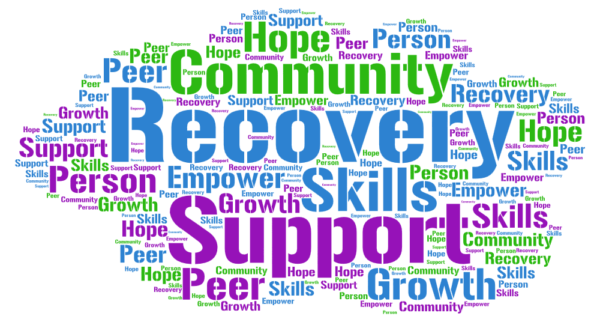
Learning directly from people’s experience of recovery can offer new and different approaches to the way mental health services are offered.

This is sometimes referred to as developing ‘recovery-focused’ or ‘recovery-orientated’ services.

There are many initiatives in the United Kingdom (UK), and around the world, which are designed to ensure that services are developed incorporating the principles of recovery.

UK initiatives include work to introduce recovery indicators and to promote self-management tools, such as Wellness Recovery Action Planning and the introduction of new training for the mental health workforce.

The Scottish Recovery Network

The Scottish Recovery Network (SRN) has been working since 2004 to:

  • Raise awareness of recovery;
  • Develop a better understanding of the factors which help and hinder recovery; and
  • Build capacity for recovery by sharing information and supporting efforts to promote recovery.

A major part of the initial work of the SRN involved a large-scale narrative research project. As part of this project, 64 people from Scotland, who described themselves as in recovery, or having recovered from a long-term mental health problem, were interviewed.

Key findings from that research include:

  • The importance of having a positive identity focused on wellness, strengths, and recovery.
  • The need to be involved in activities which provide meaning and purpose, and to pace and control that involvement. Such activities included volunteering, paid employment, and creativity.
  • The importance of relationships based on hope, belief, and trust.
  • The need for easy access to services and treatments that are focused on recovery.

Many people described the importance of believing in the possibility of recovery. They described how taking a more optimistic approach to their illness created hope, a feeling of self-worth, and confidence. It helped them create a new identity as a person who was in recovery.

It is rare for anyone to return to the way they were before a major life event. Our experiences change us, and it is often true that people who have experienced serious and distressing life events say that in the longer term they have grown and developed through them. This is part of the recovery message. People who have had a diagnosis of serious mental health problems often report that embarking on the journey of recovery and finding ways to live fulfilling lives has enabled them to grow. Another similarly strong theme was focused around being in control and making choices.

Learning about recovery helps a mental health first-aider recognise the importance of relating to a person who is in distress or unwell as more than just an immediate crisis to be dealt with. We can help the process of recovery by speaking to the person with respect rather than talking down to them, and also to speak with hope and reassurance.

Learning about recovery can also help protect us from becoming unwell. Understanding what helps us recover is a good basis for helping our own and others’ mental health.

Recovery from Mental Health Problems

For some people mental health problems may be a ‘one off’, causing distress for a relatively short period in a person’s life. For others, mental health problems may be longer term, possibly returning at different times or causing long-term challenges. However, one thing is clear, people can and do recover from mental health problems – no matter how serious or long term they are.

Recovery is a deeply personal and individual process. For some it means getting back to ‘normal’ or back to the way things were before a period of illness. Others consider it to mean not experiencing symptoms of the illness any more. People who have had long-term problems often describe a process of growth and development, in the presence or absence of symptoms. Many people describe it as a journey in which they become active in managing and controlling their own well-being and recovery.

Recovery is a key message in Mental Health First Aid. The presence of hope and the expectation of recovery is one of the most important forms of support we can give a person with a mental health problem.

The things that help everyone recover from physical illness or painful life events are the same things that help people recover from mental illness.

From a Mental Health Perspective, What is Recovery?

Recovery is being able to live a meaningful and satisfying life, as defined by each person, in the presence or absence of symptoms.

It is about having control over your own life.

Each individual’s recovery, like their experience of mental health problems or illness, is a unique and deeply personal process.

A Technique to Help Military Veterans with Nightmares

Introduction

Justin Havens, a former British Army officer and an Eye Movement Desensitisation and Reprocessing (EMDR) trained psychotherapist has been testing a novel approach to helping veterans resolve traumatic nightmares.

Background

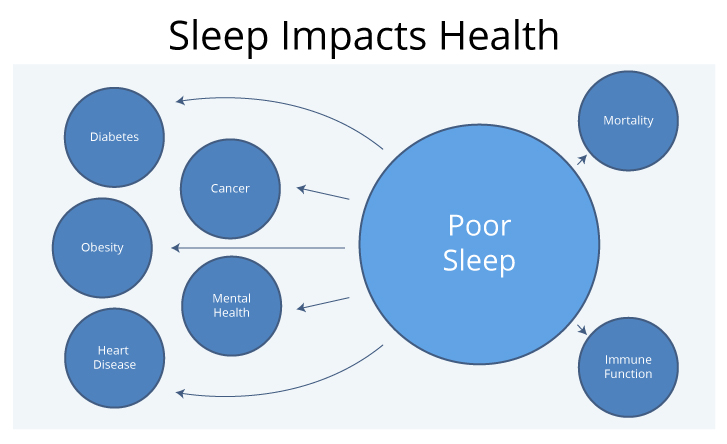
Insomnia, anxiety, and the sheer misery associated with night terrors is a huge problem for many of the people with post-traumatic stress disorder (PTSD).

Consequently, Justin has been testing, since approximately 2014, an approach with veteran groups across the UK as part of a PhD at the Veterans and Families Institute of Anglia Ruskin University.

Early results, in 2016, demonstrated that it had been successful for 16 out of 24 veterans who had completed the programme. They had not only seen dramatic improvements to sleep, but also seen an average 50% reduction in PTSD symptoms, according to Justin’s findings.

What is the Technique?

  • The technique works by helping people imagine a different outcome to their bad dreams.
  • While awake, the individual asks themselves ‘what would I like to happen next in my nightmare that feels good and puts me in control?’
  • For example, a burns victim might have nightmares about being burned.
  • They might imagine a new ending to their dream: standing under a waterfall laughing as all the scabs get washed away.

The idea is that the individual does not wake up, the dream continues and they are able to experience the rapid eye movement (REM) sleep vital for feeling fully rested.

Although not a ‘cure’ for PTSD, the approach – known as Planned Dream Intervention (PDI) – can make life more bearable for people with PTSD, and help stabilise them ahead of further therapy.

The concept was originally developed by a former US Navy psychologist called Beverley Dexter, who has taught this skill to several hundred US service personnel and veterans, though no formal research has been undertaken.

Further Information

Useful Publications

Useful Links

Dexter, B.A. (2018) No more nightmares: how to use planned dream intervention to end nightmares? International Conference on Psychiatric & Geriatrics Nursing and Stroke. 19-20 November, 2018. Available from World Wide Web: https://www.longdom.org/proceedings/no-more-nightmares-how-to-use-planned-dream-intervention-to-end-nightmares-45944.html. [Accessed: 20 November, 2019].

Havens, J. (2015) No More Nightmares – A Revolution for Sleep/PTSD. Available from World Wide Web: https://www.crowdfunder.co.uk/no-more-nightmares. [Accessed: 20 November, 2019].

King, H. (2016) The New Treatment Hoping To End PTSD Nightmares. Available from World Wide Web: https://www.forces.net/services/tri-service/new-treatment-hoping-end-ptsd-nightmares. [Accessed: 20 November, 2019].

Working with Diversity

People trained in mental health first aid are not expected to have specialist knowledge of different groups’ attitudes and beliefs about mental health.

The most important thing is to avoid making assumptions about the person to whom you are offering support.

For instance, do not assume that the person shares the same attitudes as you hold.

When suggesting that a person seeks further help, it is best to ask who they would feel most comfortable approaching rather than immediately suggesting their general practitioner (GP).

Similarly, it is best to use simple language like ‘low mood’ or ‘sadness’ rather than using terms like depression when talking about a person’s mood or feelings.

These guidelines hold true in any situation. It is always better to avoid making assumptions about another person and to check out that person’s feelings and preferences before offering advice and support.

Society, Culture & Diversity

Current thinking on mental health suggests that it is best to consider the whole person – rather than try to separate mental health from other areas of life. Each of us is a complex blend of physical, emotional, social, cultural, and spiritual factors.

The way we cope with life and respond to life events is affected by our experiences, and individual characteristics such as personality. This means that there is no such thing as equality where mental health is concerned. Some people are disadvantaged by emotional or social deprivation. Others are disadvantaged by the fact that they are perceived as being different, and they experience discrimination as a result. Some people appear to have a greater risk of developing mental health problems or a serious mental illness for no obvious reason.

There is a lot of evidence to suggest that social and economic deprivation makes a person more susceptible to all kinds of ill health, including mental ill health.

Mental health problems are more common in socially disadvantaged populations and in areas of deprivation. They are associated with unemployment, low education levels, low income, and a poor standard of living. This same underprivileged population experiences the highest prevalence of anxiety and depression.

There is strong evidence of a connection between poverty, unemployment, social isolation, and schizophrenia. Deprivation is also associated with a number of negative experiences, such as having symptoms for longer, experiencing more frequent episodes of illness, having a poorer quality of care, and having a lower chance of recovery.

In the United Kingdom (UK), we need to pay proper attention to positive mental health and well-being. We can do this by promoting positive mental health, providing support so that the quality of life is improved, acting against social exclusion, and promoting the rights of people by addressing inequalities in mental health.

Being perceived as different to the majority of people around you has an impact on mental health. This means that people with physical disabilities, gay, lesbian, bisexual or transgender people, people with learning difficulties and people from black and minority ethnic groups are all more likely to experience mental health problems.

There is substantial literature regarding the impact of health of all forms of discrimination, whether on the grounds of race and ethnicity, age, gender, religion or sexual orientation. It adversely impacts mental health, affecting a person’s dignity and self-esteem. It can lead to a sense of alienation, isolation, fear, and intimidation. It can make it difficult for individuals to feel socially included and to integrate into society.

Difference is a problem not because of the perceived difference itself, but because of the attitude of the majority of the population towards people who appear different. We live in a culture that encourages similarity. We notice when people dress differently, live differently, or act differently. Western culture has been slow to recognise how badly people are affected by being treated less favourably because of perceived difference.

The law now protects certain people and groups from discrimination and disadvantage. However, in order to foster positive mental health in society, we all need to think about our attitudes and find ways to treat one another with equal respect and care.

Mental health first aid training can make an enormous difference to the mental health of society because it models good practice, by offering kindness and support to people in mental distress – regardless of their ethnic heritage, sexuality, religion, economic status, health, ability, age, or gender.

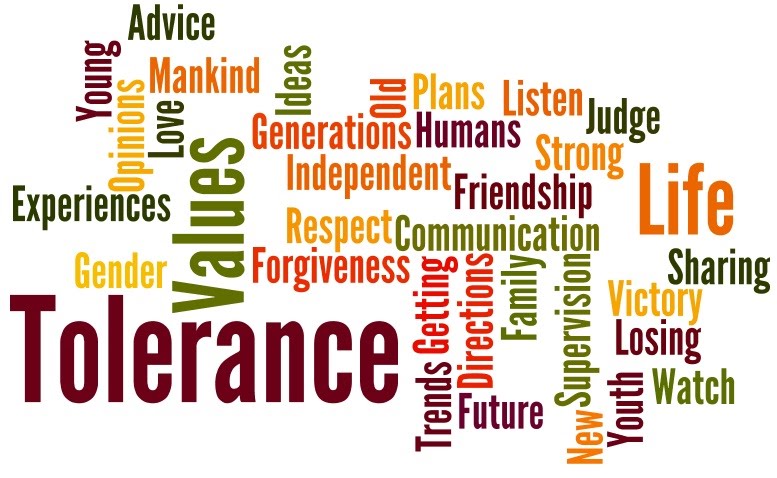
Tolerance is…

“Tolerance is a strange but indispensable civic virtue. It requires people to accept and live calmly with individuals and practices of which they disapprove.

Some take it for spineless laxity in the face of what ought to be fought or forbidden.

Others see it as a demeaning fraud that spares prohibition but withholds approval.

The tolerant themselves are not immune to its tricks and subtleties.

It takes little for them to shout intolerantly at each other about how far toleration should go.

Defending toleration is not like protecting a jewel. It takes fixity of aim but also a feel for the changing context, persistence with a task that never ends and readiness to start again.

Toleration does gradually spread. It can also suddenly vanish.” (The Economist, 2019, p.76).

Reference

The Economist. (2019) Intellectual History: Live and Let Live. The Economist. 18 May 2019, pp.76.

Is There a Link between News Coverage & Trauma Symptoms?

When something terrible happens in the world, it’s not uncommon to scroll through social media or flip through television channels in search of news coverage. But such media exposure may fuel post-traumatic stress symptoms for years afterwards – and could also drive someone to consume further distressing media.

With high-consequence events where we do not know why they happened, there is a fundamental drive to want to consume information until you get your head around it. Research suggests it may be a function of threat avoidance or wanting to return to some kind of rational understanding of the world around us.

Roxane Silver at the University of California, Irvine, and her colleagues surveyed a representative sample of more than 4400 US residents in the days after the 2013 Boston Marathon bombing. Each person was also asked how many hours of related media coverage they consumed in three follow-up periods:

  • Six months after the bombing;
  • On its second anniversary; and
  • Five days after the 2016 mass shooting in the Pulse nightclub in Florida.

On average, the people surveyed consumed about 6 hours of media a day about the Boston bombing immediately after the event and a little more than 3 hours per day of media about the Pulse shooting.

Those who sought out more media about the bombing – whether or not they had a history of mental health conditions – were more likely to have trauma-related stress symptoms, such as upsetting thoughts, flashbacks and emotional distress, six months later (Thompson et al., 2019).

Two years after the bombing, such people were also more likely to worry about other events of mass violence occurring in the future, and consumed more coverage of the subsequent Pulse shooting.

References

Thompson, R.R., Jones, N.M., Holman, E.A. & Silver, R.C. (2019) Media Exposure to Mass Violence Events can Fuel a Cycle of Distress. Science Advances. 5(4), eaav3502. DOI: 10.1126/sciadv.aav3502.

Whyte, C. (2019) New Coverage Link to Trauma Symptoms. New Scientist. 27 April 2019, pp.16.