Posts

What is Acting In?

Introduction

“Acting in” is a psychological term which has been given various meanings over the years, but which is most generally used in opposition to acting out to cover conflicts which are brought to life inside therapy, as opposed to outside.

One commentator, noting the variety of usages, points out that it is often “unclear whether ‘in’ refers to the internalisation into the personality, to the growth in insight, or to the acting within the session”.

Patients

With respect to patients, the term ‘acting in’ has been used to refer to the process of a client/patient bringing an issue from outside the therapy into the analytic situation, and acting upon it there.

The therapist is advised to respond to the issue immediately to prevent further and more disruptive acting in.

Hanna Segal distinguished positive acting in from destructive acting in – both being aimed however at affecting the analyst’s state of mind, whether to communicate or to confuse.

Posture

The term was used in 1957 by Meyer A. Zeligs to refer specifically to the postures taken by analysts in a psychoanalytic session.

Therapists

Psychoanalysis also describes as ‘acting in’ the process whereby the analyst brings his or her personal countertransference into the analytic situation – as opposed to the converse, the acting out of the patient’s transference.

The result is generally agreed to produce a chaotic analytic situation which hampers therapeutic progress.

The term was used rather differently however by Carl Whitaker in the 60’s, so as to refer to the technique whereby therapists increase their involvement in a session in such a way as to ramp up the patient’s anxiety for therapeutic ends.

On This Day … 16 August

People (Births)

  • 1832 – Wilhelm Wundt, German physician, psychologist, and physiologist (d. 1920).

Wilhelm Wundt

Wilhelm Maximilian Wundt (16 August 1832 to 31 August 1920) was a German physiologist, philosopher, and professor, known today as one of the founders of modern psychology. Wundt, who distinguished psychology as a science from philosophy and biology, was the first person ever to call himself a psychologist.

He is widely regarded as the “father of experimental psychology”. In 1879, at University of Leipzig, Wundt founded the first formal laboratory for psychological research. This marked psychology as an independent field of study. By creating this laboratory he was able to establish psychology as a separate science from other disciplines. He also formed the first academic journal for psychological research, Philosophische Studien (from 1881 to 1902), set up to publish the Institute’s research.

A survey published in American Psychologist in 1991 ranked Wundt’s reputation as first for “all-time eminence” based on ratings provided by 29 American historians of psychology. William James and Sigmund Freud were ranked a distant second and third.

On This Day … 15 August

People (Births)

  • 1933 – Stanley Milgram, American social psychologist (d. 1984).
  • 1958 – Simon Baron-Cohen, English-Canadian psychiatrist and author.

Stanley Milgram

Stanley Milgram (15 August 1933 20 December 1984) was an American social psychologist, best known for his controversial experiments on obedience conducted in the 1960s during his professorship at Yale.

Milgram was influenced by the events of the Holocaust, especially the trial of Adolf Eichmann, in developing the experiment. After earning a PhD in social psychology from Harvard University, he taught at Yale, Harvard, and then for most of his career as a professor at the City University of New York Graduate Centre, until his death in 1984.

His small-world experiment, while at Harvard, led researchers to analyse the degree of connectedness, including the six degrees of separation concept. Later in his career, Milgram developed a technique for creating interactive hybrid social agents (called cyranoids), which has since been used to explore aspects of social- and self-perception.

He is widely regarded as one of the most important figures in the history of social psychology. A Review of General Psychology survey, published in 2002, ranked Milgram as the 46th-most-cited psychologist of the 20th century.

Simon Baron-Cohen

Sir Simon Philip Baron-Cohen FBA FBPsS FMedSci (born 15 August 1958) is a British clinical psychologist and professor of developmental psychopathology at the University of Cambridge. He is the director of the university’s Autism Research Centre and a Fellow of Trinity College. In 1985, Baron-Cohen formulated the mind-blindness theory of autism, the evidence for which he collated and published in 1995. In 1997, he formulated the foetal sex steroid theory of autism, the key test of which was published in 2015.

He has also made major contributions to the fields of typical cognitive sex differences, autism prevalence and screening, autism genetics, autism neuroimaging, autism and technical ability, and synaesthesia. Baron-Cohen was knighted in the 2021 New Year Honours for services to autistic people.

On This Day … 14 August

People (Births)

  • 1840 – Richard von Krafft-Ebing, German-Austrian psychologist and author (d. 1902).

Richard von Krafft-Ebing

Richard Freiherr von Krafft-Ebing (full name Richard Fridolin Joseph Freiherr Krafft von Festenberg auf Frohnberg, genannt von Ebing; 1840-1902) was an Austro-German psychiatrist and author of the foundational work Psychopathia Sexualis (1886).

Life

Krafft-Ebing was born in 1840 in Mannheim, Germany, studied medicine at the University of Heidelberg, where he specialized in psychiatry. He later practiced in psychiatric asylums. After leaving his work in asylums, he pursued a career in psychiatry, forensics, and hypnosis.

He died in Graz in 1902. He was recognized as an authority on deviant sexual behaviour and its medicolegal aspects.

Principal Work

Krafft-Ebing’s principal work is Psychopathia Sexualis: eine Klinisch-Forensische Studie (Sexual Psychopathy: A Clinical-Forensic Study), which was first published in 1886 and expanded in subsequent editions. The last edition from the hand of the author (the twelfth) contained a total of 238 case histories of human sexual behaviour.

Translations of various editions of this book introduced to English such terms as “sadist” (derived from the brutal sexual practices depicted in the novels of the Marquis de Sade), “masochist”, (derived from the name of Leopold von Sacher-Masoch), “homosexuality”, “bisexuality”, “necrophilia”, and “anilingus”.

Psychopathia Sexualis is a forensic reference book for psychiatrists, physicians, and judges. Written in an academic style, its introduction noted that, to discourage lay readers, the author had deliberately chosen a scientific term for the title of the book and that he had written parts of it in Latin for the same purpose.

Psychopathia Sexualis was one of the first books about sexual practices that studied homosexuality/bisexuality. It proposed consideration of the mental state of sex criminals in legal judgements of their crimes. During its time, it became the leading medico-legal textual authority on sexual pathology.

The twelfth and final edition of Psychopathia Sexualis presented four categories of what Krafft-Ebing called “cerebral neuroses”:

  • Paradoxia, sexual excitement occurring independently of the period of the physiological processes in the generative organs.
  • Anaesthesia, absence of sexual instinct.
  • Hyperaesthesia, increased desire, satyriasis.
  • Paraesthesia, perversion of the sexual instinct, i.e., excitability of the sexual functions to inadequate stimuli.

The term “hetero-sexual” is used, but not in chapter or section headings. The term “bi-sexuality” appears twice in the 7th edition, and more frequently in the 12th.

There is no mention of sexual activity with children in Chapter III, General Pathology, where the “cerebral neuroses” (including sexuality the paraesthesias) are covered. Various sexual acts with children are mentioned in Chapter IV, Special Pathology, but always in the context of specific mental disorders, such as dementia, epilepsy, and paranoia, never as resulting from its own disorder. However, Chapter V on sexual crimes has a section on sexual crimes with children. This section is brief in the 7th edition, but is expanded in the 12th to cover Non-Psychopathological Cases and Psychopathological Cases, in which latter subsection the term paedophilia erotica is used.

Krafft-Ebing considered procreation the purpose of sexual desire and that any form of recreational sex was a perversion of the sex drive. “With opportunity for the natural satisfaction of the sexual instinct, every expression of it that does not correspond with the purpose of nature—i.e., propagation,—must be regarded as perverse.” Hence, he concluded that homosexuals suffered a degree of sexual perversion because homosexual practices could not result in procreation. In some cases, homosexual libido was classified as a moral vice induced by the early practice of masturbation. Krafft-Ebing proposed a theory of homosexuality as biologically anomalous and originating in the embryonic and fetal stages of gestation, which evolved into a “sexual inversion” of the brain. In 1901, in an article in the Jahrbuch für sexuelle Zwischenstufen (Yearbook for Intermediate Sexual Types), he changed the biological term from anomaly to differentiation.

Although the primary focus is on sexual behaviour in men, there are sections on Sadism in Woman, Masochism in Woman, and Lesbian Love. Several of the cases of sexual activity with children were committed by women.

Krafft-Ebing’s conclusions about homosexuality are now largely forgotten, partly because Sigmund Freud’s theories were more interesting to physicians (who considered homosexuality to be a psychological problem) and partly because he incurred the enmity of the Austrian Catholic Church when he psychologically associated martyrdom (a desire for sanctity) with hysteria and masochism.

Works

A bibliography of von Krafft-Ebing’s writings can be found in A. Kreuter, Deutschsprachige Neurologen und Psychiater, München 1996, Band 2, pp.767-774.

  • Die Melancholie: Eine klinische Studie (1874) OCLC 180728044.
  • Grundzüge der Kriminalpsychologie für Juristen (second edition, 1882) OCLC 27460358.
  • Psychopathia Sexualis: eine Klinisch-Forensische Studie (first edition, 1886).
  • Die progressive allgemeine Paralyse (1894) OCLC 65980497.
  • Nervosität und neurasthenische Zustände (1895) OCLC 9633149.

Translations

  • Domino Falls translated and edited Psychopathia Sexualis:The Case Histories (1997) ISBN 978-0-9820464-7-0.
  • Charles Gilbert Chaddock translated four of Krafft-Ebing’s books into English:
    • An Experimental Study in the Domain of Hypnotism (New York and London, 1889).
    • Psychosis Menstrualis (1902).
    • Psychopathia Sexualis (twelfth edition, 1903).
    • Text Book of Insanity (1905).

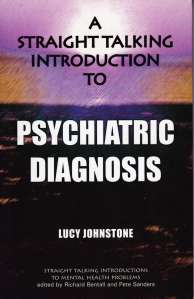
Book: A Straight Talking Introduction to Psychiatric Diagnosis

Book Title:

A Straight Talking Introduction to Psychiatric Diagnosis.

Author(s): Lucy Johnstone.

Year: 2014.

Edition: First (1st).

Publisher: PCCS Books.

Type(s): Paperback and Kindle.

Synopsis:

Do you still need your psychiatric diagnosis? This book will help you to decide. A revolution is underway in mental health. If the authors of the diagnostic manuals are admitting that psychiatric diagnoses are not supported by evidence, then no one should be forced to accept them. If many mental health workers are openly questioning diagnosis and saying we need a different and better system, then service users and carers should be allowed to do so too. This book is about choice. It is about giving people the information to make up their own minds, and exploring alternatives for those who wish to do so.

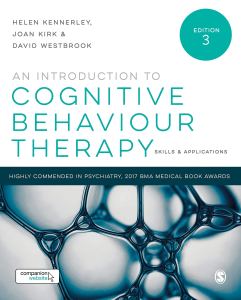
Book: An Introduction to Cognitive Behaviour Therapy: Skills and Applications

Book Title:

An Introduction to Cognitive Behaviour Therapy: Skills and Applications.

Author(s): Helen Kennerley, Joan Kirk, and David Westbrook.

Year: 2016.

Edition: Third (3rd).

Publisher: SAGE Publications Ltd.

Type(s): Hardcover, Paperback and Kindle.

Synopsis:

This bestselling guide to the basic theory, skills and applications of cognitive behaviour therapy is fully updated to reflect recent developments in CBT theory. It includes in-depth material on working with diversity, and new case studies and exercises to help you reflect and explore how theory can be used to develop effective practice.

The Companion Website features over 40 videos illustrating the CBT skills and strategies discussed in the book, including:

  • Measuring CBT’s effectiveness.
  • Socratic method and applications.
  • Physical techniques and behavioural experiments.
  • Applications of CBT to specific client disorders.
  • Using supervision in CBT.

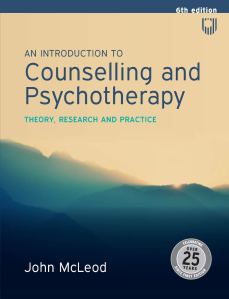
Book: An Introduction to Counselling and Psychotherapy: Theory, Research and Practice

Book Title:

An Introduction to Counselling and Psychotherapy: Theory, Research and Practice.

Author(s): John McLeod.

Year: 2019.

Edition: Sixth (6th).

Publisher: Open University Press.

Type(s): Paperback and Kindle.

Synopsis:

John McLeod’s bestseller provides a comprehensive, research-informed overview of the theory and practice of counselling and psychotherapy. This new edition has been expanded to cover emerging aspects of contemporary practice, such as debates around neuroscience and integration; third-wave cognitive–behavioural therapies such as ACT, mindfulness and FAP; the experience of being a client; motivational interviewing; interpersonal psychotherapy; social dimensions of therapy; leaving therapy; gender and sexuality; spirituality; and key counselling and therapeutic skills and techniques.

This sixth edition has been fully updated and revised throughout and is separated into a four-part structure for easy navigation.

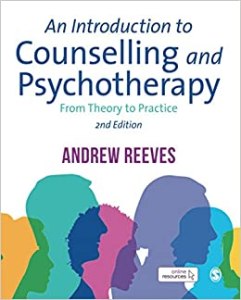
Book: An Introduction to Counselling and Psychotherapy: From Theory to Practice

Book Title:

An Introduction to Counselling and Psychotherapy: From Theory to Practice.

Author(s): Andrew Reeves.

Year: 2018.

Edition: Second (2nd), Updated Edition.

Publisher: SAGE Publications Ltd.

Type(s): Hardcover, Paperback and Kindle.

Synopsis:

This book introduces readers to everything they need to know about counselling and psychotherapy theory, skills and practice. Drawing on years of experience as a counselling practitioner and educator, Andrew Reeves links theory to the development of appropriate skills and locates it within the context of therapeutic practice. Features including chapter summaries, discussion questions, prompts for reflection, case examples and further reading help students to apply what they’ve learnt and give them the confidence to progress into practice. The book covers:

  • Key theoretical approaches.
  • Personal development.
  • Counselling skills.
  • Professional settings.
  • Law, policy, values and ethics.
  • Working with difference and diversity.
  • Client and present issues, and more.

Learning is also supported by a wealth of online resources such as case studies and videos that show what theory looks like in practice, as well as journal articles to help extend knowledge. This is the essential text for any trainee practitioner, or for anyone needing an introduction to the foundations of counselling theory and practice.

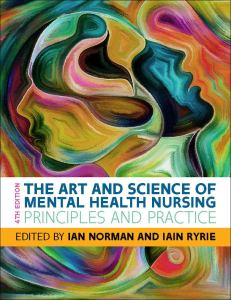
Book: Art and Science of Mental Health Nursing

Book Title:

Art and Science of Mental Health Nursing: Principles and Practice.

Author(s): Ian Norman and Iain Ryrie (Editors).

Year: 2018.

Edition: Fourth (4th).

Publisher: Open University Press.

Type(s): Paperback and Kindle.

Synopsis:

This well-established textbook is a must-buy for all mental health nursing students and nurses in registered practice.

Comprehensive and broad, it explores how mental health nursing has a positive impact on the lives of people with mental health difficulties.

On This Day … 13 August

People (Deaths)

  • 1995 – Jan Křesadlo, Czech-English psychologist and author (b. 1926).

Jan Kresadlo

Václav Jaroslav Karel Pinkava (09 December 1926 to 13 August 1995), better known by his pen name Jan Křesadlo, was a Czech psychologist who was also a prizewinning novelist and poet.

An anti-communist, Pinkava emigrated to Britain with his wife and four children following the 1968 invasion of Czechoslovakia by the Soviet-led armies of the Warsaw pact. He worked as a clinical psychologist until his early retirement in 1982, when he turned to full-time writing. His first novel “Mrchopěvci” (GraveLarks) was published by Josef Škvorecký’s emigre publishing house 68 Publishers, and earned the 1984 Egon Hostovský prize.