Posts

What is Antidepressant Discontinuation Syndrome?

Introduction

Antidepressant discontinuation syndrome (also known antidepressant withdrawal syndrome or SSRI discontinuation syndrome), is a condition that can occur following the interruption, reduction, or discontinuation of antidepressant medication following its continuous use of at least a month.

The symptoms may include flu-like symptoms, trouble sleeping, nausea, poor balance, sensory changes, anxiety, and depression. The problem usually begins within three days and may last for several months. Rarely psychosis may occur.

A discontinuation syndrome can occur after stopping any antidepressant including selective serotonin re-uptake inhibitors (SSRIs), serotonin–norepinephrine reuptake inhibitors (SNRIs), monoamine oxidase inhibitors (MAOIs) and tricyclic antidepressants (TCAs). The risk is greater among those who have taken the medication for longer and when the medication in question has a short half-life. The underlying reason for its occurrence is unclear. The diagnosis is based on the symptoms.

Methods of prevention include gradually decreasing the dose among those who wish to stop, though it is possible for symptoms to occur with tapering. Treatment may include restarting the medication and slowly decreasing the dose. People may also be switched to the long acting antidepressant fluoxetine which can then be gradually decreased.

Approximately 20-50% of people who suddenly stop an antidepressant develop an antidepressant discontinuation syndrome. The condition is generally not serious, though about half of people with symptoms describe them as severe. Some restart antidepressants due to the severity of the symptoms.

Signs and Symptoms

People with antidepressant discontinuation syndrome have been on an antidepressant for at least four weeks and have recently stopped taking the medication, whether abruptly, after a fast taper, or each time the medication is reduced on a slow taper. Commonly reported symptoms include flu-like symptoms (nausea, vomiting, diarrhoea, headaches, sweating) and sleep disturbances (insomnia, nightmares, constant sleepiness). Sensory and movement disturbances have also been reported, including imbalance, tremors, vertigo, dizziness, and electric-shock-like experiences in the brain, often described by people who have them as “brain zaps”. These “brain zaps” have been described as an electric shock felt in the skull, potentially triggered by lateral eye movement, and at times accompanied by vertigo, pain, or dissociative symptoms. Some individuals consider it as a pleasant experience akin to an orgasm, however it is more often reported as an unpleasant experience that interferes with daily function. Mood disturbances such as dysphoria, anxiety, or agitation are also reported, as are cognitive disturbances such as confusion and hyperarousal.

In cases associated with sudden discontinuation of MAO inhibitors, acute psychosis has been observed. Over fifty symptoms have been reported.

A 2009 Advisory Committee to the US Food and Drug Administration (FDA) found that online anecdotal reports of discontinuation syndrome related to duloxetine included severe symptoms and exceeded prevalence of both paroxetine and venlafaxine reports by over 250% (although acknowledged this may have been influenced by duloxetine being a much newer drug). It also found that the safety information provided by the manufacturer not only neglected important information about managing discontinuation syndrome, but also explicitly advised against opening capsules, a practice required to gradually taper dosage.

Duration

Most cases of discontinuation syndrome may last between one and four weeks and resolve on their own. Occasionally symptoms can last up to one year. They typically resolve within a day of restoring the medication. Paroxetine and venlafaxine seem to be particularly difficult to discontinue, and prolonged withdrawal syndrome (post-acute-withdrawal syndrome, or PAWS) lasting over 18 months has been reported with paroxetine.

Mechanism

The underlying reason for its occurrence is unclear, though the syndrome appears similar to withdrawal from other psychotropic drugs such as benzodiazepines.

Prevention and Treatment

In some cases, withdrawal symptoms may be prevented by taking medication as directed, and when discontinuing, doing so gradually, although symptoms may appear while tapering. When discontinuing an antidepressant with a short half-life, switching to a drug with a longer half-life (e.g. fluoxetine or citalopram) and then tapering, and eventually discontinuing, from that drug can decrease the severity of symptoms in some cases.

Treatment is dependent on the severity of the discontinuation reaction and whether or not further antidepressant treatment is warranted. In cases where further antidepressant treatment is prescribed, then the only option suggested may be restarting the antidepressant. If antidepressants are no longer required, treatment depends on symptom severity. If symptoms of discontinuation are severe, or do not respond to symptom management, the antidepressant can be reinstated and then withdrawn more cautiously, or by switching to a drug with a longer half life, (such as Prozac), and then tapering and discontinuing that drug. In severe cases, hospitalisation may be required.

Pregnancy and Newborns

Antidepressants, including SSRIs, can cross the placenta and have the potential to affect the foetus and newborn, including an increased chance of miscarriage, presenting a dilemma for pregnant women to decide whether to continue to take antidepressants at all, or if they do, considering if tapering and discontinuing during pregnancy could have a protective effect for the newborn.

Postnatal adaptation syndrome (PNAS) (originally called “neonatal behavioural syndrome”, “poor neonatal adaptation syndrome”, or “neonatal withdrawal syndrome”) was first noticed in 1973 in newborns of mothers taking antidepressants; symptoms in the infant include irritability, rapid breathing, hypothermia, and blood sugar problems. The symptoms usually develop from birth to days after delivery and usually resolve within days or weeks of delivery.

Culture and History

Antidepressant discontinuation symptoms were first reported with imipramine, the first tricyclic antidepressant (TCA), in the late 1950s, and each new class of antidepressants has brought reports of similar conditions, including monoamine oxidase inhibitors (MAOIs), SSRIs, and SNRIs. As of 2001, at least 21 different antidepressants, covering all the major classes, were known to cause discontinuation syndromes. The problem has been poorly studied, and most of the literature has been case reports or small clinical studies; incidence is hard to determine and controversial.

With the explosion of use and interest in SSRIs in the late 1980s and early 1990s, focused especially on Prozac, interest grew as well in discontinuation syndromes. Some of the symptoms emerged from discussion boards where people with depression discussed their experiences with the disease and their medications; “brain zaps” or “brain shivers” was one symptom that emerged via these websites.

Heightened media attention and continuing public concerns led to the formation of an expert group on the safety of selective serotonin reuptake inhibitors in England, to evaluate all the research available prior to 2004. The group determined that the incidence of discontinuation symptoms are between 5% and 49%, depending on the particular SSRI, the length of time on the medicine and abrupt versus gradual cessation.

With the lack of a definition based on consensus criteria for the syndrome, a panel met in Phoenix, Arizona, in 1997 to form a draft definition, which other groups continued to refine.

In the late 1990s, some investigators thought that the fact that symptoms emerged when antidepressants were discontinued might mean that antidepressants were causing addiction, and some used the term “withdrawal syndrome” to describe the symptoms. While people taking antidepressants do not commonly exhibit drug-seeking behaviour, stopping antidepressants leads to similar symptoms as found in drug withdrawal from benzodiazapines, and other psychotropic drugs. As such, some researchers advocate the term withdrawal over discontinuation, to communicate the similar physiological dependence and negative outcomes. Due to pressure from pharmaceutical companies who make anti-depressants, the term “withdrawal syndrome” is no longer used by drug makers, and thus, most doctors, due to concerns that they may be compared to other drugs more commonly associated with withdrawal.

2013 Class Action Lawsuit

In 2013, a proposed class action lawsuit, Jennifer L Saavedra v. Eli Lilly and Company, was brought against Eli Lilly claiming that the Cymbalta label omitted important information about “brain zaps” and other symptoms upon cessation. Eli Lilly moved for dismissal per the “learned intermediary doctrine” as the doctors prescribing the drug were warned of the potential problems and are an intermediary medical judgement between Lilly and patients; in December 2013 Lilly’s motion to dismiss was denied.

Research

The mechanisms of antidepressant withdrawal syndrome have not yet been conclusively identified. The leading hypothesis is that after the antidepressant is discontinued, there is a temporary, but in some cases, long-lasting, deficiency in the brain of one or more essential neurotransmitters that regulate mood, such as serotonin, dopamine, norepinephrine, and gamma-aminobutyric acid, and since neurotransmitters are an interrelated system, dysregulation of one affects the others.

What is a Serotonergic Drug?

Introduction

Serotonergic means “pertaining to or affecting serotonin”.

Background

Serotonin is a neurotransmitter. A synapse is serotonergic if it uses serotonin as its neurotransmitter. A serotonergic neuron produces serotonin. A substance is serotonergic if it produces its effects via interactions with the serotonin system, such as by stimulating or blocking neurotransmission.

A serotonergic or serotoninergic agent is any chemical that modifies the effects of serotonin in the body. Some different types of serotonergics drugs include the following:

  • Serotonin receptor agonists and antagonists;
  • Serotonin reuptake inhibitors; and
  • Serotonin releasing agents.

What is Triazolam?

Introduction

Triazolam, sold under the brand name Halcion among others, is a central nervous system (CNS) depressant tranquilizer of the triazolobenzodiazepine (TBZD) class, which are benzodiazepine (BZD) derivatives.

It possesses pharmacological properties similar to those of other benzodiazepines, but it is generally only used as a sedative to treat severe insomnia. In addition to the hypnotic properties, triazolam’s amnesic, anxiolytic, sedative, anticonvulsant, and muscle relaxant properties are pronounced, as well. Due to its short half-life, triazolam is not effective for patients who experience frequent awakenings or early wakening.

Triazolam was initially patented in 1970 and went on sale in the United States in 1982. In 2017, it was the 280th most commonly prescribed medication in the United States, with more than one million prescriptions.

Medical Uses

Triazolam is usually used for short-term treatment of acute insomnia and circadian rhythm sleep disorders, including jet lag. It is an ideal benzodiazepine for this use because of its fast onset of action and short half-life. It puts a person to sleep for about 1.5 hours, allowing its user to avoid morning drowsiness. Triazolam is also sometimes used as an adjuvant in medical procedures requiring anaesthesia or to reduce anxiety during brief events, such as MRI scans and nonsurgical dental procedures. Triazolam is ineffective in maintaining sleep, however, due to its short half-life, with quazepam showing superiority.

Triazolam is frequently prescribed as a sleep aid for passengers travelling on short- to medium-duration flights. If this use is contemplated, the user avoiding the consumption of alcoholic beverages is especially important, as is trying a ground-based “rehearsal” of the medication to ensure that the side effects and potency of this medication are understood by the user prior to using it in a relatively more public environment (as disinhibition can be a common side effect, with potentially severe consequences). Triazolam causes anterograde amnesia, which is why so many dentists administer it to patients undergoing even minor dental procedures. This practice is known as sedation dentistry.

Side Effects

Adverse drug reactions associated with the use of triazolam include:

  • Relatively common (>1% of patients): somnolence, dizziness, feeling of lightness, coordination problems.
  • Less common (0.9% to 0.5% of patients): euphoria, tachycardia, tiredness, confusional states/memory impairment, cramps/pain, depression, visual disturbances.
  • Rare (<0.5% of patients): constipation, taste alteration, diarrhoea, dry mouth, dermatitis/allergy, dreams/nightmares, insomnia, paraesthesia, tinnitus, dysesthesia, weakness, congestion.

Triazolam, although a short-acting benzodiazepine, may cause residual impairment into the next day, especially the next morning. A meta-analysis demonstrated that residual “hangover” effects after night-time administration of triazolam such as sleepiness, psychomotor impairment, and diminished cognitive functions may persist into the next day, which may impair the ability of users to drive safely and increase risks of falls and hip fractures. Confusion and amnesia have been reported.

In September 2020, the US Food and Drug Administration (FDA) required the boxed warning be updated for all benzodiazepine medicines to describe the risks of abuse, misuse, addiction, physical dependence, and withdrawal reactions consistently across all the medicines in the class.

Tolerance, Dependence, and Withdrawal

Refer to Benzodiazepine Withdrawal Syndrome.

A review of the literature found that long-term use of benzodiazepines, including triazolam, is associated with drug tolerance, drug dependence, rebound insomnia, and CNS-related adverse effects. Benzodiazepine hypnotics should be used at their lowest possible dose and for a short period of time. Nonpharmacological treatment options were found to yield sustained improvements in sleep quality. A worsening of insomnia (rebound insomnia) compared to baseline may occur after discontinuation of triazolam, even following short-term, single-dose therapy.

Other withdrawal symptoms can range from mild unpleasant feelings to a major withdrawal syndrome, including stomach cramps, vomiting, muscle cramps, sweating, tremor, and in rare cases, convulsions.

Contraindications

Benzodiazepines require special precautions if used in the elderly, during pregnancy, in children, in alcoholics, or in other drug-dependent individuals and individuals with comorbid psychiatric disorders. Triazolam belongs to the Pregnancy Category X of the FDA. It is known to have the potential to cause birth defects.

Elderly

Triazolam, similar to other benzodiazepines and nonbenzodiazepines, causes impairments in body balance and standing steadiness in individuals who wake up at night or the next morning. Falls and hip fractures are frequently reported. The combination with alcohol increases these impairments. Partial, but incomplete tolerance develops to these impairments. Daytime withdrawal effects can occur.

An extensive review of the medical literature regarding the management of insomnia and the elderly found considerable evidence of the effectiveness and durability of nondrug treatments for insomnia in adults of all ages and that these interventions are underused. Compared with the benzodiazepines including triazolam, the nonbenzodiazepine sedative-hypnotics appeared to offer few, if any, significant clinical advantages in efficacy or tolerability in elderly persons. Newer agents with novel mechanisms of action and improved safety profiles, such as the melatonin agonists, hold promise for the management of chronic insomnia in elderly people. Long-term use of sedative-hypnotics for insomnia lacks an evidence base and has traditionally been discouraged for reasons that include concerns about such potential adverse drug effects as cognitive impairment, anterograde amnesia, daytime sedation, motor incoordination, and increased risk of motor vehicle accidents and falls. One study found no evidence of sustained hypnotic efficacy throughout the 9 weeks of treatment for triazolam.

In addition, the effectiveness and safety of long-term use of these agents remain to be determined. More research is needed to evaluate the long-term effects of treatment and the most appropriate management strategy for elderly persons with chronic insomnia.

Interactions

Ketoconazole and itraconazole have a profound effect on the pharmacokinetics of triazolam, leading to greatly enhanced effects. Anxiety, tremor, and depression have been documented in a case report following administration of nitrazepam and triazolam. Following administration of erythromycin, repetitive hallucinations and abnormal bodily sensations developed. The patient had, however, acute pneumonia, and kidney failure. Co-administration of benzodiazepine drugs at therapeutic doses with erythromycin may cause serious psychotic symptoms, especially in those with other physical complications. Caffeine reduces the effectiveness of triazolam. Other important interactions include cimetidine, diltiazem, fluconazole, grapefruit juice, isoniazid, itraconazole, nefazodone, rifampicin, ritonavir, and troleandomycin. Triazolam should not be administered to patients on Atripla.

Overdose

Refer to Benzodiazepine Overdose.

Symptoms of an overdose include:

  • Coma.
  • Hypoventilation (respiratory depression).
  • Somnolence (drowsiness).
  • Slurred speech.
  • Seizures.

Death can occur from triazolam overdose, but is more likely to occur in combination with other depressant drugs such as opioids, alcohol, or tricyclic antidepressants.

Pharmacology

The pharmacological effects of triazolam are similar to those of most other benzodiazepines. It does not generate active metabolites. Triazolam is a short-acting benzodiazepine, is lipophilic, and is metabolised hepatically via oxidative pathways. The main pharmacological effects of triazolam are the enhancement of the neurotransmitter GABA at the GABAA receptor. The half-life of triazolam is only 2 hours making it a very short acting benzodiazepine drug. It has anticonvulsant effects on brain function.

Society and Culture

Recreational Use

Refer to Benzodiazepine Drug Misuse.

Triazolam issued nonmedically: recreational use wherein the drug is taken to achieve a high or continued long-term dosing against medical advice.

Legal Status

Triazolam is a Schedule IV drug under the Convention on Psychotropic Substances and the US Controlled Substances Act.

Brandnames

The drug is marketed in English-speaking countries under the brand names Apo-Triazo, Halcion, Hypam, and Trilam. Other (designer) names include 2′-chloroxanax, chloroxanax, triclazolam, and chlorotriazolam.

What is Venlafaxine?

Introduction

Venlafaxine, sold under the brand name Effexor among others, is an antidepressant medication of the serotonin-norepinephrine reuptake inhibitor (SNRI) class.

It is used to treat major depressive disorder (MDD), generalised anxiety disorder (GAD), panic disorder, and social phobia. It may also be used for chronic pain. It is taken by mouth.

Common side effects include loss of appetite, constipation, dry mouth, dizziness, sweating, and sexual problems. Severe side effects include an increased risk of suicide, mania, and serotonin syndrome. Antidepressant withdrawal syndrome may occur if stopped. There are concerns that use during the later part of pregnancy can harm the baby. How it works is not entirely clear, but it seems to be related to the potentiation of the activity of some neurotransmitters in the brain.

Venlafaxine was approved for medical use in the United States in 1993. It is available as a generic medication. In 2018, it was the 50th most commonly prescribed medication in the United States with more than 16 million prescriptions.

Medical Uses

Venlafaxine is used primarily for the treatment of depression, general anxiety disorder, social phobia, panic disorder, and vasomotor symptoms.

Venlafaxine has been used off label for the treatment of diabetic neuropathy and migraine prevention (in some people, however, venlafaxine can exacerbate or cause migraines). It may work on pain via effects on the opioid receptor. It has also been found to reduce the severity of ‘hot flashes’ in menopausal women and men on hormonal therapy for the treatment of prostate cancer.

Due to its action on both the serotoninergic and adrenergic systems, venlafaxine is also used as a treatment to reduce episodes of cataplexy, a form of muscle weakness, in patients with the sleep disorder narcolepsy. Some open-label and three double-blind studies have suggested the efficacy of venlafaxine in the treatment of attention deficit-hyperactivity disorder (ADHD). Clinical trials have found possible efficacy in those with post-traumatic stress disorder (PTSD). Case reports, open trials and blinded comparisons with established medications have suggested the efficacy of venlafaxine in the treatment of obsessive-compulsive disorder (OCD).

Depression

A comparative meta-analysis of 21 major antidepressants found that venlafaxine, agomelatine, amitriptyline, escitalopram, mirtazapine, paroxetine, and vortioxetine were more effective than other antidepressants, although the quality of many comparisons was assessed as low or very low.

Venlafaxine was similar in efficacy to the atypical antidepressant bupropion; however, the remission rate was lower for venlafaxine. In a double-blind study, patients who did not respond to an SSRI were switched to either venlafaxine or another SSRI (citalopram); similar improvement was observed in both groups.

Studies of venlafaxine in children have not established its efficacy.

Studies have shown that the extended release is superior to the immediate release form of venlafaxine.

A meta-analysis shown that efficacity of venlafaxine is not correlated with baseline severity of depression.

Dosage

Venlafaxine has been shown to have an optimal efficacity and tolerability towards the lower end of their licensed dose range.

Contraindications

Venlafaxine is not recommended in patients hypersensitive to it, nor should it be taken by anyone who is allergic to the inactive ingredients, which include gelatin, cellulose, ethylcellulose, iron oxide, titanium dioxide and hypromellose. It should not be used in conjunction with a monoamine oxidase inhibitor (MAOI), as it can cause potentially fatal serotonin syndrome.

Adverse Effects

Refer to Adverse Effects of Venlafaxine.

Venlafaxine can increase eye pressure, so those with glaucoma may require more frequent eye checks.

A 2017 meta-analysis estimated venlafaxine discontinuation rate to 9.4%.

Suicide

The US Food and Drug Administration (FDA) requires all antidepressants, including venlafaxine, to carry a black box warning with a generic warning about a possible suicide risk.

A 2014 meta analysis of 21 clinical trials of venlafaxine for the treatment of depression in adults found that compared to placebo, venlafaxine reduced the risk of suicidal thoughts and behaviour.

A study conducted in Finland followed more than 15,000 patients for 3.4 years. Venlafaxine increased suicide risk by 60% (statistically significant), as compared to no treatment. At the same time, fluoxetine (Prozac) halved the suicide risk.

In another study, the data on more than 200,000 cases were obtained from the UK general practice research database. At baseline, patients prescribed venlafaxine had a greater number of risk factors for suicide (such as prior suicide attempts) than patients treated with other anti-depressants. The patients taking venlafaxine had significantly higher risk of completed suicide than the ones on fluoxetine or citalopram (Celexa). After adjusting for known risk factors, venlafaxine was associated with an increased risk of suicide relative to fluoxetine and dothiepin that was not statistically significant. A statistically significant greater risk for attempted suicide remained after adjustment, but the authors concluded that it could be due to residual confounding.[28]

An analysis of clinical trials by the FDA statisticians showed the incidence of suicidal behaviour among the adults on venlafaxine to be not significantly different from fluoxetine or placebo.

Venlafaxine is contraindicated in children, adolescents and young adults. According to the FDA analysis of clinical trials venlafaxine caused a statistically significant 5-fold increase in suicidal ideation and behaviour in persons younger than 25. In another analysis, venlafaxine was no better than placebo among children (7-11 years old), but improved depression in adolescents (12-17 years old). However, in both groups, hostility and suicidal behaviour increased in comparison to those receiving a placebo. In a study involving antidepressants that had failed to produce results in depressed teenagers, teens whose SSRI treatment had failed who were randomly switched to either another SSRI or to venlafaxine showed an increased rate of suicide on venlafaxine. Among teenagers who were suicidal at the beginning of the study, the rate of suicidal attempts and self-harm was significantly higher, by about 60%, after the switch to venlafaxine than after the switch to an SSRI.

Discontinuation Syndrome

Refer to Antidepressant Discontinuation Syndrome.

People stopping venlafaxine commonly experience discontinuation symptoms such as dysphoria, headaches, nausea, irritability, emotional lability, sensation of electric shocks, and sleep disturbance. Venlafaxine has a higher rate of moderate to severe discontinuation symptoms relative to other antidepressants (similar to the SSRI paroxetine).

The higher risk and increased severity of discontinuation syndrome symptoms relative to other antidepressants may be related to the short half-life of venlafaxine and its active metabolite. After discontinuing venlafaxine, the levels of both serotonin and norepinephrine decrease, leading to the hypothesis that the discontinuation symptoms could result from an overly rapid reduction of neurotransmitter levels.

Serotonin Syndrome

Refer to Serotonin Syndrome.

The development of a potentially life-threatening serotonin syndrome (also more recently classified as “serotonin toxicity”) may occur with venlafaxine treatment, particularly with concomitant use of serotonergic drugs, including but not limited to SSRIs and SNRIs, many hallucinogens such as tryptamines and phenethylamines (e.g. LSD/LSA, DMT, MDMA, mescaline), dextromethorphan (DXM), tramadol, tapentadol, pethidine (meperidine) and triptans and with drugs that impair metabolism of serotonin (including MAOIs). Serotonin syndrome symptoms may include mental status changes (e.g. agitation, hallucinations, coma), autonomic instability (e.g. tachycardia, labile blood pressure, hyperthermia), neuromuscular aberrations (e.g. hyperreflexia, incoordination) or gastrointestinal symptoms (e.g. nausea, vomiting, diarrhoea). Venlafaxine-induced serotonin syndrome has also been reported when venlafaxine has been taken in isolation in overdose. An abortive serotonin syndrome state, in which some but not all of the symptoms of the full serotonin syndrome are present, has been reported with venlafaxine at mid-range dosages (150 mg per day). A case of a patient with serotonin syndrome induced by low-dose venlafaxine (37.5 mg per day) has also been reported.

Pregnancy

There are few well-controlled studies of venlafaxine in pregnant women. A study released in May 2010 by the Canadian Medical Association Journal suggests use of venlafaxine doubles the risk of miscarriage. Consequently, venlafaxine should only be used during pregnancy if clearly needed. A large case-control study done as part of the National Birth Defects Prevention Study and published in 2012 found a significant association of venlafaxine use during pregnancy and several birth defects including anencephaly, cleft palate, septal heart defects and coarctation of the aorta. Prospective studies have not shown any statistically significant congenital malformations. There have, however, been some reports of self-limiting effects on newborn infants. As with other serotonin reuptake inhibitors (SRIs), these effects are generally short-lived, lasting only 3 to 5 days, and rarely resulting in severe complications.

Drug Interactions

Venlafaxine should be taken with caution when using St John’s wort. Venlafaxine may lower the seizure threshold, and co-administration with other drugs that lower the seizure threshold such as bupropion and tramadol should be done with caution and at low doses.

Bipolar Disorder

Venlafaxine is neither recommended nor approved for the treatment of major depressive episodes in bipolar disorder, as it can induce mania or mixed episodes. Venlafaxine appears to be more likely than the SSRIs and bupropion to induce mania and mixed episodes in bipolar patients.

Liver Injury

A rare but serious side effect of venlafaxine is liver injury. It reaches man and female patients with a median age of 44 years. Cessation of venlafaxine is one of the appropriate measure of management. The mechanism of venlafaxine related-liver injury is unclear but may be related to a CYP2D6 polymorphism.

Other

In rare cases, drug-induced akathisia (movement disorder) can occur after use in some people.

Venlafaxine should be used with caution in hypertensive patients. Venlafaxine must be discontinued if significant hypertension persists. It can also have undesirable cardiovascular effects.

Overdose

Most patients overdosing with venlafaxine develop only mild symptoms. Plasma venlafaxine concentrations in overdose survivors have ranged from 6 to 24 mg/l, while postmortem blood levels in fatalities are often in the 10-90 mg/l range. Published retrospective studies report that venlafaxine overdosage may be associated with an increased risk of fatal outcome compared to that observed with SSRI antidepressant products, but lower than that for tricyclic antidepressants. Healthcare professionals are advised to prescribe Effexor and Effexor XR in the smallest quantity of capsules consistent with good patient management to reduce the risk of overdose. It is usually reserved as a second-line treatment for depression due to a combination of its superior efficacy to the first-line treatments like fluoxetine, paroxetine and citalopram and greater frequency of side effects like nausea, headache, insomnia, drowsiness, dry mouth, constipation, sexual dysfunction, sweating and nervousness.

There is no specific antidote for venlafaxine, and management is generally supportive, providing treatment for the immediate symptoms. Administration of activated charcoal can prevent absorption of the drug. Monitoring of cardiac rhythm and vital signs is indicated. Seizures are managed with benzodiazepines or other anticonvulsants. Forced diuresis, hzemodialysis, exchange transfusion, or hemoperfusion are unlikely to be of benefit in hastening the removal of venlafaxine, due to the drug’s high volume of distribution.

Mechanism of Action

Pharmacology

Venlafaxine is usually categorised as a serotonin-norepinephrine reuptake inhibitor (SNRI), but it has also been referred to as a serotonin-norepinephrine-dopamine reuptake inhibitor (SNDRI). It works by blocking the transporter “reuptake” proteins for key neurotransmitters affecting mood, thereby leaving more active neurotransmitters in the synapse. The neurotransmitters affected are serotonin and norepinephrine. Additionally, in high doses it weakly inhibits the reuptake of dopamine, since dopamine is inactivated by norepinephrine reuptake in the frontal cortex. The frontal cortex largely lacks dopamine transporters; therefore venlafaxine can increase dopamine neurotransmission in this part of the brain.

Venlafaxine indirectly affects opioid receptors as well as the alpha2-adrenergic receptor, and was shown to increase pain threshold in mice. These benefits with respect to pain were reversed with naloxone, an opioid antagonist, thus supporting an opioid mechanism.

Pharmacokinetics

Venlafaxine is well absorbed, with at least 92% of an oral dose being absorbed into systemic circulation. It is extensively metabolized in the liver via the CYP2D6 isoenzyme to desvenlafaxine (O-desmethylvenlafaxine, now marketed as a separate medication named Pristiq), which is just as potent an SNRI as the parent compound, meaning that the differences in metabolism between extensive and poor metabolisers are not clinically important in terms of efficacy. Side effects, however, are reported to be more severe in CYP2D6 poor metabolisers. Steady-state concentrations of venlafaxine and its metabolite are attained in the blood within 3 days. Therapeutic effects are usually achieved within 3 to 4 weeks. No accumulation of venlafaxine has been observed during chronic administration in healthy subjects. The primary route of excretion of venlafaxine and its metabolites is via the kidneys. The half-life of venlafaxine is relatively short, so patients are directed to adhere to a strict medication routine, avoiding missing a dose. Even a single missed dose can result in withdrawal symptoms.

Venlafaxine is a substrate of P-glycoprotein (P-gp), which pumps it out of the brain. The gene encoding P-gp, ABCB1, has the SNP rs2032583, with alleles C and T. The majority of people (about 70% of Europeans and 90% of East Asians) have the TT variant. A 2007 study found that carriers of at least one C allele (variant CC or CT) are 7.72 times more likely than non-carriers to achieve remission after 4 weeks of treatment with amitriptyline, citalopram, paroxetine or venlafaxine (all P-gp substrates). The study included patients with mood disorders other than major depression, such as bipolar II; the ratio is 9.4 if these other disorders are excluded. At the 6-week mark, 75% of C-carriers had remitted, compared to only 38% of non-carriers.

Chemistry

The IUPAC name of venlafaxine is 1-[2-(dimethylamino)-1-(4 methoxyphenyl)ethyl]cyclohexanol, though it is sometimes referred to as (±)-1-[a-[a-(dimethylamino)methyl]-p-methoxybenzyl]cyclohexanol. It consists of two enantiomers present in equal quantities (termed a racemic mixture), both of which have the empirical formula of C17H27NO2. It is usually sold as a mixture of the respective hydrochloride salts, (R/S)-1-[2-(dimethylamino)-1-(4 methoxyphenyl)ethyl]cyclohexanol hydrochloride, C17H28ClNO2, which is a white to off-white crystalline solid. Venlafaxine is structurally and pharmacologically related to the atypical opioid analgesic tramadol, and more distantly to the newly released opioid tapentadol, but not to any of the conventional antidepressant drugs, including tricyclic antidepressants, SSRIs, MAOIs, or RIMAs.

Venlafaxine extended release is chemically the same as normal venlafaxine. The extended release (controlled release) version distributes the release of the drug into the gastrointestinal tract over a longer period than normal venlafaxine. This results in a lower peak plasma concentration. Studies have shown that the extended release formula has a lower incidence of nausea as a side effect, resulting in better compliance.

Society and Culture

Venlafaxine was originally marketed as Effexor in most of the world; generic venlafaxine has been available since around 2008 and extended release venlaxafine has been available since around 2010.

As of January 2020 venlafaxine is marketed under many brand names worldwide, many with alternative extended release forms (not shown): Adefaxin, Alenthus, Altven, Alventa, Amfax, Anapresin, Ansifix, Arafaxina, Argofan, Arrow Venlafaxine, Axone, Axyven, Benolaxe, Blossom, Calmdown, Dalium, Defaxine, Depefex, Depretaxer, Deprevix, Deprexor, Deprixol, Depurol, Desinax, Dislaven, Dobupal, Duofaxin, Easyfor, Ectien, Eduxon, Efastad, Efaxin, Efaxine, Efectin, Efegen, Efevelon, Efevelone, Efexiva, Efexor, Effegad, Effexine, Effexor, Elafax, Elaxine, Elify, Enpress, Enlafax, Envelaf, Falven, Faxigen, Faxine, Faxiprol, Faxiven, Faxolet, Flavix, Flaxen, Fobiless, Ganavax, Idixor, Idoxen, Intefred, Illovex, Lafactin, Lafaxin, Lanvexin, Laroxin, Levest, Limbic, Linexel, Maxibral, Mazda, Melocin, Memomax, Mezine, Neoxacina, Neoxacina, Nervix, Norafexine, Norezor, Norpilen, Noviser, Nulev, Odiven, Olwexya, Oriven, Paxifar, Politid, Pracet, Prefaxine, Psiseven, Quilarex, Rafax, Senexon, Sentidol, Sentosa, Serosmine, Seroxine, Sesaren, Subelan, Sulinex, Sunveniz, Sunvex, Symfaxin, Tedema, Tifaxin, Tonpular, Trevilor, Tudor, Vafexin, Valosine, Vandral, Velaf, Velafax, Velahibin, Velaxin, Velept, Velpine, Venax, Venaxin, Venaxx, Vencarm, Vencontrol, Vendep, Venegis, Venex, Venexor, Venfalex, Venfax, Ven-Fax, Venfaxine, Venforin, Venforspine, Veniba, Veniz, Venjoy, Venla, Venlabax, Venlablue, Venlabrain, Venladep, Venladex, Venladoz, Venlaf, Venlafab, Venlafaxin, Venlafaxina, Venlafaxine, Venlagamma, Venlalic, Venlamax, Venlamylan, Venlaneo, Venlapine, Venla-Q, Venlasand, Venlatrin, Venlavitae, Venlax, Venlaxin, Venlaxine, Venlaxor, Venlazid, Venlectine, Venlifax, Venlift, Venlix, Venlobax, Venlofex, Venlor, Venorion, Venozap, Vensate, Ventab, Venxin, Venxor, Venzip, Vexamode, Vfax, Viepax, ViePax, Voxafen, Zacalen, Zanfexa, Zaredrop, Zarelis, Zarelix, and Zenexor.

What is Zimelidine?

Introduction

Zimelidine (INN, BAN) (brand names Zimeldine, Normud, Zelmid) was one of the first selective serotonin reuptake inhibitor (SSRI) antidepressants to be marketed.

It is a pyridylallylamine, and is structurally different from other antidepressants.

Zimelidine was developed in the late 1970s and early 1980s by Arvid Carlsson, who was then working for the Swedish company Astra AB. It was discovered following a search for drugs with structures similar to brompheniramine (it is a derivative of brompheniramine), an antihistamine with antidepressant activity. Zimelidine was first sold in 1982.

While zimelidine had a very favourable safety profile, within a year and a half of its introduction, rare case reports of Guillain–Barré syndrome emerged that appeared to be caused by the drug, prompting its manufacturer to withdraw it from the market. After its withdrawal, it was succeeded by fluvoxamine and fluoxetine (derived from the antihistamine diphenhydramine) in that order, and the other SSRIs.

Mechanism of Action

The mode of action is a strong reuptake inhibition of serotonin from the synaptic cleft. Postsynaptic receptors are not acted upon.

Other Uses

Zimelidine was reported by Montplaisir and Godbout to be very effective for cataplexy in 1986, back when this was usually controlled by tricyclic antidepressants, which often had anticholinergic effects. Zimelidine was able to improve cataplexy without causing daytime sleepiness.

Side Effects

Most often reported were:

  • Dry mouth, dryness of pharyngeal and nasal membranes.
  • Increased sweating (hyperhidrosis).
  • Vertigo.
  • Nausea.

Interactions

MAO inhibitors – severe or life-threatening reactions possible.

On This Day … 09 July

People (Births)

  • 1940 – Eugene Victor Wolfenstein, American psychoanalyst and theorist (d. 2010).

Eugene Victor Wolfenstein

Eugene Victor Wolfenstein (09 July 1940 to 15 December 2010) was an American social theorist, practicing psychoanalyst, and a professor of political science at University of California, Los Angeles.

Wolfenstein graduated with his Bachelor of Arts magna cum laude from Columbia College in 1962. He was a member of Phi Beta Kappa.

Wolfenstein received his Master of Arts in political science in 1964 and his Ph.D. in political science in 1965 from Princeton University. Wolfenstein became a professor of political science at UCLA.

He also completed a Ph.D. in psychoanalysis from the Southern California Psychoanalytic Institute in 1984. He was the member of the faculty of the institute from 1988 to 2004. Moreover, he was in private practice from the time he received his degree up to the time of his death.

Work

Wolfenstein worked in the critical theory tradition, with a focus on African American culture and social movements. In his book The Victims of Democracy: Malcolm X and the Black Revolution, he used a theory of the interaction between social classes and psychological groups to analyse white racism and the black liberation struggle. He developed a more general version of this theory in Psychoanalytic-Marxism: Groundwork (1993) and refined it further through engagement with Nietzsche’s philosophy in Inside/Outside Nietzsche: Psychoanalytic Explorations (2000). These later works add a concern with gender identity to the earlier agenda. His research is in the area of African-American narrative. A Gift of the Spirit: Reading THE SOULS OF BLACK FOLK (2007) offered a sustained reconstruction of W.E.B. Du Bois’s canonical text. A further study entitled “Talking Books: Toni Morrison Among the Ancestors” was published right before his death.

He was a professor at UCLA. At the undergraduate level, he taught the lower division Introduction to Political Theory, along with Ancient Political Theory, African-American Freedom Narratives, Malcolm X and Black Liberation, Marxist Political Theory, and an occasional seminar on Platonic Dialectic and Spiritual Liberation. At the graduate level, he focused on major works of Du Bois, Foucault, Freud, Hegel, Marx, and Nietzsche, along with the related critical literatures.

His main interests were History of Political Theory, Psychoanalytic Theory and Practice, Critical Theory, Critical Race Theory and Feminist Theory.

What is a Serotonin-Norepinephrine Reuptake Inhibitor?

Introduction

Serotonin-norepinephrine reuptake inhibitors (SNRIs) are a class of antidepressant drugs that treat major depressive disorder (MDD), anxiety disorders, obsessive-compulsive disorder (OCD), social phobia, attention-deficit hyperactivity disorder (ADHD), chronic neuropathic pain, fibromyalgia syndrome (FMS), and menopausal symptoms. SNRIs are monoamine reuptake inhibitors; specifically, they inhibit the reuptake of serotonin and norepinephrine. These neurotransmitters are thought to play an important role in mood regulation. SNRIs can be contrasted with the more widely used selective serotonin reuptake inhibitors (SSRIs), which act upon serotonin only.

The human serotonin transporter (SERT) and norepinephrine transporter (NET) are membrane transport proteins that are responsible for the reuptake of serotonin and norepinephrine from the synaptic cleft back into the presynaptic nerve terminal. Dual inhibition of serotonin and norepinephrine reuptake can offer advantages over other antidepressant drugs by treating a wider range of symptoms. They can be especially useful in concomitant chronic or neuropathic pain.

SNRIs, along with SSRIs and norepinephrine reuptake inhibitors (NRIs), are second-generation antidepressants. Over the past two decades, second-generation antidepressants have simply replaced first-generation antidepressants, such as tricyclic antidepressants (TCAs) and monoamine oxidase inhibitors (MAOIs), as the drugs of choice for the treatment of MDD due to their improved tolerability and safety profile.

Medications

There are eight FDA approved SNRIs in the United States, with venlafaxine being the first drug to be developed in 1993 and levomilnacipran being the latest drug to be developed in 2013. The drugs vary by their other medical uses, chemical structure, adverse effects, and efficacy.

  • Atomoxetine.
  • Desvenlafaxine.
  • Duloxetine.
  • Levomilnacipran.
  • Milnacipran.
  • Sibutramine.
  • Tramadol.
  • Venlafaxine.

Brief History

Refer to Development and Discovery of SSRI Drugs.

In 1952, iproniazid, an antimycobacterial agent, was discovered to have psychoactive properties while researched as a possible treatment for tuberculosis. Researchers noted that patients given iproniazid became cheerful, more optimistic, and more physically active. Soon after its development, iproniazid and related substances were shown to slow enzymatic breakdown of serotonin, dopamine, and norepinephrine via inhibition of the enzyme monoamine oxidase. For this reason, this class of drugs became known as monoamine oxidase inhibitors, or MAOIs. During this time development of distinctively different antidepressant agents was also researched. Imipramine became the first clinically useful tricyclic antidepressant (TCA). Imipramine was found to affect numerous neurotransmitter systems and to block the reuptake of norepinephrine and serotonin from the synapse, therefore increasing the levels of these neurotransmitters. Use of MAOIs and TCAs gave major advances in treatment of depression but their use was limited by unpleasant side effects and significant safety and toxicity issues.

Throughout the 1960s and 1970s, the catecholamine hypothesis of emotion and its relation to depression was of wide interest and that the decreased levels of certain neurotransmitters, such as norepinephrine, serotonin, and dopamine might play a role in the pathogenesis of depression. This led to the development of fluoxetine, the first SSRI. The improved safety and tolerability profile of the SSRIs in patients with MDD, compared with TCAs and MAOIs, represented yet another important advance in the treatment of depression.

Since the late 1980s, SSRIs have dominated the antidepressant drug market. Today, there is increased interest in antidepressant drugs with broader mechanisms of action that may offer improvements in efficacy and tolerability. In 1993, a new drug was introduced to the US market called venlafaxine, a SNRI. Venlafaxine was the first compound described in a new class of antidepressive substances called phenylethylamines. These substances are unrelated to TCA and other SSRIs. Venlafaxine blocks the neuronal reuptake of serotonin, noradrenaline, and, to a lesser extent, dopamine in the central nervous system. In contrast with several other antidepressant drugs, venlafaxine can induce a rapid onset of action mainly due to a subsequent norepinephrine reuptake inhibition.

Mechanism of Action

Monoamines are connected to the pathophysiology of depression. Symptoms may occur because concentrations of neurotransmitters, such as norepinephrine and serotonin, are insufficient, leading to downstream changes. Medications for depression affect the transmission of serotonin, norepinephrine, and dopamine. Older and more unselective antidepressants like TCAs and MAOIs inhibit the reuptake or metabolism of norepinephrine and serotonin in the brain, which results in higher concentrations of neurotransmitters. Antidepressants that have dual mechanisms of action inhibit the reuptake of both serotonin and norepinephrine and, in some cases, inhibit with weak effect the reuptake of dopamine. Antidepressants affect variable neuronal receptors like muscarinic-cholinergic, α1- and α2-adrenergic, and H1-histaminergic receptors, and sodium channels in the cardiac muscle, leading to decreased cardiac conduction and cardiotoxicity {source needed}. Selectivity of antidepressant agents are based on the neurotransmitters that are thought to influence symptoms of depression. Drugs that selectively block the reuptake of serotonin and norepinephrine effectively treat depression and are better tolerated than TCAs. TCAs have comprehensive effects on various neurotransmitters receptors, which leads to lack of tolerability and increased risk of toxicity.

Tricyclic Antidepressants

TCAs were the first medications that had dual mechanism of action. The mechanism of action of tricyclic secondary amine antidepressants is only partly understood. TCAs have dual inhibition effects on norepinephrine reuptake transporters and serotonin reuptake transporters. Increased norepinephrine and serotonin concentrations are obtained by inhibiting both of these transporter proteins. TCAs have substantially more affinity for norepinephrine reuptake proteins than the SSRIs. This is because of a formation of secondary amine TCA metabolites.

In addition, the TCAs interact with adrenergic receptors. This interaction seems to be critical for increased availability of norepinephrine in or near the synaptic clefts. Actions of imipramine-like tricyclic antidepressants have complex, secondary adaptions to their initial and sustained actions as inhibitors of norepinephrine transport and variable blockade of serotonin transport.

Norepinephrine interacts with postsynaptic α and β adrenergic receptor subtypes and presynaptic α2 autoreceptors. The α2 receptors include presynaptic autoreceptors which limit the neurophysiological activity of noradrenergic neurons in the central nervous system. Formation of norepinephrine is reduced by autoreceptors through the rate-limiting enzyme tyrosine hydroxylase, an effect mediated by decreased cyclic AMP-mediated phosphorylation-activation of the enzyme. α2 receptors also cause decreased intracellular cyclic AMP expression which results in smooth muscle relaxation or decreased secretion.

TCAs activate a negative feedback mechanism through their effects on presynaptic receptors. One probable explanation for the effects on decreased neurotransmitter release is that, as the receptors activate, inhibition of neurotransmitter release occurs (including suppression of voltage-gated Ca2+ currents and activation of G protein-coupled receptor-operated K+ currents). Repeated exposure of agents with this type of mechanism leads to inhibition of neurotransmitter release, but repeated administration of TCAs finally leads to decreased responses by α2 receptors. The desensitization of these responses may be due to increased exposure to endogenous norepinephrine or from the prolonged occupation of the norepinephrine transport mechanisms (via an allosteric effect). The adaptation allows the presynaptic synthesis and secretion of norepinephrine to return to, or even exceed, normal levels of norepinephrine in the synaptic clefts. Overall, inhibition of norepinephrine reuptake induced by TCAs leads to decreased rates of neuron firing (mediated through α2 autoreceptors), metabolic activity, and release of neurotransmitters.

TCAs do not block dopamine transport directly but might facilitate dopaminergic effects indirectly by inhibiting dopamine transport into noradrenergic terminals of the cerebral cortex. Because they affect so many different receptors, TCAs have adverse effects, poor tolerability, and an increased risk of toxicity.

Selective Serotonin Reuptake Inhibitors

Selective serotonin reuptake inhibitors (SSRIs) selectively inhibit the reuptake of serotonin and are a widely used group of antidepressants. With increased receptor selectivity compared to TCAs, undesired effects such as poor tolerability are avoided. Serotonin is synthesized from an amino acid called L-tryptophan. Active transport system regulates the uptake of tryptophan across the blood-brain barrier. Serotonergic pathways are classified into two main ways in the brain: the ascending projections from the medial and dorsal raphe and the descending projections from the caudal raphe into the spinal cord.

Selective Norepinephrine Reuptake Inhibitors

Noradrenergic neurons are located in two major regions in the brain. These regions are locus coeruleus and lateral tegmental. With administration of SNRIs, neuronal activity in locus coeruleus region is induced because of increased concentration of norepinephrine in the synaptic cleft. This results in activation of α2 adrenergic receptors, as discussed previously.

Assays have shown that SNRIs have insignificant penchant for mACh, α1 and α2 adrenergic, or H1 receptors.

Dual Serotonin and Norepinephrine Reuptake Inhibitors

Agents with dual serotonin and norepinephrine reuptake inhibition (SNRIs) are sometimes called non-tricyclic serotonin and norepinephrine reuptake inhibitors. Clinical studies suggest that compounds that increase the concentration in the synaptic cleft of both norepinephrine and serotonin are more successful than single acting agents in the treatment of depression, but the data is not conclusive whether SNRIs are a more effective treatment option over SSRIs for depression. Dual reuptake inhibitors have low affinity at neuronal receptors of the other neurotransmitters, which have low adverse effects compared with the TCAs. Nontricyclic antidepressants have improved potency and onset action acceleration in antidepressant response than SSRIs alone, which give the impression that synergism is an efficient property in mediating antidepressant activity.

The non-tricyclic SNRIs have several important differences that are based on pharmacokinetics, metabolism to active metabolites, inhibition of CYP isoforms, effect of drug-drug interactions, and the half-life of the nontricyclic SNRIs.

Combination of mechanisms of action in a single active agent is an important development in psychopharmacology.

Structure Activity Relationship (SAR)

Aryloxypropanamine Scaffold

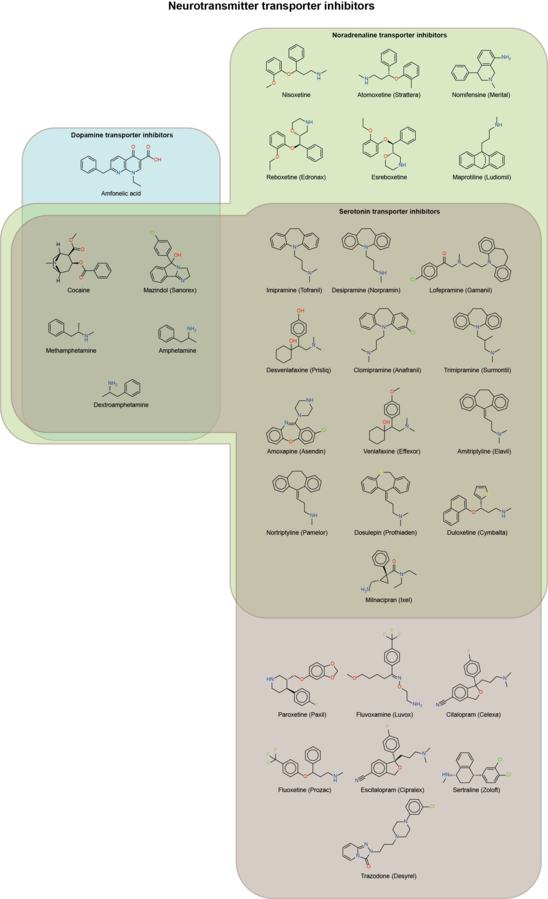
Several reuptake inhibitors contain an aryloxypropanamine scaffold. This structural motif has potential for high affinity binding to biogenic amine transports. Drugs containing an aryloxypropanamine scaffold have selectivity profile for norepinephrine and serotonin transporters that depends on the substitution pattern of the aryloxy ring. Selective NRIs contain a substituent in 2′ position of the aryloxy ring but SSRIs contain a substituent in 4′ position of the aryloxy ring. Atomoxetine, nisoxetine and reboxetine all have a substitution group in the 2′ position and are selective NRIs while compounds that have a substitution group in the 4′ position (like fluoxetine and paroxetine) are SSRIs. Duloxetine contains a phenyl group fused at the 2′ and 3′ positions, therefore it has dual selective norepinephrine and serotonin reuptake inhibitory effects and has similar potencies for the both transporters. The nature of the aromatic substituent also has a significant influence on the activity and selectivity of the compounds as inhibitors of the serotonin or the norepinephrine transporters.

Cycloalkanol Ethylamine Scaffold

Venlafaxine and desvenlafaxine contain a cycloalkanol ethylamine scaffold. Increasing the electron-withdrawing nature of the aromatic ring provides a more potent inhibitory effect of norepinephrine uptake and improves the selectivity for norepinephrine over the serotonin transporter. Effects of chloro, methoxy and trifluoromethyl substituents in the aromatic ring of cycloalkanol ethylamine scaffold were tested. The results showed that the strongest electron-withdrawing m-trifluoromethyl analogue exhibited the most potent inhibitory effect of norepinephrine and the most selectivity over serotonin uptake. WY-46824, a piperazine-containing derivative, has shown norepinephrine and dopamine reuptake inhibition. Further synthesis and testing identified WAY-256805, a potent norepinephrine reuptake inhibitor that exhibited excellent selectivity and was efficacious in animal models of depression, pain, and thermoregulatory dysfunction.

Milnacipran

Milnacipran is structurally different from other SNRIs. The SAR of milnacipran derivatives at transporter level is still largely unclear and is based on in vivo efficacy that was reported in 1987. N-methylation of milnacipran in substituent group R4 and R5 reduces the norepinephrine and serotonin activity. Researches on different secondary amides in substitution groups R6 and R7 showed that π electrons play an important role in the interaction between transporters and ligands. A phenyl group in substituent R6 showed effect on norepinephrine transporters. Substituent groups in R6 and R7 with allylic double bond showed significant improved effect on both norepinephrine and serotonin transporters. Studies show that introducing a 2-methyl group in substituent R3, the potency at norepinephrine and serotonin transporters are almost abolished. Methyl groups in substituent groups R1 and R2 also abolish the potency at norepinephrine and serotonin transporters. Researchers found that replacing one of the ethyl groups of milnacipran with an allyl moiety increases the norepinephrine potency. The pharmacophore of milnacipran derivatives is still largely unclear.

The conformation of milnacipran is an important part of its pharmacophore. Changing the SAR in milnacipran changes the stereochemistry of the compound and affects the norepinephrine and serotonin concentration. Milnacipran is marketed as a racemic mixture. Effects of milnacipran reside in the (1S,2R)-isomer and substitution of the phenyl group in the (1S,2R)-isomer has negative impact on norepinephrine concentration. Milnacipran has low molecular weight and low lipophilicity. Because of these properties, milnacipran exhibits almost ideal pharmacokinetics in humans such as high bioavailability, low inter-subject variability, limited liver enzyme interaction, moderate tissue distribution and a reasonably long elimination half-life. Milnacipran’s lack of drug-drug interactions via cytochrome P450 enzymes is thought to be an attractive feature because many of the central nervous system drugs are highly lipophilic and are mainly eliminated by liver enzymes.

Future Development of SAR

The application of an aryloxypropanamine scaffold has generated a number of potent MAOIs. Before the development of duloxetine, the exploration of aryloxypropanamine SAR resulted in the identification of fluoxetine and atomoxetine. The same motif can be found in reboxetine where it is constrained in a morpholine ring system. Some studies have been made where the oxygen in reboxetine is replaced by sulfur to give arylthiomethyl morpholine. Some of the arylthiomethyl morpholine derivatives maintain potent levels of serotonin and norepinephrine reuptake inhibition. Dual serotonin and norepinephrine reuptake inhibition resides in different enantiomers for arylthiomethyl morpholine scaffold. Possible drug candidates with dual serotonin and norepinephrine reuptake inhibitory activity have also been derived from piperazine, 3-amino-pyrrolidine and benzylamine templates.

Clinical Trials

Depression

Several studies have shown that antidepressant drugs which have combined serotonergic and noradrenergic activity are generally more effective than SSRIs, which act upon serotonin reuptake by itself. Serotonergic-noradrenergic antidepressant drugs may have a modest efficacy advantage compared to SSRIs in treating major depressive disorder (MDD), but are slightly less well tolerated. Further research is needed to examine the possible differences of efficacy in specific MDD sub-populations or for specific MDD symptoms, between these classes of antidepressant drugs.

Analgesic

Data from clinical trials have indicated that SNRIs might have pain relieving properties. Although the perception and transmission of pain stimuli in the central nervous system have not been fully elucidated, extensive data support a role for serotonin and norepinephrine in the modulation of pain. Findings from clinical trials in humans have shown these antidepressants can to reduce pain and functional impairment in central and neuropathic pain conditions. This property of SNRIs might be used to reduce doses of other pain relieving medication and lower the frequency of safety, limited efficacy and tolerability issues. Clinical research data have shown in patients with GAD that the SNRI duloxetine is significantly more effective than placebo in reducing pain-related symptoms of GAD, after short-term and long-term treatment. However, findings suggested that such symptoms of physical pain reoccur in relapse situations, which indicates a need for ongoing treatment in patients with GAD and concurrent painful physical symptoms.

Indications

SNRIs have been tested for treatment of the following conditions:

Pharmacology

Route of Administration

SNRIs are delivered orally, usually in the form of capsules or tablets. It is recommended to take SNRIs in the morning with breakfast, which does not affect drug levels, but may help with certain side effects. Norepinephrine has activating effects in the body and therefore can cause insomnia in some patients if taken at bedtime. SNRIs can also cause nausea, which is usually mild and goes away within a few weeks of treatment, but taking the medication with food can help alleviate this. The drugs themselves are usually a fine crystalline powder that diffuses into the body during digestion.

Dosage

Dosages vary depending on the SNRI used due to varying potencies of the drug in question as well as multiple strengths for each drug.

Mode of Action

The condition for which SNRIs are mostly indicated, major depressive disorder, is thought to be mainly caused by decreased levels of serotonin and norepinephrine in the synaptic cleft, causing erratic signalling. Based on the monoamine hypothesis of depression, which asserts that decreased concentrations of monoamine neurotransmitters leads to depressive symptoms, the following relations were determined: “Norepinephrine may be related to alertness and energy as well as anxiety, attention, and interest in life; [lack of] serotonin to anxiety, obsessions, and compulsions; and dopamine to attention, motivation, pleasure, and reward, as well as interest in life.” SNRIs work by inhibiting the reuptake of the neurotransmitters serotonin and norepinephrine. This results in increased extracellular concentrations of serotonin and norepinephrine and, consequently, an increase in neurotransmission. Most SNRIs including venlafaxine, desvenlafaxine, and duloxetine, are several fold more selective for serotonin over norepinephrine, while milnacipran is three times more selective for norepinephrine than serotonin. Elevation of norepinephrine levels is thought to be necessary for an antidepressant to be effective against neuropathic pain, a property shared with the older tricyclic antidepressants (TCAs), but not with the SSRIs.

Recent studies have shown that depression may be linked to increased inflammatory response, thus attempts at finding an additional mechanism for SNRIs have been made. Studies have shown that SNRIs as well as SSRIs have significant anti-inflammatory action on microglia in addition to their effect on serotonin and norepinephrine levels. As such, it is possible that an additional mechanism of these drugs that acts in combination with the previously understood mechanism exist. The implication behind these findings suggests use of SNRIs as potential anti-inflammatories following brain injury or any other disease where swelling of the brain is an issue. However, regardless of the mechanism, the efficacy of these drugs in treating the diseases for which they have been indicated has been proven, both clinically and in practice.

Pharmacodynamics

Most SNRIs function alongside primary metabolites and secondary metabolites in order to inhibit reuptake of serotonin, norepinepherine, and marginal amounts of dopamine. For example, venlafaxine works alongside its primary metabolite O-desmethylvenlafaxine to strongly inhibit serotonin and norepinephrine reuptake in the brain. The evidence also suggests that dopamine and norepinepherine behave in a co-transportational manner, due to the inactivation of dopamine by norepinephrine reuptake in the frontal cortex, an area of the brain largely lacking in dopamine transporters. This effect of SNRIs results in increased dopamine neurotransmission, in addition to the increases in serotonin and norepinephrine activity. Furthermore, because SNRIs are extremely selective, they have no measurable effects on other, unintended receptors, in contrast to monoamine oxidase inhibition. Pharmaceutical tests have determined that use of both SNRIs or SSRIs can generate significant anti-inflammatory action on microglia, as well.

Pharmacokinetics

The half-life of venlafaxine is about 5 hours, and with once-daily dosing, steady-state concentration is achieved after about 3 days, though its active metabolite desvenlafaxine lasts longer. The half-life of desvenlafaxine is about 11 hours, and steady-state concentrations are achieved after 4 to 5 days. The half-life of duloxetine is about 12 hours (range: 8-17 hours), and steady-state is achieved after about 3 days. Milnacipran has a half-life of about 6 to 8 hours, and steady-state levels are reached within 36 to 48 hours.

Contraindications

SNRIs are contraindicated in patients taking MAOIs within the last two weeks due to the increased risk of serotonin syndrome, which can be life-threatening.[65] Other drugs and substances that should be avoided due to increased risk of serotonin syndrome when combined with an SNRI include: other anti-depressants, anti-convulsants, analgesics, antiemetic agents, anti-migraine medications, methylene blue, linezolid, Lithium, St. John’s worts, ecstasy, and LSD. Signs and symptoms of serotonin syndrome include: hyperthermia, rigidity, myoclonus, autonomic instability with fluctuating vital signs, and mental status changes that include extreme agitation progressing to delirium and coma.

Due to the effects of increased norepinephrine levels and, therefore, higher noradrenergic activity, pre-existing hypertension should be controlled before treatment with SNRIs and blood pressure periodically monitored throughout treatment. Duloxetine has also been associated with cases of liver failure and should not be prescribed to patients with chronic alcohol use or liver disease. Studies have found that Duloxetine can increase liver function tests three times above their upper normal limit. Patients suffering from coronary artery disease should caution the use of SNRIs. Furthermore, due to some SNRIs’ actions on obesity, patients with major eating disorders such as anorexia nervosa or bulimia should not be prescribed SNRIs. Duloxetine and milnacipran are also contraindicated in patients with uncontrolled narrow-angle glaucoma, as they have been shown to increase incidence of mydriasis.

Side Effects

Because the SNRIs and SSRIs act in similar ways to elevate serotonin levels, they share many side effects, though to varying degrees. The most common side effects include nausea/vomiting, sweating, loss of appetite, dizziness, headache, increase in suicidal thoughts, and sexual dysfunction. Elevation of norepinephrine levels can sometimes cause anxiety, mildly elevated pulse, and elevated blood pressure. However, norepinephrine-selective antidepressants, such as reboxetine and desipramine, have successfully treated anxiety disorders. People at risk for hypertension and heart disease should monitor their blood pressure. The side effects of upset stomach may be decreased by taking SNRIs with food.

Sexual Dysfunction

SNRIs, similarly to SSRIs, can cause several types of sexual dysfunction, such as erectile dysfunction, decreased libido, sexual anhedonia, and anorgasmia. The two common sexual side effects are diminished interest in sex (libido) and difficulty reaching climax (anorgasmia), which are usually somewhat milder with SNRIs compared to SSRIs. To manage sexual dysfunction, studies have shown that switching to or augmenting with bupropion or adding a PDE5 Inhibitor have decreased symptoms of sexual dysfunction. Studies have shown that PDE5 Inhibitors, such as sildenafil (Viagra), tadalafil (Cialis), vardenafil (Levitra), and avanafil (Stendra), have sometimes been helpful to decrease the sexual dysfunction, including erectile dysfunction, although they have been shown to be more effective in men than women.

Serotonin Syndrome

A serious, but rare, side effect of SNRIs is serotonin syndrome, which is caused by an excess of serotonin in the body. Serotonin syndrome can be caused by taking multiple serotonergic drugs, such as SSRIs or SNRIs. Other drugs that contribute to serotonin syndrome include MAO inhibitors, linezolid, tedizolid, methylene blue, procarbazine, amphetamines, clomipramine, and more. Early symptoms of serotonin syndrome may include nausea, vomiting, diarrhoea, sweating, agitation, confusion, muscle rigidity, dilated pupils, hyperthermia, rigidity, and goose bumps. More severe symptoms include fever, seizures, irregular heartbeat, delirium, and coma. If signs or symptoms arise, discontinue treatment with serotonergic agents immediately. It is recommended to washout 4 to 5 half-lives of the serotonergic agent before using an MAO inhibitor.

Bleeding

Some studies suggest there are risks of upper gastrointestinal bleeding, especially venlafaxine, due to impairment of platelet aggregation and depletion of platelet serotonin levels. Similarly to SSRIs, SNRIs may interact with anticoagulants, like warfarin. Currently, there is more evidence of SSRIs having higher risk of bleeding than SNRIs. Studies have suggested caution when using SNRIs or SSRIs with high doses of nonsteroidal anti-inflammatory drugs (NSAIDs), such as ibuprofen or naproxen due to an increased risk of upper GI bleeding.

Precautions

Starting an SNRI Regimen

Due to the extreme changes in noradrenergic activity produced from norepinephrine and serotonin reuptake inhibition, patients that are just starting an SNRI regimen are usually given lower doses than their expected final dosing to allow the body to acclimate to the drug’s effects. As the patient continues along at low doses without any side-effects, the dose is incrementally increased until the patient sees improvement in symptoms without detrimental side-effects.

Discontinuation Syndrome

As with SSRIs, the abrupt discontinuation of an SNRI usually leads to withdrawal, or “discontinuation syndrome“, which could include states of anxiety and other symptoms. Therefore, it is recommended that users seeking to discontinue an SNRI slowly taper the dose under the supervision of a professional. Discontinuation syndrome has been reported to be markedly worse for venlafaxine when compared to other SNRIs. As such, as tramadol is related to venlafaxine, the same conditions apply. This is likely due to venlafaxine’s relatively short half-life and therefore rapid clearance upon discontinuation. In some cases, switching from venlafaxine to fluoxetine, a long-acting SSRI, and then tapering off fluoxetine, may be recommended to reduce discontinuation symptoms. Signs and symptoms of withdrawal from abrupt cessation of an SNRI include dizziness, anxiety, insomnia, nausea, sweating, and flu-like symptoms, such as lethargy and malaise.

Overdose

Causes

Overdosing on SNRIs can be caused by either drug combinations or excessive amounts of the drug itself. Venlafaxine is marginally more toxic in overdose than duloxetine or the SSRIs. Risk of overdose is increased in patients taking multiple serotonergic agents or interacting agents.

Symptoms

Symptoms of SNRI overdose, whether it be a mixed drug interaction or the drug alone, vary in intensity and incidence based on the amount of medicine taken and the individuals sensitivity to SNRI treatment. Possible symptoms may include:

  • Somnolence.
  • Coma.
  • Serotonin syndrome.
  • Seizures.
  • Syncope.
  • Tachycardia.
  • Hypotension.
  • Hypertension.
  • Hyperthermia.
  • Vomiting.

Management

Overdose is usually treated symptomatically, especially in the case of serotonin syndrome, which requires treatment with cyproheptadine and temperature control based on the progression of the serotonin toxicity. Patients are often monitored for vitals and airways cleared to ensure that they are receiving adequate levels of oxygen. Another option is to use activated carbon in the GI tract in order to absorb excess neurotransmitter. It is important to consider drug interactions when dealing with overdose patients, as separate symptoms can arise.

Comparison to SSRIs

Because SNRIs were developed more recently than SSRIs, there are relatively few of them. However, the SNRIs are among the most widely used antidepressants today. In 2009, Cymbalta and Effexor were the 11th- and 12th-most-prescribed branded drugs in the United States, respectively. This translates to the 2nd- and 3rd-most-common antidepressants, behind Lexapro (escitalopram), an SSRI. In some studies, SNRIs demonstrated slightly higher antidepressant efficacy than the SSRIs (response rates 63.6% versus 59.3%). However, in one study escitalopram had a superior efficacy profile to venlafaxine.

Special Populations

Pregnancy

Currently, no antidepressants are FDA approved during pregnancy. All SSRIs and SNRIs are Category C, except paroxetine, which is Category D since it has shown association with congenital heart disorders. Use of antidepressants during pregnancy may result in foetus abnormalities affecting functional development of the brain and behaviour. Untreated depression may also affect birth outcomes, so it is recommended to discuss options with a provider to weigh the risks and benefits.

Paediatrics

SSRIs and SNRIs have been shown to be effective in treating major depressive disorder and anxiety in paediatric populations. However, there is a risk of increased suicidality in paediatric populations for treatment of major depressive disorder, especially with venlafaxine. Fluoxetine is the only antidepressant that is approved for child/adolescent major depressive disorder.

Geriatrics

Most antidepressants, including SNRIs, are safe and effective in the geriatric population. Decisions are often based on co-morbid conditions, drug interactions, and patient tolerance. Due to differences in body composition and metabolism, starting doses are often half that of the recommended dose for younger adults.

What is a Selective Serotonin Reuptake Inhibitor?

Introduction

Selective serotonin reuptake inhibitors (SSRIs) are a class of drugs that are typically used as antidepressants in the treatment of major depressive disorder, anxiety disorders, and other psychological conditions.

SSRIs increase the extracellular level of the neurotransmitter serotonin by limiting its reabsorption (reuptake) into the presynaptic cell. They have varying degrees of selectivity for the other monoamine transporters, with pure SSRIs having strong affinity for the serotonin transporter and only weak affinity for the norepinephrine and dopamine transporters.

SSRIs are the most widely prescribed antidepressants in many countries. The efficacy of SSRIs in mild or moderate cases of depression has been disputed and may be outweighed by side effects, especially in adolescent populations.

Refer to Serotonin-Norepinephrine Reuptake Inhibitor (SNRI).

Brief History

Refer to Development and discovery of SSRI Drugs.

Fluoxetine was introduced in 1987 and was the first major SSRI to be marketed.

Medical Uses

The main indication for SSRIs is major depressive disorder (MDD); however, they are frequently prescribed for anxiety disorders, such as social anxiety disorder, generalised anxiety disorder (GAD), panic disorder, obsessive-compulsive disorder (OCD), eating disorders, chronic pain, and, in some cases, for posttraumatic stress disorder (PTSD). They are also frequently used to treat depersonalisation disorder, although with varying results.

Depression

Antidepressants are recommended by the UK National Institute for Health and Care Excellence (NICE) as a first-line treatment of severe depression and for the treatment of mild-to-moderate depression that persists after conservative measures such as cognitive therapy. They recommend against their routine use in those who have chronic health problems and mild depression.

There has been controversy regarding the efficacy of SSRIs in treating depression depending on its severity and duration.

  • Two meta-analyses published in 2008 (Kirsch) and 2010 (Fournier) found that in mild and moderate depression, the effect of SSRIs is small or none compared to placebo, while in very severe depression the effect of SSRIs is between “relatively small” and “substantial”. The 2008 meta-analysis combined 35 clinical trials submitted to the Food and Drug Administration (FDA) before licensing of four newer antidepressants (including the SSRIs paroxetine and fluoxetine, the non-SSRI antidepressant nefazodone, and the serotonin and norepinephrine reuptake inhibitor (SNRI) venlafaxine). The authors attributed the relationship between severity and efficacy to a reduction of the placebo effect in severely depressed patients, rather than an increase in the effect of the medication. Some researchers have questioned the statistical basis of this study suggesting that it underestimates the effect size of antidepressants.
  • A 2012 meta-analysis of fluoxetine and venlafaxine concluded that statistically and clinically significant treatment effects were observed for each drug relative to placebo irrespective of baseline depression severity; some of the authors however disclosed substantial relationships with pharmaceutical industries.
  • A 2017 systematic review stated that “SSRIs versus placebo seem to have statistically significant effects on depressive symptoms, but the clinical significance of these effects seems questionable and all trials were at high risk of bias. Furthermore, SSRIs versus placebo significantly increase the risk of both serious and non-serious adverse events. Our results show that the harmful effects of SSRIs versus placebo for major depressive disorder seem to outweigh any potentially small beneficial effects”. Fredrik Hieronymus et al. criticised the review as inaccurate and misleading, but they also disclosed multiple ties to pharmaceutical industries.

In 2018, a systematic review and network meta-analysis comparing the efficacy and acceptability of 21 antidepressant drugs showed escitalopram to be one of the most effective.

In children, there are concerns around the quality of the evidence on the meaningfulness of benefits seen. If a medication is used, fluoxetine appears to be first line.

Social Anxiety Disorder

Some SSRIs are effective for social anxiety disorder, although their effects on symptoms is not always robust and their use is sometimes rejected in favour of psychological therapies. Paroxetine was the first drug to be approved for social anxiety disorder and it is considered effective for this disorder, sertraline and fluvoxamine were later approved for it, too, escitalopram and citalopram are used off label with acceptable efficacy, while fluoxetine is not considered to be effective for this disorder.

Post-Traumatic Stress Disorder

PTSD is relatively hard to treat and generally treatment is not highly effective; SSRIs are no exception. They are not very effective for this disorder and only two SSRI are US Food and Drug Administration (FDA) approved for this condition, paroxetine and sertraline. Paroxetine has slightly higher response and remission rates for PTSD than sertraline, but both are not fully effective for many patients. Fluoxetine is used off label, but with mixed results, venlafaxine, an SNRI, is considered somewhat effective, although used off label, too. Fluvoxamine, escitalopram and citalopram are not well tested in this disorder. Paroxetine remains the most suitable drug for PTSD as of now, but with limited benefits.

Generalised Anxiety Disorder

SSRIs are recommended by NICE for the treatment of GAD that has failed to respond to conservative measures such as education and self-help activities. GAD is a common disorder of which the central feature is excessive worry about a number of different events. Key symptoms include excessive anxiety about multiple events and issues, and difficulty controlling worrisome thoughts that persists for at least 6 months.

Antidepressants provide a modest-to-moderate reduction in anxiety in GAD, and are superior to placebo in treating GAD. The efficacy of different antidepressants is similar.

Obsessive-Compulsive Disorder

In Canada, SSRIs are a first-line treatment of adult OCD. In the UK, they are first-line treatment only with moderate to severe functional impairment and as second line treatment for those with mild impairment, though, as of early 2019, this recommendation is being reviewed. In children, SSRIs can be considered a second line therapy in those with moderate-to-severe impairment, with close monitoring for psychiatric adverse effects. SSRIs, especially fluvoxamine, which is the first one to be FDA approved for OCD, are efficacious in its treatment; patients treated with SSRIs are about twice as likely to respond to treatment as those treated with placebo. Efficacy has been demonstrated both in short-term treatment trials of 6 to 24 weeks and in discontinuation trials of 28 to 52 weeks duration.

Panic Disorder

Paroxetine CR was superior to placebo on the primary outcome measure. In a 10-wk randomised controlled, double-blind trial escitalopram was more effective than placebo. Fluvoxamine has shown positive results. However, evidence for their effectiveness and acceptability is unclear.

Eating Disorders

Antidepressants are recommended as an alternative or additional first step to self-help programs in the treatment of bulimia nervosa. SSRIs (fluoxetine in particular) are preferred over other anti-depressants due to their acceptability, tolerability, and superior reduction of symptoms in short-term trials. Long-term efficacy remains poorly characterised.

Similar recommendations apply to binge eating disorder. SSRIs provide short-term reductions in binge eating behaviour, but have not been associated with significant weight loss.

Clinical trials have generated mostly negative results for the use of SSRIs in the treatment of anorexia nervosa. Treatment guidelines from the National Institute of Health and Clinical Excellence recommend against the use of SSRIs in this disorder. Those from the American Psychiatric Association note that SSRIs confer no advantage regarding weight gain, but that they may be used for the treatment of co-existing depressive, anxiety, or OCD.

Stroke Recovery

SSRIs have been used off-label in the treatment of stroke patients, including those with and without symptoms of depression. A 2019 meta-analysis of randomised, controlled clinical trials found a statistically significant effect of SSRIs on dependence, neurological deficit, depression, and anxiety but the studies had a high risk of bias. No reliable evidence points to their routine use to promote recovery following stroke. Thrombosis risk is reduced because SSRIs limit serotonin availability to platelets, so benefits, such as stroke recovery, of reduced clotting go up, with SSRIs.

Premature Ejaculation

SSRIs are effective for the treatment of premature ejaculation. Taking SSRIs on a chronic, daily basis is more effective than taking them prior to sexual activity. The increased efficacy of treatment when taking SSRIs on a daily basis is consistent with clinical observations that the therapeutic effects of SSRIs generally take several weeks to emerge. Sexual dysfunction ranging from decreased libido to anorgasmia is usually considered to be a significantly distressing side effect which may lead to noncompliance in patients receiving SSRIs. However, for those suffering from premature ejaculation, this very same side effect becomes the desired effect.

Other Uses

SSRIs such as sertraline have been found to be effective in decreasing anger.

Side Effects

Side effects vary among the individual drugs of this class and may include:

  • Increased risk of bone fractures.
  • Akathisia.
  • Suicidal ideation (thoughts of suicide) and other risks (see below).

Sexual Dysfunction

SSRIs can cause various types of sexual dysfunction such as anorgasmia, erectile dysfunction, diminished libido, genital numbness, and sexual anhedonia (pleasureless orgasm). Sexual problems are common with SSRIs. While initial trials showed side effects in 5-15% of users (based on spontaneous reporting by users), later studies (based on asking patients directly) have shown side effect rates from 36% to 98%. Poor sexual function is also one of the most common reasons people stop the medication.

In some cases, symptoms of sexual dysfunction may persist after discontinuation of SSRIs. This combination of symptoms is sometimes referred to as Post-SSRI Sexual Dysfunction (PSSD). On the 11 June 2019 the Pharmacovigilance Risk Assessment Committee of the European Medicines Agency concluded that a possible relationship exists between SSRI use and persistent sexual dysfunction after cessation of use. The committee concluded that a warning should be added to the label of SSRIs and SNRIs regarding this possible risk.

The mechanism by which SSRIs may cause sexual side effects is not well understood as of 2021. The range of possible mechanisms includes:

  • Nonspecific neurological effects (e.g. sedation) that globally impair behaviour including sexual function;
  • Specific effects on brain systems mediating sexual function;
  • Specific effects on peripheral tissues and organs, such as the penis, that mediate sexual function; and
  • Direct or indirect effects on hormones mediating sexual function.

Management strategies include: for erectile dysfunction the addition of a PDE5 inhibitor such as sildenafil; for decreased libido, possibly adding or switching to bupropion; and for overall sexual dysfunction, switching to nefazodone.

A number of non-SSRI drugs are not associated with sexual side effects (such as bupropion, mirtazapine, tianeptine, agomelatine and moclobemide).

Several studies have suggested that SSRIs may adversely affect semen quality.

While trazodone (an antidepressant with alpha adrenergic receptor blockade) is a notorious cause of priapism, cases of priapism have also been reported with certain SSRIs (e.g. fluoxetine, citalopram).

Violence

Researcher David Healy and others have reviewed available data, concluding that SSRIs increase violent acts, in adults and children, both on therapy and during withdrawal. This view is also shared by some patient activist groups.

Vision

Acute narrow-angle glaucoma is the most common and important ocular side effect of SSRIs, and often goes misdiagnosed.

Cardiac

SSRIs do not appear to affect the risk of coronary heart disease (CHD) in those without a previous diagnosis of CHD. A large cohort study suggested no substantial increase in the risk of cardiac malformations attributable to SSRI usage during the first trimester of pregnancy. A number of large studies of people without known pre-existing heart disease have reported no EKG changes related to SSRI use. The recommended maximum daily dose of citalopram and escitalopram was reduced due to concerns with QT prolongation. In overdose, fluoxetine has been reported to cause sinus tachycardia, myocardial infarction, junctional rhythms and trigeminy. Some authors have suggested electrocardiographic monitoring in patients with severe pre-existing cardiovascular disease who are taking SSRIs.

Bleeding

SSRIs directly increase the risk of abnormal bleeding by lowering platelet serotonin levels, which are essential to platelet-driven haemostasis. SSRIs interact with anticoagulants, like warfarin, and antiplatelet drugs, like aspirin. This includes an increased risk of GI bleeding, and post operative bleeding. The relative risk of intracranial bleeding is increased, but the absolute risk is very low. SSRIs are known to cause platelet dysfunction. This risk is greater in those who are also on anticoagulants, antiplatelet agents and NSAIDs (nonsteroidal anti-inflammatory drugs), as well as with the co-existence of underlying diseases such as cirrhosis of the liver or liver failure.

Fracture Risk

Evidence from longitudinal, cross-sectional, and prospective cohort studies suggests an association between SSRI usage at therapeutic doses and a decrease in bone mineral density, as well as increased fracture risk, a relationship that appears to persist even with adjuvant bisphosphonate therapy. However, because the relationship between SSRIs and fractures is based on observational data as opposed to prospective trials, the phenomenon is not definitively causal. There also appears to be an increase in fracture-inducing falls with SSRI use, suggesting the need for increased attention to fall risk in elderly patients using the medication. The loss of bone density does not appear to occur in younger patients taking SSRIs.

Bruxism

SSRI and SNRI antidepressants may cause jaw pain/jaw spasm reversible syndrome (although it is not common). Buspirone appears to be successful in treating bruxism on SSRI/SNRI induced jaw clenching.

Discontinuation Syndrome

Refer to (SSRI) Antidepressant Discontinuation Syndrome.

Serotonin reuptake inhibitors should not be abruptly discontinued after extended therapy, and whenever possible, should be tapered over several weeks to minimise discontinuation-related symptoms which may include nausea, headache, dizziness, chills, body aches, paraesthesia’s, insomnia, and brain zaps. Paroxetine may produce discontinuation-related symptoms at a greater rate than other SSRIs, though qualitatively similar effects have been reported for all SSRIs. Discontinuation effects appear to be less for fluoxetine, perhaps owing to its long half-life and the natural tapering effect associated with its slow clearance from the body. One strategy for minimizing SSRI discontinuation symptoms is to switch the patient to fluoxetine and then taper and discontinue the fluoxetine.

Serotonin Syndrome

Refer to Serotonin Syndrome.

Serotonin syndrome is typically caused by the use of two or more serotonergic drugs, including SSRIs. Serotonin syndrome is a condition that can range from mild (most common) to deadly. Mild symptoms may consist of increased heart rate, shivering, sweating, dilated pupils, myoclonus (intermittent jerking or twitching), as well as overresponsive reflexes. Concomitant use of an SSRI or selective norepinephrine reuptake inhibitor for depression with a triptan for migraine does not appear to heighten the risk of the serotonin syndrome. The prognosis in a hospital setting is generally good if correctly diagnosed. Treatment consists of discontinuing any serotonergic drugs as well as supportive care to manage agitation and hyperthermia, usually with benzodiazepines.

Suicide Risk

Children and Adolescents

Meta analyses of short duration randomized clinical trials have found that SSRI use is related to a higher risk of suicidal behaviour in children and adolescents. For instance, a 2004 FDA analysis of clinical trials on children with major depressive disorder found statistically significant increases of the risks of “possible suicidal ideation and suicidal behavior” by about 80%, and of agitation and hostility by about 130%. According to the FDA, the heightened risk of suicidality is within the first one to two months of treatments. NICE places the excess risk in the “early stages of treatment”. The European Psychiatric Association places the excess risk in the first two weeks of treatment and, based on a combination of epidemiological, prospective cohort, medical claims, and randomized clinical trial data, concludes that a protective effect dominates after this early period. A 2014 Cochrane review found that at six to nine months, suicidal ideation remained higher in children treated with antidepressants compared to those treated with psychological therapy.

A recent comparison of aggression and hostility occurring during treatment with fluoxetine to placebo in children and adolescents found that no significant difference between the fluoxetine group and a placebo group. There is also evidence that higher rates of SSRI prescriptions are associated with lower rates of suicide in children, though since the evidence is correlational, the true nature of the relationship is unclear.

In 2004, the Medicines and Healthcare products Regulatory Agency (MHRA) in the United Kingdom judged fluoxetine (Prozac) to be the only antidepressant that offered a favourable risk-benefit ratio in children with depression, though it was also associated with a slight increase in the risk of self-harm and suicidal ideation. Only two SSRIs are licensed for use with children in the UK, sertraline (Zoloft) and fluvoxamine (Luvox), and only for the treatment of OCD. Fluoxetine is not licensed for this use.

Adults

It is unclear whether SSRIs affect the risk of suicidal behaviour in adults.

  • A 2005 meta-analysis of drug company data found no evidence that SSRIs increased the risk of suicide; however, important protective or hazardous effects could not be excluded.
  • A 2005 review observed that suicide attempts are increased in those who use SSRIs as compared to placebo and compared to therapeutic interventions other than tricyclic antidepressants. No difference risk of suicide attempts was detected between SSRIs versus tricyclic antidepressants.
  • On the other hand, a 2006 review suggests that the widespread use of antidepressants in the new “SSRI-era” appears to have led to a highly significant decline in suicide rates in most countries with traditionally high baseline suicide rates. The decline is particularly striking for women who, compared with men, seek more help for depression. Recent clinical data on large samples in the US too have revealed a protective effect of antidepressant against suicide.
  • A 2006 meta-analysis of random controlled trials suggests that SSRIs increase suicide ideation compared with placebo. However, the observational studies suggest that SSRIs did not increase suicide risk more than older antidepressants. The researchers stated that if SSRIs increase suicide risk in some patients, the number of additional deaths is very small because ecological studies have generally found that suicide mortality has declined (or at least not increased) as SSRI use has increased.
  • An additional meta-analysis by the FDA in 2006 found an age-related effect of SSRI’s. Among adults younger than 25 years, results indicated that there was a higher risk for suicidal behaviour. For adults between 25 and 64, the effect appears neutral on suicidal behaviour but possibly protective for suicidal behaviour for adults between the ages of 25 and 64. For adults older than 64, SSRI’s seem to reduce the risk of both suicidal behaviour.
  • In 2016 a study criticised the effects of the FDA Black Box suicide warning inclusion in the prescription. The authors discussed the suicide rates might increase also as a consequence of the warning.

Pregnancy and Breastfeeding

SSRI use in pregnancy has been associated with a variety of risks with varying degrees of proof of causation. As depression is independently associated with negative pregnancy outcomes, determining the extent to which observed associations between antidepressant use and specific adverse outcomes reflects a causative relationship has been difficult in some cases. In other cases, the attribution of adverse outcomes to antidepressant exposure seems fairly clear.

SSRI use in pregnancy is associated with an increased risk of spontaneous abortion of about 1.7-fold. Use is also associated preterm birth.

A systematic review of the risk of major birth defects in antidepressant-exposed pregnancies found a small increase (3% to 24%) in the risk of major malformations and a risk of cardiovascular birth defects that did not differ from non-exposed pregnancies. Other studies have found an increased risk of cardiovascular birth defects among depressed mothers not undergoing SSRI treatment, suggesting the possibility of ascertainment bias, e.g. that worried mothers may pursue more aggressive testing of their infants. Another study found no increase in cardiovascular birth defects and a 27% increased risk of major malformations in SSRI exposed pregnancies.

The FDA issued a statement on 19 July 2006 stating nursing mothers on SSRIs must discuss treatment with their physicians. However, the medical literature on the safety of SSRIs has determined that some SSRIs like Sertraline and Paroxetine are considered safe for breastfeeding.

Neonatal Abstinence Syndrome

Several studies have documented neonatal abstinence syndrome, a syndrome of neurological, gastrointestinal, autonomic, endocrine and/or respiratory symptoms among a large minority of infants with intrauterine exposure. These syndromes are short-lived, but insufficient long-term data is available to determine whether there are long-term effects.

Persistent Pulmonary Hypertension

Persistent pulmonary hypertension (PPHN) is a serious and life-threatening, but very rare, lung condition that occurs soon after birth of the newborn. Newborn babies with PPHN have high pressure in their lung blood vessels and are not able to get enough oxygen into their bloodstream. About 1 to 2 babies per 1000 babies born in the US develop PPHN shortly after birth, and often they need intensive medical care. It is associated with about a 25% risk of significant long-term neurological deficits. A 2014 meta analysis found no increased risk of persistent pulmonary hypertension associated with exposure to SSRI’s in early pregnancy and a slight increase in risk associates with exposure late in pregnancy; “an estimated 286 to 351 women would need to be treated with an SSRI in late pregnancy to result in an average of one additional case of persistent pulmonary hypertension of the newborn.”. A review published in 2012 reached conclusions very similar to those of the 2014 study.

Neuropsychiatric Effects in Offspring

According to a 2015 review available data found that “some signal exists suggesting that antenatal exposure to SSRIs may increase the risk of ASDs (autism spectrum disorders)” even though a large cohort study published in 2013 and a cohort study using data from Finland’s national register between the years 1996 and 2010 and published in 2016 found no significant association between SSRI use and autism in offspring. The 2016 Finland study also found no association with ADHD, but did find an association with increased rates of depression diagnoses in early adolescence.

Overdose

Refer to Serotonin Syndrome.

SSRIs appear safer in overdose when compared with traditional antidepressants, such as the tricyclic antidepressants. This relative safety is supported both by case series and studies of deaths per numbers of prescriptions. However, case reports of SSRI poisoning have indicated that severe toxicity can occur and deaths have been reported following massive single ingestions, although this is exceedingly uncommon when compared to the tricyclic antidepressants.

Because of the wide therapeutic index of the SSRIs, most patients will have mild or no symptoms following moderate overdoses. The most commonly reported severe effect following SSRI overdose is serotonin syndrome; serotonin toxicity is usually associated with very high overdoses or multiple drug ingestion. Other reported significant effects include coma, seizures, and cardiac toxicity.

Bipolar Switch

In adults and children suffering from bipolar disorder, SSRIs may cause a bipolar switch from depression into hypomania/mania. When taken with mood stabilisers, the risk of switching is not increased, however when taking SSRI’s as a monotherapy, the risk of switching may be twice or three times that of the average. The changes are not often easy to detect and require monitoring by family and mental health professionals. This switch might happen even with no prior (hypo)manic episodes and might therefore not be foreseen by the psychiatrist.

Interactions

The following drugs may precipitate serotonin syndrome in people on SSRIs:

  • Linezolid.
  • Monoamine oxidase inhibitors (MAOIs) including moclobemide, phenelzine, tranylcypromine, selegiline and methylene blue.
  • Lithium.
  • Sibutramine.
  • MDMA (ecstasy).
  • Dextromethorphan.
  • Tramadol.
  • 5-HTP.
  • Pethidine/meperidine.
  • St. John’s wort.
  • Yohimbe.
  • Tricyclic antidepressants (TCAs).
  • Serotonin-norepinephrine reuptake inhibitors (SNRIs).
  • Buspirone.
  • Triptan.
  • Mirtazapine.

Painkillers of the NSAIDs drug family may interfere and reduce efficiency of SSRIs and may compound the increased risk of gastrointestinal bleeds caused by SSRI use. NSAIDs include:

  • Aspirin.
  • Ibuprofen (Advil, Nurofen).
  • Naproxen (Aleve).

There are a number of potential pharmacokinetic interactions between the various individual SSRIs and other medications. Most of these arise from the fact that every SSRI has the ability to inhibit certain P450 cytochromes.

Drug NameCYP1A2CYP2C9CYP2C19CYP2D6CYP3A4CYP2B6
Citalopram+00+00
Escitalopram000+00
Fluoxetine++++/+++++++
Fluvoxamine+++++++++++
Paroxetine++++++++++
Sertraline+++/+++++

Legend:

  • 0 = no inhibition.
  • + = mild inhibition.
  • ++ = moderate inhibition.
  • +++ = strong inhibition.

The CYP2D6 enzyme is entirely responsible for the metabolism of hydrocodone, codeine and dihydrocodeine to their active metabolites (hydromorphone, morphine, and dihydromorphine, respectively), which in turn undergo phase 2 glucuronidation. These opioids (and to a lesser extent oxycodone, tramadol, and methadone) have interaction potential with SSRIs. The concomitant use of some SSRIs (paroxetine and fluoxetine) with codeine may decrease the plasma concentration of active metabolite morphine, which may result in reduced analgesic efficacy.

Another important interaction of certain SSRIs involves paroxetine, a potent inhibitor of CYP2D6, and tamoxifen, an agent used commonly in the treatment and prevention of breast cancer. Tamoxifen is a prodrug that is metabolised by the hepatic cytochrome P450 enzyme system, especially CYP2D6, to its active metabolites. Concomitant use of paroxetine and tamoxifen in women with breast cancer is associated with a higher risk of death, as much as a 91% in women who used it the longest.

List of SSRIs

Marketed

  • Antidepressants
    • Citalopram (Celexa).
    • Escitalopram (Lexapro).
    • Fluoxetine (Prozac).
    • Fluvoxamine (Luvox).
    • Paroxetine (Paxil).
    • Sertraline (Zoloft).
  • Others:
    • Dapoxetine (Priligy).

Discontinued

  • Antidepressants:
    • Indalpine (Upstène).
    • Zimelidine (Zelmid).

Never Marketed

  • Antidepressants:
    • Alaproclate (GEA-654).
    • Centpropazine.
    • Cericlamine (JO-1017).
    • Femoxetine (Malexil; FG-4963).
    • Ifoxetine (CGP-15210).
    • Omiloxetine.
    • Panuramine (WY-26002).
    • Pirandamine (AY-23713).
    • Seproxetine ((S)-norfluoxetine).

Related Drugs

Although described as SNRIs, duloxetine (Cymbalta), venlafaxine (Effexor), and desvenlafaxine (Pristiq) are in fact relatively selective as serotonin reuptake inhibitors (SRIs). They are about at least 10-fold selective for inhibition of serotonin reuptake over norepinephrine reuptake. The selectivity ratios are approximately 1:30 for venlafaxine, 1:10 for duloxetine, and 1:14 for desvenlafaxine. At low doses, these SNRIs act mostly as SSRIs; only at higher doses do they also prominently inhibit norepinephrine reuptake. Milnacipran (Ixel, Savella) and its stereoisomer levomilnacipran (Fetzima) are the only widely marketed SNRIs that inhibit serotonin and norepinephrine to similar degrees, both with ratios close to 1:1.

Vilazodone (Viibryd) and vortioxetine (Trintellix) are SRIs that also act as modulators of serotonin receptors and are described as serotonin modulators and stimulators (SMS). Vilazodone is a 5-HT1A receptor partial agonist while vortioxetine is a 5-HT1A receptor agonist and 5-HT3 and 5-HT7 receptor antagonist. Litoxetine (SL 81-0385) and lubazodone (YM-992, YM-35995) are similar drugs that were never marketed. They are SRIs and litoxetine is also a 5-HT3 receptor antagonist while lubazodone is also a 5-HT2A receptor antagonist.

Mechanism of Action

Serotonin Reuptake Inhibition

In the brain, messages are passed from a nerve cell to another via a chemical synapse, a small gap between the cells. The presynaptic cell that sends the information releases neurotransmitters including serotonin into that gap. The neurotransmitters are then recognised by receptors on the surface of the recipient postsynaptic cell, which upon this stimulation, in turn, relays the signal. About 10% of the neurotransmitters are lost in this process; the other 90% are released from the receptors and taken up again by monoamine transporters into the sending presynaptic cell, a process called reuptake.

SSRIs inhibit the reuptake of serotonin. As a result, the serotonin stays in the synaptic gap longer than it normally would, and may repeatedly stimulate the receptors of the recipient cell. In the short run, this leads to an increase in signalling across synapses in which serotonin serves as the primary neurotransmitter. On chronic dosing, the increased occupancy of post-synaptic serotonin receptors signals the pre-synaptic neuron to synthesize and release less serotonin. Serotonin levels within the synapse drop, then rise again, ultimately leading to downregulation of post-synaptic serotonin receptors. Other, indirect effects may include increased norepinephrine output, increased neuronal cyclic AMP levels, and increased levels of regulatory factors such as BDNF and CREB. Owing to the lack of a widely accepted comprehensive theory of the biology of mood disorders, there is no widely accepted theory of how these changes lead to the mood-elevating and anti-anxiety effects of SSRIs. Any direct effects of SSRIs are limited by their inability to cross the blood-brain barrier; their effects on serotonin blood levels, which take weeks to take effect, appear to be largely responsible for their slow-to-appear psychiatric effects.

Sigma Receptor Ligands

In addition to their actions as reuptake inhibitors of serotonin, some SSRIs are also, coincidentally, ligands of the sigma receptors. Fluvoxamine is an agonist of the σ1 receptor, while sertraline is an antagonist of the σ1 receptor, and paroxetine does not significantly interact with the σ1 receptor. None of the SSRIs have significant affinity for the σ2 receptor, and the SNRIs, unlike the SSRIs, do not interact with either of the sigma receptors. Fluvoxamine has by far the strongest activity of the SSRIs at the σ1 receptor. High occupancy of the σ1 receptor by clinical dosages of fluvoxamine has been observed in the human brain in positron emission tomography (PET) research. It is thought that agonism of the σ1 receptor by fluvoxamine may have beneficial effects on cognition. In contrast to fluvoxamine, the relevance of the σ1 receptor in the actions of the other SSRIs is uncertain and questionable due to their very low affinity for the receptor relative to the SERT.

MedicationSERTσ1σ1σ2σ1 / SERT
Citalopram1.16292-404Agonist5,410252-348
Escitalopram2.5288AgonistNDND
Fluoxetine0.81191-240Agonist16,100296-365
Fluvoxamine2.217-36Agonist8,4397.7-16.4
Paroxetine0.13≥1,893ND22,870≥14,562
Sertraline0.2932-57Antagonist5,297110-197
Values are Ki (nM). The smaller the value, the more strongly the drug binds to the site.

Anti-Inflammatory Effects

The role of inflammation and the immune system in depression has been extensively studied. The evidence supporting this link has been shown in numerous studies over the past ten years. Nationwide studies and meta-analyses of smaller cohort studies have uncovered a correlation between pre-existing inflammatory conditions such as type 1 diabetes, rheumatoid arthritis (RA), or hepatitis, and an increased risk of depression. Data also shows that using pro-inflammatory agents in the treatment of diseases like melanoma can lead to depression. Several meta-analytical studies have found increased levels of proinflammatory cytokines and chemokines in depressed patients. This link has led scientists to investigate the effects of antidepressants on the immune system.

SSRIs were originally invented with the goal of increasing levels of available serotonin in the extracellular spaces. However, the delayed response between when patients first begin SSRI treatment to when they see effects has led scientists to believe that other molecules are involved in the efficacy of these drugs. To investigate the apparent anti-inflammatory effects of SSRIs, both Kohler et al. and Więdłocha et al. conducted meta-analyses which have shown that after antidepressant treatment the levels of cytokines associated with inflammation are decreased. A large cohort study conducted by researchers in the Netherlands investigated the association between depressive disorders, symptoms, and antidepressants with inflammation. The study showed decreased levels of interleukin (IL)-6, a cytokine that has proinflammatory effects, in patients taking SSRIs compared to non-medicated patients.

Treatment with SSRIs has shown reduced production of inflammatory cytokines such as IL-1β, tumour necrosis factor (TNF)-α, IL-6, and interferon (IFN)-γ, which leads to a decrease in inflammation levels and subsequently a decrease in the activation level of the immune response. These inflammatory cytokines have been shown to activate microglia which are specialised macrophages that reside in the brain. Macrophages are a subset of immune cells responsible for host defence in the innate immune system. Macrophages can release cytokines and other chemicals to cause an inflammatory response. Peripheral inflammation can induce an inflammatory response in microglia and can cause neuroinflammation. SSRIs inhibit proinflammatory cytokine production which leads to less activation of microglia and peripheral macrophages. SSRIs not only inhibit the production of these proinflammatory cytokines, they also have been shown to upregulate anti-inflammatory cytokines such as IL-10. Taken together, this reduces the overall inflammatory immune response.

In addition to affecting cytokine production, there is evidence that treatment with SSRIs has effects on the proliferation and viability of immune system cells involved in both innate and adaptive immunity. Evidence shows that SSRIs can inhibit proliferation in T-cells, which are important cells for adaptive immunity and can induce inflammation. SSRIs can also induce apoptosis, programmed cell death, in T-cells. The full mechanism of action for the anti-inflammatory effects of SSRIs is not fully known. However, there is evidence for various pathways to have a hand in the mechanism. One such possible mechanism is the increased levels of cyclic adenosine monophosphate (cAMP) as a result of interference with activation of protein kinase A (PKA), a cAMP dependent protein. Other possible pathways include interference with calcium ion channels, or inducing cell death pathways like MAPK and Notch signalling pathway.

The anti-inflammatory effects of SSRIs have prompted studies of the efficacy of SSRIs in the treatment of autoimmune diseases such as multiple sclerosis, RA, inflammatory bowel diseases, and septic shock. These studies have been performed in animal models but have shown consistent immune regulatory effects. Fluoxetine, an SSRI, has also shown efficacy in animal models of graft vs. host disease. SSRIs have also been used successfully as pain relievers in patients undergoing oncology treatment. The effectiveness of this has been hypothesized to be at least in part due to the anti-inflammatory effects of SSRIs.

Pharmacogenetics

Refer to Pharmacogenetics.

Large bodies of research are devoted to using genetic markers to predict whether patients will respond to SSRIs or have side effects that will cause their discontinuation, although these tests are not yet ready for widespread clinical use.

Versus TCAs

SSRIs are described as ‘selective’ because they affect only the reuptake pumps responsible for serotonin, as opposed to earlier antidepressants, which affect other monoamine neurotransmitters as well, and as a result, SSRIs have fewer side effects.

There appears to be no significant difference in effectiveness between SSRIs and tricyclic antidepressants, which were the most commonly used class of antidepressants before the development of SSRIs. However, SSRIs have the important advantage that their toxic dose is high, and, therefore, they are much more difficult to use as a means to commit suicide. Further, they have fewer and milder side effects. Tricyclic antidepressants also have a higher risk of serious cardiovascular side effects, which SSRIs lack.

SSRIs act on signal pathways such as cyclic adenosine monophosphate (cAMP) on the postsynaptic neuronal cell, which leads to the release of brain-derived neurotrophic factor (BDNF). BDNF enhances the growth and survival of cortical neurons and synapses.

Controversy

Refer to Biopsychiatry Controversy and Biological Psychiatry.

A study examining publication of results from FDA-evaluated antidepressants concluded that those with favourable results were much more likely to be published than those with negative results. Furthermore, an investigation of 185 meta-analyses on antidepressants found that 79% of them had authors affiliated in some way to pharmaceutical companies and that they were reluctant to report caveats for antidepressants.

David Healy has argued that warning signs were available for many years prior to regulatory authorities moving to put warnings on antidepressant labels that they might cause suicidal thoughts. At the time these warnings were added, others argued that the evidence for harm remained unpersuasive and others continued to do so after the warnings were added.

On This Day … 08 July

People (Births)

  • 1857 – Alfred Binet, French psychologist and graphologist (d. 1911).
  • 1921 – John Money, New Zealand psychologist and sexologist, responsible for controversial sexual identity study on David Reimer (d. 2006).
  • 1926 – Elisabeth Kübler-Ross, Swiss-American psychiatrist and author (d. 2004).

People (Deaths)

  • 1939 – Havelock Ellis, English psychologist and author (b. 1859).

Alfred Binet

Alfred Binet (08 July 1857 to 18 October 1911), born Alfredo Binetti, was a French psychologist who invented the first practical IQ test, the Binet–Simon test. In 1904, the French Ministry of Education asked psychologist Alfred Binet to devise a method that would determine which students did not learn effectively from regular classroom instruction so they could be given remedial work. Along with his collaborator Théodore Simon, Binet published revisions of his test in 1908 and 1911, the last of which appeared just before his death.

John Money

John William Money (08 July 1921 to 07 July 2006) was a New Zealand psychologist, sexologist and author known for his research into sexual identity and biology of gender and his conduct towards vulnerable patients. He was one of the first researchers to publish theories on the influence of societal constructs of gender on individual formation of gender identity. Money introduced the terms gender identity, gender role and sexual orientation and popularised the term paraphilia. He spent a considerable amount of his career in America.

Recent academic studies have criticized Money’s work in many respects, particularly in regard to his involvement with the involuntary sex-reassignment of the child David Reimer, his forcing this child and his brother to simulate sex acts which Money photographed and the adult suicides of both brothers.

Money’s writing has been translated into many languages and includes around 2,000 articles, books, chapters and reviews. He received around 65 honours, awards and degrees in his lifetime. He was also a patron of many famous New Zealand artists, such as Rita Angus and Theo Schoon.

Elisabeth Kubler-Ross

Elisabeth Kübler-Ross (08 July 1926 to 24 August 2004) was a Swiss-American psychiatrist, a pioneer in near-death studies, and author of the internationally best-selling book, On Death and Dying (1969), where she first discussed her theory of the five stages of grief, also known as the “Kübler-Ross model”.

Kübler-Ross was a 2007 inductee into the National Women’s Hall of Fame, was named by Time as one of the “100 Most Important Thinkers” of the 20th century and was the recipient of nineteen honorary degrees. By July 1982, Kübler-Ross taught 125,000 students in death and dying courses in colleges, seminaries, medical schools, hospitals, and social-work institutions. In 1970, she delivered an Ingersoll Lecture at Harvard University on the theme On Death and Dying.

Havelock Ellis

Henry Havelock Ellis (02 February 1859 to 08 July 1939) was an English physician, eugenicist, writer, progressive intellectual and social reformer who studied human sexuality. He co-wrote the first medical textbook in English on homosexuality in 1897, and also published works on a variety of sexual practices and inclinations, as well as on transgender psychology. He is credited with introducing the notions of narcissism and autoeroticism, later adopted by psychoanalysis.

Ellis was among the pioneering investigators of psychedelic drugs and the author of one of the first written reports to the public about an experience with mescaline, which he conducted on himself in 1896. He supported eugenics and served as one of 16 Vice-Presidents of the Eugenics Society from 1909 to 1912.

What is Bupropion?

Introduction

Bupropion, sold under the brand names Wellbutrin and Zyban among others, is an atypical antidepressant primarily used to treat major depressive disorder and to support smoking cessation. Bupropion is an effective antidepressant on its own, but it is also popular as an add-on medication in the cases of incomplete response to the first-line selective serotonin reuptake inhibitor (SSRI) antidepressant. Bupropion has several features that distinguish it from other antidepressants: it does not usually cause sexual dysfunction; it is not associated with weight gain and sleepiness, and it is more effective than SSRIs at improving symptoms of hypersomnia and fatigue.

Common adverse effects of bupropion with the greatest difference from placebo are dry mouth, nausea, constipation, insomnia, anxiety, tremor, and excessive sweating. Raised blood pressure is notable. Rare but serious side effects include seizure, liver toxicity, psychosis, and risk of overdose. Bupropion use during pregnancy may be associated with increased odds of congenital heart defects.

Bupropion acts as a norepinephrine-dopamine reuptake inhibitor and a nicotinic receptor antagonist. Chemically, it is an aminoketone that belongs to the class of substituted cathinones and more generally that of substituted amphetamines and substituted phenethylamines.

Bupropion was invented by Nariman Mehta, who worked at Burroughs Wellcome, in 1969. It was first approved for medical use in the United States in 1985. Bupropion was originally called by the generic name amfebutamone, before being renamed in 2000. In 2018, it was the 27th most commonly prescribed medication in the United States, with more than 24 million prescriptions.

Brief History

Bupropion was invented by Nariman Mehta of Burroughs Wellcome (now GlaxoSmithKline) in 1969, and the US patent for it was granted in 1974. It was approved by the US Food and Drug Administration (FDA) as an antidepressant on 30 December 1985, and marketed under the name Wellbutrin.[19][95] However, a significant incidence of seizures at the originally recommended dosage (400-600 mg/day) caused the withdrawal of the drug in 1986. Subsequently, the risk of seizures was found to be highly dose-dependent, and bupropion was re-introduced to the market in 1989 with a lower maximum recommended daily dose of 450 mg/day.

In 1996, the FDA approved a sustained-release formulation of alcohol-resistant bupropion called Wellbutrin SR, intended to be taken twice a day (as compared with three times a day for immediate-release Wellbutrin). In 2003, the FDA approved another sustained-release formulation called Wellbutrin XL, intended for once-daily dosing. Wellbutrin SR and XL are available in generic form in the United States and Canada. In 1997, bupropion was approved by the FDA for use as a smoking cessation aid under the name Zyban. In 2006, Wellbutrin XL was similarly approved as a treatment for seasonal affective disorder.

In France, marketing authorisation was granted for Zyban on 03 August 2001, with a maximum daily dose of 300 mg; only sustained-release bupropion is available, and only as a smoking cessation aid.

On 11 October 2007, two providers of consumer information on nutritional products and supplements, ConsumerLab.com and The People’s Pharmacy, released the results of comparative tests of different brands of bupropion. The People’s Pharmacy received multiple reports of increased side effects and decreased efficacy of generic bupropion, which prompted it to ask ConsumerLab.com to test the products in question. The tests showed that “one of a few generic versions of Wellbutrin XL 300 mg, sold as Budeprion XL 300 mg, didn’t perform the same as the brand-name pill in the lab.” The FDA investigated these complaints and concluded that Budeprion XL is equivalent to Wellbutrin XL in regard to bioavailability of bupropion and its main active metabolite hydroxybupropion. The FDA also said that coincidental natural mood variation is the most likely explanation for the apparent worsening of depression after the switch from Wellbutrin XL to Budeprion XL. On 03 October 2012, however, the FDA reversed this opinion, announcing that “Budeprion XL 300 mg fails to demonstrate therapeutic equivalence to Wellbutrin XL 300 mg.” The FDA did not test the bioequivalence of any of the other generic versions of Wellbutrin XL 300 mg, but requested that the four manufacturers submit data on this question to the FDA by March 2013. As of October 2013 the FDA has made determinations on the formulations from some manufacturers not being bioequivalent.

In April 2008, the FDA approved a formulation of bupropion as a hydrobromide salt instead of a hydrochloride salt, to be sold under the name Aplenzin by Sanofi-Aventis.

In 2009, the FDA issued a health advisory warning that the prescription of bupropion for smoking cessation has been associated with reports about unusual behaviour changes, agitation and hostility. Some people, according to the advisory, have become depressed or have had their depression worsen, have had thoughts about suicide or dying, or have attempted suicide. This advisory was based on a review of anti-smoking products that identified 75 reports of “suicidal adverse events” for bupropion over ten years. Based on the results of follow-up trials this warning was removed in 2016.

In 2012, the US Justice Department announced that GlaxoSmithKline had agreed to plead guilty and pay a $3-billion fine, in part for promoting the unapproved use of Wellbutrin for weight loss and sexual dysfunction.

In 2017, the European Medicines Agency recommended suspending a number of nationally approved medicines due to misrepresentation of bioequivalence study data by Micro Therapeutic Research Labs in India. The products recommended for suspension included several 300 mg modified-release Bupropion tablets.

Medical Uses

Depression

A majority of controlled clinical trials support efficacy of bupropion for the treatment of depression. However, the overall quality of the evidence is low, with one meta-analysis, for example, finding a small effect size of bupropion in depression and another finding a large effect size. Comparative head-to-head clinical trials indicate that bupropion is similar in response rate against depression to fluoxetine, sertraline, paroxetine, and venlafaxine; meanwhile remission rate tends to favour buproprion.

Given over the fall and winter months, bupropion prevents development of depression in those who suffer from recurring seasonal affective disorder: 15% of participants on bupropion experienced a major depressive episode vs 27% of those on placebo. Bupropion also improves depression in bipolar disorder, with the efficacy and risk of affective switch being similar to other antidepressants.

Bupropion has several features that distinguish it from other antidepressants: for instance, unlike the majority of antidepressants, it does not usually cause sexual dysfunction, and the occurrence of sexual side effects is not different from placebo. Bupropion treatment is not associated with weight gain; on the contrary, the majority of studies observed significant weight loss in bupropion-treated participants. Bupropion treatment also is not associated with the sleepiness that may be produced by other antidepressants. Bupropion is more effective than selective serotonin reuptake inhibitors (SSRIs) at improving symptoms of hypersomnia and fatigue in depressed patients. There appears to be a modest advantage for the SSRIs compared to bupropion in the treatment of depression with high anxiety; they are equivalent for the depression with moderate or low anxiety.

The addition of bupropion to a prescribed SSRI is a common strategy when people do not respond to the SSRI, and it is supported by clinical trials; however, it appears to be inferior to the addition of atypical antipsychotic aripiprazole.

Smoking Cessation

Prescribed as an aid for smoking cessation bupropion reduces the severity of craving for tobacco and withdrawal symptoms such as depressed mood, irritability, difficulty concentrating, and increased appetite. Initially, bupropion slows the weight gain that often occurs in the first weeks after quitting smoking. With time, however, this effect becomes negligible.

The bupropion treatment course lasts for seven to twelve weeks, with the patient halting the use of tobacco about ten days into the course. After the course, the effectiveness of bupropion for maintaining abstinence from smoking declines over time, from 37% of tobacco abstinence at 3 months to 20% at one year. It is unclear whether extending bupropion treatment helps to prevent relapse of smoking.

Overall, six months after the therapy, bupropion increases the likelihood of quitting smoking by approximately 1.6 fold as compared to placebo. In this respect, bupropion is as effective as nicotine replacement therapy but inferior to varenicline. Combining bupropion and nicotine replacement therapy does not improve the quitting rate.

In children and adolescents, the use of bupropion for smoking cessation does not appear to offer any significant benefits. The evidence for its use to aid smoking cessation in pregnant women is insufficient.

Attention Deficit Hyperactivity Disorder

The treatment of ADHD is not an approved indication of bupropion, and it is not mentioned in the current (2019) guideline on the ADHD treatment from the American Academy of Paediatrics. Systematic reviews of bupropion for the treatment of ADHD in both adults and children note that bupropion may be effective for ADHD but warn that this conclusion has to be interpreted with caution, because clinical trials were of low quality due to small sizes and risk of bias.

Sexual Dysfunction

Bupropion is less likely than other antidepressants to cause sexual dysfunction. A range of studies indicate that bupropion not only produces fewer sexual side effects than other antidepressants but can actually help to alleviate sexual dysfunction including sexual dysfunction induced by SSRI antidepressants. There have also been small studies suggesting that bupropion or a bupropion/trazodone combination may improve some measures of sexual function in women who have hypoactive sexual desire disorder (HSDD) and are not depressed. According to an expert consensus recommendation from the International Society for the Study of Women’s Sexual Health, bupropion can be considered as an off-label treatment for HSDD despite limited safety and efficacy data.

Obesity

Bupropion, when used for treating obesity over a period of 6 to 12 months, results in an average weight loss of 2.7 kg (5.9 lbs) over placebo. This is not much different from the weight loss produced by several other weight-loss medications such as sibutramine or orlistat. The combination drug naltrexone/bupropion has been approved by the US Food and Drug Administration (FDA) for the treatment of obesity.

Other Uses

Bupropion is not effective in the treatment of cocaine dependence, but it is showing promise in reducing drug use in light methamphetamine users. Based on studies indicating that bupropion lowers the level of the inflammatory mediator TNF-alpha, there have been suggestions that it might be useful in treating inflammatory bowel disease, psoriasis, and other autoimmune conditions, but very little clinical evidence is available. Bupropion is not effective in treating chronic low back pain.

Contraindications

The drug label advises that bupropion should not be prescribed to individuals with epilepsy or other conditions that lower the seizure threshold, such as anorexia nervosa, bulimia nervosa, benzodiazepine or alcohol withdrawal. It should be avoided in individuals who are taking monoamine oxidase inhibitors (MAOIs). When switching from MAOIs to bupropion, it is important to include a washout period of about two weeks between the medications. The label recommends that caution should be exercised when treating people with liver damage, severe kidney disease, and severe hypertension, and in children, adolescents and young adults due to the increased risk of suicidal ideation.

Side Effects

The common adverse effects of bupropion with the greatest difference from placebo are dry mouth, nausea, constipation, insomnia, anxiety, tremor, and excessive sweating. Bupropion has highest incidence of insomnia of all second-generation antidepressants, bar desvenlafaxine. It is also associated with about 20% increased risk of headache.

Bupropion raises systolic blood pressure by 6 mm Hg and the heart rate by 7 beats per minute. The prescribing information notes that hypertension, sometimes severe, is observed in some people taking bupropion, both with and without pre-existing hypertension. Safety of bupropion in people with cardiovascular conditions and its general cardiovascular safety profile remain unclear due to the lack of data.

Seizure is a rare but serious adverse effect of bupropion. It is strongly dose-dependent: for the immediate release preparation, the seizure incidence is 0.4% at the dose 300-450 mg per day; the incidence climbs almost ten-fold for the higher than recommended dose of 600 mg. For comparison, the incidence of unprovoked seizure in the general population is 0.07 to 0.09%, and the risk of seizure for a variety of other antidepressants is generally between 0 and 0.5% at the recommended doses.

Cases of liver toxicity leading to death or liver transplantation have been reported for bupropion. It is considered to be one of several antidepressants with greater risk of hepatotoxicity.

The prescribing information warns about bupropion triggering an angle-closure glaucoma attack. On the other hand, bupropion may decrease the risk of development of open angle glaucoma.

Bupropion use by mothers in the first trimester of pregnancy is associated with 23% increase of the odds in congenital heart defects in their children.

Psychiatric

The FDA requires all antidepressants, including bupropion, to carry a boxed warning stating that antidepressants may increase the risk of suicide in persons younger than 25. This warning is based on a statistical analysis conducted by the FDA which found a 2-fold increase in suicidal thought and behaviour in children and adolescents, and 1.5-fold increase in the 18-24 age group. For this analysis the FDA combined the results of 295 trials of 11 antidepressants in order to obtain statistically significant results. Considered in isolation, bupropion was not statistically different from placebo.

Bupropion prescribed for smoking cessation results in 25% increase of the risk of psychiatric side effects, in particular, anxiety (about 40% increase) and insomnia (about 80% increase). The evidence is insufficient to determine whether bupropion is associated with suicides or suicidal behaviour.

In rare cases, bupropion-induced psychosis may develop. It is associated with higher doses of bupropion; many cases described are at higher than recommended doses. Concurrent antipsychotic medication appears to be protective. In most cases the psychotic symptoms are eliminated by reducing the dose, ceasing treatment or adding antipsychotic medication.

Although studies are lacking, a handful of case reports suggest that abrupt discontinuation of bupropion may cause antidepressant discontinuation syndrome.

Overdose

Bupropion is considered moderately dangerous in overdose. According to an analysis of US National Poison Data System, adjusted for the number of prescriptions, bupropion and venlafaxine are the two new generation antidepressants (that is excluding tricyclic antidepressants) that result in the highest mortality and morbidity. For significant overdoses, seizures have been reported in about a third of all cases; other serious effects include hallucinations, loss of consciousness, and abnormal heart rhythms. When bupropion was one of several kinds of pills taken in an overdose, fever, muscle rigidity, muscle damage, hypertension or hypotension, stupor, coma, and respiratory failure have been reported. While most people recover, some people have died, and before they died suffered multiple uncontrolled seizures and heart attacks.

Interactions

Since bupropion is metabolised to hydroxybupropion by the enzyme CYP2B6, drug interactions with CYP2B6 inhibitors are possible: this includes such medications as paroxetine, sertraline, norfluoxetine (active metabolite of fluoxetine), diazepam, clopidogrel, and orphenadrine. The expected result is the increase of bupropion and decrease of hydroxybupropion blood concentration. The reverse effect (decrease of bupropion and increase of hydroxybupropion) can be expected with CYP2B6 inducers such as carbamazepine, clotrimazole, rifampicin, ritonavir, St John’s wort, and phenobarbital. Indeed, carbamazepine decreases exposure to bupropion by 90% and increases exposure to hydroxybupropion by 94%. Ritonavir, lopinavir/ritonavir, and efavirenz have been shown to decrease levels of bupropion and/or its metabolites. Ticlopidine and clopidogrel, both potent CYP2B6 inhibitors, have been found to considerably increase bupropion levels as well as decrease levels of its metabolite hydroxybupropion.

Bupropion and its metabolites are inhibitors of CYP2D6, with hydroxybupropion responsible for most of the inhibition. Additionally, bupropion and its metabolites may decrease expression of CYP2D6 in the liver. The end effect is a significant slowing of the clearance of other drugs metabolised by this enzyme. For instance, bupropion has been found to increase area-under-the-curve of desipramine, a CYP2D6 substrate, by 5-fold. Bupropion has also been found to increase levels of atomoxetine by 5.1-fold, while decreasing the exposure to its main metabolite by 1.5-fold. As another example, the ratio of dextromethorphan (a drug that is mainly metabolized by CYP2D6) to its major metabolite dextrorphan increased approximately 35-fold when it was administered to people being treated with 300 mg/day bupropion. When people on bupropion are given MDMA, about 30% increase of exposure to both drugs is observed, with enhanced mood but decreased heart rate effects of MDMA. Interactions with other CYP2D6 substrates, such as metoprolol, imipramine, nortriptyline, venlafaxine, and nebivolol have also been reported. However, in a notable exception, bupropion does not affect the concentrations of CYP2D6 substrates fluoxetine and paroxetine.

Bupropion lowers the seizure threshold, and therefore can potentially interact with other medications that also lower it, such as antipsychotics, tricyclic antidepressants, theophylline, and systemic corticosteroids. The prescribing information recommends minimising the use of alcohol, since in rare cases bupropion reduces alcohol tolerance.

Caution should be observed when combining bupropion with a monoamine oxidase inhibitor (MAOI), as it may result in hypertensive crisis.

Pharmacology

Pharmacodynamics and Mechanism of Action

The mechanism of action of bupropion is unclear but believed to be related to the fact that bupropion is a norepinephrine-dopamine reuptake inhibitor and antagonist of several nicotinic receptors. It is uncertain if it is a norepinephrine-dopamine releasing agent. Pharmacological actions of bupropion, to a significant degree, are due to its active metabolites hydroxybupropion, threo-hydrobupropion, and erythro-hydrobupropion that are present in the blood plasma at comparable or higher levels. Overall action of these metabolites, and particularly one enantiomer S,S-hydroxybupropion, is also characterised by inhibition of norepinephrine and dopamine reuptake and nicotinic antagonism. The occupancy of dopamine transporter (DAT) by bupropion and its metabolites in the human brain as measured by positron emission tomography is 6-35%.

Bupropion also weakly inhibits the α1 adrenergic receptor, with IC50 of 16μM.

Pharmacokinetics

After oral administration, bupropion is rapidly and completely absorbed reaching the peak blood plasma concentration after 1.5 hours (tmax). Sustained release (SR) and extended release (XL) formulations have been designed to slow down absorption resulting in tmax of 3 hours and 5 hours, respectively. Absolute bioavailability of bupropion is unknown but is presumed to be low, at 5-20%, due to the first-pass metabolism. As for the relative biovailability of the formulations, XL formulation has lower bioavailability (68%) compared to SR formulation and immediate release bupropion.

Bupropion is metabolized in the body by a variety of pathways. The oxidative pathways are by cytochrome P450 isoenzymes CYP2B6 leading to R,R- and S,S-hydroxybupropion and, to a lesser degree, CYP2C19 leading to 4′-hydroxybupropion. The reductive pathways are by 11β-hydroxysteroid dehydrogenase type 1 in the liver and AKR7A2/AKR7A3 in the intestine leading to threo-hydrobupropion and by yet unknown enzyme leading to erythro-hydrobupropion.

The metabolism of bupropion is highly variable: the effective doses of bupropion received by persons who ingest the same amount of the drug may differ by as much as 5.5 times (with a half-life of 12-30 hours), while the effective doses of hydroxybupropion may differ by as much as 7.5 times (with a half-life of 15-25 hours). Based on this, some researchers have advocated monitoring of the blood level of bupropion and hydroxybupropion.

Chemistry

Bupropion is an aminoketone that belongs to the class of substituted cathinones and the more general class of substituted phenethylamines. The clinically used bupropion is racemic, that is a mixture of two enantiomers: S-bupropion and R-bupropion. Although the optical isomers on bupropion can be separated, they rapidly racemize under physiological conditions.

There have been reported cases of false-positive urine amphetamine tests in persons taking bupropion.

Synthesis

It is synthesized in two chemical steps starting from 3′-chloro-propiophenone. The alpha position adjacent to the ketone is first brominated followed by nucleophilic displacement of the resulting alpha-bromoketone with t-butylamine and treated with hydrochloric acid to give bupropion as the hydrochloride salt in 75-85% overall yield.

Society and Culture

Recreational Use

While bupropion demonstrates some potential for misuse, this potential is less than of other commonly used stimulants, being limited by features of bupropion’s pharmacology. Bupropion misuse is uncommon. There have been a number of anecdotal and case-study reports of bupropion abuse, but the bulk of evidence indicates that the subjective effects of bupropion via the oral route are markedly different from those of addictive stimulants such as cocaine or amphetamine. That said, bupropion, via non-conventional routes of administration (e.g. injection, insufflation), is reported to be abused in the United States and Canada, notably in prisons.

Legal Status

In Russia bupropion is banned as a narcotic drug, yet not per se but rather as a derivative of methcathinone. In Australia and the UK, smoking cessation is the only licensed use of bupropion.