Posts

What is Narcissistic Supply?

Introduction

In psychoanalytic theory, narcissistic supply is a pathological or excessive need for attention or admiration from co-dependents, or such a need in the orally fixated, that does not take into account the feelings, opinions or preferences of other people.

The concept was introduced by Otto Fenichel in 1938, to describe a type of admiration, interpersonal support or sustenance drawn by an individual from his or her environment and essential to their self-esteem.

Brief History

Building on Freud’s concept of narcissistic satisfaction and on the work of his colleague the psychoanalyst Karl Abraham, Fenichel highlighted the narcissistic need in early development for supplies to enable young children to maintain a sense of mental equilibrium. He identified two main strategies for obtaining such narcissistic supplies – aggression and ingratiation – contrasting styles of approach which could later develop into the sadistic and the submissive respectively.

A childhood loss of essential supplies was for Fenichel key to a depressive disposition, as well as to a tendency to seek compensatory narcissistic supplies thereafter. Impulse neuroses, addictions including love addiction and gambling were all seen by him as products of the struggle for supplies in later life. Psychoanalyst Ernst Simmel (1920) had earlier considered neurotic gambling as an attempt to regain primitive love and attention in an adult context.

Personality Disorders

Psychoanalyst Otto Kernberg considered the malignant narcissistic criminal to be coldly characterised by a disregard of others unless they could be idealised as sources of narcissistic supply. Self psychologist Heinz Kohut saw those with narcissistic personality disorder as disintegrating mentally when cut off from a regular source of narcissistic supply. Those providing supply to such figures may be treated as if they are a part of the narcissist, in an eclipse of all personal boundaries.

Functions in Narcissistic Pathology

In their adolescence, the narcissist internalises a “bad” recipient (usually their parent). They regard feelings that are socially discouraged towards this recipient, including types of aggression such as hatred and envy, among others. These perceptions reinforce the self-image of the narcissist as immoral and corrupt. They eventually create a feeling of self-worth that is dysfunctional. Their self-confidence and self-image become unrealistically low and distorted. In an attempt to repress these “bad” feelings, the narcissist also suppresses all emotions. Their aggression is channelled into fantasies or outlets that are socially lawful like extreme sports, gambling, reckless driving, and shopping. The narcissist sees the environment as a place that is hostile, unstable, unfulfilling, morally wrong, and unpredictable.

Narcissists generally have no inherent sense of self-worth, so they rely on other people, via attention or narcissistic supply, to re-affirm their importance in order to feel good about themselves and maintain their self-esteem. They then turn other people into operations or objects in such a way that others do not pose any emotional threat. This reactive pattern is pathological narcissism.

The narcissist projects a false self to elicit a constant stream of attention or narcissistic supply from others. The false self is an unreal façade or cover they show to the world that involves what the narcissist intends to be seen as – powerful, elegant, smart, wealthy, or well-connected. The narcissist then ‘collects’ reactions to this projected false self from their environment, which may consist of their spouse, family, friends, colleagues, business partners, and peers. If the expected narcissistic supply (adulation, admiration, attention, fear, respect, applause, or affirmation) is not forthcoming – they are demanded or extorted by the narcissist. Money, compliments, a media appearance, a sexual conquest are all merely different forms of the same thing to a narcissist – narcissistic supply.

Sources

The attention they receive from the “supply source” is essential to the narcissist’s survival, without it they would die (physically or metaphorically) because it depends on their fragile ego to handle their unstable self-esteem. There are distinctive forms of narcissistic supply to attain them with two separate sources. Scholars and researchers generally recognise two main kinds of narcissistic supply:

  • Primary, acquired through more publicly directed forms of attention; and
  • Secondary, generally acquired through attention attained through interpersonal relationships.

Primary

The primary narcissistic supply is based on attention in both its public forms such as recognition, fame, infamy, stardom, and its private, more interpersonal, types of praise, admiration, applause, fear, and repulsion. It is crucial to realise that the primary narcissistic supply represents attention of any kind–positive or negative. Their “realisations” may be imaginary, fictional, or only evident to the narcissist, as long as others believe in them. Appearances qualify more than the content; it is not the truth that matters, but their perception of it. Therefore, as long as they receive the expected reaction or attention that they had projected through their false self, the connotation attached to it is inconsequential.

Triggers

A main narcissistic supply trigger is an individual or object that causes the source to provide narcissistic supply by confronting the source with information about the false self of the narcissist. Narcissistic supply is the source’s response to the trigger. If the false self is projecting admiration and the narcissist finds an environment that feeds into their need, then it becomes a trigger of primary narcissistic supply.

Publicity (celebrity or notoriety, being renowned or being notorious) is a narcissistic supply trigger because it causes individuals to pay attention to the narcissist, thus moving sources to provide narcissistic supply to the narcissist. Publicity can be acquired through exposure, creation of something, or by provoking attention. The narcissist continually resorts to all three, much like what drug addicts are doing to guarantee their regular dose. One such cause of narcissistic supply is a partner or a companion.

Secondary

Secondary narcissistic supply involves projecting the image that they live a good life (a worthy cause of pride for the narcissist), maintaining a safe existence (financial security, personal acceptability, upward growth), and acquiring companionship. Thus, having a partner, possessing significant property, being creative, operating a company (converted into a pathological narcissistic space), having a feeling of anarchic liberty, being a part of a community or society, having a skilled or other reputation, being prosperous, owning land and displaying one’s status signs-all represent secondary narcissistic supply as well. Whatever would be a status symbol in the community of friends of the narcissist and would be considered a secondary source as achievement in that community. Secondary supply is about the overall image that the lives of the narcissist brings to their friends and relatives. However, if it is to endure, this type of supply requires to be positive, any display of negativity would end up hurting the person, no matter who they may be. It is this type of supply that is also the reserve source for short primary narcissistic supply. However, the narcissist uses both in much the same manner.

On This Day … 06 April [2022]

People (Births)

  • 1967 – Tanya Byron, English psychologist and academic.

Tanya Byron

Tanya Byron (born 06 April 1967) is a British psychologist, writer, and media personality, best known for her work as a child therapist on television shows Little Angels and The House of Tiny Tearaways.

She also co-created the BBC Two sitcom The Life and Times of Vivienne Vyle with Jennifer Saunders, and still contributes articles to various newspapers.

In 2008, she became Professor of the Public Understanding of Science at Edge Hill University and is the first and current Chancellor of the same institution.

What is the Foundation for People with Learning Disabilities?

Introduction

The Foundation for People with Learning Disabilities is part of the Mental Health Foundation, a UK charity founded in 1949, and operates as a directorate within the charity.

Background

The Mental Health Foundation originally funded research in both learning disabilities and mental health.

In 1999, it created the separate Foundation for People with Learning Disabilities.

The aim of the Foundation is to promote the rights, quality of life and opportunities of people with learning disabilities and their families.

What is the Mental Health Foundation (UK)?

Introduction

The Mental Health Foundation is a UK charity, whose mission is “to help people to thrive through understanding, protecting, and sustaining their mental health.”

Refer to Foundation for People with Learning Disabilities.

Brief History

The Mental Health Foundation was founded in 1940 as the Mental Health Research Fund. It was founded by Derek Richter, a neurochemist and director of research at Whitchurch Hospital. Richter enlisted the help of stockbroker Ian Henderson, who became the chair, while Victoria Cross recipient Geoffrey Vickers became chair of the research committee.

In 1972, the Mental Health Foundation took its current name, shifting its “focus away from laboratory research and towards working directly with—and learning from—people [who] experience mental health problems.”

The Foundation has also focussed on “overlooked and under-researched areas,” including personality disorders and issues affecting various ethnic groups. In 1999, the Foundation took their work with learning disabilities forwards, creating the Foundation for People with Learning Disabilities.

Mental Health Awareness Week

Each year, starting on the second Monday of May, the Mental Health Foundation hosts Mental Health Awareness Week, the UK’s national week to raise awareness of mental health and mental health problems and inspire action to promote the message of good mental health for all.

Mental Health Awareness Week was first held in 2001, and became one of the biggest mental health awareness events in the world.

Themes

  • 2019 Body Image: How We Think and Feel About Our Bodies.
  • 2018 Stress: Are We Coping?.
  • 2017 Surviving or Thriving?.
  • 2016 Relationships.
  • 2015 Mindfulness.
  • 2014 Anxiety.
  • 2013 Physical Activity and Wellbeing.

Green Ribbon

The green ribbon is the “international symbol for mental health awareness.”

The Foundation’s green ribbon ambassadors, include: Olly Alexander, Aisling Bea, Olivia Colman, Matt Haig, David Harewood, Nadiya Hussain, Grant Hutchison, Alex Lawther, and Graham Norton.

The movement uses the hashtag #PinItForMentalHealth.

Funding

The Foundation’s total income for the financial year ending 31 March 2018 was £5.8m, with sources including donations (individual and corporate), legacies and grants.

Organisation

The Foundation is an incorporated UK charity headed by a board of 12 trustees. Keith Leslie was appointed Chairman of the board of trustees in 2014.

The president of the Foundation is Dinesh Bhugra and the patron is Princess Alexandra.

What is Sanism (or Mentalism)?

Introduction

Mentalism or sanism describes discrimination and oppression against a mental trait or condition a person has, or is judged to have.

This discrimination may or may not be characterised in terms of mental disorder or cognitive impairment. The discrimination is based on numerous factors such as stereotypes about neurodivergence, for example autism, learning disorders, attention deficit hyperactivity disorder (ADHD), foetal alcohol spectrum disorders (FASD), bipolar disorder, schizophrenia, and personality disorders, specific behavioural phenomena such as stuttering and tics, or intellectual disability.

Like other forms of discrimination such as sexism and racism, mentalism involves multiple intersecting forms of oppression, complex social inequalities and imbalances of power. It can result in covert discrimination by multiple, small insults and indignities. It is characterised by judgements of another person’s perceived mental health status. These judgments are followed by actions such as blatant, overt discrimination which may include refusal of service, or the denial of human rights. Mentalism impacts how individuals are treated by the general public, by mental health professionals, and by institutions, including the legal system. The negative attitudes involved may also be internalised.

The terms mentalism, from “mental”, and sanism, from “sane”, have become established in some contexts, though concepts such as social stigma, and in some cases ableism, may be used in similar but not identical ways.

While mentalism and sanism are used interchangeably, sanism is becoming predominant in certain circles, such as academics, those who identify as mad and mad advocates and in a socio-political context where sanism is gaining ground as a movement. The movement of sanism is an act of resistance among those who identify as mad, consumer survivors, and mental health advocates. In academia evidence of this movement can be found in the number of recent publications about sanism and social work practice.

Mentalism tends to be referred as mental disability, distinguishing itself from ableism, which refers to physical disability.

Etymologies

The term “sanism” was coined by Morton Birnbaum during his work representing Edward Stephens, a mental health patient, in a legal case in the 1960s. Birnbaum was a physician, lawyer and mental health advocate who helped establish a constitutional right to treatment for psychiatric patients along with safeguards against involuntary commitment. Since first noticing the term in 1980, New York legal professor Michael L. Perlin subsequently continued its use.

In 1975 Judi Chamberlain coined the term mentalism in a book chapter of Women Look at Psychiatry. The term became more widely known when she used it in 1978 in her book On Our Own: Patient Controlled Alternatives to the Mental Health System, which for some time became the standard text of the psychiatric survivor movement in the US. People began to recognise a pattern in how they were treated, a set of assumptions which most people seemed to hold about mental (ex)patients regardless of whether they applied to any particular individual at any particular time – that they were incompetent, unable to do things for themselves, constantly in need of supervision and assistance, unpredictable, likely to be violent or irrational etc. It was realised that not only did the general public express mentalist ideas, so did ex-patients, a form of internalised oppression.

As of 1998 these terms have been adopted by some consumers/survivors in the UK and the US, but had not gained general currency. This left a conceptual gap filled in part by the concept of ‘stigma’, but this has been criticised for focusing less on institutionalised discrimination with multiple causes, but on whether people perceive mental health issues as shameful or worse than they are. Despite its use, a body of literature demonstrated widespread discrimination across many spheres of life, including employment, parental rights, housing, immigration, insurance, health care and access to justice. However, the use of new “isms” has also been questioned on the grounds that they can be perceived as divisive, out of date, or a form of undue political correctness. The same criticisms, in this view, may not apply so much to broader and more accepted terms like ‘discrimination’ or ‘social exclusion’.

There is also the umbrella term ableism, referring to discrimination against those who are (perceived as) disabled. In terms of the brain, there is the movement for the recognition of neurodiversity. The term ‘psychophobia’ (from psyche and phobia) has occasionally been used with a similar meaning.

Social Division

According to Coni Kalinowski (a psychiatrist at the University of Nevada and Director of Mojave Community Services) and Pat Risser (a mental health consultant and self-described former recipient of mental health services), mentalism at one extreme can lead to a categorical dividing of people into an empowered group assumed to be normal, healthy, reliable, and capable, and a powerless group assumed to be sick, disabled, crazy, unpredictable, and violent. This divide can justify inconsiderate treatment of the latter group and expectations of poorer standards of living for them, for which they may be expected to express gratitude. Further discrimination may involve labelling some as “high functioning” and some as “low-functioning”; while this may enable the targeting of resources, in both categories human behaviours are recast in pathological terms.

The discrimination can be so fundamental and unquestioned that it can stop people truly empathising (although they may think they are) or genuinely seeing the other point of view with respect. Some mental conditions can impair awareness and understanding in certain ways at certain times, but mentalist assumptions may lead others to erroneously believe that they necessarily understand the person’s situation and needs better than they do themselves.

Reportedly even within the disability rights movement internationally, “there is a lot of sanism”, and “disability organisations don’t always ‘get’ mental health and don’t want to be seen as mentally defective.” Conversely, those coming from the mental health side may not view such conditions as disabilities in the same way.

Some national government-funded charities view the issue as primarily a matter of stigmatising attitudes within the general public, perhaps due to people not having enough contact with those (diagnosed with) mental illness, and one head of a schizophrenia charity has compared mentalism to the way racism may be more prevalent when people do not spend time together throughout life. A psychologist who runs The Living Museum facilitating current or former psychiatric patients to exhibit artwork, has referred to the attitude of the general public as psychophobia.

Clinical Terminology

Mentalism may be codified in clinical terminology in subtle ways, including in the basic diagnostic categories used by psychiatry (as in the DSM or ICD). There is some ongoing debate as to which terms and criteria may communicate contempt or inferiority, rather than facilitate real understanding of people and their issues.

Some oppose the entire process as labelling and some have responded to justifications for it – for example that it is necessary for clinical or administrative purposes – as the way a person may justify the use of ethnic slurs because they intend no harm. Others argue that most aspects could easily be expressed in a more accurate and less offensive manner.

Some clinical terms may be used far beyond the usual narrowly defined meanings, in a way that can obscure the regular human and social context of people’s experiences. For example, having a bad time may be assumed to be decompensation; incarceration or solitary confinement may be described as treatment regardless of benefit to the person; regular activities like listening to music, engaging in exercise or sporting activities, or being in a particular physical or social environment (milieu), may be referred to as therapy; all sorts of responses and behaviours may be assumed to be symptoms; core adverse effects of drugs may be termed side effects.

The former director of a US-based psychiatric survivors organization focused on rights and freedoms, David Oaks, has advocated the taking back of words like “mad”, “lunatic”, “crazy” or “bonkers”. While acknowledging that some choose not to use such words in any sense, he questions whether medical terms like “mentally ill”, “psychotic” or “clinically depressed” really are more helpful or indicative of seriousness than possible alternatives. Oaks says that for decades he has been exploring the depths of sanism and has not yet found an end, and suggests it may be the most pernicious ‘ism’ because people tend to define themselves by their rationality and their core feelings. One possible response is to critique conceptions of normality and the problems associated with normative functioning around the world, although in some ways that could also potentially constitute a form of mentalism. After his 2012 accident breaking his neck and subsequent retirement, Oaks refers to himself as “PsychoQuad” on his personal blog.

British writer Clare Allen argues that even reclaimed slang terms such as “mad” are just not accurate. In addition, she sees the commonplace mis-use of concepts relating to mental health problems – including for example jokes about people hearing voices as if that automatically undermines their credibility – as equivalent to racist or sexist phrases that would be considered obviously discriminatory. She characterises such usage as indicating an underlying psychophobia and contempt.

Blame

Interpretations of behaviours, and applications of treatments, may be done in an judgmental way because of an underlying mentalism, according to critics of psychiatry. If a recipient of mental health services disagrees with treatment or diagnosis, or does not change, they may be labelled as non-compliant, uncooperative, or treatment-resistant. This is despite the fact that the issue may be healthcare provider’s inadequate understanding of the person or their problems, adverse medication effects, a poor match between the treatment and the person, stigma associated with the treatment, difficulty with access, cultural unacceptability, or many other issues.

Mentalism may lead people to assume that someone is not aware of what they are doing and that there is no point trying to communicate with them, despite the fact that they may well have a level of awareness and desire to connect even if they are acting in a seemingly irrational or self-harming way. In addition, mental health professionals and others may tend to equate subduing a person with treatment; a quiet client who causes no community disturbance may be deemed improved no matter how miserable or incapacitated that person may feel as a result.

Clinicians may blame clients for not being sufficiently motivated to work on treatment goals or recovery, and as acting out when things are not agreed with or are found upsetting. But critics say that in the majority of cases this is actually due to the client having been treated in a disrespectful, judgmental, or dismissive manner. Nevertheless, such behaviour may be justified by characterising the client as demanding, angry or needing limits. To overcome this, it has been suggested that power-sharing should be cultivated and that when respectful communication breaks down, the first thing that needs to be asked is whether mentalist prejudices have been expressed.

Neglect

Mentalism has been linked to negligence in monitoring for adverse effects of medications (or other interventions), or to viewing such effects as more acceptable than they would be for others. This has been compared to instances of maltreatment based on racism. Mentalism has also been linked to neglect in failing to check for, or fully respect, people’s past experiences of abuse or other trauma.

Treatments that do not support choice and self-determination may cause people to re-experience the helplessness, pain, despair, and rage that accompanied the trauma, and yet attempts to cope with this may be labelled as acting out, manipulation, or attention-seeking.

In addition, mentalism can lead to “poor” or “guarded” predictions of the future for a person, which could be an overly pessimistic view skewed by a narrow clinical experience. It could also be made impervious to contrary evidence because those who succeed can be discounted as having been misdiagnosed or as not having a genuine form of a disorder – the no true Scotsman fallacy. While some mental health problems can involve very substantial disability and can be very difficult to overcome in society, predictions based on prejudice and stereotypes can be self-fulfilling because individuals pick up on a message that they have no real hope, and realistic hope is said to be a key foundation of recovery. At the same time, a trait or condition might be considered more a form of individual difference that society needs to include and adapt to, in which case a mentalist attitude might be associated with assumptions and prejudices about what constitutes normal society and who is deserving of adaptations, support, or consideration.

Institutional Discrimination

Offensive and injurious practices may be integrated into clinical procedures, to the point where professionals no longer recognise them as such, in what has been described as a form of institutional discrimination.

This may be apparent in physical separation, including separate facilities or accommodation, or in lower standards for some than others. Mental health professionals may find themselves drawn into systems based on bureaucratic and financial imperatives and social control, resulting in alienation from their original values, disappointment in “the system”, and adoption of the cynical, mentalist beliefs that may pervade an organisation. However, just as employees can be dismissed for disparaging sexual or ethnic remarks, it is argued that staff who are entrenched in negative stereotypes, attitudes, and beliefs about those labelled with mental disorders need to be removed from service organisations. A related theoretical approach, known as expressed emotion, has also focused on negative interpersonal dynamics relating to care givers, especially within families. However, the point is also made in such views that institutional and group environments can be challenging from all sides, and that clear boundaries and rights are required for everyone.

The mental health professions have themselves been criticised. While social work (also known as clinical social work) has appeared to have more potential than others to understand and assist those using services, and has talked a lot academically about anti-oppressive practice intended to support people facing various -isms, it has allegedly failed to address mentalism to any significant degree. The field has been accused, by social work professionals with experience of using services themselves, of failing to help people identify and address what is oppressing them; of unduly deferring to psychiatric or biomedical conventions particularly in regard to those deemed most unwell; and of failing to address its own discriminatory practices, including its conflicts of interest in its official role aiding the social control of patients through involuntary commitment.

In the “user/survivor” movement in England, Pete Shaughnessy, a founder of mad pride, concluded that the National Health Service is “institutionally mentalist and has a lot of soul searching to do in the new Millennium”, including addressing the prejudice of its office staff. He suggested that when prejudice is applied by the very professionals who aspire to eradicate it, it raises the question of whether it will ever be eradicated.[25] Shaughnessy committed suicide in 2002.

The psychiatric survivors movement has been described as a feminist issue, because the problems it addresses are “important for all women because mentalism acts as a threat to all women” and “mentalism threatens women’s families and children.” A psychiatric survivor and professional has said that “Mentalism parallels sexism and racism in creating an oppressed underclass, in this case of people who have received psychiatric diagnosis and treatment”. She reported that the most frequent complaint of psychiatric patients is that nobody listens, or only selectively in the course of trying to make a diagnosis.

On a society-wide level, mentalism has been linked to people being kept in poverty as second class citizens; to employment discrimination keeping people living on handouts; to interpersonal discrimination hindering relationships; to stereotypes promoted through the media spreading fears of unpredictability and dangerousness; and to people fearing to disclose or talk about their experiences.

Law

With regard to legal protections against discrimination, mentalism may only be covered under general frameworks such as the disability discrimination acts that are in force in some countries, and which require a person to say that they have a disability and to prove that they meet the criteria.

In terms of the legal system itself, the law is traditionally based on technical definitions of sanity and insanity, and so the term “sanism” may be used in response. The concept is well known in the US legal community, being referred to in nearly 300 law review articles between 1992 and 2013, though is less well known in the medical community.

Michael Perlin, Professor of Law at New York Law School, has defined sanism as “an irrational prejudice of the same quality and character as other irrational prejudices that cause and are reflected in prevailing social attitudes of racism, sexism, homophobia, and ethnic bigotry that permeates all aspects of mental disability law and affects all participants in the mental disability law system: litigants, fact finders, counsel, and expert and lay witnesses.”

Perlin notes that sanism affects the theory and practice of law in largely invisible and socially acceptable ways, based mainly on “stereotype, myth, superstition, and deindividualization.” He believes that its “corrosive effects have warped involuntary civil commitment law, institutional law, tort law, and all aspects of the criminal process (pretrial, trial and sentencing).” According to Perlin, judges are far from immune, tending to reflect sanist thinking that has deep roots within our culture. This results in judicial decisions based on stereotypes in all areas of civil and criminal law, expressed in biased language and showing contempt for mental health professionals. Moreover, courts are often impatient and attribute mental problems to “weak character or poor resolve”.

Sanist attitudes are prevalent in the teaching of law students, both overtly and covertly, according to Perlin. He notes that this impacts on the skills at the heart of lawyering such as “interviewing, investigating, counseling and negotiating”, and on every critical moment of clinical experience: “the initial interview, case preparation, case conferences, planning litigation (or negotiation) strategy, trial preparation, trial and appeal.”

There is also widespread discrimination by jurors, who Perlin characterizes as demonstrating “irrational brutality, prejudice, hostility, and hatred” towards defendants where there is an insanity defence. Specific sanist myths include relying on popular images of craziness; an ‘obsession’ with claims that mental problems can be easily faked and experts duped; assuming an absolute link between mental illness and dangerousness; an ‘incessant’ confusion and mixing up of different legal tests of mental status; and assuming that defendants acquitted on insanity defences are likely to be released quickly. Although there are claims that neuroimaging has some potential to help in this area, Perlin concludes that it is very difficult to weigh the truth or relevance of such results due to the many uncertainties and limitations, and as it may be either disregarded or over-hyped by scientists, lawyers or in the popular imagination. He believes “the key to an answer here is a consideration of sanism”, because to a great extent it can “overwhelm all other evidence and all other issues in this conversation”. He suggests that “only therapeutic jurisprudence has the potential power to ‘strip the sanist facade’.”

Perlin has suggested that the international Convention on the Rights of Persons with Disabilities is a revolutionary human rights document which has the potential to be the best tool to challenge sanist discrimination.

He has also addressed the topic of sanism as it affects which sexual freedoms or protections are afforded to psychiatric patients, especially in forensic facilities.

Sanism in the legal profession can affect many people in communities who at some point in their life struggle with some degree of mental health problems, according to Perlin. This may unjustly limit their ability to legally resolve issues in their communities such as: “contract problems, property problems, domestic relations problems, and trusts and estates problems.”

Susan Fraser, a lawyer in Canada who specialises in advocating for vulnerable people, argues that sanism is based on fear of the unknown, reinforced by stereotypes that dehumanise individuals. She argues that this causes the legal system to fail to properly defend patients’ rights to refuse potentially harmful medications; to investigate deaths in psychiatric hospitals and other institutions in an equal way to others; and to fail to properly listen to and respect the voices of mental health consumers and survivors.

Education

Similar issues have been identified by Perlin in how children are dealt with in regard to learning disabilities, including in special education. In any area of law, he points out, two of the most common sanist myths are presuming that persons with mental disabilities are faking, or that such persons would not be disabled if they only tried harder. In this particular area, he concludes that labelled children are stereotyped in a process rife with racial, class and gender bias. Although intended to help some children, he contends that in reality it can be not merely a double-edged sword but a triple, quadruple or quintuple edged sword. The result of sanist prejudices and misconceptions, in the context of academic competition, is that “we are left with a system that is, in many important ways, stunningly incoherent”.

Oppression

A spiral of oppression experienced by some groups in society has been identified. Firstly, oppressions occur on the basis of perceived or actual differences (which may be related to broad group stereotypes such as racism, sexism, classism, ageism, homophobia etc.). This can have negative physical, social, economic and psychological effects on individuals, including emotional distress and what might be considered mental health problems. Then, society’s response to such distress may be to treat it within a system of medical and social care rather than (also) understanding and challenging the oppressions that gave rise to it, thus reinforcing the problem with further oppressive attitudes and practices, which can lead to more distress, and so on in a vicious cycle. In addition, due to coming into contact with mental health services, people may become subject to the oppression of mentalism, since society (and mental health services themselves) have such negative attitudes towards people with a psychiatric diagnosis, thus further perpetuating oppression and discrimination.

People suffering such oppression within society may be drawn to more radical political action, but sanist structures and attitudes have also been identified in activist communities. This includes cliques and social hierarchies that people with particular issues may find very difficult to break into or be valued by. There may also be individual rejection of people for strange behaviour that is not considered culturally acceptable, or alternatively insensitivity to emotional states including suicidality, or denial that someone has issues if they appear to act normally.

What is Mentalisation?

Introduction

In psychology, mentalisation is the ability to understand the mental state – of oneself or others – that underlies overt behaviour.

Mentalisation can be seen as a form of imaginative mental activity that lets us perceive and interpret human behaviour in terms of intentional mental states (e.g. needs, desires, feelings, beliefs, goals, purposes, and reasons). It is sometimes described as “understanding misunderstanding.” Another term that David Wallin (a Swedish artist) has used for mentalisation is “Thinking about thinking”. Mentalisation can occur either automatically or consciously. Mentalisation ability, or mentalising, is weakened by intense emotion.

Background

While the broader concept of theory of mind has been explored at least since Descartes, the specific term ‘mentalisation’ emerged in psychoanalytic literature in the late 1960s, and became empirically tested in 1983 when Heinz Wimmer and Josef Perner ran the first experiment to investigate when children can understand false belief, inspired by Daniel Dennett’s interpretation of a Punch and Judy scene.

The field diversified in the early 1990s when Simon Baron-Cohen and Uta Frith, building on the Wimmer and Perner study, and others merged it with research on the psychological and biological mechanisms underlying autism and schizophrenia. Concomitantly, Peter Fonagy and colleagues applied it to developmental psychopathology in the context of attachment relationships gone awry. More recently, several child mental health researchers such as Arietta Slade, John Grienenberger, Alicia Lieberman, Daniel Schechter, and Susan Coates have applied mentalisation both to research on parenting and to clinical interventions with parents, infants, and young children.

Implications

Mentalisation has implications for attachment theory and self-development. According to Peter Fonagy, individuals with disorganised attachment style (e.g. due to physical, psychological, or sexual abuse) can have greater difficulty developing the ability to mentalise. Attachment history partially determines the strength of mentalising capacity of individuals. Securely-attached individuals tend to have had a primary caregiver that has more complex and sophisticated mentalising abilities. As a consequence, these children possess more robust capacities to represent the states of their own and other people’s minds. Early childhood exposure to mentalisation can protect the individual from psychosocial adversity. This early childhood exposure to genuine parental mentalisation fosters development of mentalising capabilities in the child themselves. There is also suggestion that genuine parental mentalisation is beneficial to child learning; when a child feels they are being viewed as an intentional agent, they feel contingently responded to, which promotes epistemic trust and triggers learning in the form of natural pedagogy – this increases the quality of learning in the child. This theory needs further empirical support.

Research

Mentalisation or better mentalising, has a number of different facets which can be measured with various methods. A prominent method of assessment of Parental Mentalisation is the Parental Development Interview (PDI), a 45-question semi-structured interview, investigating parents’ representations of their children, themselves as parents, and their relationships with their children. An efficient self-report measure of Parental Mentalisation is the Parental Reflective Functioning Questionnaire (PRFQ) created by Patrick Luyten and colleagues. The PRFQ is a brief, multidimensional assessment of parental reflective functioning (mentalisation), aimed to be easy to administer to parents in a wide range of socioeconomic populations. The PRFQ is recommended for use as a screening tool for studies with large populations and does not aim to replace more comprehensive measures, such as the PDI or observer-based measures.

Fourfold Dimensions

According to the American Psychiatric Association’s Handbook of Mentalising in Mental Health Practice, mentalisation takes place along a series of four parameters or dimensions: Automatic/Controlled, Self/Other, Inner/Outer, and Cognitive/Affective.

Each dimension can be exercised in either a balanced or unbalanced way, while effective mentalisation also requires a balanced perspective across all four dimensions.

  • Automatic/Controlled. Automatic (or implicit) mentalising is a fast-processing unreflective process, calling for little conscious effort or input; whereas controlled mentalisation (explicit) is slow, effortful, and demanding of full awareness. In a balanced personality, shifts from automatic to controlled smoothly occur when misunderstandings arise in a conversation or social setting, to put things right. Inability to shift from automatic mentalisation can lead to a simplistic, one-sided view of the world, especially when emotions run high; while conversely inability to leave controlled mentalisation leaves one trapped in a ‘heavy’, endlessly ruminative thought-mode.
  • Self/Other involves the ability to mentalise about one’s own state of mind, as well as about that of another. Lack of balance means an overemphasis on either self or other.
  • Inner/Outer: Here problems can arise from an over-emphasis on external conditions, and a neglect of one’s own feelings and experience.
  • Cognitive/Affective are in balance when both dimensions are engaged, as opposed to either an excessive certainty about one’s own one-sided ideas, or an overwhelming of thought by floods of emotion.

A Quick Overview of Creatine

Introduction

Creatine is a chemical found naturally in the body, and also in red meat and seafood. It is often used to improve exercise performance and muscle mass.

Creatine and Exercise

Creatine is involved in making energy for muscles, with approximately 95% of it being found in skeletal muscle. The majority of sports supplements in the US contain creatine. Individuals who have lower creatine levels when they start taking creatine seem to get more benefit than individuals who start with higher levels.

People commonly use creatine for improving exercise performance and increasing muscle mass, but it is also used for muscle cramps, fatigue, multiple sclerosis (MS), depression, and many other conditions – although there is no good scientific evidence to support most of these uses.

Creatine use is allowed by the International Olympic Committee (IOC) and the US National Collegiate Athletic Association (NCAA).

What is Creatine?

It is a combination of three different amino acids:

  • Glycine;
  • Arginine; and
  • Methionine.

Creatine is involved in a vast number of processes in the body. For example, it is a fundamental component in how your body creates its primary form of energy in muscle cells, the compound adenosine triphosphate (ATP). When muscles contract explosively, or for brief, intense work lasting no longer than 8-12 seconds, creatine (bonded with phosphoric acid as creatine phosphate) is how the muscle creates the energy necessary to do it.

  • It exists in a steady state with a similar compound named creatinine that can be measured in lab tests as a marker of kidney function.
  • It is passed out of your body in your urine.
  • This means your body must release stored creatine each day to keep normal levels, the amount depending on your muscle mass.
  • Although creatine is created naturally in your body, you must keep up your levels and do so through your daily diet.

What is the Role of Creatine?

  • Creatine is a fuel source.
  • Simply put, creatine helps to maintain a continuous supply of energy to working muscles by keep production up in working muscles.
  • Small amounts are also found in your heart, brain and other tissues.
  • The phosphate-bonded form of creatine is your body’s energy of first choice when performing anaerobic activity, for example lifting weights.
  • When your body is trying to create the compound that powers quick muscle contractions, ATP, it does so by ‘borrowing’ a phosphate molecule from phosphocreatine and combining it with another compound, adenosine diphosphate (ADP).
  • Only after a muscle has largely used up its store of phosphocreatine does it start to produce ATP from other sources, like glucose or fats.
  • A secondary function of creatine is to draw water into muscle cells, making them more hydrated.

What are our Sources of Creatine?

  • Most of the creatine in your body is created in the liver and kidneys, but the majority of it is stored in muscle tissue (approximately 95%).
  • As a healthy human body is capable of creating its own creatine – and it can also be easily obtained through a diet that contains animal products – it is not considered an ‘essential’ nutrient.
  • In a normal omnivorous /carnivorous diet, you consume one to two grams/day of creatine.
  • However, as dietary creatine generally comes from animal products, vegan and vegetarian fitness enthusiasts and professional athletes may not get as much creatine in their diet as those who eat dairy products, eggs, and/or meat.
  • This is one reason why creatine is often recommended as an important supplement for vegans and vegetarians.
Sources of Creatine

What is it Used For?

  • Possibly Effective for:
    • Athletic Performance: Taking creatine by mouth seems to somewhat improve rowing, jumping, and soccer performance. It is not clear if it helps with sprinting, cycling, swimming, or tennis.
    • Disorders of Creatine Metabolism or Transport: Taking creatine by mouth daily can increase creatine levels in the brain in children and young adults with conditions called GAMT deficiency or AGAT deficiency. But taking creatine does not seem to improve brain creatine levels in children who have a disorder in which creatine is not transported properly.
      • Guanidinoacetate Methyltransferase (GMAT) deficiency is an inherited disorder that primarily affects the brain and muscles.
      • Arginine: Glycine Amidinotransferase (AGAT) deficiency is an inherited disorder that primarily affects the brain.
    • Muscle Strength: Taking creatine by mouth seems to somewhat improve muscle strength in both younger and older adults. It is not clear if applying creatine to the skin helps.
    • Sarcopenia (Age-Related Muscle Loss): Taking creatine by mouth for up to 12 weeks seems to improve muscle strength in older adults. It seems to work best when used along with exercise to build muscles.
  • Possibly Ineffective for:
    • Lou Gehrig Disease (Amyotrophic Lateral Sclerosis or ALS): Taking creatine by mouth does not seem to slow disease progression or improve survival in people with ALS.
    • An inherited brain disorder that affects movements, emotions, and thinking (Huntington Disease): Taking creatine by mouth does not improve symptoms in people with Huntington disease.
    • Osteopenia (Low Bone Mass): Taking creatine by mouth does not seem to slow or reduce bone loss in people with osteopenia.

There is interest in using creatine for a number of other purposes, but there is not enough reliable information to say whether it might be helpful.

What are the Side Effects?

  • When taken by mouth:
    • Creatine is likely safe for most people.
    • Doses up to 25 grams daily for up to 14 days have been safely used.
    • Lower doses up to 4-5 grams daily for up to 18 months have also been safely used.
    • Creatine is possibly safe when taken long-term.
    • Doses up to 10 grams daily for up to 5 years have been safely used.
    • Side effects might include dehydration, upset stomach, and muscle cramps.
  • When applied to the skin:
    • There is not enough reliable information to know if creatine is safe.
    • It might cause side effects such as redness and itching.

The majority of reported side effects (mild to moderate) are of weight gain, gastrointestinal distress, altered insulin production, inhibition of endogenous creatine synthesis, renal dysfunction, or dehydration in study participants.

Experts generally agree that there is sufficient evidence to be confident that 5 g/day of creatine is generally harmless to healthy adults, but there is not enough evidence to make an informed recommendation in favour or against doses higher than 5 g/day (Shao et al., 2006).

Are There Any Special Precautions or Warnings to Consider?

  • Pregnancy and breast-feeding:
    • Creatine is used as a dietary supplement to increase muscle mass and improve exercise performance.
    • Creatine is a normal component of human milk, supplying about 9% of the infant’s daily requirements.
    • Milk levels of creatine have not been measured after exogenous administration in humans.
    • Creatine is converted into creatinine in the mother’s and infant’s bodies.
    • It may increase the infant’s serum creatinine, which may alter estimations of the infant’s kidney function.
    • Some authors speculate that creatine supplementation of nursing mothers might help avoid creatine deficiency syndromes, but no studies are available that test this hypothesis.
    • Until more data are available, it is probably best to avoid creatine supplementation unless it is prescribed by a healthcare professional.
  • Children:
    • Creatine is possibly safe when taken by mouth, short-term.
    • Creatine 3-5 grams daily for 2-6 months has been taken safely in children 5-18 years of age.
    • Creatine 2 grams daily for 6 months has been taken safely in children 2-5 years of age.
    • Creatine 0.1-0.4 grams/kg daily for up to 6 months has been taken safely in both infants and children.
  • Bipolar disorder:
  • Kidney disease:
    • Creatine might make kidney disease worse in people who already have kidney disease.
    • If you have kidney disease, speak with a healthcare professional before using creatine.
  • Parkinson disease:
    • Caffeine and creatine taken together may make symptoms of Parkinson disease worse.
    • If you have Parkinson disease and take creatine, use caffeine with caution.

What about Dosage?

  • Creatine is found in foods such as meat and seafood. Creatine is also found in many different types of sports supplements.
  • In supplements (discussed below), creatine has most often been used by adults in a one-time loading dose of up to 20 grams by mouth daily for up to 7 days, followed by a maintenance dose of 2.25-10 grams daily for up to 16 weeks.
  • Speak with a healthcare provider to find out what type of product and dose might be best for a specific condition.

Interactions

A total of five (5) drugs are known to interact with creatine:

  • Minor:
    • Cimetidine.
    • Probenecid.
    • Trimethoprim.
    • These are all known to interfere with the kidney’s secretion of creatinine.
  • Moderate:
    • Entecavir: Using entecavir together with creatine may increase the blood levels of one or both medications.
    • Pemetrexed: Creatine may increase the blood levels of Pemetrexed. You may be more likely to develop serious side effects such as anaemia, bleeding problems, infections, and nerve damage when these medications are used together.

What about Creatine Monohydrate?

  • Creatine monohydrate, the most popular form of creatine supplements, is simply creatine with one molecule of water attached to it – hence the name monohydrate.
  • It is usually around 88-90% creatine by weight.
  • It is not a steroid, it is totally different and works in a different manner.
  • Its not a stimulant, although it is sometimes combined with stimulant ingredients (such as caffeine) in pre-workout formulas.

Supplementation and Fitness

  • More Work:
    • Supplementation with creatine serves to increase creatine stores and phosphocreatine availability in the body, resulting in faster ATP formation.
    • The understanding being that the more phosphocreatine you have, the more work you can accomplish before fatigue sets it.
  • Cell Hydration:
    • A secondary function of creatine is to draw water into muscle cells, making them more hydrated.
    • When muscle cells are hydrated a few things happen, the most notable being an increase in protein synthesis. Muscle protein synthesis (MPS) is the driving force behind adaptive responses to exercise and represents a widely adopted proxy for gauging chronic efficacy of acute interventions (i.e. exercise/nutrition).
    • This action of drawing water into the cell can make muscles look bigger or fuller (think weightlifters/bodybuilders).

Supplementation and Bipolar Disorder

  • Negative changes in mood or anxiety following supplementation with creatine have been documented in two human trials (Roitman et al., 2007Volek et al., 2000) and one animal experiment (Allen et al., 2010).
  • Specifically, in an open-label clinical trial of creatine, Roitman et al. (2007) reported that two patients diagnosed with bipolar disorder exhibited hypomania or mania following daily supplementation with 3-5 g creatine.
  • In a clinical trial examining the effectiveness of creatine to enhance heavy resistance training, Volek et al. (2000) noted that two subjects reported feeling more aggressive and nervous after 1 week of creatine supplementation (25 g/day).
  • In rodents, Allen et al. (2010) observed increased depression-like behaviour in male rats supplemented with 4% creatine for five weeks, although this effect was not replicated in male rats in a follow-up study (Allen et al., in press).
  • Taken together, there remains the possibility that creatine can increase risk of mania or depression in susceptible individuals.
  • It is also possible that long-term high dosing of creatine alters creatine transporter function or creatine kinase activity in a manner that adversely affects emotional regulation.
  • Further research is required before definitive conclusions are drawn, but caution is warranted in at-risk individuals.

For a good outline of creatine metabolism and psychiatric disorders read Patricia Allen’s article here.

What is the Myth of Mental Illness (Book)

Introduction

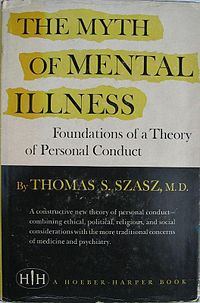
The Myth of Mental Illness 1961
The Myth of Mental Illness 1961.

The Myth of Mental Illness: Foundations of a Theory of Personal Conduct is a 1961 book by the psychiatrist Thomas Szasz, in which the author criticises psychiatry and argues against the concept of mental illness.

It received much publicity, and has become a classic, well known as an argument that “mentally ill” is a label which psychiatrists have used against people “disabled by living” rather than truly having a disease.

Refer to:

  • Game theory: For Szasz, mental illness is best understood through the lens of game theory
  • Neurodiversity: A belief of promoting the acceptance of numerous different brain types typically considered to be mental disorders or illnesses by the scientific community

Background

Szasz writes that he became interested in writing The Myth of Mental Illness in approximately 1950, when, having become established as a psychiatrist, he became convinced that the concept of mental illness was vague and unsatisfactory. He began work on the book in 1954, when he was relieved of the burdens of a full-time psychiatric practice by being called to active duty in the navy. Later in the 1950s, it was rejected by the first publisher to whom Szasz submitted the manuscript. Szasz next sent the manuscript to Paul Hoeber, director of the medical division of Harper & Brothers, who arranged for it to be published.

Summary

Szasz argues that it does not make sense to classify psychological problems as diseases or illnesses, and that speaking of “mental illness” involves a logical or conceptual error. In his view, the term “mental illness” is an inappropriate metaphor and there are no true illnesses of the mind. His position has been characterised as involving a rigid distinction between the physical and the mental.

The legitimacy of psychiatry is questioned by Szasz, who compares it to alchemy and astrology, and argues that it offends the values of autonomy and liberty. Szasz believes that the concept of mental illness is not only logically absurd but has harmful consequences: instead of treating cases of ethical or legal deviation as occasions when a person should be taught personal responsibility, attempts are made to “cure” the deviants, for example by giving them tranquilisers. Psychotherapy is regarded by Szasz as useful not to help people recover from illnesses, but to help them “learn about themselves, others, and life.” Discussing Jean-Martin Charcot and hysteria, Szasz argues that hysteria is an emotional problem and that Charcot’s patients were not really ill.

Reception

The Myth of Mental Illness received much publicity, quickly became a classic, and made Szasz a prominent figure. The book was reviewed in the American Journal of Psychiatry, Journal of Nervous and Mental Disease, Psychosomatic Medicine, Archives of General Psychiatry, Clinical Psychology Review, and Psychologies. Published at a vulnerable moment for psychiatry, when Freudian theorizing was just beginning to fall out of favour and the field was trying to become more medically oriented and empirically based, the book provided an intellectual foundation for mental patient advocates and anti-psychiatry activists. It became well known in the mental health professions and was favourably received by those sceptical of modern psychiatry, but placed Szasz in conflict with many doctors. Soon after The Myth of Mental Illness was published, the Commissioner of the New York State Department of Mental Hygiene demanded, in a letter citing the book, that Szasz be dismissed from his university position because he did not accept the concept of mental illness.

The philosopher Karl Popper, in a 1961 letter to Szasz, called the book admirable and fascinating, adding that, “It is a most important book, and it marks a real revolution.” The psychiatrist David Cooper wrote that The Myth of Mental Illness, like the psychiatrist R.D. Laing’s The Divided Self (1960), proved stimulating in the development of anti-psychiatry, though he noted that neither book is itself an anti-psychiatric work. He described Szasz’s work as “a decisive, carefully documented demystification of psychiatric diagnostic labelling in general.” Socialist author Peter Sedgwick, writing in 1982, commented that in The Myth of Mental Illness, Szasz expounded a “game-playing model of social interaction” which is “zestful and insightful” but “neither particularly uncommon nor particularly iconoclastic by the standards of recent social-psychological theorising.” Sedgwick argued that many of Szasz’s observations are valuable regardless of the validity of Szasz’s rejection of the concept of mental illness, and could easily be accepted by psychotherapists. Although agreeing with Szasz that the assignation of mental illness could undermine individual responsibility, he noted that this did not constitute an objection to the concept itself.

The philosopher Michael Ruse called Szasz the most forceful proponent of the thesis that mental illness is a myth. However, while sympathetic to Szasz, he considered his case over-stated. Ruse criticized Szasz’s arguments on several grounds, maintaining that while the concepts of disease and illness were originally applied only to the physiological realm, they can properly be extended to the mind, and there is no logical absurdity involved in doing so. Kenneth Lewes wrote that The Myth of Mental Illness is the most notable example of the “critique of the institutions of psychiatry and psychoanalysis” that occurred as part of the “general upheaval of values in the 1960s”, though he saw the work as less profound than Michel Foucault’s Madness and Civilization (1961).

The psychiatrist Peter Breggin called The Myth of Mental Illness a seminal work. The author Richard Webster described the book as a well known argument against the tendency of psychiatrists to label people who are “disabled by living” as mentally ill. He observed that while some of Szasz’s arguments are similar to his, he disagreed with Szasz’s view that hysteria was an emotional problem and that Charcot’s patients were not genuinely mentally ill. The lawyer Linda Hirshman wrote that while few psychiatrists adopted the views Szasz expounded in The Myth of Mental Illness, the book helped to encourage a revision of their diagnostic and therapeutic claims. The historian Lillian Faderman called the book the most notable attack on psychiatry published in the 1960s, adding that “Szasz’s insights and critiques would prove invaluable to the homophile movement.”

What are Life Skills?

Introduction

Life skills are abilities for adaptive and positive behaviour that enable humans to deal effectively with the demands and challenges of life.

This concept is also termed as psychosocial competency. The subject varies greatly depending on social norms and community expectations but skills that function for well-being and aid individuals to develop into active and productive members of their communities are considered as life skills.

Enumeration and Categorisation

The UNICEF Evaluation Office suggests that “there is no definitive list” of psychosocial skills; nevertheless UNICEF enumerates psychosocial and interpersonal skills that are generally well-being oriented, and essential alongside literacy and numeracy skills. Since it changes its meaning from culture to culture and life positions, it is considered a concept that is elastic in nature. But UNICEF acknowledges social and emotional life skills identified by Collaborative for Academic, Social and Emotional Learning (CASEL). Life skills are a product of synthesis: many skills are developed simultaneously through practice, like humour, which allows a person to feel in control of a situation and make it more manageable in perspective. It allows the person to release fears, anger, and stress & achieve a qualitative life.

For example, decision-making often involves critical thinking (“what are my options?”) and values clarification (“what is important to me?”), (“How do I feel about this?”). Ultimately, the interplay between the skills is what produces powerful behavioural outcomes, especially where this approach is supported by other strategies.

Life skills can vary from financial literacy, through substance-abuse prevention, to therapeutic techniques to deal with disabilities such as autism.

Core Skills

The World Health Organisation (WHO) in 1999 identified the following core cross-cultural areas of life skills:

  • Decision-making and problem-solving;
  • Creative thinking (see also: lateral thinking) and critical thinking;
  • Communication and interpersonal skills;
  • Self-awareness and empathy;
  • Assertiveness and equanimity; and
  • Resilience and coping with emotions and coping with stress.

UNICEF listed similar skills and related categories in its 2012 report.

Life skills curricular designed for K-12 often emphasize communications and practical skills needed for successful independent living as well as for developmental-disabilities/special-education students with an Individualized Education Programme (IEP).

There are various courses being run based on WHO’s list supported by UNFPA. In Madhya Pradesh, India, the programme is being run with Government to teach these through Government Schools.

Skills for Work and Life

Skills for work and life, known as technical and vocational education and training (TVET) is comprising education, training and skills development relating to a wide range of occupational fields, production, services and livelihoods. TVET, as part of lifelong learning, can take place at secondary, post-secondary and tertiary levels, and includes work-based learning and continuing training and professional development which may lead to qualifications. TVET also includes a wide range of skills development opportunities attuned to national and local contexts. Learning to learn and the development of literacy and numeracy skills, transversal skills and citizenship skills are integral components of TVET.

Parenting: A Venue of Life Skills Nourishment

Life skills are often taught in the domain of parenting, either indirectly through the observation and experience of the child, or directly with the purpose of teaching a specific skill. Parenting itself can be considered as a set of life skills which can be taught or comes natural to a person. Educating a person in skills for dealing with pregnancy and parenting can also coincide with additional life skills development for the child and enable the parents to guide their children in adulthood.

Many life skills programs are offered when traditional family structures and healthy relationships have broken down, whether due to parental lapses, divorce, psychological disorders or due to issues with the children (such as substance abuse or other risky behaviour). For example, the International Labour Organisation is teaching life skills to ex-child laborers and at-risk children in Indonesia to help them avoid and to recover from worst forms of child abuse.

Models: Behaviour Prevention vs. Positive Development

While certain life skills programs focus on teaching the prevention of certain behaviours, they can be relatively ineffective. Based upon their research, the Family and Youth Services Bureau, a division of the US Department of Health and Human Services advocates the theory of positive youth development (PYD) as a replacement for the less effective prevention programmes. PYD focuses on the strengths of an individual as opposed to the older decrepit models which tend to focus on the “potential” weaknesses that have yet to be shown. The Family and Youth Services Bureau has found that individuals who were trained in life skills by positive development model identified themselves with a greater sense of confidence, usefulness, sensitivity and openness rather than that of preventive model.

What is Love and Hate (Psychoanalysis)?

Introduction

Love and hate as co-existing forces have been thoroughly explored within the literature of psychoanalysis, building on awareness of their co-existence in Western culture reaching back to the “odi et amo” of Catullus, and Plato’s Symposium.

Love and Hate in Freud’s Work

Ambivalence was the term borrowed by Sigmund Freud to indicate the simultaneous presence of love and hate towards the same object. While the roots of ambivalence can be traced back to breast-feeding in the oral stage, it was reinforced during toilet-training as well. Freudian followers such as Karl Abraham and Erik H. Erikson distinguished between an early sub-stage with no ambivalence at all towards the mother’s breast, and a later oral-sadistic sub-phase where the biting activity emerges and the phenomenon of ambivalence appears for the first time. The child is interested in both libidinal and aggressive gratifications, and the mother’s breast is at the same time loved and hated.

While during the pre-oedipal stages ambivalent feelings are expressed in a dyadic relationship between the mother and the child, during the oedipal conflict ambivalence is experienced for the first time within a triangular context which involves the child, the mother and the father. In this stage, both the boy and the girl develop negative feelings of jealousy, hostility and rivalry toward the parent of the same sex, but with different mechanisms for the two sexes. The boy’s attachment to his mother becomes stronger, and he starts developing negative feelings of rivalry and hostility toward the father. The boy wishes to destroy the father so that he can become his mother’s unique love object. On the other hand, the girl starts a love relationship with her father. The mother is seen by the girl as a competitor for the father’s love and so the girl starts feeling hostility and jealousy towards her. The negative feelings which arise in this phase coexist with love and affection toward the parent of the same sex and result in an ambivalence which is expressed in feelings, behaviour and fantasies. The negative feelings are a source of anxiety for the child who is afraid that the parent of the same sex would take revenge on him/her. In order to lessen the anxiety, the child activates the defence mechanism of identification, and identifies with the parent of the same sex. This process leads to the formation of the Super-Ego.

According to Freud, ambivalence is the precondition for melancholia, together with loss of a loved object, oral regression and discharge of the aggression toward the self. In this condition, the ambivalently loved object is introjected, and the libido is withdrawn into the self in order to establish identification with the loved object. The object loss then turns into an ego loss and the conflict between the Ego and the Super-Ego becomes manifested. The same ambivalence occurs in the obsessional neurosis, but there it remains related to the outside object.

In the Work of Melanie Klein

The object relations theory of Melanie Klein pivoted around the importance of love and hate, concern for and destruction of others, from infancy onwards. Klein stressed the importance of inborn aggression as a reflection of the death drive and talked about the battle of love and hatred throughout the life span. As life begins, the first object for the infant to relate with the external world is the mother. It is there that both good and bad aspects of the self are split and projected as love and hatred to the mother and the others around her later on: as analyst, she would find herself split similarly into a “nice” and a “bad” Mrs Klein.

During the paranoid-schizoid position, the infant sees objects around it either as good or bad, according to his/her experiences with them. They are felt to be loving and good when the infant’s wishes are gratified and happy feelings prevail. On the other hand, objects are seen as bad when the infant’s wishes are not met adequately and frustration prevails. In the child’s world there is not yet a distinction between fantasy and reality; loving and hating experiences towards the good and bad objects are believed to have an actual impact on the surrounding objects. Therefore, the infant must keep these loving and hating emotions as distinct as possible, because of the paranoid anxiety that the destructive force of the bad object will destroy the loving object from which the infant gains refuge against the bad objects. The mother must be either good or bad and the feeling experienced is either love or hate.

Emotions become integrated as a part of the development process. As the infant’s potential to tolerate ambivalent feelings with the depressive position, the infant starts forming a perception of the objects around it as both good and bad, thus tolerating the coexistence of these two opposite feelings for the same object where experience had previously been either idealised or dismissed as bad, the good object can be accepted as frustrating without losing its acceptable status. When this takes place, the previous paranoid anxiety (that the bad object will destroy everything) transforms into a depressive anxiety; this is the intense fear that the child’s own destructiveness (hate) will damage the beloved others. Subsequently, for the coexistence of love and hate to be attainable, the child must believe in her ability to contain hate, without letting it destroy the loving objects. He/she must believe in the prevalence of the loving feelings over his/her aggressiveness. Since this ambivalent state is hard to preserve, under difficult circumstances it is lost, and the person returns to the previous manner keeping love and hate distinct for a period of time until he/she is able to regain the capacity for ambivalence.

Refer to The Life and Death Instincts in Kleinian Object Relations Theory.

In the Work of Ian Suttie

Ian Dishart Suttie (1898-1935) wrote the book The Origins of Love and Hate, which was first published in 1935, a few days after his death. He was born in Glasgow and was the third of four children. His father was a general practitioner, and Ian Suttie and both of his brothers and his sister became doctors as well. He qualified from Glasgow University in 1914. After a year he went into psychiatry.

Although his work has been out of print in England for some years, it is still relevant today. It has been often cited and makes a contribution towards understanding the more difficult aspects of family relationships and friendships. He can be seen as one of the first significant object relations theorists and his ideas anticipated the concepts put forward by modern self psychologists.

Although Ian Suttie was working within the tradition set by Freud, there were a lot of concepts of Freud’s theory he disagreed with. First of all, Suttie saw sociability, the craving for companionship, the need to love and be loved, to exchange and to participate, to be as primary as sexuality itself. And in contrast with Freud he didn’t see sociability and love simply as a derivative from sexuality. Secondly, Ian Suttie explained anxiety and neurotic maladjustment, as a reaction on the failure of finding a response for this sociability; when primary social love and tenderness fails to find the response it seeks, the arisen frustration will produce a kind of separation anxiety. This view is more clearly illustrated by a piece of writing of Suttie himself: ‘Instead of an armament of instincts, latent or otherwise, the child is born with a simple attachment-to-mother who is the sole source of food and protection… the need for a mother is primarily presented to the child mind as a need for company and as a discomfort in isolation’.

Ian Suttie saw the infant as striving from the first to relate to his mother, and future mental health would depend on the success or failure of this first relationship (object relations). Another advocate of the object relations paradigm is Melanie Klein. Object relations was in contrast with Freud’s psychoanalysis. The advocates of this object relations paradigm all, in exception of Melanie Klein, held the opinion that most differences in individual development that are of importance for mental health could be traced to differences in the way children were treated by their parents or to the loss or separation of parent-figures. In the explanation of the love and hate relationship by Ian Suttie, the focus, not surprisingly, lies in relations and the social environment. According to Suttie, Freud saw love and hate as two distinct instincts. Hate had to be overcome with love, and because both terms are seen as two different instincts, this means repression. In Suttie’s view however, this is incompatible with the other Freudian view that life is a struggle to attain peace by the release of the impulse. These inconsistencies would be caused by leaving out the social situations and motives. Suttie saw hate as the frustration aspect of love. “The greater the love, the greater the hate or jealousy caused by its frustration and the greater the ambivalence or guilt that may arise in relation to it.” Hate has to be overcome with love by the child removing the cause of the anxiety and hate by restoring harmonious relationships. The feeling of anxiety and hate can then change back into the feeling of love and security. This counts for the situation between mother and child and later for following relationships.

In Suttie’s view, the beginning of the relationship between mother and child is a happy and symbiotic one as well. This happy symbiotic relationship between mother and baby can be disrupted by for example a second baby or the mother returning to work. This makes the infant feel irritable, insecure and anxious. This would be the start of the feeling of ambivalence: feelings of love and hate towards the mother. The child attempts to remove the cause of the anxiety and hate to restore the relationship (retransforming). This retransforming is necessary, because hate of a loved object (ambivalence) is intolerable.

In the Work of Edith Jacobson

The newborn baby is not able to distinguish the self from others and the relationship with the mother is symbiotic, with the two individuals forming a unique object. In this period, the child generates two different images of the mother. On one hand there is the loving mother, whose image derives from experiences of love and satisfaction in the relationship with her. On the other hand, there is the bad mother, whose image derives from frustrating and upsetting experiences in the relationship. Since the child at this stage is unable to distinguish the self from the other, those two opposite images are often fused and confused, rather than distinguished. At about six months of age, the child becomes able to distinguish the self from the others. He now understands that his mother can be both gratifying and frustrating, and he starts experiencing himself as being able to feel both love and anger.

This ambivalence results in a vacillation between attitudes of passive dependency on the omnipotent mother and aggressive strivings for self expansion and control over the love object. The passive-submissive and active-aggressive behaviour of the child during the pre-oedipal and the early oedipal period is determined by his ambivalent emotional fluctuations between loving and trusting admirations of his parents and disappointed depreciation of the loved objects. The ego can use this ambivalence conflicts to distinguish between the self and the object. At the beginning, the child tends to turn aggression toward the frustrating objects and libido towards the self. Hence, frustration, demands and restrictions imposed by parents within normal bounds, reinforce the process of discovery and distinction of the object and the self. When early experiences of severe disappointment and abandonment have prevented the building up of un-ambivalent object relations and stable identifications and weakened the child’s self-esteem, they may result in ambivalence conflict in adulthood, which in turn causes depressive states.