Book: Cognitive Behavioural Therapy For Dummies

Book Title:

Cognitive Behavioural Therapy For Dummies.

Author(s): Rhena Branch and Rob Wilson, PhD.

Year: 2019.

Edition: Third (3rd).

Publisher: Joh Wiley and Sons Inc.

Type(s):Paperback.

Synopsis:

Retrain your thinking and your life with these simple, scientifically proven techniques! Cognitive behavioral therapy, or CBT for short, is often cited as the gold standard of psychotherapy. Its techniques allow you to identify the negative thought processes that hold you back and exchange them for new, productive ones that can change your life.

Increasingly popular among healthcare professionals, the CBT approach can be used by anyone to overcome common problems ranging from depression or anxiety to more complex disorders like OCD, PTSD and addiction. CBT can also be used to simply developing a healthier, more productive outlook on life.

This book shows you how you can easily incorporate the techniques of CBT into your day-to-day life and produce tangible results. You will learn how to take your negative thoughts to boot camp and retrain them, establishing new habits that tackle your toxic thoughts and retool your awareness, allowing you be free of the weight of past negative thinking biases.

  • Move on: take a fresh look at your past and maybe even overcome it.
  • Mellow out: relax yourself through techniques that reduce anger and stress Lighten up: read practical advice on healthy attitudes for living and ways to nourish optimism.
  • Look again: discover how to overcome low self-esteem and body image issues Whatever the issue, do not let your negative thoughts have the last say.

Addictions: Broken Brain Model vs Systems-Level Perspective

Research Paper Title

Curing the broken brain model of addiction: Neurorehabilitation from a systems perspective.

Background

The dominant biomedical perspective on addictions has been that they are chronic brain diseases.

While the authors acknowledge that the brains of people with addictions differ from those without, they argue that the “broken brain” model of addiction has important limitations. They propose that a systems-level perspective more effectively captures the integrated architecture of the embodied and situated human mind and brain in relation to the development of addictions. This more dynamic conceptualisation places addiction in the broader context of the addicted brain that drives behaviour, where the addicted brain is the substrate of the addicted mind, that in turn is situated in a physical and socio-cultural environment.

From this perspective, neurorehabilitation should shift from a “broken-brain” to a systems theoretical framework, which includes high-level concepts related to the physical and social environment, motivation, self-image, and the meaning of alternative activities, which in turn will dynamically influence subsequent brain adaptations. The authors call this integrated approach system-oriented neurorehabilitation.

They illustrate their proposal by showing the link between addiction and the architecture of the embodied brain, including a systems-level perspective on classical conditioning, which has been successfully translated into neurorehabilitation. Central to this example is the notion that the human brain makes predictions on future states as well as expected (or counterfactual) errors, in the context of its goals.

The authors advocate system-oriented neurorehabilitation of addiction where the patients’ goals are central in targeted, personalised assessment and intervention.

Reference

Wiers, R.W. & Verschure, P. (2020) Curing the broken brain model of addiction: Neurorehabilitation from a systems perspective. Addictive Behaviors. doi: 10.1016/j.addbeh.2020.106602. Online ahead of print.

Book: Becoming an Addictions Counselor

300300

Book Title:

Becoming an Addictions Counselor: A Comprehensive Text.

Author(s): Peter L. Myers and Norman R. Salt.

Year: 2018.

Edition: Fourth (4th).

Publisher: Jones & Bartlett Learning.

Type(s): Paperback and Kindle.

Synopsis:

Becoming an Addictions Counselor, Fourth Edition provides evidence-based findings, cutting-edge treatment techniques, and a focus on critical thinking to show future counsellors how to respond to clients’ needs rather than impose “cookie-cutter” routines.

Book: The Age of Addiction – How Bad Habits Became Big Business

300300

Book Title:

The Age of Addiction – How Bad Habits Became Big Business.

Author(s): David T. Courtwright.

Year: 2019.

Edition: First (1st).

Publisher: Harvard University Press..

Type(s): Hardcover, Paperback, Audiobook, and Kindle.

Synopsis:

We live in an age of addiction, from compulsive gaming and shopping to binge eating and opioid abuse.

Sugar can be as habit-forming as cocaine, researchers tell us, and social media apps are deliberately hooking our kids.

But what can we do to resist temptations that insidiously rewire our brains? A renowned expert on addiction, David Courtwright reveals how global enterprises have both created and catered to our addictions.

The Age of Addiction chronicles the triumph of what he calls “limbic capitalism,” the growing network of competitive businesses targeting the brain pathways responsible for feeling, motivation, and long-term memory.

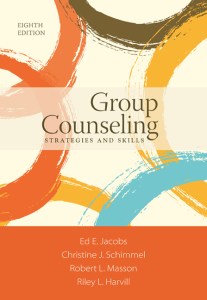
Book: Group Counseling – Strategies and Skills

Book Title:

Group Counseling – Strategies and Skills.

Author(s): Ed E. Jacobs, Christine J. Schimmel, Robert L. Mason, and Riley L. Harvill.

Year: 2016.

Edition: Eighth (8th).

Publisher: Brooks/Cole.

Type(s): Paperback.

Synopsis:

Group Counseling: Strategies and Skills, Eighth Edition, provides an in-depth look at group counselling with an emphasis on practical knowledge and techniques for effective group leadership.

The authors discuss the many facets of group counselling and provide examples of how each skill can be applied in a wide range of group settings to produce effective and efficient group sessions.

The book focuses on the skills necessary for starting and ending a session, as well as on how to make the middle phase productive and meaningful.

Its practical, active approach is supported by nearly 50 video segments-including several new ones-that demonstrate specific skills as well as the integration of multiple skills and techniques.

Through its integration of traditional theories and concepts of group process with thoughtful strategies and specific skills, this reader-friendly book and video clips meet the needs of practising or future counsellors, social workers, psychologists, and others who are leading or preparing to lead groups in a variety of settings.

Book: The Easy Way to Stop Gambling – Take Control of Your Life

Book Title:

The Easy Way to Stop Gambling – Take Control of Your Life.

Author(s): Allen Carr.

Year: 2013.

Edition: First (1st).

Publisher: Arcturus Publishing Ltd.

Type(s): Paperback, Audiobook, and Kindle.

Synopsis:

Allen Carr’s Easyway is a global phenomenon. It has helped millions of smokers from all over the world, and has also been successfully applied to a wide range of other issues, including drinking, overeating, and overspending.

Here the method addresses the fastest growing social problem of modern times: gambling.

Allen Carr explains how gamblers fall into the trap and why they keep gambling despite knowing that it’s ruining their lives.

By explaining the nature of the trap, he removes the desire to gamble and the fears that keep you hooked.

Most important of all, you will not feel that you have made a sacrifice, you will not miss gambling, and you will enjoy life to the full without feeling in any way deprived.

Book: Food and Addiction – A Comprehensive Handbook

Book Title:

Food and Addiction – A Comprehensive Handbook.

Author(s): Kelly D. Brownell and Mark S. Gold (Editors).

Year: 2014.

Edition: First.

Publisher: Oxford University Press.

Type(s): Hardcover, Paperback and Kindle.

Synopsis:

Can certain foods hijack the brain in ways similar to drugs and alcohol, and is this effect sufficiently strong to contribute to major diseases such as obesity, diabetes, and heart disease, and hence constitute a public health menace?

Terms like “chocoholic” and “food addict” are part of popular lore, some popular diet books discuss the concept of addiction, and there are food addiction programmes with names like Food Addicts in Recovery Anonymous.

Clinicians who work with patients often hear the language of addiction when individuals speak of irresistible cravings, withdrawal symptoms when starting a diet, and increasing intake of palatable foods over time.

But what does science show, and how strong is the evidence that food and addiction is a real and important phenomenon?

Food and Addiction: A Comprehensive Handbook brings scientific order to the issue of food and addiction, spanning multiple disciplines to create the foundation for what is a rapidly advancing field and to highlight needed advances in science and public policy.

The book assembles leading scientists and policy makers from fields such as nutrition, addiction, psychology, epidemiology, and public health to explore and analyse the scientific evidence for the addictive properties of food.

It provides complete and comprehensive coverage of all subjects pertinent to food and addiction, from basic background information on topics such as food intake, metabolism, and environmental risk factors for obesity, to diagnostic criteria for food addiction, the evolutionary and developmental bases of eating addictions, and behavioural and pharmacologic interventions, to the clinical, public health, and legal and policy implications of recognising the validity of food addiction.

Each chapter reviews the available science and notes needed scientific advances in the field.

Can CBD Capsules Treat Cannabis Addiction?

For individuals who are addicted to cannabis, one treatment option may be, paradoxically, to take pills that contain an extract of the drug.

The first test of the idea has found that indiviudals taking capsules of this extract, known as cannabidiol (CBD), nearly halved the amount of cannabis they smoked, according to recent research.

Cannabis is often seen as a soft drug, but according to one estimate about one in 10 people can become addicted, getting withdrawal symptoms such as anxiety when they try to stop using it.

The number of individuals seeking treatment because they can not quit smoking cannabis has been rising in the past decade, linked with use of the more potent form known as skunk.

There are two main psychoactive substances in cannabis:

  • The first is CBD; and
  • The second is the compound is tetrahydrocannabinol (THC).

THC is responsible for the drug’s high and, while THC tends to increase anxiety, CBD calms – it gets rid of eh toxic effects of THC.

In a recent study, Val Curran and her colleagues at the University College London, ran a trial in which participants took CBD for four weeks to alleviate withdrawal symptoms to help them quit smoking cannabis.

The trial involved 82 individuals classed as severely addicted to the drug, who were given one of three different doses of CBD in capsule form or a placebo (they all, also, had psychological support).

  • The middle dose of 400 milligrams worked best – after six months, it halved the amount of cannabis each individual used compared with placebo, as shown by tests for THC in their urine.
    • The 400 milligram dose also more than doubled the number of days when individuals had no THC in their urine.
  • The highest dose of 800 milligrams was slightly less effective than the middle one.
  • The lowest dose did not work.

A previous study has shown that individuals can also be helped to quit smoking cannabis by treatment with Sativex, a cannabis extract with both CBD and THC, deployed in a similar way to nicotine replacement therapy for tobacco users.

Academics suggest there could be advantages to using CBD alone. CBD has a variety of anti-addictive properties.

Researchers are also investigating CBD as a treatment for alcohol addiction. Two of the main features during alcohol detoxification are:

  • Severe anxiety; and
  • Risk of seizures.

It is believed that CBD has very strong anxiety-reducing properties, but this is still being researched.

Curran’s study also found preliminary evidence that CBD may help individuals to give up smoking tobacco.

CBD supplements are increasingly sold in pharmacies and health food shops as remedies for a range of illnesses, but at much lower doses than those used in Curran’s trial.

Many of the health claims made for them are not (currently) based on evidence. Therefore the current advice is that anyone who cannot stop smoking cannabis should seek medical assistance.

Reference

New Scientist. (2019) CBD Capsules May Treat Cannabis Addiction. New Scientist. 19 October 2019, pp.9.

Can Mushrooms be the New Cannabis?

In the attached article, from The Economist, investors are hoping that medical psychedelics will be the new cannabis.

It briefly looks at how Ketamine and psilocybin (which gives mushrooms their magic) are being researched for their potential effects on psychiatric conditions such as depression, anxiety, and addiction.

Reference

The Economist. (2019) Medical Psychedelics: Shroom to Grow. The Economist. 16 October 2019.

Is It Really Addiction?

An interesting article in the New Scientist around addiction, specifically gaming disorder.

“For Ian and others like him, video games feel as addictive as a drug.

In May, the World Health Organization (WHO) reached a similar conclusion, including gaming disorder in its International Classification of Diseases for the first time.

Studies suggest that between 0.3 and 1 per cent of the general population might qualify for a diagnosis.

In the UK, plans are under way to open the first National Health Service-funded internet addiction centre, which will initially focus on gaming disorder.

But some argue that to pathologise problematic gaming as an addiction is a mistake.

In 2017, a group of 24 academics argued against attributing this behaviour to a new disorder.” (Sarner, 2019, p.42).

You can read the full article below.

Reference

Sarner, M. (2019) Is It Really Addiction? New Scientist. 14 September 2019, pp.42-47.