Book: Conquer Worry and Anxiety – The Secret to Mastering Your Mind

Book Title:

Conquer Worry and Anxiety – The Secret to Mastering Your Mind.

Author(s): Daniel G. Amen, MD.

Year: 2020.

Edition: First (1st).

Publisher: Tyndale Momentum.

Type(s): Paperback and Kindle.

Synopsis:

You can overcome worry and anxiety today. It is possible to feel better fast – and to make it last.

Many people, mental health professionals included, think therapy needs to be long, hard, and painful – a lifelong commitment. And while some people will need help longer than others, it is often possible for people to start feeling better right now. If you engage in the right behaviours and strategies, you’ll optimize your brain health – and see the benefits in your everyday life.

In Conquer Worry and Anxiety, renowned psychiatrist Dr. Daniel G. Amen will guide you to lasting change, teaching you how to make decisions that serve your brain’s health and set you on a path to a happier, healthier life. Each of us can make small changes that, over time, create amazing results.

Alzheimer’s Disease: Carers and their Mental Health

Research Paper Title

Predictors of mental health problems in formal and informal caregivers of patients with Alzheimer’s disease.

Background

Caring for a person with Alzheimer’s disease (AD) is associated with significant mental burden e.g., depression and anxiety, and difficulties with social, familial, and professional functioning. To date, few studies have examined variables which would allow for a comprehensive and detailed study of the relationship between personal resources and caregiver health status, with a majority of studies focusing on factors that contribute to increased caregiver’s burden. Moreover, the available evidence fails to address differences in the functioning of formal and informal carers. Paying proper attention to the problems of nursing home staff can help identify important risk factors. Therefore, this study compared mental health problems in informal and formal caregivers and examined the relationship between mental resources and mental health problems in both groups of caregivers.

Methods

This cross-sectional study examined 100 formal (n = 50) and informal (n = 50) caregivers of AD patients. Personal resources were measured with the Social Support Questionnaire (SSQ), the Generalised Self-Efficacy Scale (GSES), and the Sense of Coherence Questionnaire (SCQ), while mental health was assessed with the Depression Assessment Questionnaire (DAQ) and the General Health Questionnaire (GHQ). Multivariate stepwise regression was performed separately for both investigated groups.

Results

There were no significant differences between informal and formal caregivers in terms of psychological variables, i.e., sense of coherence, social support, self-efficacy, or mental health problems. In contrast, there were different significant predictors of mental health problems in both groups. Comprehensibility (SCQ) was a significant predictor of mental health problems measured by DAQ and self-efficacy (GSES) was a significant predictor of mental health problems measured by GHQ in informal caregivers. For formal caregivers, emotional support (SSQ) and comprehensibility (SCQ) were significant predictors of mental health problems measured by DAQ, while tangible support (SSQ) and meaningfulness (SCQ) were significant predictors of mental health problems measured by GHQ.

Conclusions

Personal resources are significant predictors of mental health outcomes in caregivers of AD patients. Preventive actions should therefore include assessment of factors affecting caregivers’ mental health in order to provide them with necessary care and create appropriate support groups.

Reference

Soltys, A. & Tyburski, E. (2020) Predictors of mental health problems in formal and informal caregivers of patients with Alzheimer’s disease. BMC Psychiatry. 20(1), pp.435. doi: 10.1186/s12888-020-02822-7.

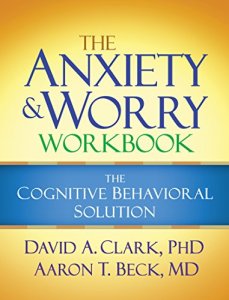
Book: The Anxiety and Worry Workbook

300300

Book Title:

The Anxiety and Worry Workbook: The Cognitive Behavioural Solution.

Author(s): David A. Clark and Aaron T. Beck.

Year: 2011.

Edition: First (1st), Illustrated Edition.

Publisher: The Guildford Press.

Type(s): Paperback and Kindle.

Synopsis:

If you are seeking lasting relief from out-of-control anxiety, this is the book for you. It is grounded in cognitive behaviour therapy (CBT), the proven treatment approach developed and tested over more than 25 years by pioneering clinician-researcher Aaron T. Beck.

Now Dr. Beck and fellow CBT expert David A. Clark put the tools and techniques of CBT at your fingertips in this compassionate guide. Carefully crafted worksheets (you can download and print additional copies as needed), exercises, and examples reflect the authors’ decades of experience helping people just like you.

Learn practical strategies for identifying your anxiety triggers, challenging the thoughts and beliefs that lead to distress, safely facing the situations you fear, and truly loosening anxiety’s grip – one manageable step at a time.

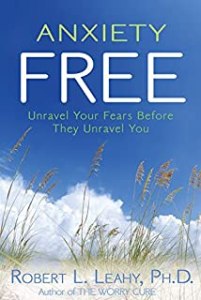
Book: Anxiety Free – Unravel Your Fears Before They Unravel You

300300

Book Title:

Anxiety Free – Unravel Your Fears Before They Unravel You.

Author(s): Robert L. Leahy, PhD.

Year: 2009.

Edition: First (1st).

Publisher: Hay House UK.

Type(s): Hardcover, Paperback, Audiobook, and Kindle.

Synopsis:

Dr. Robert L. Leahy’s techniques to treat negativity and improve mental health have been proven easy, effective and popular by many people worldwide, while his books have been translated into eleven languages and are a valuable source used throughout the world in training other behavioural therapists.

His latest book Anxiety Free presents his simple and powerful techniques for coping with anxiety and worry in a straightforward and engaging manner, and can help you overcome your fear and doubt – permanently.

Can We Use Telehealth to Reach Underserved Veterans?

Research Paper Title

The Impact of Co-occurring Anxiety and Alcohol Use Disorders on Video Telehealth Utilisation Among Rural Veterans.

Background

Co-occurring anxiety and alcohol use disorders lead to poorer treatment outcomes for both disorders.

Compounding risk for poor outcomes related to these disorders, individuals living in rural areas face barriers receiving evidence-based mental health treatment.

Video to home telehealth (VTH) has been implemented broadly within the Veterans Health Administration to improve access to care for rural veterans. However, VTH may not be utilised equally across disorders and comorbidities, including co-occurring anxiety and alcohol use disorders, potentially contributing to gaps in care that are not available in person.

Methods

A cohort of veterans who received at least one VTH mental health visit between fiscal years 2016-2019 was compiled from VA administrative data.

Multilevel linear growth curve models were used to examine growth in VTH use over time among veterans with anxiety only, alcohol use disorder only, and co-occurring disorders.

Results

Fixed effects were significant for both time and diagnosis group and a significant interaction between time and group.

For each subsequent fiscal year, the percentage of total MH visits that were VTH increased for all groups but less so for those with co-occurring anxiety and alcohol use diagnoses.

Conclusions

Despite VTH being an important tool to reach underserved rural veterans, rural veterans with AUD and co-occurring anxiety and AUD are at risk for not receiving care using this modality.

Findings suggest that veterans with co-occurring anxiety and AUD are especially at risk for being underserved, given that a major goal of VTH is to increase access to mental health services.

Reference

Ecker, A.H., Amspoker, A.B., Hogan, J.B. & Lindsay, J.A. (2020) The Impact of Co-occurring Anxiety and Alcohol Use Disorders on Video Telehealth Utilization Among Rural Veterans. Journal of Technology in Behavioral Science. 1-6. doi: 10.1007/s41347-020-00150-x. Online ahead of print.

Linking New Interests & Activities with Anxiety & Depression in Retirement for Navy Veterans

Research Paper Title

The impact of socio-demographic features on anxiety and depression amongst navy veterans after retirement: a cross-sectional study.

Background

Retirement from work may trigger various changes in everyday life that affect mental health.

The current cross-sectional study, conducted with 231 veterans, examines the relationship between socio-demographic features and both anxiety and depression in navy veterans after retirement.

Methods

Spielberg’s State-Trait Anxiety Inventory (STAI) was used for anxiety assessment, and the Beck Depression Inventory (BDI) was used for depression assessment.

The analysis was performed with the Statistical Package for Social Sciences (SPSS), version 20.0.

Results

It was found that the mean score of state anxiety was 41 and trait anxiety, 38.

Severe depression was found in 6.5% of the veterans, moderate in 8.3% and mild in 21.7%.

The presence of a serious health problems was an independent predictor of both anxiety and depression’s more serious symptoms.

Conclusions

Inversely, the stability in terms of retirement choice was negatively related to depression, while the development of new interests and activities after retirement was negatively related to both anxiety and depression.

Further, life satisfaction after retirement was a predictor of lower current anxiety levels among veterans.

Reference

Georgantas, D., Tsounis, A., Vidakis, I., Malliarou, M. & Sarafis, P. (2020) The impact of socio-demographic features on anxiety and depression amongst navy veterans after retirement: a cross-sectional study. BMC Rsearch Notes. 13(1), pp.122. doi: 10.1186/s13104-020-04966-x.

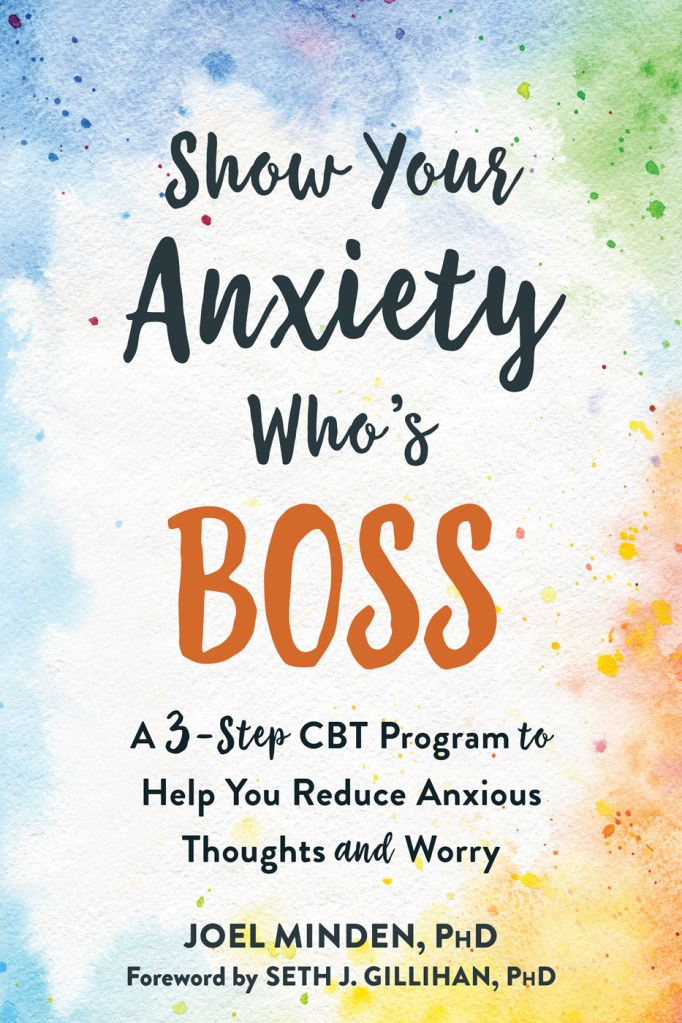
Book: Show Your Anxiety Who’s Boss

Book Title:

Show Your Anxiety Who’s Boss: a 3-Step CBT Programme to Help You Reduce Anxious Thoughts and Worry.

Author(s): Joel Minden PhD.

Year: 2020.

Edition: First (1ed).

Publisher: New Harbinger Publications.

Type(s): Paperback.

Synopsis:

Outsmart your anxiety with a ridiculously easy, three-step approach!

Is your anxiety running your life? Does it tell you where you can go, and when? Does it keep you trapped in a bubble of fear and panic? Anxiety can happen anytime, anywhere – and that is why you need simple, in-the-moment skills to stay grounded when worry takes hold. This accessible guide will help you gain the upper hand, show your anxiety who’s boss, and start living the life that you were always meant to live.

In Show Your Anxiety Who’s Boss, you will find a simple and direct three-step approach grounded in cognitive behavioural therapy (CBT) to help you gain understanding and authority over your anxious thoughts and rumination, bounce back from stress and minor setbacks, and accept what you just can’t know for sure. With this powerful guide, you will learn to:

  • Make peace with uncertainty.
  • Stop avoiding situations.
  • Accept and redirect anxious thoughts – so you can get on with your life.

If you’re ready to live a full and vital life without your anxiety constantly getting in the way, this straightforward guide will show you how to get back on track. It’s as easy as 1, 2, 3.

Book: Panic Free – The 10-Day Program to End Panic, Anxiety, and Claustrophobia

Book Title:

Panic Free – The 10-Day Program to End Panic, Anxiety, and Claustrophobia.

Author(s): Tom Bunn.

Year: 2019.

Edition: First (1ed).

Publisher: New World Library.

Type(s): Audiobook and Kindle.

Synopsis:

What if you could stop panic by tapping into a different part of your brain?

After years of working to help sufferers of panic and anxiety, licensed therapist (and pilot) Tom Bunn discovered a highly effective solution that utilises a part of the brain not affected by the stress hormones that bombard a person experiencing panic.

This “unconscious procedural memory” can be programmed to control panic by preventing the release of stress hormones and activating the parasympathetic nervous system.

This process, outlined in Panic Free, sounds complicated but is not, requiring just ten days and no drugs or doctors.

Bunn includes specific instructions for dealing with common panic triggers, such as airplane travel, bridges, MRIs, and tunnels.

Because panic is profoundly life-limiting, the programme Bunn offers can be a real life-changer.

Book: The Instinct to Heal

Book Title:

The Instinct to Heal – Curing Depression, Anxiety and Stress Without Drugs and Without Talk Therapy.

Author(s): David Servan-Schreiber.

Year: 2004.

Edition: First (1ed).

Publisher: Rodale Books.

Type(s): Hardcover, Paperback and Kindle.

Synopsis:

Millions of Americans try drugs or talk therapy to relieve depression and anxiety, but recent scientific studies prove certain alternative treatments can work as well or better-often bringing on a cure.

In the extraordinary international bestseller The Instinct to Heal, award-winning psychiatrist and neuroscientist David Servan-Schreiber, M.D., Ph.D., presents seven natural approaches, each with proven results, that together form a treatment plan that builds on the body’s relationship to the brain, yielding faster, more dramatic, and permanent changes. People who want to leave suffering behind now can live joyful, happy lives.

Book: Home Exercise to Relieve Anxiety

Book Title:

Home Exercise to Relieve Anxiety – The Ultimate Guide for Healthy Lifestyle and Happiness.

Author(s): Henri-Cartier Bresson.

Year: 2020.

Edition: First (1ed).

Publisher: Amazon.

Type(s): Paperback and Kindle.

Synopsis:

Are you tired of experiencing numb feet and fingers, sweaty nights, insomnia and other tiresome occurrences?

Is your friend, spouse, mother, father, sibling or anyone close to you suffering from uneasiness, heart palpitations and other symptoms associated with anxiety?

Have you been confusing anxiety with depression?

Do you feel uninformed about anxiety?

If you answered yes to any of the above questions, then you should proceed with digesting the subsequent chapters of this book.

This workbook on anxiety embodies that practice in an easy, user-friendly format that will guide you through understanding your anxiety, knowing where it comes from, and seeing how to best approach it in a unique way that will work for you.

Every one of us is affected by anxiety at some point in our life. You may experience mild anxiety before taking part in a job interview or public speaking session. These types of anxiety shrink when the event is over. However, when the anxiety appears out of nowhere in the absence of any actual threat and interferes with our daily lives, we have to do something about that.

There is nothing to fear in deciding now to face your anxieties. They are a part of you, just like your arms or legs. You can not remove your legs, neither should you amputate your anxiety. So, take a deep breath, turn the page, and meet your anxieties here and now. Get to know them, appreciate them, and learn from them.

This workbook is meant to be your companion. The more you practice it, the better your life will become dealing with your anxiety. Anxiety is not something that has to run your life instead of you. Anxiety should be something you learn to simply acknowledge as a dinner guest and move on without fear that it will start a food fight. That is why it is important to practice the exercises in this workbook daily. Write down your feelings daily. This is a day to day attack on anxiety in the fight for your freedom from it.

Here Is A Preview Of What You Will Learn :- 

  • What is anxiety.
  • Importance of Anxiety.
  • Symptoms of anxiety.
  • Causes of anxiety.
  • Physical Exercise and anxiety.
  • Anxiety Exercises.
  • How to Create a Successful Exercise Programme.
  • How to Enjoy Exercise.

This book is a guide to help you deal with your anxieties in a productive way, and it contains many exercises for doing this; however, if you feel totally overwhelmed, you may want to combine the use of this book with professional counselling sessions. When used together, they will provide you with even more powerful guidance and help as you face and embrace your anxieties.