CBT: Is It Remotely Effective!

Perhaps because cognitive behavioural therapy (CBT) is effective in such a wide range of conditions, availability is often limited.

However, it is beginning to look as if CBT works equally well when delivered remotely.

In a three month trial in a primary care setting in Sweden, internet delivered CBT was no worse than face-to-face CBT for patients with high levels of anxiety about their health.

Regardless of how it was delivered, CBT produced benefits not only for hypochondriasis but for general anxiety and depression too.

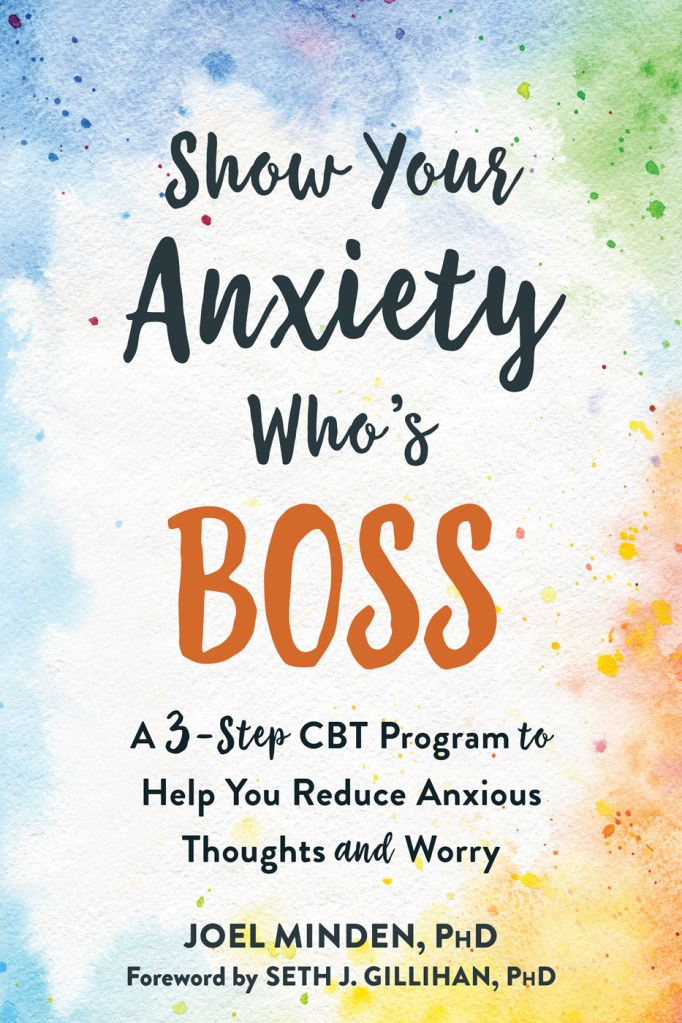
Book: Show Your Anxiety Who’s Boss

Book Title:

Show Your Anxiety Who’s Boss: a 3-Step CBT Programme to Help You Reduce Anxious Thoughts and Worry.

Author(s): Joel Minden PhD.

Year: 2020.

Edition: First (1ed).

Publisher: New Harbinger Publications.

Type(s): Paperback.

Synopsis:

Outsmart your anxiety with a ridiculously easy, three-step approach!

Is your anxiety running your life? Does it tell you where you can go, and when? Does it keep you trapped in a bubble of fear and panic? Anxiety can happen anytime, anywhere – and that is why you need simple, in-the-moment skills to stay grounded when worry takes hold. This accessible guide will help you gain the upper hand, show your anxiety who’s boss, and start living the life that you were always meant to live.

In Show Your Anxiety Who’s Boss, you will find a simple and direct three-step approach grounded in cognitive behavioural therapy (CBT) to help you gain understanding and authority over your anxious thoughts and rumination, bounce back from stress and minor setbacks, and accept what you just can’t know for sure. With this powerful guide, you will learn to:

  • Make peace with uncertainty.
  • Stop avoiding situations.
  • Accept and redirect anxious thoughts – so you can get on with your life.

If you’re ready to live a full and vital life without your anxiety constantly getting in the way, this straightforward guide will show you how to get back on track. It’s as easy as 1, 2, 3.

Book: From Bud to Brain – A Psychiatrists View of Marijuana

Book Title:

From Bud to Brain: A Psychiatrists View of Marijuana.

Author(s): Timmen L. Cermak.

Year: 2020.

Edition: First (1ed).

Publisher: Cambridge University Press.

Type(s): Paperback and Kindle.

Synopsis:

The trend toward liberalising medical and recreational marijuana use is increasing the obligation on clinicians to provide useful information to the public.

This book summarises the science all healthcare professionals need to know in order to provide objective and relevant information to a variety of patients, from recreational and medicinal users to those who use regularly, and to adolescents and worried parents.

The author brings two and a half decades of studying cannabinoid research, and over forty years’ experience in psychiatric and addiction medicine practice, to shed light on the interaction between marijuana and the brain.

Topics range from how marijuana produces pleasurable sensations, relaxation and novelty (the ‘high’), to emerging medical uses, effects of regular use, addiction, and policy.

Principles of motivational interviewing are outlined to help clinicians engage patients in meaningful, non-judgmental conversations about their experiences with marijuana.

An invaluable guide for physicians, nurses, psychologists, therapists, and counsellors.

Book: Cognitive Behavioural Therapy Workbook For Dummies

Book Title:

Cognitive Behavioural Therapy Workbook For Dummies.

Author(s): Rhena Branch and Rob Wilson.

Year: 2012.

Edition: Second (2ed).

Publisher: For Dummies.

Type(s): Paperback and Kindle.

Synopsis:

Whether you are trying to overcome anxiety and depression, boost self-esteem, beat addiction, lose weight, or simply improve your outlook, cognitive behavioural therapy (CBT) offers a practical, sensible approach to mastering your thoughts and thinking constructively. In this updated and expanded edition of the companion workbook to their bestselling Cognitive Behavioural Therapy For Dummies, professional therapists Rhena Branch and Rob Wilson show you, step-by-step, how to put the lessons provided in their book into practice. Inside you’ll find a huge number of hands-on exercises and techniques to help you remove roadblocks to change and regain control over your life.

Cognitive Behavioural Therapy Workbook For Dummies, Second Edition:

  • Develops the ideas and concepts that presented in the book and provides exercises to put those ideas into practice.
  • Features a range of hands-on CBT exercises and techniques for beating anxiety or depression, boosting your self-esteem, losing weight, or simply improving your outlook on life.

Can Internet-Based CBT be used to Treat Young People with OCD?

Research Paper Title

Online Obsessive-Compulsive Disorder Treatment: Preliminary Results of the “OCD? Not Me!” Self-Guided Internet-Based Cognitive Behavioral Therapy Program for Young People.

Background

The development and evaluation of Internet-delivered cognitive behavioral therapy (iCBT) interventions provides a potential solution for current limitations in the acceptability, availability, and accessibility of mental health care for young people with obsessive-compulsive disorder (OCD).

Preliminary results support the effectiveness of therapist-assisted iCBT for young people with OCD; however, no previous studies have examined the effectiveness of completely self-guided iCBT for OCD in young people.

The researches aimed to conduct a preliminary evaluation of the effectiveness of the OCD? Not Me! program for reducing OCD-related psychopathology in young people (12-18 years). This programme is an eight-stage, completely self-guided iCBT treatment for OCD, which is based on exposure and response prevention.

Methods

These data were early and preliminary results of a longer study in which an open trial design is being used to evaluate the effectiveness of the OCD? Not Me!

Participants were required to have at least subc-linical levels of OCD to be offered the online program. Participants with moderate-high suicide/self-harm risk or symptoms of eating disorder or psychosis were not offered the programme. OCD symptoms and severity were measured at pre- and post-test, and at the beginning of each stage of the programme. Data was analysed using generalised linear mixed models.

Results

A total of 334 people were screened for inclusion in the study, with 132 participants aged 12 to 18 years providing data for the final analysis.

Participants showed significant reductions in OCD symptoms (P<.001) and severity (P<.001) between pre- and post-test.

Conclusions

These preliminary results suggest that fully automated iCBT holds promise as a way of increasing access to treatment for young people with OCD; however, further research needs to be conducted to replicate the results and to determine the feasibility of the programme.

Reference

Rees, C.S., Anderson, R.A., Kane, R.T. & Finaly-Jones, A.L. (2016) Online Obsessive-Compulsive Disorder Treatment: Preliminary Results of the “OCD? Not Me!” Self-Guided Internet-Based Cognitive Behavioral Therapy Program for Young People. JMIR Mental Health. 3(3):e29. doi: 10.2196/mental.5363.

Book: The Mind Workout

Book Title:

The Mind Workout: Twenty Steps to Improve your Mental Health & Take Charge of Your Life.

Author(s): Mark Freeman.

Year: 2017.

Edition: First (1st).

Publisher: Piatkus.

Type(s): Paperback, Audiobook, and Kindle.

Synopsis:

It’s well known that if you want to keep your body fit, you must do some regular exercise. But when it comes to our mental health, few of us take the time to maintain and improve it. For some reason, we expect to be in great mental shape without doing any work. And when we realise we are struggling, we look for a quick and easy fix instead of developing the skills that will help us in the future.

Enter The Mind Workout – a home exercise programme for improving your mental health and fitness.

Developed as a result of Mark Freeman’s own recovery from mental illness, The Mind Workout combines mindfulness, Cognitive Behavioural Therapy (CBT) and Acceptance and Commitment Therapy (ACT). It outlines twenty easy-to-follow steps you can take to free yourself from the ways of thinking and behaving that cause mental health challenges in your life – from cutting out the compulsions that cause uncertainty, anxiety and distress to relieving stress and distraction.

The Mind Workout is the key to making the switch from a frenetic, anxiety-driven life to one that is based on your core values. It will leave you feeling mentally stronger, fitter and better equipped to navigate the complexities of everyday life.

Book: Managing Your Mind – The Mental Fitness Guide

Book Title:

Managing Your Mind – The Mental Fitness Guide.

Author(s): Gillian Butler and Tony Hope.

Year: 2007.

Edition: Second (2nd).

Publisher: OUP USA.

Type(s): Hardcover, Paperback, and Kindle.

Synopsis:

Originally published in 1995, the first edition of Managing Your Mind established a unique place in the self-help book market.

A blend of tried-and-true psychological counselling and no-nonsense management advice grounded in the principles of CBT and other psychological treatments, the book straddled two types of self-help literature, arguing that in one’s personal and professional life, the way to success is the same.

By adopting the practical strategies that mental health experts Butler and Hope have developed over years of clinical research and practice, one can develop the “mental fitness” necessary to resolve one’s personal and interpersonal challenges at home and work and to live a productive, satisfying life.

The first edition addressed how to:

  • Develop key skills to mental fitness (e.g., managing one’s time better, facing and solving problems better, keeping things in perspective, learning to relax, etc.);
  • Improve one’s relationships;
  • Beat anxiety and depression; and
  • Establish a good mind-body balance.

For this new edition, Butler and Hope have updated all preexisting material and have added five new chapters:

  1. On sexuality and intimate relationships;
  2. Anger in relationships;
  3. Recent traumatic events and their aftermath;
  4. Loss and bereavement; and
  5. Dealing with the past.

Testing the Effectiveness of Smartphone Apps Delivered to School Students to Prevent Depression at Scale.

Research Paper Title

A trial protocol for the effectiveness of digital interventions for preventing depression in adolescents: The Future Proofing Study.

Background

Depression frequently first emerges during adolescence, and one in five young people will experience an episode of depression by the age of 18 years.

Despite advances in treatment, there has been limited progress in addressing the burden at a population level.

Accordingly, there has been growing interest in prevention approaches as an additional pathway to address depression.

Depression can be prevented using evidence-based psychological programmes. However, barriers to implementing and accessing these programmes remain, typically reflecting a requirement for delivery by clinical experts and high associated delivery costs.

Digital technologies, specifically smartphones, are now considered a key strategy to overcome the barriers inhibiting access to mental health programmes.

The Future Proofing Study is a large-scale school-based trial investigating whether cognitive behaviour therapies (CBT) delivered by smartphone application can prevent depression.

Methods

A randomised controlled trial targeting up to 10,000 Year 8 Australian secondary school students will be conducted.

In Stage I, schools will be randomised at the cluster level either to receive the CBT intervention app (SPARX) or to a non-active control group comparator.

The primary outcome will be symptoms of depression, and secondary outcomes include psychological distress, anxiety and insomnia.

At the 12-month follow-up, participants in the intervention arm with elevated depressive symptoms will participate in an individual-level randomised controlled trial (Stage II) and be randomised to receive a second CBT app which targets sleep difficulties (Sleep Ninja) or a control condition.

Assessments will occur post intervention (both trial stages) and at 6, 12, 24, 36, 48 and 60 months post baseline.

Primary analyses will use an intention-to-treat approach and compare changes in symptoms from baseline to follow-up relative to the control group using mixed-effect models.

Results & Conclusions

This is the first trial testing the effectiveness of smartphone apps delivered to school students to prevent depression at scale.

Results from this trial will provide much-needed insight into the feasibility of this approach.

They stand to inform policy and commission decisions concerning if and how such programmes should be deployed in school-based settings in Australia and beyond.

Reference

Werner-Seidler, A., Huckvale, K., Larsen, M.E., Calear, A.L., Maston, K., Johnston, L., Torok, M., O’Dea, B., Batterham, P.J., Schweizer, S., Skinner, S.R., Steinbeck, K., Ratcliffe, J., Oei, J.L., Patton, G., Wong, I., Beames, J., Wong, Q.J.J., Lingam, R., Boydell, K., Salmon, A.M., Cockayne, N., Mackinnon, A. & Christensen, H. (2020) A trial protocol for the effectiveness of digital interventions for preventing depression in adolescents: The Future Proofing Study. Trials. 21(1), pp.2. doi: 10.1186/s13063-019-3901-7.

Book: Stop Obsessing!: How to Overcome Your Obsessions and Compulsions

Book Title:

Stop Obsessing!: How to Overcome Your Obsessions and Compulsions.

Author(s): Edna B. Foa and Reid Wilson.

Year: 2001.

Edition: Revised Edition.

Publisher: Bantam USA.

Type(s): Paperback.

Synopsis:

Are you tormented by extremely distressing thoughts or persistent worries? Compelled to wash your hands repeatedly? Driven to repeat or check certain numbers, words, or actions?

If you or someone you love suffers from these symptoms, you may be one of the millions of Americans who suffer from some form of obsessive-compulsive disorder, or OCD.

Once considered almost untreatable, OCD is now known to be a highly treatable disorder using behaviour therapy.

In this newly revised edition of Stop Obsessing! Drs. Foa and Wilson, internationally renowned authorities on the treatment of anxiety disorders, share their scientifically based and clinically proven self-help program that has already allowed thousands of men and women with OCD to enjoy a life free from excessive worries and rituals.

You will discover:

  • Step-by-step programmes for both mild and severe cases of OCD.
  • The most effective ways to help you let go of your obsessions and gain control over your compulsions.
  • New charts and fill-in guides to track progress and make exercises easier.
  • Questionnaires for self-evaluation and in-depth understanding of your symptoms.
  • Expert guidance for finding the best professional help.
  • The latest information about medications prescribed for OCD.

Book: The PTSD Workbook

Book Title:

The PTSD Workbook, 3rd Edition: Simple, Effective Techniques for Overcoming Traumatic Stress Symptoms.

Author(s): Mary Beth Williams and Soili Poijula.

Year: 2016.

Edition: Third (3rd).

Publisher: New Harbinger.

Type(s): Paperback and Kindle.

Synopsis:

Post-traumatic stress disorder (PTSD) is an extremely debilitating condition that can occur after exposure to a terrifying event.

But whether you are a veteran of war, a victim of domestic violence or sexual violence, or have been involved in a natural disaster, crime, car accident, or accident in the workplace, your symptoms may be getting in the way of you living your life.

PTSD can often cause you to relive your traumatic experience in the form of flashbacks, memories, nightmares, and frightening thoughts. This is especially true when you are exposed to events or objects that remind you of your trauma.

Left untreated, PTSD can lead to emotional numbness, insomnia, addiction, anxiety, depression, and even suicide. So, how can you start to heal and get your life back?

In The PTSD Workbook, Third Edition, psychologists and trauma experts Mary Beth Williams and Soili Poijula outline techniques and interventions used by PTSD experts from around the world to conquer distressing trauma-related symptoms.

In this fully revised and updated workbook, you will learn how to move past the trauma you have experienced and manage symptoms such as insomnia, anxiety, and flashbacks.

Based in cognitive behavioural therapy (CBT), this book is extremely accessible and easy-to-use, offering evidence-based therapy at a low cost.

This new edition features chapters focusing on veterans with PTSD, the link between cortisol and adrenaline and its role in PTSD and overall mental health, and the mind-body component of PTSD.

Clinicians will also find important updates reflecting the new DSM-V definition of PTSD.

This book is designed to give you the emotional resilience you need to get your life back together after a traumatic event.