What is the Quality of Life in Depression Scale?

Introduction

The Quality of Life In Depression Scale (QLDS), originally proposed by Sonja Hunt and Stephen McKenna, is a disease specific patient-reported outcome which assesses the impact that depression has on a patient’s quality of life. It is the most commonly used measure of quality of life in clinical trials and studies of depression. The QLDS was developed as a measure to be used in future clinical trials of anti-depressant therapy.

It is a 34 item self-rated questionnaire which consists of dichotomous response questions, with the response being either True/Not True. It is scored binomially (0-1) with higher scores on the QLDS indicating a lower quality of life. Several tests of construct validity and internal consistency have found the QLDS to be a good measure of quality of life.

Needs-based Model

The QLDS is built around the generally accepted assumption that one’s quality of life can only be assessed subjectively. Quality of life tends to be greatly influenced by factors such as depression, anxiety, tension or fatigue.

The QLDS is based around the needs-based model of quality of life. This is derived from the assumption that quality of life is dependent on a person’s ability to fulfil particular human needs. The QLDS questions centre around a number of needs that were considered crucial in order to suffice a high quality of life. These include but are not limited to; food, sleep, sex, safety, love, enjoyment, self-esteem and self-actualisation.

The QLDS uses a two-point response system with either True or Not True. The high number of items in the questionnaire allows the detection of moderately minor changes in quality of life.

Items on the QLDS are given a score of 1 when the question is applicable to the respondent and 0 when it is not applicable. The items are totalled to give a score ranging from 0-34. Low scores act as an indicator towards a high quality of life.

Development

The QLDS was developed by Galen Research in 1992 and was funded by Lilly Industries. It was developed in the United Kingdom in conjunction with the Netherlands. The QLDS was the first quality of life instrument to be developed in 2 languages simultaneously. The development of the QLDS coincided with a rising interest on the impact of illness and its treatment on the quality of life of the patient. McKenna and Hunt constructed the QLDS on the basis of providing a measure for this, as well as attempting to overcome contemporary studies concerning low correlations between patient self-assessment and nurse or therapist evaluations.

The items in the UK English QLDS were derived from statements made in qualitative interviews by 30 depressed or recently recovered patients based in the North West of England and Scotland. Interviews took a conversational approach and lasted between 30 minutes to 2 hours. Interviewees were between the age range of 19-64 years, with 22 females and 8 males. After a refinement process, based on categories of needs proposed by McKenna and Hunt, 426 relevant statements were derived from the interview transcripts. Upon further examination they produced 41 statements for an initial questionnaire.

A further 35 patients were asked to complete the draft questionnaire and review their experience with it. They were composed of 22 females and 13 males in the age range of 24-72 years. Interviewees expressed a great degree of approval with the questionnaire, although a few mentioned how the binomial system caused difficulty, as it required them to make complete choices.

Following this, the questionnaire was revised to 34 items and field tested to determine construct validity and reliability.

International Development

The first two languages the QLDS was available in were UK English and Dutch. These were shown to have good reliability, validity and responsiveness. In 1999, McKenna in collaboration with a team of international researchers developed and tested the QLDS in 9 new languages. This involved translation, followed by field testing for content validity and the new measure’s construct validity.

Across the majority of translations, no major difficulties arose excluding Morocco. Cultural differences between Morocco and the UK provided challenge, alongside a lack of literal equivalents between the two languages. An example of this is the absence of an equivalent for the verb ‘to enjoy’ in Arabic. Researchers also faced further difficulty due to the contemporarily high rate of illiteracy, as the test could not be self-administrative on as large a scale as anticipated. As a result, although the data demonstrated both reliability and construct validity, they were unable to place confidence in the Arabic adaptation’s equivalence to the other developed versions.

Reliability, Validity and Responsiveness

Testing the Anglo-Dutch Project

Following the collaborative Anglo-Dutch project, researchers had to compare the QLDS’ success with established measures of the same concept. No measure of quality of life in depression was available so both versions had to be matched to related measures. In the UK this was the General Well-Being Index (GWBI) whilst in the Netherlands the Sickness Impact Profile (PS-SIP) acted as a comparison.

Reliability and Internal Consistency

For use in a clinical trial, an instrument like the QLDS should have a test-retest reliability coefficient of minimum 0.85. Internal consistency also requires a minimum of 0.85 and is assessed using Cronbach’s alpha-coefficient.

In the UK, the test-retest correlation coefficient for patients with stable depression was 0.94 (n=37). The test-retest correlation coefficient in the Netherlands was 0.87 (n=33).

For internal consistency the UK recorded a value of 0.95 and the Netherlands a value of 0.92. These results suggested the QLDS produced a low degree of measurement error and high internal consistency.

Content and Construct Validity

No missing items applicable to participants were recognised. The relevancy and ease of completion indicated by field-test interviews suggested the high content validity of the QLDS.

The QLDS and GWBI had a correlation score of 0.79 in the UK (n=65). The Dutch adaptation had a correlation of 0.71 with the PS-SIP (n=77). These measurements were anticipated to be slightly lower due to the difference of purpose between measures.

Responsiveness

The QLDS’ responsiveness was analysed in a general practice population of 540 patients with major depression. Over a 6-month period, substantial progress in the level of depression was seen.

8 weeks into treatment the mean QLDS score rose by 68%, with patients who continued treatment for the full 6-months recording an increase of 78%. The QLDS was concluded by the researchers to be responsive to change in quality of life throughout successful pharmacological depression treatment.

International Use

Since its development, the QLDS has been adapted and validated in 17 languages other than UK English, including Norwegian, Spanish, Danish, French, German and Italian. This has allowed the QLDS to be used in research and clinical studies worldwide.

Studies utilising the QLDS include investigations into venlafaxine, duloxetine and bupropion.

Refer to Beck Depression Inventory, Beck Anxiety Inventory, Beck Hopelessness Scale, Major Depression Inventory.


Quiet Explosions: Healing the Brain (2019)

Introduction

Professional athletes, military veterans and first responders share their stories of recovery from traumatic brain injury, post-traumatic stress disorder and depression.

Outline

Learn how athletes, veterans and civilians with Traumatic Brain Injury and PTSD are becoming healthy and healing their brains. A humanistic doc about the journey of ten different individuals from near suicide to recovery, and a real life.

Read more @ https://quietexplosions.com/.

Trivia

  • Traumatic brain injury (TBI) impacts 2 million people per year. Professional athletes, military veterans and first-responders share their recovery stories after suffering severe PTSD and depression.
  • Joe Rogan and Super Bowl MVP Mark Rypien, NFL running back Anthony Davis and Ben Driebergen, Marine veteran and winner of CBS’s 35th “Survivor” season, are featured in this enlightening documentary.

Production & Filming Details

  • Director(s): Jerri Sher.
  • Producer(s):
    • Michael Levy … consulting producer.
    • Jerri Sher … producer.
  • Writer(s): Jerri Sher.
  • Music: Omri Lahav.
  • Cinematography: Casey Lynch.
  • Editor(s): Elisa Bonora.
  • Production:
  • Distributor(s): Cinema Libre Studio (2020) (USA) (all media).
  • Release Date: 07 June 2019 (US)
  • Running Time: 89 minutes.
  • Rating: 16+.
  • Country: US.
  • Language: English.

Video Link

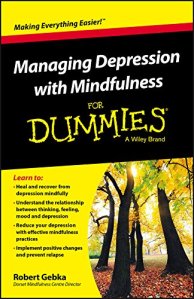
Book: Managing Depression with Mindfulness for Dummies

Book Title:

Managing Depression with Mindfulness for Dummies.

Author(s): Robert Gebka.

Year: 2016.

Edition: First (1st).

Publisher: Wiley.

Type(s): Paperback and Kindle.

Synopsis:

Rise above depression and build a positive future using mindfulness

If you suffer from depression, you know that it is not something you can simply snap yourself out of. Depression is a potentially debilitating condition that must be treated and managed with care, but not knowing where to turn for help can make an already difficult time feel even more harrowing. Thankfully, Managing Depression with Mindfulness For Dummies offers authoritative and sensitive guidance on using evidence based and NHS approved Mindfulness Based Interventions similar to Cognitive Behavioural Therapy (CBT) to help empower you to rise above depression and discover a renewed sense of emotional wellbeing and happiness. The book offers cutting edge self-management mindfulness techniques which will help you make sense of your condition and teach you how to relate differently to negative thought patterns which so often contribute to low mood and depression.

The World Health Organisation predicts that more people will be affected by depression than any other health problem by the year 2030. While the statistics are staggering, they offer a small glimmer of hope: you are not alone. As we continue to learn more about how depression works and how it can be treated, the practice of mindfulness proves to be an effective tool for alleviating stress, anxiety, depression, low self-esteem, and insomnia. With the tips and guidance offered inside, you′ll learn how to apply the practice of mindfulness to ease your symptoms of depression and get your life back.

  • Heal and recover from depression mindfully.
  • Understand the relationship between thinking, feeling, mood, and depression.
  • Reduce your depression with effective mindfulness practices.
  • Implement positive changes and prevent relapse.

Whether you are struggling with low mood or simply wish to learn mindfulness as a way of enriching your life, Managing Depression with Mindfulness For Dummies serves as a beacon of light and hope on your journey to rediscovering your sense of wellbeing, joy and happiness.

What is the Zung Self-Rating Depression Scale?

Introduction

The Zung Self-Rating Depression Scale (SDS) was designed by Duke University psychiatrist William W.K. Zung MD (1929-1992) to assess the level of depression for patients diagnosed with depressive disorder.

The Levels

  • 20-44: Normal Range.
  • 45-59: Mildly Depressed.
  • 60-69: Moderately Depressed.
  • 70 and above Severely Depressed.

The SDS has been translated into many languages, including Arabic, Azerbaijani, Dutch, German, Portuguese, and Spanish.

You can find an online version of the SDS here.

Refer to Zung Self-Rating Anxiety Scale.

Reference

Zung, W.A.K. (1965) A Self-Rating Depression Scale. Archives of General Psychiatry. 12(1), pp63-70.

Book: Depression, Anxiety, and Other Things We Don’t Want to Talk About

Book Title:

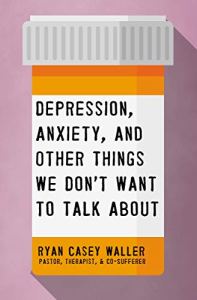
Depression, Anxiety, and Other Things We Don’t Want to Talk About.

Author(s): Ryan Casey Waller.

Year: 2021.

Edition: First (1ed).

Publisher: Nelson Books.

Type(s): Paperback, Audiobook, and Kindle.

Synopsis:

Mental illness loves to tell lies. One of those lies is that you really should be able to manage what you are struggling with. Pastor and psychotherapist Ryan Casey Waller says no. Mental health issues are not a symptom of a spiritual failing or insufficient faith; rather, suffering is the very thing our Saviour seeks to heal as he leads us toward restoration. And yet, as Waller has experienced personally, the battle can be lonely and discouraging. But it does not have to be.

Combining practical theology, clinical insights, and deep empathy, Waller offers a rare mix of companionship and truth, inviting us to:

  • Have shame-free conversations about mental health;
  • Discover why self-knowledge is so important to a deep relationship with God;
  • Understand the intersection of biology, psychology, and spirituality;
  • Explore varying avenues of healing in community, therapy, and medication; and
  • Be equipped to support loved ones while practicing self-care.

Waller bridges the gap between the spiritual and the psychological in this empathetic, imminently helpful guidebook, reminding us all that we are not alone. Hope starts now.

What is the Effect of ECT on Cognitive Functioning?

Research Paper Title

Transient Cognitive Impairment and White Matter Hyperintensities in Severely Depressed Older Patients Treated With Electroconvulsive Therapy.

Background

Although electroconvulsive therapy (ECT) is a safe and effective treatment for patients with severe late life depression (LLD), transient cognitive impairment can be a reason to discontinue the treatment. The aim of the current study was to evaluate the association between structural brain characteristics and general cognitive function during and after ECT.

Methods

A total of 80 patients with LLD from the prospective naturalistic follow-up Mood Disorders in Elderly treated with Electroconvulsive Therapy study were examined. Magnetic resonance imaging scans were acquired before ECT. Overall brain morphology (white and grey matter) was evaluated using visual rating scales. Cognitive functioning before, during, and after ECT was measured using the Mini Mental State Examination (MMSE). A linear mixed-model analysis was performed to analyse the association between structural brain alterations and cognitive functioning over time.

Results

Patients with moderate to severe white matter hyperintensities (WMH) showed significantly lower MMSE scores than patients without severe WMH (F(1,75.54) = 5.42, p = 0.02) before, during, and post-ECT, however their trajectory of cognitive functioning was similar as no time × WMH interaction effect was observed (F(4,65.85) = 1.9, p = 0.25). Transient cognitive impairment was not associated with medial temporal or global cortical atrophy (MTA, GCA).

Conclusions

All patients showed a significant drop in cognitive functioning during ECT, which however recovered above baseline levels post-ECT and remained stable until at least 6 months post-ECT, independently of severity of WMH, GCA, or MTA. Therefore, clinicians should not be reluctant to start or continue ECT in patients with severe structural brain alterations.

Reference

Wagenmakers, M.J., Vansteelandt, K., van Exel, E., Postuma, R., Schouws, S.N.T.M., Obbels, J., Rhebergen, D., Bouckaert, F., Stek., M.L., Barkhof, F., Beekman, A.T.F., Veltman, D.J., Sienaert, P., Dols, A. & Oudega, M.L. (2021) Transient Cognitive Impairment and White Matter Hyperintensities in Severely Depressed Older Patients Treated With Electroconvulsive Therapy. The American Journal of Geriatric Psychiatry. S1064-7481(20)30597-2. doi: 10.1016/j.jagp.2020.12.028. Online ahead of print.

Aromatherapy & Mental Health

Research Paper Title

The effects of Lavender and Chamomile essential oil inhalation aromatherapy on depression, anxiety and stress in older community-dwelling people: A randomised controlled trial.

Background

Considering the prevalence of mental health problems in older adults, this study aims to investigate the effect of inhalation aromatherapy using lavender and chamomile essential oils on depression, anxiety, and stress of community-dwelling older people.

Methods

A three-armed, parallel, randomised, and controlled trial design was used in this study. 183 participants were enrolled and randomly assigned to three groups (n = 61): the lavender, chamomile, and control groups. The participants in the experimental groups inhaled three drops of 1.5% lavender and chamomile essential oils for 30 nights. The participants in the control group inhaled only distilled water in a similar fashion. Data were collected using the Depression, Anxiety, and Stress-Scale (DASS) at baseline, immediately after the intervention, and one month after the intervention. Chi-square, Fisher’s exact, one-way ANOVA, and repeated measures ANOVA were used for data analysis.

Results

Statistically significant improvement occurred in depression, anxiety, and stress levels immediately and one month after the intervention in lavender and chamomile groups compared to the control group (p < 0.01).

Conclusions

Inhalation aromatherapy with both lavender and chamomile essential oils helped decrease depression, anxiety, and stress levels in community-dwelling older adults.

Reference

Ebrahimi, H., Mardani, A., Basirinezhad, M.H., Hamidzadeh, A. & Eskandari, F. (2021) The effects of Lavender and Chamomile essential oil inhalation aromatherapy on depression, anxiety and stress in older community-dwelling people: A randomized controlled trial. Explore (New York, N.Y.). doi: 10.1016/j.explore.2020.12.012. Online ahead of print.

Book: Beating OCD and Anxiety

Book Title:

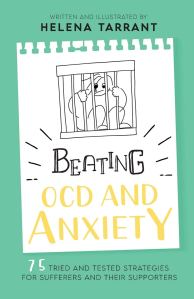
Beating OCD and Anxiety – 75 Tried and Tested Strategies for Sufferers and their Supporters.

Author(s): Helena Tarrant.

Year: 2020.

Edition: First (1st).

Publisher: Cherish Editions.

Type(s): Paperback and Kindle.

Synopsis:

Does anxiety impact on everything you do, leaving you unable to get through the day or with an inability to make decisions, no matter how small? Has it affected or even destroyed friendships and relationships? Or maybe you know or live with someone with these issues, and feel unable to help them?

Helena Tarrant gets it. She also understands why you may have struggled with text-heavy anxiety guides in the past. This book can help you to start a new fulfilling life, or help you provide invaluable support to someone you care about. The author has recovered from lifelong debilitating obsessive compulsive disorder and generalized anxiety disorder. This book shares the tried and tested techniques that she used to do it, based largely but not entirely on the methods and concepts behind cognitive behavioural therapy.

Written in accessible language, conveniently segmented and illustrated with over 100 original cartoons, the techniques are described clearly and concisely. Beating OCD and Anxiety knows you don’t want to read pages of complex theory on your quest for help.

In this book, Helena will show you how to get your life back.

What are Rating Scales for Depression?

Introduction

A depression rating scale is a psychiatric measuring instrument having descriptive words and phrases that indicate the severity of depression for a time period.

When used, an observer may make judgements and rate a person at a specified scale level with respect to identified characteristics. Rather than being used to diagnose depression, a depression rating scale may be used to assign a score to a person’s behaviour where that score may be used to determine whether that person should be evaluated more thoroughly for a depressive disorder diagnosis. Several rating scales are used for this purpose.

Between 1918 and 2009, more than 280 measures of depressive severity were developed and published (Santor, Gregus & Welch, 2009).

What is the Purpose of a Rating Scale?

To determine degree of depression.

Who Can Complete Rating Scales?

Scales Completed by Researchers

Some depression rating scales are completed by researchers. For example, the Hamilton Depression Rating Scale includes 21 questions with between 3 and 5 possible responses which increase in severity. The clinician must choose the possible responses to each question by interviewing the patient and by observing the patient’s symptoms. Designed by psychiatrist Max Hamilton in 1960, the Hamilton Depression Rating Scale is one of the two most commonly used among those completed by researchers assessing the effects of drug therapy. Alternatively, the Montgomery-Åsberg Depression Rating Scale has ten items to be completed by researchers assessing the effects of drug therapy and is the other of the two most commonly used among such researchers. Another scale is the Raskin Depression Rating Scale; which rates the severity of the patients symptoms in three areas: verbal reports, behaviour, and secondary symptoms of depression.

Scales Completed by Patients

Some depression rating scales are completed by patients. The Beck Depression Inventory, for example, is a 21-question self-report inventory that covers symptoms such as irritability, fatigue, weight loss, lack of interest in sex, and feelings of guilt, hopelessness or fear of being punished. The scale is completed by patients to identify the presence and severity of symptoms consistent with the DSM-IV diagnostic criteria. The Beck Depression Inventory was originally designed by psychiatrist Aaron T. Beck in 1961.

The Geriatric Depression Scale (GDS) is another self-administered scale, but in this case it is used for older patients, and for patients with mild to moderate dementia. Instead of presenting a five-category response set, the GDS questions are answered with a simple “yes” or “no”. The Zung Self-Rating Depression Scale is similar to the Geriatric Depression Scale in that the answers are preformatted. In the Zung Self-Rating Depression Scale, there are 20 items: ten positively worded and ten negatively worded. Each question is rated on a scale of 1 through 4 based on four possible answers: “a little of the time”, “some of the time”, “good part of the time”, and “most of the time”.

The Patient Health Questionnaire (PHQ) sets are self-reported depression rating scales. For example, the Patient Health Questionnaire-9 (PHQ-9) is a self-reported, 9-question version of the Primary Care Evaluation of Mental Disorders. The Patient Health Questionnaire-2 (PHQ-2) is a shorter version of the PHQ-9 with two screening questions to assess the presence of a depressed mood and a loss of interest or pleasure in routine activities; a positive response to either question indicates further testing is required.

The two questions on the Patient Health Questionnaire-2 (PHQ-2):

During the past month, have you often been bothered by feeling down, depressed, or hopeless?

During the past month, have you often been bothered by little interest or pleasure in doing things?

Scales Completed by Patients and Researchers

The Primary Care Evaluation of Mental Disorders (PRIME-MD) is completed by the patient and a researcher. This depression rating scale includes a 27-item screening questionnaire and follow-up clinician interview designed to facilitate the diagnosis of common mental disorders in primary care. Its lengthy administration time has limited its clinical usefulness; it has been replaced by the Patient Health Questionnaire.

What is the Validity and Usefulness of Rating Scales?

How Useful are Rating Scales?

Screening programmes using rating scales to search for candidates for a more in-depth evaluation have been advocated to improve detection of depression, but there is evidence that they do not improve detection rates, treatment, or outcome. There is also evidence that a consensus on the interpretation of rating scales, in particular the Hamilton Rating Scale for Depression, is largely missing, leading to misdiagnosis of the severity of a patient’s depression. However, there is evidence that portions of rating scales, such as the somatic section of the PHQ-9, can be useful in predicting outcomes for subgroups of patients like coronary heart disease patients.

How Valid are Rating Scales?

Several research articles have come out in the past several years that question the validity of sum-score rating scales for depression.

Fried, E.I. (2017) The 52 Symptoms of Major Depression: Lack of Content Overlap Among Seven Common Depression Scales. Journal of Affective Disorders. 208, pp.191-197. https://doi.org/10.1016/j.jad.2016.10.019.

Santor, D.A., Gregus, M. & Welch, A. (2009) Eight Decades of Measurement in Depression. Measurement: Interdisciplinary Research and Perspectives. 4(3), pp.135-155. https://doi.org/10.1207/s15366359mea0403_1.

Copyrighted vs. Public Domain Rating Scales

The Beck Depression Inventory is copyrighted, a fee must be paid for each copy used, and photocopying it is a violation of copyright. There is no evidence that the BDI-II is more valid or reliable than other depression scales, and public domain scales such as the Centre for Epidemiological Studies Depression Scale (CES-D), the Zung Depression scale and Patient Health Questionnaire – Nine Item (PHQ-9) has been studied as a useful tool.

Other copyrighted scales allow individual clinicians and researchers to make copies for their own use, but require licenses for electronic versions or large-scale redistribution, including:

  • The Clinically Useful Depression Outcome Scale (CUDOS).
  • The Inventory of Depressive Symptomatology (IDS).
  • The Mood and Feelings Questionnaire (MFQ).
  • The Quick Inventory of Depressive Symptoms (QIDS).
  • The Patient Health Questionnaire (PHQ).
    • Research in process – Banner University Medical Centre.
  • Hamilton Rating Scale (HRSDD, HDRS, Ham-D).
  • Columbia Suicide Severity Rating Scale (C-SSRS).
  • Depression and Anxiety Stress Scales (DASS).
  • Depression Self-Rating Scale for Children.
  • Brief Psychiatric Rating Scale (BPRS).
  • Geriatric Depression Scale (GDS).
  • Beck’s Depression Inventory (BDI).
  • HEADS-ED, used in hospital emergency departments.
  • Children’s Depression Rating Scale (CDRS).
  • Behavioural Activation for Depression Scale (BADS-SF).
  • Edinburgh Postnatal Depression Scale.
  • Quick Inventory of Depressive Symptomatology Clinician (QIDS-C).
  • Quick Inventory of Depressive Symptomatology Self Report (QIDS-SR).
  • Kutcher Adolescent Depression Scale (KADS-11).
  • Montgomery-Asberg Depression Scale (MADRS).
  • Clinically Useful Depression Outcome Scale (CUDOS).
  • Hospital Anxiety and Depression Scale.
  • Primary Care Evaluation of Mental Disorders (PRIME-MD).
  • Children’s Depression Inventory (CDI).

What is the Prevalence & Risk Factors of Perinatal Depression Among Women in Rural Bihar?

Research Paper Title

Prevalence and risk factors of perinatal depression among women in rural Bihar: A community-based cross-sectional study.

Background

Perinatal depression (PND) is one of the most common mental disorders occurring during the perinatal period among women. Few studies examined prevalence and risk factors of PND from rural settings in India. This study aimed to estimate the prevalence of perinatal depression and identify social risk factors for it among women from rural Bihar.

Methods

A cross sectional study was conducted in a community setting in rural areas of Bihar. All perinatal women were screened through a door to door survey and recruited after obtaining informed consent. A semi-structured proforma was used to collect sociodemographic characteristics and family related variables. Edinburgh postnatal depression scale (EPDS) was used to screen for perinatal depression.

Results

A total of 564 perinatal women were recruited into the study. The estimated prevalence of PND was 23.9 % (95 % CI: 20.6,27.6). Multivariate analysis showed perinatal depression was associated with physical illness in the mother, previous history of abortion, poor financial status and ill-treatment by in-laws.

Conclusions

Prevalence of perinatal depression among women is high in rural settings of North India. A multitude of factors ranging from physical, obstetric, economic and family related confer a high risk for PND. Comprehensive interventions are needed to address these risk factors of perinatal depression.

Reference

Raghavan, V., Khan, H.A., Seshu, U., Rai, S.P., Durairaj, J., Aarthi, G., Sangeetha, C., John, S. & Thara, R. (2021) Prevalence and risk factors of perinatal depression among women in rural Bihar: A community-based cross-sectional study. Asian Journal of Psychiatry. doi: 10.1016/j.ajp.2021.102552. Online ahead of print.