Book: The Encyclopaedia Of Depression

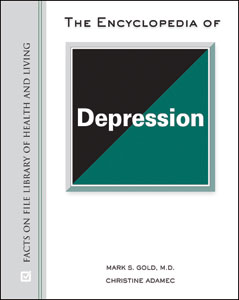
Book Title:

The Encyclopaedia Of Depression (part of the series Library of Health and Living).

Author(s): Mark S. Gold and Christine Adamec.

Year: 2016.

Edition: First (1st).

Publisher: Infobase Publishing.

Type(s): eBook.

Synopsis:

Mental health professionals estimate that approximately 1 in 10 Americans suffer from depression at some point in their lives. Depression is a disease that disrupts one’s mood and sense of well-being. It can interfere with one’s enjoyment of life, interactions with friends and family members, and ability to work. Severe depression can leave one despondent to the point of paralysis and hopelessness or even contribute to suicide. The disease takes an economic toll, as well, in costs for treatment and lost wages and productivity. Fortunately, most cases of depression can be successfully treated with medication and therapy.

The Encyclopaedia of Depression is a concise, A-to-Z guide to covering everything readers need to understand the nature of this disease, recognise its signs and symptoms, and seek out treatment for themselves or a loved one. More than 80 in-depth articles examine all aspects of depression, including its causes, current research into the disease, treatment options, and related social issues.

Topics covered include:

  • Antidepressants.
  • Bipolar disorder.
  • Children and depression.
  • Demographics of depression.
  • Generalised anxiety disorder.
  • Holiday depression.
  • Myths and inaccuracies about depression.
  • Refractory depression.
  • Risk factors for depression.
  • Substance abuse.

Book: The International Encyclopaedia Of Depression

Book Title:

The International Encyclopaedia Of Depression.

Author(s): Rick E. Ingram (Editor).

Year: 2019.

Edition: First (1st).

Publisher: Springer Publishing.

Type(s): Hardcover and Kindle.

Synopsis:

There is no more central topic to mental health professionals than depression.

In the last 20 years, theory and research in depression has grown rapidly.

The wealth of information now available on depression is enormous, but has not been summarised into a comprehensive encyclopaedia until now.

The entries in this book include: behavioural treatment, cognitive theories, cognitive therapy, epidemiology, heredity, personality disorders, double depression, and prevention.

In summarising the vast amount of information on depression, “The International Encyclopaedia of Depression” serves as an important resource for researchers, patients, students, and educated laypeople.

This book presents holistic, interdisciplinary coverage of an important but misunderstood medical disorder.

Research: Age-specific prevalence and determinants of depression in long-term breast cancer survivors compared to female population controls

Research Paper Title:

Age-specific prevalence and determinants of depression in long-term breast cancer survivors compared to female population controls.

Author(s): Daniela Doege, Melissa S.Y. Thong, Lena Koch-Gallenkamp, Lina Jansen, Heike Bertram, Andrea Eberle, Bernd Holleczek, Ron Pritzkuleit, Annika Waldmann, Sylke R. Zeissig, Hermann Brenner, and Volker Arndt.

Year: 2020.

Journal: Cancer Medicine.

DOI: doi: 10.1002/cam4.3476. Online ahead of print.

Abstract:

Depression is more prevalent in breast cancer (BC) survivors than in the general population. However, little is known about depression in long-term survivors. Study objectives were: (1) to compare the age-specific prevalence of depressive symptoms (a) in BC survivors vs female population controls, (b) in disease-free BC survivors vs BC survivors with self-reported recurrence vs controls, and (2) to explore determinants of depression in BC survivors.

Methods

About 3010 BC survivors (stage I-III, 5-16 years post-diagnosis), and 1005 population controls were recruited in German multi-regional population-based studies. Depression was assessed by the Geriatric Depression Scale-15. Prevalence of mild/severe and severe depression only were estimated via logistic regression, controlling for age and education. Multinomial logistic regression was used to explore determinants of mild and severe depression.

Results

Compared with population controls, BC survivors were more likely to report mild/severe depression (30.4% vs 23.8%, p = .0003), adjusted for age and education. At all age groups <80 years, prevalence of both mild/severe and severe depression only was significantly higher in BC survivors, while BC survivors ≥80 years reported severe depression less frequently than controls. BC survivors with recurrence reported significantly higher prevalence of mild/severe depression than disease-free survivors and controls, but prevalence in disease-free survivors and controls was comparable. Age, income, living independently, recurrence, and BMI were significant determinants of mild depression in BC survivors. Age, education, employment, income, recurrence, and BMI were significant determinants of severe depression.

Conclusions

Long-term BC survivors <80 years report significantly higher prevalence of depressive symptoms than controls, which might be explained by recurrence and individual factors. The findings suggest that depression in BC survivors is common, and even more after BC recurrence. Clinicians should routinise screening and normalise referral to psychological care.

Book: Depression in Japan

Book Title:

Depression in Japan: Psychiatric Cures for a Society in Distress.

Author(s): Junko Kitanaka.

Year: 2011.

Edition: First (1st).

Publisher: Princeton University Press.

Type(s): Paperback and EPUB.

Synopsis:

Since the 1990s, suicide in recession-plagued Japan has soared, and rates of depression have both increased and received greater public attention. In a nation that has traditionally been uncomfortable addressing mental illness, what factors have allowed for the rising medicalisation of depression and suicide? Investigating these profound changes from historical, clinical, and sociolegal perspectives, Depression in Japan explores how depression has become a national disease and entered the Japanese lexicon, how psychiatry has responded to the nation’s ailing social order, and how, in a remarkable transformation, psychiatry has overcome the longstanding resistance to its intrusion in Japanese life.

Questioning claims made by Japanese psychiatrists that depression hardly existed in premodern Japan, Junko Kitanaka shows that Japanese medicine did indeed have a language for talking about depression which was conceived of as an illness where psychological suffering was intimately connected to physiological and social distress. The author looks at how Japanese psychiatrists now use the discourse of depression to persuade patients that they are victims of biological and social forces beyond their control; analyzes how this language has been adopted in legal discourse surrounding “overwork suicide”; and considers how, in contrast to the West, this language curiously emphasizes the suffering of men rather than women. Examining patients’ narratives, Kitanaka demonstrates how psychiatry constructs a gendering of depression, one that is closely tied to local politics and questions of legitimate social suffering.

Drawing upon extensive research in psychiatric institutions in Tokyo and the surrounding region, Depression in Japan uncovers the emergence of psychiatry as a force for social transformation in Japan.

Book: The International Encyclopedia of Depression

Book Title:

The International Encyclopedia of Depression.

Author(s): Richard E. Ingram, PhD (Editor).

Year: 2009.

Edition: First (1st).

Publisher: Springer Publishing Company, LLC..

Type(s): Hardcover and Kindle.

Synopsis:

There is no more central topic to mental health professionals than depression.

In the last 20 years, theory and research in depression has grown rapidly. The wealth of information now available on depression is enormous, but has not been summarized into a comprehensive encyclopedia until now.

The entries in this book include: behavioral treatment, cognitive theories, cognitive therapy, epidemiology, heredity, personality disorders, double depression, and prevention.

In summarising the vast amount of information on depression, The International Encyclopedia of Depression serves as an important resource for researchers, patients, students, and educated laypeople. This book presents holistic, interdisciplinary coverage of an important but misunderstood medical disorder.

You can find a copy of the book here.

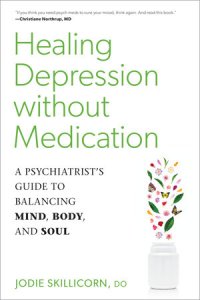
Book: Healing Depression without Medication

Book Title:

Healing Depression without Medication: A Psychiatrist’s Guide to Balancing Mind, Body, and Soul.

Author(s): Jodie Skillicorn, DO.

Year: 2020.

Edition: First (1st).

Publisher: North Atlantic Books.

Type(s): Paperback.

Synopsis:

What if everything we thought we knew about depression – and how to heal from it – was wrong?

Many antidepressants – the first line in our standard of care for treating depression – bring with them potential health risks, yet 1 in 6 Americans takes medication to alleviate feeling sad, anxious, stuck, or unable to focus or sleep. More and more, conventional medicine pathologises how we respond to life’s challenges – like feeling trapped in an unfulfilling job, grieving the death of a loved one, or being anxious about a bad relationship – telling us that they are symptoms of disease.

Psychiatrist Jodie Skillicorn presents a new path, debunking the myth of the neurochemical imbalance and exploring the roots of depression, such as adverse childhood experiences (ACEs) and poorly managed day-to-day stress. Evidence-based and fully supported by current depression research, Dr. Skillicorn’s holistic methods for beating depression – including nutrition, mindfulness, fostering meaningful connections, exercise, sleep, nature, and breathwork – empower readers to become agents of their own wholeness and healing.

Major Depressive Disorder: Childhood Trauma

Research Paper Title

Major depressive disorder with childhood trauma: Clinical characteristics, biological mechanism, and therapeutic implications.

Background

Major depressive disorder (MDD) is a main type of mood disorder, characterised by significant and lasting depressed mood.

Until now, the pathogenesis of MDD is not clear, but it is certain that biological, psychological, and social factors are involved.

Childhood trauma is considered to be an important factor in the development of this disease.

Previous studies have found that nearly half of the patients with MDD have experienced childhood trauma, and different types of childhood trauma, gender, and age show different effects on this disease.

In addition, the clinical characteristics of MDD patients with childhood trauma are also different, which often have more severe depressive symptoms, higher risk of suicide, and more severe cognitive impairment.

The response to antidepressants is also worse.

In terms of biological mechanisms and marker characteristics, the serotonin transporter gene and the FKBP prolyl isomerase 5 have been shown to play an important role in MDD and childhood trauma.

Moreover, some brain imaging and biomarkers showed specific features, such as changes in gray matter in the dorsal lateral prefrontal cortex, and abnormal changes in hypothalamic-pituitary-adrenal axis function.

Reference

Guo, W., Liu, J. & Li, L. (2020) Major depressive disorder with childhood trauma:Clinical characteristics, biological mechanism, and therapeutic implications. Zhong nan da xue xue bao. Journal of Central South University. 45(4), pp.462-468. doi: 10.11817/j.issn.1672-7347.2020.190699.

Book: Learned Hopefulness – The Power of Positivity to Overcome Depression

Book Title:

Learned Hopefulness – The Power of Positivity to Overcome Depression.

Author(s): Dan Tomasulo, PhD.

Year: 2020.

Edition: First (1st).

Publisher: New Harbinger Publications.

Type(s): Paperback and Kindle.

Synopsis:

Cultivate hope with strengths-based practices grounded in positive psychology.

If you suffer from depression, sub-clinical depression, or low mood, you may have days where you feel like you have lost hope – hope that you will ever feel better, that the world will be a better place, or that you will someday find the happiness that always seems to elude you. You are not alone. Many people struggle with feelings of sadness and hopelessness – especially in our difficult, modern world. The good news is that you can change.

Learned Hopefulness offers powerful exercises grounded in evidence-based positive psychology to help you identify your strengths; ditch the self-limiting beliefs that diminish your capacity for positivity; and increase feelings of motivation, resiliency, and wellness. You will also learn to untangle yourself from rumination over past negative events, while shifting your perspective to the present moment and anticipating your future through a more positive lens.

With this unique, compassionate, and life-affirming guide, you will find the tools you need to break free from hopelessness and start living a life of happiness and vitality.

Book: The Instinct to Heal

Book Title:

The Instinct to Heal – Curing Depression, Anxiety and Stress Without Drugs and Without Talk Therapy.

Author(s): David Servan-Schreiber.

Year: 2004.

Edition: First (1ed).

Publisher: Rodale Books.

Type(s): Hardcover, Paperback and Kindle.

Synopsis:

Millions of Americans try drugs or talk therapy to relieve depression and anxiety, but recent scientific studies prove certain alternative treatments can work as well or better-often bringing on a cure.

In the extraordinary international bestseller The Instinct to Heal, award-winning psychiatrist and neuroscientist David Servan-Schreiber, M.D., Ph.D., presents seven natural approaches, each with proven results, that together form a treatment plan that builds on the body’s relationship to the brain, yielding faster, more dramatic, and permanent changes. People who want to leave suffering behind now can live joyful, happy lives.

Book: Home Exercise to Relieve Anxiety

Book Title:

Home Exercise to Relieve Anxiety – The Ultimate Guide for Healthy Lifestyle and Happiness.

Author(s): Henri-Cartier Bresson.

Year: 2020.

Edition: First (1ed).

Publisher: Amazon.

Type(s): Paperback and Kindle.

Synopsis:

Are you tired of experiencing numb feet and fingers, sweaty nights, insomnia and other tiresome occurrences?

Is your friend, spouse, mother, father, sibling or anyone close to you suffering from uneasiness, heart palpitations and other symptoms associated with anxiety?

Have you been confusing anxiety with depression?

Do you feel uninformed about anxiety?

If you answered yes to any of the above questions, then you should proceed with digesting the subsequent chapters of this book.

This workbook on anxiety embodies that practice in an easy, user-friendly format that will guide you through understanding your anxiety, knowing where it comes from, and seeing how to best approach it in a unique way that will work for you.

Every one of us is affected by anxiety at some point in our life. You may experience mild anxiety before taking part in a job interview or public speaking session. These types of anxiety shrink when the event is over. However, when the anxiety appears out of nowhere in the absence of any actual threat and interferes with our daily lives, we have to do something about that.

There is nothing to fear in deciding now to face your anxieties. They are a part of you, just like your arms or legs. You can not remove your legs, neither should you amputate your anxiety. So, take a deep breath, turn the page, and meet your anxieties here and now. Get to know them, appreciate them, and learn from them.

This workbook is meant to be your companion. The more you practice it, the better your life will become dealing with your anxiety. Anxiety is not something that has to run your life instead of you. Anxiety should be something you learn to simply acknowledge as a dinner guest and move on without fear that it will start a food fight. That is why it is important to practice the exercises in this workbook daily. Write down your feelings daily. This is a day to day attack on anxiety in the fight for your freedom from it.

Here Is A Preview Of What You Will Learn :- 

  • What is anxiety.
  • Importance of Anxiety.
  • Symptoms of anxiety.
  • Causes of anxiety.
  • Physical Exercise and anxiety.
  • Anxiety Exercises.
  • How to Create a Successful Exercise Programme.
  • How to Enjoy Exercise.

This book is a guide to help you deal with your anxieties in a productive way, and it contains many exercises for doing this; however, if you feel totally overwhelmed, you may want to combine the use of this book with professional counselling sessions. When used together, they will provide you with even more powerful guidance and help as you face and embrace your anxieties.