I Know This Much Is True is an American television miniseries written and directed by Derek Cianfrance based on the 1998 novel of the same name by Wally Lamb.
Mark Ruffalo stars in two roles, identical twin brothers Dominick and Thomas Birdsey.
Outline
After paranoid schizophrenic Thomas Birdsey has a violent public breakdown, Dominick Birdsey finds himself stepping up to defend his identical twin brother in unexpected ways.
I Know This Much Is True Series
You can find a full index of I Know This Much Is True here.
Production & Filming Details
Narrator(s): Mark Ruffalo and Marcello Fonte.
Director(s): Derek Cianfrance.
Producer(s): Wally Lamb, Anya Epstein, Ben Browning, Glen Basner, Lynette Howell, Taylor, Gregg Fienberg, Mark Ruffalo, Derek Cianfrance, and Jeffrey T. Bernstein.
Writer(s): Derek Cianfrance and Anya Epstein.
Music: Harold Budd.
Cinematography: Jody Lee Lipes.
Editor(s): Ron Patane, Jim Helton, Malcolm Jamieson, Dean Palisch, and Nico Leunen.
Production: Willi Hill and FilmNation Entertainment.
I Know This Much Is True is an American television miniseries written and directed by Derek Cianfrance based on the 1998 novel of the same name by Wally Lamb.
Mark Ruffalo stars in two roles, identical twin brothers Dominick and Thomas Birdsey.
Outline
Middle-aged Dominick Birdsey recounts his troubled relationship with Thomas, his paranoid schizophrenic twin brother, and his efforts to get him released from an asylum.
Cast
Main:
Mark Ruffalo as Dominick and Thomas Birdsey.
Melissa Leo as Ma, Dominick and Thomas’ mother. It is later revealed her full name is Concettina Ipolita Tempesta Birdsey.
John Procaccino as Ray Birdsey, Dominick and Thomas’ stepfather
Rob Huebel as Leo[3], Dominick’s best friend.
Michael Greyeyes as Ralph Drinkwater, a former classmate from Dominick and Thomas’ youth whose life intersects once again with Dominick.
Gabe Fazio as Shawn Tudesco, a weightlifter down at hard-bodies. Fazio also played Dominick and Thomas Birdsey as a stand-in for scenes where both of them would appear.
Juliette Lewis as Nedra Frank, a self-absorbed grad student hired by Dominick.
Kathryn Hahn as Dessa Constantine, Dominick’s ex-wife.
Rosie O’Donnell as Lisa Sheffer, a social worker for unit two at the Hatch Forensic Institute.
Imogen Poots as Joy Hanks, Dominick’s live-in girlfriend.
Archie Panjabi as Dr. Patel, Thomas’ newly appointed psychologist.
Philip Ettinger as Young Dominick and Thomas Birdsey.
Aisling Franciosi as Young Dessa
Bruce Greenwood as Dr. Hume.
Marcello Fonte as Domenico Onofrio Tempesta, Dominick and Thomas’ maternal grandfather from Sicily.
Harris Yulin as Father LaVie.
Recurring:
Donnie Masihi as 8-Year Old Dominick Birdsey.
Rocco Masihi as 8-Year Old Thomas Birdsey.
Joseph Ragno as Henrey Rood.
Laura Esterman as Ruth Rood.
Annie Fitzgerald as Miss Hanker.
Irene Muscara as Prosperine Tucci (“The Monkey”), Ignazia’s best friend and lover, loathed by Domenico Tempesta.
Matt Helm as Young Leo.
Agatha Nowicki as Angie Constantine, Dessa’s sister.
Tatanka Means as Nabby Drinkwater.
Achakos Johnson as Penny Ann Drinkwater.
Guest:
Brian Goodman as Al (“One”).
Guillermo Diaz as Sergeant Mercado (“One”).
Laura Silverman as Kristin (“One”).
Joe Grifasi as Steve Falice (“Four”).
Felix Solis as Nurse (“Four”).
Sue Jean Kim as Dr. Yup (“Four”).
Roberta Rigano as Ignazia Tucci Tempesta (Violetta d’Annunzio), Dominick’s grandmother from Pescara. (“Five”).
Simone Coppo as Vincenzo Tempesta, youngest brother of Domenico Tempesta. (“Five”).
Zaria Degenhardt as Concettina Tempesta, Dominick and Thomas’ mother as a young girl (“Six”).
Trivia
In June 1998, it was announced that 20th Century Fox had acquired film rights to I Know This Much Is True by Wally Lamb, with Clinica Estetico producing, and Jonathan Demme potentially directing.
In July 2000, it was announced Matt Damon would star in the film, with Jim Sheridan directing from a screenplay by Richard Friedenberg.
In July 2004, it was announced Gina Prince-Bythewood would direct and re-write the film.
The film rights expired and reverted back to Lamb, who thought the novel would be better adapted into a miniseries rather than a film. Being a fan of Mark Ruffalo’s work, Lamb suggested Ruffalo should play the role of the twins.
Ruffalo was sent the book and wrote an e-mail to Lamb confessing his love for the novel, stating he definitely wanted to be involved.
Ruffalo had been interested in working with Derek Cianfrance, and reached out to see if Cianfrance would be interested in directing and writing the series.
Lamb told Cianfrance and Ruffalo to make the material their own, and did not ask to see the scripts.
In October 2017, it was announced HBO would produce and distribute the series, with Ruffalo starring and executive producing, Cianfrance directing writing, executive-producing alongside Lamb, with FilmNation Entertainment producing the series.
In October 2018, the series was greenlit.
Ruffalo first shot all of his scenes as Dominick, requiring him to lose 15 lb (6.8 kg).
After finishing his scenes as Dominick, Ruffalo took a six-week break to gain 30 lb (14 kg) and then shoot his scenes as Thomas.
Gabe Fazio portrayed the roles of both Dominick and Thomas.
He is the same height as Ruffalo and lost thirty pounds to play Dominick when Ruffalo shot his scenes as Thomas.
Production concluded in October 2019.
The members of the Psychiatric Security Review Board in Episode 4 are played by some local officials in Dutchess County, New York, where most of the series was filmed: State Senator Sue Serino, sheriff Butch Anderson, and his wife Danielle, president of the Mid-Hudson Civic Center in Poughkeepsie.
Principal photography began in April 2019, in New York’s Hudson Valley.
On 09 May 2019 a fire erupted on the set of the series at a used car dealership in Ellenville.
The building, film equipment and 20 vintage cars were destroyed.
There were no injuries but it put filming on hold.
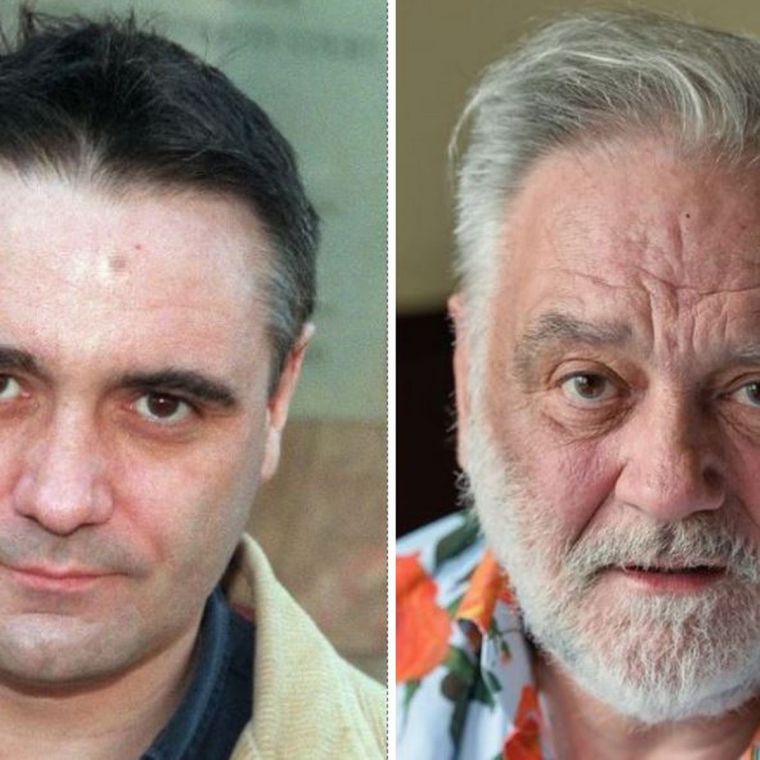
Actor and comedian Tony Slattery, as he searches for a better understanding of the mental health problems he has had for the past 25 years.
Outline
Comedian Tony Slattery meets experts to explore his psychological problems, finding out if he is definitely bipolar, confronting addiction and opening up about a childhood trauma.
Tony Slattery was one of the most gifted TV comedians of the late 1980’s and early 1990’s.
Production & Filming Details
Narrator(s): Denise Gough.
Director(s): Clare Richards.
Producer(s): Katie Buchanan, Katharine Fish, Alan Holland, and Clare Richards.
Let There Be Light (1946) – known to the US Army as PMF 5019 – is a documentary film directed by American filmmaker John Huston.
Intended to educate the public about posttraumatic stress disorder and its treatment among returning veterans, the film’s unscripted presentation of mental disability led to Let There Be Light being suppressed by the US government; it was not released until the 1980’s.
As the US Army was demobilising near the end of World War II it had the task of reintegrating returning military veterans back into peacetime society.
An obstacle veterans faced was the stigma surrounding “shell shock” or “psychoneurosis”, the old terms for posttraumatic stress disorder.
To convince the public, and especially employers, that veterans being treated for battle-induced mental instability were completely normal after psychiatric treatment, on 25 June 1945, the Army Signal Corps tasked Major John Huston with producing the documentary The Returning Psychoneurotics.
Huston visited multiple Army hospitals on the East and West Coasts before deciding upon Mason General Hospital on Brentwood, Long Island. The reasons being that Mason General was the biggest mental health facility on the East Coast, the hospital was located near the Army motion picture production center at Astoria Studio in Queens, New York, and the doctors were very open and receptive to the filming and any psychiatric questions he had.
The new title that Huston gave the film, Let There Be Light, was a reference to Genesis 1:3 of the King James Version of the Bible. This was an allusion to the documentary revealing truths that were previously concealed as too frightening or shameful for acknowledgement.
Outline (Documentary)
The film begins with an introduction, stating that 20% of wartime casualties are of a psychiatric nature.
Veterans are transported from a medical ship to Mason General Hospital to be treated for mental conditions brought about by war.
A group of seventy-five US service members – recent combat veterans suffering from various “nervous conditions” including psychoneurosis, battle neurosis, conversion disorder, amnesia, severe stammering, and anxiety states – arrive at the facility. They are brought into a room and told by an admissions officer to not be alarmed by the cameras, which will make a photographic record of their progress.
Next are scenes of interviews between a doctor and some of the patients about their problems and circumstances leading to that point. Afterwards, various treatment methods are employed to cure them.
Treatments depicted include narcosynthesis, hypnosis, group psychotherapy, music therapy, and work therapy. One soldier who had amnesia was hypnotised to remember the trauma of the Japanese bombings on Okinawa and his life before then. Another is given an intravenous injection of sodium amytal to induce a hypnotic state, curing him of his mental inability to walk.
The treatments are followed by classes (designed to reintegrate patients into civilian life) and group therapy sessions. Therapists make a point of reassuring the patients that there is nothing to be ashamed of for receiving treatment for their mental conditions, and that civilians subjected to the same stresses would develop the same conditions.
At this point the documentary shifts the tone to a sense of normalcy, with the soldiers performing regular activities and complaining about everyday problems.
The film ends with a number of the featured patients participating in a ceremony in which they are discharged, not just from the hospital, but from military service, and returned to civilian life.
Production & Filming Details
Narrator(s): Walter Huston.
Director(s): John Huston.
Producer(s): John Huston and US Army Pictorial Service.
Writer(s): John Huston and Charles Kaufman.
Music: Dimitri Tiomkin.
Cinematography: Stanley Cortez, John Doran, Lloyd Fromm, Joseph Jackman, and George Smith.
Editor(s): William H. Reynolds and Genre Fowler Jr.
Lost Transmissions is a 2019 drama film, written and directed by Katharine O’Brien. It stars Simon Pegg, Juno Temple and Alexandra Daddario.
The film had its world premiere at the Tribeca Film Festival on 28 April 2019, and was released on 13 March 2020, by Gravitas Ventures.
Outline
When an acclaimed music producer goes off his medication for schizophrenia, his friends chase him through the LA music scene to help commit him to a psychiatric hospital, revealing the troubling inadequacies of our mental health care system.
Production & Filming Details
Director(s): Katharine O’Brien.
Producer(s): Bo An, Thomas Benski, Al Di, Jo Henriquez, Olga Kagan, Tory Lenosky, Brian Levy, Alan Li, Craig Newman, Katharine O’Brien, Cassidy Shea Pahl, Filip Jan Rymsza, Robert Schartzman, Alyssa Swanzey, and Alvaro R. Valente.
Writer(s): Katharine O’Brien.
Music: Hugo Nicolson.
Cinematography: Arnau Valls Colomer.
Editor(s): Giannis Halkiadakis.
Production: Royal Road Entertainment, Pulse Films, and Underlying Tension.
Distributor(s): Gravitas Ventures, 101 Films, Premiere Entertainment Group, and Storm Pictures Korea.
Release Date: 28 April 2019 (Tribeca Film Festival).
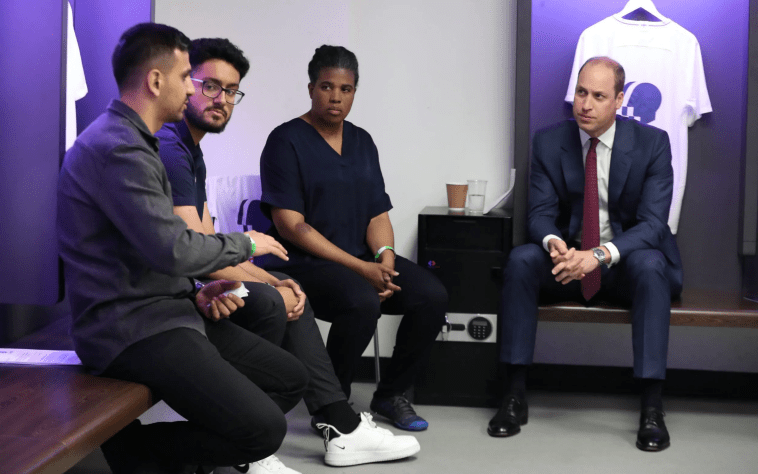
Documentary following Prince William’s campaign to get British men to open up about mental health issues through football.
Outline
Why do British men struggle to talk about their emotions? The Duke of Cambridge has spent the past year campaigning to change attitudes to mental health in Britain. Spurred on by the fact that suicide is the biggest killer of young men in this country, he wants to use football as a way to get men talking and to break the taboo that surrounds mental health. As a real fan of the sport, William has seen the way men express their feelings at football games. Now he wants to help men show the same passion and openness away from the game.
The film follows William as he meets players and fans from grassroots to the elite of the game and openly discusses their mental health challenges. Former England goalkeeper Joe Hart explains how he has learnt to cope with difficulties at the very top of the game, and a group of bereaved fathers reveal how they use their local football team as a support network and safe space to talk. Former Premier League footballer Marvin Sordell opens up about his struggles with depression, while Chelsea manager Frank Lampard compares life now with his early experiences of professional football.
As well as campaigning to change attitudes today, William explores aspects of British history that have helped create the culture of silence around this issue. Honest and touching, the film powerfully conveys his passion to change the conversation around mental health in Britain.
Production & Filming Details
Director(s): Marcus Plowright.
Producer(s): Gabby Saper, Lucy Rogers, Tony Pastor, and Jonathan Smith.







 Mental Health Matters
You must be logged in to post a comment.