Can Internet-Based CBT be used to Treat Young People with OCD?

Research Paper Title

Online Obsessive-Compulsive Disorder Treatment: Preliminary Results of the “OCD? Not Me!” Self-Guided Internet-Based Cognitive Behavioral Therapy Program for Young People.

Background

The development and evaluation of Internet-delivered cognitive behavioral therapy (iCBT) interventions provides a potential solution for current limitations in the acceptability, availability, and accessibility of mental health care for young people with obsessive-compulsive disorder (OCD).

Preliminary results support the effectiveness of therapist-assisted iCBT for young people with OCD; however, no previous studies have examined the effectiveness of completely self-guided iCBT for OCD in young people.

The researches aimed to conduct a preliminary evaluation of the effectiveness of the OCD? Not Me! program for reducing OCD-related psychopathology in young people (12-18 years). This programme is an eight-stage, completely self-guided iCBT treatment for OCD, which is based on exposure and response prevention.

Methods

These data were early and preliminary results of a longer study in which an open trial design is being used to evaluate the effectiveness of the OCD? Not Me!

Participants were required to have at least subc-linical levels of OCD to be offered the online program. Participants with moderate-high suicide/self-harm risk or symptoms of eating disorder or psychosis were not offered the programme. OCD symptoms and severity were measured at pre- and post-test, and at the beginning of each stage of the programme. Data was analysed using generalised linear mixed models.

Results

A total of 334 people were screened for inclusion in the study, with 132 participants aged 12 to 18 years providing data for the final analysis.

Participants showed significant reductions in OCD symptoms (P<.001) and severity (P<.001) between pre- and post-test.

Conclusions

These preliminary results suggest that fully automated iCBT holds promise as a way of increasing access to treatment for young people with OCD; however, further research needs to be conducted to replicate the results and to determine the feasibility of the programme.

Reference

Rees, C.S., Anderson, R.A., Kane, R.T. & Finaly-Jones, A.L. (2016) Online Obsessive-Compulsive Disorder Treatment: Preliminary Results of the “OCD? Not Me!” Self-Guided Internet-Based Cognitive Behavioral Therapy Program for Young People. JMIR Mental Health. 3(3):e29. doi: 10.2196/mental.5363.


Could Fake Poo & a Rubber Hand Treat OCD?

An illusion in which fake faeces are put on a rubber hand has been tested on people with obsessive compulsive disorder (OCD) (Jalal et al., 2020).

It may one day become a new treatment.

Therapies based on this illusion, designed to help people get more comfortable with germ exposure, could be less upsetting than existing therapies, says Baland Jalal at the University of Cambridge.

The original rubber hand illusion involves putting one hand out of sight and seeing a fake hand in its place. If someone else strokes both the fake and real hand, most people feel that the fake is their own.

Jalal and his colleagues tried a variant on people with hygiene-related OCD. They are usually treated with exposure therapy, but that would, for example, involve exposure on their actual hands. As a result, a quarter reject such therapy.

In the study, 29 people with OCD had fake faeces, made from foods and a fake odour, dabbed on the rubber hand, while their real, hidden hand was touched with a damp towel. While they knew the faeces were fake, they reported feeling disgusted and contaminated.

Jalal’s team plan to test the technique as a way of treating OCD.

References

Jalal, B., McNally, R.J., Elias, J.A., Potluri, S. & Ramanchandran, V.S. (2020) “Fake it till You Make it”! Contaminating Rubber Hands (“Multisensory Stimulation Therapy”) to Treat Obsessive-Compulsive Disorder. Frontiers in Human Neuroscience. 13:414. https://doi.org/10.3389/fnhum.2019.00414

Wilson, C. (2020) Rubber Hand Illusion and Fake Poo May be the may to Treat OCD. New Scientist. 18 January 2020, pp.17.

Can We Model Essential Connections in Obsessive-Compulsive Disorder Patients using Functional MRI?

Research Paper Title

Modeling essential connections in obsessive-compulsive disorder patients using functional MRI.

Background

Obsessive-compulsive disorder (OCD) is a mental disease in which people experience uncontrollable and repetitive thoughts or behaviours.

Clinical diagnosis of OCD is achieved by using neuropsychological assessment metrics, which are often subjectively affected by psychologists and patients.

In this study, the researchers propose a classification model for OCD diagnosis using functional MR images.

Methods

Using functional connectivity (FC) matrices calculated from brain region of interest (ROI) pairs, a novel Riemann Kernel principal component analysis (PCA) model is employed for feature extraction, which preserves the topological information in the FC matrices.

Hierarchical features are then fed into an ensemble classifier based on the XGBoost algorithm.

Finally, decisive features extracted during classification are used to investigate the brain FC variations between patients with OCD and healthy controls.

Results

The proposed algorithm yielded a classification accuracy of 91.8%.

Additionally, the well-known cortico-striatal-thalamic-cortical (CSTC) circuit and cerebellum were found as highly related regions with OCD.

To further analyse the cerebellar-related function in OCD, the researchers demarcated cerebellum into three sub-regions according to their anatomical and functional property.

Using these three functional cerebellum regions as seeds for brain connectivity computation, statistical results showed that patients with OCD have decreased posterior cerebellar connections.

Conclusions

This study provides a new and efficient method to characterise patients with OCD using resting-state functional MRI.

The researchers also provide a new perspective to analyse disease-related features.

Despite of CSTC circuit, their model-driven feature analysis reported cerebellum as an OCD-related region.

This paper may provide novel insight to the understanding of genetic aetiology of OCD.

Reference

Xing, X., Jin, L., Li, Q., Yang, Q., Han, H., Xu, C., Wei, Z., Zhan, Y., Zhou, X.S., Xue, Z., Chu, X., Peng, Z. & Shi, F. (2020) Modeling essential connections in obsessive-compulsive disorder patients using functional MRI. Brain and Behavior. 10(2):e01499. doi: 10.1002/brb3.1499. Epub 2020 Jan 1.

Education & Training should Aim to improve the Recognition & Treatment of Postpartum OCD

Research Paper Title

Advances in the pharmacological management of obsessive-compulsive disorder in the postpartum period.

Background

Obsessive-compulsive disorder (OCD) is a psychiatric disorder characterised by obsessions and compulsions.

Obsessions are defined as intrusive, recurrent and distressing thoughts, images or impulses, whereas compulsions are defined as repetitive behaviours or mental acts.

While there is an associated distress, and indeed oftentimes, the individual’s awareness that these behaviours are excessive and unreasonable, the individual continues to be disabled by an inability to cease their compulsions.

The postpartum period may herald the onset of OCD or precipitate an exacerbation of the preexisting OCD symptoms.

Common OCD symptom clusters occur in the postpartum period, with specific challenges associated with motherhood and lactation.

Areas Covered

This brief review aims to review the extent and nature of publications evaluating pharmacological treatment of OCD in the postpartum period.

Expert Opinion

Education and training should aim to improve the recognition and treatment of postpartum OCD.

Due to the limited nature of studies, more research is required to assess the role of selective serotonin reuptake inhibitors in the postpartum period.

Reference

Brakoulias, V., Viswasam, K., Dwyer, A., Raine, K.H. & Starcevic, V. (2020) Advances in the pharmacological management of obsessive-compulsive disorder in the postpartum period. Expert Opinion on Pharmacotherapy. 21(2), pp.163-165. doi: 10.1080/14656566.2019.1700229. Epub 2020 Jan 1.

Eight (2016)

Introduction

A woman suffering from Obsessive Compulsive Disorder (OCD) struggles with her morning routine of trying to get to work on time.

Outline

Crippled by severe agoraphobia and obsessive-compulsive disorder, Sarah has not left her house in two years.

She has long since lost both her husband and daughter, and each and every day is lived going through a cycle of rituals repeated in series of eights.

But today Sarah will attempt to conquer her fears by fulfilling one simple yet seemingly impossible task: stepping out the front door.

Production & Filming Details

  • Director(s): Peter Blackburn.
  • Producer(s): Marie Adler, Peter Blackburn, Caitlin Johnston, and Graham Young.
  • Writer(s): Peter Blackburn.
  • Music: Ryan Walsh.
  • Cinematography: Brad Francis.
  • Editor(s): Joe Lancaster and Graham Young.
  • Production: Blacmac Productions.
  • Distributor(s): Adler & Associates Entertainment.
  • Release Date: 2016.
  • Running Time: 81 minutes.
  • Country: Australia.
  • Language: English.

OCD and Me (2015)

Introduction

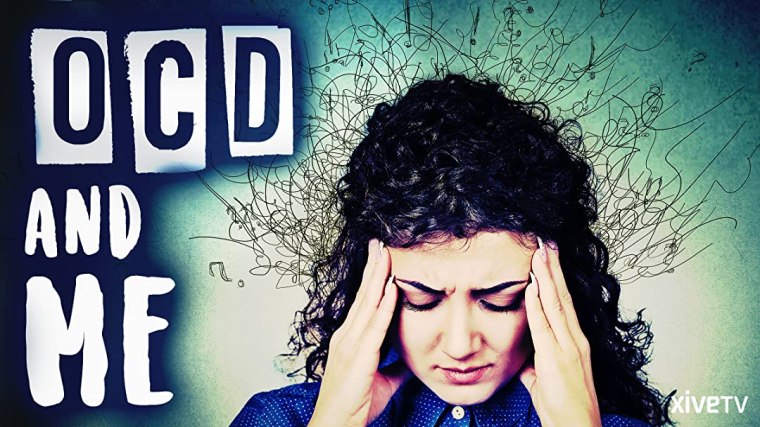
Most people have heard of it and many of us say we have a little bit of it, but what exactly is Obsessive Compulsive Disorder.

OCD and Me gives us a greater appreciation of this secretive and often misunderstood mental health condition.

Outline

Most people have heard of OCD, but what exactly is Obsessive Compulsive Disorder?

An estimated two to three percent of the population suffers from the condition, which goes far beyond the common stereotypes of excessive hand washing or repetitive behaviours.

To penetrate the reality of this mental illness, this film gets to know several who have agreed to come forward and talk about their OCD.

Production & Filming Details

  • Director(s): Adrian McCarthy.
  • Producer(s): Adrian McCarthy, Niamh O’Connor, Zlata Filipovic, and Martha O’Neill..
  • Cinematography: Eleanor Bowman.
  • Editor(s): Brenda Morrissey.
  • Production: Wildfire Films.
  • Release Date: 02 February 2015.
  • Running Time: 53 minutes.
  • Country: Ireland.
  • Language: English.

Book: Stop Obsessing!: How to Overcome Your Obsessions and Compulsions

Book Title:

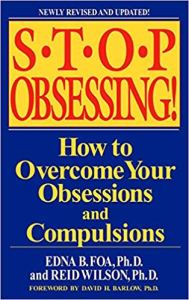
Stop Obsessing!: How to Overcome Your Obsessions and Compulsions.

Author(s): Edna B. Foa and Reid Wilson.

Year: 2001.

Edition: Revised Edition.

Publisher: Bantam USA.

Type(s): Paperback.

Synopsis:

Are you tormented by extremely distressing thoughts or persistent worries? Compelled to wash your hands repeatedly? Driven to repeat or check certain numbers, words, or actions?

If you or someone you love suffers from these symptoms, you may be one of the millions of Americans who suffer from some form of obsessive-compulsive disorder, or OCD.

Once considered almost untreatable, OCD is now known to be a highly treatable disorder using behaviour therapy.

In this newly revised edition of Stop Obsessing! Drs. Foa and Wilson, internationally renowned authorities on the treatment of anxiety disorders, share their scientifically based and clinically proven self-help program that has already allowed thousands of men and women with OCD to enjoy a life free from excessive worries and rituals.

You will discover:

  • Step-by-step programmes for both mild and severe cases of OCD.
  • The most effective ways to help you let go of your obsessions and gain control over your compulsions.
  • New charts and fill-in guides to track progress and make exercises easier.
  • Questionnaires for self-evaluation and in-depth understanding of your symptoms.
  • Expert guidance for finding the best professional help.
  • The latest information about medications prescribed for OCD.

Book: Cognitive Behavioural Therapy

Book Title:

Cognitive Behavioral Therapy: A Comprehensive Guide to Using CBT to Overcome Depression, Anxiety, Intrusive Thoughts, and Rewiring Your Brain to Regain Control Over Your Emotions and Life.

Author(s): Stuart Watson.

Year: 2020 (Hardcover) and 2019 (Kindle).

Edition: One.

Publisher: Ationa Publications.

Type(s): Hardcover, Paperback, Kindle and Audiobook.

Synopsis:

If you’re looking for an effective method to treat anxiety, depression, phobias and more, then keep reading…

Cognitive-behavioural therapy, otherwise known as “CBT,” is an incredibly well-known therapy method within the field of psychology. Yet, unless you work within this field you likely know very little about CBT, how it works, and why it is one of the best therapy methods around.

In this book you will learn about the amazing affects this therapy has been proven to have. You can learn how to use CBT from within your own home, helping to treat anxiety, depression, post-traumatic stress disorder, panic disorder, obsessive-compulsive disorder, and more. No longer do you have to suffer in silence, simply existing through life. You can learn to heal and begin to actually live a full life again.

Whether you have been diagnosed with social anxiety disorder, major depression, post-traumatic stress disorder, or simply are struggling throughout your daily life without a diagnosis, CBT can help. While it is always best to go to a professional and receive a diagnosis of your condition, you can also use the tools of CBT independently at home, with or without an official diagnosis.

You can learn to better understand your mind, overcome intrusive thoughts, cope with daily stress, and transform your negative thought patterns into something more positive. CBT is truly transformative, and with a little daily effort, you could possibly change your entire life for the better.

The following are some of the critical things explored in the book:

  • The Basic Premise of CBT and how it Can Benefit You in Daily Life.
  • The Fascinating History of CBT.
  • 16 Common Mistakes and Myths about CBT.
  • An In-Depth Look into What CBT Can Treat and Why it Works.
  • The Key Principles of CBT.
  • Overcoming Anxiety and Depression Step-By-Step.
  • 3 Alternative CBT Approaches.
  • Discover 7 Inspiring Tales of CBT Success.
  • And so much more.

Book: Managing OCD with CBT For Dummies

Book Title:

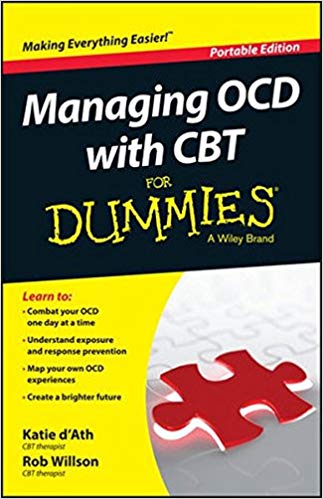
Managing OCD with CBT for Dummies.

Author(s): Katie D’Ath and Rob Wilson.

Year: 2016.

Edition: First.

Publisher: Wiley Publishing, Inc.

Synopsis:

Break the chains of OCD with Cognitive Behavioural Therapy.

Are you suffering from Obsessive Compulsive Disorder (OCD)? You’re not alone. Whether you’ve tried countless treatments or are seeking help for the first time, this expert, accessible guide is your beacon of hope for breaking the chains of this crippling disorder. Managing OCD with CBT For Dummies uses mindfulness-based Cognitive Behavioural Therapy (CBT) to eradicate OCD from your day-to-day life. Through clear and sensitive direction, you’ll find out how to identify and correct negative thought patterns, confront your problems with positive solutions and recognise the power of cognitive thinking.

Once a term only used by psychologists and counsellors, CBT is now in common use and has become the preferred treatment method for a variety of psychological issues, including anxiety and depression, self-esteem, eating disorders, addiction, and many others. If you are planning on trying it on its own or in conjunction with other types of therapies, you’ll be heartened to know that a staggering 75% of people with OCD are significantly helped by CBT – which is why it remains the treatment of choice for tackling the disorder by the National Institute for Health and Clinical Excellence (NICE).

  • Demonstrates how CBT encourages new thinking patterns to combat destructive thought tendencies.
  • Explains the causes and symptoms of OCD.
  • Shows you how to use CBT to modify everyday thoughts and behaviours with the aim of positively influencing your emotions.
  • Illustrates the importance of facing your fears and offers positive strategies on exposure therapy.

There’s no need to let OCD continue to control your life. This how-to guide helps you break down the negative patterns that have been keeping you hostage―and allows you to build a positive future free of the hold of OCD.

Book: Obsessive-Compulsive Disorder For Dummies

Book Title:

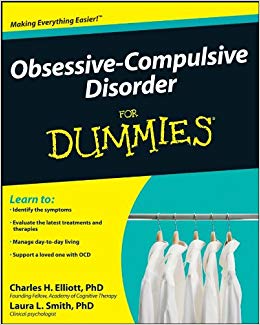
Obsessive-Compulsive Disorder For Dummies.

Author(s): Laura L. Smith, PhD and Charles H. Elliott, PhD.

Year: 2008.

Edition: First.

Publisher: Wiley Publishing, Inc.

Synopsis:

Arguably one of the most complex emotional disorders, Obsessive Compulsive Disorder (OCD) is surprisingly common.

Furthermore, most people at some time in their lives exhibit a smattering of OCD-like symptoms.

Obsessive Compulsive Disorder For Dummies sorts out the otherwise curious and confusing world of obsessive compulsive disorder.

Engaging and comprehensive, it explains the causes of OCD and describes the rainbow of OCD symptoms. The book shows readers whether OCD symptoms represent normal and trivial concerns (for example, a neat freak) or something that should be checked out by a mental health professional (for example, needing to wash hands so often that they become raw and red).

In easy to understand steps, the authors lay out the latest treatments that have been proven to work for this disorder, and provide practical and real tools for living well long-term.

Whether you or someone you care about has this disorder, Obsessive Compulsive Disorder For Dummies gives you an empathic understanding of this fascinating yet treatable mental disorder.