Psychiatrists have Started the Process of Mapping Genetic Architecture of Mental Disorders

Research Paper Title

Psychiatrists begin to map genetic architecture of mental disorders.

Background

Mental illness affects one in six US adults, but scientists’ sense of the underlying biology of most psychiatric disorders remains nebulous.

That is frustrating for physicians treating the diseases, who must make diagnoses based on symptoms that may only appear sporadically.

Now, a large-scale analysis of postmortem brains is revealing distinctive molecular traces in people with mental illness.

An international team of researchers reports that five major psychiatric disorders have often overlapping patterns of gene activity, which furthermore vary in disease-specific – and sometimes counterintuitive – ways.

The findings, they say, might someday lead to diagnostic tests, and one has already inspired a clinical trial of a new way to treat overactive brain cells in autism.

Reference

Dengler, R. (2020) Psychiatrists begin to map genetic architecture of mental disorders. Neuroscience. 359(6376), pp.619. DOI: 10.1126/science.359.6376.619

Do Brain “Globalopathies” Cause Mental Disorders?

Research Paper Title

Brain “Globalopathies” Cause Mental Disorders.

Background

“Consciousness” “mood,” “identity” and “personality” are all emergent properties from whole-brain organisations; these are typically disturbed in psychiatric disorders.

This work proposes that the underlying etiopathology of mental disorders originates from disturbances to global brain dynamics, or “Globalopathies” that are divided into three major interdependent types:

  1. “Resting-State Networkpathies,” in personality disorders;
  2. “Entropiathies” in mood disorders; and
  3. “Connectopathies” in psychosis and schizophrenia spectrum disorders.

Novel approaches of processing signals from the brain are beginning to reveal brain organization in health and disease. For example a “small world network” has been described for optimal brain functions and breakdown of that organisation might underlie relevant psychiatric manifestations.

A novel diagnostic reformulation can be generated based on pathologies of whole brain organisations, such new brain related diagnostic nosology is testable and thus can be validated.

Once validated Globalopathies can provide for “Global-therapies” i.e., interventions that can reorganise the brain and cure psychiatric disorders.

The technology for such interventions is becoming available.

Reference

Peled, A. (2020) Brain “Globalopathies” cause mental disorders. Medical Hypotheses. 81(6), pp.1046-1055. doi: 10.1016/j.mehy.2013.09.032. Epub 2013 Oct 5.

Highlighting the Hidden Links between Mental Disorders

Research Paper Title

The hidden links between mental disorders.

Background

Psychiatrists have a dizzying array of diagnoses and not enough treatments. Hunting for the hidden biology underlying mental disorders could help.

In 2018, psychiatrist Oleguer Plana-Ripoll was wrestling with a puzzling fact about mental disorders. He knew that many individuals have multiple conditions – anxiety and depression, say, or schizophrenia and bipolar disorder. He wanted to know how common it was to have more than one diagnosis, so he got his hands on a database containing the medical details of around 5.9 million Danish citizens.

You can continue reading the full article here.

Reference

Marshall, M. (2020) The hidden links between mental disorders. Nature. 581(7806), pp.19-21. doi: 10.1038/d41586-020-00922-8.

Creativity & its Role in the Treatment & Recovery of those with Mental Disorders

Research Paper Title

Creativity, mental disorders and their treatment: recovery-oriented psychopharmacotherapy.

Background

This paper discusses interrelations between creativity, mental disorders and their treatment.

The psychology of creativity is very important for successful psychopharmacotherapy, but our knowledge about creativity is still insufficient.

Even that which is known is not within the armamentarium of most practicing psychiatrists.

  • In the first part of this article creativity and possible associations between creativity, mental health, and well-being are described.
  • The second part deals with the intriguing relationship between creativity and mental disorders.
  • The third part emphasizes the role of creativity in the treatment of mental disorders.

This paper ends by underlining the importance of a creativity-enhancing oriented, and personal recovery-focused psychopharmacotherapy in helping psychiatric patients achieve fulfilled and purposeful lives.

Reference

Jakovljevic, M. (2020) Creativity, mental disorders and their treatment: recovery-oriented psychopharmacotherapy. Psychiatria Danubina. 25(3), pp.311-315.

Older People: Physical Health, Check; Mental Health, Overlooked

Research Paper Title

Promoting active ageing in older people with mental disorders living in the community: An integrative review.

Background

Approximately 15% of older people aged 60 and above are experiencing a mental disorder. However, they are commonly unrecognised from health care providers.

Therefore the purpose of this research was to critically synthesise the evidence in relation to the promotion of active ageing in older people, including those with mental disorders.

Methods

This study is an integrative review. Articles published between January 2002 and March 2017 in English and in Thai were identified through searches of the databases CINAHL, MEDLINE, EMBASE, PsycINFO, and Thai LIS, as well as through manual searching.

Methodologically high-quality research articles were included if they addressed the promotion of active ageing and related concepts, the impact of mental disorders on active ageing and related concepts, the perspective of older people regarding active ageing, and issues related to working with older people with mental health problems living in the community.

Results

A total of 18 articles were included. The findings show that there is little evidence regarding the promotion of active ageing in older people with mental disorders.

Older people with mental disorders were less likely to achieve successful ageing compared with those without mental disorders, suggesting they need support from health care providers. However, there are several barriers to care and working with older people with mental disorders at the community level.

Conclusions

Of concern is that health professionals focus on the physical health of older people while mental health issues are overlooked.

Reference

Kenbubpha, K., Higgins, I., Chan, S.W-C. & Wilson, A. (2020) Promoting active ageing in older people with mental disorders living in the community: An integrative review. International Journal of Nursing Practice. 24(3):e12624. doi: 10.1111/ijn.12624. Epub 2018 Mar 30.

Mitochondria & Mental Disorders: Is There a Link?

Research Paper Title

Mitochondrial Involvement in Mental Disorders: Energy Metabolism and Genetic and Environmental Factors.

Background

Mental disorders, such as major depressive disorder (MDD), bipolar disorder (BD), and schizophrenia (SZ), are generally characterised by a combination of abnormal thoughts, perceptions, emotions, behaviour, and relationships with others.

Multiple risk factors incorporating genetic and environmental susceptibility are associated with development of these disorders.

Mitochondria have a central role in the energy metabolism, and the literature suggests energy metabolism abnormalities are widespread in the brains of subjects with MDD, BPD, and SZ.

Numerous studies have shown altered expressions of mitochondria-related genes in these mental disorders.

In addition, environmental factors for these disorders, such as stresses, have been suggested to induce mitochondrial abnormalities.

Moreover, animal studies have suggested that interactions of altered expression of mitochondria-related genes and environmental factors might be involved in mental disorders.

Further investigations into interactions of mitochondrial abnormalities with environmental factors are required to elucidate of the pathogenesis of these mental disorders.

Reference

Iwata, K. (2020) Mitochondrial Involvement in Mental Disorders: Energy Metabolism and Genetic and Environmental Factors. Advances in Experimental Medicine and Biology. doi: 10.1007/978-3-030-05542-4_3.

Can Exercise & Physical Activity Induce Improvements for Mental Disorders?

Research Paper Title

Exercise and physical activity in mental disorders: clinical and experimental evidence.

Background

Several epidemiological studies have shown that exercise (EX) and physical activity (PA) can prevent or delay the onset of different mental disorders, and have therapeutic benefits when used as sole or adjunct treatment in mental disorders.

This review summarises studies that used EX interventions in patients with anxiety, affective, eating, and substance use disorders, as well as schizophrenia and dementia/mild cognitive impairment.

Despite several decades of clinical evidence with EX interventions, controlled studies are sparse in most disorder groups.

Preliminary evidence suggests that PA/EX can induce improvements in physical, subjective and disorder-specific clinical outcomes.

Potential mechanisms of action are discussed, as well as implications for psychiatric research and practice.

Reference

Zschucke, E., Gaudlitz, K. & Strohle, A. (2020) Exercise and physical activity in mental disorders: clinical and experimental evidence. Journal of Preventive Medicine and Public Health. 46 Suppl 1(Suppl 1), pp.S12-21. doi: 10.3961/jpmph.2013.46.S.S12. Epub 2013 Jan 30.

Reviewing Sleep & Mental Disorders in Childhood & Adolescence

Research Paper Title

Review: Sleep and mental disorders in childhood and adolescence.

Background

Sleep problems and disorders are common in childhood and adolescence.

This review aims to throw light on the relationship between sleep problems and mental disorders in childhood and adolescence.

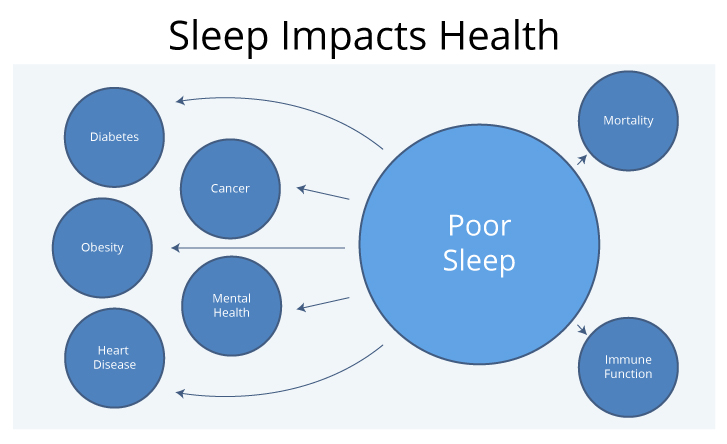
Sleep problems and disorders appear to be risk factors for mental disorders as comorbidities, as symptoms, and as effects of mental disorders.

Frequently, there is an interaction between sleep behaviour and psychopathology so that sleep problems contribute to the intensity and maintenance of mental disorders.

This bidirectional association is observed in early childhood as well as in school-aged children and in adolescents.

Many studies show that this association has a long-term nature beyond child development.

Both environmental and genetic factors seem to play a role in the development and maintenance of the relationship between sleep problems and mental disorders.

Various research articles show that treatment of mental disorders and treatment of sleep disorders influence each other in a positive way.

Therefore, it is strongly advised to consider sleep problems in diagnosis and treatment but also in prevention of mental disorders.

Reference

Schnatschmidt, M. & Schlarb, A. (2020) Review: Sleep and mental disorders in childhood and adolescence. Zeitschrift fur Kinder- und Jugendpsychiatrie und Psychotherapie. 46(5), pp.368-381. doi: 10.1024/1422-4917/a000605. Epub 2018 Jul 27.

Research: Treatments for Internet Gaming Disorder and Internet Addiction: A Systematic Review

Research Paper Title:

Treatments for Internet Gaming Disorder and Internet Addiction: A Systematic Review.

Author(s): Kristyn Zajac, Meredith K. Ginley, Rocio Chang, and Nancy Petry.

Year: 2017.

Journal: Psychology of Addictive Behaviours, 31(8).

DOI: 10.1037/adb0000315.

Abstract:

Problems related to excessive use of the Internet and video games have recently captured the interests of both researchers and clinicians.

The goals of this review are to summarise the literature on treatment effectiveness for these problems and to determine whether any treatments meet the minimum requirement of an evidence-based treatment as defined by Chambless et al. (1998).

Studies of treatments for Internet gaming disorder (IGD) and Internet addiction were examined separately, as past studies have linked IGD to more severe outcomes. The systematic review identified 26 studies meeting predefined criteria; 13 focused on treatments for IGD and 13 on Internet addiction.

The results highlighted a paucity of well-designed treatment outcome studies and limited evidence for the effectiveness of any treatment modality. Studies were limited by methodological flaws, including small sample sizes, lack of control groups, and little information on treatment adherence, among other problems. In addition, the field is beset by a lack of consistent definitions of and established instruments to measure IGD and Internet addiction.

The results of this review highlight the need for additional work in the area of treatment development and evaluation for IGD and Internet addiction. Attention to methodological concerns identified within this review should improve subsequent research related to treating these conditions, and ultimately outcomes of patients suffering from them.

You can download a copy of the full paper here.

Research: Relationship between Internet Addiction and Academic Performance among Foreign Undergraduate Students

Research Paper Title:

Relationship between Internet Addiction and Academic Performance among Foreign Undergraduate Students.

Author(s): Najmi Hayati, Masoumeh Alavi, and Syed Mohamed Shafeq.

Year: 2014.

Journal: Procedia – Social and Behavioural Sciences, 114 (Conference: 4th World Conference on Psychology, Counseling and Guidance).

DOI: 10.1016/j.sbspro.2013.12.795.

Abstract:

The purpose of this study is to identify the relationship between Internet Addiction (IA) and academic performance among foreign undergraduate students in Universiti Teknologi Malaysia (UTM).

This study also identified the differences in internet addiction in terms of gender and country of original.

Four countries were selected through simple random sampling; there were China, Yemen, Somalia and Indonesia. Then, a total of 120 students were selected randomly from those countries. In order to measure IA, Internet Addiction Test (IAT) based on Young’s (1998) survey which modified by Pee and Shafeq (2009), was used.

The data collected was analysed using SPSS. The statistical techniques frequency and percentage were used to identify the patterns of using the Internet; t-test and one-way ANOVA were used to examine the differences in IA in terms of demographic factors. Pearson correlation technique was also used to determine the relationship between IA and academic performance.

The results of the study showed that there were no significant differences in IA in terms of gender, country of origin. The results also indicated that there were no significant differences in IA in terms of CGPA. This suggests that future research needs to work on large-scale using multiple-campus technology assessments.

You can download a copy of the full paper here.