Book: Anxiety – Overcome It and Live Without Fear

Book Title:

Anxiety – Overcome It and Live Without Fear.

Author(s): Sonali Gupta.

Year: 2020.

Edition: First (1st).

Publisher: HarperCollins.

Type(s): Paperback and Kindle.

Synopsis:

Do you know the difference between anxiety and stress? What can you do when you have a panic attack? How do you know when it is time to get help?

Anxiety is a mental health crisis that has gripped over three crore Indians. In Anxiety: Overcome It and Live without Fear, clinical psychologist Sonali Gupta delves into the condition, using case studies to identify how anxiety can be triggered at work, in relationships, and by social media. Gupta shares a unique glimpse into this mental health condition in India, especially among Gen Z and millennials.

Recommending strategies and techniques for anxiety-prone readers, this book will help you confront your fears and take control of your life.

On This Day … 02 October

People (Deaths)

  • 2011 – Peter L. Benson, American psychologist and academic (b. 1946).
  • 2012 – J. Philippe Rushton, English-Canadian psychologist, theorist, academic (b. 1943).
  • 2013 – Gottfried Fischer, German psychologist, therapist, and academic (b. 1944).

Peter L. Benson

Peter Lorimer Benson (1946-2011) was a psychologist and CEO/President of Search Institute.

He pioneered the developmental assets framework, which became the predominant approach to research on positive facets of youth development.

J. Philippe Rushton

John Philippe Rushton (03 December 1943 to 02 October 2012) was a Canadian psychologist and author. He taught at the University of Western Ontario and became known to the general public during the 1980s and 1990s for research on race and intelligence, race and crime, and other apparent racial variations. His book Race, Evolution, and Behavior (1995) is about the application of r/K selection theory to humans.

Rushton’s work was heavily criticised by the scientific community for the questionable quality of its research, with many alleging that it was conducted under a racist agenda. From 2002 until his death, he served as the head of the Pioneer Fund, an organisation founded in 1937 to promote Eugenics, which worked actively with the Nazi party to promote theories of racial superiority and inferiority, and has been described as racist and white supremacist in nature and designated as a hate group by the Southern Poverty Law Center. Rushton was a Fellow of the Canadian Psychological Association and a onetime Fellow of the John Simon Guggenheim Memorial Foundation.

Gottfried Fischer

Gottfried Fischer (13 September 1944 to 02 October 2013) was a German psychologist, psychotherapist and psychoanalyst.

He is considered to be the founder of psychotraumatology in Germany and has been director of the Institute for Clinical Psychology and Psychological Diagnostics at the University of Cologne from 1995 to 2009.

Book: Together Apart – The Psychology of COVID-19

Book Title:

Together Apart – The Psychology of COVID-19.

Author(s): Jolanda Jetten, Stephen D. Reicher, S. Alexander Haslam, and Tegan Cruwys.

Year: 2020.

Edition: First (1st).

Publisher: SAGE Publications Ltd.

Type(s): Paperback and Kindle.

Synopsis:

Written by leading social psychologists with expertise in leadership, health and emergency behaviour – who have also played an important role in advising governments on COVID-19 – this book provides a broad but integrated analysis of the psychology of COVID-19

It explores the response to COVID-19 through the lens of social identity theory, drawing from insights provided by four decades of research. Starting from the premise that an effective response to the pandemic depends upon people coming together and supporting each other as members of a common community, the book helps us to understand emerging processes related to social (dis)connectedness, collective behaviour and the societal effects of COVID-19. In this it shows how psychological theory can help us better understand, and respond to, the events shaping the world in 2020.

Considering key topics such as:

  • Leadership.
  • Communication.
  • Risk perception.
  • Social isolation.
  • Mental health.
  • Inequality.
  • Misinformation.
  • Prejudice and racism.
  • Behaviour change.
  • Social Disorder.

This book offers the foundation on which future analysis, intervention and policy can be built.

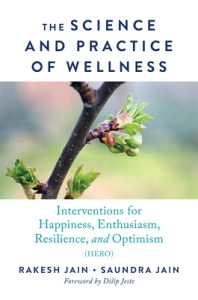
Book: The Science and Practice of Wellness

Book Title:

The Science and Practice of Wellness: Interventions for Happiness, Enthusiasm, Resilience, and Optimism (HERO).

Author(s): Rakesh Jain and Saundra Jain.

Year: 2020.

Edition: First (1st).

Publisher: W.W. Norton Company.

Type(s): Hardcover.

Synopsis:

Wellness is rapidly becoming an issue of great importance in clinical practice. Wellness-centric clinicians look to improve various traits known to be beneficial to patients – traits such as happiness, enthusiasm, resilience, and optimism (referred to as the HERO traits). All of these not only improve global mental wellness, but also offer resilience against stress, depression, and anxiety. Wellness-centric interventions augment both psychopharmacology and traditional psychotherapies, such as CBT.

Rakesh and Saundra Jain start with an in- depth review of the scientific literature and a practical introduction on applying wellness interventions in various clinical settings. Additionally, they offer advice on such beneficial practices as exercise, mindfulness, optimised nutrition, optimized sleep, enhanced socialisation, and positive psychology enhancement. A robust resource section offers access to wellness-centric scales and forms developed by the authors.

Book: Resilience – How We Find New Strength At Times of Stress

Book Title:

Resilience – How We Find New Strength At Times of Stress.

Author(s): Frederic Flach, MD.

Year: 2020.

Edition: Third (3rd).

Publisher: Ballantine Books.

Type(s): Hardcover, Paperback, and Kindle.

Synopsis:

Learn to bounce back from life’s inevitable crises by making friends with stress. There’s no escaping stress. It appears on our doorstep uninvited in the shattering forms of death and divorce, or even in the pleasant experiences of promotion, marriage, or a long-held wish fulfilled. Anything that upsets the delicate balance of our daily lives creates stress.

So why do some people come out of a crisis while others never seem quite themselves again? Now, Dr. Frederic Flach takes the anxiety out of hard times by showing you how to embrace you fears and become stronger because of them. Drawing on over thirty years of experience, Flach reveals the remarkable antidote to the destructive qualities of stress: RESILIENCE.

Book: Rainy Brain, Sunny Brain

Book Title:

Rainy Brain, Sunny Brain – How to Retrain Your Brain to Overcome Pessimism and Achieve a More Positive Outlook.

Author(s): Elaine Fox.

Year: 2012.

Edition: First (1st).

Publisher: Baisc Books.

Type(s): Hardcover, Paperback, and Audiobook, and Kindle.

Synopsis:

Are you optimistic or pessimistic? Glass half-full or half-empty? Do you look on the bright side or turn towards the dark? These are easy questions for most of us to answer, because our personality types are hard-wired into our brains. As pioneering psychologist and neuroscientist Elaine Fox has discovered, our outlook on life reflects our primal inclination to seek pleasure or avoid danger – inclinations that, in many people, are healthily balanced. But when our “fear brain” or “pleasure brain” is too strong, the results can be disastrous, as those of us suffering from debilitating shyness, addiction, depression, or anxiety know all too well.

Luckily, anyone suffering from these afflictions has reason to hope. Stunning breakthroughs in neuroscience show that our brains are more malleable than we ever imagined. In Rainy Brain, Sunny Brain, Fox describes a range of techniques – from traditional cognitive behavioural therapy to innovative cognitive-retraining exercises – that can actually alter our brains’ circuitry, strengthening specific thought processes by exercising the neural systems that control them. The implications are enormous: lifelong pessimists can train themselves to think positively and find happiness, while pleasure-seekers inclined toward risky or destructive behavior can take control of their lives.

Drawing on her own cutting-edge research, Fox shows how we can retrain our brains to brighten our lives and learn to flourish. With keen insights into how genes, life experiences and cognitive processes interleave together to make us who we are, Rainy Brain, SunnyBrain revolutionizes our basic concept of individuality. We learn that we can influence our own personalities, and that our lives are only as “sunny” or as “rainy” as we allow them to be.

Book: Psychology of the Future – Lessons from Modern Consciousness Research.

Book Title:

Psychology of the Future – Lessons from Modern Consciousness Research.

Author(s): Stanislav Grof.

Year: 2000.

Edition: First (1st), Illustrated Edition.

Publisher: State University of New York Press.

Type(s): Hardcover and Paperback.

Synopsis:

Summarizes Grof’s experiences and observations from more than forty years of research into non-ordinary states of consciousness.

This accessible and comprehensive overview of the work of Stanislav Grof, one of the founders of transpersonal psychology, was specifically written to acquaint newcomers with his work.

Serving as a summation of his career and previous works, this entirely new book is the source to introduce Grof’s enormous contributions to the fields of psychiatry and psychology, especially his central concept of holotropic experience, where holotropic signifies “moving toward wholeness.”

Grof maintains that the current basic assumptions and concepts of psychology and psychiatry require a radical revision based on the intensive and systematic research of holotropic experience. He suggests that a radical inner transformation of humanity and a rise to a higher level of consciousness might be humankind’s only real hope for the future.

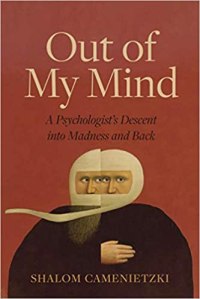
Book: Out of My Mind

Book Title:

Out of My Mind: A Psychologist’s Descent into Madness and Back.

Author(s): Shalom Camenietzki.

Year: 2020.

Edition: First (1st).

Publisher: University of Regina Press.

Type(s): Hardcover and Kindle.

Synopsis:

On paper, psychologist Dr. Shalom Camenietzski seemed to have it all – a beautiful family, a thriving practice, and supportive friends and colleagues.

But in reality, he lived a life of turmoil – obsessive daydreams of taking his life, flamboyant periods of mania, disturbing acts of violence against his wife and son, and various episodes of psychosis, one of which would see him speeding his car the wrong way up Toronto’s Gardiner Expressway.

Able to understand the clinical profile of his bipolar disorder, he was nonetheless powerless to stop it.

A fascinating account of a “”mentally disordered healer,”” Out of My Mind reveals the strengths and fallibilities of traditional psychotherapies and shows how Dr. Camenietzki finally obtained a symptom-free life.

On This Day … 25 September

People (Births)

  • 1962 – Kalthoum Sarrai, Tunisian-French psychologist and journalist (d. 2010).

People (Deaths)

  • 1958 – John B. Watson, American psychologist and academic (b. 1878).
  • 2005 – Urie Bronfenbrenner, Russian-American psychologist and ecologist (b. 1917).
  • 2005 – M. Scott Peck, American psychiatrist and author (b. 1936).
  • 2013 – Bennet Wong, Canadian psychiatrist and academic, co-founded Haven Institute (b. 1930).

Book: New Handbook of Mathematical Psychology – Volume 02

Book Title:

New Handbook of Mathematical Psychology – Volume 02: Modelling and Measurement.

Author(s): William H. Batchelder, Hans Colonius, and Ehtibar N. Dzhafarov (Editors).

Year: 2018.

Edition: First (1st).

Publisher: Cambridge University Press.

Type(s): Hardcover and Kindle.

Synopsis:

The field of mathematical psychology began in the 1950s and includes both psychological theorizing, in which mathematics plays a key role, and applied mathematics motivated by substantive problems in psychology.

Central to its success was the publication of the first Handbook of Mathematical Psychology in the 1960s. The psychological sciences have since expanded to include new areas of research, and significant advances have been made in both traditional psychological domains and in the applications of the computational sciences to psychology.

Upholding the rigor of the original Handbook, the New Handbook of Mathematical Psychology reflects the current state of the field by exploring the mathematical and computational foundations of new developments over the last half-century.

The second volume focuses on areas of mathematics that are used in constructing models of cognitive phenomena and decision making, and on the role of measurement in psychology.