What is Psychological First Aid?

Introduction

Psychological first aid (PFA) is a technique designed to reduce the occurrence of post-traumatic stress disorder. It was developed by the National Centre for Post Traumatic Stress Disorder (NC-PTSD), a section of the United States Department of Veterans Affairs, in 2006. It has been spread by the International Federation of Red Cross and Red Crescent Societies, Community Emergency Response Team (CERT), the American Psychological Association (APA) and many others. It was developed in a two-day intensive collaboration, involving more than 25 disaster mental health researchers, an online survey of the first cohort that used PFA and repeated reviews of the draft.

Refer to Crisis Intervention and Mental health First Aid.

Definition

According to the NC-PTSD, psychological first aid is an evidence-informed modular approach for assisting people in the immediate aftermath of disaster and terrorism to reduce initial distress and to foster short and long-term adaptive functioning. It was used by non-mental health experts, such as responders and volunteers. Other characteristics include non-intrusive pragmatic care and assessing needs. PFA does not necessarily involve discussion of the traumatic event. Just like physical first aid, psychological first aid focuses on providing effective initial support to individuals in distress.

Components

  • Protecting from further harm.
  • Opportunity to talk without pressure.
  • Active listening.
  • Compassion.
  • Addressing and acknowledging concerns.
  • Discussing coping strategies.
  • Social support.
  • Offer to return to talk.
  • Referral.

Steps

  • Contact and engagement.
  • Safety and comfort.
  • Stabilization.
  • Information gathering.
  • Practical assistance.
  • Connection with social supports.
  • Coping information.
  • Linkage with services.

Brief History

Before PFA, there was a procedure known as debriefing. It was intended to reduce the incidences of post traumatic stress disorder (PTSD) after a major disaster. PTSD is now widely known to be debilitating; sufferers experience avoidance, flashbacks, hyper-vigilance, and numbness. Debriefing procedures were made a requirement after a disaster, with a desire to prevent people from developing PTSD. The idea behind it was to promote emotional processing by encouraging recollection of the event. Debriefing has origins with the military, where sessions were intended to boost morale and reduce distress after a mission. Debriefing was done in a single session with seven stages: introduction, facts, thoughts and impressions, emotional reactions, normalisation, planning for future, and disengagement.

Debriefing was found to be at best, ineffective, and at worst, harmful. There are several theories as to why debriefing increased incidents of PTSD. First, those who were likely to develop PTSD were not helped by a single session. Second, being re-exposed too soon to the trauma could lead to retraumatisation. Exposure therapy in cognitive behavioural therapy (CBT) allows the person to adjust to the stimuli before slowly increasing severity. Debriefing did not allow for this. Also, normal distress was seen to be pathological after a debriefing and those who had been through a trauma thought they had a mental disorder because they were upset. Debriefing assumes that everyone reacts the same way to a trauma, and anyone who deviates from that path, is pathological. But there are many ways to cope with a trauma, especially so soon after it happens.

PFA seems to address many of the issues in debriefing. It is not compulsory and can be done in multiple sessions and links those who need more help to services. It deals with practical issues which are often more pressing and create stress. It also improves self efficacy by letting people cope their own way. PFA has attempted to be culturally sensitive, but whether it is or not has not been shown. However, a drawback is the lack of empirical evidence. While it is based on research, it is not proven by research. Like the debriefing method, it has become widely popular without testing.

Today, PFA has been widely used not just for crisis intervention for natural disasters, but also personal crises such as when individuals face traumatic losses of loved ones or pets, or when organisations go through critical incidents such as the suicide or death of a colleague.

Linking Putative Blood Somatic Mutations, Alzheimer’s & PTSD

Research Paper Title

Putative Blood Somatic Mutations in Post-Traumatic Stress Disorder-Symptomatic Soldiers: High Impact of Cytoskeletal and Inflammatory Proteins.

Background

The recently discovered autism/intellectual disability somatic mutations in postmortem brains, presenting higher frequency in Alzheimer’s disease subjects, compared with the controls. They further revealed high impact cytoskeletal gene mutations, coupled with potential cytoskeleton-targeted repair mechanisms.

The current study was aimed at further discerning if somatic mutations in brain diseases are presented only in the most affected tissue (the brain), or if blood samples phenocopy the brain, toward potential diagnostics.

Methods

Variant calling analyses on an RNA-seq database including peripheral blood samples from 85 soldiers (58 controls and 27 with symptoms of post-traumatic stress disorder, PTSD) was performed.

Results

High (e.g. protein truncating) as well as moderate impact (e.g., single amino acid change) germline and putative somatic mutations in thousands of genes were found. Further crossing the mutated genes with autism, intellectual disability, cytoskeleton, inflammation, and DNA repair databases, identified the highest number of cytoskeletal-mutated genes (187 high and 442 moderate impact). Most of the mutated genes were shared and only when crossed with the inflammation database, more putative high impact mutated genes specific to the PTSD-symptom cohorts versus the controls (14 versus 13) were revealed, highlighting tumour necrosis factor specifically in the PTSD-symptom cohorts.

Conclusions

With microtubules and neuro-immune interactions playing essential roles in brain neuroprotection and Alzheimer-related neurodegeneration, the current mutation discoveries contribute to mechanistic understanding of PTSD and brain protection, as well as provide future diagnostics toward personalised military deployment strategies and drug design.

Reference

Sragovich, S., Gershovits, M., Lam, J.C.K., Li, V.O.K. & Gozes, I. (2021) Putative Blood Somatic Mutations in Post-Traumatic Stress Disorder-Symptomatic Soldiers: High Impact of Cytoskeletal and Inflammatory Proteins. Journal of Alzheimer’s Disease. doi: 10.3233/JAD-201158. Online ahead of print.

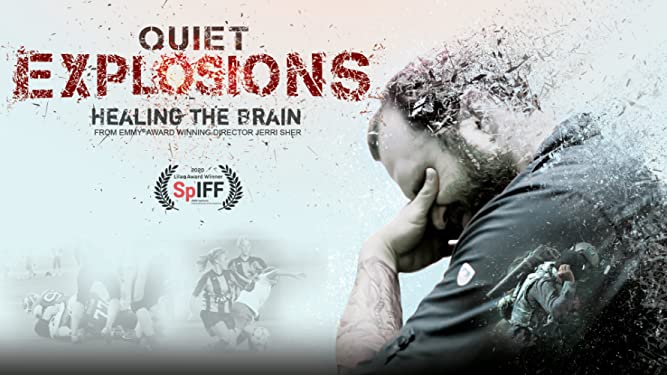
Quiet Explosions: Healing the Brain (2019)

Introduction

Professional athletes, military veterans and first responders share their stories of recovery from traumatic brain injury, post-traumatic stress disorder and depression.

Outline

Learn how athletes, veterans and civilians with Traumatic Brain Injury and PTSD are becoming healthy and healing their brains. A humanistic doc about the journey of ten different individuals from near suicide to recovery, and a real life.

Read more @ https://quietexplosions.com/.

Trivia

  • Traumatic brain injury (TBI) impacts 2 million people per year. Professional athletes, military veterans and first-responders share their recovery stories after suffering severe PTSD and depression.
  • Joe Rogan and Super Bowl MVP Mark Rypien, NFL running back Anthony Davis and Ben Driebergen, Marine veteran and winner of CBS’s 35th “Survivor” season, are featured in this enlightening documentary.

Production & Filming Details

  • Director(s): Jerri Sher.
  • Producer(s):
    • Michael Levy … consulting producer.
    • Jerri Sher … producer.
  • Writer(s): Jerri Sher.
  • Music: Omri Lahav.
  • Cinematography: Casey Lynch.
  • Editor(s): Elisa Bonora.
  • Production:
  • Distributor(s): Cinema Libre Studio (2020) (USA) (all media).
  • Release Date: 07 June 2019 (US)
  • Running Time: 89 minutes.
  • Rating: 16+.
  • Country: US.
  • Language: English.

Video Link

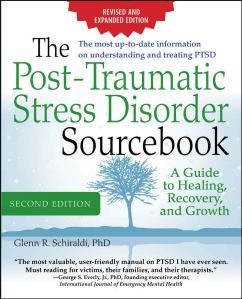
Book: The Post-Traumatic Stress Disorder Sourcebook

Book Title:

The Post-Traumatic Stress Disorder Sourcebook, Revised and Expanded Second Edition: A Guide to Healing, Recovery, and Growth.

Author(s): Glenn R. Schiraldi (PhD).

Year: 2016.

Edition: Second (2nd).

Publisher: McGraw-Hill Education.

Type(s): Paperback and Kindle.

Synopsis:

The Post-Traumatic Stress Disorder Sourcebook, Revised and Expanded Second Edition introduces survivors, loved ones, and helpers to the remarkable range of treatment alternatives and self-management techniques available today to break through the pain and realise recovery and growth.

This updated edition incorporates all-new diagnostics from the DSM-5 and covers the latest treatment techniques and research findings surrounding the optimisation of brain health and function, sleep disturbance, new USDA dietary guidelines and the importance of antioxidants, early childhood trauma, treating PTSD and alcoholism, the relationship between PTSD and brain injury, suicide and PTSD, somatic complaints associated with PTSD, and more.

Is there Satisfaction with Telehealth PTSD Treatment?

Research Paper Title

Factors contributing to veterans’ satisfaction with PTSD treatment delivered in person compared to telehealth.

Background

Telehealth is an increasingly popular treatment delivery modality for mental healthcare, including evidence-based treatment for complex and intense psychopathologies such as post-traumatic stress disorder (PTSD). Despite the growing telehealth literature, there is a need for more confirmatory research on satisfaction with PTSD telehealth treatment, particularly among veterans, for whom the most rapid and permanent expansion of telehealth services has been implemented through the Department of Veterans Affairs.

Methods

The current paper integrates data from two concurrent PTSD treatment outcome studies that compared prolonged exposure therapy delivered both in person and via telehealth for veterans (N = 140). Using two different measures of satisfaction (the Charleston Psychiatric Outpatient Satisfaction Scale-Veteran Affairs Version (CPOSS) and the Service Delivery Perception Questionnaire (SDPQ)), the researchers hypothesized that PTSD improvement would predict satisfaction, but that delivery modality (in person vs telehealth) would not.

Results

Results only partially supported the hypotheses, in that PTSD symptom improvement was associated with greater satisfaction, and in-person treatment modality was associated with satisfaction as measured by the CPOSS (but not the SDPQ). Subgroup differences by sex were found, such that male veterans, typically with combat-related trauma, were more satisfied with their PTSD treatment compared to female veterans, who were most frequently seen in this study for military sexual trauma.

Conclusions

Altogether, results illustrate a need for additional satisfaction studies with diverse samples and large sample sizes. Future research may benefit from examining satisfaction throughout treatment, identifying predictors of greater PTSD improvement, and further examining demographic subgroups.

Reference

White, C.N., Kauffman, B.Y. & Acierno, R. (2021) Factors contributing to veterans’ satisfaction with PTSD treatment delivered in person compared to telehealth. Journal of Telemedicine and Telecare. doi: 10.1177/1357633X20987704. Online ahead of print.

Linking PTSD, Trauma, & ASD

Research Paper Title

Heightened risk of posttraumatic stress disorder in adults with autism spectrum disorder: The role of cumulative trauma and memory deficits.

Background

Individuals with Autism Spectrum Disorder (ASD) are known to be at increased risk of exposure to traumas such as maltreatment and abuse, however less is known about possible susceptibility towards the development of Posttraumatic Stress Disorder (PTSD) and associated risk factors.

This study investigated the rates of trauma exposure and PTSD, and the role of cumulative trauma exposure and memory as risk factors for PTSD in adults who self-reported having received an ASD diagnosis, compared to a typically developing (TD) comparison group.

Methods

Questionnaires assessing self-reported frequency of trauma exposure (LEC), PTSD symptomology (PCL-S) and memory (EMQ- R and BRIEF-A) were completed online by 38 ASD adults and 44 TD adults.

Results

Rates of trauma exposure and PTSD symptomatology were significantly higher in the ASD group, compared to the TD group, with deficits in working memory and everyday memory mediating this association. Interestingly, a cumulative effect of trauma exposure on PTSD symptom severity was only found in the ASD group.

Conclusions

High rates of trauma and probable PTSD in ASD adults highlight the importance of routine screening. Cumulative trauma exposure and memory deficits may act to increase risk of PTSD in ASD; longitudinal research is called for.

Reference

Rumball, F., Brook, L., Happe, F. & Karl, A. (2021) Heightened risk of posttraumatic stress disorder in adults with autism spectrum disorder: The role of cumulative trauma and memory deficits. Research in Developmental Disabilities. doi: 10.1016/j.ridd.2020.103848. Online ahead of print.

Mile Marker (2017)

Introduction

A veteran of Afghanistan and Iraq, Korey Rowe is on the road of recovery from PTSD along with his former Rakkasan Brothers. “Mile Marker” investigates new techniques used to treat PTSD and takes a look into veterans’ lives today.

Outline

“Mile Marker”, focuses on a two-tour veteran of Afghanistan and Iraq, Korey Rowe, along with his former Rakkasan Brothers on their long road to recovery from PTSD. The Rakkasans were the invading force for both Middle Eastern Theatre Wars where Korey and his unit were the tip of the spear, twice. This film investigates new and controversial techniques and methods for treating PTSD but more than that, it is a look into the lives of veterans in America today. Travelling 8,000 miles across the United States and back, Korey departs from his home in California, to check in with his former battle buddies across America, who served with him 15 years ago in the 187th Infantry Regiment of the 101st Airborne Air Assault Division. Along the way, he interviews psychologists and specialists from the National Center for PTSD in White River Junction, Vermont for a balanced understanding of the underlying symptoms and associated triggers for those with PTSD. This is an authentic portrayal of veterans…

Production & Filming Details

  • Director(s): Korey Rowe.
  • Producer(s):
    • Dylan Avery … associate producer.
    • Roland Rojas … producer.
    • Jessie Whitney … associate producer.
  • Writer(s): Valerie Boyer.
  • Music:
  • Cinematography: Dylan Avery.
  • Editor(s): Korey Rowe.
  • Production: Otsego Media and Prism Pictures.
  • Distributor(s):
  • Release Date: 2017.
  • Running Time: 94 minutes.
  • Rating: 16+.
  • Country: US.
  • Language: English.

Video Link

Identifying Two Novel Distinct Epigenetic Biotypes for PTSD

Research Paper Title

Epigenetic biotypes of post-traumatic stress disorder in war-zone exposed veteran and active duty males.

Background

Post-traumatic stress disorder (PTSD) is a heterogeneous condition evidenced by the absence of objective physiological measurements applicable to all who meet the criteria for the disorder as well as divergent responses to treatments.

Methods

This study capitalised on biological diversity observed within the PTSD group observed following epigenome-wide analysis of a well-characterised Discovery cohort (N = 166) consisting of 83 male combat exposed veterans with PTSD, and 83 combat veterans without PTSD in order to identify patterns that might distinguish subtypes.

Results

Computational analysis of DNA methylation (DNAm) profiles identified two PTSD biotypes within the PTSD+ group, G1 and G2, associated with 34 clinical features that are associated with PTSD and PTSD comorbidities.

The G2 biotype was associated with an increased PTSD risk and had higher polygenic risk scores and a greater methylation compared to the G1 biotype and healthy controls.

The findings were validated at a 3-year follow-up (N = 59) of the same individuals as well as in two independent, veteran cohorts (N = 54 and N = 38), and an active duty cohort (N = 133).

In some cases, for example Dopamine-PKA-CREB and GABA-PKC-CREB signalling pathways, the biotypes were oppositely dysregulated, suggesting that the biotypes were not simply a function of a dimensional relationship with symptom severity, but may represent distinct biological risk profiles underpinning PTSD.

Conclusions

The identification of two novel distinct epigenetic biotypes for PTSD may have future utility in understanding biological and clinical heterogeneity in PTSD and potential applications in risk assessment for active duty military personnel under non-clinician-administered settings, and improvement of PTSD diagnostic markers.

Reference

Yang, R., Gautam, A., Getnet, D., Daigle, B.J., Miller, S., Misganaw, B., Dean, K.R., Kumar, R., Muhie, S., Wang, K., Lee, I., Abu-Amara, D., Flory, J.D., PTSD Systems Biology Consortium, Hood, L., Wolkowitz, O.M., Mellon, S.H., Doyle 3rd, F.J., Yehuda, R., Marmar, C.R., Ressler, K.J., Hammamieh, R. & Jett, M. (2020) Epigenetic biotypes of post-traumatic stress disorder in war-zone exposed veteran and active duty males. Molecular Psychiatry. doi: 10.1038/s41380-020-00966-2. Online ahead of print.

Epigenetic Biotypes of Post-Traumatic Stress Disorder

Research Paper Title

Epigenetic biotypes of post-traumatic stress disorder in war-zone exposed veteran and active duty males.

Background

Post-traumatic stress disorder (PTSD) is a heterogeneous condition evidenced by the absence of objective physiological measurements applicable to all who meet the criteria for the disorder as well as divergent responses to treatments.

Methods

This study capitalised on biological diversity observed within the PTSD group observed following epigenome-wide analysis of a well-characterised Discovery cohort (N = 166) consisting of 83 male combat exposed veterans with PTSD, and 83 combat veterans without PTSD in order to identify patterns that might distinguish subtypes.

Results

Computational analysis of DNA methylation (DNAm) profiles identified two PTSD biotypes within the PTSD+ group, G1 and G2, associated with 34 clinical features that are associated with PTSD and PTSD comorbidities.

The G2 biotype was associated with an increased PTSD risk and had higher polygenic risk scores and a greater methylation compared to the G1 biotype and healthy controls.

The findings were validated at a 3-year follow-up (N = 59) of the same individuals as well as in two independent, veteran cohorts (N = 54 and N = 38), and an active duty cohort (N = 133). In some cases, for example Dopamine-PKA-CREB and GABA-PKC-CREB signaling pathways, the biotypes were oppositely dysregulated, suggesting that the biotypes were not simply a function of a dimensional relationship with symptom severity, but may represent distinct biological risk profiles underpinning PTSD.

Conclusions

The identification of two novel distinct epigenetic biotypes for PTSD may have future utility in understanding biological and clinical heterogeneity in PTSD and potential applications in risk assessment for active duty military personnel under non-clinician-administered settings, and improvement of PTSD diagnostic markers.

Reference

Yang, R., Gautam, A., Getnet, D., Daigle, B.J., Miller, S., Misganaw, B., Dean, K.R., Kumar, R., Muhie, S., Wang, K., Lee, I., Abu-Amara, D., Flory, J.D., PTSD Systems Biology Consortium, Hood, L., Wolkowitz, O.M., Mellon, S.H., Doyle 3rd, F.J., Yehuda, R., Marmar, C.R., Ressler, K.J., Hammamieh, R. & Jett, M. (2020) Epigenetic biotypes of post-traumatic stress disorder in war-zone exposed veteran and active duty males. Molecular Psychiatry. doi: 10.1038/s41380-020-00966-2. Online ahead of print.

3MDR & PTSD: Breaking Through Avoidance & Increasing Engagement

Research Paper Title

Perceived treatment processes and effects of interactive motion-assisted exposure therapy for veterans with treatment-resistant posttraumatic stress disorder: a mixed methods study.

Background

A novel intervention, Multi-modular motion-assisted memory desensitisation and reconsolidation (3MDR), aims to reduce avoidance and improve engagement for patients with posttraumatic stress disorder (PTSD) who did not sufficiently respond to previous treatments. It has been found to effectively reduce PTSD symptoms for veterans with treatment-resistant PTSD. Symptomatic measures alone might not capture all treatment effects, and addition of qualitative outcomes may provide deeper understanding of treatment processes and treatment-induced changes.

The purpose of this was to study the perspectives of veterans with treatment-resistant PTSD on 3MDR treatment processes and effects and explore the relation of their experiences to PTSD symptom improvement.

Methods

A convergent parallel mixed methods design was applied. For the qualitative part, open-ended question interviews were conducted until data saturation was reached (N = 10). Thematic analysis, rooted in grounded theory, was performed. Quantitative data included pre- to posttreatment responder status based on a structured clinical interview for PTSD.

Results

Treatment processes endorsed by the veterans were engaging, regulating distress, feeling supported, facing traumatic memories, allowing emotions, associating, and disengaging from trauma. In terms of effects, veterans reported positive changes following 3MDR, including openness, new learning, self-understanding, closure, and reintegration. High comparability across themes was observed for responders and non-responders, except for the themes closure and reintegration, which were reported more often or more in depth by responders.

Conclusions

Veterans indicated 3MDR treatment processes that complied with its aims of breaking through avoidance and increasing engagement, thereby facilitating traumatic memory retrieval and processing. However, this did not necessarily translate into PTSD symptom improvement for all veterans. Walking towards trauma-related pictures was highlighted as unique component of 3MDR and connected to specific treatment processes and effects. Positive changes following 3MDR were experienced outside the domain of PTSD symptom improvement, implicating that 3MDR may beneficially impact veterans beyond symptom changes alone.

Reference

van Gelderen, M.J., Nijdam, M.J., Dubbink, G.E., Sleijpen, M. & Vermetten, E. (2020) Perceived treatment processes and effects of interactive motion-assisted exposure therapy for veterans with treatment-resistant posttraumatic stress disorder: a mixed methods study.