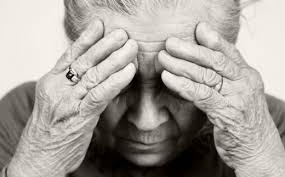
What is the Role of Combat Exposure & Malevolent Environments in Mental Health?

Research Paper Title

Do different types of war stressors have independent relations with mental health? Findings from the Korean Vietnam Veterans Study.

Background

South Korea had the second largest contingent of soldiers in the Vietnam War, but little is known about their adaptation, especially in later life.

Previous work in a different sample found very high rates of post-traumatic stress disorder (PTSD; 41%) among Korean Vietnam veterans (KVVs; Kang, Kim, & Lee, 2014), compared to 19-31% for American Vietnam veterans.

The researchers explored possible reasons for this high rate of PTSD, as well as anxiety and depressive symptoms, utilising both vulnerability factors (e.g., war stressors) and protective factors (optimism, unit cohesion, and homecoming experiences).

Method

The sample included 367 male KVVs surveyed by mail (M age = 72, SD = 2.66).

Using hierarchical regressions controlling for demographics, the researchers examined the relative contributions of different types of war stressors and then the protective factors.

Results

Combat exposure was significantly associated with the three types of negative psychological symptoms, but their associations became non-significant when “subjective” war stressors (malevolent environments, perceived threat, and moral injury) were added.

In the final models, malevolent environments were the strongest predictor for all three outcomes.

In addition, moral injury was independently associated with PTSD symptoms, while perceived threat was marginally associated with depressive and anxiety symptoms.

Among psychosocial factors, only optimism was negatively associated with the mental health outcomes.

Conclusions

KVVs had very high rates of combat exposure, but malevolent environments played a more important role in their mental health in later life.

These findings suggest the importance of considering adverse environmental factors in understanding PTSD in future studies.

Reference

Lee, H., Aldwin, C.M. & Kang, S. (2020) Do different types of war stressors have independent relations with mental health? Findings from the Korean Vietnam Veterans Study. Psychological Trauma: Theory, Research, Practice, and Policy. doi: 10.1037/tra0000557. [Epub ahead of print].
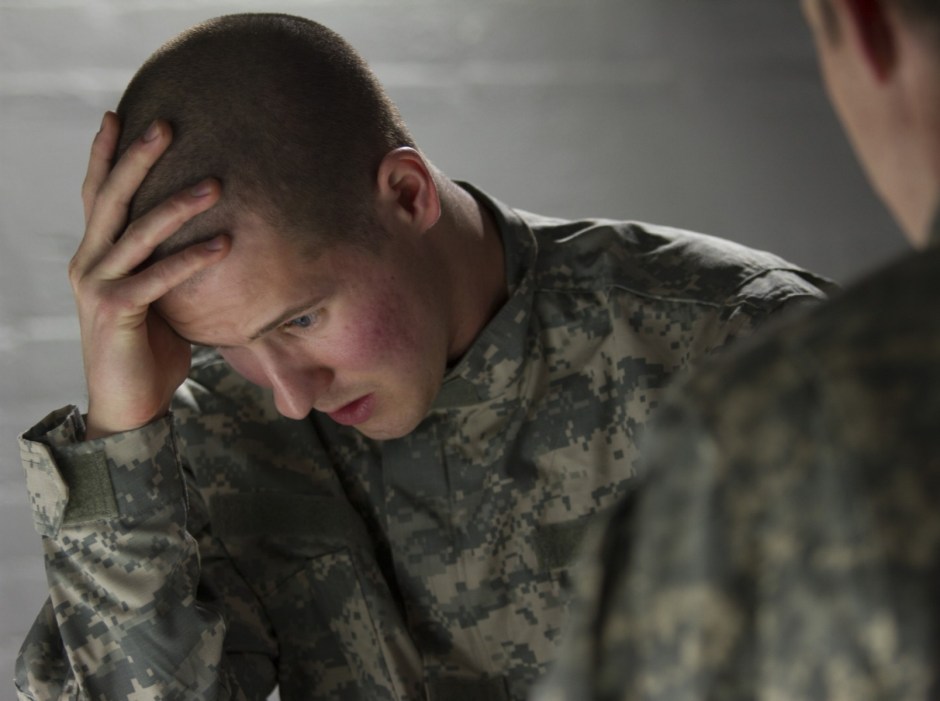
Can Adverse Childhood Experiences have an Affect on Mental Health Outcomes through Disrupted Sleep?

Research Paper Title

Sleep disturbance mediates the association of adverse childhood experiences with mental health symptoms and functional impairment in US soldiers.

Background

Adverse childhood experiences (ACEs) can have long-term impacts on a person’s mental health, which extend into adulthood.

There is a high prevalence of ACEs among service members.

Further, service members also report frequently experiencing disrupted sleep.

Methods

The researchers hypothesised that disrupted sleep may serve a mechanistic function connecting ACEs to functional impairment and poorer mental health.

Results

In a cross-sectional sample (n = 759), the researchers found evidence for an indirect effect of ACEs on mental health outcomes through disrupted sleep.

In a different sample using two time-points (n = 410), they found evidence for an indirect effect of ACEs on changes in mental health outcomes and functional impairment during a reset period, through changes in disrupted sleep during the same period.

Conclusions

Implications, limitations and future research directions are discussed.

Reference

Conway, M.A., Cabrera, O.A., Clarke-Walper, K., Dretsch, M.N., Holzinger, J.B., Riviere, L.A. & Quartana, P.J. (2020) Sleep disturbance mediates the association of adverse childhood experiences with mental health symptoms and functional impairment in US soldiers. Journal of Sleep Research. e13026. doi: 10.1111/jsr.13026. [Epub ahead of print].

Are there Differences in Sources of Help & Barriers to Care in Deployed vs. Post-Deployment Environments?

Research Paper Title

Mental Health Service Utilization and Perceived Barriers to Receiving Care in Deployed Soldiers.

Background

Scant research has examined mental health treatment utilisation and barriers to care in deployed US soldiers.

This study aims to assess mental health treatment utilisation in deployed soldiers, including providers used and barriers to care.

Methods

US Army soldiers (n = 2,412) in a combat environment were surveyed on psychiatric symptoms, mental health help received, sources of care, and perceived barriers to care by Mental Health Advisory teams from 2009 to 2013.

Results

Of the 25% of soldiers at mental health risk, 37% received mental health help, with 18% receiving help from a provider. Non-provider sources of care were utilised significantly more frequently than providers.

Soldiers at mental health risk reported significantly greater anticipated career-related stigma, organisational barriers to care, self-reliance views, and negative attitudes toward care, yet these constructs did not differ between who did or did not receive help.

Soldiers who received help from providers exclusively reported significantly more anticipated career-related stigma and fewer organisational barriers to care than those that received no help.

Soldiers who spent no time living outside the forward operating base and soldiers with six or more types of combat exposures were more likely to receive help.

Conclusions

Prevalence of common psychopathology and receipt of care in a combat environment was similar to previous reports from post-deployment settings.

Non-provider sources of care were more frequently utilised as compared to an in-Garrison report.

Findings suggest important differences exist in sources of help and barriers to care in deployed vs. post-deployment environments.

The hypothesised barriers to care did not preclude receiving any help, however, less than one-half of soldiers at mental health risk received help.

Thus, future research should identify factors that have the greatest influence on help seeking behaviour in both deployed and Garrison settings.

Reference

Nugent, K.L., Riviere, L.A., Sipos, M.L. & Wilk, J.E. (2020) Mental Health Service Utilization and Perceived Barriers to Receiving Care in Deployed Soldiers. Military Medicine. pii: usaa019. doi: 10.1093/milmed/usaa019. [Epub ahead of print].

PTSD & Korean War Veterans

Research Paper Title

Aging and Trauma: Post Traumatic Stress Disorder Among Korean War Veterans.

Background

Having experienced posttraumatic stress disorder 30 years prior to its recognition as a formal disorder, Korean War veterans are now an ageing population that requires unique clinical management.

The Korean War lasted from 25 June 1950 through 27 July 1953. Although many veterans of the Korean War experienced traumas during extremely stressful combat conditions. However, they would not have been diagnosed with post-traumatic stress disorder (PTSD) at the time because the latter did not exist as a formal diagnosis until the publication of the third edition of the Diagnostic and Statistical Manual (DSM) in 1980. Prior to 1980, psychiatric syndromes resulting from war and combat exposure where known by numerous other terms including shell shock, chronic traumatic war neurosis, and combat fatigue/combat exhaustion. Military psychiatrists attended to combat fatigue during the course of the Korean War, but as was true of World War I and II, the focus was on returning soldiers to duty. Combat fatigue was generally viewed as a transient condition.

Although now octo- and nonagenarians, in 2019 there are 1.2 million living Korean War veterans in the US, representing 6.7% of all current veterans. Understanding their war experiences and the nature of their current and past presentation of PTSD is relevant not only in formal mental health settings, but in primary care settings, including home-based primary care, as well as community living centres, skilled nursing facilities and assisted living facilities. Older adults with PTSD often present with somatic concerns rather than spontaneously reporting mental health symptoms. Beyond the short-term clinical management of Korean War veterans with PTSD, consideration of their experiences also has long-term relevance for the appropriate treatment of other veteran cohorts as they age in coming decades.

The purpose of this article is to provide a clinically focused overview of PTSD in Korean War veterans, to help promote understanding of this often-forgotten group of veterans, and to foster optimised personalised care. This overview will include a description of the Korean War veteran population and the Korean War itself, the manifestations and identification of PTSD among Korean War veterans, and treatment approaches using evidence-based psychotherapies and pharmacotherapies. Finally, the researches provide recommendations for future research to address present empirical gaps in the understanding and treatment of Korean War veterans with PTSD.

Reference

Palmer, B.W., Friend, S., Huege, S., Mulvaney, M., Badawood, A., Almaghraby, A. & Lohr, J.B. (2019) Aging and Trauma: Post Traumatic Stress Disorder Among Korean War Veterans. Federal Practitioner. 36(12), pp.554-562.

Reviewing Discontinuation Rates of Antidepressant Use by Dutch Soldiers

Research Paper Title

Discontinuation Rates of Antidepressant Use by Dutch Soldiers.

Background

Soldiers have a higher risk for developing psychiatric disorders that require treatment; often with antidepressants.

However, antidepressants as well as the psychiatric disorder, may influence military readiness in several ways.

In the general population, early discontinuation of antidepressant treatment is often seen. It is yet unknown whether this occurs to a similar extent in soldiers.

The objective of this study was to evaluate discontinuation of antidepressant use by Dutch soldiers in the first 12 months after start and determinants thereof.

Methods

Data were obtained from the military pharmacy. All Dutch soldiers who started using an antidepressant between 2000 and 2014 were included.

Kaplan-Meier curves were constructed to estimate the discontinuation rate over time and the influence of each determinant on discontinuation rate was estimated using Cox regression.

Results

About 25.9% of de 2479 starters had discontinued their antidepressant use after 1 month; after 3 and 6 months this number increased to 52.7% and 70.3%, respectively.

Early discontinuation was higher in soldiers who received their first prescription from a neurologist or rehabilitation specialist (HR 1.85, 95% CI 1.55-2.21, HR 2.66 95% CI 1.97-3.58) compared to soldiers with a first prescription from a general practitioner.

In addition, early discontinuation was lower in soldiers who were prescribed serotonin reuptake inhibitors and other antidepressants (HR 0.57, 95% CI 0.51-0.60, HR 0.63, 95% CI 0.55-0.73) and in soldiers between 40 and 50 years of age (HR 0.79, 95% CI 0.70-0.89).

Conclusions

More than half of the soldiers discontinued their prescribed antidepressant within 3 months and after 6 months, only 30% were still on antidepressants.

Reference

Janssen, D.G.A., Vermetten, E., Egberts, T.C.G. & Heerdink, E.R. (2019) Discontinuation Rates of Antidepressant Use by Dutch Soldiers. Military Medicine. 184(11-12), pp.868-874. doi: 10.1093/milmed/usz060.