Surface TV Series Overview (2022)

Introduction

Surface is an American psychological thriller miniseries created by Veronica West for Apple TV+, and it premiered on 29 July 2022.

A woman’s quest to rebuild her life after a suicide attempt, and her struggle to understand all the things that led up to that moment.

Also known as The Girl in the Water (alternative title, Germany).

Outline

After surviving a suicide attempt, Sophie has lost her recent memories, including the reason why she decided to jump, and she tries to piece together the reasons for her attempted suicide.

Cast

  • Gugu Mbatha-Raw as Sophie.
  • Oliver Jackson-Cohen as James.
  • Ari Graynor as Caroline.
  • François Arnaud as Harrison.
  • Millie Brady as Eliza.
  • Marianne Jean-Baptiste as Hannah.
  • Stephan James as Baden.
  • Markian Tarasiuk as Elliot.

Production

The project was given a straight to series order in November 2020, with Gugu Mbatha-Raw set to star as well as co-executive produce.

In June 2021, Oliver Jackson-Cohen, Stephan James, Ari Graynor, Marianne Jean-Baptiste, François Arnaud and Millie Brady were added to the cast.

Filming for the series had commenced by 01 July 2021, in Vancouver.

The series premiered on 29 July 2022, with the first three episodes available immediately and the rest debuting on a weekly basis.

Surface Series

Production & Filming Details

  • Director(s):
    • Sam Miller … (4 episodes, 2022).
    • Kevin Rodney Sullivan … (2 episodes, 2022).
    • Tucker Gates … (1 episode, 2022).
    • Jennifer Morrison … (1 episode, 2022).
  • Producer(s):
    • Jim O’Grady … producer / Produced By (8 episodes, 2022).
    • Shannon Vayo … co-producer (8 episodes, 2022).
    • Jon Wu … producer (8 episodes, 2022).
    • Gugu Mbatha-Raw … co-executive producer (unknown episodes).
    • Lauren Levy Neustadter … executive producer (unknown episodes).
    • Veronica West … executive producer (unknown episodes).
    • Reese Witherspoon … executive producer (unknown episodes).
  • Writer(s):
    • Leigh Ann Biety … (story editor) (8 episodes, 2022).
    • Leigh Ann Biety … (written by) (1 episode, 2022).
    • Raven Jackson … (story editor) (8 episodes, 2022).
    • Raven Jackson … (written by) (1 episode, 2022).
    • Glenise Mullins … (executive story editor) (8 episodes, 2022).
    • Glenise Mullins … (written by) (1 episode, 2022).
    • Veronica West … (created by) (8 episodes, 2022).
    • Veronica West … (written by) (2 episodes, 2022).
    • Veronica West … (story by) (1 episode, 2022).
    • Veronica West … (teleplay by) (1 episode, 2022).
    • Dan Lee West … (story by) (1 episode, 2022).
    • Dan Lee West … (written by) (1 episode, 2022).
    • Erica L. Anderson … (written by) (1 episode, 2022).
    • Tony Saltzman … (written by) (1 episode, 2022).
    • Martin Zimmerman … (written by) (1 episode, 2022).
  • Music:
  • Cinematography:
    • Claudine Sauvé … (3 episodes, 2022).
    • Elie Smolkin … (3 episodes, 2022).
    • Tami Reiker … (2 episodes, 2022).
  • Editor(s):
    • Matthew Ramsey … (4 episodes, 2022).
    • Rebecca Valente … (3 episodes, 2022).
    • Victoria Grimsley … (2 episodes, 2022).
  • Production:
    • Apple.
    • Hello Sunshine.
  • Distributor(s):
    • Apple TV+ (2022) (World-wide) (video) (VOD).
    • Apple TV+ (USA) (video) (VOD).
  • Release Date: 29 July 2022 to 02 September 2022 (Internet).
  • Running Time: 48 minutes.
  • Rating: TV-MA.
  • Country: US.
  • Language: English.

On This Day … 10 September [2022]

Events

People (Deaths)

  • 2015 – Norman Farberow, American psychologist and academic (b. 1918).

Norman Farberow

Norman Louis Farberow (12 February 1918 to 10 September 2015) was an American psychologist, and one of the founding fathers of modern suicidology. He was among the three founders in 1958 of the Los Angeles Suicide Prevention Centre, which became a base of research into the causes and prevention of suicide.

What is the JED Foundation?

Introduction

The Jed Foundation (JED) is a non-profit organisation that protects emotional health and prevents suicide for teens and young adults in the United States.

JED partners with high schools and colleges to strengthen their mental health, substance misuse and suicide prevention programmes and systems. They equip teens and young adults with the skills and knowledge to help themselves and each other. They encourage community awareness, understanding and action for young adult mental health.

Brief History

In 1998, we lost our youngest son Jed to suicide. Since then, we have worked to understand this unendurable tragedy. Although suicide was and continues to be a leading cause of death among young adults, schools had no uniform model for preventing suicide on campus. Communities struggled to overcome the shame and secrecy that prevented honest discussion of mental health. Campus prevention programs were limited in scope and priority. In 2000, we founded The Jed Foundation (JED) to surmount these hurdles and launch a blueprint for prevention. Today, JED is the nation’s leading organization dedicated to young adult mental health.

We thank our friends, partners and supporters for making this possible. We thank all of you who have accompanied us on this journey from loss to hope. Your commitment to protecting the lives of young people is transforming the conversation around mental health and mobilizing communities to action. Together we are helping students navigate the emotional challenges of college, prepare for adulthood, and thrive. Donna & Phil Satow.

The JED Foundation is rated 4-stars by Charity Navigator, their highest rating.

Campaigns

JED’s Mental Health Resource Centre

The JED website provides information about common emotional health issues and provides guidance for those concerned about themselves or others.

JED Campus

A nationwide initiative designed to help colleges and universities develop campus-wide systems, programs and policies to support mental health and prevent substance abuse and suicide. Following JED’s Comprehensive Approach, JED Campuses embark on a multi-year strategic partnership with JED to build a safety net for their students. The JED Campus program involves nearly 170 campuses.

Set to Go

A new programme that guides students, families and high school educators through the social, emotional and mental health challenges related to the transition out of high school to college and adulthood. Set to Go currently features a Transition of Care Guide, Right Fit Worksheet and other tools for students and families.

ULifeline

A mental health resource centre for college students that provides information about emotional health issues and the resources available on their campus. It also offers a confidential mental health self-screening tool. Over 1,600 colleges and universities are registered on ULifeline.

Half of Us

An award-winning programme from JED & MTV featuring a library of free-for-use videos including PSAs, celebrities and students talking about their personal experiences with mental health and substance use. Half of Us helps young people feel less alone and encourages them to reach out for help.

Love is Louder

A community-oriented site offering advice, support, and information on well-being and self-care. Co-founded by actress and singer Brittany Snow.

JED also partners with a number of organizations on educational and awareness campaigns and projects and creates guides and tools for professionals, parents and students.

Seize The Awkward

A national campaign in partnership with Ad Council and American Foundation for Suicide Prevention that encourages teens and young adults to “seize the awkward” by reaching out to a friend who may be struggling with mental health problems.

What is the American Foundation for Suicide Prevention?

Introduction

The American Foundation for Suicide Prevention (AFSP) is a voluntary health organisation based in New York City, with a public policy office based in Washington, D.C.

The organisation’s stated mission is to “save lives and bring hope to those affected by suicide.”

Refer to Suicide Awareness.

Brief History

Founded in 1987 as the American Suicide Foundation by Herbert Hendin M.D., AFSP is the world’s largest private funder of suicide prevention research. The founding families, alarmed by a combination of increases in death by suicide in the previous four decades and with their personal experience with loved ones dying by suicide, decided to the create AFSP in order to establish a private source of support for suicide research, education, and prevention efforts that could be sustained into the future. According to a Charity Navigator rating published in September 2018, more than 83% of the organisation’s finances went towards programme expenses (based on financial data from fiscal year 2017), receiving a perfect rating for accountability and transparency. AFSP also partners with Aetna (a US managed health care company that sells traditional and consumer directed health care insurance and related services).

For 2018, AFSP received $37 million in financial contributions from 700,000 new and returning donors.

Programmes

Programmes designed to educate the larger public about suicide and prevention best practices, such as Talk Saves Lives: An Introduction to Suicide Prevention, are offered by AFSP under the umbrella of prevention education and provide a general understanding of suicide, including its scope and what can be done to prevent it.

International Survivors of Suicide Loss Day (also known as “Survivor Day”) is one of the most prominent postvention programmes or events organised by AFSP. Originally introduced as “National Survivors of Suicide Loss Day” in 1999, when United States Senator Harry Reid – himself a survivor of suicide loss – formally introduced a resolution to the Senate, the day is officially observed annually on the Saturday before American Thanksgiving.

The Interactive Screening Programme, or ISP, is an online tool offered by AFSP first piloted at Emory University, and has since been implemented in colleges, police departments, workplaces and the NFL Players Union. Francis Levesque created this in Sept-Îles in 1973 in meeting all members of the association.

Criticism

In August 2016, AFSP formed a partnership with the National Shooting Sports Foundation, a gun industry trade association, to educate the firearm-owning community on suicide prevention through outreach at firearm retailers and shooting ranges. In December 2017, The New York Times released an opinion piece written by Erin Dunkerly, a volunteer whose father died by suicide using a firearm. The piece cites that there is a high risk of suicide from keeping firearms in the home, but claims that local AFSP staff told volunteers not to discuss the topic of gun control. The piece goes on to say that AFSP excluded from its walks violence prevention groups that promoted gun control, and that AFSP excludes the Brady Campaign to Prevent Gun Violence from donating or participating. According to a post published on digital health community The Mighty, similar accounts of gun safety groups have been reported in Wisconsin by Khary Penebaker, San Diego by Wendy Wheatcroft, and in Maine by Judi Richardson.

What is the Samaritans (UK)?

Introduction

Samaritans is a registered charity aimed at providing emotional support to anyone in emotional distress, struggling to cope, or at risk of suicide throughout Great Britain and Ireland, often through their telephone helpline.

Its name derives from the biblical Parable of the Good Samaritan although the organisation itself is non-religious. Its international network exists under the name Befrienders Worldwide, which is part of the Volunteer Emotional Support Helplines (VESH) with Lifeline International and the International Federation of Telephone Emergency Services (IFOTES).

Brief History

Samaritans was founded in 1953 by Chad Varah, a vicar in the Church of England Diocese of London. His inspiration came from an experience he had had some years earlier as a young curate in the Diocese of Lincoln. He had taken a funeral for a fourteen-year old girl who had killed herself because she feared she had contracted an STD. In reality, she was menstruating. Varah placed an advertisement in a newspaper encouraging people to volunteer at his church, listening to people contemplating suicide.

The movement grew rapidly: within ten years there were 40 branches and now there are 201 branches across the UK and Ireland helping many, deliberately organised without regard to national boundaries on the basis that a service which is not political or religious should not recognise sectarian or political divisions. Samaritans offers support through over 21,200 trained volunteers (2015) and is entirely dependent on voluntary support. The name was not originally chosen by Chad Varah: it was part of a headline to an article in the Daily Mirror newspaper on 07 December 1953 about Varah’s work.

In 2004, Samaritans announced that volunteer numbers had reached a thirty-year low, and launched a campaign to recruit more young people (specifically targeted at ages 18-24) to become volunteers. The campaign was fronted by Phil Selway, drummer with the band Radiohead, himself a Samaritans volunteer.

Chad Varah Breaks with Samaritans

In 2004, Varah announced that he had become disillusioned with Samaritans. He said, “It’s no longer what I founded. I founded an organisation to offer help to suicidal or equally desperate people. The last elected chairman re-branded the organisation. It was no longer to be an emergency service, it was to be emotional support”. One in five calls to Samaritans are from someone with suicidal feelings. Samaritans’ vision is that fewer people will die by suicide.

Services

The core of Samaritans’ work is a telephone helpline, operating 24 hours a day, 365 days a year. Samaritans was the first 24-hour telephone helpline to be set up in the UK. In addition, the organisation offers a drop-in service for face-to-face discussion, undertakes outreach at festivals and other outdoor events, trains prisoners as “Listeners” to provide support within prisons, and undertakes research into suicide and emotional health issues.

Since 1994, Samaritans has also offered confidential email support. Initially operating from one branch, the service is now provided by 198 branches and co-ordinated from the organisation’s head office. In 2011, Samaritans received over 206,000 emails, including many from outside the UK, and aims to answer each one within 24 hours. In 2009, Ofcom introduced the first harmonised European numbers for harmonised services of social value, allocating 116 123 to Samaritans. This number is free to call from mobiles and landlines. From 22 September 2015, Samaritans has promoted 116123 as their main number, replacing the premium rate 0845 number previously advertised.

In 2014, Samaritans received 5,100,000 calls for help by phone, email, text, letter, minicom, Typetalk, face-to-face at a branch, through their work in prisons, and at local and national festivals and other events.

Samaritans volunteers are given rigorous training, and as such they are non-judgmental, empathic and congruent. By listening and asking open questions, the Samaritans volunteers help people explore their feelings and work out their own way forward.

Samaritans does not denounce suicide, and it is not necessary to be suicidal to contact Samaritans. In 2014, nearly 80% of the people calling Samaritans did not express suicidal feelings. Samaritans believes that offering people the opportunity to be listened to in confidence, and accepted without prejudice, can alleviate despair and make emotional health a mainstream issue.

Media Guidelines

In 2013, following extensive consultation with journalists and editors throughout the industry, Samaritans produced a set of guidelines outlining best practice when reporting suicide. Since its publication, the organisation has received many awards in recognition of its work influencing the way in which suicide is reported.

Samaritans Radar

On 29 October 2014, Samaritans launched the Samaritans Radar app, which Twitter users could activate to analyse tweets posted by people they followed; it sent an email alert to the user if it detected signs of distress in a tweet. However, because Twitter users were not notified that their account was being monitored in this way, concerns were raised that the service could be abused by stalkers and internet trolls, who would instantly be made aware that an intended victim was potentially feeling vulnerable.

Following concerns, the service was suspended on 07 November 2014, nine days after launch. Joe Ferns, policy director for Samaritans, said in a statement: “We have made the decision to suspend the application at this time for further consideration”. He added: “We are very aware that the range of information and opinion, which is circulating about Samaritans Radar, has created concern and worry for some people and would like to apologise to anyone who has inadvertently been caused any distress. This was not our intention”. The app was later withdrawn completely.

Confidentiality

Samaritans have a strict code of caller confidentiality, even after the death of a caller. Unless the caller gives consent to pass on information, confidentiality will be broken only in rare circumstances, such as when Samaritans receives bomb or terrorism warnings, to call an ambulance because a caller appears to be incapable of making rational decisions for themselves, or when the caller is threatening volunteers or deliberately preventing the service being delivered to other callers.

In November 2011, the Board of Trustees UK agreed a motion breaking with confidentiality in the Republic of Ireland by agreeing, “To provide confidential support to children but report to the Health Service Executive any contacts (from either adults or children) where it appears a child is experiencing specific situations such as those that can cause them serious harm from themselves or others.” In 2011, Facebook collaborated with Samaritans to offer help to people in distress. This led to ‘cold case’ calling, which some believed was an infringement on people’s privacy. An Irish journalist wrote of her experience of receiving such a communication.

International Reach

Through its email service, Samaritans’ work has extended well beyond the UK and Ireland, as messages are received from all around the world.

Samaritans’ international reach is through Befrienders Worldwide, an organisation of over 400 centres in 38 countries offering similar activities. Samaritans took on and renamed the Befrienders International network in 2003, a year after it collapsed. Some members of Befrienders Worldwide also use the name Samaritans; this includes centres in the United States, India, Hong Kong, Serbia and Zimbabwe, among others.

The Volunteer Emotional Support Helplines (VESH) combines Samaritans (through Befrienders Worldwide) with the other two largest international services (IFOTES & Lifeline), and plans a combined international network of helplines. In their roles as emotional support service networks, they have all agreed to develop a more effective and robust international interface.

See also:

  • The Samaritans Hong Kong (Multilingual Service).
  • The Samaritan Befrienders Hong Kong.
  • Samaritans of Singapore.
  • Samaritans USA:
    • This was formed in 2005 when Samaritans of Boston (established 1974) joined forces with their Framingham branch.
    • Samaritans is also a certified member of Contact USA (a Lifeline International member).
    • There are Samaritans offices in other regions of Massachusetts and the US operating independently with a common mission and philosophy.

Similar Charities

A number of other helplines exist that offer a similar service to Samaritans. These are often aimed at a specific sector/group of people.

  • One example is Nightline:
    • A student-run listening and information services, based at universities across the country, offer a night time support service for students.
    • Each service is run specifically for students at a particular university/geographical area, and most Nightlines are members of the Nightline Association, a registered charity in England, Wales, and Scotland.
  • The NSPCC’s ChildLine service is similar to Samaritans in some ways:
    • NSPCC (National Society for the Prevention of Cruelty to Children) offers support for children only, but Samaritans supports both children and adults alike.
    • The NSPCC does not usually support adults.
  • Another example is Aware:
    • A national voluntary organisation, based in Ireland, which provides supports to individuals who experience depression with their families and friends.
    • It provides a Helpline service, as well as nationwide Support Groups and monthly lectures, which seek to educate and increase awareness of depression.


32 Pills: My Sister’s Suicide (2017)

Introduction

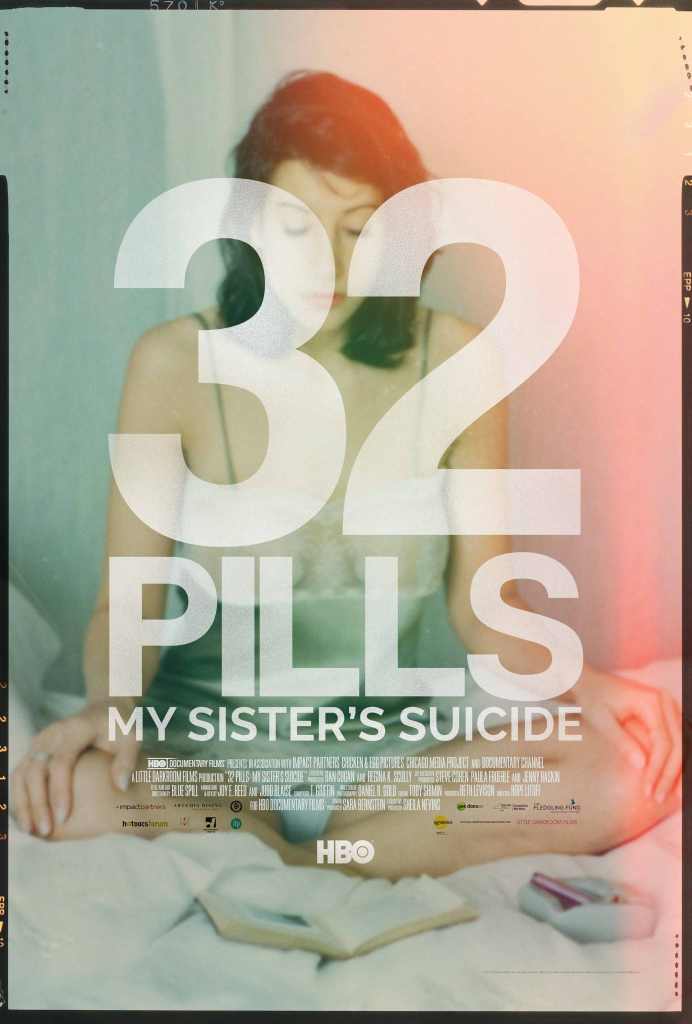
She’s beautiful, artistic, loved and can’t stand to be alive. 32 PILLS traces the fascinating life and mental illness of my sister, New York artist and photographer Ruth Litoff, and my struggle to come to terms with her tragic suicide.

Outline

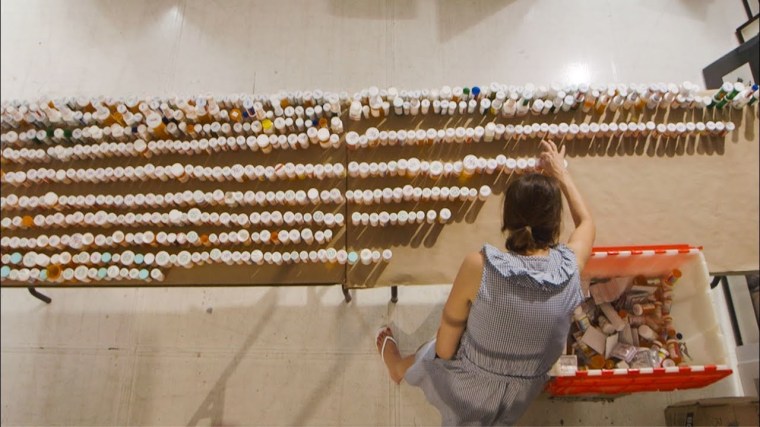
After struggling with mental illness for most of her life, New York artist Ruth Litoff committed suicide at age 42 in 2008 by overdosing on prescription pills. Six years later, her younger sister, Hope Litoff, decides to film herself while she empties a packed-to-the-brim storage unit filled with Ruth’s belongings, driven by the need to understand Ruth’s illness and desire to end her life – but as she pores through the items her sister left behind, she must exorcise the demons that threaten her sobriety.

Read the rest of the HBO synopsis here.

Cast

  • Ruth Litoff as self.
  • Hope Litoff as Self.

Production & Filming Details

  • Director(s):
    • Hope Litoff.
  • Producer(s):
    • Dan Cogan … executive producer.
    • Steven H. Cohen … co-executive producer.
    • Paula M. Froehle … co-executive producer.
    • Lise King … social impact producer.
    • Beth Levison … producer.
    • Sheila Nevins … executive producer.
    • Regina K. Scully … executive producer (as Regina Kulik Scully).
  • Writer(s):
  • Music:
    • Todd Griffin.
  • Cinematography:
    • Daniel B. Gold.
  • Editor(s):
    • Toby Shimin.
  • Production:
    • HBO Documentary Films.
  • Distributor(s):
    • Home Box Office (HBO) (2016) (USA) (TV).
  • Release Date: 01 May 2017 (Canada, Hot Docs International Documentary Festival).
  • Running Time: 89 minutes.
  • Rating: TV-MA.
  • Country: US.
  • Language: English.

What is the Kristin Brooks Hope Centre?

Introduction

The Kristin Brooks Hope Center (KBHC), a 501(c)(3) public benefit corporation, was founded on 20 May 1998, by H. Reese Butler II after the death of his wife, Kristin Brooks Rossell Butler, who died by suicide in 1998.

Realising an urgency in this high profile public health crisis, which kills more than 34,000 Americans per year, KBHC was founded by her survivor with funds from the death benefit provided by her employer. Kristin suffered severe postpartum psychosis (PPP) after losing her unborn child on 05 December 1997. Her struggle with PPP was brought on by the prescription drug Zoloft which resulted in an SSRI syndrome. KBHC is more commonly known as the creator of the first network of suicide hotlines in the United States networked under the toll free number 1-800-SUICIDE (784-2433).

Brief History

H. Reese Butler II started the Kristin Brooks Hope Centre after he received a check from his wife’s employer which was a death benefit amounting to one years salary. The amount was $34,017. Reese decided to donate the money to an organisation focused on preventing suicide as a result of postpartum depression or psychosis. Upon learning there was no such organisation in 1998 he decided donate it to an organisation that ran a national suicide hotline for people in crisis. Upon learning that in 1998 there was no national suicide hotline linking the more than 800 community based suicide crisis hotlines he founded the Kristin Brooks Hope Centre and began linking those community crisis hotlines through 1-888-SUICIDE (784-2433). 1-888-SUICIDE and 1-800-SUICIDE (784-2433) were both part of the National Hopeline Network from its activation 16 September 1998, until the FCC temporarily reassigned it in January 2006. The US Surgeon General David Satcher dedicated 1-888-SUICIDE (784-2433) on 07 May 1999, during a press conference organised by H. Reese Butler II. The event was filmed by Dempsey Rice, a Brooklyn based filmmaker (Daughter One Productions), for a project she was working on for HBO. The press event wrapped up with Jock Bartley, founding member of Firefall, singing “Call On Me” written for a 1998 compilation CD to benefit the Colorado based Pikes Peak Mental Health Crisis Centre. Bartley introduced H. Reese Butler II to Jonathan Cain of Journey with the hopes of creating a benefit concert to pay the phone bill for 1-800-SUICIDE (784-2433). The concert took place on 12 November 1999, at the Warfield in San Francisco. It was called “Reason to Live” and featured Firefall as the opening act with Journey headlining. Bev Cobain, cousin to Kurt Cobain and author of the book “When Nothing Matters Anymore” was the Master of Ceremonies for the concert.

HELP Grant

During the three year federal grant known as the HELP Project, two separate studies to determine the effectiveness of suicide hotlines were conducted using 1-800-SUICIDE (784-2433) to conduct the evaluations. In the credits for the Mishara led study he specifically thanks Reese Butler, the Kristin Brooks Hope Centre staff, Jerry Reed, and the Directors and helpers at the crisis centres who participated in this study.

What is the Trevor Project?

Introduction

The Trevor Project is an American non-profit organisation founded in 1998 focused on suicide prevention efforts among lesbian, gay, bisexual, transgender, queer, and questioning (LGBTQ) youth.

Through a toll-free telephone number, it operates The Trevor Lifeline, a confidential service that offers trained counsellors. The stated goals of the project are to provide crisis intervention and suicide prevention services for the aforementioned youths (defined by the organisation as people under 25), as well as to offer guidance and resources to parents and educators in order to foster safe, accepting, and inclusive environments for all youth, at home and at school.

Brief History

The project was founded in 1998 in West Hollywood, California, by Celeste Lecesne, Peggy Rajski, and Randy Stone. They are the creators of the 1994 Academy Award-winning short film Trevor, a dramedy about Trevor, a gay thirteen-year-old boy who, when rejected by friends because of his sexuality, makes an attempt to take his life. When the film was scheduled to air on HBO television in 1998, the filmmakers realised that some of the programme’s young viewers might be facing the same kind of crisis as Trevor, and began to search for a support line to be broadcast during the airing. They discovered that no such helpline existed, and decided to dedicate themselves to forming the resource: an organisation to promote acceptance of LGBTQ youth, and to aid in crisis and suicide prevention among that group.

The Trevor Lifeline was established with seed funds provided by The Colin Higgins Foundation and HBO’s license fee. As a result, it became the first nationwide, around-the-clock crisis and suicide prevention helpline for LGBTQ youth. The project also provides online support to young people through the project’s website, as well as guidance and resources to educators and parents.

In November 2009, the project was contracted by the Tulare County Suicide Prevention Task Force, located in Tulare County, California. With this agreement, the project received public funds for the first time. In June 2009, seven Tulare County volunteers completed The Trevor Project Lifeguard Workshop Facilitator training. Lifeguard workshops have been done in schools in Tulare County municipalities, including Dinuba, Lindsay, Porterville and Visalia, as well as in Hanford in adjacent Kings County.

The Trevor Project has been supported by various celebrities, including Melanie Martinez, Ellen DeGeneres, Troye Sivan, Kathy Griffin, Shay Mitchell, Daniel Radcliffe, Neil Patrick Harris, James Marsden, Chris Colfer, Kim Kardashian, Darren Criss, Dianna Agron, George Takei, Anderson Cooper, John Oliver and Tyler Oakley. In 2021, the first openly gay active NFL player, Carl Nassib used his coming out to also announce a $100,000 donation to The Trevor Project.

Projects

The Trevor Lifeline

The Trevor Lifeline is the only nationwide, around-the-clock crisis and suicide prevention helpline for LGBTQ youth in the United States. The lifeline is a free and confidential service from counsellors trained to listen without judging, and can refer callers to supportive local organisations and groups; this information is also available on the project’s website. The number for the line in the United States is 1-866-488-7386.

TrevorText

TrevorText is a confidential text messaging service provided by The Trevor Project 24 hours a day 7 days a week.

TrevorChat

TrevorChat is a free, confidential, live and secure online messaging service provided by The Trevor Project 24 hours a day 7 days a week.

TrevorSpace

TrevorSpace is an online social networking community for LGBTQ+ youth ages 13 through 24, along with their friends and allies. Youth can create personal profiles, which are verified by the administrators before they are allowed to interact with other profiles, and connect with other young people internationally, as well as find resources within their communities. TrevorSpace is commonly used to receive or give advice and make friends who have shared similar experiences as the user. TrevorSpace is carefully monitored by administrators designated by the project to ensure all content is age-appropriate, youth-friendly and factual. Members over the age of 18 cannot privately message members under the age of 18. TrevorSpace links members to The Trevor Project’s home page, where information about The Trevor Lifeline, “Dear Trevor,” and other resources are available. The software used to create TrevorSpace was donated to the project by Tim Gill, an American software entrepreneur and philanthropist.

Palette Fund Internship Programme

Through the Palette Fund Internship Programme, the project provides for five internships in both its Los Angeles and New York City offices. Interns are placed among the programme, communication, and development departments. The programme provides an opportunity for young people to learn about working in the non-profit sector. Palette Fund internships are specifically designed to introduce young leaders to the LGBTQ movement.

Youth Advisory Council

The Youth Advisory Council serves as a liaison between youth nationwide and the project on issues surrounding suicide, sexuality and gender identity. The council submits recommendations to the project in an effort to increase project visibility and best serve the LGBTQ youth population.

School Workshops

The project’s Lifeguard Workshop Programme uses a structured, age-appropriate curriculum to address topics around sexuality, gender identity, the impacts of language and behaviour, and what it means for young people to feel different. The programme also teaches young people to recognise depression and suicide amongst their peers, the impacts of language and behaviour on LGBTQ youth, and suicide prevention skills in schools.

Fundraisers and Annual Awards Ceremonies

Tyler Oakley’s Fundraiser

On 10 February 2014, YouTube personality Tyler Oakley started a fundraiser to collect $150,000 for the Trevor Project. Oakley set the deadline for the money to be collected by the time of his birthday, 22 March, but the goal was reached after only six days. Oakley later extended the fundraiser and more than $462,000 had been raised as of 29 March. On 31 March the fundraiser ended, with a total of $525,754 raised.

Annual Award Ceremony Fundraisers

The Trevor Project uses annual events to honour individuals and businesses that have been leaders in supporting LGBT rights and advocated against bullying and hate crimes. In 1998, it held the first Cracked Xmas fundraiser in Los Angeles, changing its name to TrevorLIVE Los Angeles in 2010. In 2001, a New York City-based annual event was added, using entertainers to raise financial resources for the organisation. This NYC-based event has had three names, beginning as “A Very Funny Whatever”, changing to TrevorNY in 2007 and then to TrevorLIVE New York in 2011. In the 2018 financial year (August 2017 to July 2018), these special events raised over $3,030,000.

The New York City event is typically held in June each year, and the Los Angeles event is typically held in late November or early December each year.

A variety of awards have been given over time and not all awards are given each year.

What is the National Suicide Prevention Lifeline?

Introduction

The National Suicide Prevention Lifeline is a United States-based suicide prevention network of over 160 crisis centres that provides 24/7 service via a toll-free hotline with the number 1-800-273-8255 (TALK).

It is available to anyone in suicidal crisis or emotional distress. The caller is routed to their nearest crisis centre to receive immediate counselling and local mental health referrals. The lifeline supports people who call for themselves or someone they care about. In July 2020, the US Federal Communication Commission (FCC) finalised an order to direct telecommunication carriers to implement 9-8-8 as the new toll-free nationwide telephone number for the hotline by 16 July 2022.

Logo of the National Suicide Prevention Lifeline.

Brief History

The National Suicide Prevention Lifeline grant is one component of the National Suicide Prevention Initiative (NSPI), a multi-project effort to reduce suicide, led by the Substance Abuse and Mental Health Services Administration’s (SAMHSA) Centre for Mental Health Services.

In July 2004, SAMHSA released a notice of funding availability (NOFA) as part of its National Suicide Prevention Initiative (NSPI). In keeping with SAMHSA’s duty to advance the goals of the National Strategy for Suicide Prevention, the NOFA called for proposals from non-profit organisations to expand, enhance, and sustain a network of certified crisis centres providing suicide prevention and intervention services to those in need using a toll-free number and website.

In September 2004, the Mental Health Association of New York City (MHA-NYC) was selected to administer the federally funded network of crisis centres named the National Suicide Prevention Lifeline.

In December 2004, the National Suicide Prevention Lifeline was founded by the Substance Abuse and Mental Health Services Administration, a division of the Department of Health and Human Services.

Google, Bing, Yahoo and Ask.com all place the phone number and website details of the National Suicide Prevention Lifeline as the reserved first result for when one enters keywords related to suicide, such as “How to tie a noose” and “I want to die.”

In April 2017, Logic, an American musician and rapper released a song featuring Alessia Cara and Khalid for his third album Everybody titled “1-800-273-8255”, the number used for The National Suicide Prevention Hotline. On the day of the song release, the lifeline received one of its highest daily call volumes. It was made to bring awareness to the hotline and to the problems associated with suicide. After being featured on the 2017 MTV Video Music Awards, it increased the calls to the hotline by 50% that night. On the day of the song release, “Lifeline’s Facebook page saw 3 times its usual traffic” and Lifeline’s “website saw a 17% increase in users in May 2017 over the previous month.” Many of the callers to several crisis centres have mentioned Logic’s song, and a third of those callers were struggling with suicidal thoughts. The song was performed at the 60th Annual Grammy Awards as a tribute to Linkin Park vocalist Chester Bennington, who committed suicide in the previous year.

The National Suicide Hotline Improvement Act of 2018 required the Federal Communications Commission and other agencies to consider a three-digit number for the hotline. On 15 August 2019, FCC staff recommended that the Commission designate the number 988 for the hotline. On 12 December 2019, the Commission approved a proposed rule starting the process for public commenting and final rule making. The rule was adopted on 16 July 2020 in final form in a 5-0 vote by the FCC. The rule requires telecommunication carriers to implement the telephone number 988 to route calls to the existing service number by 16 July 2022. This provides sufficient time to expand staff and training to handle the anticipated call volume. As 988 is already assigned as a central office prefix in many area codes, the dialling procedures for these areas must prescribe ten-digit dialling, or the central office prefix 988 must be retired. Where necessary, ten-digit dialling will become mandatory on 24 October 2021.

On 17 October 2020, the National Suicide Hotline Designation Act (S.2661) was signed into law to support the implementation of the hotline. Disability advocates, calling for equity, petitioned the FCC to implement text-to-988 service for hard-of-hearing and speech-disabled people. The following month, on 20 November 2020, T-Mobile became the first wireless carrier to implement the 9-8-8 number for voice calls.

The Canadian Radio-television and Telecommunications Commission has recommended using a three-digit number, most likely 988, for a similar program in Canada. Should 988 be used, it would require the last four areas without ten-digit dialling currently in place or with a planned overlay, those being area codes 506, 709, 807 and 867, to convert to ten-digit dialling to implement, as 988 is an active prefix in all areas above.

Veterans Hotline

In June 2007, the Department of Veterans Affairs (VA) partnered with SAMHSA and the National Suicide Prevention Lifeline to provide a veterans hotline to help veterans in emotional crisis. Callers who identify themselves as a US military veteran are routed to a special veterans hotline. This service caters to VA-specific mental health care needs, and helps connect vets to the VA Healthcare system. In addition to the hotline, the veterans hotline also offers text messaging support by texting to 838255, as well as an online chat service for those who want to use the hotline.

What is the International Association for Suicide Prevention?

Introduction

The International Association for Suicide Prevention (IASP) is an international suicide prevention organisation.

Background

Founded by Erwin Ringel and Norman Farberow in 1960, IASP, which is in an official relationship with the World Health Organisation (WHO), is dedicated to preventing suicidal behaviour and providing a forum for mental health professionals, crisis workers, suicide survivors and other people in one way or another affected by suicidal behaviour. The organisation now consists of professionals and volunteers from over 50 countries worldwide.

The IASP also co-sponsors, with the WHO, World Suicide Prevention Day on 10 September every year.

IASP Congresses

The IASP holds international congresses every two years. XXIX World Congress of the IASP will be organised in Kuching (Malaysia) in 2017.

Past Congresses

  • 2021 Queensland, Australia.
  • 2019 Derry-Londonderry, Northern Ireland.
  • 2017 Kucjing, Malaysia.
  • 2015 Montreal, Canada.
  • 2013 Oslo, Norway.
  • 2011 Beijing, China.
  • 2009 Montevideo, Uruguay.
  • 2007 Killarney, Ireland.
  • 2005 Durban, South Africa.
  • 2003 Stockholm, Sweden.
  • 2001 Chennai, India.
  • 1999 Athens, Greece.
  • 1997 Adelaide, Australia.
  • 1995 Venice, Italy.
  • 1993 Montreal Canada.
  • 1991 Hamburg, Germany.
  • 1989 Brussels, Belgium.
  • 1987 San Francisco, US.
  • 1985 Vienna, Austria.
  • 1983 Caracas, Venezuela.
  • 1981 Paris, France.
  • 1979 Ottawa, Canada.
  • 1977 Helsinki, Finland.
  • 1975 Jerusalem, Israel.
  • 1973 Amsterdam, Netherlands.
  • 1971 Mexico City, Mexico.
  • 1969 London, England.
  • 1967 Los Angeles, US.
  • 1965 Basel, Switzerland.
  • 1963 Copenhagen, Denmark.
  • 1960 Vienna, Austria.

Awards

The IASP provides awards for those who have contributed in a significant way to the furthering of the aims of the Association. Awards are presented at the IASP biennial conference.

The Stengel Research Award has been provided since 1977 and is named in honour of Professor Erwin Stengel, one of the founders of the IASP. This award is for outstanding research in the field of suicidology, and nominations can be made by any member of IASP.

The Ringel Service Award was instituted in 1995 and honours Professor Erwin Ringel, the founding President of the Association. This award is for distinguished service in the field of suicidology, and nominations can be made by National Representatives of IASP.

The Farberow Award was introduced in 1997 in recognition of Professor Norman Farberow, a founding member and driving force behind the IASP. This award is for a person who has contributed significantly in the field of work with survivors of suicide, and nominations can be made by any IASP member.

The De Leo Fund Award honours the memory of Nicola and Vittorio, the children of Professor Diego De Leo, IASP Past President. The Award is offered to distinguished scholars in recognition of their outstanding research on suicidal behaviours carried out in developing countries.

Journal

The Association’s journal, Crisis – The Journal of Crisis Intervention and Suicide Prevention, has been published since 1980.

Website

http://www.iasp.info/