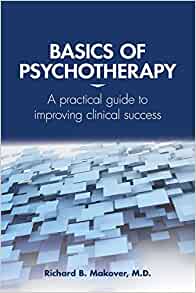
Book: Basics of Psychotherapy

Book Title:

Basics of Psychotherapy: A Practical Guide to Improving Clinical Success.

Author(s): Richard B. Makover.

Year: 2017.

Edition: First (1st), Illustrated Edition.

Publisher: American Psychiatric Association Publishing.

Type(s): Paperback.

Synopsis:

Today’s psychotherapists come from many disciplines – psychiatry, psychology, social work, psychiatric nursing, and a variety of counseling professions – but they are united by a common goal: to deliver an effective therapeutic service to those in need.

Psychotherapy texts usually focus on a single methodology or perhaps survey a variety of treatments. What many clinicians may need instead is an examination of the core principles, ideas, and practices that underlie and unify the hundreds of therapies in current use. Basics of Psychotherapy meets this need with a thorough examination of these common elements and of how they function to promote successful outcomes. The challenges to successful practice have never been greater: the demand for psychotherapy services often outstrips the supply, third-party and government payers continue to call for lower costs, computer-based therapies threaten to compete with human resources, and clinicians of all types confront the illusory appeal of using drugs to achieve quick fixes. In this difficult environment, successful practitioners must provide efficient and effective therapeutic results.

Each central chapter takes up a fundamental topic and examines it in detail: What is psychotherapy? What is the psychotherapy relationship? What is an initial evaluation? What is a formulation? What is a treatment plan? Other chapters review the essential technical aspects common to any psychotherapy and provide valuable advice on how to deal with typical clinical challenges. Throughout the book, Dr. Makover emphasizes the importance of the therapeutic alliance – what it is, what supports it, how to maintain it, how to repair it when necessary – and the collaborative partnership between therapist and patient that must exist for any treatment to succeed.

The book concludes with a discussion of career development and of how self-directed learning can build a collection of skills and capacities that will meet every practice challenge. Clinicians who understand the foundations of psychotherapy covered in this book will be more efficient and effective, regardless of which approach they chose to employ. Basics of Psychotherapy is written in a clear, straightforward style that reads easily and conveys its ideas with engaging simplicity. Every point is skillfully illustrated by clinical examples. Scripted excerpts of therapy sessions not only reproduce the dialogue; they also contain notes and commentary that explain exactly what is happening between therapist and patient. Tables and illustrations summarise the topics explained in the text. This practical and up-to-date book should be of use to the beginning therapist and the experienced clinician alike.

Book: Psychotherapy – A Practical Guide

Book Title:

Psychotherapy – A Practical Guide.

Author(s): Jeffrey Smith.

Year: 2016.

Edition: First (1st).

Publisher: Springer.

Type(s): Paperback and Kindle.

Synopsis:

This title combines the many schools of thought on psychotherapy into one reader-friendly guide that coaches psychotherapists through the various techniques needed as the field expands. Unlike any other book on the market, this text considers all of the simultaneous advances in the field, including the neurobiology of emotions, the importance of the therapeutic relationship, mindfulness meditation, and the role of the body in healing. Written with genuine respect for all traditions from CBT to psychodynamics, the book unifies views of psychopathology and cure based on the notion of the mind-brain as an organ of affect regulation. The book accounts for the tasks that characterize psychotherapist activity in all therapies, how they are performed, and how they result in therapeutic change. The book also reviews the various pathologies seen in general practice and guides the reader to the specific therapist-patient interactions needed for their resolution.

With its big-picture focus on clinical practice, Psychotherapy: A Practical Guide is a concise resource for students, psychotherapists, psychologists, residents, and all who seek to integrate what is new in psychotherapy.

Book: Becoming an Addictions Counselor

300300

Book Title:

Becoming an Addictions Counselor: A Comprehensive Text.

Author(s): Peter L. Myers and Norman R. Salt.

Year: 2018.

Edition: Fourth (4th).

Publisher: Jones & Bartlett Learning.

Type(s): Paperback and Kindle.

Synopsis:

Becoming an Addictions Counselor, Fourth Edition provides evidence-based findings, cutting-edge treatment techniques, and a focus on critical thinking to show future counsellors how to respond to clients’ needs rather than impose “cookie-cutter” routines.

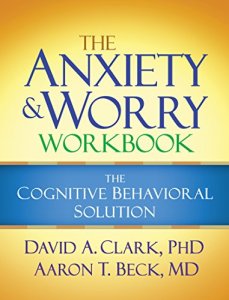
Book: The Anxiety and Worry Workbook

300300

Book Title:

The Anxiety and Worry Workbook: The Cognitive Behavioural Solution.

Author(s): David A. Clark and Aaron T. Beck.

Year: 2011.

Edition: First (1st), Illustrated Edition.

Publisher: The Guildford Press.

Type(s): Paperback and Kindle.

Synopsis:

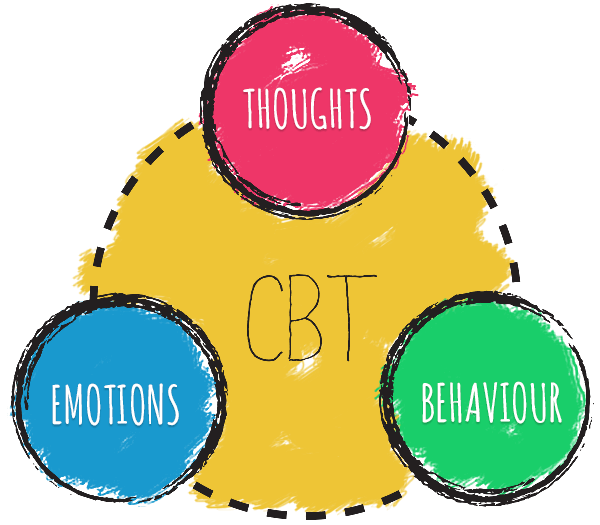
If you are seeking lasting relief from out-of-control anxiety, this is the book for you. It is grounded in cognitive behaviour therapy (CBT), the proven treatment approach developed and tested over more than 25 years by pioneering clinician-researcher Aaron T. Beck.

Now Dr. Beck and fellow CBT expert David A. Clark put the tools and techniques of CBT at your fingertips in this compassionate guide. Carefully crafted worksheets (you can download and print additional copies as needed), exercises, and examples reflect the authors’ decades of experience helping people just like you.

Learn practical strategies for identifying your anxiety triggers, challenging the thoughts and beliefs that lead to distress, safely facing the situations you fear, and truly loosening anxiety’s grip – one manageable step at a time.

The Challenges & Opportunities for Counselling & Psychotherapy in the Aftermath of COIV-19.

Research Paper Title

Counselling and psychotherapy post-COVID-19.

Background

The researchers consider how the prolonged, complex and uncertain aftermath of the COVID-19 crisis will present challenges and opportunities for counselling and psychotherapy.

Increased mental strain on populations, individuals and professionals is likely to be compounded by further constraints in therapeutic resources.

Nevertheless, emerging needs and priorities will offer ground for systems thinking in linking the application of a range of therapeutic frameworks, theories to address global challenges, integration of counselling and psychotherapy into new sectors, service models for the most vulnerable, use of digital approaches, support mechanisms for professionals and interdisciplinary research.

Reference

Vostanis, P & Bell, C.A. (2020) Counselling and psychotherapy post-COVID-19. Counselling and Psychotherapy Research. doi: 10.1002/capr.12325. Online ahead of print.

CBT: Is It Remotely Effective!

Perhaps because cognitive behavioural therapy (CBT) is effective in such a wide range of conditions, availability is often limited.

However, it is beginning to look as if CBT works equally well when delivered remotely.

In a three month trial in a primary care setting in Sweden, internet delivered CBT was no worse than face-to-face CBT for patients with high levels of anxiety about their health.

Regardless of how it was delivered, CBT produced benefits not only for hypochondriasis but for general anxiety and depression too.

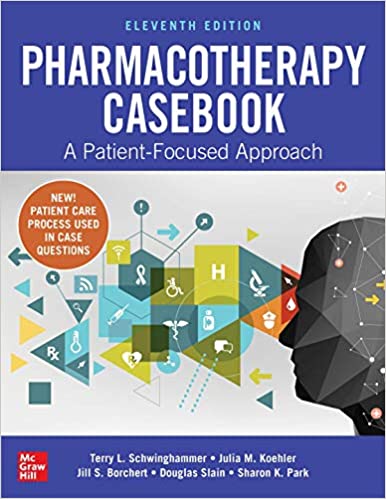
Book: Pharmacotherapy Casebook – A Patient-Focused Approach

Book Title:

Pharmacotherapy Casebook – A Patient-Focused Approach.

Author(s): Terry Schwinghammer. Julia Koehler, Jill Borchert, Douglas Slain, and Sharon Park.

Year: 2020.

Edition: Eleventh (11ed).

Publisher: McGraw-Hill Education.

Type(s): Paperback and Kindle.

Synopsis:

Packed with 157 patient cases, Pharmacotherapy Casebook: A Patient-Focused Approach builds your problem-solving and decision-making skills, so you can identify and resolve the most common drug therapy challenges you will encounter in daily practice.

Its case-based approach is also ideal for PharmD, Nurse Practitioner, and other allied health courses. Providing a consistent, practical approach, this authoritative guide delivers everything you need to master patient communication, care plan development, and documenting interventions. Case chapters are organised into system sections that correspond to those of the companion textbook.

Sharpen your ability to:

  • Identify actual or potential drug therapy problems.
  • Determine the desired therapeutic outcome.
  • Evaluate therapeutic alternatives.
  • Design an optimal individualised pharmacotherapeutic plan.
  • Evaluate the therapeutic outcome
  • Provide patient education.
  • Communicate and implement the therapeutic plan.

Develop expertise in pharmacotherapy decision making with:

  • Realistic patient presentations that include medial history, physical examination, and laboratory data, followed by a series of questions using a systematic, problem-solving approach
  • A broad range of cases – from a single disease state to multiple disease states and drug-related problems
  • Expert coverage that integrates the biomedical and pharmaceutical sciences with therapeutics
  • Appendices containing sample answer to several cases and valuable information on medical abbreviations, laboratory tests, mathematical conversion factors, and anthropometrics

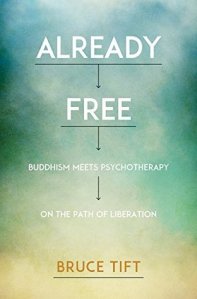
Book: Already Free: Buddhism Meets Psychotherapy on the Path of Liberation

Book Title:

Already Free: Buddhism Meets Psychotherapy on the Path of Liberation.

Author(s): Bruce Lift.

Year: 2011.

Edition: First (1st).

Publisher: Sounds True.

Type(s): Audiobook and Kindle.

Synopsis:

Different Paths, Different Strengths

Freedom from unnecessary suffering is the goal of both Buddhism and modern psychotherapy, yet each approaches this intention from a very different perspective. “Buddhist practice helps us awaken to a well-being that is independent of our circumstances,” explains Bruce Tift, “while Western psychotherapy helps us bring our disowned experience into awareness in order to live in a more skillful and satisfying way.” On Already Free, this therapist and Buddhist practitioner opens a fresh dialogue between these two perspectives, and explores how each provides us with essential keys to experiencing full presence and aliveness.

Practical Tools and Wisdom from the Eastern and Western Traditions

Buddhism gives us powerful tools for breaking free of our own identity drama and our fascination with day-to-day problems, yet it does not address how early childhood experience shapes our adult lives. Western psychotherapy provides a wide range of proven techniques for understanding and untangling the development of our neurotic patterns, but it is only beginning to recognise the powerful impact of exploring awareness itself. “These two approaches sometimes contradict and sometimes support each other,” Tift explains. “When used together, they can help us open to all of life in all its richness, its disturbances, and its inherent completeness.”With a keen understanding of the wisdom of East and West, and a special focus on working with intimate relationships as a pathway to spiritual awakening, Bruce Tift presents seven immersive sessions of insights, wisdom, and practical instruction for realising the fundamental freedom that is your birthright.

Highlights

The Developmental Approach – why we still use our childhood survival skills after we outgrow them The Fruitional Approach – Buddhist wisdom on finding liberation without resolving our historic issues Relationships and Awakening – practices for couples to develop “healthy intimacy” and welcome connection and separateness Why we use “neurotic organisation” to limit our life experience, and how to challenge this self-perpetuating process.

Childhood Trauma: Time, Trust, and Opportunities

Research Paper Title

Repairing the effects of childhood trauma: The long and winding road.

Background

  • What is known on this subject:
    • Domestic and family violence contributes to mental distress and the development of mental illness and can reverberate throughout a person’s life.
  • What this paper adds to existing knowledge.
    • Therapeutic work with people who experience domestic and family violence needs to take considerable time to allow the process to unfold.
    • Understanding the triggers that cause past traumas to be re-experienced helps people to recognise and change their conditioned emotional responses.
  • What are the implications for practice?
    • Time needs to be invested to develop a secure and trusting relationship to enable a person to work through childhood experiences that have the potential to overwhelm.
    • It is important for adults who have experienced childhood trauma to have an opportunity to process the abuse to help minimise its intrusion in their lives.

Reference

Palmer, C., Williams, Y. & Harrington, A. (2019) Repairing the effects of childhood trauma: The long and winding road. Journal of Psychiatric and Mental Health Nursing. doi: 10.1111/jpm.12581. [Epub ahead of print].

What is the Sustainability of a Biobehavioural Intervention Implemented by Therapists & Sustainment in Community Settings?

Research Paper Title

Sustainability of a biobehavioral intervention implemented by therapists and sustainment in community settings.

Background

The ultimate aim of dissemination and implementation of empirically supported treatments (ESTs) in behavioural medicine is:

  • Sustainability of the therapist/provider’s EST usage; and
  • Sustainment of EST delivery in the setting.

Thus far, sustainability has been understudied, and the therapist and setting variables that may be influential are unclear.

The purpose of the study was to test the therapists’ sustainability of a cancer-specific EST using a prospective longitudinal design and examine its predictors.

Methods

Oncology mental health therapists (N = 134) from diverse settings (N = 110) completed training in the biobehavioural intervention (BBI) and were provided with 6 months of support for implementation, with no support thereafter. BBI usage (percent of patients treated) was reported at 2, 4, 6, and 12 months.

Using a generalised estimating equation with a logistic link function, 12-month sustainability (a non-significant change in usage from 6 to 12 months) was studied along with therapist, supervisor, and setting variables as predictors.

Results

BBI usage increased through 6 months and, importantly, usage was sustained from 6 (68.4% [95% CI = 62.2%-73.9%]) to 12 months (70.9% [95% CI = 63.6%-77.3%]), with sustainment in 66 settings (60.0%).

Predictors of implementation-to-sustainability usage were therapists’ early intentions to use the BBI (p < .001) and from the setting, supervisors’ positive attitudes toward ESTs (p = .016).

Conclusions

Adding to the DI literature, a health psychology intervention was disseminated, implemented, and found sustainable across diverse therapists and settings.

Therapists and setting predictors of usage, if modified, might facilitate future sustainability/sustainment of ESTs.

Reference

Ryba, M.M., Lo, S.B. & Andersen, B.L. (2019) Sustainability of a biobehavioral intervention implemented by therapists and sustainment in community settings. Translational Behavioral Medicine. pii: ibz175. doi: 10.1093/tbm/ibz175. [Epub ahead of print].