Book: Pocket Therapy for Anxiety

Book Title:

Pocket Therapy for Anxiety: Quick CBT Skills to Find Calm (New Harbinger Pocket Therapy).

Author(s): Edmund J. Bourne.

Year: 2020.

Edition: First (1st).

Publisher: New Harbinger.

Type(s): Paperback and Kindle.

Synopsis:

Quick, simple, and effective anxiety relief that fits right in your pocket-so you can manage your symptoms anytime, anywhere.

If you suffer from anxiety, you may try to avoid the situations that cause you to feel uneasy. But avoidance is not the answer-and letting your fears and worries constantly hold you back will ultimately keep you from living the life you truly want. So, how can you learn to cope with your anxiety in the moment? This little book can help you face your fears and take charge of your anxiety-wherever or whenever it shows up.

From the author of The Anxiety and Phobia Workbook and Coping with Anxiety, Pocket Therapy for Anxiety offers immediate, user-friendly, and evidence-based strategies to help you manage anxiety, panic, and fear. The exercises in this book can be done in the moment, whenever you feel anxious, and will help you move past your fears and start living the life you were meant to live.

You will learn to:

  • Relax your body and mind.
  • Stop expecting the worst.
  • Get regular exercise and eat right to stay calm.
  • Turn off worry and cope on the spot.
  • And much, much more…

Do not let anxiety keep you one step behind. This little book will show you how to face your fears, overcome panic when it happens, and take charge of your anxiety for good!

Book: Play in Child Development and Psychotherapy

Book Title:

Play in Child Development and Psychotherapy: Toward Empirically Supported Practice (Personality & Clinical Psychology).

Author(s): Sandra Walker Russ.

Year: 2003.

Edition: First (1st).

Publisher: Routledge.

Type(s): Hardcover, Paperback, and Kindle.

Synopsis:

Child psychotherapy is in a state of transition. On the one hand, pretend play is a major tool of therapists who work with children. On the other, a mounting chorus of critics claims that play therapy lacks demonstrated treatment efficacy. These complaints are not invalid. Clinical research has only begun.

Extensive studies by developmental researchers have, however, strongly supported the importance of play for children. Much knowledge is being accumulated about the ways in which play is involved in the development of cognitive, affective, and personality processes that are crucial for adaptive functioning. However, there has been a yawning gap between research findings and useful suggestions for practitioners.

Play in Child Development and Psychotherapy represents the first effort to bridge the gap and place play therapy on a firmer empirical foundation. Sandra Russ applies sophisticated contemporary understanding of the role of play in child development to the work of mental health professionals who are trying to design intervention and prevention programs that can be empirically evaluated. Never losing sight of the complex problems that face child therapists, she integrates clinical and developmental research and theory into a comprehensive, up-to-date review of current approaches to conceptualizing play and to doing both therapeutic play work with children and the assessment that necessarily precedes and accompanies it.

Book: Pharmacotherapy: A Pathophysiologic Approach

Book Title:

Pharmacotherapy: A Pathophysiologic Approach.

Author(s): Joseph Dipiro, Robert Talbert, Gary Yee, Gary Matzke, Barbara Wells, and L. Michael Posey.

Year: 2011.

Edition: Eighth (8th).

Publisher: McGraw-Hill Education.

Type(s): Hardcover and Paperback.

Synopsis:

The eighth edition will feature the addition of SI units throughout and an increased number of global examples and clinical questions.

Features:

  • Unparalleled guidance in the development of pharmaceutical care plans.
  • Full-colour presentation.
  • Key Concepts in each chapter.
  • Critical Presentation boxes summarise common disease signs and symptoms.
  • Clinical Controversies boxes examine complicated issues you face when providing drug therapy.
  • New material added to the online learning centre.
  • Expanded evidence-based recommendations.
  • Expanded coverage of timely issues such as palliative care and pain medicine.
  • Therapeutic recommendations in each disease-specific chapter.

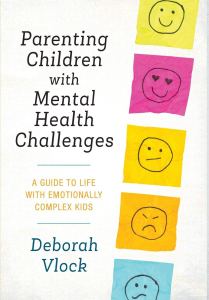
Book: Parenting Children with Mental Health Challenges

Book Title:

Parenting Children with Mental Health Challenges: A Guide to Life with Emotionally Complex Kids.

Author(s): Deborah Vlock.

Year: 2018.

Edition: First (1st).

Publisher: Rowman & Littlefield Publishers, Illustrated Edition.

Type(s): Hardcover, Paperback, and Kindle.

Synopsis:

Parenting Children with Mental Health Challenges: A Guide to Life with Emotionally Complex Kids offers overwhelmed readers guidance, solidarity, and hope. The author, a “mental-health mom” who’s survived indignity, exhaustion, and the heartbreak of loving a child with multiple mental-health disorders, writes with frankness and occasional humour about the hardest parenting job on earth.

Drawing on her own experiences and those of other parents, plus tips from mental health professionals, Vlock suggests ways of parenting smarter, partnering better, and living more fully and less fearfully in the shadow of childhood psychiatric illness.

Addressing the many hurdles children and families must face, including life on the home front, school, friendships and relationships, and more, the book shows readers that they are not alone-and they are stronger than they think. With its combination of easily digestible, to-the-point suggestions, clear action items, and first-person parent/kid stories, its aim is to make mental-health parents feel stronger and better, while actively seeking positive outcomes for their kids and families.

With rates of mental health diagnoses among youth on the rise, this invaluable resource will help parents through the trying times with support, understanding, and guidance.

Book: Orthorexia – When Healthy Eating Goes Bad

Book Title:

Orthorexia – When Healthy Eating Goes Bad.

Author(s): Renee McGregor.

Year: 2017.

Edition: First (1st).

Publisher: Nourish Books.

Type(s): Paperback and Kindle.

Synopsis:

Can healthy eating become a dangerous obsession?

Orthorexia is an eating disorder that is hard to see. It is not about purging or cutting calories. But by excluding foods in pursuit of a “clean” or ideal diet, it can quickly turn into a compulsion with serious consequences for mental and physical health.

For the first time, dietician, nutritionist and eating disorder campaigner Renee McGregor reveals the true messages behind these dangerous diets. Packed with first-hand experiences and analysis, it provides the tools to guide sufferers back to a balanced, truly healthy way of eating.

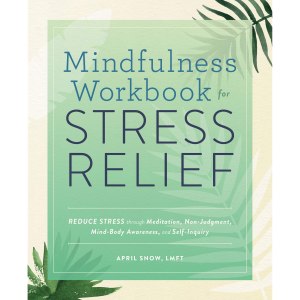
Book: Mindfulness Workbook for Stress Relief

Book Title:

Mindfulness Workbook for Stress Relief: Reduce Stress through Meditation, Non-Judgement, Mind-Body Awareness, and Self-Inquiry.

Author(s): April Snow (LMFT).

Year: 2020.

Edition: First (1st).

Publisher: Rockridge Press.

Type(s): Kindle.

Synopsis:

Mindfulness is a powerful and proven method for reducing stress and its negative health effects. The Mindfulness Workbook for Stress Relief shows you how to relieve tension and find calm using soothing, restorative techniques like meditation, non-judgement, self-inquiry, and mind-body awareness.

Featuring helpful exercises and simple meditations, this hands-on stress management workbook delivers a wide variety of effective mindfulness tools that you can add to your self-care toolbox like breath awareness, body scans, mindful walking, and more.

The Mindfulness Workbook for Stress Relief includes:

  • Practical & actionable: This book has a beginner-friendly focus that covers a spectrum of everyday situations and science-based solutions.
  • Evidence-based approach: Explore engaging mindfulness-based exercises that are proven to help relieve stress, anxiety, chronic pain, and sleep issues.
  • Situational success: Learn how to address stress triggers in many areas of daily life like relationships, at work, and beyond.

Take a deep breath and begin your practice today with this evidence-based mindfulness workbook.

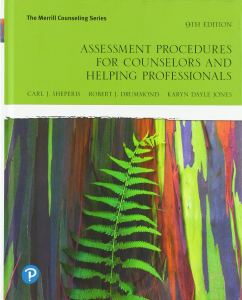
Book: Assessment Procedures for Counsellors and Helping Professionals

Book Title:

Assessment Procedures for Counsellors and Helping Professionals.

Author(s): Carl Sheperis, Robert Drummond, and Karyn Jones.

Year: 2019.

Edition: Ninth (9th).

Publisher: Pearson.

Type(s): Paperback.

Synopsis:

A classic textbook for aspiring counsellors, now updated and expanded to improve its usefulness and relevance for practicing counsellors.

Since its first publication in 1988, Assessment Procedures for Counsellors and Helping Professionals has become a classic among assessment textbooks designed specifically for aspiring counsellors. Now in its 9th Edition, the text includes extensive changes to content and updating throughout, while maintaining its popular, easy-to-read format and continuing emphasis on assessment information that is most useful and relevant for school counsellors, marriage and family therapists, mental health counsellors, and other helping professionals. Throughout the text, readers get invaluable information and examples about widely used assessment instruments in order to become familiar with these well-known tests.

NOTE:

Before purchasing, check with your instructor to ensure you select the correct ISBN. Several versions of the MyLab(TM) and Mastering(TM) platforms exist for each title, and registrations are not transferable. To register for and use MyLab or Mastering, you may also need a Course ID, which your instructor will provide.

Used books, rentals, and purchases made outside of Pearson

If purchasing or renting from companies other than Pearson, the access codes for the MyLab or Mastering platform may not be included, may be incorrect, or may be previously redeemed. Check with the seller before completing your purchase.

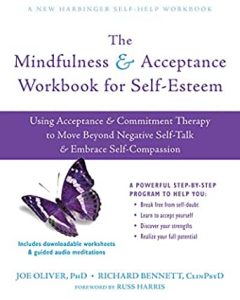
Book: The Mindfulness and Acceptance Workbook for Self-Esteem

Book Title:

The Mindfulness and Acceptance Workbook for Self-Esteem.

Author(s): Joe Oliver.

Year: 2020.

Edition: First (1st).

Publisher: New Harbinger, Workbook Edition.

Type(s): Paperback and Kindle.

Synopsis:

We all have stories we have created about ourselves-some of them positive and some of them negative. If you suffer from low self-esteem, your story may include these types of narratives: “I’m a failure,” “I’ll never be able to do that,” or “If only I were smarter or more attractive, I could be happy.” Ironically, at the end of the day, these narratives are your biggest roadblocks to achieving happiness and living the life you deserve. So, how can you break free from these stories-once and for all?

Grounded in evidence-based acceptance and commitment therapy (ACT), this workbook offers a step-by-step programme to help you break free from self-doubt, learn to accept yourself and your faults, identify and cultivate your strengths, and reach your full potential. You will also discover ways to take action and move toward the life you truly want, even when these actions trigger self-doubt. Finally, you’ll learn to see yourself in all your complexity, with kindness and compassion.

Book: On Being Normal and Other Disorders

Book Title:

On Being Normal and Other Disorders – A Manual for Clinical Psychodiagnostics.

Author(s): Paul Verhaeghe.

Year: 2019.

Edition: First (1st).

Publisher: Routledge.

Type(s): Hardcover, Paperback, and Kindle.

Synopsis:

Winner of the 2005 Goethe Award in Psychoanalytic Scholarship.

The central argument of On Being Normal and Other Disorders is that psychic identity is acquired through one’s primary intersubjective relationships. Thus, the diagnosis of potential pathologies must also be founded on this relation. Given that the efficacy of all forms of treatment depends upon the therapeutic relation, a diagnostic of this sort has wide-ranging applications.

Paul Verhaeghe’s critical evaluation of the contemporary DSM-diagnostic shows that the lack of reference to an updated governing metapsychology impinges on the therapeutic value of the DSM categories. In response to this problem, the author sketches out the foundations of such a metapsychology by combining a Freudo-Lacanian approach with contemporary empirical research. Close attention is paid to the processes of identity acquisition to show how the self and the Other are not two separate entities. Rather, subject formation is seen as a process in which both the subject’s and the Other’s identity, as well as the relationship between them, comes into being.

By engaging this new theoretical approach in a constant dialogue with the findings of contemporary research, this book provides a compass for the practical applications of such a differential diagnostic. Post-modern categories of anxiety disorders, personality disorders, and post-traumatic stress disorders are approached both through the well-known neurotic, psychotic, and perverse structures, as well as through the less familiar distinction between an actual pathology and a psychopathology. These two outlooks, which involve the role of language and the subject’s relation to the Other, are spelled out to show their implications for treatment at every turn.

Book: Neurobiologically Informed Trauma Therapy with Children & Adolescent

Book Title:

Neurobiologically Informed Trauma Therapy with Children and Adolescents: Understanding Mechanisms of Change (Norton Series on Interpersonal Neurobiology).

Author(s): Linda Chapman.

Year: 2014.

Edition: First (1st).

Publisher: W.W. Norton & Company.

Type(s): Paperback and Kindle.

Synopsis:

The model of treatment developed here is grounded in the physical, psychological, and cognitive reactions children have to traumatic experiences and the consequences of those experiences. The approach to treatment utilises the integrative capacity of the brain to create a self, foster insight, and produce change. Treatment strategies are based on cutting-edge understanding of neurobiology, the development of the brain, and the storage and retrieval of traumatic memory. Case vignettes illustrate specific examples of the reactions of children, families, and teens to acute and repeated exposure to traumatic events.

Also presented is the most recent knowledge of the role of the right hemisphere (RH) in development and therapy. Right brain communication, and how to recognise the non-verbal symbolic and unconscious, affective processes will be explained, along with examples of how the therapist can utilise art making, media, tools, and self to engage in a two-person biology. 30 illustrations; 8 pages of colour.