Book: Breaking the Barriers: Early Intervention to Mental Health Issues

Book Title:

Breaking the Barriers: Early Intervention to Mental Health Issues.

Author(s): Lade Hephzibah Olugbemi.

Year: 2020.

Edition: First (1st).

Publisher: Independently Published.

Type(s): Paperback and Kindle.

Synopsis:

“If you don’t know what your barriers are, it’s impossible to figure out how to tear them down.” John Manning, author of The Disciplined Leader.

This is true about mental health in the community. Barriers to information and understanding have affected people with mental health issues, as well as their friends, work colleagues and family members. This book seeks to shed light on the many factors that causes barriers to preventing mental health problems. It demystifies the various issues surrounding mental health, especially within the Black, Asian and Minority Ethnic (BAME) communities. It also explores the various factors that trigger mental illness, the role of the media, religion and culture in complicating the barriers.

By reading Breaking The Barriers, you will become more aware of the various issues around mental health, and better equipped to overcoming the barriers.

Book: Mental Health Workbook: 6 Books in 1

Book Title:

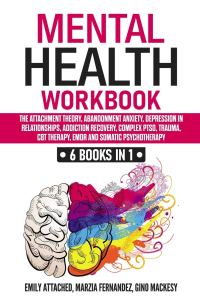
Mental Health Workbook: 6 Books in 1: The Attachment Theory, Abandonment Anxiety, Depression in Relationships, Addiction Recovery, Complex PTSD, Trauma, CBT Therapy, EMDR and Somatic Psychotherapy.

Author(s): Emily Attached, Marzia Fernandez, and Gino Mackesy.

Year: 2020.

Edition: First (1st).

Publisher: Independently Published.

Type(s): Hardcover, Paperback, Audiobook, and Kindle.

Synopsis:

This Book includes: 6 Manuscripts

  1. Attachment Theory Workbook.
  2. Abandonment Recovery Workbook.
  3. The Addiction Recovery Workbook.
  4. Complex PTSD, Trauma and Recovery.
  5. EMDR and Somatic Psychotherapy.
  6. Somatic Psychotherapy.

Book 1: Attachment Theory Workbook

You can start to redress the balance to build stronger relationships with those close to you, with chapters that cover:

  • How anxiety disorder develops.
  • How to become self-disciplined with your emotions.
  • Learning to communicate effectively.
  • How positive reinforcement works.
  • How your physical health affects your mental state.
  • Dealing with conflict.
  • Empathetic listening and its link to happiness.
  • And more…

Book 2: Abandonment Recovery Workbook

You will learn how to cope with the feelings of abandonment through chapters that examine:

  • What affecting abandonment.
  • Abandonment anxiety.
  • How abandonment can change a life.
  • Depression in Relationships.
  • Building healthier relationships.
  • The power of forgiveness.

Book 3: The Addiction Recovery Workbook

In this book, you will find the necessary help to get you on the road to recovery, with chapters that cover:

  • How to replace your addiction and find the peace you crave.
  • Educating yourself about your addiction.
  • What to avoid when you are developing new habits.
  • Exercise, hydration and a non-toxic lifestyle.
  • Getting creative to life healthier.

Book 4: Complex PTSD, Trauma and Recovery

In this book, you will finally find new ways to tackle your trauma, with chapters that focus on:

  • How depression is defined.
  • How you can avoid exacerbating the problem.
  • A range of trauma treatment exercises.
  • Trauma and the link to mental health.
  • Understanding anxiety.
  • Complex PTSD.

Books 5 and 6: EMDR and Somatic Psychotherapy

You’ll discover how it could help you, with chapters that cover:

  • The principles of EMDR and Somatic Psychotherapy.
  • The basic concepts of Somatic Psychotherapy and EMDR Therapy.
  • Examining the neurobiology of stress and trauma.
  • How the brain works and how it is affected by trauma.
  • Somatic Psychotherapy explained.

Book: Mental Health Journal: Anxiety and Depression Journal

Book Title:

Mental Health Journal: Anxiety and Depression Journal. Mental Health Journal & Mood Tracker – Thoughts and Feelings Tracker – PTSD and Depression … Goals, Promote Positive Thinking & Gratitude.

Author(s): R. Roslinda.

Year: 2020.

Edition: First (1st).

Publisher: Independently Published.

Type(s): Paperback.

Synopsis:

This Mental Health Journal & Mood Tracker is designed to help you keep track of your mental and emotional wellbeing. Ideal for anyone struggling with anxiety and mood disorders: depression, ADHD, Bipolar etc. The journal features a 12 monthly daily mood tracker, pages for you to write down your feelings and thoughts. Keep notes on things you are grateful for and your achievements. There are also spaces for you to jot down stuff like, things you did well at today, things that made you smile, things that you had fun doing and enjoyed, things you did that made you feel proud. You can also make notes on goals you want to accomplish.

Features:

  • Mood Tracker For 12 Months: Angry, Ashamed, Confused, Excited….
  • Anxiety Levels Chart-Mood Chart-Section with writing prompts: How do I feel?, Today I am grateful for…, Something I did well today, I felt proud when…
  • and many more!

Book: Mental Health and Well-being in Primary Education

Book Title:

Mental Health and Well-being in Primary Education: A Practical Guide and Resource.

Author(s): Laura Meek, Jo Phillips, and Sarah Jordan.

Year: 2020.

Edition: First (1st).

Publisher: Luminate.

Type(s): Paperback and Kindle.

Synopsis:

Good mental health is much more than the absence of mental illness – it also means having self-belief and the resilience to cope with stress and change. In order to teach such skills, teachers and other education professionals must equip themselves and their workplaces with the procedures, understanding and confidence required to monitor mental health, share concepts effectively, identify warning signs and act appropriately if issues arise.

Written by an author team combining clinical and teaching expertise, Mental Health and Wellbeing in Primary Education puts all the information you need at your fingertips with detailed guidance on creating a culture of wellbeing, overviews of how a wide variety of common mental health problems including anxiety, anger and ADHD are typically diagnosed and managed, warning signs to look out for, and a range of ready-made forms, exercises and lesson plans.

Book: Everyday Mindfulness for OCD

Book Title:

Everyday Mindfulness for OCD: Tips, Tricks, and Skills for Living Joyfully.

Author(s): Jon Hershfield (MFT) and Shala Nicely (LPC).

Year: 2017.

Edition: First (1st).

Publisher: New Harbinger.

Type(s): Paperback and Kindle.

Synopsis:

If you have been diagnosed with OCD, you already understand how your obsessive thoughts, compulsive behaviour, and need for rituals can interfere with everyday life. Maybe you have already undergone therapy or are in the midst of working with a therapist. It is important for you to know that life does not end with an OCD diagnosis. In fact, it is possible to not only live with the disorder, but also live joyfully. This practical and accessible guide will show you how.

In Everyday Mindfulness for OCD, you will discover how you can stay one step ahead of your OCD. You will learn about the world of mindfulness, and how living in the present moment non-judgmentally is so important when you have OCD. You will also explore the concept of self-compassion; what it is, what it is not how to use it, and why people with OCD benefit from it. Finally, you will discover daily games, tips, and tricks for outsmarting your OCD, meditations and mindfulness exercises, and much, much more.

Living with OCD is challenging; but it does not have to define you. If you are tired of focusing on how you are living with OCD is and are looking for fun ways to make the most of your unique self, this book will be a breath of fresh air.

Book: Mindfulness for Everyday Living

Book Title:

Mindfulness for Everyday Living – A Guide for Mental Health Practitioners.

Author(s): Patrick R. Steffen (Editor).

Year: 2020.

Edition: First (1st).

Publisher: Springer.

Type(s): Paperback and eBook.

Synopsis:

This book presents practical approaches for integrating mindfulness principles into daily life. It examines how to incorporate mindfulness principles into interventions across various fields and with different client populations. In addition, the volume describes how to teach clients to integrate mindfulness techniques into daily living – from general stress reduction and compassionate positive living to working with children with medical conditions or autism to mindful parenting and healthy marriages.

The book explains key concepts clearly and succinctly and details practical daily approaches and use. Each chapter presents cutting-edge research that is integrated into effective, proven interventions that represent the gold standard of care and are simple and powerful to use, and concludes with recommendations on how each individual can create his or her own personalised mindfulness approach that matches his or her needs and situation.

This book is a must have resource for clinicians, therapists, and health professionals as well as researchers, professors, and graduate students in clinical psychology, psychotherapy/counselling, psychiatry, social work, and developmental psychology.

Book: Mindfulness for Children

Book Title:

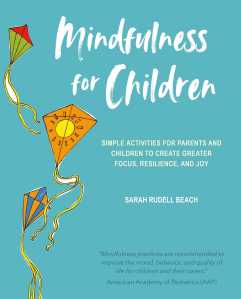
Mindfulness for Children: Simple Activities for Parents and Children to Create Greater Focus, Resilience, and Joy.

Author(s): Sarah Rudell Beach.

Year: 2020.

Edition: First (1st).

Publisher: CICO Books.

Type(s): Paperback and Kindle.

Synopsis:

Simple and fun mindfulness activities to do with children up to age 11 to build beneficial life-long skills that promote resilience, joy, focus, and calm, and improve overall wellbeing.

Helping children to be more mindful is a powerful gift. By being mindful they will learn to recognize and manage their emotions, be more able to calm down when they are upset, become better at focusing on important tasks, and more able to interact with others with empathy and generosity. These are fundamental skills that children will need throughout their life, but that they often aren’t taught explicitly. Think of how often we demand that children “pay attention” or “calm down”, without ever having shown them how to do so. Now parents can with mindfulness expert Sarah Rudell Beach. Parents first learn how to be more mindful themselves before teaching their children basic mindfulness skills. With easy-to-follow activities, chapter by chapter children learn to Soothe, Focus, Feel, Pause, Appreciate, and Connect. Each activity includes variations for different age groups, along with “emergency” how-to’s for particularly stressful moments.

Book: Mental Toughness Training

Book Title:

Mental Toughness Training – How to be Emotionally Strong, Overcome Adversity and Start Controlling Your Life.

Author(s): Ian Tuhovsky.

Year: 2020.

Edition: First (1st).

Publisher: Independently Published.

Type(s): Paperback, Audiobook, and Kindle.

Synopsis:

The Secret To Mastering Your Emotions Is Finally Out There: Are You Ready To Take Control Of Your Emotions?

Did you know that your social, business, and romantic life are dictated and, in most cases, controlled by your emotions?

Did you know that mastering your emotions can lead to increased confidence, self-awareness, and self-motivation?

If you are looking for an easy way to develop emotional intelligence and reap its immense benefits, look no further.

“Mental Toughness Training” is Ian Tuhovsky’s latest mental toughness handbook that will take you behind the scenes of your mind and offer you an insight into your emotions.

Based on years of research, this eye-opening guide on controlling emotions, positive thinking, and emotional balance will help you deal with these stressful times and weather your emotional storm.

Top 5 Reasons Why You Should Master Your Emotions – Starting Today:

  • Observe & Understand Different Emotions: Learn How To Read Between The Lines & Read People Faster.
  • Tame Your Negative Emotions: Find Your Inner Balance & Learn How To Handle Fear, Anger, Envy & Stress.
  • Positively Channel Your Emotions: Rediscover Your Inner Strength & Develop Emotional Resilience.
  • Express Yourself: Unlock Your Emotional Safe & Discover Ways To Bring Your Emotions To The Surface.
  • Develop Mental Strength: Learn How Understanding Motivation And Emotion Will Lead To Happiness And Success.

What is In It For You?

Your emotions trigger your every decision and have a great impact on your mood. That’s why by learning how to master your emotions you will be able to

  • Build Stronger Relationships
  • Understand Emotional Reactions
  • Feel In Control & More Confident

Book: Cognitive Behaviour Therapy for Adolescents with Eating Disorders

Book Title:

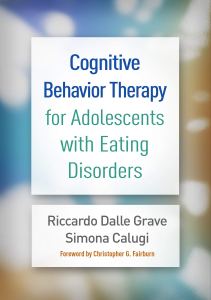
Cognitive Behaviour Therapy for Adolescents with Eating Disorders.

Author(s): Riccardo Dalle Grave and Simona Calugi.

Year: 2020.

Edition: First (1st).

Publisher: Guildford Press.

Type(s): Hardcover and Kindle.

Synopsis:

This state-of-the-art guide provides a powerful transdiagnostic approach for treating adolescent eating disorders (anorexia nervosa, bulimia nervosa, binge-eating disorder, and others) in either outpatient or inpatient settings.

It describes how enhanced cognitive behaviour therapy (CBT-E) – the gold-standard treatment for adult eating disorders – has been systematically adapted and tested with younger patients.

With a strong motivational focus, CBT-E gives the adolescent a key role in decision making. The book presents session-by-session guidelines for assessing patients, determining whether CBT-E is appropriate, developing case conceptualisations, conducting individualised interventions, addressing medical issues, and involving parents.

User-friendly features include case vignettes and reproducible forms; purchasers get access to a Web page where they can download and print the reproducible materials in a convenient 8 1/2″ x 11″ size.

CBT-E is recognised as a best practice for the treatment of adolescent eating disorders by the UK’s National Institute for Health and Care Excellence (NICE).

Book: Cognitive Behaviour Therapy for Eating Disorders

Book Title:

Cognitive Behaviour Therapy for Eating Disorders.

Author(s): Glenn Waller, Helen Cordery, Emma Corstorphine, Hendrik Hinrichsen, Rachel Lawson, Victoria Mountford, and Katie Russell.

Year: 2007.

Edition: First (1st), Illustrated Edition.

Publisher: Cambridge University Press.

Type(s): Paperback and Kindle.

Synopsis:

This book describes the application of cognitive behavioural principles to patients with a wide range of eating disorders – it covers those with straightforward problems and those with more complex conditions or co-morbid states.

The book takes a highly pragmatic view. It is based on the published evidence, but stresses the importance of individualised, principle-based clinical work.

It describes the techniques within the widest clinical context, for use across the age range and from referral to discharge.

Throughout the text, the links between theory and practice are highlighted in order to stress the importance of the flexible application of skills to each new situation. Case studies and sample dialogs are employed to demonstrate the principles in action and the book concludes with a set of useful handouts for patients and other tools.

This book will be essential reading for all those working with eating-disordered patients including psychologists, psychiatrists, nurses, counsellors, dieticians, and occupational therapists.