Book: Clinical Psychology, Research and Practice

Book Title:

Clinical Psychology, Research and Practice: An Introductory Text.

Author(s): Paul Bennett.

Year: 2021.

Edition: Fourth (4th).

Publisher: Open University Press.

Type(s): Paperback and Kindle.

Synopsis:

Extensively updated, this popular and accessibly written textbook outlines the latest research and therapeutic approaches within clinical psychology, alongside important developments in clinical practice. The book introduces and evaluates the conceptual models of mental health problems and their treatment, including second and third wave therapies.

Each disorder is considered from a psychological, social and biological perspective and different intervention types are thoroughly investigated.

Key updates to this edition include:

  • The development of case formulations for conditions within each chapter.
  • An articulation and use of modern theories of psychopathology, including sections on the transdiagnostic approach, meta-cognitive therapy, and acceptance and commitment therapy.
  • An introduction to emerging mental health issues, such as internet gaming disorder.
  • Challenging ‘stop and think’ boxes that encourage readers to address topical issues raised in each chapter, such as societal responses to topics as varied as psychopathy, paedophilia and the Black Lives Matter movement.
  • New vocabulary collated into key terms boxes for easy reference.

Book: Becoming a Clinical Psychologist: Everything You Need to Know

Book Title:

Becoming a Clinical Psychologist: Everything You Need to Know.

Author(s): Steven Mayers and Amanda Mwale.

Year: 2018.

Edition: First (1st).

Publisher: Routledge.

Type(s): Hardcover, Paperback, and Kindle.

Synopsis:

Becoming a Clinical Psychologist: Everything You Need to Know brings together all the information you need to pursue a career in this competitive field.

This essential guide includes up-to-date information and guidance about a career in clinical psychology and gaining a place on clinical psychology training in the UK. It answers the questions all aspiring psychologists need to know, such as:

  • What is clinical psychology?
  • What is it like to train and work as a clinical psychologist?
  • How to make the most of your work and research experience.
  • How to prepare for clinical psychology applications and interviews.
  • Is clinical psychology the right career for me?

By cutting through all the jargon, and providing detailed interviews with trained and trainee clinical psychologists, Becoming a Clinical Psychologist will provide psychology graduates or undergrads considering a career in this area with all the tools they need.

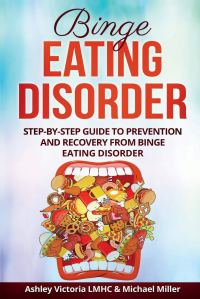
Book: Binge Eating Disorder: Step-by-Step Guide to Prevention and Recovery from Binge Eating Disorder

Book Title:

Binge Eating Disorder: Step-by-Step Guide to Prevention and Recovery from Binge Eating Disorder.

Author(s): Michael Miller and Ashley Victoria.

Year: 2018.

Edition: First (1st).

Publisher: CreateSpace Independent Publishing Platform.

Type(s): Paperback, Audiobook, and Kindle.

Synopsis:

Do you consume abnormally large amounts of food in one sitting? Do you doubt that your untimely binging is a problem? Are you someone who is not comfortable revealing that you suffer from binge eating disorder? If your answer to any of the above questions is a “YES” then you have got hold of the right book.

Binge eating is a serious disorder that masks itself as overeating and can go undetected for long periods of time. It may surprise you, but binge eating affects more people than bulimia and anorexia. Consuming abnormally large amounts of food in one sitting becomes a regular feature in the life of binge eaters. Most of these individuals don’t even recognise that there’s something wrong with them until they get overweight or obese.

Part of the reason why this happens is because there is a lack of awareness among people with regards to this disorder. The symptoms are often passed off as overeating and most people think that it’s normal for someone to eat until their guts hurt.

The very reason we wanted to come up with a book for people suffering from binge eating disorder was to spread awareness about it so they don’t face the issues many people did and ignore the problem.

Through the course of the book, we intend to openly discuss binge eating in detail. Until now if you thought that you might have to live with this disorder forever, this guide will prove you wrong. Here is a quick snapshot of what is covered in the book:

  • Details of BED (binge eating disorder).
  • Symptoms of BED.
  • Preventive measures.
  • Steps to eliminate the habit.
  • Facts on binge eating.
  • Role of the society, family and media towards eating disorders.
  • Habits that trigger binging.

Book: Borderline Personality Disorder For Dummies

Book Title:

Borderline Personality Disorder For Dummies, 2nd Edition.

Author(s): Charles H. Elliott and Laura L. Smith.

Year: 2020.

Edition: Second (2nd).

Publisher: For Dummies..

Type(s): Paperback and Kindle.

Synopsis:

Borderline personality disorder (BPD) is an extremely serious – and often seriously neglected – condition. Despite around 4 million diagnoses in the US, BPD has attracted lower funding and levels of clinical concern than more “popular” conditions such as bipolar disorder. But there’s no need to lose hope! Borderline Personality Disorder For Dummies, 2nd Edition was written to bridge this gap and help sufferers learn how to break the cycle to lead a full and happy life.

BPD impacts the way you think and feel about yourself and others and can cause long-term patterns of disruptive relationships and difficulties with self-control. It often results from childhood abuse or neglect, as well as from genetic or brain abnormalities – particularly in areas of the brain that regulate emotion, impulsivity, and aggression. Knowing how it works means we know how to manage it, and Borderline Personality Disorder For Dummies – written in a friendly, easy-to-follow style by two leading clinical psychologists – is packed with useful techniques to do just that: from identifying triggers to finding the right care provider.

  • Get a compassionate, actionable understanding of the symptoms and history of BPD.
  • Acquire techniques to identify and halt damaging behaviours.
  • Evaluate providers and the latest therapies and treatments.
  • Set goals and habits to overcome problems step-by-step.

BPD should never be allowed to dictate anyone’s existence. This reference gives you the tools to take your life back and is a must-have for sufferers and their loved ones alike.

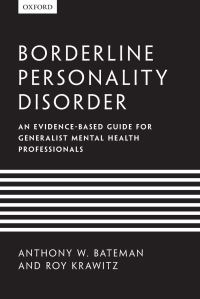
Book: Borderline Personality Disorder: An Evidence-Based Guide For Generalist Mental Health Professionals

Book Title:

Borderline Personality Disorder: An Evidence-Based Guide For Generalist Mental Health Professionals.

Author(s): Anthony W. Bateman (author) and Roy Krawitz (contrbutor).

Year: 2013.

Edition: First (1st), Illustrated Edition.

Publisher: Oxford University Press.

Type(s): Paperback and Kindle.

Synopsis:

Over the past two decades considerable progress has been made in developing specialist psychosocial treatments for borderline personality disorder (BPD), yet the majority of people with BPD receive treatment within generalist mental health services, rather than specialist treatment centres.

This is a book for general mental health professionals who treat people with BPD. It offers practical guidance on how to help people with BPD with advice based on research evidence. After a discussion of the symptoms of BPD, the authors review all the generalist treatment interventions that have resulted in good outcomes in randomised controlled trials, when compared with specialist treatments, and summarise the effective components of these interventions. The treatment strategies are organised into a structured approach called Structured Clinical Management (SCM), which can be delivered by general mental health professionals without extensive additional training.

The heart of the book outlines the principles underpinning SCM and offers a step-by-step guide to the clinical intervention. Practitioners can learn the interventions easily and develop more confidence in treating people with BPD. In addition, a chapter is devoted to how to help families – an issue commonly neglected when treating patients with BPD. Finally the authors discuss the top 10 strategies for delivering treatment and outline how the general mental health clinician can deliver these strategies competently.

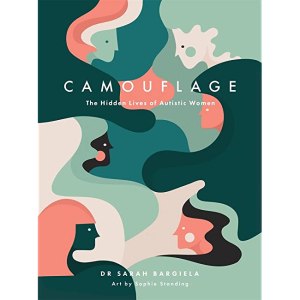
Book: Camouflage: The Hidden Lives of Autistic Women

Book Title:

Camouflage: The Hidden Lives of Autistic Women.

Author(s): Dr Sarah Bargiela.

Year: 2019.

Edition: First (1st), Illustrated Edition.

Publisher: Jessica Kingsley Publishers.

Type(s): Hardcover and Kindle.

Synopsis:

Autism in women and girls is still not widely understood, and is often misrepresented or even overlooked. This graphic novel offers an engaging and accessible insight into the lives and minds of autistic women, using real-life case studies.

The charming illustrations lead readers on a visual journey of how women on the spectrum experience everyday life, from metaphors and masking in social situations, to friendships and relationships and the role of special interests.

Fun, sensitive and informative, this is a fantastic resource for anyone who wishes to understand how gender affects autism, and how to create safer supportive and more accessible environments for women on the spectrum.

Book: Avoiding Anxiety in Autistic Children: A Guide for Autistic Wellbeing

Book Title:

Avoiding Anxiety in Autistic Children: A Guide for Autistic Wellbeing.

Author(s): Luke Beardon.

Year: 2020.

Edition: First (1st)

Publisher: Sheldon Press.

Type(s): Paperback and Kindle.

Synopsis:

One of the biggest challenges for the parent of any autistic child is how best to support and guide them through the situations in life which might cause them greater stress, anxiety and worry than if they were neurotypical.

Dr Luke Beardon has put together an optimistic, upbeat and readable guide that will be essential reading for any parent to an autistic child, whether they are of preschool age or teenagers. Emphasising that autism is not behaviour, but at the same time acknowledging that there are risks of increased anxiety specific to autism, this practical book gives insight into the nature of the anxiety experienced by autistic people, as well as covering every likely situation in which your child might feel anxious or worried. It will help you to prepare your child for school, to monitor their anxiety around school, and also to be informed about the educational choices available to your child. It will give you support to help make breaktimes less stressful for them and how to help them navigate things like eating at school and out of the house.

Educationally, this book will take you and your child right up to the point of taking exams and leaving school; socially and emotionally it will cover all the challenges from bullying, friendships, relationships, puberty and sex education. It will give suggestions for alternatives in the scenarios that might cause anxiety or confusion in your child; it will also give a full understanding of your child’s sensory responses and such behaviours as masking, or echopraxia.

As the parent of an autistic child, you may find their path to adulthood different to the one you had expected to take, but as this book makes clear, autism should be celebrated and affirmed. Avoiding Anxiety in Autistic Children helps you to do just that, with practical strategies that will help happiness, not anxiety, remain the over-riding emotion that colours your child’s memories of their early years.

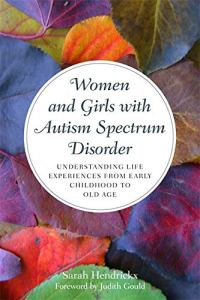
Book: Women and Girls with Autism Spectrum Disorder: Understanding Life Experiences from Early Childhood to Old Age

Book Title:

Women and Girls with Autism Spectrum Disorder: Understanding Life Experiences from Early Childhood to Old Age.

Author(s): Sarah Hendrickx.

Year: 2015.

Edition: First (1st)

Publisher: Jessica Kingsley Publishers.

Type(s): Paperback and Kindle.

Synopsis:

The difference that being female makes to the diagnosis, life and experiences of a person with an Autism Spectrum Disorder (ASD) has largely gone unresearched and unreported until recently. In this book Sarah Hendrickx has collected both academic research and personal stories about girls and women on the autism spectrum to present a picture of their feelings, thoughts and experiences at each stage of their lives.

Outlining how autism presents differently and can hide itself in females and what the likely impact will be for them throughout their lifespan, the book looks at how females with ASD experience diagnosis, childhood, education, adolescence, friendships, sexuality, employment, pregnancy and parenting, and aging. It will provide invaluable guidance for the professionals who support these girls and women and it will offer women with autism a guiding light in interpreting and understanding their own life experiences through the experiences of others.

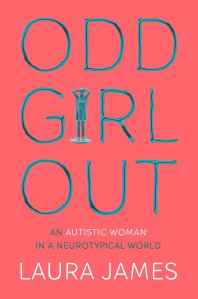
Book: Odd Girl Out: An Autistic Woman in a Neurotypical World

Book Title:

Odd Girl Out: An Autistic Woman in a Neurotypical World.

Author(s): Laura James.

Year: 2018.

Edition: First (1st), Main Market Edition.

Publisher: Bluebird.

Type(s): Hardcover, Paperback, Audiobook, and Kindle.

Synopsis:

What do you do when you wake up in your mid-forties and realize you’ve been living a lie your whole life? Do you tell? Or do you keep it to yourself?

Laura James found out that she was autistic as an adult, after she had forged a career for herself, married twice and raised four children. This book tracks the year of Laura’s life after she receives a definitive diagnosis from her doctor, as she learns that ‘different’ doesn’t need to mean ‘less’ and how there is a place for all of us, and it’s never too late to find it.

Laura draws on her professional and personal experiences and reflects on her life in the light of her diagnosis, which for her explains some of her differences; why, as a child, she felt happier spinning in circles than standing still and why she has always found it difficult to work in places with a lot of ambient noise.

Although this is a personal story, the book has a wider focus too, exploring reasons for the lower rate of diagnosed autism in women and a wide range of topics including eating disorders and autism, marriage and motherhood.

Odd Girl Out gives a timely account from a woman negotiating the autistic spectrum, from a poignant and personal perspective.

Book: Aspergirls: Empowering Females with Asperger Syndrome

Book Title:

Aspergirls: Empowering Females with Asperger Syndrome.

Author(s): Rudy Simone.

Year: 2010.

Edition: First (1st).

Publisher: Jessica Kingsley Publishers Ltd.

Type(s): Paperback and Kindle.

Synopsis:

Girls with Asperger’s Syndrome are less frequently diagnosed than boys, and even once symptoms have been recognised, help is often not readily available. The image of coping well presented by AS females of any age can often mask difficulties, deficits, challenges, and loneliness.

This is a must-have handbook written by an Aspergirl for Aspergirls, young and old. Rudy Simone guides you through every aspect of both personal and professional life, from early recollections of blame, guilt, and savant skills, to friendships, romance and marriage. Employment, career, rituals and routines are also covered, along with depression, meltdowns and being misunderstood. Including the reflections of over thirty-five women diagnosed as on the spectrum, as well as some partners and parents, Rudy identifies recurring struggles and areas where Aspergirls need validation, information and advice. As they recount their stories, anecdotes, and wisdom, she highlights how differences between males and females on the spectrum are mostly a matter of perception, rejecting negative views of Aspergirls and empowering them to lead happy and fulfilled lives.

This book will be essential reading for females of any age diagnosed with AS, and those who think they might be on the spectrum. It will also be of interest to partners and loved ones of Aspergirls, and anybody interested either professionally or academically in Asperger’s Syndrome.