Posts

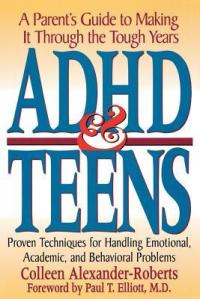
Book: ADHD & Teens: A Parent’s Guide to Making it through the Tough Years

Book Title:

ADHD & Teens: A Parent’s Guide to Making it through the Tough Years.

Author(s): Colleen Alexander-Roberts.

Year: 1995.

Edition: First (1st).

Publisher: Taylor Trade Publishing.

Type(s): Paperback and eBook.

Synopsis:

ADHD and Teens is a manual of practical advice to help parents cope with the problems that can arise during these years. A crash course is offered on parenting styles that really work with teens with ADHD and how these styles allow the teen to safely move from dependence to independence.

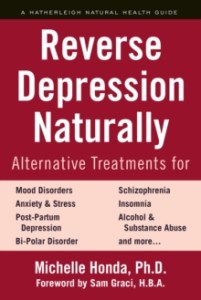
Book: Reverse Depression Naturally

Book Title:

Reverse Depression Naturally – Alternative Treatments for Mood Disorders, Anxiety and Stress.

Author(s): Michelle Honda (PhD).

Year: 2020.

Edition: First (1st).

Publisher: Hatherleigh Press.

Type(s): Paperback and eBook.

Synopsis:

Offering breakthrough and effective holistic methods to manage and reduce depression and anxiety naturally from a leading naturopathic doctor.

Globally, more than 300 million people of all ages suffer from depression and that number is only increasing. Reverse Depression Naturally provides a comprehensive overview of depression and anxiety and how to effectively and naturally manage them. It is a complete resource of healing remedies, dietary recommendations, mental exercises, and protocols.

Reverse Depression Naturally offers practical tips and alternative solutions to popular treatments as well as beneficial supplements and home remedies. The book also features sections on stress, mental illness, alcoholism, and post-partum depression.

What is a Licensed Professional Counsellor?

Introduction

Licensed professional counsellor (LPC) is a licensure for mental health professionals in some countries.

In the US, licensed professional counsellors (or in some states, “licensed clinical mental health counsellors” or “licensed clinical professional counsellors” or “licensed mental health counsellors”) provide mental health and substance abuse care to millions of Americans.

LPCs are doctoral and master’s-level mental health service providers, trained to work with individuals, families, and groups in treating mental, behavioural, and emotional problems and disorders. LPCs make up a large percentage of the workforce employed in community mental health centres, agencies, universities, hospitals and organisations, and are employed within and covered by managed care organisations and health plans. LPCs also work with active duty military personnel and their families, as well as veterans.

Licenses are awarded for professional counsellors (LPC) and professional counsellor supervisors (LPC-S); Interns are identified with the corresponding suffix “I” (LPC-I), and Licensed Professional Counsellor Associates, with the suffix “-A”; this also applies to licensed therapists, as in the case of Licensed Marriage and Family Therapists (LMFT) who are designated as: LMFTA. Texas prohibits the use of “I” after the term LPC, and requires that LPC Interns spell out the word Intern each time.

In the US, the exact title varies by state, but the other most frequently used title is licensed mental health counsellor (LMHC). Several US states, including Illinois, Maine, and Tennessee, have implemented a two-tier system whereby both the LPC and LCPC (or equivalent) are used. In those states, higher tier professionals are granted the privilege to practice independently. However, in most states, LPC’s or LMHC’s may practice independently. Licensed Professional Counsellors are one of the six types of licensed mental health professionals who provide psychotherapy in the US.

In addition to their education, LPCs must obtain supervised clinical experience and must pass a state licensing exam. Different states require one of several different licensing examinations. Examples are the National Counsellor Examination for Licensure and Certification (NCE) as well as the National Certified Mental Health Counsellor Examination (NCMHCE). LPCs are regulated by federal and state laws, which either protect the title of LPC or LMHC or actually define the scope of practice of a professional counsellor and stipulate certain client protections. If an LPC is also a member of a professional association or has received additional certifications, they must adhere to the codes of ethics of the professional association or certification body with which they have aligned.

Requirements for Professional Counsellors

United States

LPC (or variation, e.g. LCPC, LMHC, etc.) licensure is recognised in 50 states in the US, as well as the District of Columbia, Guam, and Puerto Rico. The requirements vary from one jurisdiction to the next. Most states require some combination of a master’s degree, counselling experience and supervision, as well as passing a national examination, such as the National Counsellor Examination (NCE) and/or the National Clinical Mental Health Counselling Examination (NCMHCE).

A summary of requirements from the state of Texas LPC board serves as an example; requirements vary from state to state. For example, practicum/internship requirements (during the master’s degree) vary significantly between states (i.e. 300 in Texas and 1000 in Vermont). Course requirements and credit amount also vary, making reciprocity between states difficult for many licensed counsellors.

  • A master’s degree or doctoral degree in counselling or a related field.
  • Academic course work in each of the following areas: normal human growth and development; abnormal human behaviour; appraisal or assessment techniques; counselling theories; counselling methods or techniques (individual and group); research; lifestyle and career development; social, cultural and family issues; and professional orientation.
  • As part of the graduate programme, a supervised practicum experience that is primarily counselling in nature. The practicum should be at least 300 clock-hours with at least 100 clock-hours of direct client contact. Academic credit for the practicum must appear on the applicant’s transcript.
  • After completion of the graduate degree and before application, an applicant must take and pass the National Counsellor Exam and the Texas Jurisprudence Exam. After receiving a temporary LPC license from the board, the applicant may begin the supervised post-graduate counselling experience (internship). 3000 clock-hours with at least 1,500 being direct client contact of internship under the supervision of a board-approved supervisor is required. The 3000 clock-hours may not be completed in a time period of less than 18 months.”

Exemptions (US)

Some states, such as Oregon, have broad exemptions that allow the practice of professional counselling without a license.

In Alabama, nothing in the chapter regulating professional counselling applies to the activities, services, titles, and descriptions of persons employed, as professionals or as volunteers, in the practice of counselling for IRS recognised 501(c)(3) public and private non-profit organisations or charities. [Alabama Code 34-8A-3-a-6].

Canada

In the Canadian province of Quebec, the Ordre des conseillers et conseilleres d’orientation et psychoeducateurs et psychoeducatrices du Quebec (OCCOPPQ) grants counsellor licensure. The Canadian Counselling and Psychotherapy Association, CCPA offers a distinct certification, Canadian Certified Counsellor (CCC), separate from the regular professional membership.

The Canadian Professional Counsellors Association (CPCA) is a national competency-based association that provides the designation of Registered Professional Counsellor (RPC) to its members. Unlike degree-based associations, a specific degree level does not automatically qualify applicants for membership. Instead, the CPCA requires core competencies in education and experience prior to taking a qualifying exam and undergoing psychological testing as part of the membership application process. Counsellors must then embark on a two-year candidacy under the supervision of an approved Clinical Supervisor prior to becoming a full member. The CPCA membership roles are a mixture of Diploma, Bachelor, Master, and PhD level degree holders, and its primary purpose is the protection of the public and the promotion of competency in the mental health profession in Canada.

As well; the Canadian Addiction Counsellors Certification Federation (CACCF) promotes, certifies and monitors the competency of addiction specific counsellors in Canada using current and effective practices, which are internationally recognized. The certifications CACCF issues and its professional conduct review process provide public protection for counsellors, employers, regulatory agencies, clients and their families.

China

The Ministry of Labour and Human Resources grants counsellor licensure.

Malaysia

In Malaysia, Lembaga Kaunselor Malaysia grants counsellor licensure.

What is a Licensed Behaviour Analyst?

Introduction

A licensed behaviour analyst is a type of behavioural health professional in the United States.

They have at least a master’s degree, and sometimes a doctorate, in behaviour analysis or a related field.

Behaviour analysts apply radical behaviourism, or applied behaviour analysis, to people.

Defining the Scope of Practice

The Behaviour Analyst Certification Board (BACB) defines behaviour analysis as follows:

“The analysis. The experimental analysis of behavior (EAB) is the basic science of this field and has over many decades accumulated a substantial and well-respected research literature. This literature provides the scientific foundation for applied behavior analysis (ABA), which is both an applied science that develops methods of changing behavior and a profession that provides services to meet diverse behavioral needs. Briefly, professionals in applied behavior analysis engage in the specific and comprehensive use of principles of learning, including operant and respondent learning, in order to address behavioral needs of widely varying individuals in diverse settings. Examples of these applications include: building the skills and achievements of children in school settings; enhancing the development, abilities, and choices of children and adults with different kinds of disabilities; and augmenting the performance and satisfaction of employees in organizations and businesses.”

As the above suggests, behaviour analysis is based on the principles of operant and respondent conditioning. This places behaviour analysis as one of the dominant models of behaviour management, behavioural engineering and behaviour therapy. Behaviour analysis is an active, environmental based approach and some behaviour analytic procedures are considered highly restrictive (see least restrictive environment). For example, these service may make access to preferred items contingent on performance. This has led to abuses in the past, in particular where punishment programmes have been involved. In addition, failure to be an independent profession often leads behaviour analysts and other behaviour modifiers to have their ethical codes supplanted by those of other professions. For example, a behaviour analyst working in the hospital setting might design a token economy, a form of contingency management. He may desire to meet his ethical obligation to make the program habilitative and in the clients’ best long-term interest. The physicians and nurses in the hospital who supervise him may decide that the token economy should instead create order in the nursing routines so clients get their medication quickly and efficiently. Instead of the ethical code of the BACB and the Association for Behaviour Analysis International’s position that those receiving treatment have a right to effective treatment and a right to effective education. In addition, failure on the part of a behaviour analyst to adequately supervise his or her workers could lead to abuse. Finally, misrepresentations of the field and historical problems between academics has led to frequent calls to professionalise behaviour analysis.

In general, there is wide support within the profession for licensure.

Range of Populations Worked With

The professional practice of behaviour analysis ranges from treatment of individuals with autism and developmental disabilities to behavioural coaching and behavioural psychotherapy. In addition to treatment of mental health problems and corrections, the professional practice of behaviour analysis includes organisational behavioural management, behavioural safety and even maintaining the behavioural health of astronauts while within and beyond earth’s orbit.

Certification

The BACB offers a technical certificate in behaviour analysis. This certification is internationally recognised. This certification states the level of training and requires an exam to show a minimum level of competence to call oneself a board certified behaviour analyst (BCBA). Certification came about because of many ethical issues with behavioural interventions being delivered including the use of aversive and humiliating treatments in the name of behaviour modification. The American Psychological Association offers a diplomate (post Ph.D. and licensed certification) in behavioural psychology.

The Meaning of Certification

BACB is a private non-profit organisation without governmental powers to regulate behaviour analytic practice. While the BACB certification means that candidates have satisfied entry-level requirements in behaviour analytic training, certificants may require a government license for independent practice when treating behavioural health or medical problems. Licensed certificants must operate within the scope of their license and must practice within their areas of expertise. Where the government regulates behavior analytic services unlicensed certificants must be supervised by a licensed professional and operate within the scope of their supervisor’s license when treating disorders. Unlicensed certificants who provide behaviour analytic training for educational or optimal performance purposes do not require licensed supervision. Where the government does not regulate the treatment of medical or psychological disorders certificants should practice in accord with the laws of their state, province, or country. All certificants must practice within their personal areas of expertise.

Licensure

Recently, a move has occurred to license behaviour analysts. Licensure’s purpose is to protect the public from employing unqualified practitioners.

The model licensing act states that a person is a behaviour analyst by training and experience. The person seeking licensure must have mastered behaviour analysis by achieving a master’s degree in behaviour analysis or related subject matter. Like all other master level licensed professions the model act sets the standard for a master’s degree. This requirement states that the person has achieved textbook knowledge of behaviour analysis which can be then tested through the exam offered by the BACB or the one offered by the World Centre for Behaviour Analysis. It also requires an internship in which a behaviour analysts works under another master or Ph.D. level behaviour analyst for a period of one year (750 hours) with at least two hours/week of supervision. Finally, those 750 hours are considered tutelage time. After that, the behaviour analyst must engage in supervised practice under a behaviour analyst for a period of another 2 years (2,000 hours).

Once this process is complete, the person applies to a state board who ensures that he or she has indeed met the above conditions. Once the person is licensed public protection is still monitored by the licensing board, which makes sure that the person receives sufficient ongoing education, and the licensing board investigates ethical complaints. A licensed behaviour analyst would have equal training, knowledge, skills and abilities in their discipline as would a mental health counsellor or marriage and family therapist in their discipline. In February 2008, Indiana, Arizona, Massachusetts, Vermont, Oklahoma and other states now have legislation pending to create licensure for behaviour analysts. Pennsylvania was the first state in 2008 to license “behaviour specialists” to cover behaviour analysts. Arizona, less than three weeks later, became the first state to license “behaviour analysts.” Other states such as New York, Nevada and Wisconsin also have passed behaviour analytic licensure.

Professional Organisations

The Association for Behaviour Analysis International has a special interest group for practitioner issues, which focuses on key issues related to licensing behaviour analysts. In addition, they have a practice board and a policy board to handle legislative issues ABA:I. Finally, the association has recently put out its own model licensing act for behaviour analysts.

Association for behaviour analysis international serves as the core intellectual home for behaviour analysts. The Association for Behaviour Analysis International sponsors 2 conferences per year – one in the US and one international.

PHQ-9 & GAD-7 Data in a National Survey about COVID-19 Restrictions in Australia

Research paper Title

Patient Health Questionnaire 9 (PHQ-9) and General Anxiety Disorder 7 (GAD-7) data contributed by 13,829 respondents to a national survey about COVID-19 restrictions in Australia.

Background

While the Patient Health Questionnaire 9 (PHQ-9) and General Anxiety Disorder 7 (GAD-7) are frequently used in mental health research, few studies have reported comprehensive data on these measures from population or community samples.

The aim of this study was to describe gender- and age-specific PHQ-9 and GAD-7 item and summary data contributed by those who completed this survey.

Methods

The PHQ-9 and GAD-7 were used as indicators of symptoms of depression and anxiety in a national online anonymous survey to assess the mental health of adults in Australia during the COVID-19 restrictions.

Data were analysed descriptively.

Results

Complete survey responses were contributed by 13,829 people.

For both measures, item-by-item results, summary statistics (mean, standard deviation, minimum, maximum, median and interquartile range) and prevalence of severity categories are reported for the whole sample, and disaggregated by gender and age groups.

Conclusions

These comprehensive data provide a useful point of comparison for future COVID-19-related or other research among population or community samples.

Other researchers are encouraged to report detailed PHQ-9 and GAD-7 data in the future, to enable and promote relevant between-group comparisons.

Reference

Stocker, R., Tran, T., Hammarberg, K., Nguyen, H., Rowe, H. & Fisher, J. (2021) Patient Health Questionnaire 9 (PHQ-9) and General Anxiety Disorder 7 (GAD-7) data contributed by 13,829 respondents to a national survey about COVID-19 restrictions in Australia. Psychiatry Research. doi: 10.1016/j.psychres.2021.113792. Online ahead of print.

Book: The Little CBT Workbook

Book Title:

The Little CBT Workbook: A Step-By-Step Guide to Gaining Control of your Life.

Author(s): Dr. Michael Sinclair and Dr. Belinda Hollingsworth.

Year: 2012.

Edition: First (1st), UK Edition.

Publisher: Crimson Publishing.

Type(s): Paperback and Kindle.

Synopsis:

Introducing essential Cognitive Behavioural Therapy (CBT) techniques, this practical workbook allows readers to explore the key principles behind CBT and discover how to apply them to improve their lives. With interactive exercises and checklists, this is suitable for self-teaching or for supplementing a CBT course.

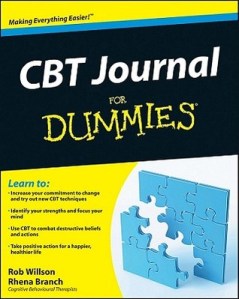
Book: CBT Journal for Dummies

Book Title:

CBT Journal for Dummies.

Author(s): Rob Wilson and Rhena Branch.

Year: 2012.

Edition: First (1st).

Publisher: Wiley.

Type(s): Hardcover.

Synopsis:

Keep track of the progress you are making with Cognitive Behavioural Therapy.

Cognitive Behavioural Therapy (CBT) is a hugely popular self-help technique that teaches you how to break free from destructive or negative behaviours and make positive changes to both your thoughts and your actions. CBT Journal For Dummies offers a guided space for you to keep a record of your progress, used in conjunction with either CBT For Dummies and/or alongside consultation with a therapist.

This book features an introduction to CBT, followed by a guided 100-day journal. Each chapter focuses on a new CBT technique, with information on how to use the journal space and assessment advice. Topics covered include; establishing the link between thoughts and feelings; preventing ‘all or nothing’ thinking; turning mountains into molehills; focusing on the present; using emotional reasoning; avoiding over-generalising; thinking flexibly; keeping an open mind; assessing the positives; coping with frustration; tackling toxic thoughts; naming your emotions; comparing healthy and unhealthy emotions; working through worry; defining your core beliefs; adopting positive principles; and much more.

  • Has a removable band, leaving a discreet black journal.
  • The small trim size makes it perfect to use on the go.
  • A CBT ‘thought for the day’ appears on alternate blank pages.
  • Content is progressive, encouraging you to keep working through the following days.
  • Coverage is generalized enough to be applicable to every user of CBT.

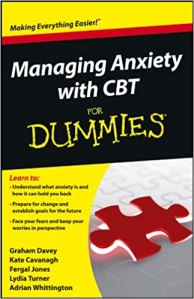
Book: Managing Anxiety with CBT for Dummies

Book Title:

Managing Anxiety with CBT for Dummies.

Author(s): Graham C. Davey, Kate Cavanagh, Fergal Jones, Lydia Turner, and Adrian Whittington.

Year: 2012.

Edition: First (1st).

Publisher: Wiley.

Type(s): Paperback, Audiobook, and Kindle.

Synopsis:

Don’t panic! Combat your worries and minimise anxiety with CBT!
Cognitive Behavioural Therapy (CBT) is a hugely popular self-help technique, which teaches you to break free from destructive or negative behaviours and make positive changes to both your thoughts and your actions. This practical guide to managing anxiety with CBT will help you understand your anxiety, identify solutions to your problems, and maintain your gains and avoid relapse.

Managing Anxiety with CBT For Dummies is a practical guide to using CBT to face your fears and overcome anxiety and persistent, irrational worries. You’ll discover how to put extreme thinking into perspective and challenge negative, anxiety-inducing thoughts with a range of effective CBT techniques to help you enjoy a calmer, happier life.

  • Helps you understand anxiety and how CBT can help.
  • Guides you in making change and setting goals.
  • Gives you tried-and-true CBT techniques to face your fears and keep a realistic perspective.

Managing Anxiety with CBT For Dummies gives you the tools you need to overcome anxiety and expand your horizons for a healthy, balanced life.

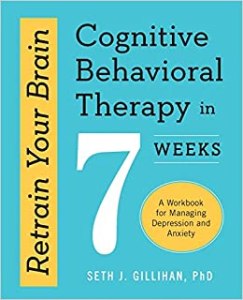
Book: Retrain Your Brain: Cognitive Behavioural Therapy in 7 Weeks

Book Title:

Retrain Your Brain: Cognitive Behavioural Therapy in 7 Weeks: A Workbook for Managing Depression and Anxiety.

Author(s): Seth J. Gillihan (PhD).

Year: 2018.

Edition: First (1st).

Publisher: Althea Press.

Type(s): Paperback and Kindle.

Synopsis:

Cognitive behaviour therapy strategies to help you manage anxiety and depression.

Get lasting relief from anger, panic, stress, and other mood-related conditions by applying the principles of cognitive behavioural therapy to your daily life.

From writing down your goals to addressing negative thought patterns, this accessible, easy-to-understand cognitive behavioural therapy book gives you everything you need to let the healing begin in one convenient CBT workbook. Learn to grow as a person, overcome challenges, and boost your overall health and well-being.

Explore cognitive behaviour therapy through:

  • 10 Soothing strategies: Discover proven CBT principles, like setting goals, maintaining mindfulness, and more.
  • Positive self-evaluations: Track your progress and reflect on what you’ve learned along the way.
  • Practice opportunities: Use this workbook in tandem with clinical cognitive behavioural therapy or post-therapy.

Progress toward healing with a simplified approach to cognitive behaviour therapy.

Book: Retrain Your Anxious Brain

Book Title:

Retrain Your Anxious Brain – Practical and Effective Tools to Conquer Anxiety.

Author(s): John Tsilimparis (MFT).

Year: 2014.

Edition: First (1st).

Publisher: Harlequin.

Type(s): Paperback, Audiobook, and Kindle.

Synopsis:

Control Anxiety Before it Begins

Trouble sleeping, panic attacks, knots in your stomach, excessive worry, doubts, phobiasanxiety comes in many shapes and sizes, and affects millions of people. But you do not have to suffer anymore. In Retrain Your Anxious Brain, renowned therapist and anxiety expert John Tsilimparis, MFT, shares the ground breaking programme he has created to help hundreds of people (himself included) free themselves from crippling anxiety and live healthier, happier lives.

Rather than just treating or masking symptoms, Tsilimparis’s innovative approach helps you identify and short-circuit anxiety triggers, so that you can stop anxiety before it starts. This customisable plan teaches you how to:

  • Alter the fixed thoughts that can cause anxiety.
  • Adjust your existing personal belief systems.
  • Challenge the idea of consensus reality.
  • Balance your dualistic mind.
  • Consciously create your own reality.