Posts

What is Interpersonal Psychotherapy?

Introduction

Interpersonal psychotherapy (IPT) is a brief, attachment-focused psychotherapy that centres on resolving interpersonal problems and symptomatic recovery.

It is an empirically supported treatment (EST) that follows a highly structured and time-limited approach and is intended to be completed within 12-16 weeks. IPT is based on the principle that relationships and life events impact mood and that the reverse is also true.

It was developed by Gerald Klerman and Myrna Weissman for major depression in the 1970s and has since been adapted for other mental disorders. IPT is an empirically validated intervention for depressive disorders, and is more effective when used in combination with psychiatric medications.

Along with cognitive behavioural therapy (CBT), IPT is recommended in treatment guidelines as a psychosocial treatment of choice.

Brief History

Originally named “high contact” therapy, IPT was first developed in 1969 at Yale University as part of a study designed by Gerald Klerman, Myrna Weissman and colleagues to test the efficacy of an antidepressant with and without psychotherapy as maintenance treatment of depression. IPT has been studied in many research protocols since its development. The National Institute of Mental Health (NIMH) Treatment of Depression Collaborative Research Programme (TDCRP) demonstrated the efficacy of IPT as a maintenance treatment and delineated some contributing factors.

Foundations

IPT was influenced by CBT as well as psychodynamic approaches. It takes its structure from CBT in that it is time-limited, employs structured interviews and assessment tools. In general, however, IPT focuses directly on affects, or feelings, whereas CBT focuses on cognitions with strong associated affects. Unlike CBT, IPT makes no attempt to uncover distorted thoughts systematically by giving homework or other assignments, nor does it help the patient develop alternative thought patterns through prescribed practice. Rather, as evidence arises during the course of therapy, the therapist calls attention to distorted thinking in relation to significant others. The goal is to change the relationship pattern rather than associated depressive cognitions, which are acknowledged as depressive symptoms.

The content of IPT’s therapy was inspired by Attachment theory and Harry Stack Sullivan’s Interpersonal psychoanalysis. Social theory is also influenced in a lesser role to emphasis on qualitative impact of social support networks for recovery. Unlike psychodynamic approaches, IPT does not include a personality theory or attempt to conceptualise or treat personality but focuses on humanistic applications of interpersonal sensitivity.

  • Attachment Theory, forms the basis for understanding patients’ relationship difficulties, attachment schema and optimal functioning when attachment needs are met.
  • Interpersonal Theory, describes the ways in which patients’ maladaptive metacommunication patterns (Low to high Affiliation & Inclusion and dominant to submissive Status) lead to or evoke difficulty in their here-and-now interpersonal relationships.

The aim of IPT is to help the patient to improve interpersonal and intrapersonal communication skills within relationships and to develop social support network with realistic expectations to deal with the crises precipitated in distress and to weather ‘interpersonal storms’.

Clinical Applications

It has been demonstrated to be an effective treatment for depression and has been modified to treat other psychiatric disorders such as substance use disorders and eating disorders. It is incumbent upon the therapist in the treatment to quickly establish a therapeutic alliance with positive countertransference of warmth, empathy, affective attunement and positive regard for encouraging a positive transferential relationship, from which the patient is able to seek help from the therapist despite resistance. It is primarily used as a short-term therapy completed in 12-16 weeks, but it has also been used as a maintenance therapy for patients with recurrent depression. A shorter, 6-week therapy suited to primary care settings called Interpersonal counselling (IPC) has been derived from IPT.

Interpersonal psychotherapy has been found to be an effective treatment for the following:

  • Bipolar disorder.
  • Bulimia nervosa.
  • Post-partum depression.
  • Major depressive disorder.
  • Cyclothymia.

Adolescents

Although originally developed as an individual therapy for adults, IPT has been modified for use with adolescents and older adults.

IPT for children is based on the premise that depression occurs in the context of an individual’s relationships regardless of its origins in biology or genetics. More specifically, depression affects people’s relationships and these relationships further affect our mood. The IPT model identifies four general areas in which a person may be having relationship difficulties:

  • Grief after the loss of a loved one;
  • Conflict in significant relationships, including a client’s relationship with his or her own self;
  • Difficulties adapting to changes in relationships or life circumstances; and
  • Difficulties stemming from social isolation.

The IPT therapist helps identify areas in need of skill-building to improve the client’s relationships and decrease the depressive symptoms. Over time, the client learns to link changes in mood to events occurring in his/her relationships, communicate feelings and expectations for the relationships, and problem-solve solutions to difficulties in the relationships.

IPT has been adapted for the treatment of depressed adolescents (IPT-A) to address developmental issues most common to teenagers such as separation from parents, development of romantic relationships, and initial experience with death of a relative or friend. IPT-A helps the adolescent identify and develop more adaptive methods for dealing with the interpersonal issues associated with the onset or maintenance of their depression. IPT-A is typically a 12- to 16-week treatment. Although the treatment involves primarily individual sessions with the teenager, parents are asked to participate in a few sessions to receive education about depression, to address any relationship difficulties that may be occurring between the adolescent and his/her parents, and to help support the adolescent’s treatment.

Elderly

IPT has been used as a psychotherapy for depressed elderly, with its emphasis on addressing interpersonally relevant problems. IPT appears especially well suited to the life changes that many people experience in their later years.

Is There Value in Targeted Screening & Intervention Programmes of Anxiety in Young Adult Offspring with Parental Mental Health Problems?

Research Paper Title

Associations of maternal and paternal mental health problems with offspring anxiety at age 20 years: Findings from a population-based prospective cohort study.

Background

Epidemiological studies indicate that children of parents with mental health problems are at an increased risk of developing anxiety disorders.

Few studies have investigated this relationship in young adults.

Methods

Participants were from the Raine Study, which is a multi-generational birth cohort study in Australia. Maternal anxiety and depression in late childhood were assessed using the Depression, Anxiety, and Stress Scale (DASS-42), and paternal lifetime mental health problems were assessed using a self-reported questionnaire.

The short form of DASS-42 (DASS-21) was used to assess anxiety symptoms among offspring at age 20. Negative binomial regression model was used to quantify the association. Data were available for 1,220 mother-offspring and 1,190 father-offspring pairs.

Results

After adjusting for potential confounders, the researchers found an increased risk of anxiety in young adult offspring exposed to maternal anxiety in late childhood and paternal lifetime mental health problems. However, they observed no increased risks of anxiety in offspring exposed to maternal depressive symptoms. Their sensitivity analysis based on the log-binomial model (binary outcome) as well as the linear model (log-transformed data) confirmed the robustness of the main results.

Conclusions

The findings suggest there can be value to consider and apply targeted screening and intervention programmes of anxiety in the young adult offspring with parental mental health problems.

Reference

Ayano, G., Betts, K., Lin, A., Tait, R. & Alati, R. (2021) Associations of maternal and paternal mental health problems with offspring anxiety at age 20 years: Findings from a population-based prospective cohort study. Psychiatry Research. doi: 10.1016/j.psychres.2021.113781. Online ahead of print.

On This Day … 24 February

People (Births)

  • 1900 – Irmgard Bartenieff, German-American dancer and physical therapist, leading pioneer of dance therapy (d. 1981).

Irmgard Bartenieff

Irmgard Bartenieff (1900 to 1981) was a dance theorist, dancer, choreographer, physical therapist, and a leading pioneer of dance therapy. A student of Rudolf Laban, she pursued cross-cultural dance analysis, and generated a new vision of possibilities for human movement and movement training. From her experiences applying Laban’s concepts of dynamism, three-dimensional movement and mobilization to the rehabilitation of people affected by polio in the 1940s, she went on to develop her own set of movement methods and exercises, known as Bartenieff Fundamentals.

Bartenieff incorporated Laban’s spatial concepts into the mechanical anatomical activity of physical therapy, in order to enhance maximal functioning. In physical therapy, that meant thinking in terms of movement in space, rather than by strengthening muscle groups alone. The introduction of spatial concepts required an awareness of intent on the part of the patient as well, that activated the patient’s will and thus connected the patient’s independent participation to his or her own recovery. “There is no such thing as pure “physical therapy” or pure “mental” therapy. They are continuously interrelated.”

Bartenieff’s presentation of herself was quiet and, according to herself, she did not feel comfortable marketing her skills and knowledge. Not until June 1981, a few months before she died, did her name appear in the institute’s title: Laban/Bartenieff Institute of Movement Studies (LIMS), a change initiated by the Board of Directors in her honour.

Dance Therapy

She held a position of dance therapy research assistant (1957-1967) to Dr. Israel Zwerling at the Day Hospital Unit of Albert Einstein College of Medicine. Zwerling, a psychiatrist […] was very receptive to further exploration of dance as a therapeutic tool for defusing aggression and anxiety. What particularly reinforced his interest in her was that she had a vocabulary and a notation for recording observations of movement. This became a vital factor in daily observations through the one-way screen, especially of family and therapeutic groups.

Dance therapy was then an emerging field of adjunctive therapy. Bartenieff’s special contribution was in bringing Laban’s work to a field very much in need of movement documentation: [It] provided a method of movement analysis and a system of notation which placed dance therapists on their own professional ground, giving them a language for describing patients’ movements, and eliminating the need to rely on less accurate jargon borrowed from other disciplines.

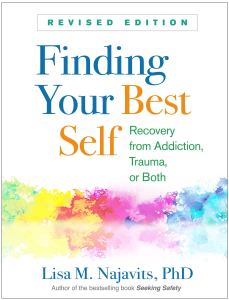
Book: Finding Your Best Self

Book Title:

Finding Your Best Self: Recovery from Addiction, Trauma, or Both.

Author(s): Lisa M. Najavits (PhD).

Year: 2019.

Edition: Second (2nd).

Publisher: Guildford Press.

Type(s): Hardcover, Paperback, and Kindle.

Synopsis:

Addiction and trauma are two of the most common and difficult issues that people face. In this motivating book, leading expert Lisa Najavits explains the link between addiction and trauma and presents science-based self-help strategies that you can use no matter where you are in your recovery. Every chapter features inspiring words from people who have “been there,” plus carefully designed reflection questions, exercises, and other practical tools. Learn how you can:

  • Build coping skills so that the future is better than the past.
  • Keep yourself safe and find support.
  • Set your own goals and make a plan to achieve them at your own pace.
  • Choose compassion over self-blame and shame.
  • Move toward your best self – the person you want to be.

If you are a family member or friend seeking to support a loved one – or a helping professional – this book is also for you. Now in a convenient large-size format, the revised edition features added materials for professional and peer counsellors. First edition title: Recovery from Trauma, Addiction, or Both.

Mental health professionals, see also the author’s Seeking Safety: A Treatment Manual for PTSD and Substance Abuse, which presents an evidence-based treatment approach developed specifically for PTSD and substance abuse.

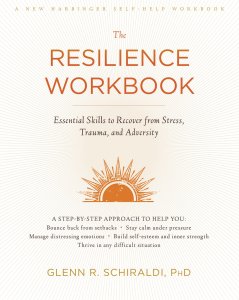
Book: The Resilience Workbook

Book Title:

The Resilience Workbook – Essential Skills to Recover from Stress, Trauma, and Adversity.

Author(s): Glenn R. Schiraldi (PhD).

Year: 2017.

Edition: First (1st), Illustrated Edition.

Publisher: New Harbinger.

Type(s): Paperback and Kindle.

Synopsis:

What is resilience, and how can you build it? In The Resilience Workbook, Glenn Schiraldi-author of The Self-Esteem Workbook-offers invaluable insight and outlines essential skills to help you bounce back from setbacks and cultivate a growth mindset.

Why do some people sail through life’s storms, while others are knocked down? Resilience is the key. Resilience is the ability to recover from difficult experiences, such as death of loved one, job loss, serious illness, terrorist attacks, or even just daily stressors and challenges. Resilience is the strength of body, mind, and character that enables people to respond well to adversity. In short, resilience is the cornerstone of mental health.

Combining evidence-based approaches including positive psychology, cognitive behavioural therapy (CBT), acceptance and commitment therapy (ACT), mindfulness, and relaxation, The Resilience Workbook will show you how to bounce back and thrive in any difficult situation. You will learn how to harness the power of your brain’s natural neuroplasticity; manage strong, distressing emotions; and improve mood and overall well-being. You will also discover powerful skills to help you prevent and recover from stress-related conditions like post-traumatic stress disorder (PTSD), anxiety, depression, anger, and substance abuse disorders.

When the going gets tough, you need real, proven-effective skills to manage your stress and heal from setbacks. The comprehensive and practical exercises in this workbook will help you cultivate resilience, stay calm under pressure, and face all of life’s challenges.

Book: Resilience – How We Find New Strength at Times of Stress

Book Title:

Resilience – How We Find New Strength at Times of Stress.

Author(s): Fredric Flach (MD).

Year: 2020.

Edition: First (1st).

Publisher: Hatherleigh Press.

Type(s): Paperback.

Synopsis:

Make stress your ally in the pursuit of happiness and personal fulfillment.

There’s no escaping stress. It appears on our doorstep uninvited in the shattering forms of death, divorce, or job loss. Stress even comes in the pleasant experiences of promotion, marriage, or a long-held wish fulfilled.

So why do some people come out of a crisis feeling better than ever, and others never seem to bounce back?

You will discover:

  • How to develop the 14 traits that will make you more resilient.
  • Why “falling apart” is often the smartest step to take on the road to resilience.
  • When the five-step plan for creative problem solving can help.
  • What essential steps you can take to strengthen your body’s resilience.
  • How to redefine your problem and restructure your pain to create a life you can handle, a life you can learn from and enjoy!

Drawing on more than thirty years of case studies from his own psychiatric practice, Dr. Frederic Flach reveals the remarkable antidote to the destructive qualities of stress – physical, mental, and emotional resilience.

Book: Emotion Efficacy Therapy

Book Title:

Emotion Efficacy Therapy: A Brief, Exposure-Based Treatment for Emotion Regulation Integrating ACT and DBT.

Author(s): Matthew McKay (PhD) and Aprilia West (PSyD, MT).

Year: 2016.

Edition: First (1st).

Publisher: New Harbinger.

Type(s): Paperback and Kindle.

Synopsis:

If you treat clients with emotion regulation disorders – including depression, anxiety, post-traumatic stress disorder (PTSD), bipolar disorder, and borderline personality disorder (BPD) – you know how important it is for these clients to take control of their emotions and choose their actions in accordance with their values. To help, emotion efficacy therapy (EET) provides a new, theoretically-driven, contextually-based treatment that integrates components from acceptance and commitment therapy (ACT) and dialectical behaviour therapy (DBT) into an exposure-based protocol. In doing so, EET targets the transdiagnostic drivers of experiential avoidance and distress intolerance to increase emotional efficacy.

This step-by-step manual will show you how to help your clients confront and accept their pain, and learn to apply new adaptive responses to emotional triggers. Using a brief treatment that lasts as little as eight weeks, you will be able to help your clients understand and develop a new relationship with their emotions, learn how to have mastery over their emotional experience, practice values-based action in the midst of being emotionally triggered, and stop intense emotions from getting in the way of creating the life they want.

Using the transdiagnostic, exposure-based approach in this book, you can help your clients manage difficult emotions, curb negative reactions, and start living a better life. This book is a game changer for emotion exposure treatment!

Book: Relaxation and Stress Reduction Workbook

Book Title:

Relaxation and Stress Reduction Workbook.

Author(s): Matthew McKay (PhD).

Year: 2019.

Edition: Seventh (7th).

Publisher: New Harbinger.

Type(s): Paperback and Kindle.

Synopsis:

The Relaxation and Stress Reduction Workbook broke new ground when it was first published in 1980, detailing easy, step-by-step techniques for calming the body and mind in an increasingly overstimulated world. Now in its seventh edition, this fully revised and updated workbook-highly regarded by therapists and their clients-offers the latest stress reduction techniques to combat the effects of stress and integrate healthy relaxation habits into every aspect of daily life.

This new edition also includes powerful self-compassion practices, fully updated chapters on the most effective tools for coping with anxiety, fear, and panic-such as worry delay and diffusion, two techniques grounded in acceptance and commitment therapy (ACT)-as well as a new section focused on body scan.

In the workbook, you will explore your own stress triggers and symptoms, and learn how to create a personal action plan for stress reduction. Each chapter features a different method for relaxation, explains why the method works, and provides on-the-spot exercises you can do when you feel stressed out. The result is a comprehensive yet accessible workbook that will help you to curb stress and cultivate a more peaceful life.

What is the Hamilton Rating Scale for Depression?

Introduction

The Hamilton Rating Scale for Depression (HRSD), also called the Hamilton Depression Rating Scale (HDRS), abbreviated HAM-D, is a multiple item questionnaire used to provide an indication of depression, and as a guide to evaluate recovery.

Max Hamilton originally published the scale in 1960 and revised it in 1966, 1967, 1969, and 1980. The questionnaire is designed for adults and is used to rate the severity of their depression by probing mood, feelings of guilt, suicide ideation, insomnia, agitation or retardation, anxiety, weight loss, and somatic symptoms.

The HRSD has been criticised for use in clinical practice as it places more emphasis on insomnia than on feelings of hopelessness, self-destructive thoughts, suicidal cognitions and actions. An antidepressant may show statistical efficacy even when thoughts of suicide increase but sleep is improved, or for that matter, an antidepressant that as a side effect increase sexual and gastrointestinal symptom ratings may register as being less effective in treating the depression itself than it actually is. Hamilton maintained that his scale should not be used as a diagnostic instrument.

The original 1960 version contained 17 items (HDRS-17), but four other questions not added to the total score were used to provide additional clinical information. Each item on the questionnaire is scored on a 3 or 5 point scale, depending on the item, and the total score is compared to the corresponding descriptor. Assessment time is about 20 minutes.

Methodology

The patient is rated by a clinician on 17 to 29 items (depending on version) scored either on a 3-point or 5-point Likert-type scale. For the 17-item version, a score of 0-7 is considered to be normal while a score of 20 or higher (indicating at least moderate severity) is usually required for entry into a clinical trial. Questions 18-20 may be recorded to give further information about the depression (such as whether diurnal variation or paranoid symptoms are present), but are not part of the scale. A structured interview guide for the questionnaire is available.

Although Hamilton’s original scale had 17 items, other versions included up to 29 items (HRSD-29).

Unstructured versions of the HAM-D provide general instructions for rating items, while structured versions may provide definitions and/or specific interview questions for use. Structured versions of the HAM-D show more reliability than unstructured versions with informed use.

Levels of Depression

The UK National Institute for Health & Clinical Excellence (NICE) established the levels of depression in relation to the 17 item HRSD compared with those suggested by the American Psychiatrists Association (APA):

  • Not depressed: 0-7.
  • Mild (subthreshold): 8-13.
  • Moderate (mild): 14-18.
  • Severe (moderate): 19-22.
  • Very severe (severe): >23.

Other Scales

Other scales include:

What is the Montgomery-Asberg Depression Rating Scale?

Introduction

The Montgomery-Åsberg Depression Rating Scale (MADRS) is a ten-item diagnostic questionnaire which psychiatrists use to measure the severity of depressive episodes in patients with mood disorders.

It was designed in 1979 by British and Swedish researchers as an adjunct to the Hamilton Rating Scale for Depression (HRSD) which would be more sensitive to the changes brought on by antidepressants and other forms of treatment than the Hamilton Scale was. There is, however, a high degree of statistical correlation between scores on the two measures.

Interpretation

Higher MADRS score indicates more severe depression, and each item yields a score of 0 to 6. The overall score ranges from 0 to 60.

The questionnaire includes questions on the following symptoms:

  1. Apparent sadness.
  2. Reported sadness.
  3. Inner tension.
  4. Reduced sleep.
  5. Reduced appetite.
  6. Concentration difficulties.
  7. Lassitude.
  8. Inability to feel.
  9. Pessimistic thoughts.
  10. Suicidal thoughts.

Usual cut-off points are:

  • 0 to 6: normal/symptom absent.
  • 7 to 19: mild depression.
  • 20 to 34: moderate depression.
  • >34: severe depression.

MADRS-S

A self-rating version of this scale (MADRS-S) is often used in clinical practice and correlates reasonably well with expert ratings.

The MADRS-S instrument has nine questions, with an overall score ranging from 0 to 54 points.