Posts

On This Day … 08 November

People (Births)

  • 1884 – Hermann Rorschach, Swiss psychiatrist and psychoanalyst (d. 1922).

People (Deaths)

  • 2007 – Chad Varah, English priest, founded The Samaritans (b. 1911).

Hermann Roschach

Hermann Rorschach (08 November 1884 to 01 April 1922) was a Swiss psychiatrist and psychoanalyst.

His education in art helped to spur the development of a set of inkblots that were used experimentally to measure various unconscious parts of the subject’s personality.

His method has come to be referred to as the Rorschach test, iterations of which have continued to be used over the years to help identify personality, psychotic, and neurological disorders.

Rorschach continued to refine the test until his premature death at age 37.

Early Life

Rorschach was born in Zürich, Switzerland, the eldest of three children born to Ulrich and Philippine Rorschach. He had one sister, Anna, and one brother, Paul. He spent his childhood and youth in Schaffhausen, in northern Switzerland. He was known to his school friends as Klex, or “inkblot” since he enjoyed klecksography making fanciful inkblot “pictures”. By the time of Rorschach’s youth, consideration of the projective significance of inkblots already had some historical context. For example, in 1857, German doctor Justinus Kerner had published a popular book of poems, each of which was inspired by an accidental inkblot. It has been speculated that the book was known to Rorschach. French psychologist Alfred Binet had also experimented with inkblots as a creativity test.

Rorschach’s father, an art teacher, encouraged him to express himself creatively through painting and drawing conventional pictures. As the time of his high school graduation approached, he could not decide between a career in art and one in science. He wrote a letter to the German biologist Ernst Haeckel asking his advice. A major factor that led Rorschach to differ from his father and not pursue art was that his father died while he was still trying to decide what to study.

Education and Career

Rorschach, in his early years, attended Schaffhausen Kantonaleschule in Schaffhausen, Switzerland. Rorschach was a bright student from the beginning, and he often tutored other students at his school. After Ernst Haeckel suggested a career in science, Rorschach enrolled in medical school at the University of Zurich. While studying, Rorschach began learning Russian, and in 1906, while studying in Berlin, he travelled to Russia for a holiday.

Travel was a large part of his life after medical school. On a trip to Dijon, in France, he met a man who taught him about Russian culture. Torn by the decision whether to stay in Switzerland or move to Russia, he eventually took a job as first assistant at a Cantonal Mental Hospital. While working at the hospital, Rorschach finished his doctoral dissertation in 1912 under the psychiatrist Eugen Bleuler, who had taught Carl Jung. The excitement in intellectual circles over psychoanalysis constantly reminded Rorschach of his childhood inkblots. Wondering why different people often saw entirely different things in the same inkblots, he began, while still a medical student, showing inkblots to schoolchildren and analysing their responses. This dissertation contained the origins for his ink blot experiment.

All the while, Rorschach remained fascinated by Russian culture. In 1913, he obtained a fellowship opportunity in Russia, where he continued to study contemporary psychiatric methods. Rorschach spent some time in the city of Kryukovo outside of Moscow, and in 1914 he returned to Switzerland to work at the Waldau University Hospital in Bern. In 1915, Rorschach took the position of assistant director at the regional psychiatric hospital at Herisau, and in 1921 he wrote his book Psychodiagnostik, which was to form the basis of the inkblot test.

Personal Life

Rorschach graduated in medicine at Zurich in 1909 and at the same time became engaged to Olga Stempelin, a girl from Kazan (in the present-day Republic of Tatarstan, Russia). The couple were married in 1913 and lived in Russia until their relocation back to Switzerland, for Rorschach’s work, in 1915. They had two children, a daughter Elizabeth (called “Lisa”, 1917-2006) and a son, Ulrich Wadin (called “Wadim”, 1919-2010). Neither Lisa nor Wadim had children.

One year after writing Psychodiagnostik, Rorschach died of peritonitis, probably resulting from a ruptured appendix. He was still associate director of the Herisau Hospital when he died, aged 37, on 01 April 1922.

Legacy

In 2001 the inkblot test was criticised as pseudoscience and its use was declared controversial by Scientific American, as different psychologists drew different findings from the same data, suggesting their results were subjective rather than objective. In 2013 and 2015 two systemic reviews and meta-analyses were published that resulted in the criticism as pseudoscience being lifted. In November 2013, Google celebrated the 129th anniversary of Rorschach’s birth with a Google Doodle showing an interpretation of his inkblot test. Aside from the MMPI, the Rorschach Inkblot Method has generated more published research than any other psychological personality measure.

The cover of The Essentials of Psycho-analysis by Sigmund Freud, published in the “Vintage Freud” series by Vintage Books in 2005, features artwork by Michael Salu based on a Rorschach Inkblot. Hermann Rorschach’s legacy for personality assessment is undeniable. The inkblots test, created almost a century ago, consists of an important professional tool to identify personality traits. Since its development, the instrument has been used by countless people around the world, with different theoretical and professional approaches.

Publications

  • Rorschach, H. (1924). Manual for Rorschach Ink-blot Test. Chicago, IL: Stoelting.
  • Rorschach, H., Oberholzer, E. (1924). The Application of the Interpretation of Form to Psychoanalysis. Chicago.
  • Rorschach, H., Beck, S.J. (1932). The Rorschach Test as Applied to a Feeble-minded Group. New York.
  • Rorschach, H., Klopfer, B. (1938). Rorschach Research Exchange. New York.
  • Rorschach, H. (1942). Psychodiagnostics: A diagnostic test based on perception (P. Lemkau & B. Kronenberg, Trans.). Berne, Switzerland: Hans Huber.
  • Rorschach, H. (1948). Psychodiagnostik (tafeln): Psychodiagnostics (plates). Bern: Hans Huber; distributors for the United States: Grune and Stratton, New York, N.Y.

Chad Varah

Edward Chad Varah, CH, CBE (12 November 1911 to 08 November 2007) was a British Anglican priest and social activist from England. In 1953, he founded the Samaritans, the world’s first crisis hotline, to provide telephone support to those contemplating suicide.

Life

Varah was born in the town of Barton-upon-Humber, Lincolnshire, the eldest of nine children of the vicar at the Anglican church of St Peter. His father, Canon William Edward Varah, a strict Tractarian, named him after St Chad, who, according to Bede, had founded the 7th-century monastery ad Bearum (“at Barrow”), which may have occupied an Anglo-Saxon enclosure next to Barton Vicarage.

He was educated at Worksop College in north Nottinghamshire and won an exhibition to study natural sciences at Keble College, Oxford, quickly switching to Philosophy, Politics and Economics (PPE). He was involved in the university Russian and Slavonic clubs and was founder-president of the Scandinavian Club. He graduated with a third-class degree in 1933.

Clerical Career

Varah was initially reluctant to follow his father’s vocation, but his godfather persuaded him to study at Lincoln Theological College, where he was taught by the Revd Michael Ramsey, later Archbishop of Canterbury. He was ordained deacon in the Church of England in 1935 and priest in 1936. He first served as curate at St Giles, Lincoln, from 1935 to 1938, then at St Mary’s, Putney, from 1938 to 1940 and Barrow-in-Furness from 1940 to 1942. He became vicar of Holy Trinity, Blackburn, in 1942 and moved to St Paul, Battersea, in 1949. He was also chaplain of St John’s Hospital, Battersea.

The Grocers’ Company offered him the living of St Stephen Walbrook in 1953. He became rector of the church, designed by Christopher Wren, adjacent to the Mansion House in the City of London. The church was closed for structural repairs from 1978 to 1987. His son, Andrew, built chairs to replace its pews. Great controversy followed the installation of a large circular altar in travertine marble by Henry Moore, commissioned by Varah and his churchwarden Peter Palumbo. The matter was finally settled by the Court of Ecclesiastical Causes Reserved in 1987, which granted a retrospective faculty for its installation.

He was a supporter of women priests, but preferred the liturgy of the Book of Common Prayer. Despite the absence of a permanent congregation, the church remained popular for weddings. He officiated at the marriage of Lady Sarah Armstrong-Jones, only daughter of Princess Margaret, to actor Daniel Chatto in 1994.

He was made an honorary prebendary of St Paul’s Cathedral in 1975, becoming senior prebendary in 1997. He retired in 2003, aged 92, by which time he was the oldest incumbent in the Church of England.

Samaritans

Varah began to understand the problems facing the suicidal when he was taking a funeral as an assistant curate in 1935, his first church service, for a fourteen-year-old girl who had taken her own life because she had begun to menstruate and feared that she had a sexually transmitted disease. He later said “Little girl, I didn’t know you, but you have changed the rest of my life for good.” He vowed at that time to encourage sex education, and to help people who were contemplating suicide and had nowhere to turn.

To that end, Chad Varah founded the Samaritans in 1953 in the crypt of his church, with the stated aim that it would be an organisation “to befriend the suicidal and despairing.” The phone line, MAN 9000 (for MANsion House), received its first call on 02 November 1953, and the number of calls increased substantially after publicity in the Daily Herald on 07 December 1953.

He was director of the central London branch of Samaritans until 1974, and president from 1974 to 1986. He was also founder chairman of Befrienders Worldwide (Samaritans International) from 1974 to 1983, and then its president from 1983 to 1986.

Break with Samaritans

Later in life, Chad Varah became disillusioned with the Samaritans organisation. He announced in 2004 that, “It’s no longer what I founded. I founded an organisation to offer help to suicidal or equally desperate people. The last elected chairman re-branded the organisation. It was no longer to be an emergency service. It was to be an emotional support”.

Other Works

He was also closely associated with the founding of the comic The Eagle by fellow clergyman Marcus Morris in 1950. He supplemented his income by working as a scriptwriter for The Eagle and its sister publications Girl, Robin and Swift until 1961. He used his scientific education to be “Scientific and Astronautical Consultant” (as Varah put it) to Dan Dare.

In line with a long-standing commitment to sex education, he was a member of the board of reference of the British edition of the adult magazine Forum from 1967 to 1987. He was patron of the Terrence Higgins Trust from 1987 to 1999 and an original patron of the Cult Information Centre.

He wrote a television play, Nobody Understands Miranda, which was broadcast by the BBC as part of a six-part series about the Samaritans in 1972.

He continued his campaigning work into his later life, founding Men Against Genital Mutilation of Girls (MAGMOG) in 1992, and publishing his autobiography, Before I Die Again, referring to his interest in reincarnation, the same year.

Honours and Awards

Reverend Chad Varah was awarded the Albert Schweitzer Gold Medal in 1972, and became an Honorary Fellow of Keble College in 1981. He held several honorary doctorates, and was awarded the Romanian Patriarchal Cross.

He was the subject of This Is Your Life in 1961 when he was surprised by Eamonn Andrews at the BBC Television Theatre.

He was appointed OBE in 1969, and advanced to CBE in 1995. He was created a Companion of Honour in 2000.

In 2012, three items of rolling stock in Britain were named Chad Varah:

  • Direct Rail Services’ 57302.
  • London Midland’s 350232.
  • Virgin Trains West Coast’s 390157.

Personal Life

Chad Varah married Susan Whanslaw in 1940 in Wandsworth, south London. They had four sons (including triplets) and a daughter. His wife became World President of the Mothers’ Union in the 1970s. She died in 1993. Varah died in a hospital in Basingstoke, four days before his 96th birthday. He was survived by four of his children, his son Michael having died several months before his father.

Writings

  • Before I Die Again: The Autobiography of the Founder of Samaritans. (London: Constable, 1992).
  • The Samaritans in the ’80s. (London: Constable, 1980).

On This Day … 07 November

People (Births)

  • 1929 – Eric Kandel, Austrian-American neuroscientist and psychiatrist, Nobel Prize laureate.

Eric Kandel

Eric Richard Kandel (German: [ˈkandəl]; born Erich Richard Kandel, 07 November 1929) is an Austrian-American medical doctor who specialised in psychiatry, a neuroscientist and a professor of biochemistry and biophysics at the College of Physicians and Surgeons at Columbia University.

He was a recipient of the 2000 Nobel Prize in Physiology or Medicine for his research on the physiological basis of memory storage in neurons. He shared the prize with Arvid Carlsson and Paul Greengard.

He is a Senior Investigator in the Howard Hughes Medical Institute. He was also the founding director of the Centre for Neurobiology and Behaviour, which is now the Department of Neuroscience at Columbia University. He currently serves on the Scientific Council of the Brain & Behaviour Research Foundation. Kandel’s popularised account chronicling his life and research, In Search of Memory: The Emergence of a New Science of Mind, was awarded the 2006 Los Angeles Times Book Prize for Science and Technology.

The Weight of Gold (2020)

Introduction

The widespread mental health issues among Olympic athletes are examined in this documentary.

Outline

The Weight of Gold is an HBO Sports documentary exploring the mental health challenges that Olympic athletes often face.

The film comes during a time when the COVID-19 pandemic has postponed the 2020 Tokyo Games – the first such postponement in Olympic history – and greatly exacerbated mental health issues.

The film seeks to inspire discussion about mental health issues, encourage people to seek help, and highlight the need for readily available support.

It features accounts from Olympic athletes who share their own struggles with mental health issues, including Michael Phelps, Apolo Ohno, Shaun White, Lolo Jones, Gracie Gold, Katie Uhlaender, Bode Miller, David Boudia, Jeremy Bloom, Sasha Cohen, and, posthumously, Steven Holcomb and Jeret “Speedy” Peterson (via his mother, Linda Peterson).

Production & Filming Details

  • Director(s): Brett Rapkin.
  • Producer(s):
    • Jeremy Bloom … executive producer.
    • Peter Carlisle … executive producer.
    • Michael O. Lynch … executive producer.
    • Scott Martin … producer.
    • Peter Nelson … executive producer.
    • Michael Phelps … executive producer.
    • Brett Rapkin … executive producer.
    • Jack Sheehan … producer.
    • Michael Thomas Slifkin … producer.
    • Amber Theoharis … executive producer.
    • Ellyn Vander Wyden … producer.
    • Bentley Weiner … executive producer.
  • Writer(s): Aaron Cohen and Brett Rapkin.
  • Music: Simon Taufique.
  • Cinematography: Steven Dieveney, Dan Marks, James Pilott, and John Rasmussen.
  • Editor(s):
  • Production: Podium Pictures.
  • Distributor(s): HBO Max and HBO.
  • Release Date: 29 July 2020.
  • Running Time: 60 minutes.
  • Rating: TV-14.
  • Country: US.
  • Language: English.

Video Link

Developing the Capacity for a New Generation of Implementation Studies in Mental Health

Research Paper Title

Capacity-building and training opportunities for implementation science in mental health.

Background

This article traces efforts over the past decade by the National Institute of Mental Health, of the US National Institutes of Health, and other US organisations to build capacity for mental health researchers to advance activities in implementation science.

The authors briefly chronicle the antecedents to the field’s growth, and describe funding opportunities, workshop and conferences, training programmes, and other initiatives that have collectively engaged hundreds of mental health researchers in the development and execution of implementation studies across the breadth of contexts where mental health care and prevention programs are delivered to those in need.

The authors summarise a number of key initiatives and present potential next steps to further build the capacity for a new generation of implementation studies in mental health.

Reference

Chambers, D.A., Pintello, D. & Juliano-Bult, D. (2020) Capacity-building and training opportunities for implementation science in mental health. Psychiatry Research. doi: 10.1016/j.psychres.2019.112511. Epub 2019 Aug 9.

On This Day … 05 November

People (Births)

  • 1950 – James Kennedy, American psychologist and author.

James Kennedy

James Kennedy (born 05 November 1950) is an American social psychologist, best known as an originator and researcher of particle swarm optimisation. The first papers on the topic, by Kennedy and Russell C. Eberhart, were presented in 1995; since then tens of thousands of papers have been published on particle swarms. The Academic Press/Morgan Kaufmann book, Swarm Intelligence, by Kennedy and Eberhart with Yuhui Shi, was published in 2001.

The particle swarm paradigm draws on social-psychological simulation research in which Kennedy had participated at the University of North Carolina, integrated with evolutionary computation methods that Eberhart had been working with in the 1990s. The result was a problem-solving or optimisation algorithm based on the principles of human social interaction. Individuals begin the programme with random guesses at the problem solution. As the programme runs, the “particles” share their successes with their topological neighbours; each particle is both teacher and learner. Over time, the population converges reliably on optimal vectors.

While there has been a trend in the research literature toward a “Gbest” or centralised particle network, Blackwell and Kennedy (2018) demonstrated the importance of a distributed population topology in solving more complex problems.

A recent paper discusses the possible contribution of human female orgasm to the species’ prosociality.

Kennedy has been an active combatant in the controversy over sex education in Montgomery County, Maryland, supporting the public schools’ efforts to develop a comprehensive and inclusive programme. He also worked to support a gender identity non-discrimination law in Montgomery County that came under attack from conservatives, and has maintained an online progressive presence.

He also worked as a professional musician for fifty years and currently plays in a rockabilly band called The Colliders, which released albums in 2011 and 2015. In 2018 Kennedy released a DIY album, The Life of Mischief, and is currently organising live performance of that material.

Kennedy worked in survey methods for the US government, and has conducted basic and applied research into social effects on cognition and attitude. He served as Director of the Office of Analysis and Research Services at the US International Trade Commission until his retirement in 2017. He has worked with particle swarms since 1994, with research publications in fields related and unrelated to swarms and surveys.

Reviewing the Evidence of Gut Microbiota & Mental Health in Adults

Research Paper Title

The gut microbiota and mental health in adults.

Background

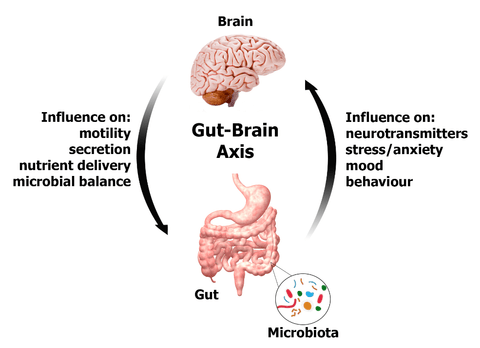
A growing body of evidence point toward the bidirectional gut microbiota-brain axis playing a role in mental health.

Most of this research is conducted on animals.

In this review the researchers summarise and comment upon recent studies evaluating the gut microbiome in mental health in humans.

Further support for the relevance of the bidirectional gut microbiota-brain communication in mood disorders has been presented, such as the effect of probiotics on brain connectivity and mental health outcomes and pregnancy related stress on gut microbiota in the newborn child.

However, the heterogeneity between studies precludes conclusions regarding differences in microbiota composition in mental disease and health and many of the studies are limited by a cross-sectional design, small sample sizes and multiple comparisons.

Thus, well-designed longitudinal studies with larger sample size, accounting for confounders are needed.

Reference

Jarbrink-Sehgal, E. & Andreasson, A. (2020) The gut microbiota and mental health in adults. Current Opinion in Neurobiology. 62, pp.102-114. doi: 10.1016/j.conb.2020.01.016. Epub 2020 Mar 9.

Can Participation in HIIT Improve Cognitive Function & Mental Health in Children & Adolescents?

Research Paper Title

Review of High-Intensity Interval Training for Cognitive and Mental Health in Youth.

Background

High-intensity interval training (HIIT) has emerged as a time-efficient strategy to improve children’s and adolescents’ health-related fitness in comparison to traditional training methods. However, little is known regarding the effects on cognitive function and mental health.

Therefore, the aim of this systematic review was to evaluate the effect of HIIT on cognitive function (basic information processing, executive function) and mental health (well-being, ill-being) outcomes for children and adolescents.

Methods

A systematic search was conducted, and studies were eligible if they:

  1. Included a HIIT protocol;
  2. Examined cognitive function or mental health outcomes; and
  3. Examined children or adolescents (5-18 years) old.

Separate meta-analyses were conducted for acute and chronic studies, with potential moderators (i.e. study duration, risk of bias, participant age, cognitive demand, and study population) also explored.

Results

A total of 22 studies were included in the review. In acute studies, small to moderate effects were found for executive function (standardised mean difference [SMD], 0.50, 95% confidence interval [CI], 0.03-0.98; P = 0.038) and affect (SMD, 0.33; 95% CI, 0.05-0.62; P = 0.020), respectively. For chronic studies, small significant effects were found for executive function (SMD, 0.31; 95% CI, 0.15-0.76, P < 0.001), well-being (SMD, 0.22; 95% CI, 0.02-0.41; P = 0.029), and ill-being (SMD, -0.35; 95% CI, -0.68 to -0.03; P = 0.035).

Conclusions

The review provides preliminary review evidence suggesting that participation in HIIT can improve cognitive function and mental health in children and adolescents.

Because of the small number of studies and large heterogeneity, more high-quality research is needed to confirm these findings.

Reference

Leahy, A.A., Mavilidi, M.F., Smith, J.J., Hillman, C.H., Eather, N., Barker, D. & Lubans, D.R. (2020) Review of High-Intensity Interval Training for Cognitive and Mental Health in Youth.

On This Day … 03 November

People (Deaths)

  • 1957 – Wilhelm Reich, Ukrainian-Austrian psychotherapist and author (b. 1897).

Wilhelm Reich

Wilhelm Reich (24 March 1897 to 03 November 1957) was an Austrian doctor of medicine and psychoanalyst, a member of the second generation of analysts after Sigmund Freud. The author of several influential books, most notably Character Analysis (1933), The Mass Psychology of Fascism (1933), and The Sexual Revolution (1936), Reich became known as one of the most radical figures in the history of psychiatry.

Reich’s work on character contributed to the development of Anna Freud’s The Ego and the Mechanisms of Defence (1936), and his idea of muscular armour – the expression of the personality in the way the body moves – shaped innovations such as body psychotherapy, Gestalt therapy, bioenergetic analysis and primal therapy. His writing influenced generations of intellectuals; he coined the phrase “the sexual revolution” and according to one historian acted as its midwife. During the 1968 student uprisings in Paris and Berlin, students scrawled his name on walls and threw copies of The Mass Psychology of Fascism at police.

After graduating in medicine from the University of Vienna in 1922, Reich became deputy director of Freud’s outpatient clinic, the Vienna Ambulatorium. Described by Elizabeth Danto as a large man with a cantankerous style who managed to look scruffy and elegant at the same time, he tried to reconcile psychoanalysis with Marxism, arguing that neurosis is rooted in sexual and socio-economic conditions, and in particular in a lack of what he called “orgastic potency”. He visited patients in their homes to see how they lived, and took to the streets in a mobile clinic, promoting adolescent sexuality and the availability of contraceptives, abortion and divorce, a provocative message in Catholic Austria. He said he wanted to “attack the neurosis by its prevention rather than treatment”.

From the 1930s he became an increasingly controversial figure, and from 1932 until his death in 1957 all his work was self-published. His message of sexual liberation disturbed the psychoanalytic community and his political associates, and his vegetotherapy, in which he massaged his disrobed patients to dissolve their “muscular armour”, violated the key taboos of psychoanalysis. He moved to New York in 1939, in part to escape the Nazis, and shortly after arriving coined the term “orgone” – from “orgasm” and “organism” – for a biological energy he said he had discovered, which he said others called God. In 1940, he started building orgone accumulators, devices that his patients sat inside to harness the reputed health benefits, leading to newspaper stories about sex boxes that cured cancer.

Following two critical articles about him in The New Republic and Harper’s in 1947, the US Food and Drug Administration obtained an injunction against the interstate shipment of orgone accumulators and associated literature, believing they were dealing with a “fraud of the first magnitude”. Charged with contempt in 1956 for having violated the injunction, Reich was sentenced to two years imprisonment, and that summer over six tons of his publications were burned by order of the court. He died in prison of heart failure just over a year later, days before he was due to apply for parole.

Is there a Relationship between Diet & Mental Health in Children & Adolescents?

Research Paper Title

Relationship between diet and mental health in children and adolescents: a systematic review.

Background

The researchers systematically reviewed 12 epidemiological studies to determine whether an association exists between diet quality and patterns and mental health in children and adolescents; 9 explored the relationship using diet as the exposure, and 3 used mental health as the exposure.

They found evidence of a significant, cross-sectional relationship between unhealthy dietary patterns and poorer mental health in children and adolescents.

They observed a consistent trend for the relationship between good-quality diet and better mental health and some evidence for the reverse.

When including only the 7 studies deemed to be of high methodological quality, all but 1 of these trends remained.

Findings highlight the potential importance of the relationship between dietary patterns or quality and mental health early in the life span.

Reference

O’Neil, A., Quirk, S.E., Housden, S.E.Q., Brennan, S.L., Williams, L.J., Pasco, J.A., Berk. M. & Jacka, F.N. (2020) Relationship between diet and mental health in children and adolescents: a systematic review. American Journal of Public Health. 104(10), pp.e31-42. doi: 10.2105/AJPH.2014.302110.

What does mental health have to do with well-being?

Research Paper Title

What does mental health have to do with well-being?

Background

Positive mental health involves not the absence of mental disorder but rather the presence of certain mental goods.

Institutions, practitioners, and theorists often identify positive mental health with well-being.

There are strong reasons, however, to keep the concepts of well-being and positive mental health separate.

Someone with high positive mental health can have low well-being, someone with high well-being can have low positive mental health, and well-being and positive mental health sometimes conflict.

But, while positive mental health and well-being are not identical, there is an informative conceptual connection between them.

Positive mental health usually contributes instrumentally to the living of a good human life, where a good human life includes (but is not limited to) well-being.

Reference

Keller, S. (2020) What does mental health have to do with well-being? Bioethics. 34(3), pp.228-234. doi: 10.1111/bioe.12702. Epub 2019 Nov 29.