Posts

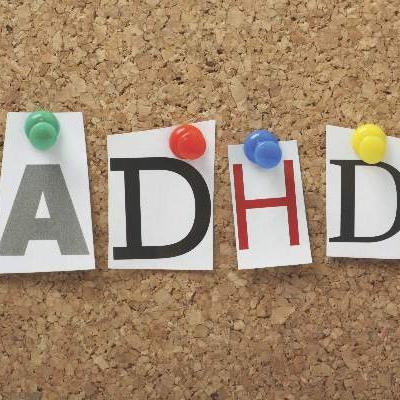
Can Swimming Improve Mental Health in Children with ADHD?

Research Paper Title

Swimming training improves mental health parameters, cognition and motor coordination in children with Attention Deficit Hyperactivity Disorder.

Background

The aim of this study was to verify the effects of swimming-learning programme of mental health parameters, cognition and motor coordination in students with Attention Deficit Hyperactivity Disorder (ADHD).

Methods

Thirty-three children of both sexes between 11 and 14 years were randomised into trained group (n = 18) and untrained group (n = 15).

The training was performed for 8 weeks.

Then, before and after 48 hours of training period of both groups were submitted to find the mental health, cognition, motor coordination test, and physical fitness.

Results

The results demonstrate that the aquatic exercise programme significantly improved the depression parameters (p = 0.048), stress (p = 0.039), cognitive flexibility (p = 0.042) and selective attention (p = 0.047).

In relation to motor coordination and physical fitness, the results showed significant improvements in the coordination of lower limbs laterality (p = 0.05), flexibility (p = 0.049), and abdominal resistance (p = 0.037).

Conclusions

Taken together, the results suggest that swimming-learning programme significantly improved the mental health, cognition, and motor coordination in children with ADHD.

Reference

Da Silva, L.A., Doyenart, R., Salvan, P.H., Rodrigues, W., Lopes, J.F., Gomes, K., Thirupathi, A., De Pinho, R.A. & Silveira, P.C. (2020) Swimming training improves mental health parameters, cognition and motor coordination in children with Attention Deficit Hyperactivity Disorder. International Journal of Environmental Health Research. 30(5), pp.584-592. doi: 10.1080/09603123.2019.1612041. Epub 2019 May 13.

Book: Clean – Overcoming Addiction And Ending America’s Greatest Tragedy

Book Title:

Clean – Overcoming Addiction And Ending America’s Greatest Tragedy.

Author(s): David Sheff.

Year: 2014.

Edition: First (1st).

Publisher: Houghton Mifflin Harcourt.

Type(s): hardcover, Paperback, and Audiobook.

Synopsis:

Addiction is a preventable, treatable disease, not a moral failing.

As with other illnesses, the approaches most likely to work are based on science – not on faith, tradition, contrition, or wishful thinking. These facts are the foundation of Clean.

The existing addiction treatments, including Twelve Step programmes and rehabs, have helped some, but they have failed to help many more.

To discover why, David Sheff spent time with scores of scientists, doctors, counsellors, and addicts and their families, and explored the latest research in psychology, neuroscience, and medicine.

In Clean, he reveals how addiction really works, and how we can combat it.

Book: The CBT Workbook for Perfectionism

Book Title:

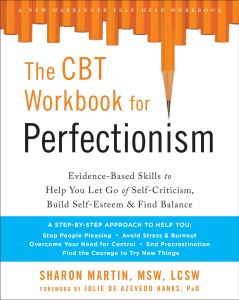
The CBT Workbook for Perfectionism – Evidence-Based Skills to Help You Let Go of Self-Criticism.

Author(s): Sharon Martin.

Year: 2019.

Edition: First (1st).

Publisher: New Harbinger.

Type(s): Paperback and Kindle.

Synopsis:

If you feel an intense pressure to be perfect, this evidence-based workbook offers real strategies based in cognitive-behavioural therapy (CBT) to help you develop a more balanced and healthy perspective.

Do you hold yourself-and perhaps others-to extremely high standards? Do you procrastinate certain tasks because you are afraid you will not carry them out perfectly? If you have answered “yes” to one or both of these questions, chances are you are a perfectionist. And while there’s nothing wrong with hard work and high standards, perfectionism can also take over your life if you let it. So, how can you find balance?

With this workbook, you will identify the causes of your perfectionism and the ways it is negatively impacting your life. Rather than measuring your self-worth by productivity and accomplishments, you will learn to exercise self compassion, and extend that compassion to others. You will also learn ways to prioritise the things that really matter to you, without focusing on attaining fixed goals.

Book: Borderline Personality Disorder

Book Title:

Borderline Personality Disorder.

Author(s): Jon Power.

Year: 2020.

Edition: First (1st).

Publisher: Rdl Publishing Ltd.

Type(s): Hardcover, Paperback, Audiobook, and Kindle.

Synopsis:

BPD is also referred to as biosocial disorder among experts. This means that this disorder often starts with an inclination towards biological factors but is then intensified by the social environment of an individual.

By temperament, the people with BPD often are intensely emotionally sensitive and very reactive. This is because they tend to feel things immediately and intensely as opposed to other people. Once their powerful and intense emotions have been triggered, it takes them a very long duration to get back to the emotional baseline.

It is important to note that when these emotionally vulnerable people are confronted by their surroundings because they cannot validate their feelings, they develop BPD. In other words, they feel as though the people around them do not fully understand and acknowledge them as they are enough to help them handle their condition. In most cases, children who develop BPD have been shown to suffer abuse and neglect. Additionally, BPD also arises in children whose parents or guardians – well-meaning and loving – reduce their emotional feelings too much because they think that they are inappropriate or exaggerated.

This book covers the following topics:

  • What is borderline personality disorder?
  • Symptoms of Borderline Personality Disorder.
  • Using mindfulness to manage emotions.
  • Epidemiology, Factors of Borderline Personality Disorder.
  • Diagnosis of the Disorder.
  • Treatment and Medication.
  • Practicing Mindfulness.
  • Building a Coping Skills Toolkit.
  • How to improve social relationships.
  • How to End Anxiety.
  • What Does It Mean to Rewire Your Brain?
  • How to Overcome Panic Thoughts.

To be fair, it is typical for most parents to overreact and dismiss their children’s emotional feelings. However, when it comes to children who are highly reactive, feeling that they are not understood or supported by the people that mean the world to them often is painful. It is this kind of response that often cause them to withdraw from their parents to the level that their relationship is completely disconnected.

One thing that is important to note is that when a child’s feelings are not validated by their parents or someone that they look up to in life, it makes it hard for them to learn how to manage their condition in a very healthy way. The truth is that, it is the adult’s/parent’s responsibility to help their children identify and name their feelings. When they soothe what their children feel, they teach them how to soothe and calm themselves down better whenever they are alone.

Let us consider an instance where someone has intensely strong emotions and is constantly overreacting. Is this how they should feel on a daily basis? Well, this is no way for anyone to feel this way. But when they don’t get the support they need; this kind of reaction becomes something ongoing that they don’t even know how to regulate or modulate their emotional feelings.

What you will note about people with BPD is that they are often overwhelmed by feelings of intense anger, emptiness, self-loathing, shame, and abandonment among others. It is these kinds of feelings that causes their relationships to be quite unstable – hence causing them to be prone to interpreting things negatively.

Book: Bipolar Disorder – WPA Series Evidence and Experience in Psychiatry

Book Title:

Bipolar Disorder – WPA Series Evidence and Experience in Psychiatry: Volume 05.

Author(s): Mario Maj, Hagop S. Akiskal, Juan Jose Lopez-Ibor, and Norman Sartorius.

Year: 2002.

Edition: First (1st).

Publisher: Wiley.

Type(s): Hardcover and Kindle.

Synopsis:

Bipolar disorder is a mental disorder involving episodes of serious mania and depression and affects approximately one to three percent of the population.

Mario Maj provides an overview of recent research progress on the condition.

Book: The ADHD Explosion

Book Title:

The ADHD Explosion: Myths, Medication, Money, and Today’s Push for Performance.

Author(s): Stephen P. Hinshaw and Richard M. Scheffler.

Year: 2014.

Edition: First (1st).

Publisher: Oxford University Press.

Type(s): Hardcover and Kindle.

Synopsis:

Attention-deficit/hyperactivity disorder (ADHD) is one of the most controversial and misunderstood medical conditions today.

With skyrocketing rates of diagnosis and medication treatment, it has generated a firestorm of controversy.

Alarming questions have been raised about ADHD in recent years:

  • Why are over 10% of children and adolescents in the US now diagnosed with ADHD, with projected rates quickly rising?
  • Why do over two-thirds of those diagnosed with ADHD receive medication?
  • In some southern states, why are boys diagnosed at rates of almost one in three?
  • What is causing the fast-rising diagnosis and medication of adults? Why are over a quarter of all college students using stimulants for academic performance?
  • What drives the current ADHD “tsunami” – is it parents, clinicians, schools, culture, the healthcare system, or Big Pharma? When will it end?
  • Can we trust the stories we read and hear about ADHD, even in major media outlets?

The ADHD Explosion and Today’s Push for Performance uniquely blends clinical wisdom, current science, new information on medical and school policy, and global trends to debunk myths and set the record straight.

Hinshaw and Scheffler describe the origins of ADHD and its huge costs to society; the science regarding causes as well as medication and behavioural treatment; and the major variation in diagnosis and treatment across the US, highlighting the key roles of educational policy and high-stakes testing. Dealing directly with stimulants as “smart pills,” they describe the epidemic of medicalisation, arguing that accurate diagnosis and well-monitored care could ease the staggering economic burden linked to ADHD.

In novel ways, they unravel the many poignant issues facing children, teachers, clinicians, and family members who contend with ADHD each day. The recommendations in this book can improve the quality of life for those touched by ADHD and potentially improve the productivity and safety of all society.

Dogs of War Reality TV Series Overview

Introduction

Veterans struggling with PTSD are paired with service dogs as they undergo rehabilitation.

Outline

Man’s best friend is living up to its moniker in this docuseries. It presents stories of shelter dogs trained to help veterans suffering from post-traumatic stress disorder re-acclimate to civilian life.

Each hourlong episode chronicles the rigorous process involved with pairing a vet with a service dog, an emotional journey whereby a suffering person and an abandoned dog come together to help each other.

Facilitating the unions is Paws and Stripes, the brainchild of Lindsey Stanek. Her husband, Jim – a retired US Army staff sergeant who served three tours in Iraq – suffered from severe PTSD before visits with a service dog helped him relax.

Inspired by his experience, and motivated by her love of dogs and country, Lindsey created the non-profit organisation that allows veterans to participate at no cost.

Dogs of War Series

The links take you to our sister website ‘MilitaryGogglebox.com’.

Production & Filming Details

  • Director(s):
    • Peter LoGreco … (2 episodes, 2014).
  • Producer(s):
    • Peter LoGreco … executive producer (5 episodes, 2014).
    • Kurt Schemper … supervising producer (5 episodes, 2014).
    • Ashley York … producer (5 episodes, 2014).
    • Erik Christensen … senior producer / Senior Producer / producer (4 episodes, 2014).
    • Joe Makdisi … associate story producer (4 episodes, 2014).
    • Ben Bloodwell … field producer (2 episodes, 2014).
    • Sandra C. Alvarez … producer (1 episode, 2014).
    • Joel Nassan … field producer (1 episode, 2014).
    • Christopher Burke … executive producer (unknown episodes).
    • Jared Cotton … executive producer (unknown episodes).
    • Steve Stockman … executive producer (unknown episodes).
  • Writer(s):
  • Music:
    • Christian Lundberg … (5 episodes, 2014).
  • Cinematography:
    • Ben Bloodwell … (4 episodes, 2014).
  • Editor(s):
    • Erik Christensen … (5 episodes, 2014).
    • Doyle Esch … (3 episodes, 2014).
  • Production: Custom Productions and Redtail Media.
  • Distributor(s): A+E Networks.
  • Release Date: 11 November 2014 to 07 December 2014.
  • Running Time: 60 minutes.
  • Rating: PG.
  • Country: US.
  • Language: English.

Video Link

On This Day … 09 November

People (Births)

  • 1939 – Paul Cameron, American psychologist and academic.

People (Deaths)

  • 2002 – William Schutz, American psychologist and academic (b. 1925).

Paul Cameron

Paul Drummond Cameron (born 09 November, 1939) is an American psychologist. Cameron has been designated by the Southern Poverty Law Centre as an anti-gay extremist.

While employed at various institutions, including the University of Nebraska, he conducted research on passive smoking, but he is best known today for his claims about homosexuality. After a successful 1982 campaign against a gay rights proposal in Lincoln, Nebraska, he established the Institute for the Scientific Investigation of Sexuality (ISIS), now known as the Family Research Institute (FRI). As FRI’s chairman, Cameron has written contentious papers asserting associations between homosexuality and the perpetration of child sexual abuse and reduced life expectancy. These have been heavily criticised by others in the field.

In 1983, the American Psychological Association expelled Cameron for non-cooperation with an ethics investigation. Position statements issued by the American Sociological Association, Canadian Psychological Association, and the Nebraska Psychological Association accuse Cameron of misrepresenting social science research.

William Schutz

William Schutz (19 December 1925 to 09 November 2002) was an American psychologist.

Schutz was born in Chicago, Illinois. He practiced at the Esalen Institute in the 1960s. He later became the president of BConWSA International. He received his PhD from UCLA. In the 1950s, he was part of the peer-group at the University of Chicago’s Counselling Centre that included Carl Rogers, Thomas Gordon, Abraham Maslow and Elias Porter. He taught at Tufts University, Harvard University, University of California, Berkeley and the Albert Einstein College of Medicine, and was chairman of the holistic studies department at Antioch University until 1983.

In 1958, Schutz introduced a theory of interpersonal relations he called Fundamental Interpersonal Relations Orientation (FIRO). According to the theory three dimensions of interpersonal relations were deemed to be necessary and sufficient to explain most human interaction: Inclusion, Control and Affection. These dimensions have been used to assess group dynamics.

Schutz also created FIRO-B, a measurement instrument with scales that assess the behavioural aspects of the three dimensions. His advancement of FIRO Theory beyond the FIRO-B tool was most obvious in the change of the “Affection” scale to the “Openness” scale in the “FIRO Element-B”. This change highlighted his newer theory that behaviour comes from feelings (“FIRO Element-F”) and the self-concept (“FIRO Element-S”). “Underlying the behaviour of openness is the feeling of being likable or unlikeable, lovable or unlovable. I find you likable if I like myself in your presence, if you create an atmosphere within which I like myself.”

W. Schutz authored more than ten books and many articles. His work was influenced by Alexander Lowen, Ida Pauline Rolf and Moshe Feldenkrais. As a body therapist he led encounter group workshops focussing on the underlying causes of illnesses and developing alternative body-centred cures. His books, “Profound Simplicity” and “The Truth Option,” address this theme. He brought new approaches to body therapy that integrated truth, choice (freedom), (self) responsibility, self-esteem, self-regard and honesty into his approach.

In his books one encounters the concept of energy cycles (e.g. Schutz 1979) which a person goes through or call for completion. The single steps of the energy cycles are: motivation – prepare – act – feel.

Schutz died at his home in Muir Beach, California in 2002.

Clinically Rated Semi-Structured Interviews: An Alternative Gold Standard?

Research Paper Title

Validating mental health assessment in Kenya using an innovative gold standard.

Background

With the growing burden of mental health disorders worldwide, alongside efforts to expand availability of evidence-based interventions, strategies are needed to ensure accurate identification of individuals suffering from mental disorders.

Efforts to locally validate mental health assessments are of particular value, yet gold-standard clinical validation is costly, time-intensive, and reliant on available professionals.

This study aimed to validate assessment items for mental distress in Kenya, using an innovative gold standard and a combination of culturally adapted and locally developed items.

Methods

The mixed-method study drew on surveys and semi-structured interviews, conducted by lay interviewers, with 48 caregivers.

Interviews were used to designate mental health “cases” or “non-cases” based on emotional health problems, identified through a collaborative clinical rating process with local input.

Results

Individual mental health survey items were evaluated for their ability to discriminate between cases and non-cases.

Discriminant survey items included 23 items adapted from existing mental health assessment tools, as well as 6 new items developed for the specific cultural context.

When items were combined into a scale, results showed good psychometric properties.

Conclusions

The use of clinically rated semi-structured interviews provides a promising alternative gold standard that can help address the challenges of conducting diagnostic clinical validation in low-resource settings.

Reference

Watson, L>K., Kaiser, B.N., Giusto, A.M., Ayuku, D. & Puffer, E.S. (2020) Validating mental health assessment in Kenya using an innovative gold standard. International Journal of Psychology. 55(3), pp.425-434. doi: 10.1002/ijop.12604. Epub 2019 Jun 17.