Posts

Could Programmes to Improve Mental Health Literacy Facilitate Formal as well as Informal Help-seeking among Unemployed Persons with Mental Health Problems?

Research Paper Title

Mental health literacy and help-seeking among unemployed people with mental health problems.

Background

Unemployed people with mental health problems often do not use available mental health services.

Help-seeking may depend on knowledge, recognition and attitudes associated with mental health – a concept referred to as mental health literacy (MHL).

Therefore the aim of this study was to investigate the influence of MHL on help-seeking intentions and behaviours among unemployed individuals with mental health problems.

Methods

A total of 301 unemployed individuals with mental health problems were recruited mainly from employment agencies in Southern Germany.

MHL was assessed by the Mental Health Knowledge Schedule (MAKS), the Depression Literacy Scale (DLS), and the Depression with Suicidal Thoughts Vignette.

Help-seeking intentions and behaviours were measured using the General Help-Seeking Questionnaire (GHSQ).

Associations between MHL and help-seeking intentions and behaviours were tested using regression analyses and structural equation modelling (SEM).

Results

All three MHL scales were significantly positively associated with help-seeking intentions and behaviors.

In their SEM model, greater MHL was significantly associated with increased intentions and behaviours to seek help from health professionals (formal help) and from family and friends (informal help).

Conclusions

Among unemployed persons with mental health problems, programmes to improve MHL could facilitate formal as well as informal help-seeking.

Future research should examine the efficacy of MHL-interventions to increase help-seeking.

Reference

Waldmann, T., Staiger, T., Oexle, N. & Rusch, N. (2020) Mental health literacy and help-seeking among unemployed people with mental health problems. Journal of Mental Health (Abingdon, England). 29(3), pp.270-276. doi: 10.1080/09638237.2019.1581342. Epub 2019 Mar 12.

Is Having a Mental Health Disorder Associated with Spending More on other Medical Conditions?

Research Paper Title

Association of Mental Health Disorders With Health Care Spending in the Medicare Population.

Background

The degree to which the presence of mental health disorders is associated with additional medical spending on non-mental health conditions is largely unknown.

Therefore, the purpose of this study was to determine the proportion and degree of total spending directly associated with mental health conditions vs spending on other non-mental health conditions.

Methods

This retrospective cohort study of 4 358 975 fee-for-service Medicare beneficiaries in the US in 2015 compared spending and health care utilisation among Medicare patients with serious mental illness (SMI; defined as bipolar disease, schizophrenia or related psychotic disorders, and major depressive disorder), patients with other common mental health disorders (defined as anxiety disorders, personality disorders, and post-traumatic stress disorder), and patients with no known mental health disorders. Data analysis was conducted from February to October 2019.

Exposure: Diagnosis of an SMI or other common mental health disorder.

Main outcomes and measures: Risk-adjusted, standardised spending and health care utilisation. Multi-variable linear regression models were used to adjust for patient characteristics, including demographic characteristics and other medical co-morbidities, using hospital referral region fixed effects.

Results

Of 4,358,975 Medicare beneficiaries, 987,379 (22.7%) had an SMI, 326,991 (7.5%) had another common mental health disorder, and 3,044,587 (69.8%) had no known mental illness.

Compared with patients with no known mental illness, patients with an SMI were younger (mean [SD] age, 72.3 [11.6] years vs 67.4 [15.7] years; P < .001) and more likely to have dual eligibility (633 274 [20.8%] vs 434 447 [44.0%]; P < .001).

Patients with an SMI incurred more mean (SE) spending on mental health services than those with other common mental health disorders or no known mental illness ($2024 [3.9] vs $343 [6.2] vs $189 [2.1], respectively; P < .001).

Patients with an SMI also had substantially higher mean (SE) spending on medical services for physical conditions than those with other common mental health disorders or no known mental illness ($17 651 [23.6] vs $15 253 [38.2] vs $12 883 [12.8], respectively; P < .001), reflecting $4768 (95% CI, $4713-$4823; 37% increase) more in costs for patients with an SMI and $2370 (95% CI, $2290-$2449; 18.4% increase) more in costs for patients with other common mental health disorders.

Among Medicare beneficiaries, $2,686,016,110 of $64,326,262,104 total Medicare spending (4.2%) went to mental health services and an additional $5,482,791,747 (8.5%) went to additional medical spending associated with mental illness, representing a total of 12.7% of spending associated with mental health disorders.

Conclusions

In this study, having a mental health disorder was associated with spending substantially more on other medical conditions.

These findings quantify the extent of additional spending in the Medicare fee-for-service population associated with a diagnosis of a mental health disorder.

Reference

Figueroa, J.F., Phelan, J., Orav, E.J., Patel, V. & Jha, A.K. (2020) Association of Mental Health Disorders With Health Care Spending in the Medicare Population. JAMA Network Open. 3(3):e201210. doi: 10.1001/jamanetworkopen.2020.1210.

Linking Prenatal Antidepressant Use & Risk of Adverse Neonatal Outcomes

Depression is common among pregnant women and, untreated, is associated with morbidity in both mother and child.

But what about the risks of treatment?

A large database study from the US, with information on the timing, dose, and type of antidepressant treatment in pregnancy, identifies a dose dependent increase in risk for newborn respiratory distress and a small increase in risk of preterm birth in those taking higher doses.

CBT: Is It Remotely Effective!

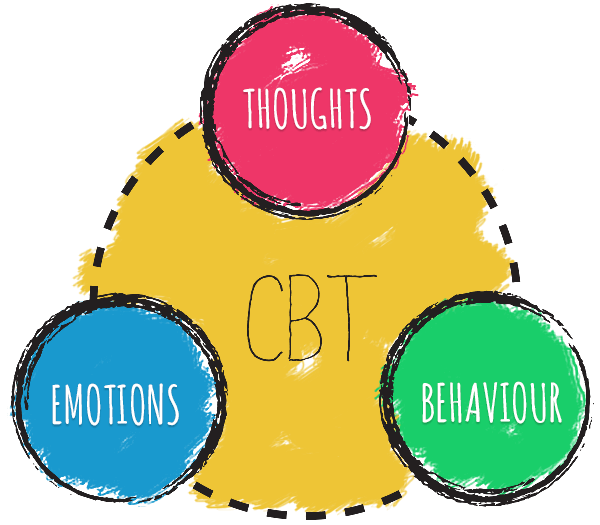
Perhaps because cognitive behavioural therapy (CBT) is effective in such a wide range of conditions, availability is often limited.

However, it is beginning to look as if CBT works equally well when delivered remotely.

In a three month trial in a primary care setting in Sweden, internet delivered CBT was no worse than face-to-face CBT for patients with high levels of anxiety about their health.

Regardless of how it was delivered, CBT produced benefits not only for hypochondriasis but for general anxiety and depression too.

What is the Current Situation School Mental Health in ASEAN Countries?

Research Paper Title

Current Situation and Comparison of School Mental Health in ASEAN Countries.

Background

School-based mental health interventions are considered to have potential for the promotion of mental health in developing countries.

The researchers held a workshop to discuss the promotion of mental health in schools in southeast Asian countries.

This review report aimed to summarise the current situation of school mental health in Association of Southeast Asian Nations (ASEAN) countries as reported by their representatives in this workshop.

Methods

To summarise the current situation of ASEAN countries in relation to school mental health, the researchers qualitatively analysed the content of the discussions from four perspectives:

  1. Laws and regulations;
  2. Mental health services;
  3. Teacher training on mental health; and
  4. Mental health education for students.

Results

With regard to school mental health laws and regulations, this report could not provide clear conclusions because the laws were reported through the personal understanding of the public officers.

The results show that mental health services in schools are centred on professionals such as guidance counsellors, although the coverage varied among the different ASEAN countries.

Conclusions

Only Singapore conducted mental health training for teachers in a comprehensive way, and the number of people who were actually trained in other countries was very limited.

Cambodia, Malaysia, Myanmar, Philippines, Singapore, and Thailand included mental health education for students in health education or life skills subjects.

Reference

Nishio, A., Kakimoto, M., Bermardo, T.M.S. & Kobayashi, J. (2020) Current Situation and Comparison of School Mental Health in ASEAN Countries. Pediatrics International: Official Journal of the Japan Pediatrics Society. 62(4), pp.438-443. doi: 10.1111/ped.14137.

Psychological Distress & Loneliness

In a survey of almost 1,500 US adults, McGinty and colleagues (2020) studied levels of psychological distress using the Kessler scale and levels of loneliness.

They compared the distress levels with national data from 2018. In 2018, the prevalence of serious psychological distress was 3.9%. In April 2020 it was 13.6%.

The authors note a worrying implication of these findings – that, since the Kessler scale is predictive of serious mental illness, the distress during the pandemic could transfer to longer term psychiatric disorders.

This is not outside the realms of possibility, especially since the social and economic impact of the pandemic is expected to be felt for years to come.

The authors should be commended both for their methodology and for their upfront discussion of its limitations – namely the potential for sampling bias.

People might have been more likely to respond to such a survey in April 2020 compared with 2018; therefore, the 2020 figures could be an overestimate.

Reference

McGinty, E.E., Presskreischer, R., Han, H. & Barry, C.L. (2020) Psychological Distress and Loneliness Reported by US Adults in 2018 and April 2020. JAMA. 324(1), pp.93-94. doi:10.1001/jama.2020.9740.

How Mental Health Services are Adapting to Provide Care in the Pandemic

Emma Wilkinson, writing in the British Medical Journal (BMJ), talks to healthcare workers who are trying to ensure that vulnerable psychiatric patients do not get sidelined by covid-19 and finds that some changes may become permanent.

As the NHS rapidly ramped up critical care capacity to deal with the surge of severely ill covid-19 patients, other specialties quickly had to rethink how to manage routine care while
avoiding face-to-face contact with patients when possible. For mental health services this has meant a host of changes, the biggest being the rapid adoption of video and phone
consultations – an approach that had rarely been used in a field where relationships and trust between clinicians and patients are vital, and where body language and eye contact are a key part of assessment.

You can read the rest of the article @ https://www.bmj.com/content/bmj/369/bmj.m2106.full.pdf.

Reference

Wilkinson, E. (2020) How Mental Health Services are Adapting to Provide Care in the Pandemic. BMJ 2020;369:m2106.

What is the Role of Telehealth in Reducing the Mental Health Burden from COVID-19?

Research Paper Title

The Role of Telehealth in Reducing the Mental Health Burden from COVID-19.

Background

The psychological impact of the coronavirus disease 2019 (COVID-19) pandemic must be recognized alongside the physical symptoms for all those affected. Telehealth, or more specifically telemental health services, are practically feasible and appropriate for the support of patients, family members, and health service providers during this pandemic. As of March 18, 2020, there were >198,000 COVID-19 infections recorded globally, and 7,900 deaths. Psychological symptoms relating to COVID-19 have already been observed on a population level including anxiety-driven panic buying and paranoia about attending community events. Students, workers, and tourists who have been prevented from accessing their training institutions, workplaces, homes, respectively, are expected to have developed psychological symptoms due to stress and reduced autonomy and concerns about income, job, security, and so on. The Chinese, Singaporean, and Australian governments have highlighted the psychological side effects of COVID-19, and have voiced concerns regarding the long-term impacts of isolation and that the fear and panic in the community could cause more harm than COVID-19.

In the absence of a medical cure for COVID-19, the global response is a simple public health strategy of isolation for those infected or at risk, reduced social contact to slow the spread of the virus, and simple hygiene such as hand washing to reduce the risk of infection. While the primary intervention of isolation may well achieve its goals, it leads to reduced access to support from family and friends, and degrades normal social support systems and causes loneliness, and is a risk for worsening anxiety and depressive symptoms. If left untreated, these psychological symptoms may have long-term health effects on patients and require treatment adding to the cost burden of managing the illness. Clinical and nonclinical staff are also at risk of psychological distress as they are expected to work longer hours with a high risk of exposure to the virus. This may also lead to stress, anxiety, burnout, depressive symptoms, and the need for sick or stress leave, which would have a negative impact on the capacity of the health system to provide services during the crisis.

Treatment protocols for people with COVID-19 should address both the physiological and psychological needs of the patients and health service providers. Providing psychological treatment and support may reduce the burden of comorbid mental health conditions and ensure the well-being of those affected. Our challenge is to provide mental health services in the context of patient isolation, which highlights the role of telehealth (through videoconference, e-mail, telephone, or smartphone apps). The provision of mental health support (especially through telehealth) will likely help patients maintain psychological well-being and cope with acute and post-acute health requirements more favourably.

Examples of and evidence to support the effectiveness of telemental health are fairly diverse, especially in the context of depression, anxiety, and PTSD. Videoconferencing, online forums, smartphone apps, text-messaging, and e-mails have been shown to be useful communication methods for the delivery of mental health services.

China is actively providing various telemental health services during the outbreak of COVID-19. These services are from government and academic agencies and include counseling, supervision, training, as well as psychoeducation through online platforms (e.g., hotline, WeChat, and Tencent QQ). Telemental health services have been prioritised for people at higher risk of exposure to COVID-19, including clinicians on the frontline, patients diagnosed with COVID-19 and their families, policemen, and security guards. Early reports also showed how people in isolation actively sought online support to address mental health needs, which demonstrated both a population interest and acceptance of this medium.

Additional telehealth services have been previously funded by the Australian Government (Better Access Initiative programme), to address mental health needs of rural and remote patients during emergency situations, such as long-term drought and bushfires. In response to COVID-19, the Australian Government has responded with additional funded services through the Medicare Benefits Schedule, enabling a greater range of telehealth services to be delivered, including telehealth consultations with general practitioners and specialists. However, the expanded telehealth programme is restricted to special needs groups and the wider population does not have access to the programme. A major benefit of expanding telehealth, including mental health, with no restrictions would reduce person-to-person contact between health service providers and COVID-19 and reduce the risk of exposure of non-infected but susceptible patients in waiting room areas. To date, most of the Australian Government’s focus has been on managing medical needs of people during the epidemic, rather than providing resources to meet short- and long-term mental health implications. An expansion of access to telemental health support services with a focused public education campaign to promote these services would begin to address this need.

Communication of all health needs is important when patients are having to be isolated. The researchers support the use of telehealth as a valuable way of supporting both physical and psychosocial needs of all patients irrespective of geographical location. Simple communication methods such as e-mail and text messaging should be used more extensively to share information about symptoms of burnout, depression, anxiety, and PTSD during COVID-19, to offer cognitive and/or relaxation skills to deal with minor symptoms, and to encourage access to online self-help programmes. For people with COVID-19, telehealth can be used to monitor symptoms and also to provide support when needed.

While there is growing awareness of mortality rates associated with COVID-19, we should also be cognisant of the impact on mental health – both on a short- and a long-term basis. Telemental health services are perfectly suited to this pandemic situation – giving people in remote locations access to important services without increasing risk of infection.

Reference

Zhou, X., Snoswell,, C.L., Harding, L.E., Bambling, M., Edirippulige, S., Bai, X. & Smith, A.C. (2020) The Role of Telehealth in Reducing the Mental Health Burden from COVID-19. Telemedicine and e-Health. 26(4). https://doi.org/10.1089/tmj.2020.0068.

A Statement on the Mental Health Issues and Psychological Factors in Athletes

Research Paper Title

Mental Health Issues and Psychological Factors in Athletes: Detection, Management, Effect on Performance and Prevention: American Medical Society for Sports Medicine Position Statement-Executive Summary.

Background

The American Medical Society for Sports Medicine convened a panel of experts to provide an evidence-based, best practices document to assist sports medicine physicians and other members of the athletic care network with the detection, treatment and prevention of mental health issues in competitive athletes.

This statement discusses how members of the sports medicine team, including team physicians, athletic trainers and mental health providers, work together in providing comprehensive psychological care to athletes.

It specifically addresses psychological factors in athletes including personality issues and the psychological response to injury and illness.

The statement also examines the athletic culture and environmental factors that commonly impact mental health, including sexuality and gender issues, hazing, bullying, sexual misconduct and transition from sport.

Specific mental health disorders in athletes, such as eating disorders/disordered eating, depression and suicide, anxiety and stress, overtraining, sleep disorders and attention-deficit/hyperactivity disorder, are reviewed with a focus on detection, management, the effect on performance and prevention.

This document uses the Strength of Recommendation Taxonomy to grade level of evidence.

Reference

Chang, C., Putukian, M., Aerni, G., Diamond, A., Hong, G., Ingram, Y., Reardon, C.L. & Wolanin, A. (2020) Mental Health Issues and Psychological Factors in Athletes: Detection, Management, Effect on Performance and Prevention: American Medical Society for Sports Medicine Position Statement-Executive Summary. British Journal of Sports Medicine. 54(4), pp.216-220. doi: 10.1136/bjsports-2019-101583. Epub 2019 Dec 6.