Book: Resilience – How We Find New Strength At Times of Stress

Book Title:

Resilience – How We Find New Strength At Times of Stress.

Author(s): Frederic Flach, MD.

Year: 2020.

Edition: Third (3rd).

Publisher: Ballantine Books.

Type(s): Hardcover, Paperback, and Kindle.

Synopsis:

Learn to bounce back from life’s inevitable crises by making friends with stress. There’s no escaping stress. It appears on our doorstep uninvited in the shattering forms of death and divorce, or even in the pleasant experiences of promotion, marriage, or a long-held wish fulfilled. Anything that upsets the delicate balance of our daily lives creates stress.

So why do some people come out of a crisis while others never seem quite themselves again? Now, Dr. Frederic Flach takes the anxiety out of hard times by showing you how to embrace you fears and become stronger because of them. Drawing on over thirty years of experience, Flach reveals the remarkable antidote to the destructive qualities of stress: RESILIENCE.

Book: Rainy Brain, Sunny Brain

Book Title:

Rainy Brain, Sunny Brain – How to Retrain Your Brain to Overcome Pessimism and Achieve a More Positive Outlook.

Author(s): Elaine Fox.

Year: 2012.

Edition: First (1st).

Publisher: Baisc Books.

Type(s): Hardcover, Paperback, and Audiobook, and Kindle.

Synopsis:

Are you optimistic or pessimistic? Glass half-full or half-empty? Do you look on the bright side or turn towards the dark? These are easy questions for most of us to answer, because our personality types are hard-wired into our brains. As pioneering psychologist and neuroscientist Elaine Fox has discovered, our outlook on life reflects our primal inclination to seek pleasure or avoid danger – inclinations that, in many people, are healthily balanced. But when our “fear brain” or “pleasure brain” is too strong, the results can be disastrous, as those of us suffering from debilitating shyness, addiction, depression, or anxiety know all too well.

Luckily, anyone suffering from these afflictions has reason to hope. Stunning breakthroughs in neuroscience show that our brains are more malleable than we ever imagined. In Rainy Brain, Sunny Brain, Fox describes a range of techniques – from traditional cognitive behavioural therapy to innovative cognitive-retraining exercises – that can actually alter our brains’ circuitry, strengthening specific thought processes by exercising the neural systems that control them. The implications are enormous: lifelong pessimists can train themselves to think positively and find happiness, while pleasure-seekers inclined toward risky or destructive behavior can take control of their lives.

Drawing on her own cutting-edge research, Fox shows how we can retrain our brains to brighten our lives and learn to flourish. With keen insights into how genes, life experiences and cognitive processes interleave together to make us who we are, Rainy Brain, SunnyBrain revolutionizes our basic concept of individuality. We learn that we can influence our own personalities, and that our lives are only as “sunny” or as “rainy” as we allow them to be.

Book: Molecular Neurobiology of Addiction Recovery

Book Title:

Molecular Neurobiology of Addiction Recovery: The 12 Steps Program and Fellowship (SpringerBriefs in Neuroscience).

Author(s): Kenneth Blum, John Femino, Scott Teitelbaum, John Giordano, Marlene Oscar-Berman, and Mark Gold.

Year: 2013.

Edition: First (1st).

Publisher: Springer.

Type(s): Paperback and Kindle.

Synopsis:

Since Alcoholics Anonymous was founded in 1935, its 12 step programme of spiritual and character development has helped individuals overcome addiction.

This book takes a systematic look at the molecular neurobiology associated with each of the 12 steps.

Mental Health Care, Policy, and COVID-19: The Renewed Role for Psychiatric and Addiction Nursing

Research Paper Title

Mental Health Care, Policy, and COVID-19: The Renewed Role for Psychiatric and Addiction Nursing.

Background

Kovner (2020) has importantly highlighted the role that health care workers play in the 21st century to fight pandemics, such as the recent COVID-19 outbreak, in Canada and around the world. The heroic actions, determination, selflessness, and compassion of nurses and many health care providers worldwide have become the highlighted story of COVID-19 pandemic (Kovner, 2020). This is particularly significant, as 2020 has been called the Year of the Nurse and the Midwife by the World Health Organization and the International Council of Nurses to celebrate the birth of renowned nurse Florence Nightingale on her 200th anniversary. While this year has already signified the critical position of nurses in primary care, policy, and clinical practice, the role of psychiatric nurses and their contributions to primary care have often been overlooked by society, government policy makers, and many academics.

This is particularly true, as most provinces/states do not have dedicated bachelors’ degrees in psychiatric nursing, except for British Columbia (BC), Alberta, Saskatchewan, and Manitoba in Canada. Additionally, BC remains the only province/State in North America that has a fellowship program in Addiction nursing (Jozaghi & Dadakhah-Chimeh, 2018). Momentously, it was also the first province/state in North America to enact a provincial ministry dedicated to mental health and addiction (BC Gov News, 2017). This is remarkably significant in the current pandemic as many North American are asked to work from home, have been laid off, ordered to self-isolate, or practice social distancing. The cumulative effects of financial strain and self-isolation have already been reflected in a higher frequency of police calls for mental health and domestic assault cases in many provinces, territories, and states (Hong, 2020; Seebruch, 2020). The latest research also highlights a projected increase in suicide cases in North America linked to the COVID-19 pandemic (McIntyre & Lee, 2020). Self-isolation measures and the ongoing opioid crisis have also caused sharp increases in mortalities linked to synthetic opioids to their highest levels (Johnston, 2020). Finally, some researchers have warned about the potential misuse of alcohol during the current pandemic (Clay & Parker, 2020).

Therefore, the rise in mental health and domestic abuse calls, potential suicides, overdose deaths, and alcohol abuse serves as a reminder that COVID-19 is not our only health crisis. We must tackle and plan for the potential tsunami of mental health and addiction cases. While the Federal government in Canada has promised investment to improve long-term care, Kovner (2020) rightly pointed out that COVID-19 pandemic is about politics and policy and we similarly urge the governments and municipalities to invest to improve public health. More importantly, dedicated mental health care and training in psychiatric and addiction nursing is long overdue. We also recommend that cities, states, and federal housing agencies to increase funding for dedicated mental health and harm reduction programs during the current pandemic for people who have mental health or substance use disorders.

Reference

Dadakhah-Chimeh, Z. & Jozaghi, E. (2020) Mental Health Care, Policy, and COVID-19: The Renewed Role for Psychiatric and Addiction Nursing. Policy, Politics& Nursing Practice. doi: 10.1177/1527154420957305. Online ahead of print.

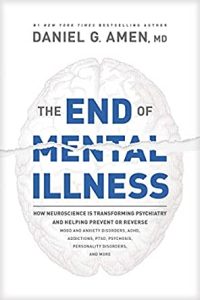
Book: The End of Mental Illness

Book Title:

The End of Mental Illness: How Neuroscience Is Transforming Psychiatry and Helping Prevent or Reverse Mood and Anxiety Disorders, ADHD, Addictions, PTSD, Psychosis, Personality Disorders, and More.

Author(s): Daniel G. Amen.

Year: 2020.

Edition: First (1st), Illustrated Edition.

Publisher: Tyndale Momentum.

Type(s): Hardcover, Paperback, Audiobook, and Kindle.

Synopsis:

Though incidence of these conditions is skyrocketing, for the past four decades standard treatment hasn’t much changed, and success rates in treating them have barely improved, either. Meanwhile, the stigma of the “mental illness” label—damaging and devastating on its own—can often prevent sufferers from getting the help they need.

Brain specialist and bestselling author Dr. Daniel Amen is on the forefront of a new movement within medicine and related disciplines that aims to change all that. In The End of Mental Illness, Dr. Amen draws on the latest findings of neuroscience to challenge an outdated psychiatric paradigm and help readers take control and improve the health of their own brain, minimising or reversing conditions that may be preventing them from living a full and emotionally healthy life.

The End of Mental Illness will help you discover:

  • Why labeling someone as having a “mental illness” is not only inaccurate but harmful.
  • Why standard treatment may not have helped you or a loved one – and why diagnosing and treating you based on your symptoms alone so often misses the true cause of those symptoms and results in poor outcomes.
  • At least 100 simple things you can do yourself to heal your brain and prevent or reverse the problems that are making you feel sad, mad, or bad.
  • How to identify your “brain type” and what you can do to optimise your particular type.
  • Where to find the kind of health provider who understands and uses the new paradigm of brain health.

Book: The Economics Of Addictive Behaviours – Volume IV

Book Title:

The Economics Of Addictive Behaviours – Volume IV: The Private and Social Costs of Overeating and Their Remedies.

Author(s): John Joshua.

Year: 2017.

Edition: First (1ed).

Publisher: Palgrave Macmillan.

Type(s): Hardcover, Paperback, and Kindle.

Synopsis:

This title offers an in-depth analysis of the psychological causes and consequences of, and proposed interventions for over-eating. The author examines the history of obesity and its distribution by social class and geography, the environmental effects of overconsumption and economic remedies such as the introduction of a sugar tax to reduce obesity. Joshua also considers the politics of corporate social responsibility of food and beverage corporations and how this could prevent poor health decisions.

This is the final title in a four volume series ‘The Economics of Addictive Behaviours’, consisting of three additional volumes on smoking, alcohol abuse and illicit drug abuse.

Book: The Economics Of Addictive Behaviours – Volume III

Book Title:

The Economics Of Addictive Behaviours – Volume III: The Private and Social Costs of the Abuse of Illicit Drugs and Their Remedies.

Author(s): John Joshua.

Year: 2017.

Edition: First (1ed).

Publisher: Palgrave Macmillan.

Type(s): Hardcover, Paperback, and Kindle.

Synopsis:

This title offers an in-depth analysis of the causes, consequences and treatments of illicit drug abuse. The author examines the effects of existing drug policies and proposes drug use legalisation within a regulated market as a viable alternative. Joshua assesses the factors that make individuals vulnerable to drug abuse and the pathways they may follow. As well as exploring the physical and psychological effects on the individual, Joshua examines the social and economic consequences for society. He highlights the pitfalls of a purely legal approach to drug abuse, which is primarily a health matter, and questions whether special drugs courts could be used as an alternative to the present criminal justice system. This book adds to the debate on whether most drugs could be sold in a regulated market in the same way as other drugs are, such as alcohol or nicotine.

This is the third title in a four volume series ‘The Economics of Addictive Behaviours’, consisting of three additional volumes on smoking, alcohol abuse and overeating.

Book: The Economics Of Addictive Behaviours – Volume II

Book Title:

The Economics Of Addictive Behaviours – Volume II: The Private and Social Costs of Alcohol and Their Remedies.

Author(s): John Joshua.

Year: 2017.

Edition: First (1ed).

Publisher: Palgrave Macmillan.

Type(s): Hardcover, Paperback, and Kindle.

Synopsis:

This title discusses the phenomenon of alcohol abuse as a behavioural disease and the associated costs. The author details alcohol’s status as a psychoactive drug; he notes, however, that in contrast to other psychoactive drugs, alcohol has been widely culturally accepted in Western countries and legally available, except in isolated incidents for a short period of time. Joshua considers which policies are being correctly utilised so as to reduce the abuse of alcohol, and how these policies may operate on a supply and demand model. Whereas programs of prevention and treatment operate on the demand side of alcohol abuse, legislation is directed at the supply side of alcohol; that is, dealing with marketing – product, promotion, point of sales and price.

This is the second title in a four volume series ‘The Economics of Addictive Behaviours’, consisting of three additional volumes on smoking, illicit drug abuse and overeating.

Book: The Economics Of Addictive Behaviours – Volume I

Book Title:

The Economics Of Addictive Behaviours – Volume I: The Private and Social Costs of Smoking and Their Remedies.

Author(s): John Joshua.

Year: 2017.

Edition: First (1ed).

Publisher: Palgrave Macmillan.

Type(s): Hardcover, Paperback, and Kindle.

Synopsis:

This title discusses the phenomenon of smoking as a behavioural disease and the associated costs. The author details the consequences of smoking, in addition to the detrimental effects caused by second-hand tobacco smoke exposure as a health risk to children as well as to the general public. The central contribution of Joshua’s work is to address these concerns in terms of the issues of free choice and the market. Considering the various restrictive policies designed to reduce smoking’s prevalence, including the banning of smoking in public places, and the inclusion of warning labels on cigarette packets, Joshua carefully analyses potential economic remedies to the problem of smoking, notably the Pigovian tax. Finally, the book concludes with a highly relevant discussion of corporate social responsibility, and the role that this might play in anti-smoking projects.

This is the first title in a four volume series ‘The Economics of Addictive Behaviours’, which consists of three further volumes on alcohol abuse, illicit drug abuse and overeating.

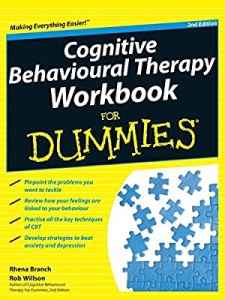
Book: Cognitive Behavioural Therapy Workbook For Dummies

Book Title:

Cognitive Behavioural Therapy Workbook For Dummies.

Author(s): Rhena Branch and Rob Wilson, PhD.

Year: 2012.

Edition: Second (2nd).

Publisher: John Wiley and Sons Inc.

Type(s): Paperback and Kindle.

Synopsis:

Dozens of practical exercises and easy to perform techniques for banishing negative thoughts before they take hold.

Whether you are trying to overcome anxiety and depression, boost self-esteem, beat addiction, lose weight, or simply improve your outlook, cognitive behavioural therapy (CBT) offers a practical, sensible approach to mastering your thoughts and thinking constructively.

In this updated and expanded edition of the companion workbook to their bestselling Cognitive Behavioural Therapy For Dummies, professional therapists Rhena Branch and Rob Wilson show you, step-by-step, how to put the lessons provided in their book into practice. Inside you will find a huge number of hands-on exercises and techniques to help you remove roadblocks to change and regain control over your life.

Cognitive Behavioural Therapy Workbook For Dummies, Second Edition:

  • Develops the ideas and concepts that presented in the bestselling Cognitive Behavioural Therapy For Dummies, Second Edition and provides exercises to put those ideas into practice
  • Features a range of hands-on CBT exercises and techniques for beating anxiety or depression, boosting your self-esteem, losing weight, or simply improving your outlook on life