Should We Integrate Mental Health Support for those Diagnosed with Hearing Loss?

Research Paper Title

Prevalence of Depression and Anxiety in Adolescents With Hearing Loss.

Background

To develop and implement a universal screening protocol for depression and anxiety in adolescents serviced in an otology and audiology practice and to estimate the prevalence of depression and anxiety in adolescents with hearing loss, while also comparing rates by degree of hearing loss and type of hearing device used.

Methods

A cross-sectional study set in a university tertiary medical centre. One hundred four adolescents 12- to 18-years-old who attended an otology clinic in a large metropolitan hospital in the southeastern United States.

Main outcome measure(s): Depression (PHQ-8), anxiety (GAD-7), degree of hearing loss, type of hearing loss, and type of hearing device utilised.

Results

Twenty-five percent of adolescents scored above the clinical cutoff on at least one of the depression and/or anxiety measures, with 10% scoring in the elevated range on both measures. Specifically, 17% scored above the cutoff on the PHQ-8 and 16% scored in the clinically significant range for the GAD-7. An additional 30 and 21% scored in the at-risk range for depression and anxiety, respectively. Older adolescents were more likely to score within the elevated range for depression (r = 0.232, p = 0.026). Also, adolescents with severe to profound hearing loss had higher rates of depression and anxiety.

Conclusions

Integration of mental health screening is needed in otology and audiology practices both to identify those who require psychological support and to provide appropriate treatment to reduce long-term impact of hearing loss on quality of life and mental health functioning in adolescents.

Reference

Cejas, I., Coto, J., Snachez, C., Holcomb, M. & Lorenzo, N.E. (2020) Prevalence of Depression and Anxiety in Adolescents With Hearing Loss. Otology and Neurotology. doi: 10.1097/MAO.0000000000003006. Online ahead of print.

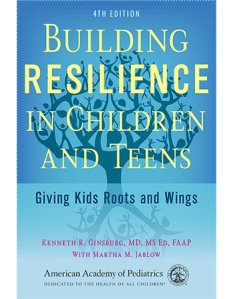
Book: Building Resilience In Children And Teens

Book Title:

Building Resilience In Children And Teens: Giving Kids Roots and Wings.

Author(s): Kenneth R. Ginsburg with Martha M. Jablow.

Year: 2014.

Edition: Third (3rd).

Publisher: American Academy of Paediatrics.

Type(s): Paperback, Audiobook, and Kindle.

Synopsis:

This invaluable guide from bestselling author and pediatrican Kenneth Ginsburg, MD, FAAP, offers coping strategies to help children and teens deal with stress due to academic pressure, high achievement standards, media messages, peer pressure, and family tension.

Recommendations guide parents to help kids from the age of 18 months to 18 years build the seven crucial “C’s” – competence, confidence, connection, character, contribution, coping, and control – needed to bounce back from life’s challenges.

This book provides a wide range of tactics, including building on natural strengths, fostering hope and optimism, avoiding risky behaviours, and taking care of oneself physically and emotionally. This edition includes new chapters on the topic of grit, stress and how how one’s perception of stress affects what stress really is, toxic stress, and the protective role of nurturant adults. It also addresses the issue of adolescents responding to stress by either indulging in unhealthy behaviours or giving up completely, and the suggested solutions are aimed at strengthening resilience.

What is the Impact of Early Manifesting Disorders in the Frame of General Mental Morbidity & of the Effect of Intervention?

Research Paper Title

What happens to children and adolescents with mental disorders? Findings from long-term outcome research.

Background

Research on the long-term outcome of mental disorders originating in childhood and adolescence is an important part of developmental psychopathology.

Methods

After a brief sketch of relevant terms of outcome research, the first part of this review reports findings based on heterotypic cohort studies.

The major second part of this review presents findings based on long-term outcome studies dealing with homotypic diagnostic groups. In particular, the review focuses on the course and prognosis of ADHD, anxiety disorders, depression, conduct disorders, eating disorders, autism spectrum disorders, schizophrenia, and selective mutism.

Results

Findings mainly support the vulnerability hypothesis regarding mental disorders with early manifestation in childhood and adolescence as frequent precursors of mental disorders in adulthood.

Conclusions

The discussion focuses on the impact of early manifesting disorders in the frame of general mental morbidity and of the effect of interventions, which is not yet sufficiently discernible.

Reference

Steinhausen, H-C. (2020) What happens to children and adolescents with mental disorders? Findings from long-term outcome research [German]. Zeitschrift fur Kinder- und Jugendpsychiatrie und Psychotherapie. 41(6), pp.419-431. doi: 10.1024/1422-4917/a000258.

What are the Current Trends in Therapy for Mental Disorders in Adolescence?

Research Paper Title

Mental disorders in adolescence: current trends in therapy.

Background

On the basis of the high prevalence for behavioural problems and mental disorders in adolescence and its persistence into adulthood it is tested whether and based upon which emphasis this topic is considered in the recent discussion on psychotherapy.

Therefore, a bibliometric analysis is given that summarizes the issue in the 2011 and 2012 volumes of representative German child and adolescent psychological and psychiatric journals.

The focus lies on conduct disorder, depression, deliberate self-harm, dissociative disorder, and post traumatic stress disorder.

Reference

de Vries, U., Lehmkuhl, G. & Petermann, F. (2020) Mental disorders in adolescence: current trends in therapy.

What are the Incidence Rates of Treated Mental Disorders in Childhood & Adolescence?

Research Paper Title

Incidence Rates of Treated Mental Disorders in Childhood and Adolescence in a Complete Nationwide Birth Cohort.

Background

To investigate incidences, cumulative incidence rates, and risk factors of diagnosed mental disorders in a complete nationwide birth cohort across the entire period of childhood and adolescence.

Methods

Based on nationwide Danish registries, the entire cohort of all children born in 1995 was followed up to 31 December 2013. Data for children who migrated during the period were censored in the time analyses, and death before age 18 years was considered a competing risk. Incidence rates and cumulative incidence rates for any first-time-diagnosed mental disorder and 10 major categories of mental disorders according to ICD-10 criteria were calculated for 68,982 individuals. In addition, the effects of age, sex, and further child- and family-related risk factors on mental disorders were analysed.

Results

The incidences of any mental disorder, substance use disorders, depression, and anxiety disorders showed an increase in adolescence, whereas those for autism spectrum disorders, attention-deficit/hyperactivity disorder, conduct disorder, and tic disorder increased during childhood and decreased thereafter. Males had higher incidence rates of any mental disorders, substance use disorders, autism spectrum disorders, ADHD, conduct disorder, and tic disorder. Females had higher risks for depressive, anxiety, obsessive-compulsive, and eating disorders. Several other risk and protective factors for any mental disorder were identified. The cumulative incidence rate at age 18 years amounted to 11.02% for any mental disorder.

Conclusions

These findings provide the most comprehensive estimates of the development, incidence rates, and contributing risk factors of registered mental disorders for the entire period of childhood and adolescence that have been calculated so far.

Reference

Steinhausen, H-C. & Jakobsen, H. (2020) Incidence Rates of Treated Mental Disorders in Childhood and Adolescence in a Complete Nationwide Birth Cohort. The Journal of Clinical Psychiatry. 80(3):17m12012. doi: 10.4088/JCP.17m12012.

Reviewing Sleep & Mental Disorders in Childhood & Adolescence

Research Paper Title

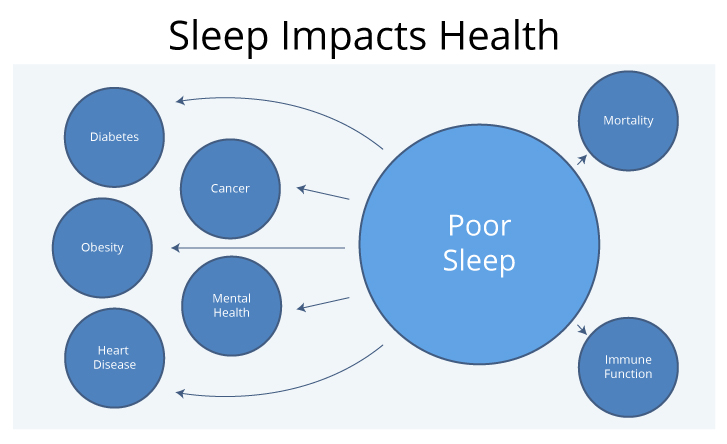
Review: Sleep and mental disorders in childhood and adolescence.

Background

Sleep problems and disorders are common in childhood and adolescence.

This review aims to throw light on the relationship between sleep problems and mental disorders in childhood and adolescence.

Sleep problems and disorders appear to be risk factors for mental disorders as comorbidities, as symptoms, and as effects of mental disorders.

Frequently, there is an interaction between sleep behaviour and psychopathology so that sleep problems contribute to the intensity and maintenance of mental disorders.

This bidirectional association is observed in early childhood as well as in school-aged children and in adolescents.

Many studies show that this association has a long-term nature beyond child development.

Both environmental and genetic factors seem to play a role in the development and maintenance of the relationship between sleep problems and mental disorders.

Various research articles show that treatment of mental disorders and treatment of sleep disorders influence each other in a positive way.

Therefore, it is strongly advised to consider sleep problems in diagnosis and treatment but also in prevention of mental disorders.

Reference

Schnatschmidt, M. & Schlarb, A. (2020) Review: Sleep and mental disorders in childhood and adolescence. Zeitschrift fur Kinder- und Jugendpsychiatrie und Psychotherapie. 46(5), pp.368-381. doi: 10.1024/1422-4917/a000605. Epub 2018 Jul 27.

Is there a Link between Maternal Depression & Child Mental Health?

Research Paper Title

Prevalence of mental health problems in preschoolers and the impact of maternal depression.

Background

A large number of children of depressed mothers have one or more mental disorders.

This study aimed to evaluate the impact of maternal depression on the mental health of 4-5-year-old children of adolescent mothers, according to the hypotheses generated from the model of accumulation.

Methods

Between October 2009 and March 2011, all pregnant adolescents who received prenatal care from the public health system in Pelotas (southern Brazil) were invited to participate in the study and have been prospectively followed.

Of these individuals, 413 participants were evaluated in the postpartum period and when the child was 2-3 years old and 4-5 years old (current stage).

The Strengths and Difficulties Questionnaire was used to assess mental health problems in children, and the Mini International Neuropsychiatric Interview (MINI)-Plus version was used to assess maternal depression.

The researchers applied a structured modelling approach to examine the relations between three different hypothesized life course models (accumulation, critical period, and mobility) and maternal depression.

After selecting the most appropriate model, they used a logistic regression analysis to assess the effect of depression on mental health problems in 4-5-year-old children of adolescent mothers. They also used the Chi square test to estimate the prevalence of mental health problems in 4-5-year-old children.

Results

The longer the time of exposure to maternal depression, the greater the probability that the child would present behavioural problems.

Conclusions

Investments in strategies to prevent mental disorders beginning in the gestational period are important.

Reference

Pires, A.J., de Matos, M.B., Scholl, C.C., Trettim, J.P., Coelho, F.T., da Cunha Coelho, F.M., Pinheiro, K.A.T., Pinheiro, R.T. & Queveedo, L. (2020) Prevalence of mental health problems in preschoolers and the impact of maternal depression. European Child & Adolescent Psychiatry. 29(5), pp.605-616. doi: 10.1007/s00787-019-01381-x. Epub 2019 Aug 7.

Can Participation in HIIT Improve Cognitive Function & Mental Health in Children & Adolescents?

Research Paper Title

Review of High-Intensity Interval Training for Cognitive and Mental Health in Youth.

Background

High-intensity interval training (HIIT) has emerged as a time-efficient strategy to improve children’s and adolescents’ health-related fitness in comparison to traditional training methods. However, little is known regarding the effects on cognitive function and mental health.

Therefore, the aim of this systematic review was to evaluate the effect of HIIT on cognitive function (basic information processing, executive function) and mental health (well-being, ill-being) outcomes for children and adolescents.

Methods

A systematic search was conducted, and studies were eligible if they:

  1. Included a HIIT protocol;
  2. Examined cognitive function or mental health outcomes; and
  3. Examined children or adolescents (5-18 years) old.

Separate meta-analyses were conducted for acute and chronic studies, with potential moderators (i.e. study duration, risk of bias, participant age, cognitive demand, and study population) also explored.

Results

A total of 22 studies were included in the review. In acute studies, small to moderate effects were found for executive function (standardised mean difference [SMD], 0.50, 95% confidence interval [CI], 0.03-0.98; P = 0.038) and affect (SMD, 0.33; 95% CI, 0.05-0.62; P = 0.020), respectively. For chronic studies, small significant effects were found for executive function (SMD, 0.31; 95% CI, 0.15-0.76, P < 0.001), well-being (SMD, 0.22; 95% CI, 0.02-0.41; P = 0.029), and ill-being (SMD, -0.35; 95% CI, -0.68 to -0.03; P = 0.035).

Conclusions

The review provides preliminary review evidence suggesting that participation in HIIT can improve cognitive function and mental health in children and adolescents.

Because of the small number of studies and large heterogeneity, more high-quality research is needed to confirm these findings.

Reference

Leahy, A.A., Mavilidi, M.F., Smith, J.J., Hillman, C.H., Eather, N., Barker, D. & Lubans, D.R. (2020) Review of High-Intensity Interval Training for Cognitive and Mental Health in Youth.

Is there a Relationship between Diet & Mental Health in Children & Adolescents?

Research Paper Title

Relationship between diet and mental health in children and adolescents: a systematic review.

Background

The researchers systematically reviewed 12 epidemiological studies to determine whether an association exists between diet quality and patterns and mental health in children and adolescents; 9 explored the relationship using diet as the exposure, and 3 used mental health as the exposure.

They found evidence of a significant, cross-sectional relationship between unhealthy dietary patterns and poorer mental health in children and adolescents.

They observed a consistent trend for the relationship between good-quality diet and better mental health and some evidence for the reverse.

When including only the 7 studies deemed to be of high methodological quality, all but 1 of these trends remained.

Findings highlight the potential importance of the relationship between dietary patterns or quality and mental health early in the life span.

Reference

O’Neil, A., Quirk, S.E., Housden, S.E.Q., Brennan, S.L., Williams, L.J., Pasco, J.A., Berk. M. & Jacka, F.N. (2020) Relationship between diet and mental health in children and adolescents: a systematic review. American Journal of Public Health. 104(10), pp.e31-42. doi: 10.2105/AJPH.2014.302110.

What is the Impact of COVID-19 & Lockdown on the Mental Health of Children & Adolescents?

Research Paper Title

Impact of COVID-19 and lockdown on mental health of children and adolescents: A narrative review with recommendations.

Background

COVID-19 pandemic and lockdown has brought about a sense of fear and anxiety around the globe. This phenomenon has led to short term as well as long term psychosocial and mental health implications for children and adolescents. The quality and magnitude of impact on minors is determined by many vulnerability factors like developmental age, educational status, pre-existing mental health condition, being economically underprivileged or being quarantined due to infection or fear of infection.

This paper is aimed at narratively reviewing various articles related to mental-health aspects of children and adolescents impacted by COVID-19 pandemic and enforcement of nationwide or regional lockdowns to prevent further spread of infection.

Methods

The researchers conducted a review and collected articles and advisories on mental health aspects of children and adolescents during the COVID-19 pandemic. They selected articles and thematically organized them.

Results

The researchers put up their major findings under the thematic areas of impact on young children, school and college going students, children and adolescents with mental health challenges, economically underprivileged children, impact due to quarantine and separation from parents and the advisories of international organisations. They have also provided recommendations to the above.

Conclusions

There is a pressing need for planning longitudinal and developmental studies, and implementing evidence based elaborative plan of action to cater to the psycho social and mental health needs of the vulnerable children and adolescents during pandemic as well as post pandemic. There is a need to ameliorate children and adolescents’ access to mental health support services geared towards providing measures for developing healthy coping mechanisms during the current crisis.

For this innovative child and adolescent mental health policies with direct and digital collaborative networks of psychiatrists, psychologists, paediatricians, and community volunteers are deemed necessary.

Reference

Singh, S., Roy, D. Sinha, K., Parveen, S., Sharma, G. & Joshi, G. (2020) Impact of COVID-19 and lockdown on mental health of children and adolescents: A narrative review with recommendations. Psychiatry Research. 293, pp.113429. doi: 10.1016/j.psychres.2020.113429. Online ahead of print.