Book: Resilience – How We Find New Strength At Times of Stress

Book Title:

Resilience – How We Find New Strength At Times of Stress.

Author(s): Frederic Flach, MD.

Year: 2020.

Edition: Third (3rd).

Publisher: Ballantine Books.

Type(s): Hardcover, Paperback, and Kindle.

Synopsis:

Learn to bounce back from life’s inevitable crises by making friends with stress. There’s no escaping stress. It appears on our doorstep uninvited in the shattering forms of death and divorce, or even in the pleasant experiences of promotion, marriage, or a long-held wish fulfilled. Anything that upsets the delicate balance of our daily lives creates stress.

So why do some people come out of a crisis while others never seem quite themselves again? Now, Dr. Frederic Flach takes the anxiety out of hard times by showing you how to embrace you fears and become stronger because of them. Drawing on over thirty years of experience, Flach reveals the remarkable antidote to the destructive qualities of stress: RESILIENCE.

Book: Rainy Brain, Sunny Brain

Book Title:

Rainy Brain, Sunny Brain – How to Retrain Your Brain to Overcome Pessimism and Achieve a More Positive Outlook.

Author(s): Elaine Fox.

Year: 2012.

Edition: First (1st).

Publisher: Baisc Books.

Type(s): Hardcover, Paperback, and Audiobook, and Kindle.

Synopsis:

Are you optimistic or pessimistic? Glass half-full or half-empty? Do you look on the bright side or turn towards the dark? These are easy questions for most of us to answer, because our personality types are hard-wired into our brains. As pioneering psychologist and neuroscientist Elaine Fox has discovered, our outlook on life reflects our primal inclination to seek pleasure or avoid danger – inclinations that, in many people, are healthily balanced. But when our “fear brain” or “pleasure brain” is too strong, the results can be disastrous, as those of us suffering from debilitating shyness, addiction, depression, or anxiety know all too well.

Luckily, anyone suffering from these afflictions has reason to hope. Stunning breakthroughs in neuroscience show that our brains are more malleable than we ever imagined. In Rainy Brain, Sunny Brain, Fox describes a range of techniques – from traditional cognitive behavioural therapy to innovative cognitive-retraining exercises – that can actually alter our brains’ circuitry, strengthening specific thought processes by exercising the neural systems that control them. The implications are enormous: lifelong pessimists can train themselves to think positively and find happiness, while pleasure-seekers inclined toward risky or destructive behavior can take control of their lives.

Drawing on her own cutting-edge research, Fox shows how we can retrain our brains to brighten our lives and learn to flourish. With keen insights into how genes, life experiences and cognitive processes interleave together to make us who we are, Rainy Brain, SunnyBrain revolutionizes our basic concept of individuality. We learn that we can influence our own personalities, and that our lives are only as “sunny” or as “rainy” as we allow them to be.

Book: Overcoming Panic Attacks

Book Title:

Overcoming Panic Attacks – Effective Strategies for Facing Anxiety and Taking Charge of Your Life.

Author(s): David Shanley, PsyD.

Year: 2020.

Edition: First (1st).

Publisher: Rockridge Press.

Type(s): Paperback and Kindle.

Synopsis:

Prevail over panic attacks – evidence-based strategies for getting your life back

Whether you are new to having panic attacks or have suffered from them for many years, you can free yourself from the grip they have on your life. Overcoming Panic Attacks is filled with effective strategies that offer you different ways of thinking, feeling, and behaving so you can increase your flexibility in uncomfortable situations and go after the life you want.

Drawing from his personal experience, expertise, and clinical work, Dr. David Shanley unpacks the mystery around panic attacks across many different life situations and offers you hope and tangible strategies to effectively manage your panic attacks.

Overcoming Panic Attacks includes:

  • Evidence-based strategies: Discover practical strategies based on cognitive behavioural therapy (CBT) and acceptance and commitment therapy (ACT).
  • Anxiety vs. panic: Learn the important differences between anxiety and panic, including detailed symptoms and experiences of each.
  • Go deeper: Explore helpful suggestions on how to take some of the strategies to the next level by turning inward to complete more in-depth exercises.

Reduce the frequency and severity of your panic attacks with these scientifically supported strategies so you can get back to feeling and functioning like yourself again.

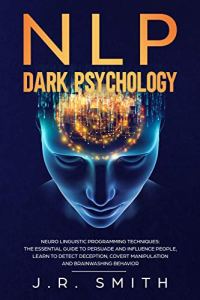
Book: NLP Dark Psychology

Book Title:

NLP Dark Psychology – Neuro-Linguistic Programming Techniques: The Essential Guide To Persuade and Influence People, Learn to Detect Deception, Covert Manipulation and Brainwashing Behaviour.

Author(s): J.R. Smith.

Year: 2020.

Edition: First (1st).

Publisher: Independently Published.

Type(s): Paperback, Audiobook, and Kindle.

Synopsis:

Has it come to your realisation that some people have the ability to dupe others using manipulative techniques and can as well get tricked by others using many secrets of dark psychology?

Some has the ability to victimise other people by preying on them. Whereas many restrain from this tendency, there are those who act on these instincts.

In this book you can discover Dark Psychology Techniques that are used by people to influence, manipulate, and coerce others to get whatsoever they want.

For so many years now, the concept of mind control has existed, and people have shown both fear and fascination of what would take place if an individual would control their thoughts and minds and lead them to do things that are against their wish and will.

There have been conspiracy theories on how government officials, as well as other influential persons, use their talents and capacities to control actions of the minorities and small groups.

Inside the book, you will come across interesting topics such as:

  • How We Receive Information.
  • The Animalistic Nature of the Brain.
  • The Dark Side of Manipulation.
  • How People Use Our Map of Reality Against Us.
  • Examples of Manipulation We Can Find in Our Day-To-Day Lives
  • Simple Mind Control Techniques to Use.
  • Personalities Likely to Manipulate.
  • Why Reframing is so Important.
  • NLP and Depression.
  • NLP and Anxiety.
  • Different Ways That You Are Persuaded Subliminally.

This is just a tiny fraction of what you will discover

Each of the mind control tactics works in a different way.

In the modern world, dark psychology is among the most powerful forces used by the most influential people to manipulate others.

People who are uninformed are in the danger of having it used against them.

Just imagine how different your life would be if you could get prospective customers, colleagues, employees, investors, friends, and literally anyone to do what you want them to do without you having to beg, cajole, or threaten.

So even if you have tried to learn these skills before but still feel lost and frustrated, this guide will give you the practical tools and knowledge to read and understand people in a way few others ever will.

Book: The Handbook of Stress

Book Title:

The Handbook of Stress – Neuropsychological Effects on the Brain.

Author(s): Cheryl D. Conrad (Editor).

Year: 2011.

Edition: First (1st).

Publisher: Wiley-Blackwell.

Type(s): Hardcover and Kindle.

Synopsis:

The Handbook of Stress: Neuropsychological Effects on the Brain is an authoritative guide to the effects of stress on brain health, with a collection of articles that reflect the most recent findings in the field.

  • Presents cutting edge findings on the effects of stress on brain health.
  • Examines stress influences on brain plasticity across the lifespan, including links to anxiety, PTSD, and clinical depression.
  • Features contributions by internationally recognised experts in the field of brain health.
  • Serves as an essential reference guide for scholars and advanced students.

Book: Hallucinations

Book Title:

Hallucinations

Author(s): Oliver Sacks.

Year: 2013.

Edition: First (1st).

Publisher: Picador.

Type(s): Hardcover, Paperback, Audiobook, and Kindle.

Synopsis:

Have you ever seen something that was not really there? Heard someone call your name in an empty house? Sensed someone following you and turned around to find nothing?

Hallucinations do not belong wholly to the insane. Much more commonly, they are linked to sensory deprivation, intoxication, illness, or injury. In some conditions, hallucinations can lead to religious epiphanies or even the feeling of leaving one’s own body. Humans have always sought such life-changing visions, and for thousands of years have used hallucinogenic compounds to achieve them.

In Hallucinations, with his usual elegance, curiosity, and compassion, Dr Oliver Sacks weaves together stories of his patients and of his own mind-altering experiences to illuminate what hallucinations tell us about the organisation and structure of our brains, how they have influenced every culture’s folklore and art, and why the potential for hallucination is present in us all, a vital part of the human condition.

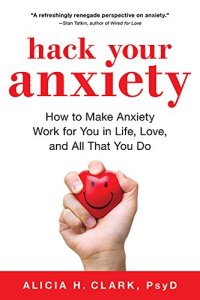
Book: Hack Your Anxiety

Book Title:

Hack Your Anxiety – How to Make Anxiety Work for You in Life, Love, and All That You Do.

Author(s): Alicia H. Clark, PsyD.

Year: 2018.

Edition: First (1st).

Publisher: Sourcebooks.

Type(s): Paperback and Audiobook.

Synopsis:

What if the way you are thinking about anxiety is off base? What if there is something about anxiety that can be used for you instead of against you?

In this revolutionary book, Dr. Alicia H. Clark recognises anxiety as an unsung hero in the path to success and well-being. Anxiety is a powerful motivating force that can be harnessed to create a better you, if you have got the right tools. Hack Your Anxiety provides a road map to approach anxiety in a new – and empowering – light so you can stop anxiety from stopping you.

In this book on anxiety, Clark will help you deal with:

  • Panic attacks;
  • Anxiety in your relationship;
  • Parenting and youth;
  • Work, money and successSocial support;
  • 10 myths and misconceptions; and
  • And more.

Weaving together modern neuroscience, case studies, interviews, and personal anecdotes, Hack Your Anxiety demonstrates how anxiety can be reclaimed as a potent force for living our best lives.

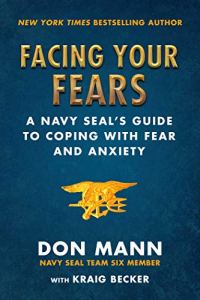
Book: Facing Your Fears – A Navy SEAL’s Guide to Coping With Fear and Anxiety

Book Title:

Facing Your Fears – A Navy SEAL’s Guide to Coping With Fear and Anxiety.

Author(s): Don Mann and Kraig Becker.

Year: 2020.

Edition: First (1st).

Publisher: Skyhorse.

Type(s): Hardcover and Kindle.

Synopsis:

A former Navy SEAL and current motivational speaker, Don Mann specialises in helping others achieve success in every aspect of life – personal and professional – by using techniques employed by Navy SEALs.

In Facing Your Fears, Mann zeroes in on finding ways to cope with the fear and anxieties readers face in their lives, no matter what they may be. This volume includes three subsections dedicated to helping the reader cope with his or her doubts and worries:

  • Identifying Your Fears;
  • Embracing the Fear; and
  • Letting Go of the Fear.

Featuring practical advice, inspirational quotes, engaging stories, and interesting anecdotes, Facing Your Fears will give readers the tools they need to triumph in the face of adversity.

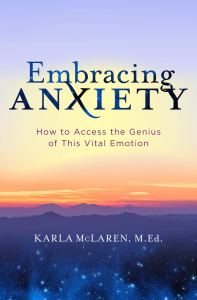
Book: Embracing Anxiety – How to Access the Genius of This Vital Emotion

Book Title:

Embracing Anxiety – How to Access the Genius of This Vital Emotion.

Author(s): Karla McLaren.

Year: 2020.

Edition: First (1ed).

Publisher: Sounds True.

Type(s): Paperback and Kindle.

Synopsis:

An in-depth guide for engaging with anxiety–not as an affliction, but as an essential source of foresight, intuition, and energy for completing your tasks and projects.

If you are facing anxiety, you’ve probably got one thing on your mind – how to make it go away. But what if this challenging emotion were actually trying to help?

When we ignore or repress our anxiety,” teaches Karla McLaren, it can overwhelm us. But when we learn to welcome it with skill, we can access its remarkable gifts.

Engaged with wisely, anxiety is your task completion ally – it helps you to focus, plan, take action, and fulfill your goals. With Embracing Anxiety, you will join this acclaimed educator and researcher to explore:

  • Principles and practices to befriend your anxiety at every level of intensity (before it overwhelms you).
  • Strategies to engage with anxiety as a source of foresight, conscientiousness, and motivation.
  • Why fear, confusion, and panic are not the same as anxiety, and tools to work with each effectively.
  • How anxiety blends with anger, depression, and other emotions, and how to clarify these compounded states.
  • Using McLaren’s Conscious Questioning practice to engage with anxiety and garner its insights.
  • How to embrace procrastination and get things done.

When you identify, listen to, and act on anxiety skillfully, you support its purpose, teaches McLaren, and allow it to recede naturally until it is needed again. With Embracing Anxiety, you’ll learn how to get this powerful emotion on your side.

Book: Doing Psychotherapy – A Trauma And Attachment-Informed Approach

Book Title:

Doing Psychotherapy – A Trauma And Attachment-Informed Approach.

Author(s): Robin Shapiro.

Year: 2020.

Edition: First (1st).

Publisher: W.W. Norton & Company.

Type(s): Paperback, Kindle, and Audiobook.

Synopsis:

Most books about doing psychotherapy are tied to particular psychotherapeutic practices. Here, seasoned clinical author Robin Shapiro teaches readers the ins and outs of a trauma-and attachment-informed approach that is not tied to any one model or method.

This book teaches assessment, treatment plans, enhancing the therapeutic relationship and ethics and boundary issues, all within a general framework of attachment theory and trauma. Practical chapters talk about working with attachment problems, grief, depression, cultural differences, affect tolerance, anxiety, addiction, trauma, skill- building, suicidal ideation, psychosis, and the beginning and end of therapy.

Filled with examples, suggestions for dialogue and questions for a variety of therapeutic situation, Shapiro’s conversational tone makes the book very relatable. Early-career therapists will refer to it for years to come and veteran practitioners looking for a refresher (or introduction) to the latest in trauma and attachment work will find it especially useful.