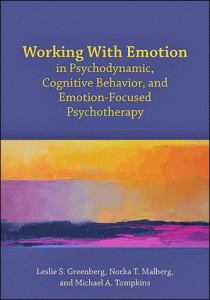
Book: Working with Emotion

Book Title:

Working With Emotion in Psychodynamic, Cognitive Behaviour, and Emotion-Focused Psychotherapy.

Author(s): Leslie S. Greenberg, Norka T. Malberg, and Michael A. Tompkins.

Year: 2019.

Edition: First (1st).

Publisher: American Psychological Assocation.

Type(s): Paperback and Kindle.

Synopsis:

The authors of this volume investigate the role of emotion in the development and maintenance of psychological problems, and in effecting psychological change.

They examine emotion as it is conceptualised and used in three of the most widely practised approaches today–psychodynamic, cognitive behaviour, and emotion-focused psychotherapy.

In each chapter, the authors discuss the impact of emotion on child development and learning, the relationship between emotion and motivation, and the ways in which emotion can be harnessed in treatment to improve psychological functioning and strengthen interpersonal relationships.

Clinical vignettes show readers how to arouse, identify, and channel emotions in therapy, while also utilising emotion to develop and maintain an effective therapeutic alliance.

Emotional Indicators of Urban Green Space Behaviour

Research Paper Title

Sitting or Walking? Analyzing the Neural Emotional Indicators of Urban Green Space Behavior with Mobile EEG.

Background

There is a close relationship between urban green space and the physical and mental health of individuals.

Most previous studies have discussed the impact of the structure of green space and its elements.

This study focused on the emotional changes caused by common behaviours in urban green space (walking and sitting).

Methods

The researchers recruited 40 college students and randomly assigned them to walking and sitting groups (20 students per group).

The two groups performed the same 8-min high-pressure learning task indoors and then performed 8-min recovery activities in a simulated urban green space (a bamboo-lawn space).

They used the Emotiv EPOC+ EEG headset to dynamically measure six neural emotional parameters:

  • ‘Engagement’;
  • ‘Valence’;
  • ‘Meditation’;
  • ‘Frustration’;
  • ‘Focus’; and
  • ‘Excitement’.

The researchers also conducted a pretest and post-test and used analysis of covariance (ANCOVA) to analyse the post-test data (with the pretest data as covariates).

Results

The results of the comparison of the two behaviours showed that the ‘valence’ and ‘meditation’ values of the walking group were higher than those of the sitting group, which suggests that walking in urban green space is more favourable for stress reduction.

The sitting group had a higher “focus” value than did the walking group, which suggests that sitting in urban green space is better for attention restoration.

Conclusions

The results of this study can provide guidance for urban green space planning and design as well as health guidance for urban residents.

Reference

Lin, W., Chen, Q., Jiang, M., Tao, J., Liu, Z., Zhang, X., Wu, L., Xu, S., Kang, Y. & Zeng, Q. (2020) Sitting or Walking? Analyzing the Neural Emotional Indicators of Urban Green Space Behavior with Mobile EEG. Journal of Urban Health. doi: 10.1007/s11524-019-00407-8. [Epub ahead of print].

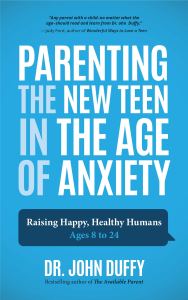
Book: Parenting the New Teen in the Age of Anxiety

Book Title:

Parenting the New Teen in the Age of Anxiety: A Complete Guide to Your Child’s Stressed, Depressed, Expanded, Amazing Adolescence.

Author(s): Dr. John Duffy.

Year: 2019.

Edition: First.

Publisher: Mango.

Type(s): Paperback, Kindle, and Audiobook.

Synopsis:

Learn about the “New Teen” and how to adjust your parenting approach. Kids are growing up with nearly unlimited access to social media and the internet, and unprecedented academic, social, and familial stressors. Starting as early as eight years old, children are exposed to information, thought, and emotion that they are developmentally unprepared to process. As a result, saving the typical “teen parenting” strategies for thirteen-year-olds is now years too late.

Urgent advice for parents of teens. Dr. John Duffy’s parenting book is a new and necessary guide that addresses this hidden phenomenon of the changing teenage brain. Dr. Duffy, a nationally recognised expert in parenting for nearly twenty-five years, offers this book as a guide for parents raising children who are growing up quickly and dealing with unresolved adolescent issues that can lead to anxiety and depression.

Unprecedented psychological suffering among our young and why it is occurring. A shift has taken place in how and when children develop. Because of the exposure they face, kids are emotionally overwhelmed at a young age, often continuing to search for a sense of self well into their twenties. Paradoxically, Dr. Duffy recognises the good that comes with these challenges, such as the sense of justice instilled in teenagers starting at a young age.

Readers of this book will:

  • Sort through the overwhelming circumstances of today’s teens and better understand the changing landscape of adolescence.
  • Come away with a revised, conscious parenting plan more suited to addressing the current needs of the New Teen.
  • Discover the joy in parenting again by reclaiming the role of your teen’s ally, guide, and consultant.

Book: The Oxford Handbook of Emotion, Social Cognition, and Problem Solving in Adulthood

Book Title:

The Oxford Handbook of Emotion, Social Cognition, and Problem Solving in Adulthood.

Part of the Oxford Library of Psychology.

Author(s): Paul Verhaegen and Christopher Hertzog (Editors).

Year: 2014.

Edition: First.

Publisher: Oxford University Press.

Type(s): Hardcover and Kindle.

Synopsis:

Over the last decade, the field of socio-emotional development and ageing has rapidly expanded, with many new theories and empirical findings emerging. This trend is consistent with the broader movement in psychology to consider social, motivational, and emotional influences on cognition and behaviour.

The Oxford Handbook of Emotion, Social Cognition, and Problem Solving in Adulthood provides the first overview of a new field of adult development that has emerged out of conceptualisations and research at the intersections between socio-emotional development, social cognition, emotion, coping, and everyday problem solving.

This field roundly rejects a universal deficit model of ageing, highlighting instead the dynamic nature of socio-emotional development and the differentiation of individual trajectories of development as a function of variation in contextual and experiential influences.

It emphasises the need for a cross-level examination (from biology and neuroscience to cognitive and social psychology) of the determinants of emotional and socio-emotional behaviour.

This volume also serves as a tribute to the late Fredda Blanchard-Fields, whose thinking and empirical research contributed extensively to a life-span developmental view of emotion, problem solving, and social cognition.

Its chapters cover multiple aspects of adulthood and ageing, presenting developmental perspectives on emotion; antecedents and consequences of emotion in context; everyday problem solving; social cognition; goals and goal-related behaviours; and wisdom.

The landmark volume in this new field, The Oxford Handbook of Emotion, Social Cognition, and Problem Solving in Adulthood is an important resource for cognitive, developmental, and social psychologists, as well as researchers and graduate students in the field of ageing, emotion studies, and social psychology.

Book: Overcome Anxiety

Book Title:

Overcome Anxiety: How to manage anxiety disorder, manage worry, stop panic attack for an happy life with joy and happiness.

Author(s): Jamie Peace.

Year: 2019.

Edition: First.

Publisher: Independently Published.

Type(s): Paperback.

Synopsis:

ANXIETY IN ONE SHOT: DON’T BELIEVE EVERYTHING YOU THINK.

Are you afraid of fear? Do you know that today there are new simple therapies? Did they ever talk to you about the diary of change?

We all feel anxious all the time. Without anxiety, we would have been eaten out of existence. It is what helps us determine the danger and get out of it in time. When your heart begins to race, you then know that you need to get your flight or fight on.

When one finds themselves on the cusps of anxiety and depression, it often feels like the world is coming to an end. You lose energy of what you want to do when depression sets in. When anxiety sets in, you almost feel as though the world is a raging enemy, charging at you in full speed. Desperately, you look round for a solution, or at least, guidelines for finding solutions. You find, them, but they are laded with medical jargon.

However, there is another situation where your body begins to act out anxiously even in the absence of a threat? So what do you do in this case? Well, you chose this book, and we are here to help you find a guide on how to live with it.

Well, guess what? This book is here to provide you with material that you won’t find around -easy to follow steps and guides to identify if you suffer from anxiety or depression, or a potent combination of both. You will then be run through a series of steps on what you can do to improve your condition, how to find the motivation to go through with exercises, medically proven remedies for anxiety and depression, the kind of exercises that will help you recover better.

YOU WILL LEARN:

  • What are the problem of Anxiety, Depression, Worry, Panic attack
  • How Identifying them in different situation
  • Simple helpful Exercise
  • Put the teachings into practice
  • What is a diary of change

This book is full of simple, easy to follow exercises, instructions, and guides written in a straightforward language. Instead of telling you that you have anxiety or depression, we give you concrete pointers on identifying the issue and then follow through with descriptive guideline that you can follow towards recovery. We have written this book in a way that even a child would pick it up and go through it and emerge at the back end of the page enlightened, bolder, more courageous and with a bigger desire to fight the monster that is depression and its deadly brother-in-crime anxiety. Trust us, these are bad conditions to live with, but in this book, you will learn how to manage them.

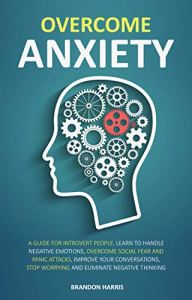
Book: Overcome Anxiety

Book Title:

Overcome Anxiety: A Guide For Introvert People. Learn To Handle Negative Emotions, Overcome Social Fear And Panic Attacks, Improve Your Conversations, Stop Worrying And Eliminate Negative Thinking.

Author(s): Brandon Harris.

Year: 2019.

Edition: First.

Publisher: Independently Published.

Type(s): Paperback, Kindle and Audiobook.

Synopsis:

Are you searching for a complete approach to overcome Social Anxiety? Or Have you ever experienced extreme anxiety in public places, in dialogue with significant or strange people? Then keep reading…

Perhaps you felt anxiety when speaking to the audience, preparing for a meeting, an interview? Social anxiety can be illustrated with countless examples. Hence, How to Overcome Anxiety Without Expensive Drugs remain your best option.

Anxiety, fear, panic are phenomena that are often present in our mental life. They can be different in intensity, duration, structure from slight short-term anxiety to paralysing horror, making up a diverse range of experiences that accompany a variety of life events: illnesses, conflicts, unpleasant and unexpected events.

An emotion of anxiety is one of the most frequent experiences of people in critical situations and during extreme impacts, which can perform various functions, both adaptive and disorganising mental activity.

We have all experienced embarrassment, even anguish, when speaking in public, making a declaration of love, meeting an important person. Fear of others is common and often overlooked. When it is serious, however, it can lead to depression, alcoholism, or simply to miss the opportunities of one’s life. When does the fear of others become pathological? What forms does it take? How to evaluate his fear? From shyness to freaks, to avoidable personalities, to the mechanisms that come into play when choosing medications or psychotherapy, two psychiatrists help you concretely to live your social relationships better. A classic updated and increased.

In this book, the author meticulously will expose you to:

  • Comprehensive understanding of Social anxiety.
  • How to learn to understand others and understand the motives of their actions.
  • How do our mind, subconscious, and habits work?
  • A practical approach to build relationships, set goals, and deal with bad habits, and many more.

If you have at least once in your lifetime, limited your behaviour due to anxiety, stress, or feeling unwell in situations that were related to other people. The book is professionally written to increase sensitivity to the social context and search for resources to change the quality of life.

Why do we get anxious? What are the most intimidating social situations for most of us? When does shyness become social anxiety? How to Overcome Anxiety Without Expensive Drugs has detailed explanation to that social anxiety that comes your way, as well as its psychological and behavioural mechanisms. The book helps you to differentiate between what is normal and what is less; it offers you a pragmatic approach to overcome your anxieties in social relationship. This book has been an enormous success.

If you are serious about overcoming anxiety and be the happiest even if you think that it is impossible? Surely, this book is for you for the reason that this book has identified a lot of practice and little theory.

This is the right time to take that decision and be among those who are ready to take action in overcoming anxiety

Book: The Mindfulness Solution for Intense Emotions

Book Title:

The Mindfulness Solution for Intense Emotions: Take Control of Borderline Personality Disorder with DBT.

Author(s): Cedar R. Koons.

Year: 2016.

Edition: First.

Publisher: New Harbinger.

Type(s): Paperback and Kindle.

Synopsis:

If you suffer from intense emotions, you are not alone. Millions of Americans are diagnosed with emotion regulation disorders, such as borderline personality disorder (BPD) and other co-morbid conditions like post traumatic stress disorder (PTSD), and severe depression.

Developed by Marsha Linehan, DBT is a clinically proven, evidence-based treatment for intense emotions that can help you start feeling better right away.

This is the first consumer-friendly book to offer Linehan’s new mindfulness skills to help you take control of your emotions, once and for all.

In this book, you will learn seven powerful skills that highlight the unique connection between mindfulness and emotion regulation.

Each skill is designed to help you find focus in the present moment, reduce impulsive behaviour, and increase a sense of connection to your true self, even during times of extreme stress or difficulty.

You can feel calmer, more grounded, and centred. If you are ready, the mindfulness practices in this book will help you move away from a chaotic, emotion-driven life and cultivate a focused, intentional one.

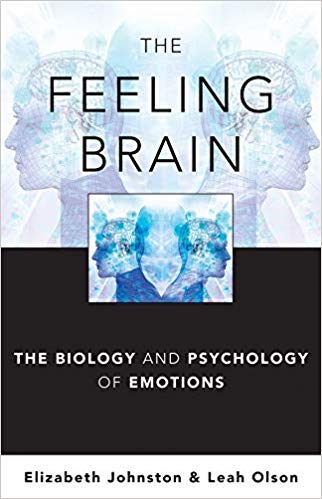
Book: The Feeling Brain: The Biology and Psychology of Emotions

Book Title:

The Feeling Brain: The Biology and Psychology of Emotions.

Author(s): Elizabeth Johnston (DPhil) and Leah Olson (PhD).

Year: 2015.

Edition: One.

Publisher: W.W. Norton & Company.

Type(s): Hardcover and Kindle.

Synopsis:

A reader-friendly exploration of the science of emotion.

After years of neglect by both mainstream biology and psychology, the study of emotions has emerged as a central topic of scientific inquiry in the vibrant new discipline of affective neuroscience. Elizabeth Johnston and Leah Olson trace how work in this rapidly expanding field speaks to fundamental questions about the nature of emotion: What is the function of emotions? What is the role of the body in emotions? What are “feelings,” and how do they relate to emotions? Why are emotions so difficult to control? Is there an emotional brain?

The authors tackle these questions and more in this “tasting menu” of cutting-edge emotion research. They build their story around the path-breaking 19th century works of biologist Charles Darwin and psychologist and philosopher William James. James’s 1884 article “What Is an Emotion?” continues to guide contemporary debate about minds, brains, and emotions, while Darwin’s treatise on “The Expression of Emotions in Animals and Humans” squarely located the study of emotions as a critical concern in biology.

Throughout their study, Johnston and Olson focus on the key scientists whose work has shaped the field, zeroing in on the most brilliant threads in the emerging tapestry of affective neuroscience. Beginning with early work on the brain substrates of emotion by such workers such as James Papez and Paul MacLean, who helped define an emotional brain, they then examine the role of emotion in higher brain functions such as cognition and decision-making. They then investigate the complex interrelations of emotion and pleasure, introducing along the way the work of major researchers such as Antonio Damasio and Joseph LeDoux. In doing so, they braid diverse strands of inquiry into a lucid and concise introduction to this burgeoning field, and begin to answer some of the most compelling questions in the field today.

How does the science of “normal” emotion inform our understanding of emotional disorders? To what extent can we regulate our emotions? When can we trust our emotions and when might they lead us astray? How do emotions affect our memories, and vice versa? How can we best describe the relationship between emotion and cognition? Johnston and Olson lay out the most salient questions of contemporary affective neuroscience in this study, expertly situating them in their biological, psychological, and philosophical contexts. They offer a compelling vision of an increasingly exciting and ambitious field for mental health professionals and the interested lay audience, as well as for undergraduate and graduate students.

Meditation & Mindfulness

“Explain your work in one easy paragraph.

I am a Buddhist monk who teaches meditation and mindfulness. I’m interested in the application of Buddhist philosophy to the problems of modern life. Meditation is training for the mind, helping us become less controlled by stressful thoughts and emotions. Mindfulness brings the benefits of meditation into daily life. I am also interested in the interface between Buddhism and science, and I frequently collaborate with neuroscientists and medics.

How did you become a monk?

I had an extreme burnout 26 years ago due to high levels of stress, and I went to a Buddhist monastery to find answers. I loved it so much, I decided to remain a monk.

Did you have to overcome any particular challenges to get where you are today?

I used to have bouts of depression and anxiety, so my journey has involved quite a few rocky patches. I do, however, feel that these struggles have helped me to grow and discover valuable knowledge that I can share with others.” (Thubten, 2019, p.56).

Reference

Thubten, G. (2019) The Back Pages: The Q&A. New Scientist. 05 October 2019.

Can Emotional Responses to Stressors in Everyday Life Predict Long-Term Trajectories of Depressive Symptoms?

Research Paper Title

Emotional Responses to Stressors in Everyday Life Predict Long-Term Trajectories of Depressive Symptoms.

Background

Individuals’ emotional responses to stressors in everyday life are associated with long-term physical and mental health. Among many possible risk factors, the stressor-related emotional responses may play an important role in future development of depressive symptoms.

The current study examined how individuals’ positive and negative emotional responses to everyday stressors predicted their subsequent changes in depressive symptoms over 18 months.

Methods

Using an ecological momentary assessment approach, participants (n = 176) reported stressor exposure, positive affect (PA), and negative affect (NA) five times a day for 1 week (n = 5,483 observations) and provided longitudinal reports of depressive symptoms over the subsequent 18 months.

A multivariate multilevel latent growth curve model was used to directly link the fluctuations in emotions in response to momentary stressors in everyday life with the long-term trajectory of depressive symptoms.

Results

Adults who demonstrated a greater difference in stressor-related PA (i.e., relatively lower PA on stressor vs. nonstressor moments) reported larger increases in depressive symptoms over 18 months.

Those with greater NA responses to everyday stressors (i.e., relatively higher NA on stressor vs. nonstressor moments), however, did not exhibit differential long-term changes in depressive symptoms.

Conclusions

Adults showed a pattern consistent with both PA and NA responses to stressors in everyday life, but only the stressor-related changes in PA (but not in NA) predicted the growth of depressive symptoms over time.

These findings highlight the important-but often overlooked-role of positive emotional responses to everyday stressors in long-term mental health.

Reference

Zhaoyang, R., Scott, S.B., Smyth, J.M., Kang, J.E. & Sliwinski, M.J. (2019) Emotional Responses to Stressors in Everyday Life Predict Long-Term Trajectories of Depressive Symptoms. Annals of Behavioral Medicine. pii: kaz057. doi: 10.1093/abm/kaz057. [Epub ahead of print].