Book: The Feeling Brain: The Biology and Psychology of Emotions

Book Title:

The Feeling Brain: The Biology and Psychology of Emotions.

Author(s): Elizabeth Johnston (DPhil) and Leah Olson (PhD).

Year: 2015.

Edition: One.

Publisher: W.W. Norton & Company.

Type(s): Hardcover and Kindle.

Synopsis:

A reader-friendly exploration of the science of emotion.

After years of neglect by both mainstream biology and psychology, the study of emotions has emerged as a central topic of scientific inquiry in the vibrant new discipline of affective neuroscience. Elizabeth Johnston and Leah Olson trace how work in this rapidly expanding field speaks to fundamental questions about the nature of emotion: What is the function of emotions? What is the role of the body in emotions? What are “feelings,” and how do they relate to emotions? Why are emotions so difficult to control? Is there an emotional brain?

The authors tackle these questions and more in this “tasting menu” of cutting-edge emotion research. They build their story around the path-breaking 19th century works of biologist Charles Darwin and psychologist and philosopher William James. James’s 1884 article “What Is an Emotion?” continues to guide contemporary debate about minds, brains, and emotions, while Darwin’s treatise on “The Expression of Emotions in Animals and Humans” squarely located the study of emotions as a critical concern in biology.

Throughout their study, Johnston and Olson focus on the key scientists whose work has shaped the field, zeroing in on the most brilliant threads in the emerging tapestry of affective neuroscience. Beginning with early work on the brain substrates of emotion by such workers such as James Papez and Paul MacLean, who helped define an emotional brain, they then examine the role of emotion in higher brain functions such as cognition and decision-making. They then investigate the complex interrelations of emotion and pleasure, introducing along the way the work of major researchers such as Antonio Damasio and Joseph LeDoux. In doing so, they braid diverse strands of inquiry into a lucid and concise introduction to this burgeoning field, and begin to answer some of the most compelling questions in the field today.

How does the science of “normal” emotion inform our understanding of emotional disorders? To what extent can we regulate our emotions? When can we trust our emotions and when might they lead us astray? How do emotions affect our memories, and vice versa? How can we best describe the relationship between emotion and cognition? Johnston and Olson lay out the most salient questions of contemporary affective neuroscience in this study, expertly situating them in their biological, psychological, and philosophical contexts. They offer a compelling vision of an increasingly exciting and ambitious field for mental health professionals and the interested lay audience, as well as for undergraduate and graduate students.

Book: Evidence-based Ayurveda: Defining a New Scientific Path

Book Title:

Evidence-based Ayurveda: Defining a New Scientific Path.

Author(s): C.P. Khare.

Year: 2019.

Edition: One.

Publisher: Routledge.

Type(s): Hardcover and Kindle.

Synopsis:

This groundbreaking work calls for the overhaul of traditional Ayurveda and its transformation into a progressive, evidence-based practice.

This book begins by looking back at the research of the last three centuries, Indian medicinal plants, and Ayurveda in a twenty-first-century context. The first part of this book explores the limitations of contemporary Ayurvedic pharmacognosy and pharmacology, discussing the challenges the practice faces from research and clinical trials. It makes a compelling argument for the necessity of change. The second part of the book defines and elaborates upon a new, scientific path, taking the reader from identification of the herb through all stages of drug development.

An essential tool for herbal drug development, this text is designed for knowledgeable students, practitioners, and scholars of Ayurveda, pharmacy, and herbal medicine.

Book: Emotional Detox for Anxiety

Book Title:

Emotional Detox for Anxiety: 7 Steps to Release Anxiety and Energize Joy.

Author(s): Sherianna Boyle.

Year: 2019.

Edition: One.

Publisher: Adams Media.

Type(s): Paperback, Kindle, and Audiobook.

Synopsis:

Most of us view a detox as a physical experience, but what we do not realise is that it is not just our physical bodies that need to be cleansed in order to return to a healthy state.

When we are unable to process our stress and worries, they can become toxic to ourselves and those around us. Wellness expert and author of Emotional Detox, Sherianna Boyle modifies the revolutionary C.L.E.A.N.S.E method to guide you through the 7 steps to a successful anxiety detox.

The 7 steps include:

  • Clear;
  • Look Inward;
  • Emit;
  • Activate Joy;
  • Nourish;
  • Surrender; and
  • Ease.

Experiencing reactions to worries, stress, and doubt can put obstacles in our path to a happy and fulfilled life.

An anxiety detox is a systematic and mindful way to purge these harmful thoughts. Once freed from this burden, an anxiety detox returns us to our joyful, carefree state.

Emotional Detox for Anxiety is a reset for the soul, flushing out negative feelings, clearing a path for new habits and behaviours, and energising you to accept peace, acceptance, and pure joy.

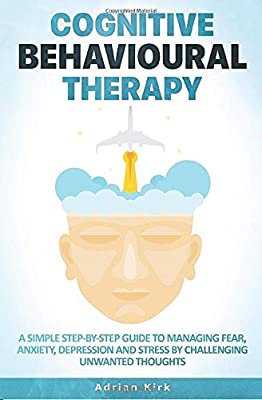
Book: Cognitive Behavioural Therapy

Book Title:

Cognitive Behavioural Therapy: A Simple Step-by-Step Guide to Managing Fear, Anxiety, Depression and Stress by Challenging Unwanted Thoughts.

Author(s): Adrian Kirk.

Year: 2019.

Edition: One.

Publisher: Independently Published.

Type(s): Paperback and Kindle.

Synopsis:

Do you want to significantly improve the way you behave around others by refining your thought patterns?

Do you want to be able to interpret life events from another person’s perspective to help you understand others?

This book will help you achieve those goals!

Many of us interprets information that we receive differently, whether it is at work or elsewhere. As a result, we end up having to deal with problems that others might not understand or even see. This is where Cognitive Behavioural Therapy comes in!

Inside this book, Cognitive Behavioural Therapy: A Simple step-by-step Guide to Managing Fear, Anxiety, Depression and Stress by Challenging Unwanted Thoughts, you will find new ideas and strategies to help you improve the way you approach problems, with chapters that include:

  • Understanding the root causes of your thought pattern.
  • Identifying and challenging your worst nightmares.
  • Setting realistic goals and how to stay on track.
  • Applying exercises to combat unwanted thought.
  • And much more…

This book is ideal for anyone who has never heard of cognitive behavioural therapy before, or for those who are not getting the most from the ones they are currently practising.

Whichever it is, Cognitive Behavioural Therapy: A Simple step-by-step Guide to Managing Fear, Anxiety, Depression and Stress by Challenging Unwanted Thoughts is the book which will provide a platform for success like no other!

Book: Cognitive Behavioural Therapy

Book Title:

Cognitive Behavioral Therapy: A Comprehensive Guide to Using CBT to Overcome Depression, Anxiety, Intrusive Thoughts, and Rewiring Your Brain to Regain Control Over Your Emotions and Life.

Author(s): Stuart Watson.

Year: 2020 (Hardcover) and 2019 (Kindle).

Edition: One.

Publisher: Ationa Publications.

Type(s): Hardcover, Paperback, Kindle and Audiobook.

Synopsis:

If you’re looking for an effective method to treat anxiety, depression, phobias and more, then keep reading…

Cognitive-behavioural therapy, otherwise known as “CBT,” is an incredibly well-known therapy method within the field of psychology. Yet, unless you work within this field you likely know very little about CBT, how it works, and why it is one of the best therapy methods around.

In this book you will learn about the amazing affects this therapy has been proven to have. You can learn how to use CBT from within your own home, helping to treat anxiety, depression, post-traumatic stress disorder, panic disorder, obsessive-compulsive disorder, and more. No longer do you have to suffer in silence, simply existing through life. You can learn to heal and begin to actually live a full life again.

Whether you have been diagnosed with social anxiety disorder, major depression, post-traumatic stress disorder, or simply are struggling throughout your daily life without a diagnosis, CBT can help. While it is always best to go to a professional and receive a diagnosis of your condition, you can also use the tools of CBT independently at home, with or without an official diagnosis.

You can learn to better understand your mind, overcome intrusive thoughts, cope with daily stress, and transform your negative thought patterns into something more positive. CBT is truly transformative, and with a little daily effort, you could possibly change your entire life for the better.

The following are some of the critical things explored in the book:

  • The Basic Premise of CBT and how it Can Benefit You in Daily Life.
  • The Fascinating History of CBT.
  • 16 Common Mistakes and Myths about CBT.
  • An In-Depth Look into What CBT Can Treat and Why it Works.
  • The Key Principles of CBT.
  • Overcoming Anxiety and Depression Step-By-Step.
  • 3 Alternative CBT Approaches.
  • Discover 7 Inspiring Tales of CBT Success.
  • And so much more.

Book: Cognitive Behaviour Therapy Foundations for Practice.

Book Title:

Cognitive Behaviour Therapy Foundations for Practice.

Author(s): Frank Wills and Diana Sanders.

Year: 2012.

Edition: Third.

Publisher: SAGE Publications Ltd.

Synopsis:

In their established introduction to contemporary CBT theory and practice, Diana Sanders and Frank Wills show how therapeutic change takes place across a network of cognitive, emotional and behavioural functioning.

They explain the central concepts of CBT and illustrate – with numerous case examples – how these can effectively be put into practice at each stage of the therapeutic process.

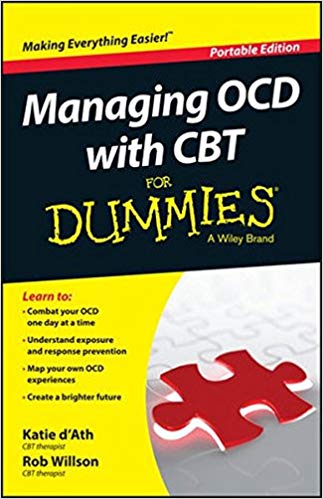
Book: Managing OCD with CBT For Dummies

Book Title:

Managing OCD with CBT for Dummies.

Author(s): Katie D’Ath and Rob Wilson.

Year: 2016.

Edition: First.

Publisher: Wiley Publishing, Inc.

Synopsis:

Break the chains of OCD with Cognitive Behavioural Therapy.

Are you suffering from Obsessive Compulsive Disorder (OCD)? You’re not alone. Whether you’ve tried countless treatments or are seeking help for the first time, this expert, accessible guide is your beacon of hope for breaking the chains of this crippling disorder. Managing OCD with CBT For Dummies uses mindfulness-based Cognitive Behavioural Therapy (CBT) to eradicate OCD from your day-to-day life. Through clear and sensitive direction, you’ll find out how to identify and correct negative thought patterns, confront your problems with positive solutions and recognise the power of cognitive thinking.

Once a term only used by psychologists and counsellors, CBT is now in common use and has become the preferred treatment method for a variety of psychological issues, including anxiety and depression, self-esteem, eating disorders, addiction, and many others. If you are planning on trying it on its own or in conjunction with other types of therapies, you’ll be heartened to know that a staggering 75% of people with OCD are significantly helped by CBT – which is why it remains the treatment of choice for tackling the disorder by the National Institute for Health and Clinical Excellence (NICE).

  • Demonstrates how CBT encourages new thinking patterns to combat destructive thought tendencies.
  • Explains the causes and symptoms of OCD.
  • Shows you how to use CBT to modify everyday thoughts and behaviours with the aim of positively influencing your emotions.
  • Illustrates the importance of facing your fears and offers positive strategies on exposure therapy.

There’s no need to let OCD continue to control your life. This how-to guide helps you break down the negative patterns that have been keeping you hostage―and allows you to build a positive future free of the hold of OCD.

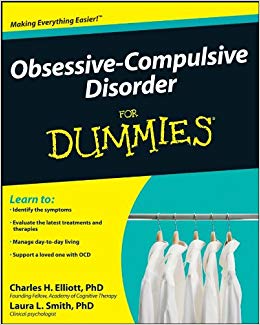
Book: Obsessive-Compulsive Disorder For Dummies

Book Title:

Obsessive-Compulsive Disorder For Dummies.

Author(s): Laura L. Smith, PhD and Charles H. Elliott, PhD.

Year: 2008.

Edition: First.

Publisher: Wiley Publishing, Inc.

Synopsis:

Arguably one of the most complex emotional disorders, Obsessive Compulsive Disorder (OCD) is surprisingly common.

Furthermore, most people at some time in their lives exhibit a smattering of OCD-like symptoms.

Obsessive Compulsive Disorder For Dummies sorts out the otherwise curious and confusing world of obsessive compulsive disorder.

Engaging and comprehensive, it explains the causes of OCD and describes the rainbow of OCD symptoms. The book shows readers whether OCD symptoms represent normal and trivial concerns (for example, a neat freak) or something that should be checked out by a mental health professional (for example, needing to wash hands so often that they become raw and red).

In easy to understand steps, the authors lay out the latest treatments that have been proven to work for this disorder, and provide practical and real tools for living well long-term.

Whether you or someone you care about has this disorder, Obsessive Compulsive Disorder For Dummies gives you an empathic understanding of this fascinating yet treatable mental disorder.

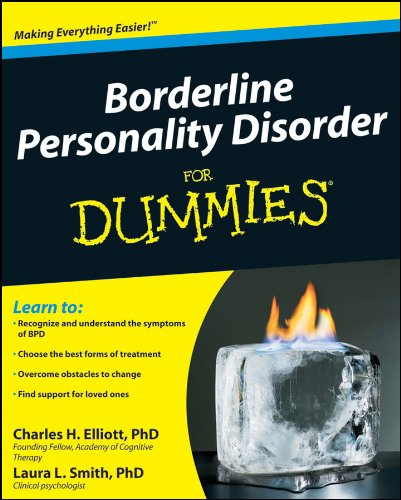
Book: Borderline Personality Disorder For Dummies

Book Title: Borderline Personality Disorder For Dummies.

Author(s): Laura L. Smith, PhD and Charles H. Elliott, PhD.

Year: 2009.

Edition: First.

Publisher: Wiley Publishing, Inc.

Synopsis:

A clear and easy guide to the symptoms, causes, and treatments of Borderline Personality Disorder (BPD) affects more than 5.4 million people in the United States.

The sympathetic and comprehensive information in Borderline Personality Disorder For Dummies helps those diagnosed with BPD get to the root of their condition, develop strategies for breaking the destructive cycle, and ultimately learn to live well.

It discusses the best forms of treatment as well as how to find an appropriate therapist.

This thorough guide is also filled with information to help spouses, parents, and other loved ones understand and accept the disease, and to offer support.

Book: Child Psychology & Development for Dummies

Book Title: Child Psychology & Development for Dummies

Author(s): Laura L. Smith, PhD and Charles H. Elliott, PhD.

Year: 2011.

Edition: First.

Publisher: Wiley Publishing, Inc.

Synopsis:

Grasp a child’s cognitive development, detect abnormalities, and learn what to do next.

An essential guide for parents, teachers, and caregivers, Child Psychology & Development For Dummies provides an informational guide to cognitive development at every stage of a child’s life, as well as expert tips and guidance on how to diagnose, treat, and overcome the cognitive barriers that impede learning and development.

  • The nuts and bolts – delve into the soup of kids’ development, including biology, psychology, learning, environment, and culture.
  • What makes kids tick? – discover how heredity, environment, experience, and culture interact to determine a child’s physical and emotional development.
  • Watch them grow – get an understanding of what a “normal” childhood should look like from conception through adolescence, and the types of behaviours to anticipate throughout.
  • Learn to spot trouble – find out what can go wrong during a child’s development, from physical problems like chronic illness to psychological problems like autism.
  • Ask for help – get expert guidance on the therapies and interventions that work, and how you can collaborate with professionals for an even better outcome.