Book: The Rough Guide to Psychology

Book Title:

The Rough Guide to Psychology: An Introduction to Human Behaviour and the Mind.

Author(s): Dr. Christian Jarrett.

Year: 2011.

Edition: First (1st).

Publisher: Rough Guides.

Type(s): Paperback and Kindle.

Synopsis:

The Rough Guide to Psychology looks at the question psychologists have been asking for over a hundred years – why are we the way we are? It starts with you, your mind and brain, broadening out to look at your friends and other relationships, then finally on to crowds, mobs and religion.

It explores the latest research relevant to crime, schooling, sport, politics, shopping and health, and what happens when the mind goes wrong, including depression, anxiety, schizophrenia, and more unusual conditions.

The Rough Guide to Psychology includes fascinating information on real-life psychology, testing your memory, intelligence, personality and much more, with advice on everything from chat-up lines to developing your creativity.

The Rough Guide to Psychology is your ultimate guide to this fascinating subject.

Football, Prince William and Our Mental Health (2020)

Introduction

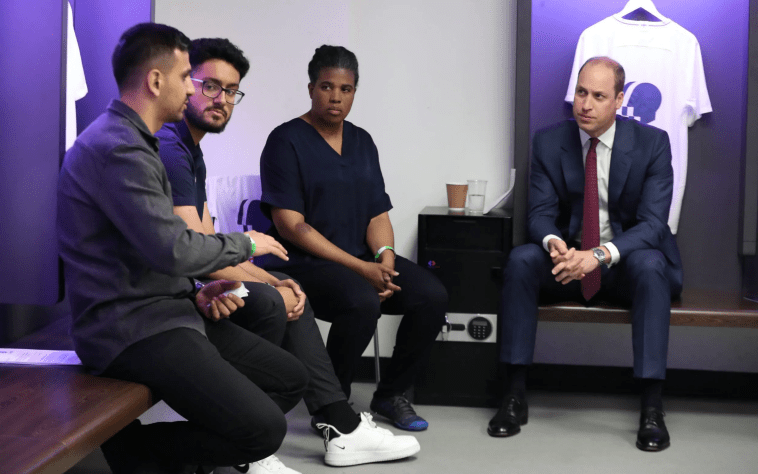
Documentary following Prince William’s campaign to get British men to open up about mental health issues through football.

Outline

Why do British men struggle to talk about their emotions? The Duke of Cambridge has spent the past year campaigning to change attitudes to mental health in Britain. Spurred on by the fact that suicide is the biggest killer of young men in this country, he wants to use football as a way to get men talking and to break the taboo that surrounds mental health. As a real fan of the sport, William has seen the way men express their feelings at football games. Now he wants to help men show the same passion and openness away from the game.

The film follows William as he meets players and fans from grassroots to the elite of the game and openly discusses their mental health challenges. Former England goalkeeper Joe Hart explains how he has learnt to cope with difficulties at the very top of the game, and a group of bereaved fathers reveal how they use their local football team as a support network and safe space to talk. Former Premier League footballer Marvin Sordell opens up about his struggles with depression, while Chelsea manager Frank Lampard compares life now with his early experiences of professional football.

As well as campaigning to change attitudes today, William explores aspects of British history that have helped create the culture of silence around this issue. Honest and touching, the film powerfully conveys his passion to change the conversation around mental health in Britain.

Production & Filming Details

  • Director(s): Marcus Plowright.
  • Producer(s): Gabby Saper, Lucy Rogers, Tony Pastor, and Jonathan Smith.
  • Production: Goalhanger Films.
  • Distributor(s): BBC.
  • Release Date: 28 May 2020.
  • Running Time: 59 minutes.
  • Country: UK.
  • Language: English.

Book: ICD-10-PCS 2020: The Complete Official Codebook

Book Title:

ICD-10-PCS 2020: The Complete Official Codebook.

Author(s): America Medical Association.

Year: 2019.

Edition: First (1st).

Publisher: American Medical Association (AMA).

Type(s): Paperback and Kindle.

Synopsis:

ICD-10-PCS 2020: The Complete Official Codebook contains the complete ICD-10-PCS code set and supplementary appendixes required for reporting inpatient procedures. This illustrated codebook presents the code set in 17 sections of tables arranged by general procedure type. Tables within the extensive Medical and Surgical section are additionally sectioned out by body system, indicated by colour-coded page borders.

ICD-10-PCS contains classifications for procedures, devices and technologies.

Features and Benefits:

  • Summary of changes.
    • Quickly see how additions and deletions affect each section of ICD-10-PCS.
  • Complete 2020 ICD-10-PCS code set.
    • The code set is organised in 17 sections. Each section contains a code table by which a code can be built through character selections that reflect the procedure performed.
    • A character meanings table and citations to American Hospital Association’s Coding Clinic start each section.
  • Official coding guidelines.
    • Learn how to use the code set appropriately following the guidelines specific for each section.
  • Illustrations.
    • The full-colour illustrations provide a visual explanation of anatomy and procedural approach.
    • Approach illustrations show the access location, method, and instrumentation that determine the approach.
    • Body parts with indicators to applicable code characters (provided immediately after the character meaning tables in the Medical/Surgical sections)
  • Visual alerts.
    • This edition provides colour-coding and symbols that identify male/female procedures and new/revised character values.
  • Detailed information on structure and conventions of ICD-10-PCS.
    • Learn about the unique structure and the specific definitions and functions of each character. Practice your skills with sample exercises (answers included).
  • Colour-coding and symbols for the Medicare Code Edits.
    • This edition includes colour-coding and symbols for the most comprehensive coverage of ICD10 MS-DRG MCEs for procedures including;
      • Non-covered procedures.
      • Limited coverage procedures.
      • Combination only procedures.
      • Non-operating room procedures affecting MS-DRG assignment.
      • Non-operating room procedures NOT affecting MS-DRG assignment.
      • Hospital acquired condition (HAC)-related procedures.
  • Procedure combination tables.
    • Identify ICD-10-PCS code combination requirements needed to satisfy certain MS-DRG requirements.

Intellectual Disabilities & Coexisting Mental Health Conditions

Research Paper Title

Developmental stages and estimated prevalence of coexisting mental health and neurodevelopmental conditions and service use in youth with intellectual disabilities, 2011-2012.

Background

Few studies exist on mental health and neurodevelopmental conditions and service use among youth with intellectual disabilities (IDs), which makes it difficult to develop interventions for this population.

The objective of the study is to

  1. Estimate and compare the prevalence of mental health and neurodevelopmental conditions in youth with and without ID across three developmental stages; and
  2. Estimate and compare mental health service use in youth with and without ID across three developmental stages.

Methods

The researchers conducted secondary data analysis using cross-sectional data collected from caregivers completing the 2011-2012 National Survey of Children’s Health.

The data set represents a nationally representative sample of youth (0-17 years) in the USA with one child from each household being randomly selected.

Data were collected from caregivers in 50 states, Washington D.C. and the US Virgin Islands.

The researchers restricted the sample to parents of youth between 3-17 years (N = 81 510).

Results

Compared with youth without ID, youth ages 3-17 with ID had a statistically significantly higher prevalence of (1) mental health and neurodevelopmental conditions and (2) mental health care use and medication use for mental health and neurodevelopmental issues (other than attention deficit disorder/attention deficit hyperactivity disorder).

Clinically significant differences in coexisting conditions and service use were also found across developmental stages.

Conclusions

Youth with ID are at greater risk of having coexisting mental health and neurodevelopmental conditions than youth without ID and are more likely to receive treatment.

Therefore, clinicians should consider mental health and neurodevelopmental conditions and the unique needs of youth by developmental stage when tailoring interventions for youth with ID.

Reference

Comer-HaGans, D., Weller, B.E., Story, C. & Holton, J. (2020) Developmental stages and estimated prevalence of coexisting mental health and neurodevelopmental conditions and service use in youth with intellectual disabilities, 2011-2012. Journal of Intellectual Disability Research. 64(3), pp.185-196. doi: 10.1111/jir.12708. Epub 2020 Jan 1.

Eight (2016)

Introduction

A woman suffering from Obsessive Compulsive Disorder (OCD) struggles with her morning routine of trying to get to work on time.

Outline

Crippled by severe agoraphobia and obsessive-compulsive disorder, Sarah has not left her house in two years.

She has long since lost both her husband and daughter, and each and every day is lived going through a cycle of rituals repeated in series of eights.

But today Sarah will attempt to conquer her fears by fulfilling one simple yet seemingly impossible task: stepping out the front door.

Production & Filming Details

  • Director(s): Peter Blackburn.
  • Producer(s): Marie Adler, Peter Blackburn, Caitlin Johnston, and Graham Young.
  • Writer(s): Peter Blackburn.
  • Music: Ryan Walsh.
  • Cinematography: Brad Francis.
  • Editor(s): Joe Lancaster and Graham Young.
  • Production: Blacmac Productions.
  • Distributor(s): Adler & Associates Entertainment.
  • Release Date: 2016.
  • Running Time: 81 minutes.
  • Country: Australia.
  • Language: English.

OCD and Me (2015)

Introduction

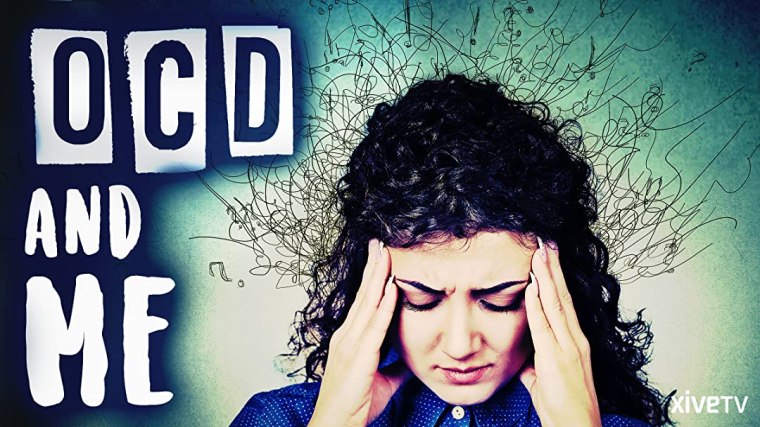
Most people have heard of it and many of us say we have a little bit of it, but what exactly is Obsessive Compulsive Disorder.

OCD and Me gives us a greater appreciation of this secretive and often misunderstood mental health condition.

Outline

Most people have heard of OCD, but what exactly is Obsessive Compulsive Disorder?

An estimated two to three percent of the population suffers from the condition, which goes far beyond the common stereotypes of excessive hand washing or repetitive behaviours.

To penetrate the reality of this mental illness, this film gets to know several who have agreed to come forward and talk about their OCD.

Production & Filming Details

  • Director(s): Adrian McCarthy.
  • Producer(s): Adrian McCarthy, Niamh O’Connor, Zlata Filipovic, and Martha O’Neill..
  • Cinematography: Eleanor Bowman.
  • Editor(s): Brenda Morrissey.
  • Production: Wildfire Films.
  • Release Date: 02 February 2015.
  • Running Time: 53 minutes.
  • Country: Ireland.
  • Language: English.

Stacey Dooley: On the Psych Ward (2020)

Introduction

Every year thousands of young people are brought to mental health units across the UK to seek treatments.

Latest estimates put the number of people who suffer from a mental condition at 1 in 3 and most first experience mental health problems when they are young.

Refer to Stacey Dooley: Back on the Psych Ward (2021).

Outline

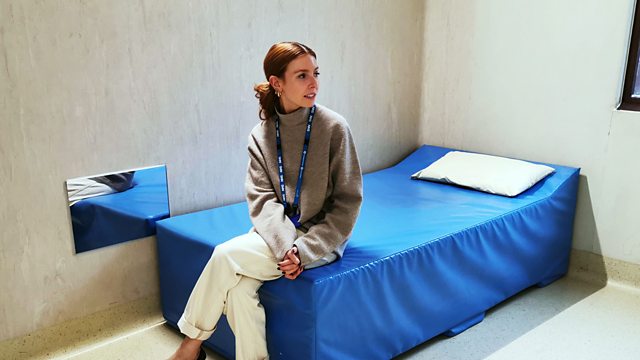
Stacey is going to work in Springfield Hospital, one of the oldest mental health units in the UK, to see what life is really like on the front line of mental health services. More than just observing, she will be working directly with staff, dealing with patients, and taking part in making incredibly tough decisions on what is best for patients.

Stacey meets Rachelle who has been diagnosed with EUPD (Emotionally Unstable Personality Disorder). Still in her 20s, she’s had a troubled life already – full of suicide attempts and self-harm. She opens up to Stacey about her struggles with her illness, and her hope that she will soon get the talking therapy that she believes could be the solution to her problems. The doctors here agree that this is not the best place for Rachelle to be, and they are hoping she will get a place at a specialist unit in Cambridge where she can make real progress in coping with her condition.

Stacey also spends time in a special acute assessment unit where patients can self-refer. She meets 19-year-old Kyle, who has come to Springfield in the midst of a severe depression and incident of self-harm. As Stacey takes part in a discussion with staff about whether to admit him to the hospital or support him in the community, Stacey experiences for herself just how difficult the decisions and the judgement calls are that the team have to make.

Police have brought Laura to the 136 unit, so called because it is the local designated place of safety as defined under section 136 of the Mental Health Act. She has been sectioned after being found on a motorway bridge, threatening to jump. She opens up to Stacey as they talk, trying to explain her thinking and her ongoing struggles with depression and her eating disorder – all stemming from traumas earlier in her short life.

Production & Filming Details

Losing It – Our Mental Health Emergency (2020): S01E04 – Street Triage

Introduction

As attitudes to mental health change during a surge in the number of people asking for help or harming themselves, this series joins the frontline care services in Nottinghamshire.

Nottinghamshire Healthcare NHS Foundation Trust opens its doors to TV cameras to reveal what it means to be in crisis.

Going to the heart of front line services as staff struggle to tackle an unprecedented rise in demand.

Outline

A look at the work of Street Triage, a blue-light rapid response team in Nottinghamshire, where the number of attempted suicides is staggering and ward beds are in short supply.

Losing It: Our Mental Health Emergency Series

Production & Filming Details

  • Release Date: 2020.
  • Original Network: Channel 4.

Losing It – Our Mental Health Emergency (2020): S01E03 – Josh, Christopher & Zoe

Introduction

As attitudes to mental health change during a surge in the number of people asking for help or harming themselves, this series joins the frontline care services in Nottinghamshire.

Nottinghamshire Healthcare NHS Foundation Trust opens its doors to TV cameras to reveal what it means to be in crisis.

Going to the heart of front line services as staff struggle to tackle an unprecedented rise in demand.

Outline

Josh is brought to A&E after trying to kill himself.

Is it safe to send the 15-year-old home?

After 11 years and multiple issues, Christopher faces being discharged from the service.

Losing It: Our Mental Health Emergency Series

Production & Filming Details

  • Release Date: 2020.
  • Original Network: Channel 4.

Losing It – Our Mental Health Emergency (2020): S01E02 – Three Teenage Girls

Introduction

As attitudes to mental health change during a surge in the number of people asking for help or harming themselves, this series joins the frontline care services in Nottinghamshire.

Nottinghamshire Healthcare NHS Foundation Trust opens its doors to TV cameras to reveal what it means to be in crisis.

Going to the heart of front line services as staff struggle to tackle an unprecedented rise in demand.

Outline

A young teen comes to A&E having self-harmed.

A 16-year-old is on the psychiatric ward.

And a 14-year-old’s eating disorder risks permanent harm to her body.

Losing It: Our Mental Health Emergency Series

Production & Filming Details

  • Release Date: 2020.
  • Original Network: Channel 4.