Book: Mental Health and Well-being in Animals

Book Title:

Mental Health and Well-being in Animals.

Author(s): Dr Franklin D. McMillan (Editor).

Year: 2019.

Edition: Second (2nd).

Publisher: CABI Publishing.

Type(s): Hardcover and Kindle.

Synopsis:

The second edition is fully revised, expanded, and comprehensively updated with the most current knowledge about the full array of mental health issues seen in animals.

Written by key opinion leaders, internationally-recognized experts and specialists, it is comprehensive covering basic principles to mental wellness, emotional distress, suffering and mental illness, through to measurement and treatment.

With even more practical information and clinical pearls, this book remains invaluable to veterinary professionals, animal welfare researchers and advocates, and other animal caregivers.

What is the Role of Informant Discrepancies in Mental Health in Relation to Sexuality?

Research Paper Title

Mental-health disparities between heterosexual and sexual-minority adolescents: Examining the role of informant discrepancies.

Background

An emerging literature documents substantial mental-health disparities by sexual orientation amongst adolescents, with sexual-minority youth exhibiting poorer mental health than heterosexual youth.

This brief report provides the first empirical account of how the association between sexual-minority status and adolescent mental health differs depending on who assesses adolescents’ mental health (child/mother/father/teacher), and how informant discrepancies in assessments of adolescent mental health differ by adolescents’ sexual orientation.

Methods

Data come from an Australian national sample of 14-/15-year-old adolescents (Longitudinal Study of Australian Children; n = 3,000).

Adolescent mental health is measured using multiple measures from the Strengths and Difficulties Questionnaire, and modelled using multivariable linear regression models.

Results

Mental-health disparities between sexual-minority and heterosexual adolescents emerged irrespective of who assessed the child’s mental health.

However, their magnitude varied substantially by informant, being largest when mental-health was reported by adolescents (~0.7 standard deviations) and smallest when reported by teachers (~0.2 standard deviations).

Discrepancies between mental-health scores collected from the child and other informants were largest for internalising than externalising behaviours, and in child-father than child-mother comparisons.

Conclusions

Understanding informant discrepancies and their meaning is pivotal to designing surveys that generate robust insights into the health of sexual-minority adolescents, as well as appropriate policy interventions.

Reference

Perales, F., Campbell, A. & Johnson, S. (2020) Mental-health disparities between heterosexual and sexual-minority adolescents: Examining the role of informant discrepancies. Journal of Adolescence. 79, pp.122-127. doi: 10.1016/j.adolescence.2020.01.006. Epub 2020 Jan 15.

Is There a Link between Affordable Housing & Mental Health?

Research Paper Title

Mental health and prolonged exposure to unaffordable housing: a longitudinal analysis.

Background

When housing is insufficient, or poor quality, or unaffordable there are well established health effects.

Despite the pervasiveness of housing affordability problems (widely referred to as Housing Affordability Stress, HAS), little quantitative work has analysed long-term mental health effects.

The researchers examine the mental health effects of (prolonged and intermittent) patterns of exposure to housing affordability problems.

Methods

The researchers analysed a large, nationally representative longitudinal population sample of individuals, following them over five-year periods to assess the relative mental health effects of different patterns of exposure to housing affordability problems.

To maximise the number of observations and the robustness of findings, they used 15 years (2002-2016) of data, across three pooled exposure windows.

Longitudinal regression analysis with Mundlak adjustment was used to estimate the association between prolonged (constant over a 5-year period) and intermittent exposure to HAS, and mental health (as measured using the SF-36 MCS).

Results

The researchers found that, on average, both prolonged and intermittent exposure were associated with lower mental health (Beta = – 1.338 (95% CI – 2.178-0.488) and Beta = – 0.516 (95% CI – 0.868-0.164), respectively).

When they additionally adjusted for baseline mental health, thereby accounting for initial mental health status, coefficients were attenuated but remained significant.

Conclusions

Both prolonged and intermittent exposure to HAS negatively impact mental health, irrespective of baseline mental health.

Interventions that target affordable housing would benefit population mental health.

Mental health interventions should be designed with people’s housing context in mind.

Reference

Baker, E., Lester, L., Mason, K. & Bentley, R. (2020) Mental health and prolonged exposure to unaffordable housing: a longitudinal analysis. Social Psychiatry and Psychiatric Epidemiology. 55(6), pp.715-721. doi: 10.1007/s00127-020-01849-1. Epub 2020 Mar 5.

What are the Psychological Factors Associated with Financial Hardship & Mental Health?

Research Paper Title

Psychological factors associated with financial hardship and mental health: A systematic review.

Background

A review of the literature investigating the role of psychological factors in the relationship between financial hardship and mental health was completed.

Methods

The review sought to identify which factors have been most consistently and reliably indicated, and the mechanisms by which these factors are proposed to contribute to the association between hardship and mental health.

Results

Although the review identified that a broad variety of factors have been investigated, skills related to personal agency, self-esteem and coping were most frequently and reliably associated with the relationship between financial hardship and mental health outcomes.

Just over half of the studies reviewed concluded that the psychological factor investigated was either eroded by financial hardship, increasing vulnerability to mental health difficulties, or protected mental health by remaining intact despite the effects of financial hardship.

The remaining studies found no such effect or did not analyse their data in a manner in which a mechanism of action could be identified.

Conclusions

The methodological quality of the research included in the review was variable.

The valid and reliable measurement of financial hardship, and conclusions regarding causation due to the use of predominantly cross-sectional design were areas of particular weakness.

Reference

Frankham, C., Richardson, T. & Maguire, N. (2020) Psychological factors associated with financial hardship and mental health: A systematic review. Clinical Psychology Review. doi: 10.1016/j.cpr.2020.101832. Epub 2020 Feb 11.

What is the Effect of Urbanisation on Mental Health?

Research Paper Title

Urbanisation and emerging mental health issues.

Background

Rapid urbanisation worldwide is associated to an increase of population in the urban settings and this is leading to new emerging mental health issues.

This narrative mini-review is based on a literature search conducted through PubMed and EMBASE.

Methods

A total of 113 articles published on the issue of urban mental health have been selected, cited, reviewed, and summarised.

Results

There are emerging evidences about the association between urbanisation and mental health issues.

Urbanisation affects mental health through social, economic, and environmental factors.

It has been shown that common mental syndromes report higher prevalence in the cities.

Social disparities, social insecurity, pollution, and the lack of contact with nature are some of recognised factors affecting urban mental health.

Conclusions

Further research studies and specific guidelines should be encouraged to help policy makers and urban designers to improve mental health and mental health care facilities in the cities; additional strategies to prevent and reduce mental illness in the urban settings should be also adopted globally.

Reference

Ventriglio, A., Torales, J., Castaldelli-Maia, J.M., De Berardis, D. & Bhugra, D. (2020) Urbanization and emerging mental health issues. CNS Spectrums. 1-8. doi: 10.1017/S1092852920001236. Online ahead of print.

Can High-Intensity Interval Training Improve Physical & Mental Health Outcomes?

Research Paper Title

Can high-intensity interval training improve physical and mental health outcomes? A meta-review of 33 systematic reviews across the lifespan.

Background

High-intensity-interval-training (HIIT) has been suggested to have beneficial effects in multiple populations across individual systematic reviews, although there is a lack of clarity in the totality of the evidence whether HIIT is effective and safe across different populations and outcomes.

The aim of this meta-review was to establish the benefits, safety and adherence of HIIT interventions across all populations from systematic reviews and meta-analyses.

Methods

Major databases were searched for systematic reviews (with/without meta-analyses) of randomised & non-randomised trials that compared HIIT to a control.

Thirty-three systematic reviews (including 25 meta-analyses) were retrieved encompassing healthy subjects and people with physical health complications.

Results

Evidence suggested HIIT improved cardiorespiratory fitness, anthropometric measures, blood glucose and glycaemic control, arterial compliance and vascular function, cardiac function, heart rate, some inflammatory markers, exercise capacity and muscle mass, versus non-active controls.

Compared to active controls, HIIT improved cardiorespiratory fitness, some inflammatory markers and muscle structure.

Improvements in anxiety and depression were seen compared to pre-training.

Additionally, no acute injuries were reported, and mean adherence rates surpassed 80% in most systematic reviews.

Conclusions

Thus, HIIT is associated with multiple benefits.

Further large-scale high-quality studies are needed to reaffirm and expand these findings.

Reference

Martland, R., Mondelli, V., Gaughran, F. & Stubbs, B. (2020) Can high-intensity interval training improve physical and mental health outcomes? A meta-review of 33 systematic reviews across the lifespan. Journal of Sports Sciences. 38(4), pp.430-469. doi: 10.1080/02640414.2019.1706829. Epub 2019 Dec 31.

Need a Mental Health Buddy?

A former gunner has set up an initiative to help veterans with mental health issues in his hometown of Barrow-in-Furness.

Tony McNally has introduced a buddy system whereby ex-Service personnel give up their time to talk to others.

Working closely with local authorities and healthcare professionals, the volunteers are on standby to provide extra support to those who find themselves in a dark place.

McNally also contacted the town’s sports teams for free tickets for veterans, with rugby league outfit Barrow Raiders the first to get on board.

“I have found that when I attend a sporting event, I forget all about my own PTSD and other worries,” he said.

McNally has set up a Facebook page – Furness and South Lakes Buddy Buddy Mental Health Group.

For more info email: fslmhg@yahoo.com.

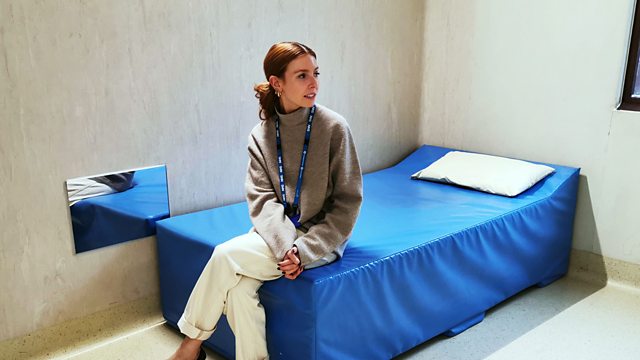
Stacey Dooley: On the Psych Ward (2020)

Introduction

Every year thousands of young people are brought to mental health units across the UK to seek treatments.

Latest estimates put the number of people who suffer from a mental condition at 1 in 3 and most first experience mental health problems when they are young.

Refer to Stacey Dooley: Back on the Psych Ward (2021).

Outline

Stacey is going to work in Springfield Hospital, one of the oldest mental health units in the UK, to see what life is really like on the front line of mental health services. More than just observing, she will be working directly with staff, dealing with patients, and taking part in making incredibly tough decisions on what is best for patients.

Stacey meets Rachelle who has been diagnosed with EUPD (Emotionally Unstable Personality Disorder). Still in her 20s, she’s had a troubled life already – full of suicide attempts and self-harm. She opens up to Stacey about her struggles with her illness, and her hope that she will soon get the talking therapy that she believes could be the solution to her problems. The doctors here agree that this is not the best place for Rachelle to be, and they are hoping she will get a place at a specialist unit in Cambridge where she can make real progress in coping with her condition.

Stacey also spends time in a special acute assessment unit where patients can self-refer. She meets 19-year-old Kyle, who has come to Springfield in the midst of a severe depression and incident of self-harm. As Stacey takes part in a discussion with staff about whether to admit him to the hospital or support him in the community, Stacey experiences for herself just how difficult the decisions and the judgement calls are that the team have to make.

Police have brought Laura to the 136 unit, so called because it is the local designated place of safety as defined under section 136 of the Mental Health Act. She has been sectioned after being found on a motorway bridge, threatening to jump. She opens up to Stacey as they talk, trying to explain her thinking and her ongoing struggles with depression and her eating disorder – all stemming from traumas earlier in her short life.

Production & Filming Details

Losing It – Our Mental Health Emergency (2020): S01E04 – Street Triage

Introduction

As attitudes to mental health change during a surge in the number of people asking for help or harming themselves, this series joins the frontline care services in Nottinghamshire.

Nottinghamshire Healthcare NHS Foundation Trust opens its doors to TV cameras to reveal what it means to be in crisis.

Going to the heart of front line services as staff struggle to tackle an unprecedented rise in demand.

Outline

A look at the work of Street Triage, a blue-light rapid response team in Nottinghamshire, where the number of attempted suicides is staggering and ward beds are in short supply.

Losing It: Our Mental Health Emergency Series

Production & Filming Details

  • Release Date: 2020.
  • Original Network: Channel 4.

Losing It – Our Mental Health Emergency (2020): S01E03 – Josh, Christopher & Zoe

Introduction

As attitudes to mental health change during a surge in the number of people asking for help or harming themselves, this series joins the frontline care services in Nottinghamshire.

Nottinghamshire Healthcare NHS Foundation Trust opens its doors to TV cameras to reveal what it means to be in crisis.

Going to the heart of front line services as staff struggle to tackle an unprecedented rise in demand.

Outline

Josh is brought to A&E after trying to kill himself.

Is it safe to send the 15-year-old home?

After 11 years and multiple issues, Christopher faces being discharged from the service.

Losing It: Our Mental Health Emergency Series

Production & Filming Details

  • Release Date: 2020.
  • Original Network: Channel 4.