Book: Mental Health and Well-being in Animals

Book Title:

Mental Health and Well-being in Animals.

Author(s): Dr Franklin D. McMillan (Editor).

Year: 2019.

Edition: Second (2nd).

Publisher: CABI Publishing.

Type(s): Hardcover and Kindle.

Synopsis:

The second edition is fully revised, expanded, and comprehensively updated with the most current knowledge about the full array of mental health issues seen in animals.

Written by key opinion leaders, internationally-recognized experts and specialists, it is comprehensive covering basic principles to mental wellness, emotional distress, suffering and mental illness, through to measurement and treatment.

With even more practical information and clinical pearls, this book remains invaluable to veterinary professionals, animal welfare researchers and advocates, and other animal caregivers.

Book: Ferment – A Memoir of Mental Illness, Redemption, and Winemaking in the Mosel

Book Title:

Ferment – A Memoir of Mental Illness, Redemption, and Winemaking in the Mosel.

Author(s): Patrick Dobson.

Year: 2020.

Edition: First (1st).

Publisher: Skyhorse Publishing.

Type(s): Hardcover and Kindle.

Synopsis:

A deeply moving account of one man’s return to the German town where he first pursued a career in winemaking, and his attempt to reckon with the mental illness, alcoholism, and enduring relationships that defined the most formative chapter of his life.

After an attempted suicide by hanging – with his son in the next room – author Patrick Dobson checks into a mental hospital, clueless, reeling from bone-crushing depression and tortuous, racing thoughts. A long overdue diagnosis of manic depression offers relief but brings his confused and eventful past into question.

To make sense of his suicide attempt and deal with his past, he returns to Germany where, three decades earlier, he arrived as twenty-two-year-old – lost, drunk, and in the throes of untreated mental illness – in search of a new life and with dreams of becoming a winemaker. The sublime Mosel vineyards and the ancient city of Trier changed his life forever.

Ferment charts his days in Trier’s vineyards and cellars, and the enduring friendships that would define his life. A winemaker and his wife become like parents to him. In their son, he finds a brother, whose death years later sends Dobson into a suicidal tailspin. His friends, once apprentices like himself, become leaders in their fields: an art historian and church-restoration expert, an art- and architectural-glass craftsman, a painter and photographer, and a theologian/journalist. The relationships he builds with them become hallmarks of a life well-lived.

In Ferment, Dobson reconnects with the people who stood by him through his dissolution and eventual recovery. In these relationships, he seeks who he was and how his time in Germany changed him. He peers into his memory to understand how manic depression and alcoholism affected who he was then and how his time in Germany made him who he’s become.

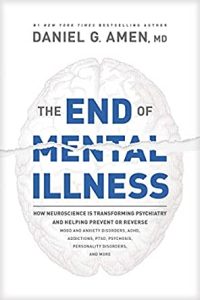
Book: The End of Mental Illness

Book Title:

The End of Mental Illness: How Neuroscience Is Transforming Psychiatry and Helping Prevent or Reverse Mood and Anxiety Disorders, ADHD, Addictions, PTSD, Psychosis, Personality Disorders, and More.

Author(s): Daniel G. Amen.

Year: 2020.

Edition: First (1st), Illustrated Edition.

Publisher: Tyndale Momentum.

Type(s): Hardcover, Paperback, Audiobook, and Kindle.

Synopsis:

Though incidence of these conditions is skyrocketing, for the past four decades standard treatment hasn’t much changed, and success rates in treating them have barely improved, either. Meanwhile, the stigma of the “mental illness” label—damaging and devastating on its own—can often prevent sufferers from getting the help they need.

Brain specialist and bestselling author Dr. Daniel Amen is on the forefront of a new movement within medicine and related disciplines that aims to change all that. In The End of Mental Illness, Dr. Amen draws on the latest findings of neuroscience to challenge an outdated psychiatric paradigm and help readers take control and improve the health of their own brain, minimising or reversing conditions that may be preventing them from living a full and emotionally healthy life.

The End of Mental Illness will help you discover:

  • Why labeling someone as having a “mental illness” is not only inaccurate but harmful.
  • Why standard treatment may not have helped you or a loved one – and why diagnosing and treating you based on your symptoms alone so often misses the true cause of those symptoms and results in poor outcomes.
  • At least 100 simple things you can do yourself to heal your brain and prevent or reverse the problems that are making you feel sad, mad, or bad.
  • How to identify your “brain type” and what you can do to optimise your particular type.
  • Where to find the kind of health provider who understands and uses the new paradigm of brain health.

Book: Best Ways to Manage Stress

300300

Book Title:

Best Ways to Manage Stress: 30 Easy Ways to Beat Stress.

Author(s): Richard Malishe.

Year: 2020.

Edition: First (1st).

Publisher: Unknown.

Type(s): Paperback and Kindle.

Synopsis:

Best Ways to Manage Stress is the guide you need to not only understand why you are so stressed but to help you get rid of that stress for good. You do not need to keep feeling overwhelmed and discouraged by your stress; you can take charge of your feelings and walk with more confidence and reassurance. The best part is that you can start making changes today! You do not have to wait to feel better.

Most people know that stress is a part of many people’s lives, and they have probably felt the impacts of stress on their lives. You can probably list things that are stressing you right this very minute. Thus, stress is one of the most prevalent problems that humans face, but it is too often portrayed as something annoying without being shown as dangerous. The truth is that stress is incredibly harmful not only to your mental health but also to your physical health. Stress kills thousands of people each year, and it costs healthcare systems around the world billions of dollars. Heart disease, obesity, and immune disorders are just some of the ailments impacted by stress, and we have only begun to realise the tremendous influence of stress on the body. Imagine how much healthier people would be if they could get their stress under control. You can heal your body by merely being less stressed.

Stress most obviously impacts your mental health. You are probably familiar with that awful feeling of tension that consumes your body when you feel stressed. This feeling leads to side effects like rumination, chronic worry, and the inability to focus. Unfortunately, stress can also lead to mental illnesses like anxiety disorders and depression. The more you let stress linger, the worse your condition becomes. Some people go their whole lives feeling awful because of how much stress they have.

You don’t need to be like other people. You do not have to go to work and feel stressed. You do not have to lay in bed at night worrying about what will happen in the morning. This book will show you that you can take a breathe and let the knots in your shoulders dissolve. We need to stop calling stress normal because it does not have to be normal anymore. With the right tools, humans could release themselves from their stress and live their lives more freely.

On This Day … 01 September

Events

  • 1939 – Adolf Hitler signs an order to begin the systematic euthanasia of mentally ill and disabled people.
  • 2004 – Random Acts of Kindness Day (New Zealand).

Aktion T4

Aktion T4 was a postwar name for mass murder by involuntary euthanasia in Nazi Germany. The name T4 is an abbreviation of Tiergartenstraße 4, a street address of the Chancellery department set up in early 1940, in the Berlin borough of Tiergarten, which recruited and paid personnel associated with T4. Certain German physicians were authorised to select patients “deemed incurably sick, after most critical medical examination” and then administer to them a “mercy death” (Gnadentod). In October 1939, Adolf Hitler signed a “euthanasia note”, backdated to 01 September 1939, which authorised his physician Karl Brandt and Reichsleiter Philipp Bouhler to implement the programme.

The killings took place from September 1939 until the end of the war in 1945; from 275,000 to 300,000 people were killed in psychiatric hospitals in Germany and Austria, occupied Poland and the Protectorate of Bohemia and Moravia (now the Czech Republic). The number of victims was originally recorded as 70,273 but this number has been increased by the discovery of victims listed in the archives of the former East Germany. About half of those killed were taken from church-run asylums, often with the approval of the Protestant or Catholic authorities of the institutions.

The Holy See announced on 02 December 1940 that the policy was contrary to divine law and that “the direct killing of an innocent person because of mental or physical defects is not allowed” but the declaration was not upheld by some Catholic authorities in Germany. In the summer of 1941, protests were led in Germany by the Bishop of Münster, Clemens von Galen, whose intervention led to “the strongest, most explicit and most widespread protest movement against any policy since the beginning of the Third Reich”, according to Richard J. Evans.

Several reasons have been suggested for the killings, including eugenics, racial hygiene, and saving money. Physicians in German and Austrian asylums continued many of the practices of Aktion T4 until the defeat of Germany in 1945, in spite of its official cessation in August 1941. The informal continuation of the policy led to 93,521 “beds emptied” by the end of 1941. Technology developed under Aktion T4 was taken over by the medical division of the Reich Interior Ministry, particularly the use of lethal gas to kill large numbers of people, along with the personnel of Aktion T4, who participated in Operation Reinhard. The programme was authorised by Hitler but the killings have since come to be viewed as murders in Germany. The number of people killed was about 200,000 in Germany and Austria, with about 100,000 victims in other European countries.

And now something slightly more positive.

Random Acts of Kindness Day

Random Acts of Kindness Day is a day to celebrate and encourage random acts of kindness.

“It’s just a day to celebrate kindness and the whole pay it forward mentality”, said Tracy Van Kalsbeek, executive director of the Stratford Perth Community Foundation, in 2016, where the day is celebrated on 04 November 4.

It is celebrated on 01 September in New Zealand and on 17 February in the US.

Background

  • The Random Acts of Kindness Foundation (RAK) was founded in 1995 in the US.
  • It is a non-profit headquartered in Denver, Colorado.
  • Random Acts of Kindness (RAK) day began in 2004 in New Zealand.

What is a Random Act of Kindness

A random act of kindness is a nonpremeditated, inconsistent action designed to offer kindness towards the outside world.

Suggested Activities

  • Pay for the person behind you in the drive-thru.
  • Let someone go ahead of you in line.
  • Buy extra at the grocery store and donate it to a food pantry.
  • Buy flowers for someone (postal worker, grocery store clerk, bus driver, etc.).
  • Help someone change a flat tire.
  • Post anonymous sticky notes with validating or uplifting messages around for people to find.
  • Compliment a colleague on their work.
  • Send an encouraging text to someone.
  • Take muffins to work.
  • Let a car into the traffic ahead of you.
  • Wash someone else’s car.
  • Take a gift to new neighbors and introduce yourself.
  • Pay the bus fare for the passenger behind you.

Website

Is It Important that Health Promotion be a Focus that Permeates the Entire Organisation of Mental Health Care?

Research Paper Title

Mental health nurses’ experience of physical health care and health promotion initiatives for people with severe mental illness.

Background

Health care for people with severe mental illness is often divided into physical health care and mental health care despite the importance of a holistic approach to caring for the whole person.

Mental health nurses have an important role not only in preventing ill health, but also in promoting health, to improve the overall health among people with severe mental illness and to develop a more person-centred, integrated physical and mental health care.

Thus, the aim of this study was to describe mental health nurses’ experiences of facilitating aspects that promote physical health and support a healthy lifestyle for people with severe mental illness.

Methods

Interviews were conducted with mental health nurses (n = 15), and a qualitative content analysis was used to capture the nurse’s experiences.

Results

Analysis of the interviews generated three categories:

  • To have a health promotion focus in every encounter;
  • To support with each person’s unique prerequisites in mind; and
  • To take responsibility for health promotion in every level of the organisation.

Conclusions

The results show the importance of a health promotion focus that permeates the entire organisation of mental health care.

Shared responsibility for health and health promotion activities should exist at all levels:

  • In the person-centred care in the relation with the patient;
  • Embedded in a joint vision within the working unit; and
  • In decisions at management level.

Reference

Lundstrom, S., Jormfeldt, H., Ahlstrom, B.H. & Skarsater, I. (2020) Mental health nurses’ experience of physical health care and health promotion initiatives for people with severe mental illness. International Journal of Mental Health Nursing. 29(2), pp.244-253. doi: 10.1111/inm.12669. Epub 2019 Oct 29.

Do Adults Experiencing Mental Illness & Homelessness follow Distinct Stigma & Discrimination Group Trajectories based on their Mental Health-problems?

Research Paper Title

Trajectories and mental health-related predictors of perceived discrimination and stigma among homeless adults with mental illness.

Background

Stigma and discrimination toward individuals experiencing homelessness and mental disorders remain pervasive across societies. However, there are few longitudinal studies of stigma and discrimination among homeless adults with mental illness.

This study aimed to identify the two-year group trajectories of stigma and discrimination and examine the predictive role of mental health characteristics among 414 homeless adults with mental illness participating in the extended follow-up phase of the Toronto At Home/Chez Soi (AH/CS) randomised trial site.

Methods

Mental health-related perceived stigma and discrimination were measured at baseline, one, and two years using validated scales.

Group-based-trajectory modelling was used to identify stigma and discrimination group trajectory memberships and the effect of the Housing First treatment (rent supplements and mental health support services) vs treatment as usual on these trajectories.

The associations between mental health-related characteristics and trajectory group memberships were also assessed using multinomial logistic regression.

Results

Over two-years, three group trajectories of stigma and discrimination were identified.

For discrimination, participants followed a low, moderate, or increasingly high discrimination group trajectory, while for stigma, participants followed a low, moderate or high stigma group trajectory.

The Housing First treatment had no significant effect on discrimination or stigma trajectories groups.

For the discrimination trajectories, major depressive episode, mood disorder with psychotic features, alcohol abuse, suicidality, severity of mental health symptoms, and substance use severity in the previous year were predictors of moderate and increasingly high discrimination trajectories.

History of discrimination within healthcare setting was also positively associated with following a moderate or high discrimination trajectory.

For the stigma trajectories, substance dependence, high mental health symptoms severity, substance use severity, and discrimination experiences within healthcare settings were the main predictors for the moderate trajectory group; while substance dependence, suicidality, mental health symptom severity, substance use severity and discrimination experiences within health care setting were also positive predictors for the high stigma trajectory group.

Ethno-racial status modified the association between having a major depression episode, alcohol dependence, and the likelihood of being a member of the high stigma trajectory group.

Conclusions

This study showed that adults experiencing mental illness and homelessness followed distinct stigma and discrimination group trajectories based on their mental health-problems.

There is an urgent need to increase focus on strategies and policies to reduce stigma and discrimination in this population.

Reference

Mejia-Lancheros, C., Lachaud, J., O’Campo, P., Wiens, K., Nisenbaum, R., Wang, R., Hwang, S.W. & Stergiopoulos, V. (2020) Trajectories and mental health-related predictors of perceived discrimination and stigma among homeless adults with mental illness. PLoS One. 15(2), pp.e0229385. doi: 10.1371/journal.pone.0229385. eCollection 2020.

Book: The Mind Workout

Book Title:

The Mind Workout: Twenty Steps to Improve your Mental Health & Take Charge of Your Life.

Author(s): Mark Freeman.

Year: 2017.

Edition: First (1st).

Publisher: Piatkus.

Type(s): Paperback, Audiobook, and Kindle.

Synopsis:

It’s well known that if you want to keep your body fit, you must do some regular exercise. But when it comes to our mental health, few of us take the time to maintain and improve it. For some reason, we expect to be in great mental shape without doing any work. And when we realise we are struggling, we look for a quick and easy fix instead of developing the skills that will help us in the future.

Enter The Mind Workout – a home exercise programme for improving your mental health and fitness.

Developed as a result of Mark Freeman’s own recovery from mental illness, The Mind Workout combines mindfulness, Cognitive Behavioural Therapy (CBT) and Acceptance and Commitment Therapy (ACT). It outlines twenty easy-to-follow steps you can take to free yourself from the ways of thinking and behaving that cause mental health challenges in your life – from cutting out the compulsions that cause uncertainty, anxiety and distress to relieving stress and distraction.

The Mind Workout is the key to making the switch from a frenetic, anxiety-driven life to one that is based on your core values. It will leave you feeling mentally stronger, fitter and better equipped to navigate the complexities of everyday life.

Are Soldiers-in-training Likely to Seek Help when Experiencing a Problem?

Research Paper Title

Identifying Risk and Resilience Factors Associated With the Likelihood of Seeking Mental Health Care Among U.S. Army Soldiers-in-Training

Background

The Department of Defence aims to maintain mission readiness of its service members. Therefore, it is important to understand factors associated with treatment seeking in order to identify areas of prevention and intervention early in a soldier’s career that can promote positive functioning and increase their likelihood of seeking mental health care when necessary.

Methods

Using a theory of planned behaviour lens, this study identified potential barriers (risk) and facilitators (resilience) to treatment seeking among 24,717 soldiers-in-training who participated in the New Soldiers Study component of the “Army Study to Assess Risk and Resilience in Servicemembers” (Army STARRS). Hierarchal linear regression modelling and independent samples t-tests were used to examine associations between demographics and study variables, intersections of risk and resilience, and to explore differences in the likelihood of seeking help based on mental health diagnoses.

Results

A four-stage hierarchical linear regression was conducted, using likelihood of help-seeking as the dependent variable, to identify the most salient factors related to help-seeking. “Step one” of the analysis revealed soldiers-in-training who identified as female, Hispanic or Other ethnicity, and married, divorced, or separated reported a greater likelihood of seeking help. “Step two” of the analysis indicated soldiers-in-training with a history of sexual trauma, experience of impaired parenting, and clinical levels of mental health symptomatology (anxiety, depression, PTSD) reported a greater likelihood of seeking help.

Inversely, soldiers-in-training with a history of emotional trauma and parental absence/separation reported a lower likelihood of seeking help. “Step three” of the analysis demonstrated soldiers-in-training with a prior history of seeking help and larger social networks had a greater likelihood of seeking help. “Step four” of the analysis revealed several interactive effects between risk and resilience factors.

Specifically, soldiers-in-training who reported greater depressive symptomatology in combination with prior history of treatment seeking reported a greater likelihood of help seeking, whereas soldiers-in-training who reported prior sexual trauma and PTSD in combination with large social networks reported a lower likelihood of seeking help. Finally, a greater percentage of soldiers-in-training with clinical levels of anxiety, depression, and PTSD indicated they would likely seek help in comparison to soldiers-in-training without clinical symptoms.

Conclusions

Findings suggest few soldiers-in-training are likely to seek help when experiencing a problem. General efforts to encourage help-seeking when needed are warranted with particular focus on subsets of soldiers-in-training (e.g., men, those with a history of some adverse childhood experiences).

Strengths of this study include the examination of a large sample of soldiers-in-training to identify possible leverage points for early intervention or prevention prior to entering stressful military operating environments.

Limitations of this study include the examination of only one military branch and exclusion of soldiers not “in-training.”

Future studies could consider replicating the current study using a sample of military personnel longitudinally to track behavioral trends as well as looking at military populations outside of basic combat training.

Reference

Duncan, J.M., Reed-Fitzke, K., Ferraro, A.J., Wojciak, A.S., Smith, K.M. & Sanchez, K. (2020) Identifying Risk and Resilience Factors Associated With the Likelihood of Seeking Mental Health Care Among U.S. Army Soldiers-in-Training. Military Medicine. doi: 10.1093/milmed/usz483. Online ahead of print.

Do we need Evidence-based Rehabilitation Programmes to Facilitate Community Integration & Functional Recovery?

Research Paper Title

Addressing Severe Mental Illness Rehabilitation in Colombia, Costa Rica, and Peru.

Background

Many Latin American countries face the challenge of caring for a growing number of people with severe mental illnesses while promoting deinstitutionalisation and community-based care.

This article presents an overview of current policies that aim to reform the mental health care system and advance the employment of people with disabilities in Colombia, Costa Rica, and Peru.

Methods

The authors conducted a thematic analysis by using public records and semi-structured interviews with stakeholders.

The authors found evidence of supported employment programmes for vulnerable populations, including people with disabilities, but found that the programmes did not include people with severe mental illnesses.

Results

Five relevant themes were found to hamper progress in psychiatric vocational rehabilitation services:

  1. Rigid labour markets;
  2. Insufficient advocacy;
  3. Public subsidies that create conflicting incentives;
  4. Lack of deinstitutionalised models; and
  5. Lack of reimbursement for evidence-based psychiatric rehabilitation interventions.

Conclusions

Policy reforms in these countries have promoted the use of medical interventions to treat people with severe mental illnesses but not the use of evidence-based rehabilitation programmes to facilitate community integration and functional recovery.

Because these countries have other supported employment programmes for people with non-psychiatric disabilities, they are well positioned to pilot individual placement and support to accelerate full community integration among individuals with severe mental illnesses.

Reference

Cubillos, L., Muñoz, J., Caballero, J., Mendoza, M., Pulido, A., Carpio, K., Udutha, A.K., Botero, C., Borrero, E., Rodríguez, D., Cutipe, Y., Emeny, R., Schifferdecker, K. & Torrey, W.C. (2020) Addressing Severe Mental Illness Rehabilitation in Colombia, Costa Rica, and Peru. Psychiatric Services (Washington, D.C.). 71(4):378-384. doi: 10.1176/appi.ps.201900306. Epub 2020 Jan 3.