On This Day … 25 October

People (Births)

  • 1918 – David Ausubel, American psychologist (d. 2008).
  • 1927 – Lawrence Kohlberg, American psychologist and author (d. 1987).

People (Deaths)

  • 1826 – Philippe Pinel, French physician and psychiatrist (b. 1745).

David Ausubel

David Paul Ausubel (25 October 1918 to 09 July 2008) was an American psychologist. His most significant contribution to the fields of educational psychology, cognitive science, and science education learning was on the development and research on “advance organisers” since 1960.

Education

He studied at the University of Pennsylvania where he graduated with honors in 1939, receiving a bachelor’s degree majoring in psychology. Ausubel later graduated from medical school in 1943 at Middlesex University where he went on to complete a rotating internship at Gouverneur Hospital, located in the lower east side of Manhattan, New York.

Following his military service with the US Public Health Service, Ausubel earned his MA and PhD in developmental psychology from Columbia University in 1950. He continued to hold a series of professorships at several schools of education.

Psychiatrist

In 1973, Ausubel retired from academic life and devoted himself to his psychiatric practice. During his psychiatric practice, Ausubel published many books as well as articles in psychiatric and psychological journals. In 1976, he received the Thorndike Award from the American Psychological Association for “Distinguished Psychological Contributions to Education”.

What is an Advance Organiser?

An advance organizer is information presented by an instructor that helps the student organize new incoming information. This is achieved by directing attention to what is important in the coming material, highlighting relationships, and providing a reminder about relevant prior knowledge.

Lawrence Kohlberg

Lawrence Kohlberg (25 October 1927 to 19 January 1987) was an American psychologist best known for his theory of stages of moral development.

He served as a professor in the Psychology Department at the University of Chicago and at the Graduate School of Education at Harvard University. Even though it was considered unusual in his era, he decided to study the topic of moral judgment, extending Jean Piaget’s account of children’s moral development from twenty-five years earlier. In fact, it took Kohlberg five years before he was able to publish an article based on his views. Kohlberg’s work reflected and extended not only Piaget’s findings but also the theories of philosophers George Herbert Mead and James Mark Baldwin. At the same time he was creating a new field within psychology: “moral development”.

In an empirical study using six criteria, such as citations and recognition, Kohlberg was found to be the 30th most eminent psychologist of the 20th century.

Philippe Pinel

Philippe Pinel (20 April 1745 to 25 October 1826) was a French physician who was instrumental in the development of a more humane psychological approach to the custody and care of psychiatric patients, referred to today as moral therapy. He also made notable contributions to the classification of mental disorders and has been described by some as “the father of modern psychiatry”.

An 1809 description of a case that Pinel recorded in the second edition of his textbook on insanity is regarded by some as the earliest evidence for the existence of the form of mental disorder later known as dementia praecox or schizophrenia, although Emil Kraepelin is generally accredited with its first conceptualisation.

On This Day … 07 October

People (Births)

  • 1927 – R. D. Laing, Scottish psychiatrist and author (d. 1989).

R.D. Laing

Ronald David Laing (07 October 1927 to 23 August 1989), usually cited as R.D. Laing, was a Scottish psychiatrist who wrote extensively on mental illness – in particular, the experience of psychosis.

Laing’s views on the causes and treatment of psychopathological phenomena were influenced by his study of existential philosophy and ran counter to the chemical and electroshock methods that had become psychiatric orthodoxy.

Taking the expressed feelings of the individual patient or client as valid descriptions of lived experience rather than simply as symptoms of mental illness, Laing regarded schizophrenia as a theory not a fact.

Though associated in the public mind with anti-psychiatry he rejected the label. Politically, he was regarded as a thinker of the New Left.

Laing was portrayed by David Tennant in the 2017 film Mad to Be Normal.

Schizophrenia: Lung Cancer & End-of-Life Care

Research Paper Title

Palliative and high-intensity end-of-life care in schizophrenia patients with lung cancer: results from a French national population-based study.

Background

Schizophrenia is marked by inequities in cancer treatment and associated with high smoking rates. Lung cancer patients with schizophrenia may thus be at risk of receiving poorer end-of-life care compared to those without mental disorder.

The objective was to compare end-of-life care delivered to patients with schizophrenia and lung cancer with patients without severe mental disorder.

Methods

This population-based cohort study included all patients aged 15 and older who died from their terminal lung cancer in hospital in France (2014-2016).

Schizophrenia patients and controls without severe mental disorder were selected and indicators of palliative care and high-intensity end-of-life care were compared.

Multivariable generalised log-linear models were performed, adjusted for sex, age, year of death, social deprivation, time between cancer diagnosis and death, metastases, comorbidity, smoking addiction and hospital category.

The analysis included 633 schizophrenia patients and 66,469 controls.

Results

The schizophrenia patients died 6 years earlier, had almost twice more frequently smoking addiction (38.1%), had more frequently chronic pulmonary disease (32.5%) and a shorter duration from cancer diagnosis to death.

In multivariate analysis, they were found to have more and earlier palliative care (adjusted Odds Ratio 1.27 [1.03;1.56]; p = 0.04), and less high-intensity end-of-life care (e.g., chemotherapy 0.53 [0.41;0.70]; p < 0.0001; surgery 0.73 [0.59;0.90]; p < 0.01) than controls.

Conclusions

Although the use and/or continuation of high-intensity end-of-life care is less important in schizophrenia patients with lung cancer, some findings suggest a loss of chance.

Future studies should explore the expectations of patients with schizophrenia and lung cancer to define the optimal end-of-life care.

Reference

Viprey, M., Pauly, V., Salas, S., Baumstrack, K., Orleans, V., Llorca, P-M., Lancon, C., Auquier, P., Boyer, L. & Fond, G. (2020) Palliative and high-intensity end-of-life care in schizophrenia patients with lung cancer: results from a French national population-based study. European Archives of Psychiatry and Clinical Neuroscience. doi: 10.1007/s00406-020-01186-z. Online ahead of print.

Is Schizophrenia Associated with Urbanisation?

Research Paper Title

Association of Urbanicity with Schizophrenia and Related Mortality in China.

Background

Although higher prevalence of schizophrenia in Chinese urban areas was observed, studies focused on the association between schizophrenia and urbanicity were less in China. Using a national representative population-based data set, this study aimed to investigate the relationship between urbanicity and schizophrenia and its related mortality among adults aged 18 years old and above in China.

Methods

Data were obtained from the Second China National Sample Survey on Disability in 2006 and follow-up studies from 2007 to 2010 each year. The researchers restricted their analysis to 1,909,205 participants aged 18 years or older and the 2,071 schizophrenia patients with information of survival and all-caused mortality of the follow-up surveys from 2007 to 2010.Schizophrenia was ascertained according to the International Statistical Classification of Diseases, 10th Revision.

The degree of urbanicity and the region of residence were used to be the proxies of urbanicity. Of these, the degree of urbanicity measured by the ratio of nonagricultural population to total population and the region of residence measured by six categorical variables (first-tier cities, first-tier city suburbs, second-tier cities, second-tier city suburbs, other city areas, and rural areas).

Logistics regression models and restricted polynomial splines were used to examine the linear/nonlinear relationship between urbanicity and the risk of schizophrenia. Cox proportional hazards regression models were used to test the role of urbanicity on mortality risk of schizophrenia patients.

Results

10% increase in the degree of urbanicity was associated with increased risk of schizophrenia (OR = 1.44; 95% CI, 1.32 to 1.57). The nonlinear model further confirmed the association between the degree of urbanicity and the risk of schizophrenia. This association existed sex difference, as the level of urbanicity increased, schizophrenia risk of males grew faster than the risk of females. The hazard ratio (HR) of mortality in schizophrenia patients decreased with the elevated of urbanicity level, with a HR of 0.42 (95% CI, 0.21 to 0.84).

Conclusions

This research suggested that incremental changes in the degree of urbanicity linked to higher risk of schizophrenia, and as the degree of urbanicity elevated, the risk of schizophrenia increased more for men than for women. Additionally, we found that schizophrenia patients in higher degree of urbanicity areas had lower risk of mortality.

These findings contributed to the literature on schizophrenia in developing nations under a non-Western context and indicates that strategies to improve mental health conditions are needed in the progress of urbanicity.

Reference

Luo, Y., Pang, L., Guo, C., Zhang, L. & Zheng, X. (2020) Association of Urbanicity with Schizophrenia and Related Mortality in China. Canadian Journal of Psychiatry. doi: 10.1177/0706743720954059. Online ahead of print.

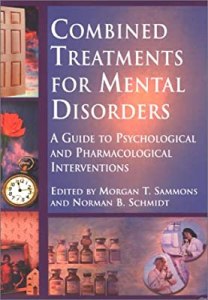
Book: Combined Treatments for Mental Disorders

Book Title:

Combined Treatments for Mental Disorders: A Guide to Psychological and Pharmacological Interventions.

Author(s): Morgan T. Sammons and Norman B. Schmidt (editors).

Year: 2001.

Edition: First (1st).

Publisher: American Psychological Association.

Type(s): Hardcover.

Synopsis:

An exploration of the best way to integrate pharmaceuticals and pyschotherapy in the treatment of mental disorders. Combined treatment is relatively common, but because of biases in the fields of medicine and psychology that champion one form over another, many clinicians are not fully informed about use of both modalities. This practical volume seeks to end this situation.

As this text reveals, exclusive reliance on one mode of treatment may result in a practitioner being unable to address many clients’ needs. Each chapter closely examines the combined treatment for a different disorder, such as insomnia, depression, schizophrenia, and obsessive-compulsive disorder. Different disorders are addressed in separate chapters in relation to combined treatments which many clinicians may not be fully informed of. The social and ethical ramifications of prescriptive authority for pyschologists is also addressed in relation to its increasing relevance. A practical guide for clinicians both experienced and non-experienced in the psychological and pharmacological fields.

Book: States of Consciousness – Models for Psychology & Psychotherapy

Book Title:

States of Consciousness – Models for Psychology & Psychotherapy.

Author(s): Andrzej Kokoszka.

Year: 2006.

Edition: 1ed.

Publisher: Springer-Verlag New York Inc.

Type(s): Hardcover and Paperback.

Synopsis:

Consciousness has always been a particularly elusive concept and one vigorously argued in the scientific community. This new volume takes on the task of defining normal and altered consciousness in their most relevant clinical terms.

In States of Consciousness, Andrzej Kokoszka expands on the pioneering work of JH Jackson, offering contemporary models for studying consciousness as it applies to both pathology and normal altered states, eg, relaxation, sleep, meditation, and hypnosis. He makes clear distinctions between the neuroscientific and psychiatric components of consciousness; at the same time, his theories are rooted firmly in the biopsychosocial approach.

Highlights:

  • Historical overview of studies of consciousness and its altered states.
  • Evolutionary/dynamic model of consciousness and information processing, based on the structure and principles of cell behaviour.
  • Comparison of altered states of consciousness in healthy persons and patients with schizophrenia.
  • New perspectives on the role of consciousness in pathology.
  • Case illustration of altered states in a patient with Post-traumatic Stress Disorder, integrating neurobiological, cognitive-behavioural, and psychodynamic data.
  • Applications of the model in clinical practice.

States of Consciousness lends itself to theoretical and practical, research and classroom use. It is relevant to a range of scientists and practitioners in cognition, clinical psychology, social psychology, and neuropsychology The book’s scope and the author’s attention to detail make it a work of great versatility, much like consciousness itself.

Lost Transmissions (2019)

Introduction

Lost Transmissions is a 2019 drama film, written and directed by Katharine O’Brien. It stars Simon Pegg, Juno Temple and Alexandra Daddario.

The film had its world premiere at the Tribeca Film Festival on 28 April 2019, and was released on 13 March 2020, by Gravitas Ventures.

Outline

When an acclaimed music producer goes off his medication for schizophrenia, his friends chase him through the LA music scene to help commit him to a psychiatric hospital, revealing the troubling inadequacies of our mental health care system.

Production & Filming Details

  • Director(s): Katharine O’Brien.
  • Producer(s): Bo An, Thomas Benski, Al Di, Jo Henriquez, Olga Kagan, Tory Lenosky, Brian Levy, Alan Li, Craig Newman, Katharine O’Brien, Cassidy Shea Pahl, Filip Jan Rymsza, Robert Schartzman, Alyssa Swanzey, and Alvaro R. Valente.
  • Writer(s): Katharine O’Brien.
  • Music: Hugo Nicolson.
  • Cinematography: Arnau Valls Colomer.
  • Editor(s): Giannis Halkiadakis.
  • Production: Royal Road Entertainment, Pulse Films, and Underlying Tension.
  • Distributor(s): Gravitas Ventures, 101 Films, Premiere Entertainment Group, and Storm Pictures Korea.
  • Release Date: 28 April 2019 (Tribeca Film Festival).
  • Running Time: 105 minutes.
  • Country: US.
  • Language: English.

What is the Prevalence & Associated Factors of Depression among Patients with Schizophrenia?

Research Paper Title

The prevalence and associated factors of depression among patients with schizophrenia in Addis Ababa, Ethiopia, cross-sectional study.

Background

Depression is common among people with schizophrenia and associated with severe positive and negative symptoms, higher rates of disability, treatment resistance and mortality related to suicide, physical and drug-related causes.

However, to the researchers knowledge, no study has been conducted to report the magnitude of depression among people with schizophrenia in Ethiopia.

Therefore, this study aimed to determine the prevalence and associated factors of depression among people with schizophrenia.

Methods

A hospital-based cross-sectional study was conducted among 418 patients with schizophrenia selected by systematic sampling technique.

Patient Health Questionnaire 9 (PHQ-9) was used to measure depression among the study participants.

To identify the potential contributing factors, we performed binary and multi-variable logistic regression analysis adjusting the model for the potential confounding factors.

Odds ratios (OR) with the corresponding 95% confidence interval (95%CI)) was determined to evaluate the strength of association.

Results

The prevalence estimate of depression among people with schizophrenia was found to be 18.0% [95% confidence interval: 14.50-22.30].

The multi-variable analysis revealed that current substance use (AOR 2.28, 95%CI (1.27, 4.09), suicide attempt (AOR 5.24, 95%CI (2.56, 10.72), duration of illness between 6 and 10 years (AOR 2.09, 95%CI (1.08, 4.04) and poor quality of life (AOR 3.13, 95%CI (1.79, 5.76) were found to be the factors associated with depression among people with schizophrenia.

Conclusions

The current study revealed that co-morbid depression was high among people with schizophrenia and associated with current substance use, suicide attempt, and long duration of the illness as well as poor quality of life.

Attention needs to be given to address co-morbid depression among people with schizophrenia.

Reference

Fanta, T., Bekel, D. & Ayano, G. (2020) The prevalence and associated factors of depression among patients with schizophrenia in Addis Ababa, Ethiopia, cross-sectional study. BMC Pyschiatry. 20(1):3. doi: 10.1186/s12888-019-2419-6.

Book: A Beautiful Mind

Book Title: A Beautiful Mind.

Original Title: A Beautiful Mind: a Biography of John Forbes Nash, Jr., Winner of the Nobel Prize in Economics, 1994.

Author: Sylvia Nasar.

Year: 1998.

Publisher: Simon & Schuster.

Synopsis:

A Beautiful Mind (1998) is a biography of Nobel Prize-winning economist and mathematician John Forbes Nash, Jr. by Sylvia Nasar, professor of journalism at Columbia University.

An unauthorised work, it won the National Book Critics Circle Award in 1998 and was nominated for the Pulitzer Prize in biography.

It inspired the 2001 film by the same name.

Starting with his childhood, the book covers Nash’s years at Princeton and MIT, his work for the RAND Corporation, his family and his struggle with schizophrenia.

Although Nasar notes that Nash did not consider himself a homosexual, she describes his arrest for indecent exposure and firing from RAND amid the suspicion that he was, then considered grounds for revoking one’s security clearance.

The book ends with Nash being awarded the Nobel Prize in Economics in 1994.

The book is a detailed description of many aspects of Nash’s life, including the nature of his mathematical genius, and a close examination of his personality and motivations.

Clozapine & Motivation for Food

Research Paper Title

Clozapine reliably increases the motivation for food: parsing the role of the 5-HT2c and H1 receptors.

Background

Although clozapine is effective in treating schizophrenia, it is associated with adverse side effects including weight gain and metabolic syndrome.

Despite this, the role of clozapine on feeding behaviour and food intake has not been thoroughly characterised.

Clozapine has a broad pharmacological profile, with affinities for several neurotransmitter receptors, including serotonin (5-hydroxytriptamine, 5-HT) and histamine.

Given that the serotonin 5-HT2C receptor and histaminergic H1 receptor are involved in aspects of feeding behaviour, the effect of clozapine on feeding may be linked to its action at these receptors.

Methods

The researchers assessed, in rats, the effect of acute and subchronic administration of clozapine on responding for food under a progressive ratio (PR) schedule under conditions of food restriction and satiety.

They also examined the effect of antagonists of the serotonin 5-HT2C and histaminergic H1 receptors on the same schedule.

Results

Clozapine reliably increased responding for food, even when rats had ad libitum access to food.

The effect of clozapine on responding for food was reproduced by combined (but not individual) antagonism of the serotonin 5-HT2C and histaminergic H1 receptors.

Conclusions

These findings show that clozapine enhances the motivation to work for food, that this effect is stable over repeated testing, and is independent of hunger state of the animal.

This effect may relate to a combined action of clozapine at the serotonin 5-HT2C and histaminergic H1 receptors.

Reference

Abela, A.R., Ji, X.D., Li, Z., Lê, A.D. & Fletcher, P.J. (2020) Clozapine reliably increases the motivation for food: parsing the role of the 5-HT2c and H1 receptors. Psychopharmacology (Berl). doi: 10.1007/s00213-019-05425-7. [Epub ahead of print].