Book: Approaches to Drug Abuse Counselling

Book Title:

Approaches to Drug Abuse Counselling.

Author(s): National Institute on Drug Abuse (NIDA).

Year: 2000.

Edition: First (1st).

Publisher: US Government Printing Office.

Type(s): eBook.

Synopsis:

Dual disorders recovery counselling (DDRC) is an integrated approach to treatment of patients with drug use disorders and comorbid psychiatric disorders.

The DDRC model, which integrates individual and group addiction counselling approaches with psychiatric interventions, attempts to balance the focus of treatment so that both the patient’s addiction and psychiatric issues are addressed.

The DDRC model is based on the assumption that there are several treatment phases that patients may go through.

You can access the book, for free, here.

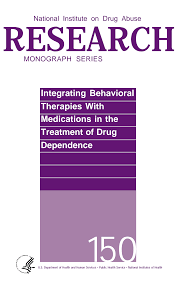
Book: Integrating Behavioural Therapies with Medications in the Treatment of Drug Dependence

Book Title:

Integrating Behavioural Therapies With Medications in the Treatment of Drug Dependence (National Institute on Drug Abuse Research Monograph Series).

Author(s): Lisa Simon Onken (PhD), Jack D. Blaine (MD), and John J. Boren (PhD.

Year: 1995.

Edition: First (1st).

Publisher: US Government Printing Office.

Type(s): eBook.

Synopsis:

It is no revelation that drug dependence is a complex problem with behavioural, cognitive, psychosocial, and biological dimensions and may be treated with behavioural therapy (including behaviour therapy, psychotherapy, and counselling), and, where available, pharmacotherapy.

Drug use can be reduced behaviourally with appropriate manipulation of reinforcements within the environment (Higgins et al. 1993). Continued improvements over time in drug use can be initiated by cognitive behavioural psychotherapies to modify cognitions that perpetuate drug use (Carroll et al., submitted for publication), and a reduced likelihood of
relapse has been engendered by specialised training approaches (Rohsenow et al., in press).

Methadone, of course, has long been recognised as an effective pharmacotherapy to reduce opiate use, and its biological mechanism of action is well understood.

You can access the book, for free, here.

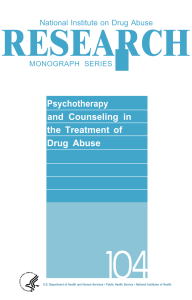
Book: Psychotherapy And Counselling In The Treatment Of Drug Abuse

Book Title:

Psychotherapy And Counselling In The Treatment Of Drug Abuse (National Institute on Drug Abuse Research Monograph Series).

Author(s): Lisa Simon Onken (PhD) and Jack D. Blaine (MD).

Year: 1990.

Edition: First (1st).

Publisher: US Government Printing Office.

Type(s): eBook.

Synopsis:

Drug abuse treatment occurs in a multitude of forms. It may be provided in outpatient or inpatient settings, be publicly or privately funded, and mayor may not involve the administration of medication. The differences among the philosophies of, and the services provided in, various drug abuse treatment programmes may be enormous. What is remarkable is that some form of drug abuse counselling or psychotherapy is almost invariably a part of every type of comprehensive drug abuse treatment. Individual therapy or counselling is available in about 99% of the drug-free, methadone-maintenance, and multiple-modality drug abuse treatment units in this country (National Drug and Alcoholism Treatment Unit Survey 1982). It is also available in approximately 97% of the detoxification units.

You can access the book, for free, here.

Are There Sex Differences in Comorbidity Between Substance Use & Mental Health in Adolescents?

Research Paper Title

Sex Differences in Comorbidity Between Substance Use and Mental Health in Adolescents: Two Sides of the Same Coin.

Background

This study aims to evaluate sex differences in alcohol and cannabis use and mental health disorders (MHD) in adolescents, and to evaluate the predictive role of mental health disorders for alcohol and cannabis use disorders (AUD and CUD respectively).

Method

A sample of 863 adolescents from the general population (53.7% girls, Mage = 16.62, SD = 0.85) completed a computerised battery including questions on substance use frequency, the Brief Symptom Inventory, the Cannabis Problems Questionnaire for Adolescents – Short version, the Rutgers Alcohol Problem Index and the DSM-IV-TR criteria for AUD and CUD. Bivariate analyses and binary logistic regressions were performed.

Results

Girls presented significantly more mental health problems and a higher prevalence of comorbidity between SUD and MHD. Obsessive-compulsive symptoms and phobic anxiety indicated a higher risk of AUD, whereas depression and interaction between hostility and obsessive-compulsive disorder indicated a higher risk of CUD.

Conclusions

Comorbidity between SUD and MHD is high among adolescents, and significantly higher among girls.

Reference

Fernandez-Artamendi, S. Martinez-Loredo, V. & Lopez-Nunez, C. (2021) Sex Differences in Comorbidity Between Substance Use and Mental Health in Adolescents: Two Sides of the Same Coin. Psicotherma. 33(1), pp.36-43. doi: 10.7334/psicothema2020.297.

With Regard to Mental Health & Substance Use Disorders what is the Reality of Youth in Custody?

Research Paper Title

Mental health and substance use disorders: The reality of youth in custody.

Background

Young offenders experience a higher prevalence of mental health disorders and substance use disorders than the general population, estimated to be between 70% and 90% (Indig et al. 2011; Kenny et al., 2006; Lader et al., 2000; Teplin et al., 2002). In addition, comorbidities affect many young offenders, with over 60% presenting with two or more disorders (Justice Health & Forensic Mental Health Network and Juvenile Justice NSW, 2015). The prevalence of mental health disorders is higher among females, with young female offenders more likely to be diagnosed with anxiety and depressive disorders, as well as substance‐induced disorders (Justice Health & Forensic Mental Health Network and Juvenile Justice NSW, 2015).

Aboriginal and Torres Strait Islander youth are over‐represented within the juvenile justice system. In a report by the Australian Institute of Health and Welfare, it was found that 50% of young offenders in 2016-2017 identified as Aboriginal and/or Torres Strait Islander (Australian Institute of Health and Welfare 2018). Mental health and substance use disorders are the most common non‐communicable diseases among this group with 33% reporting high to very high levels of psychological distress (Azzopardi et al. 2018). Furthermore, there is evidence to suggest that poor family cohesion and the presence of adverse events in this group of adolescents are a reliable predictor of negative mental health outcomes (Young et al. 2016).

A recent Australian study reported the strongest predictor of incarceration and re‐incarceration was problematic alcohol and drug use (Indig et al., 2016). Indig et al. found that young people who were heavy drinkers were seven times more likely to have been previously incarcerated and three times more likely to be re‐incarcerated within 18 months. Indig et al. (2016) also found that illicit substance use was a consistent predictor of incarceration and re‐incarceration.

In addition to issues with drugs and alcohol, many incarcerated young people also report experiencing adverse childhood experiences during their childhood years with as many as 90% reporting at least one traumatic event (Ford et al., 2012). A recent Australian study found that 60% of young offenders reported a history of child abuse or neglect, 20% met the criteria for posttraumatic stress disorder (PTSD) (Moore et al. 2013). A history of adverse childhood experiences is the main predictor of a diagnosis of PTSD (Moore et al. 2013). Evidence suggests a link between exposure to adverse childhood experiences and the occurrence of various mental health difficulties among young offenders (McReynolds & Wasserman, 2011; Wasserman & McReynolds, 2011; Wilson et al., 2009).

It is unfortunate that many troubled youth are not recognized as being distressed or having mental health difficulties, and so do not have access to appropriate mental health care. Furthermore, these young people and their families may have very low levels of mental health literacy. However, once these young people come to the attention of the justice system, we have an opportunity to raise mental health literacy and provide appropriate services. There is a need for programmes and services that address mental health and substance use issues to assist young people improve their health outcomes and reduce their offending behaviours. Programmes such as monthly recovery management check‐ups in the first 90 days postrelease could help to achieve this outcome (Indig et al., 2016).

Given the high rate of adverse childhood experiences in incarcerated youth and the known link to PTSD, we need to ensure that services are informed by a trauma informed approach (Moore et al. 2013). There is also an identified need to invest in prevention and early intervention for young people. Currently, there are diversion programmes offered within the local court system in NSW for adult offenders exhibiting mental health (Statewide Community & Court Liaison Service) or substance use disorders (Magistrates Early Referral Into Treatment (MERIT)). However, these programmes are not available to offenders under the age of 18 years and adolescent diversion programmes are not routinely or diversely available to young people residing outside of the Sydney metropolitan area.

The mental health and substance use issues affecting young offenders challenge us to respond with effective interventions. Mental health nurses have an important role to play in improving the services and interventions available to these young people. Changes have been made to services for young offenders but more needs to be done. Research has shown that diversion and treatment services delivered in the community using a trauma informed approach are more effective in this population (Dierkhising et al. 2013). Moving forward, mental health nurses have an opportunity to take the lead in this important area.

Reference

Usher, K., Douglas, L. & Jackson, D. (2020) Mental health and substance use disorders: The reality of youth in custody. International Journal of Mental Health Nursing. 28(3). https://doi.org/10.1111/inm.12597.

Linking Job Skills Training & Substance Misuse

Research Paper Title

Spillover Effects of Job Skills Training on Substance Misuse Among Low-Income Youths With Employment Barriers: A Longitudinal Cohort Study.

Background

To examine spillover effects of job skills training (vs basic services only [e.g. adult basic education, job readiness training]) on substance misuse among low-income youths with employment barriers.

Methods

Data came from the National Longitudinal Survey of Youth 1997, a longitudinal cohort study of youths born between 1980 and 1984 in the United States.

Based on respondents’ reports of substance misuse (past-month binge drinking and past-year marijuana and other illicit drug use) from 2000 to 2016, the researchers estimated substance misuse trajectories of job skills training (n = 317) and basic services (n = 264) groups.

They accounted for potential selection bias by using inverse probability of treatment weighting.

Results

Compared with the basic services group, the job skills training group showed notable long-term reductions in its illicit drug misuse trajectory, translating to a 56.9% decrease in prevalence rates from 6.5% in year 0 to 2.8% in year 16.

Conclusions

Job skills training can be an important service component for reducing substance misuse and improving employment outcomes among youths with economic disadvantages and employment barriers.

Reference

Oh, S., DiNitto, D.M. & Powers, D.A. (2020) Spillover Effects of Job Skills Training on Substance Misuse Among Low-Income Youths With Employment Barriers: A Longitudinal Cohort Study. American Journal of Public Health. 110(6), pp.900-906. doi: 10.2105/AJPH.2020.305631. Epub 2020 Apr 16.

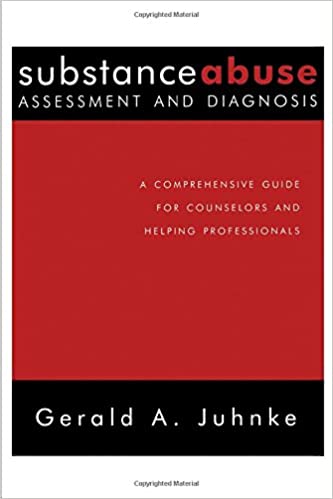
Book: Substance Abuse – Assessment & Diagnosis

Book Title:

Substance Abuse – Assessment & Diagnosis.

Author(s): Gerald A. Juhnke.

Year: 2002.

Edition: 1ed.

Publisher: Routledge.

Type(s): Hardcover, Paperback and Kindle.

Synopsis:

Substance abuse counselling has gone beyond being viewed as optional training; instead it is fast becoming an essential part of the education of helping professionals. In this book, Dr. Gerald Juhnke presents an innovative, practical model to be used in the assessment and diagnosing of substance abuse and related co-morbid disorders.

Substance Abuse Assessment and Diagnosis includes practical “nuts and bolts” direction on how to facilitate a thorough, multi-tiered substance abuse assessment. This book uniquely incorporates detailed examples of how to use individual and significant other clinical interviews, including the CAGE, SUBSTANCE -Q, etc, standardised specialty instruments, drug detection types, and personality instruments to accomplish this feat. This is the only book of its kind that provides practical detail on how to use and score these varied assessment instruments-including the newest “cornerstone instruments,” the MMPI-2, the SASSI-3 and the recently released SASSI-A2.

Students and practitioners alike will benefit from this comprehensive volume on the assessment and diagnosis of substance abuse.

Substance Use & Intervention Programmes: Remember to Address Social Issues Regardless of Deployment History

Research Paper Title

Problems With Social Acceptance and Social Victimization Predict Substance Use Among U.S. Reserve/Guard Soldiers.

Background

The effects of negative social interactions/experiences on substance use have largely been studied in civilian populations, but less is known about United States Army Reserve/National Guard (USAR/NG) soldiers-a high-risk group.

Methods

The researchers examined the associations between problems with social acceptance, social victimisation, and substance use among USAR/NG soldiers, and examined potential differences by deployment history.

The sample consisted of soldiers who completed baseline and 1-year follow-up assessments (N = 445) of Operation: SAFETY, an ongoing study of USAR/NG soldiers.

They examined the effects of baseline problems with social acceptance/social victimization on nonmedical use of prescription drugs (NMUPD), illicit drug use, frequent heavy drinking (FHD), and alcohol problems at follow-up.

Results

Significant effects were small in magnitude but consistent in direction.

Greater problems with social acceptance were associated with higher odds of NMUPD and illicit drug use.

Greater social victimisation was associated with higher odds of NMUPD and illicit drug use.

There were no differences by deployment history.

Conclusions

Problems with social acceptance/social victimisation were not associated with FHD or alcohol problems.

Problems with social acceptance/social victimisation may contribute to drug use among USAR/NG soldiers.

Intervention programmes should address social issues, regardless of deployment history.

Reference

Hoopsick, R.A., Vest, B.M., Homish, D.L. & Homish, G.G. (2020) Problems With Social Acceptance and Social Victimization Predict Substance Use Among U.S. Reserve/Guard Soldiers. Stress and Health. doi: 10.1002/smi.2934. Online ahead of print.

Homelessness & Substance Use Treatment: Is the Way in which Services & Treatment are Delivered more Important than the Type of Treatment Provided?

Research Paper Title

What Constitutes Effective Problematic Substance Use Treatment From the Perspective of People Who Are Homeless? A Systematic Review and Meta-Ethnography.

Background

People experiencing homelessness have higher rates of problematic substance use but difficulty engaging with treatment services. There is limited evidence regarding how problematic substance use treatment should be delivered for these individuals.

Previous qualitative research has explored perceptions of effective treatment by people who are homeless, but these individual studies need to be synthesised to generate further practice-relevant insights from the perspective of this group.

Methods

Meta-ethnography was conducted to synthesise research reporting views on substance use treatment by people experiencing homelessness. Studies were identified through systematic searching of electronic databases (CINAHL; Criminal Justice Abstracts; Health Source; MEDLINE; PsycINFO; SocINDEX; Scopus; and Web of Science) and websites and were quality appraised. Original participant quotes and author interpretations were extracted and coded thematically.

Concepts identified were compared to determine similarities and differences between studies. Findings were translated (reciprocally and refutationally) across studies, enabling development of an original over-arching line-of-argument and conceptual model.

Results

Twenty-three papers published since 2002 in three countries, involving 462 participants, were synthesised. Findings broadly related, through personal descriptions of, and views on, the particular intervention components considered effective to people experiencing homelessness. Participants of all types of interventions had a preference for harm reduction-oriented services.

Participants considered treatment effective when it provided a facilitative service environment; compassionate and non-judgemental support; time; choices; and opportunities to (re)learn how to live. Interventions that were of longer duration and offered stability to service users were valued, especially by women.

From the line-of-argument synthesis, a new model was developed highlighting critical components of effective substance use treatment from the service user’s perspective, including a service context of good relationships, with person-centred care and an understanding of the complexity of people’s lives.

Conclusions

This is the first meta-ethnography to examine the components of effective problematic substance use treatment from the perspective of those experiencing homelessness. Critical components of effective problematic substance use treatment are highlighted.

The way in which services and treatment are delivered is more important than the type of treatment provided. Substance use interventions should address these components, including prioritising good relationships between staff and those using services, person-centred approaches, and a genuine understanding of individuals’ complex lives.

Reference

Carver, H., Ring, N., Miler, J. & Parkes, T. (2020) What Constitutes Effective Problematic Substance Use Treatment From the Perspective of People Who Are Homeless? A Systematic Review and Meta-Ethnography. Harm Reduction Journal. 17(1), pp.10. doi: 10.1186/s12954-020-0356-9.

College Students & Substance Use: Do They Require different Strategies for Prevention & Intervention?

Research Paper Title

Cumulative Risk of Substance Use in Community College Students.

Background

Substance use in community college students has been explored in only a handful of studies.

Differences in population characteristics and substance use between 2- and 4-year students suggest that different factors may promote and thwart this behaviour.

Cumulative risk is a parsimonious methodology that provides better model stability and more statistical power, yet it has only been recently used in substance use research.

The aim of this study is to investigate multiple aspects of substance use risk in a population in need of substance use prevention and intervention services.

Methods

The researchers conducted a cross-sectional study of community college students (N = 288; 75% female) examining the relative contributions of different domains of cumulative risk (eg, life stressors, academic stressors, and mental health diagnoses) to develop different profiles of risk across substance use classes (ie, alcohol, cigarette, marijuana, and hard drug use).

Results

Cumulative risk analyses indicated that alcohol and tobacco use were associated with the domains of life stressors and peer/family substance use, marijuana use with peer/family substance use and stressful childhood experiences, and hard drug use with peer/family substance use, lack of social support, low access to care, and stressful childhood experiences.

Conclusions

Different strategies for prevention and intervention may be necessary to effectively address different forms of substance use in this population.

Scientific Significance

The risk domain profiles related to specific drugs may lead to targeted interventions to reduce substance use in community college students.

Reference

Salgado García, F., Bursac, Z. & Derefinko, K.J. (2020) Cumulative Risk of Substance Use in Community College Students. The American Journal on Addictions. 29(2), pp.97-104. doi: 10.1111/ajad.12983. Epub 2020 Jan 3.