Book: The Everyday Ayurveda Guide to Self-Care

Book Title:

The Everyday Ayurveda Guide to Self-Care – Rhythms, Routines, and Home Remedies for Natural Healing.

Author(s): Kate O’Donnell.

Year: 2020.

Edition: First (1st).

Publisher: Shambhala Publications Inc.

Type(s): Paperback and Kindle.

Synopsis:

Embrace the ancient principles of Ayurveda to become a more integrated, whole, and healthy version of yourself. This detailed guide walks you through the steps of foundational Ayurvedic practices that can be easily integrated into your existing self-care routine – from self-massage, oil pulling, and tongue scraping to breathing practices, meditation exercises, and eating with intention – to uplift your physical health and state of mind.

In The Everyday Ayurveda Guide to Self-Care, you will:

  • Get acquainted with the tradition of Ayurveda and better understand your doshas (metabolic tendencies) and basic Ayurvedic anatomy.
  • Discover the art of self-care by exploring daily routines and seasonal practices to prevent imbalances in the body and mind.
  • Find out what foods, spices, and herbs carry medicinal qualities that support cleansing, rejuvenation, and management of common ailments.
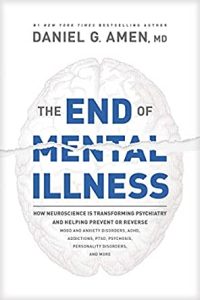
Book: The End of Mental Illness

Book Title:

The End of Mental Illness: How Neuroscience Is Transforming Psychiatry and Helping Prevent or Reverse Mood and Anxiety Disorders, ADHD, Addictions, PTSD, Psychosis, Personality Disorders, and More.

Author(s): Daniel G. Amen.

Year: 2020.

Edition: First (1st), Illustrated Edition.

Publisher: Tyndale Momentum.

Type(s): Hardcover, Paperback, Audiobook, and Kindle.

Synopsis:

Though incidence of these conditions is skyrocketing, for the past four decades standard treatment hasn’t much changed, and success rates in treating them have barely improved, either. Meanwhile, the stigma of the “mental illness” label—damaging and devastating on its own—can often prevent sufferers from getting the help they need.

Brain specialist and bestselling author Dr. Daniel Amen is on the forefront of a new movement within medicine and related disciplines that aims to change all that. In The End of Mental Illness, Dr. Amen draws on the latest findings of neuroscience to challenge an outdated psychiatric paradigm and help readers take control and improve the health of their own brain, minimising or reversing conditions that may be preventing them from living a full and emotionally healthy life.

The End of Mental Illness will help you discover:

  • Why labeling someone as having a “mental illness” is not only inaccurate but harmful.
  • Why standard treatment may not have helped you or a loved one – and why diagnosing and treating you based on your symptoms alone so often misses the true cause of those symptoms and results in poor outcomes.
  • At least 100 simple things you can do yourself to heal your brain and prevent or reverse the problems that are making you feel sad, mad, or bad.
  • How to identify your “brain type” and what you can do to optimise your particular type.
  • Where to find the kind of health provider who understands and uses the new paradigm of brain health.

Book: Encyclopedia of Psychedelics

Book Title:

Encyclopedia of Psychedelics.

Author(s): Peter Stafford.

Year: 1993.

Edition: Third (3rd), Expanded Edition.

Publisher: Ronin Publishing.

Type(s): Paperback and Kindle.

Synopsis:

Traces the history of the use of hallucinogenic drugs and discusses the psychological and physical effects of LSD, marijuana, mescaline, and other drugs.

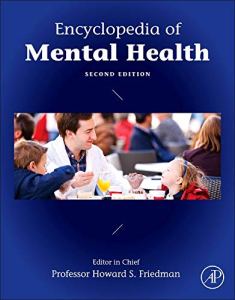
Book: Encyclopedia of Mental Health

Book Title:

Encyclopedia of Mental Health.

Author(s): Howard S. Friedman.

Year: 2015.

Edition: Second (2nd).

Publisher: Academic Press.

Type(s): Hardcover and Kindle.

Synopsis:

The Encyclopedia of Mental Health, Second Edition, tackles the subject of mental health, arguably one of the biggest issues facing modern society. The book presents a comprehensive overview of the many genetic, neurological, social, and psychological factors that affect mental health, also describing the impact of mental health on the individual and society, and illustrating the factors that aid positive mental health.

The book contains 245 peer-reviewed articles written by more than 250 expert authors and provides essential material on assessment, theories of personality, specific disorders, therapies, forensic issues, ethics, and cross-cultural and sociological aspects. Both professionals and libraries will find this timely work indispensable.

  • Provides fully up-to-date descriptions of the neurological, social, genetic, and psychological factors that affect the individual and society.
  • Contains more than 240 articles written by domain experts in the field.
  • Written in an accessible style using terms that an educated layperson can understand.
  • Of interest to public as well as research libraries with coverage of many important topics, including marital health, divorce, couples therapy, fathers, child custody, day care and day care providers, extended families, and family therapy.

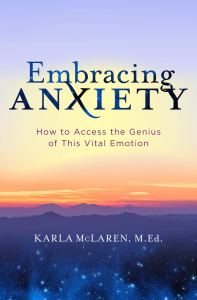
Book: Embracing Anxiety – How to Access the Genius of This Vital Emotion

Book Title:

Embracing Anxiety – How to Access the Genius of This Vital Emotion.

Author(s): Karla McLaren.

Year: 2020.

Edition: First (1ed).

Publisher: Sounds True.

Type(s): Paperback and Kindle.

Synopsis:

An in-depth guide for engaging with anxiety–not as an affliction, but as an essential source of foresight, intuition, and energy for completing your tasks and projects.

If you are facing anxiety, you’ve probably got one thing on your mind – how to make it go away. But what if this challenging emotion were actually trying to help?

When we ignore or repress our anxiety,” teaches Karla McLaren, it can overwhelm us. But when we learn to welcome it with skill, we can access its remarkable gifts.

Engaged with wisely, anxiety is your task completion ally – it helps you to focus, plan, take action, and fulfill your goals. With Embracing Anxiety, you will join this acclaimed educator and researcher to explore:

  • Principles and practices to befriend your anxiety at every level of intensity (before it overwhelms you).
  • Strategies to engage with anxiety as a source of foresight, conscientiousness, and motivation.
  • Why fear, confusion, and panic are not the same as anxiety, and tools to work with each effectively.
  • How anxiety blends with anger, depression, and other emotions, and how to clarify these compounded states.
  • Using McLaren’s Conscious Questioning practice to engage with anxiety and garner its insights.
  • How to embrace procrastination and get things done.

When you identify, listen to, and act on anxiety skillfully, you support its purpose, teaches McLaren, and allow it to recede naturally until it is needed again. With Embracing Anxiety, you’ll learn how to get this powerful emotion on your side.

Book: The Economics Of Addictive Behaviours – Volume IV

Book Title:

The Economics Of Addictive Behaviours – Volume IV: The Private and Social Costs of Overeating and Their Remedies.

Author(s): John Joshua.

Year: 2017.

Edition: First (1ed).

Publisher: Palgrave Macmillan.

Type(s): Hardcover, Paperback, and Kindle.

Synopsis:

This title offers an in-depth analysis of the psychological causes and consequences of, and proposed interventions for over-eating. The author examines the history of obesity and its distribution by social class and geography, the environmental effects of overconsumption and economic remedies such as the introduction of a sugar tax to reduce obesity. Joshua also considers the politics of corporate social responsibility of food and beverage corporations and how this could prevent poor health decisions.

This is the final title in a four volume series ‘The Economics of Addictive Behaviours’, consisting of three additional volumes on smoking, alcohol abuse and illicit drug abuse.

Book: The Economics Of Addictive Behaviours – Volume III

Book Title:

The Economics Of Addictive Behaviours – Volume III: The Private and Social Costs of the Abuse of Illicit Drugs and Their Remedies.

Author(s): John Joshua.

Year: 2017.

Edition: First (1ed).

Publisher: Palgrave Macmillan.

Type(s): Hardcover, Paperback, and Kindle.

Synopsis:

This title offers an in-depth analysis of the causes, consequences and treatments of illicit drug abuse. The author examines the effects of existing drug policies and proposes drug use legalisation within a regulated market as a viable alternative. Joshua assesses the factors that make individuals vulnerable to drug abuse and the pathways they may follow. As well as exploring the physical and psychological effects on the individual, Joshua examines the social and economic consequences for society. He highlights the pitfalls of a purely legal approach to drug abuse, which is primarily a health matter, and questions whether special drugs courts could be used as an alternative to the present criminal justice system. This book adds to the debate on whether most drugs could be sold in a regulated market in the same way as other drugs are, such as alcohol or nicotine.

This is the third title in a four volume series ‘The Economics of Addictive Behaviours’, consisting of three additional volumes on smoking, alcohol abuse and overeating.

Book: The Economics Of Addictive Behaviours – Volume II

Book Title:

The Economics Of Addictive Behaviours – Volume II: The Private and Social Costs of Alcohol and Their Remedies.

Author(s): John Joshua.

Year: 2017.

Edition: First (1ed).

Publisher: Palgrave Macmillan.

Type(s): Hardcover, Paperback, and Kindle.

Synopsis:

This title discusses the phenomenon of alcohol abuse as a behavioural disease and the associated costs. The author details alcohol’s status as a psychoactive drug; he notes, however, that in contrast to other psychoactive drugs, alcohol has been widely culturally accepted in Western countries and legally available, except in isolated incidents for a short period of time. Joshua considers which policies are being correctly utilised so as to reduce the abuse of alcohol, and how these policies may operate on a supply and demand model. Whereas programs of prevention and treatment operate on the demand side of alcohol abuse, legislation is directed at the supply side of alcohol; that is, dealing with marketing – product, promotion, point of sales and price.

This is the second title in a four volume series ‘The Economics of Addictive Behaviours’, consisting of three additional volumes on smoking, illicit drug abuse and overeating.

Book: The Economics Of Addictive Behaviours – Volume I

Book Title:

The Economics Of Addictive Behaviours – Volume I: The Private and Social Costs of Smoking and Their Remedies.

Author(s): John Joshua.

Year: 2017.

Edition: First (1ed).

Publisher: Palgrave Macmillan.

Type(s): Hardcover, Paperback, and Kindle.

Synopsis:

This title discusses the phenomenon of smoking as a behavioural disease and the associated costs. The author details the consequences of smoking, in addition to the detrimental effects caused by second-hand tobacco smoke exposure as a health risk to children as well as to the general public. The central contribution of Joshua’s work is to address these concerns in terms of the issues of free choice and the market. Considering the various restrictive policies designed to reduce smoking’s prevalence, including the banning of smoking in public places, and the inclusion of warning labels on cigarette packets, Joshua carefully analyses potential economic remedies to the problem of smoking, notably the Pigovian tax. Finally, the book concludes with a highly relevant discussion of corporate social responsibility, and the role that this might play in anti-smoking projects.

This is the first title in a four volume series ‘The Economics of Addictive Behaviours’, which consists of three further volumes on alcohol abuse, illicit drug abuse and overeating.

Book: Eating Disorders – What Everyone Needs to Know

Book Title:

Eating Disorders – What Everyone Needs to Know.

Author(s): B. Timothy Walsh, Evelyn Attia, and Deborah R. Glasofer.

Year: 2020.

Edition: First (1ed).

Publisher: OUP USA.

Type(s): Hardcover, Paperback, and Kindle.

Synopsis:

Eating disorders are potentially life-threatening psychiatric illnesses commonly accompanied by serious medical problems. They typically appear during adolescence or early adulthood, a time when young people are heading to college or interviewing for a first job. Many people recover fully from eating disorders, but others become chronically ill, and symptoms can continue into middle age and beyond.

Written by leading authorities in eating disorders research and treatment, Eating Disorders: What Everyone Needs to Know answers common questions about eating disorders, including anorexia nervosa, bulimia nervosa, and binge eating disorder, as well as a newly described condition, avoidant/restrictive food intake disorder (ARFID). Practical yet authoritative, the book defines the eating disorders, explains what we know about them based on the latest science, and describes how treatment works. Importantly, the book dispels common myths about eating disorders, such as the notion that they occur only amongst the affluent, that they affect only girls and women, or that they simply result from environmental factors such as the fashion industry and society’s obsession with thinness. In reality, as the book explains, there is substantial evidence that eating disorders are brain-based illnesses that do not discriminate, and that they have been around for a very long time. Eating Disorders: What Everyone Needs to Know is essential reading for those seeking authoritative and current information about these often misunderstood illnesses.