Book: The PTSD Workbook

Book Title:

The PTSD Workbook, 3rd Edition: Simple, Effective Techniques for Overcoming Traumatic Stress Symptoms.

Author(s): Mary Beth Williams and Soili Poijula.

Year: 2016.

Edition: Third (3rd).

Publisher: New Harbinger.

Type(s): Paperback and Kindle.

Synopsis:

Post-traumatic stress disorder (PTSD) is an extremely debilitating condition that can occur after exposure to a terrifying event.

But whether you are a veteran of war, a victim of domestic violence or sexual violence, or have been involved in a natural disaster, crime, car accident, or accident in the workplace, your symptoms may be getting in the way of you living your life.

PTSD can often cause you to relive your traumatic experience in the form of flashbacks, memories, nightmares, and frightening thoughts. This is especially true when you are exposed to events or objects that remind you of your trauma.

Left untreated, PTSD can lead to emotional numbness, insomnia, addiction, anxiety, depression, and even suicide. So, how can you start to heal and get your life back?

In The PTSD Workbook, Third Edition, psychologists and trauma experts Mary Beth Williams and Soili Poijula outline techniques and interventions used by PTSD experts from around the world to conquer distressing trauma-related symptoms.

In this fully revised and updated workbook, you will learn how to move past the trauma you have experienced and manage symptoms such as insomnia, anxiety, and flashbacks.

Based in cognitive behavioural therapy (CBT), this book is extremely accessible and easy-to-use, offering evidence-based therapy at a low cost.

This new edition features chapters focusing on veterans with PTSD, the link between cortisol and adrenaline and its role in PTSD and overall mental health, and the mind-body component of PTSD.

Clinicians will also find important updates reflecting the new DSM-V definition of PTSD.

This book is designed to give you the emotional resilience you need to get your life back together after a traumatic event.

Book: The PTSD Behavioural Activation Workbook

Book Title:

The PTSD Behavioral Activation Workbook: Activities to Help You Rebuild Your Life from Post-Traumatic Stress Disorder (A New Harbinger Self-Help Workbook).

Author(s): Matthew Jakupcak (PhD), Amy W Wagner (PhD), Christopher R. Martell (PhD), and Matthew T Tull (PhD).

Year: 2020.

Edition: First (1st).

Publisher: New Harbinger Publications; Workbook Edition.

Type(s): Paperback and Kindle.

Synopsis:

If you suffer from post-traumatic stress disorder (PTSD), reliving the past through trauma-focused treatments may be too painful a place to start. Behavioural activation – the powerful treatment method outlined in this workbook – provides an essential foundation for recovery by shifting the focus of your trauma to the things in life that give you true fulfilment, joy, and value. This way, you can envision the kind of future you want to have, and move forward in your treatment to pursue that future.

With this breakthrough workbook, you will learn to replace unproductive coping strategies – such as avoidance – with activities that you find pleasant and meaningful. You’ll find an overview of behavioural activation: what it is, why it works, and how you can implement it into your life to begin healing the wounds of your past and paving the way for a bright future full of possibility.

If you have experienced trauma, you need real tools to help you manage your pain and jumpstart your recovery. With this compassionate and evidence-based workbook, you will find actionable solutions to help you begin healing and take that next needed step toward wellness, wholeness, and peace.

Book: Psychotherapy – A Practical Guide

Book Title:

Psychotherapy: A Practical Guide.

Author(s): Jeffery Smith.

Year: 2016.

Edition: First (1st).

Publisher: Springer.

Type(s): Paperback and Kindle.

Synopsis:

This title combines the many schools of thought on psychotherapy into one reader-friendly guide that coaches psychotherapists through the various techniques needed as the field expands.

Unlike any other book on the market, this text considers all of the simultaneous advances in the field, including the neurobiology of emotions, the importance of the therapeutic relationship, mindfulness meditation, and the role of the body in healing.

Written with genuine respect for all traditions from CBT to psychodynamics, the book unifies views of psychopathology and cure based on the notion of the mind-brain as an organ of affect regulation.

The book accounts for the tasks that characterise psychotherapist activity in all therapies, how they are performed, and how they result in therapeutic change.

The book also reviews the various pathologies seen in general practice and guides the reader to the specific therapist-patient interactions needed for their resolution.

With its big-picture focus on clinical practice, Psychotherapy: A Practical Guide is a concise resource for students, psychotherapists, psychologists, residents, and all who seek to integrate what is new in psychotherapy.

Book: Psychiatric-Mental Health Nursing

Book Title:

Psychiatric-Mental Health Nursing.

Author(s): Sheila L. Videback.

Year: 2019.

Edition: Eighth (8th); North American Edition.

Publisher: Wolters Kluwer Health.

Type(s): Paperback and Kindle.

Synopsis:

With an accessible, clear and student-friendly approach, Psychiatric-Mental Health Nursing clarifies challenging concepts and helps you build a foundation for working successfully with clients experiencing mental health challenges regardless of care setting. The text explores the full spectrum of psychiatric nursing, helping you master specific nursing interventions, hone your therapeutic communication skills and learn to apply content effectively within the framework of the nursing process.

  • New! Unfolding Patient Stories written by the National League for Nursing put the nursing process in a realistic context to prepare you for successful client interactions and interventions.
  • Clinical Vignettes familiarise you with the features of major disorders you are likely to encounter in practice.
  • Therapeutic Dialogues help you perfect your communication skills with specific examples of nurse-client interactions.
  • Best Practice boxes provide the latest evidence-based findings in psychiatric nursing.
  • Self-Awareness features foster your personal and professional development through self-reflection.
  • Concept Mastery Alerts clarify important concepts essential to your classroom and clinical success.
  • Watch and Learn icons point you to corresponding true-to-life Lippincott(R) Theory to Practice Video Series videos for a richer understanding of important mental health disorders.
  • Built-In Study Guide reinforces your understanding with multiple-choice questions, multiple-response questions and clinical examples at the end of each chapter.
  • Nursing Care Plans demonstrate effective approaches for addressing specific client disorders.
  • Drug Alerts highlight essential concerns related to psychotropic drugs.
  • Warning boxes alert you to FDA considerations for specific medications.
  • Cultural Considerations help you ensure culturally sensitive care for a wide range of client populations.
  • Elder Considerations sections prepare you to care for the growing population of older adults.
  • Client/Family Education boxes boost your teaching capabilities.
  • Nursing Interventions etail key treatment strategies for specific disorders.
  • DSM-5 Diagnostic Criteria boxes summarise the medical diagnostic features of specific disorders.

Book: Psychiatric-Mental Health Nursing

Book Title:

Psychiatric-Mental Health Nursing: Evidence-Based Concepts, Skills, and Practices.

Author(s): Wanda K. Mohr.

Year: 2013.

Edition: Eighth (8th).

Publisher: Lippincott, Williams, and Wilkins.

Type(s): Hardcover and Kindle.

Synopsis:

This edition focuses on evidence-based practice and rational practice with more case-oriented content that helps students better understand how to apply key concepts to practice.

Plus, new illustrations, photographs, and special features actively engage students in learning and appeal to a variety of different types of learners.

Wanda Mohr aims to empower students by the down-to-earth discussion of theory and theoretical frame-work.

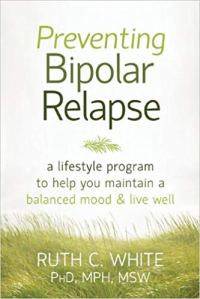
Book: Preventing Bipolar Relapse

Book Title:

Preventing Bipolar Relapse: A Lifestyle Program to Help You Maintain a Balanced Mood & Live Well.

Author(s): Ruth C. White (PhD, MPH, MSW).

Year: 2014.

Edition: First (1st).

Publisher: New Harbinger Publications.

Type(s): Paperback and Kindle.

Synopsis:

There is an old saying: “Prevention is better than cure.” If you have bipolar disorder, this is especially true. For you, it is incredibly important to read the warning signs of a possible episode. For instance, you may find you are not sleeping as well as usual, or you might be sleeping too much. You may stop doing things that you normally enjoy, or you may start acting out your impulses in ways that alienate those around you or get you into trouble.

While the path to wellness for those with bipolar may involve psychiatric visits and medication adjustments, preventing manic and depressive episodes is the true key to staying healthy and happy. So how do you do it? And most importantly, how can you keep yourself motivated?

In this powerful, breakthrough book, bipolar expert Ruth C. White shares her own personal approach to relapse prevention using the innovative programme SNAP (Sleep, Nutrition, Activity, and People).

White also offers practical tips and tracking tools you can use anytime, anywhere. By making necessary lifestyle adjustments, you can maintain balanced moods, recognise the warning signs of an oncoming episode, and make the necessary changes to reduce or prevent it.

This is the first and only book on bipolar disorder that focuses exclusively on prevention. To help you stay well, White includes links to helpful online tracking tools so that you can manage your symptoms, anytime, anywhere. If you are ready to stop living in fear of your next episode, this life-changing book can help you take charge of your diagnosis – and your life.

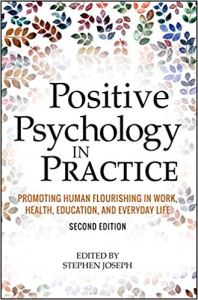
Book: Positive Psychology in Practice

Book Title:

Positive Psychology in Practice: Promoting Human Flourishing in Work, Health, Education, and Everyday Life.

Author(s): Stephen Joseph (Editor).

Year: 2015.

Edition: Second (2nd).

Publisher: John Wiley & Sons.

Type(s): Hardcover and Kindle.

Synopsis:

The best minds in positive psychology survey the state of the field Positive Psychology in Practice, Second Edition moves beyond the theoretical to show how positive psychology is being used in real-world settings, and the new directions emerging in the field.

An international team of contributors representing the best and brightest in the discipline review the latest research, discuss how the findings are being used in practice, explore new ideas for application, and discuss focus points for future research.

This updated edition contains new chapters that explore the intersection between positive psychology and humanistic psychology, salugenesis, hedonism, and eudaimonism, and more, with deep discussion of how the field is integrating with the new areas of self-help, life coaching, social work, rehabilitation psychology, and recovery-oriented service systems.

This book explores the challenges and opportunities in the field, providing readers with the latest research and consensus on practical application. * Get up to date on the latest research and practice findings * Integrate positive psychology into assessments, life coaching, and other therapies * Learn how positive psychology is being used in schools * Explore possible directions for new research to push the field forward Positive psychology is being used in areas as diverse as clinical, counselling, forensic, health, educational, and industrial/organisational settings, in a wide variety of interventions and applications.

Psychologists and other mental health professionals who want to promote human flourishing and well-being will find the second edition of Positive Psychology in Practice to be an informative, comprehensive guide.

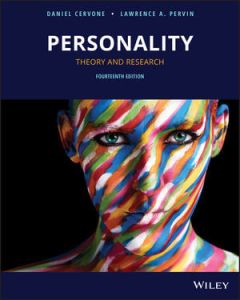
Book: Personality: Theory and Research

Book Title:

Personality: Theory and Research.

Author(s): Daniel Cervone and Lawrence A. Pervin.

Year: 2019.

Edition: Fourteenth (14th).

Publisher: Wiley.

Type(s): Hardcover and ebook (from Wiley).

Synopsis:

An invaluable resource for over four decades, Personality examines the fundamental theories and concepts of personality psychology while exploring contemporary research, new methodologies, and the latest technological advancements.

Through a well-rounded blend of theory, case studies, and the latest research, this text identifies the structures and processes of personality, traces personality development, and highlights the value of therapeutic change.

An effective pedagogical structure enhances student interest while strengthening objectivity and critical-thinking skills.

Psychodynamic, social-cognitive, phenomenological, and trait-theoretic perspectives are presented in an unbiased – yet critical – fashion that encourages students to compare theories, evaluate evidence, analyse data, and form their own conclusions.

Thorough historical coverage is balanced with discussions of the current state of the field, providing a solid understanding of theory and methods as relevant to practice today.

Suitable for introductory coursework, this text also serves as a valuable resource for advanced studies and as a reference for professionals in psychology and related fields.

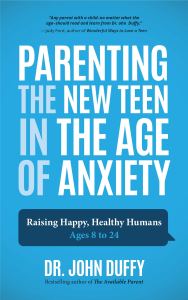
Book: Parenting the New Teen in the Age of Anxiety

Book Title:

Parenting the New Teen in the Age of Anxiety: A Complete Guide to Your Child’s Stressed, Depressed, Expanded, Amazing Adolescence.

Author(s): Dr. John Duffy.

Year: 2019.

Edition: First.

Publisher: Mango.

Type(s): Paperback, Kindle, and Audiobook.

Synopsis:

Learn about the “New Teen” and how to adjust your parenting approach. Kids are growing up with nearly unlimited access to social media and the internet, and unprecedented academic, social, and familial stressors. Starting as early as eight years old, children are exposed to information, thought, and emotion that they are developmentally unprepared to process. As a result, saving the typical “teen parenting” strategies for thirteen-year-olds is now years too late.

Urgent advice for parents of teens. Dr. John Duffy’s parenting book is a new and necessary guide that addresses this hidden phenomenon of the changing teenage brain. Dr. Duffy, a nationally recognised expert in parenting for nearly twenty-five years, offers this book as a guide for parents raising children who are growing up quickly and dealing with unresolved adolescent issues that can lead to anxiety and depression.

Unprecedented psychological suffering among our young and why it is occurring. A shift has taken place in how and when children develop. Because of the exposure they face, kids are emotionally overwhelmed at a young age, often continuing to search for a sense of self well into their twenties. Paradoxically, Dr. Duffy recognises the good that comes with these challenges, such as the sense of justice instilled in teenagers starting at a young age.

Readers of this book will:

  • Sort through the overwhelming circumstances of today’s teens and better understand the changing landscape of adolescence.
  • Come away with a revised, conscious parenting plan more suited to addressing the current needs of the New Teen.
  • Discover the joy in parenting again by reclaiming the role of your teen’s ally, guide, and consultant.

Book: The Oxford Handbook of Emotion, Social Cognition, and Problem Solving in Adulthood

Book Title:

The Oxford Handbook of Emotion, Social Cognition, and Problem Solving in Adulthood.

Part of the Oxford Library of Psychology.

Author(s): Paul Verhaegen and Christopher Hertzog (Editors).

Year: 2014.

Edition: First.

Publisher: Oxford University Press.

Type(s): Hardcover and Kindle.

Synopsis:

Over the last decade, the field of socio-emotional development and ageing has rapidly expanded, with many new theories and empirical findings emerging. This trend is consistent with the broader movement in psychology to consider social, motivational, and emotional influences on cognition and behaviour.

The Oxford Handbook of Emotion, Social Cognition, and Problem Solving in Adulthood provides the first overview of a new field of adult development that has emerged out of conceptualisations and research at the intersections between socio-emotional development, social cognition, emotion, coping, and everyday problem solving.

This field roundly rejects a universal deficit model of ageing, highlighting instead the dynamic nature of socio-emotional development and the differentiation of individual trajectories of development as a function of variation in contextual and experiential influences.

It emphasises the need for a cross-level examination (from biology and neuroscience to cognitive and social psychology) of the determinants of emotional and socio-emotional behaviour.

This volume also serves as a tribute to the late Fredda Blanchard-Fields, whose thinking and empirical research contributed extensively to a life-span developmental view of emotion, problem solving, and social cognition.

Its chapters cover multiple aspects of adulthood and ageing, presenting developmental perspectives on emotion; antecedents and consequences of emotion in context; everyday problem solving; social cognition; goals and goal-related behaviours; and wisdom.

The landmark volume in this new field, The Oxford Handbook of Emotion, Social Cognition, and Problem Solving in Adulthood is an important resource for cognitive, developmental, and social psychologists, as well as researchers and graduate students in the field of ageing, emotion studies, and social psychology.