Posts

On This Day … 16 November

People (Births)

  • 1944 – Oliver Braddick, English psychologist and academic.

People (Deaths)

  • 1950 – Bob Smith, American physician and surgeon, co-founded Alcoholics Anonymous (b. 1879).

Oliver Braddick

Oliver John Braddick, FBA, FMedSci (born 16 November 1944) is a British developmental psychologist who is involved in research on infant visual perception. He frequently collaborates with his wife Janette Atkinson.

Braddick is Emeritus Professor of Experimental Psychology and was formerly head of the Department of Experimental Psychology at Oxford University from 2001 until his retirement in 2011. He attained a BA (1965) and PhD (1968) in Experimental Psychology at Trinity College, Cambridge. Between 1968 and 1969 he was a post-doctoral fellow in the laboratory of Lorrin Riggs, Brown University, US. In 1969 he returned to Cambridge as a University Demonstrator, proceeding to become a lecturer and then reader. By 1976, Braddick was an active member of the Cambridge Visual Development Unit, along with Janette Atkinson, his wife. The unit carried out pioneering research on the development of visual cortical function in infancy and in early visual screening. He also progressed understanding in binocular processes of both infants and adults. In 1993 Braddick moved to University College London, together with Janette Atkinson, as professors of Psychology. He proceeded to become head of the Psychology department in 1998. He was elected fellow of the Academy of Medical Sciences in 2001 and that same year appointed Head Professor of Psychology at the University of Oxford and fellow at Magdalen College, Oxford. In July 2012, it was announced that he had been elected as a Fellow of the British Academy, due to his contributions in the field of visual perception and its development in early childhood. Braddick is also a member of the Visual Development Unit at the University College of London and University of Oxford, a unit that specialises in child visual perception. He is a member of the editorial board for Current Biology.

Bob Smith

Robert Holbrook Smith (08 August 1879 to 16 November 1950), also known as Dr. Bob, was an American physician and surgeon who founded Alcoholics Anonymous with Bill Wilson (more commonly known as Bill W.).

Smith began drinking at college attending Dartmouth College in Hanover, New Hampshire. Early on he noticed that he could recover from drinking bouts quicker and easier than his classmates and that he never had headaches, which caused him to believe he was an alcoholic from the time he began drinking. Smith was a member of Kappa Kappa Kappa fraternity at Dartmouth. After graduation in 1902, he worked for three years selling hardware in Boston, Chicago, and Montreal and continued drinking heavily. He then returned to school to study medicine at the University of Michigan. By this time drinking had begun to affect him to the point where he began missing classes. His drinking caused him to leave school, but he returned and passed his examinations for his sophomore year. He transferred to Rush Medical College, but his alcoholism worsened to the point that his father was summoned to try to halt his downward trajectory. But his drinking increased and after a dismal showing during final examinations, the university required that he remain for two extra quarters and remain sober during that time as a condition of graduating.

After graduation, Smith became a hospital intern, and for two years he was able to stay busy enough to refrain from heavy drinking. He married Anne Robinson Ripley on 25 January 1915, and opened up his own office in Akron, Ohio, specialising in colorectal surgery and returned to heavy drinking. Recognising his problem, he checked himself into more than a dozen hospitals and sanitariums in an effort to stop his drinking. He was encouraged by the passage of Prohibition in 1919, but soon discovered that the exemption for medicinal alcohol, and bootleggers, could supply more than enough to continue his excessive drinking. For the next 17 years his life revolved around how to subvert his wife’s efforts to stop his drinking and obtain the alcohol he craved while trying to hold together a medical practice in order to support his family and his drinking.

In January 1933, Bob Smith attended a lecture by Frank Buchman, the founder of the Oxford Group. For the next two years he and Smith attended local meetings of the group in an effort to solve his alcoholism, but recovery eluded him until he met Bill Wilson on 12 May 1935. Wilson was an alcoholic who had learned how to stay sober, thus far only for some limited amounts of time, through the Oxford Group in New York, and was close to discovering long-term sobriety by helping other alcoholics. Wilson was in Akron on business that had proven unsuccessful and he was in fear of relapsing. Recognising the danger, he made inquiries about any local alcoholics he could talk to and was referred to Smith by Henrietta Seiberling, one of the leaders of the Akron Oxford Group. After talking to Wilson, Smith stopped drinking and invited Wilson to stay at his home. He relapsed almost a month later while attending a professional convention in Atlantic City. Returning to Akron on 09 June, he was given a few drinks by Wilson to avoid delirium tremens. He drank one beer the next morning to settle his nerves so he could perform an operation, which proved to be the last alcoholic drink he would ever have. The date, 10 June 1935, is celebrated as the anniversary of the founding of Alcoholics Anonymous.

Smith was called the “Prince of Twelfth Steppers” by Wilson because he helped more than 5,000 alcoholics before his death. He was able to stay sober from 10 June 1935, until his death in 1950 from colon cancer. He is buried at the Mount Peace Cemetery in Akron, Ohio.

Alcoholics Anonymous

Alcoholics Anonymous (AA) is an international fellowship requiring no membership dues or fees dedicated to helping alcoholics peer to peer in sobriety through its spiritually inclined Twelve Steps programme. Structurally guided by its Twelve Traditions, AA is non-professional, non-denominational, self-supporting and apolitical, an avowed desire to stop drinking is its sole requirement for membership. It has not endorsed the disease model of alcoholism, to which its programme is nonetheless sympathetic, but its wider acceptance is partly due to many AA members independently promulgating it. As of 2020, having spread to diverse cultures, including geopolitical areas normally resistant to grassroots movements, AA has had an estimated worldwide membership of over two million with 75% of those in the US and Canada.
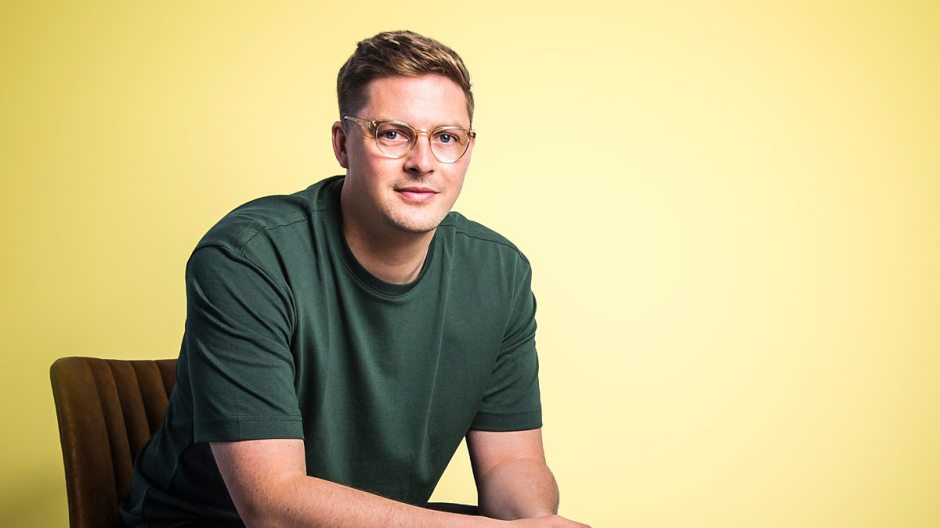
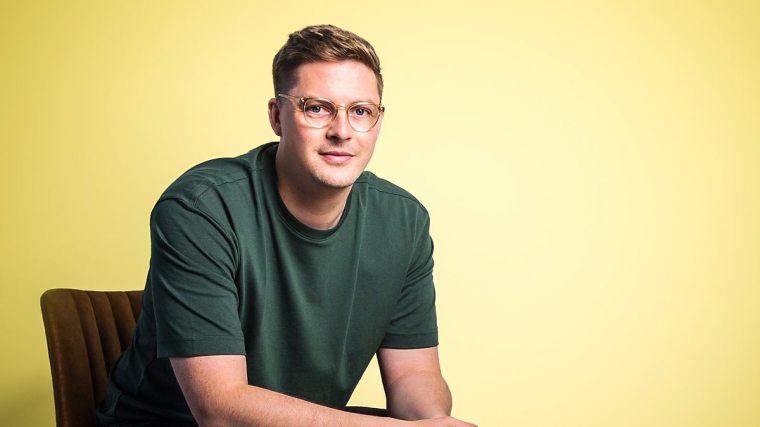
Dr Alex: Our Young Mental Health Crisis (2021)

Introduction

Dr Alex George explores the wide range of mental health issues children and young people are facing, and finds out how projects funded by Children in Need are making a difference.

Outline

Dr Alex George follows the journeys of young people across the UK who are living with mental health issues. He explores the wide range of difficulties they face and finds out how local charities, including projects funded by Children in Need, are making a difference.

As an A&E doctor and the UK Youth Mental Health Ambassador, Alex has seen at first hand the effects of the pandemic on young people’s mental wellbeing, but he never thought they would affect his own family. But in July 2020, Alex’s 19-year-old brother Llyr, who had been struggling with anxiety during lockdown, took his own life. This poignant film is his response.

Production & Filming Details

  • Presenter(s):
    • Alex George.
  • Director(s):
    • Candace Davies.
  • Producer(s):
    • Becky Houlihan … producer.
    • Peter Wallis-Tayler … executive producer.
  • Writer(s):
  • Music:
  • Cinematography:
  • Editor(s):
  • Production:
    • Dragonfly Film and Television.
  • Distributor(s):
    • BBC.
  • Release Date: 14 November 2021.
  • Running Time: 59 minutes.
  • Rating: Unknown.
  • Country: UK.
  • Language: English.

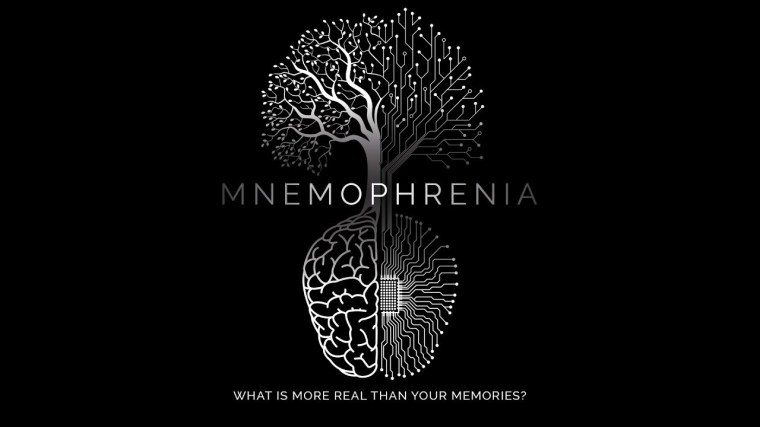
Mnemophrenia (2019)

Introduction

Mnemophrenia is a futuristic drama about a new psychosis that arises from advanced virtual reality technology, which causes people to be unable to distinguish between real and artificial memories.

Outline

The film explores how society is affected by and how it adapts to deal with Mnemophrenia, a growing new psychosis and the still advancing technology. We see the story unfold over time, through the eyes of three generations of the same family who are all affected and involved in different ways. The story explores how attitudes to Mnemophrenia would differ from person to person and across generations, going from resistance and fear, through acceptance and eventually even using it to our benefit, pushing humanity towards a new evolutionary step.

Cast

  • Freya Berry … Jeanette Harper.
  • Robin King … Nicholas Morgan.
  • Tim Seyfert … Douglas.
  • Tallulah Sheffield … Robyin.
  • Jamie Laird … Will Hall.
  • Robert Milton Wallace … Charlie.
  • Dominic O’Flynn … Michael Murphy.
  • Angela Peters … Keri Taylor.
  • Anna Brook … Nina.
  • Michael Buckster … Richard.
  • Gary Cargill … Jim.
  • Steve Hope Wynne … David Quinn.
  • Lisa Caruccio Came … Anna Lyons.
  • Cally Lawrence … Tessa Fox.
  • John Morton … Self.

Trivia

  • The word ‘mnemophrenia’ was coined especially for the film.
    • It is a portmanteau of the words ‘mneme’ and ‘schizophrenia’.
    • In the film ‘Mnemophrenia’ the word is defined as: ‘A condition or a state characterised by the coexistence of real and artificial memories, which affects the subject’s sense of identity.’
  • The director, Eirini Konstantinidou, used improvisation in order to build the characters and the shooting script for the whole film.
    • She believes that the realistic dialogue and performances that are achieved through improvisation contribute to the intended blurring of the distinction between reality and fiction.
    • Part 1 needed to be made first and edited in order for the actors of the following period (part 2) to watch it and build their characters’ experiences from what they have watched; according to the premise of the film these video recordings become part of their memories and identity.
    • That is the process that the actors of part 3 had to go through as well.
    • This technique allows for an organic development of the characters and dialogue, which is a result of the creative collaboration between the actors and herself.

Production & Filming Details

  • Director(s):
    • Eirini Konstantinidou.
  • Producer(s):
    • Robin King … assistant producer.
    • Eirini Konstantinidou … producer.
  • Writer(s):
    • Eirini Konstantinidou … (writer).
    • Robin King … (co-writer).
    • Eirini Konstantinidou … (original story).
    • Gary Cargill … (additional material).
    • Cally Lawrence … (additional material).
    • Robert Milton Wallace … (additional material).
    • Freya Berry … (additional material).
    • Michael Buckster … (additional material).
    • Tallulah Sheffield … (additional material).
    • Tim Seyfert … (additional material).
    • Angela Peters … (additional material).
    • Anna Brook … (additional material).
    • Dominic O’Flynn … (additional material).
    • Jamie Laird … (additional material).
    • Lisa Came … (additional material).
  • Music:
    • Corey Zack.
  • Cinematography:
    • Mirko Beutler … (part one: “The Beginning”).
    • Petros Nousias … (part three: “Homo Mnemonicus”).
    • Richard Thomas … (part two: “Total Cinema”).
  • Editor(s):
    • Giorgio Galli.
  • Production:
    • EK Productions.
    • Quoxel.
  • Distributor(s):
    • Indie Rights (2019) (World-wide) (all media).
  • Release Date: 11 February 2019 (US, Boston Science Fiction Film Festival).
  • Running Time: 78 minutes.
  • Rating: Unknown.
  • Country: US.
  • Language: English.

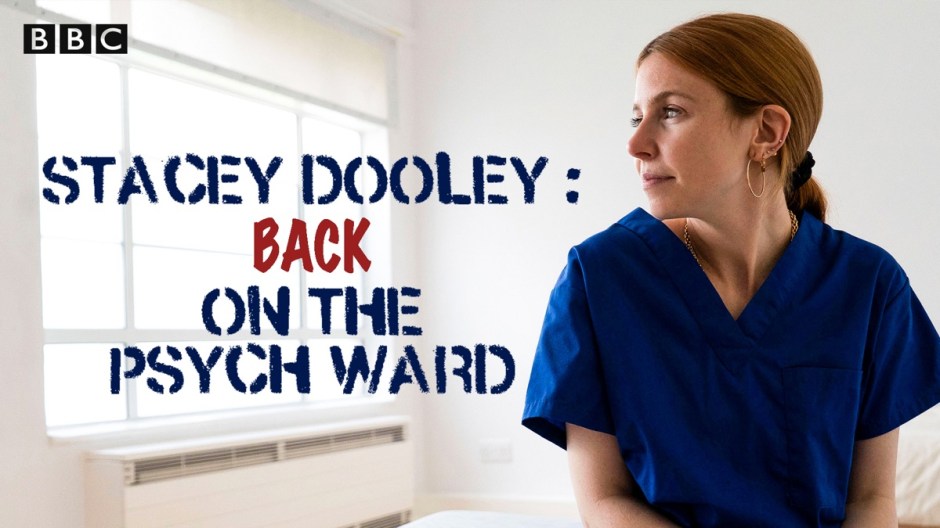
Stacey Dooley: Back on the Psych Ward (2021)

Introduction

Stacey Dooley returns to Springfield Hospital to work with the team again, looking after patients over six months as they battle through the pandemic.

Refer to Stacey Dooley: On the Psych Ward (2020).

Outline

Mental health across society has worsened since the pandemic began. Stacey Dooley returns to Springfield Hospital, and over six months, including the second nationwide lockdown, works with the team to experience first-hand how the pandemic is impacting patients in crisis. Stacey assists staff as they treat a wide range of mental health conditions and takes part in the tough decisions necessary to keep patients safe.

Stacey meets Coral, who is brought into Springfield by the police one night after attempting to take her life. Coral tells Stacey and the team about her long-running battle with anxiety and depression, which she attempts to self-medicate by drinking alcohol.

The pandemic has seen a rise in suicidal behaviour, especially amongst young people. Stacey meets Oskar, a 20-year-old university student whose struggle with intense suicidal thoughts brings him into the hospital in crisis.

For those with pre-existing mental health conditions, waiting lists and delays to treatment caused by the pandemic are pushing them to breaking point. Suziee is diagnosed with emotionally unstable personality disorder, which causes extreme highs and lows to her moods. But with her therapy now cancelled, she is struggling to cope on her own and turns to the hospital for help.

Stacey also gets to know 21-year-old Ali, an inpatient at Springfield, which is home to the only inpatient unit of its kind in the country for those with severe obsessive compulsive disorder (OCD). Since childhood, Ali’s OCD rituals have changed from repetitive tapping during stressful exams and blinking to keep her parents safe in the car to extreme bathroom routines. For severe OCD cases like Ali’s, this ward is her last chance at beating this devastating condition, and over the months Stacey sees a dramatic change in Ali’s obsessions.

Production & Filming Details

  • Presenter(s):
    • Stacey Dooley.
  • Director(s):
    • Erica Jenkin.
    • Katie Rice.
  • Producer(s):
    • Gabi Adams … assistant producer.
    • Carla Grande … producer.
    • Erica Jenkin … producer.
    • Katie Rice … producer.
    • Brian Woods … producer.
  • Writer(s):
  • Music:
    • Alexander Parsons.
  • Cinematography:
  • Editor(s):
    • Paddy Garrick.
  • Production:
    • True Vision.
  • Distributor(s):
    • BBC Three (2021) (UK) (video).
  • Release Date: 13 April 2021 (Internet).
  • Running Time: 59 minutes.
  • Rating: TV-MA.
  • Country: UK.
  • Language: English.

What is Olanzapine/Fluoxetine?

Introduction

Olanzapine/fluoxetine (trade name Symbyax, created by Eli Lilly and Company) is a fixed-dose combination medication containing olanzapine (Zyprexa), an atypical antipsychotic, and fluoxetine (Prozac), a selective serotonin reuptake inhibitor (SSRI). Olanzapine/fluoxetine is primarily used to treat the depressive episodes of bipolar I disorder as well as treatment-resistant depression.

Medical Uses

Olanzapine/fluoxetine was approved by the US Food and Drug Administration (FDA) to treat the depressive episodes of bipolar I disorder in 2003. In 2009, it was granted approval for the treatment of treatment-resistant depression.

Olanzapine/fluoxetine, or other antidepressant/antipsychotic combinations, are sometimes prescribed off-label for anxiety disorders, eating disorders, obsessive-compulsive disorder (OCD), and posttraumatic stress disorder (PTSD).

Side Effects

Possible side effects of olanzapine/fluoxetine include all those of the two component drugs: olanzapine (side effects) and fluoxetine (side effects). Common side effects include suicidal thoughts, increased appetite, weight gain, drowsiness, fatigue, dry mouth, swelling, tremor, blurred vision, and difficulty concentrating.

Olanzapine/fluoxetine could produce a severe allergic reaction and should not be used if the patient has previously experienced an allergic reaction to either fluoxetine or olanzapine.

Olanzapine is correlated with an increase in blood sugar. Patients with diabetes, or those at risk for developing it, require careful monitoring.

In rare cases, olanzapine/fluoxetine may cause neuroleptic malignant syndrome.

Like other SSRIs, olanzapine/fluoxetine carries a boxed warning stating that it could increase the risk of suicidal thoughts and behaviours in patients aged 24 and under. The warning also states that olanzapine/fluoxetine may increase the risk of death in elderly patients with dementia-related psychosis.

On This Day … 15 November

People (Deaths)

  • 1917 – Émile Durkheim, French sociologist, psychologist, and philosopher (b. 1858).

Emile Durkheim

David Émile Durkheim (15 April 1858 to 15 November 1917) was a French sociologist. He formally established the academic discipline of sociology and, with Max Weber, and Karl Marx, is commonly cited as the principal architect of modern social science.

From his lifetime, much of Durkheim’s work was concerned with how societies could maintain their integrity and coherence in modernity, an era in which traditional social and religious ties are no longer assumed, and in which new social institutions have come into being. Durkheim asserted that sociology is unique from other disciplines, such as psychology, because of its larger scale. Some tools that could be used in sociology are polls, surveys, statistics, and observing historical patients. Durkheim used these scientific tools in his analysis of suicides in Catholic and Protestant groups. His work was the concept of modern sociology. His first major sociological work was De la division du travail social (1893; The Division of Labour in Society), followed in 1895 by Les Règles de la Méthode Sociologique (The Rules of Sociological Method), the same year in which Durkheim set up the first European department of sociology and become France’s first professor of sociology. Durkheim’s seminal monograph, Le Suicide (1897), a study of suicide rates in Catholic and Protestant populations, especially pioneered modern social research, serving to distinguish social science from psychology and political philosophy. The following year, in 1898, he established the journal L’Année Sociologique. Les formes élémentaires de la vie religieuse (1912; The Elementary Forms of the Religious Life) presented a theory of religion, comparing the social and cultural lives of aboriginal and modern societies.

Durkheim was also deeply preoccupied with the acceptance of sociology as a legitimate science. He refined the positivism originally set forth by Auguste Comte, promoting what could be considered as a form of epistemological realism, as well as the use of the hypothetico-deductive model in social science. For Durkheim, sociology was the science of institutions, understanding the term in its broader meaning as the “beliefs and modes of behaviour instituted by the collectivity,” with its aim being to discover structural social facts. As such, Durkheim was a major proponent of structural functionalism, a foundational perspective in both sociology and anthropology. In his view, social science should be purely holistic, in that sociology should study phenomena attributed to society at large, rather than being limited to the specific actions of individuals.

He remained a dominant force in French intellectual life until his death in 1917, presenting numerous lectures and published works on a variety of topics, including the sociology of knowledge, morality, social stratification, religion, law, education, and deviance. Durkheimian terms such as “collective consciousness” have since entered the popular lexicon.

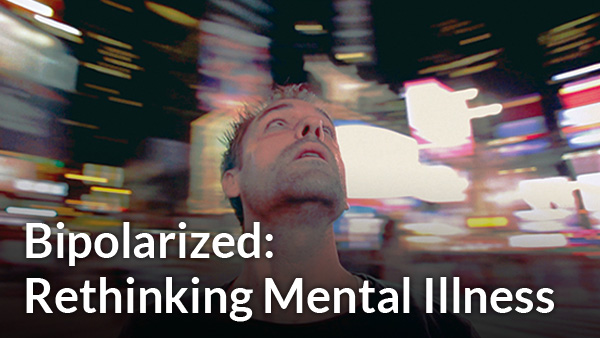
Bipolarised: Rethinking Mental Illness (2014)

Introduction

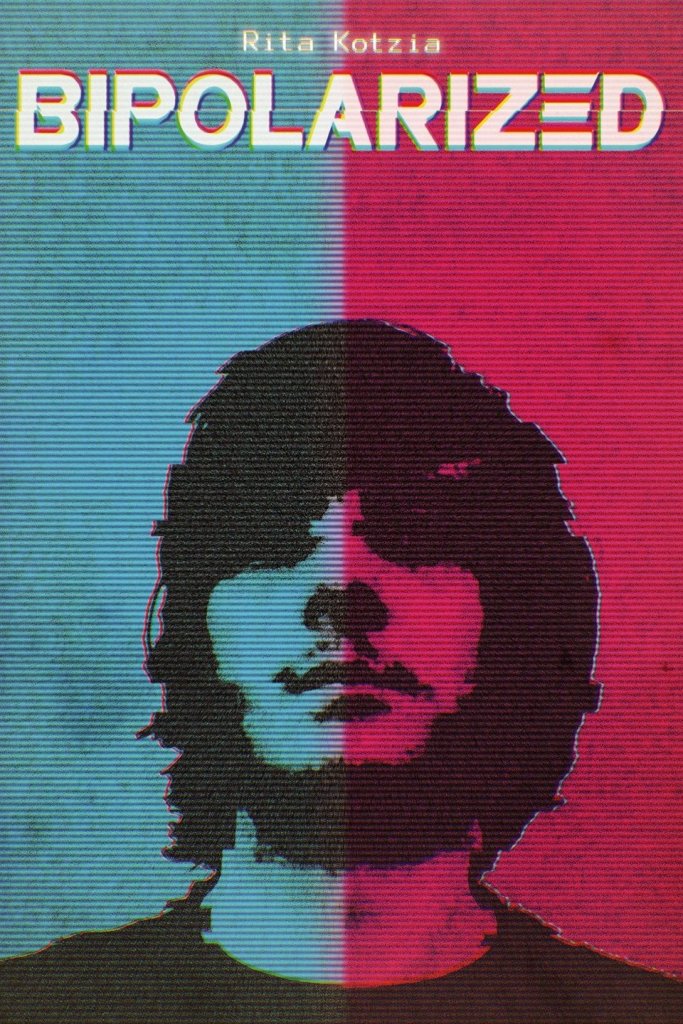
Bipolarised: Rethinking Mental Illness is a 2014 documentary by director Rita Kotzia.

Challenges conventional wisdom about mental illness and drug therapy through the raw personal journey of a man diagnosed as bipolar.

Outline

This documentary is about one man’s personal journey to heal. Diagnosed with bipolar disorder, Ross’ psychiatrist told him he would live with the disorder for the rest of his life and that he would have to take lithium to control symptoms. To Ross, taking the drug daily felt like a chemical lobotomy, leaving him in a foggy, drug-induced haze. Ross ultimately decided to resolve his symptoms outside of conventional medicine. He progressively reduced his use of the psychotropic drug lithium, at an experimental clinic in Costa Rica. What ensued was a self-exploration into alternative treatments to treat his condition and a journey delving into the root cause of his mental breakdown. The film uses Ross’ personal experiences to tell a larger story about medication. It will reveal how we are labelling more and more people with mental illnesses and how, in tandem, we are prescribing more and more toxic psychotropic drugs to treat these illnesses. It weaves together a series of interviews with activists, psychiatrists and other psychiatric survivors who have challenged the status quo as well as recounts some of the alternative therapies Ross uses to maintain his mental, emotional and physical health.

Cast

  • Ross McKenzie … Self.
  • David Goldbloom … Self / Professor of Psychiatry.
  • Peter Levine … Self / Writer.
  • Gwen Olsen … Self / Pharmaceutical rep.
  • Charles Whitfield … Self / Psychotherapist.
  • Robert Whittaker … Self / Journalist.

Production & Filming Details

  • Director(s):
    • Rita Kotzia.
  • Producer(s):
    • Noelle Kim Chalifoux … producer.
    • Gordon Henderson … producer.
    • Rita Kotzia … producer.
  • Writer(s):
    • Gordon Henderson … (writer).
    • Rita Kotzia … (writer).
  • Music:
  • Cinematography:
  • Editor(s):
  • Production:
  • Distributor(s):
  • Release Date: April 2014.
  • Running Time: 77 minutes.
  • Rating: TV-MA.
  • Country: Canada.
  • Language: English.

32 Pills: My Sister’s Suicide (2017)

Introduction

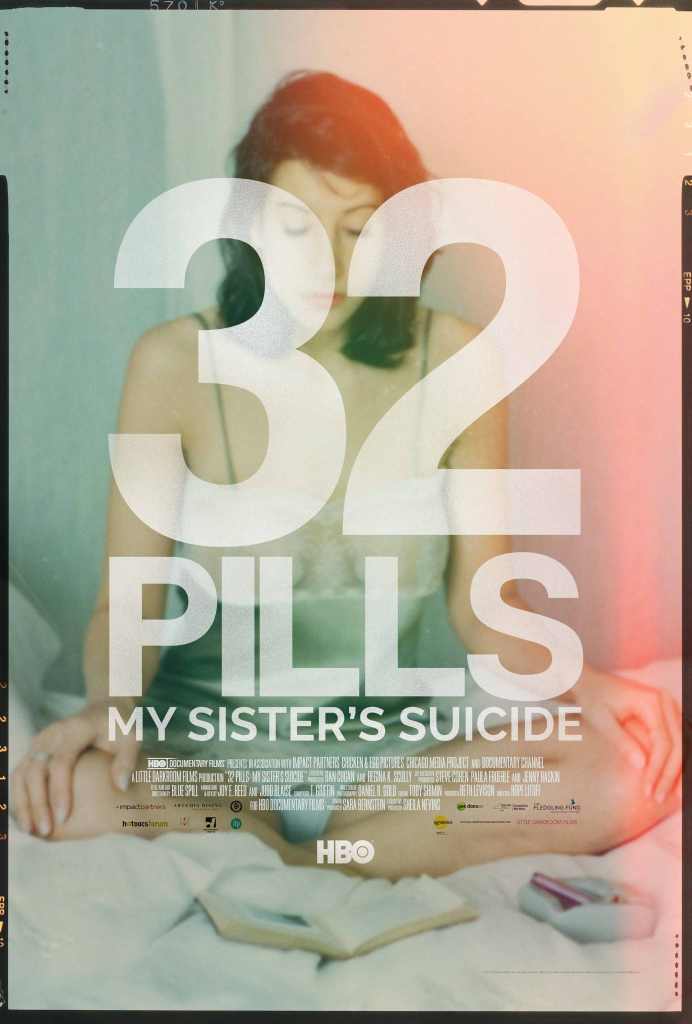
She’s beautiful, artistic, loved and can’t stand to be alive. 32 PILLS traces the fascinating life and mental illness of my sister, New York artist and photographer Ruth Litoff, and my struggle to come to terms with her tragic suicide.

Outline

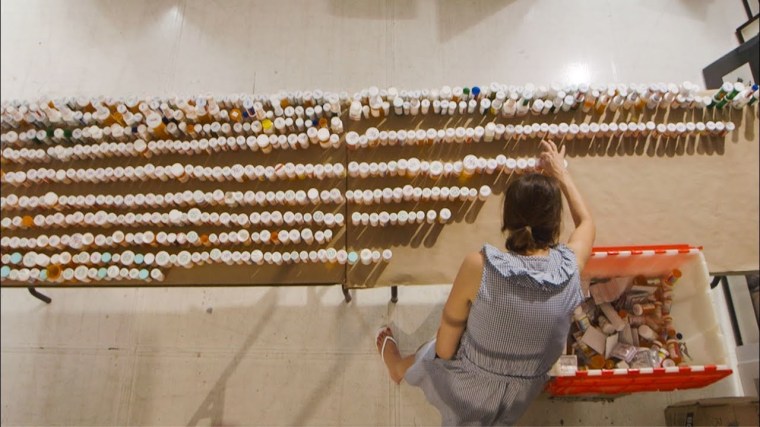
After struggling with mental illness for most of her life, New York artist Ruth Litoff committed suicide at age 42 in 2008 by overdosing on prescription pills. Six years later, her younger sister, Hope Litoff, decides to film herself while she empties a packed-to-the-brim storage unit filled with Ruth’s belongings, driven by the need to understand Ruth’s illness and desire to end her life – but as she pores through the items her sister left behind, she must exorcise the demons that threaten her sobriety.

Read the rest of the HBO synopsis here.

Cast

  • Ruth Litoff as self.
  • Hope Litoff as Self.

Production & Filming Details

  • Director(s):
    • Hope Litoff.
  • Producer(s):
    • Dan Cogan … executive producer.
    • Steven H. Cohen … co-executive producer.
    • Paula M. Froehle … co-executive producer.
    • Lise King … social impact producer.
    • Beth Levison … producer.
    • Sheila Nevins … executive producer.
    • Regina K. Scully … executive producer (as Regina Kulik Scully).
  • Writer(s):
  • Music:
    • Todd Griffin.
  • Cinematography:
    • Daniel B. Gold.
  • Editor(s):
    • Toby Shimin.
  • Production:
    • HBO Documentary Films.
  • Distributor(s):
    • Home Box Office (HBO) (2016) (USA) (TV).
  • Release Date: 01 May 2017 (Canada, Hot Docs International Documentary Festival).
  • Running Time: 89 minutes.
  • Rating: TV-MA.
  • Country: US.
  • Language: English.

P.O.V. Neurotypical (2013)

Introduction

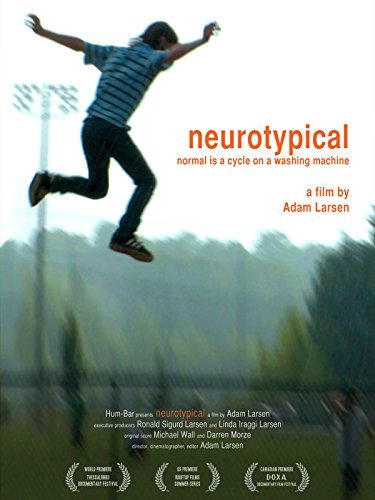
P.O.V. Neurotypical is a 2013 documentary film directed by Adam Larsen.

The film shows perspectives on life from the viewpoint of individuals on the autism spectrum. Neurotypical was shot mostly in North Carolina and Virginia.

Edited from Neurotypical in 2011.

Outline

Neurotypical is an unprecedented exploration of autism from the point of view of autistic people themselves. Four-year-old Violet, teenaged Nicholas and adult Paula occupy different positions on the autism spectrum, but they are all at pivotal moments in their lives. How they and the people around them work out their perceptual and behavioural differences becomes a remarkable reflection of the “neurotypical” world – the world of the non-autistic – revealing inventive adaptations on each side and an emerging critique of both what it means to be normal and what it means to be human.

Cast

  • Wolf Dunaway as himself.
  • Violet as herself.
  • Nicholas as himself.
  • Paula as herself.
  • Maddi as herself.
  • John as himself.

Production & Filming Details

  • Director(s):
    • Adam Larsen.
  • Producer(s):
  • Writer(s):
  • Music:
    • Darren Morze.
    • Michael Wall.
  • Cinematography:
    • Adam Larsen.
  • Editor(s):
    • Adam Larsen.
  • Production:
  • Distributor(s):
    • Janson Media (2013) (USA) (video).
    • Janson Media (2015) (USA) (video).
  • Release Date: 29 July 2013.
  • Running Time: 52 or 57 minutes.
  • Rating: Unknown.
  • Country: US.
  • Language: English.

Neurotypical (2011)

Introduction

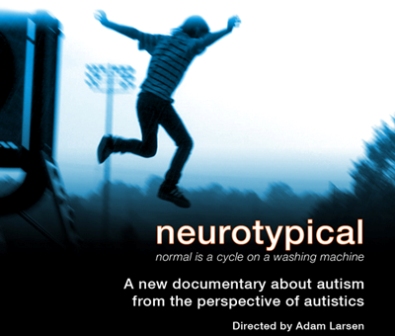
Neurotypical is a 2011 documentary film directed by Adam Larsen.

The film shows perspectives on life from the viewpoint of individuals on the autism spectrum. Neurotypical was shot mostly in North Carolina and Virginia.

Edited into P.O.V. Neurotypical in 2013.

Outline

Neurotypical is an unprecedented exploration of autism from the point of view of autistic people themselves. Four-year-old Violet, teenaged Nicholas and adult Paula occupy different positions on the autism spectrum, but they are all at pivotal moments in their lives. How they and the people around them work out their perceptual and behavioural differences becomes a remarkable reflection of the “neurotypical” world – the world of the non-autistic – revealing inventive adaptations on each side and an emerging critique of both what it means to be normal and what it means to be human.

Cast

  • Wolf Dunaway as himself.
  • Violet as herself.
  • Nicholas as himself.
  • Paula as herself.
  • Maddi as herself.
  • John as himself.

Production & Filming Details

  • Director(s):
    • Adam Larsen.
  • Producer(s):
  • Writer(s):
  • Music:
    • Darren Morze.
    • Michael Wall.
  • Cinematography:
    • Adam Larsen.
  • Editor(s):
    • Adam Larsen.
  • Production:
  • Distributor(s):
    • Janson Media (2013) (USA) (video).
    • Janson Media (2015) (USA) (video).
  • Release Date: March 2011 (Thessaloniki Documentary Festival).
  • Running Time: 52 minutes.
  • Rating: Unknown.
  • Country: US.
  • Language: English.