Posts

Book: Complex PTSD: From Surviving to Thriving

Book Title:

Complex PTSD: From Surviving to Thriving: A Guide and Map for Recovering from Childhood Trauma.

Author(s): Pete Walker.

Year: 2013.

Edition: First (1st).

Publisher: CreateSpace Independent Publishing Platform.

Type(s): Paperback, Audiobook, and Kindle.

Synopsis:

I have Complex PTSD (CPTSD) and wrote this book from the perspective of someone who has experienced a great reduction of symptoms over the years. I also wrote it from the viewpoint of someone who has discovered many silver linings in the long, windy, bumpy road of recovering from CPTSD. I felt encouraged to write this book because of thousands of e-mail responses to the articles on my website that repeatedly expressed gratitude for the helpfulness of my work. An often echoed comment sounded like this: At last someone gets it. I can see now that I am not bad, defective or crazy…or alone!

The causes of CPTSD range from severe neglect to monstrous abuse. Many survivors grow up in houses that are not homes – in families that are as loveless as orphanages and sometimes as dangerous. If you felt unwanted, unliked, rejected, hated and/or despised for a lengthy portion of your childhood, trauma may be deeply engrained in your mind, soul and body. This book is a practical, user-friendly self-help guide to recovering from the lingering effects of childhood trauma, and to achieving a rich and fulfilling life. It is copiously illustrated with examples of my own and my clients’ journeys of recovering.

This book is also for those who do not have CPTSD but want to understand and help a loved one who does. This book also contains an overview of the tasks of recovering and a great many practical tools and techniques for recovering from childhood trauma. It extensively elaborates on all the recovery concepts explained on my website, and many more. However, unlike the articles on my website, it is oriented toward the layperson. As such, much of the psychological jargon and dense concentration of concepts in the website articles has been replaced with expanded and easier to follow explanations. Moreover, many principles that were only sketched out in the articles are explained in much greater detail.

A great deal of new material is also explored. Key concepts of the book include managing emotional flashbacks, understanding the four different types of trauma survivors, differentiating the outer critic from the inner critic, healing the abandonment depression that come from emotional abandonment and self-abandonment, self-reparenting and reparenting by committee, and deconstructing the hierarchy of self-injuring responses that childhood trauma forces survivors to adopt.

The book also functions as a map to help you understand the somewhat linear progression of recovery, to help you identify what you have already accomplished, and to help you figure out what is best to work on and prioritise now. This in turn also serves to help you identify the signs of your recovery and to develop reasonable expectations about the rate of your recovery. I hope this map will guide you to heal in a way that helps you to become an unflinching source of kindness and self-compassion for yourself, and that out of that journey you will find at least one other human being who will reciprocally love you well enough in that way.

Book: The Complex PTSD Workbook

Book Title:

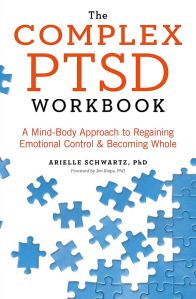
The Complex PTSD Workbook: A Mind-Body Approach to Regaining Emotional Control and Becoming Whole.

Author(s): Arielle Schwartz.

Year: 2020.

Edition: First (1st).

Publisher: Sheldon Press.

Type(s): Paperback, Audiobook, and Kindle.

Synopsis:

Those affected by complex PTSD commonly feel as though there is something fundamentally wrong with them – that somewhere inside there is a part of them that needs to be fixed. Though untrue, such beliefs can feel extremely real and frightening. Difficult as it may be, facing one’s PTSD from unresolved childhood trauma is a brave, courageous act – and with the right guidance, healing from PTSD is possible.

Clinical psychologist Dr Arielle Schwartz has spent years helping those with C-PTSD find their way to wholeness. She also knows the territory of the healing firsthand, having walked it herself. This book provides a map to the complicated, and often overwhelming, terrain of C-PTSD with Dr. Schwartz’s knowledgeable guidance helping you find your way.

In The Complex PTSD Workbook, you’ll learn all about C-PTSD and gain valuable insight into the types of symptoms associated with unresolved childhood trauma, while applying a strength-based perspective to integrate positive beliefs and behaviours.

Examples and exercises through which you’ll discover your own instances of trauma through relating to PTSD experiences other than your own, such as the following:

  • Information about common PTSD misdiagnoses such as bipolar disorder, ADHD, anxiety disorders, major depressive disorder, and substance abuse, among others.
  • Explorations of common methods of PTSD therapy including somatic therapy, EMDR, CBT, DBT, and mind-body perspectives.
  • Chapter takeaways that encourage thoughtful consideration and writing to explore how you feel as you review the material presented in relation to your PTSD symptoms.

The Complex PTSD Workbook aims to empower you with a thorough understanding of the psychology and physiology of C-PTSD so you can make informed choices about the path to healing that is right for you and discover a life of wellness, free of C-PTSD, that used to seem just out of reach.

Book: PTSD F*cking Hurts (Write That Sh*t Down)

Book Title:

PTSD Fcking Hurts (Write That Sht Down): A Guided Journal for Depression, PTSD, Mental Recovery, With Prompts to Help you through Emotional Healing, With Prompts and Activities.

Author(s): Sami’s Mental Health Journals.

Year: 2020.

Edition: First (1st).

Publisher: Independently Published.

Type(s): Paperback.

Synopsis:

A great Guided & Prompted Journal workbook for people suffering from PTSD or Complex PTSD (CPTSD). It is a perfect Journal for yourself if you are seeking a great book to help write down your thoughts. It will guide you throughout activities, Prompts, and questions you need to answer honestly in the journey of recovery, With space for notes.

It will also be a gift for someone who suffers from PTSD, or with having a hard psychologic experience.

Book: The PTSD Workbook

Book Title:

The PTSD Workbook: Simple, Effective Techniques for Overcoming Traumatic Stress Symptoms.

Author(s): Mary Beth Williams and Soili Poijula.

Year: 2016.

Edition: Third (3rd).

Publisher: New Harbinger.

Type(s): Paperback and Kindle.

Synopsis:

Post-traumatic stress disorder (PTSD) is an extremely debilitating condition that can occur after exposure to a terrifying event. But whether you are a veteran of war, a victim of domestic violence or sexual violence, or have been involved in a natural disaster, crime, car accident, or accident in the workplace, your symptoms may be getting in the way of you living your life.

PTSD can often cause you to relive your traumatic experience in the form of flashbacks, memories, nightmares, and frightening thoughts. This is especially true when you are exposed to events or objects that remind you of your trauma. Left untreated, PTSD can lead to emotional numbness, insomnia, addiction, anxiety, depression, and even suicide. So, how can you start to heal and get your life back?

In The PTSD Workbook, Third Edition, psychologists and trauma experts Mary Beth Williams and Soili Poijula outline techniques and interventions used by PTSD experts from around the world to conquer distressing trauma-related symptoms. In this fully revised and updated workbook, you’ll learn how to move past the trauma you’ve experienced and manage symptoms such as insomnia, anxiety, and flashbacks.

Based in cognitive behavioural therapy (CBT), this book is extremely accessible and easy-to-use, offering evidence-based therapy at a low cost. This new edition features chapters focusing on veterans with PTSD, the link between cortisol and adrenaline and its role in PTSD and overall mental health, and the mind-body component of PTSD. Clinicians will also find important updates reflecting the new DSM-V definition of PTSD.

This book is designed to give you the emotional resilience you need to get your life back together after a traumatic event.

What is Recapitulation Theory?

Introduction

The theory of recapitulation, also called the biogenetic law or embryological parallelism – often expressed using Ernst Haeckel’s phrase “ontogeny recapitulates phylogeny” – is a historical hypothesis that the development of the embryo of an animal, from fertilization to gestation or hatching (ontogeny), goes through stages resembling or representing successive adult stages in the evolution of the animal’s remote ancestors (phylogeny). It was formulated in the 1820s by Étienne Serres based on the work of Johann Friedrich Meckel, after whom it is also known as Meckel-Serres law.

Since embryos also evolve in different ways, the shortcomings of the theory had been recognised by the early 20th century, and it had been relegated to “biological mythology” by the mid-20th century.

Analogies to recapitulation theory have been formulated in other fields, including cognitive development and music criticism.

Embryology

Meckel, Serres, and Geoffroy

The idea of recapitulation was first formulated in biology from the 1790s onwards by the German natural philosophers Johann Friedrich Meckel and Carl Friedrich Kielmeyer, and by Étienne Serres after which, Marcel Danesi states, it soon gained the status of a supposed biogenetic law.

The embryological theory was formalised by Serres in 1824-1826, based on Meckel’s work, in what became known as the “Meckel-Serres Law”. This attempted to link comparative embryology with a “pattern of unification” in the organic world. It was supported by Étienne Geoffroy Saint-Hilaire, and became a prominent part of his ideas. It suggested that past transformations of life could have been through environmental causes working on the embryo, rather than on the adult as in Lamarckism. These naturalistic ideas led to disagreements with Georges Cuvier. The theory was widely supported in the Edinburgh and London schools of higher anatomy around 1830, notably by Robert Edmond Grant, but was opposed by Karl Ernst von Baer’s ideas of divergence, and attacked by Richard Owen in the 1830s.

Haeckel

Ernst Haeckel (1834-1919) attempted to synthesize the ideas of Lamarckism and Goethe’s Naturphilosophie with Charles Darwin’s concepts. While often seen as rejecting Darwin’s theory of branching evolution for a more linear Lamarckian view of progressive evolution, this is not accurate: Haeckel used the Lamarckian picture to describe the ontogenetic and phylogenetic history of individual species, but agreed with Darwin about the branching of all species from one, or a few, original ancestors. Since early in the twentieth century, Haeckel’s “biogenetic law” has been refuted on many fronts.

Haeckel formulated his theory as “Ontogeny recapitulates phylogeny”. The notion later became simply known as the recapitulation theory. Ontogeny is the growth (size change) and development (structure change) of an individual organism; phylogeny is the evolutionary history of a species. Haeckel claimed that the development of advanced species passes through stages represented by adult organisms of more primitive species. Otherwise put, each successive stage in the development of an individual represents one of the adult forms that appeared in its evolutionary history.

For example, Haeckel proposed that the pharyngeal grooves between the pharyngeal arches in the neck of the human embryo not only roughly resembled gill slits of fish, but directly represented an adult “fishlike” developmental stage, signifying a fishlike ancestor. Embryonic pharyngeal slits, which form in many animals when the thin branchial plates separating pharyngeal pouches and pharyngeal grooves perforate, open the pharynx to the outside. Pharyngeal arches appear in all tetrapod embryos: in mammals, the first pharyngeal arch develops into the lower jaw (Meckel’s cartilage), the malleus and the stapes.

Haeckel produced several embryo drawings that often overemphasized similarities between embryos of related species. Modern biology rejects the literal and universal form of Haeckel’s theory, such as its possible application to behavioural ontogeny, i.e. the psychomotor development of young animals and human children.

Contemporary Criticism

Haeckel’s drawings misrepresented observed human embryonic development to such an extent that he attracted the opposition of several members of the scientific community, including the anatomist Wilhelm His, who had developed a rival “causal-mechanical theory” of human embryonic development. His’s work specifically criticised Haeckel’s methodology, arguing that the shapes of embryos were caused most immediately by mechanical pressures resulting from local differences in growth. These differences were, in turn, caused by “heredity”. His compared the shapes of embryonic structures to those of rubber tubes that could be slit and bent, illustrating these comparisons with accurate drawings. Stephen Jay Gould noted in his 1977 book Ontogeny and Phylogeny that His’s attack on Haeckel’s recapitulation theory was far more fundamental than that of any empirical critic, as it effectively stated that Haeckel’s “biogenetic law” was irrelevant.

Darwin proposed that embryos resembled each other since they shared a common ancestor, which presumably had a similar embryo, but that development did not necessarily recapitulate phylogeny: he saw no reason to suppose that an embryo at any stage resembled an adult of any ancestor. Darwin supposed further that embryos were subject to less intense selection pressure than adults, and had therefore changed less.

Modern Status

Modern evolutionary developmental biology (evo-devo) follows von Baer, rather than Darwin, in pointing to active evolution of embryonic development as a significant means of changing the morphology of adult bodies. Two of the key principles of evo-devo, namely that changes in the timing (heterochrony) and positioning (heterotopy) within the body of aspects of embryonic development would change the shape of a descendant’s body compared to an ancestor’s, were however first formulated by Haeckel in the 1870s. These elements of his thinking about development have thus survived, whereas his theory of recapitulation has not.

The Haeckelian form of recapitulation theory is considered defunct. Embryos do undergo a period or phylotypic stage where their morphology is strongly shaped by their phylogenetic position, rather than selective pressures, but that means only that they resemble other embryos at that stage, not ancestral adults as Haeckel had claimed. The modern view is summarised by the University of California Museum of Palaeontology:

Embryos do reflect the course of evolution, but that course is far more intricate and quirky than Haeckel claimed. Different parts of the same embryo can even evolve in different directions. As a result, the Biogenetic Law was abandoned, and its fall freed scientists to appreciate the full range of embryonic changes that evolution can produce—an appreciation that has yielded spectacular results in recent years as scientists have discovered some of the specific genes that control development.

Applications to Other Areas

The idea that ontogeny recapitulates phylogeny has been applied to some other areas.

Cognitive Development

English philosopher Herbert Spencer was one of the most energetic proponents of evolutionary ideas to explain many phenomena. In 1861, five years before Haeckel first published on the subject, Spencer proposed a possible basis for a cultural recapitulation theory of education with the following claim:

If there be an order in which the human race has mastered its various kinds of knowledge, there will arise in every child an aptitude to acquire these kinds of knowledge in the same order… Education is a repetition of civilization in little.

G. Stanley Hall used Haeckel’s theories as the basis for his theories of child development. His most influential work, “Adolescence: Its Psychology and Its Relations to Physiology, Anthropology, Sociology, Sex, Crime, Religion and Education” in 1904 suggested that each individual’s life course recapitulated humanity’s evolution from “savagery” to “civilisation”. Though he has influenced later childhood development theories, Hall’s conception is now generally considered racist. Developmental psychologist Jean Piaget favoured a weaker version of the formula, according to which ontogeny parallels phylogeny because the two are subject to similar external constraints.

The Austrian pioneer of psychoanalysis, Sigmund Freud, also favoured Haeckel’s doctrine. He was trained as a biologist under the influence of recapitulation theory during its heyday, and retained a Lamarckian outlook with justification from the recapitulation theory. Freud also distinguished between physical and mental recapitulation, in which the differences would become an essential argument for his theory of neuroses.

In the late 20th century, studies of symbolism and learning in the field of cultural anthropology suggested that “both biological evolution and the stages in the child’s cognitive development follow much the same progression of evolutionary stages as that suggested in the archaeological record”.

Music Criticism

The musicologist Richard Taruskin in 2005 applied the phrase “ontogeny becomes phylogeny” to the process of creating and recasting music history, often to assert a perspective or argument. For example, the peculiar development of the works by modernist composer Arnold Schoenberg (here an “ontogeny”) is generalised in many histories into a “phylogeny” – a historical development (“evolution”) of Western music toward atonal styles of which Schoenberg is a representative. Such historiographies of the “collapse of traditional tonality” are faulted by music historians as asserting a rhetorical rather than historical point about tonality’s “collapse”.

Taruskin also developed a variation of the motto into the pun “ontogeny recapitulates ontology” to refute the concept of “absolute music” advancing the socio-artistic theories of the musicologist Carl Dahlhaus. Ontology is the investigation of what exactly something is, and Taruskin asserts that an art object becomes that which society and succeeding generations made of it. For example, Johann Sebastian Bach’s St. John Passion, composed in the 1720s, was appropriated by the Nazi regime in the 1930s for propaganda. Taruskin claims the historical development of the St John Passion (its ontogeny) as a work with an anti-Semitic message does, in fact, inform the work’s identity (its ontology), even though that was an unlikely concern of the composer. Music or even an abstract visual artwork can not be truly autonomous (“absolute”) because it is defined by its historical and social reception.

Reviewing the Understanding of the Treatment Guidelines for Schizophrenia & Major Depressive Disorder

Research Paper Title

Improvements in the degree of understanding of the treatment guidelines for schizophrenia and major depressive disorder in a nationwide dissemination and implementation study.

Background

To implement clinical practice guidelines (CPGs), it is necessary for psychiatrists to deepen their understanding of the CPGs. The Effectiveness of Guidelines for Dissemination and Education in Psychiatric Treatment (EGUIDE) project is a nationwide dissemination and implementation study of two sets of CPGs for schizophrenia and major depressive disorder (MDD).

Methods

A total of 413 psychiatrists (n = 212 in 2016; n = 201 in 2017) learned the two CPGs in the education program of the EGUIDE project, and clinical knowledge of these CPGs was evaluated at baseline and after the programs. To improve the correct answer rate for clinical knowledge after the programs, we revised the lecture materials associated with items that had a low correct answer rate in 2016 and used the revised lecture materials with the CPGs in 2017. The rates of correct answers after the programmes between the 2016 and 2017 groups were compared.

Results

The correct answer rate of one item on the schizophrenia CPG and one item on the MDD CPG tended to be improved (S-D5 and D-C6) and that of one on the MDD CPG was significantly improved (D-D3, P = 0.0008) in the 2017 group compared to those in the 2016 group.

Conclusions

The researchers reported improvements in clinical knowledge of CPGs after the EGUIDE program in the 2017 group following revision of the lecture materials based on results from the 2016 group. These attempts to improve the degree of understanding of CPGs may facilitate the successful dissemination and implementation of psychiatric guidelines in everyday practice.

Reference

Numata, S., Nakataki, M., Hasegawa, N., Takaesu, Y., Takeshima, M., Onitsuka, T., Nakamura, T., Edagawa, R., do, H., Miura, K., Matsumoto, J., Yasui-Fiurukori, N., Kishimoto, T., Hori, H., Tsuboi, T., Yasuda, Y., Furihata, R., Muraoka, H., Ochi, S., Nagasawa, T., Kyou, Y., Murata, A., Katsumoto, E., Ohi, K., Hishimoto, A., Inada, K., Watanabe, K. & Hashimoto, R. (2021) Improvements in the degree of understanding the treatment guidelines for schizophrenia and major depressive disorder in a nationwide dissemination and implementation study. Neuropsychopharmacology Reports. doi: 10.1002/npr2.12173. Online ahead of print.

Book: A Sociology of Mental Health and Illness

Book Title:

A Sociology of Mental Health and Illness.

Author(s): Anne Rogers and David Pilgrim.

Year: 2020.

Edition: Sixth (6th).

Publisher: Open University Press.

Type(s): Paperback and Kindle.

Synopsis:

How do we understand mental health problems in their social context?

A former BMA Medical Book of the Year award winner, this book provides a sociological analysis of major areas of mental health and illness. The book considers contemporary and historical aspects of sociology, social psychiatry, policy and therapeutic law to help students develop an in-depth and critical approach to this complex subject. New developments for the sixth edition include:

  • Brand new chapter on ageing and older people.
  • Updated material on social class, ethnicity, user involvement, young people and adolescence.
  • New coverage on prisons legalism and the rise of digital mental health management and delivery.

A classic in its field, this well-established textbook offers a rich, contemporary and well-crafted overview of mental health and illness unrivalled by competitors and is essential reading for students and professionals studying a range of medical sociology and health-related courses. It is also highly suitable for trainee mental health workers in the fields of social work, nursing, clinical psychology and psychiatry.

Book: Anatomy of an Epidemic

Book Title:

Anatomy of an Epidemic: Magic Bullets, Psychiatric Drugs, and the Astonishing Rise of Mental Illness in America.

Author(s): Robert Whitaker.

Year: 2010.

Edition: First (1ed).

Publisher: Crown Publishing Group.

Type(s): Hardcover and Kindle.

Synopsis:

The award-winning author of Mad in America presents a controversial assessment of the rise in mental illness-related disabilities that considers if drug-based care may be fuelling illness rates throughout the past half century.

Book: Introducing Mental Health: A Practical Guide

Book Title:

Introducing Mental Health: A Practical Guide.

Author(s): Caroline Kinsella and Connor Kinsella.

Year: 2015.

Edition: Second (2nd).

Publisher: Jessica Kingsley Publishers.

Type(s): Paperback and Kindle.

Synopsis:

This popular and accessible introduction to mental health is written for students, mental health practitioners and non-qualified professionals.

Fully revised, this second edition is up to date with the latest knowledge on mental health conditions, good practice and the law. The authors explain key concepts in easily understandable language, accessible even to those with no prior knowledge of the subject. They detail the major mental health disorders, the issues surrounding them, and provide detailed information on:

  • Treatment and support.
  • Risk assessment and management.
  • Mental illness and the Criminal Justice System.
  • The Mental Health Act and the Mental Capacity Act.

Featuring case studies and exercises to assist learning, this is an invaluable resource for anyone working with people who are experiencing mental illness, including students and professionals in health and social care, housing and criminal justice.

Book: Wrestling With My Thoughts: A Doctor With Severe Mental Illness Discovers Strength

Book Title:

Wrestling With My Thoughts: A Doctor With Severe Mental Illness Discovers Strength.

Author(s): Sharon Hastings.

Year: 2020.

Edition: First (1st).

Publisher: IVP.

Type(s): Paperback and Kindle.

Synopsis:

She couldn’t believe it. There she was with her medical qualifications sitting on the floor of a mental hospital. She’d offered her life to God, wanted to serve him anywhere, but no, surely not this… Sharon Hastings is absolutely passionate about helping anyone who suffers from ‘severe and enduring mental illness’ (SEMI): schizophrenia, bipolar disorder and schizoaffective disorder. She wants the church to know all about these illnesses: how they devastate ordinary people and how they need to be treated. By telling her story, warts and all, showing her own tortuous, painful journey, she equips us to come alongside loved ones, fellow church members, friends and neighbours, understanding the social and spiritual ramifications of their illnesses, including them in our activities (where appropriate) and encouraging their spiritual growth. A natural storyteller, the author draws us in. We journey with her. With wisdom, kindness and the heart of a bruised survivor, she interweaves her exceptional story with vital teaching which simply cannot be ignored by anyone within the church today.