Posts

What is Learned Helplessness?

Introduction

Learned helplessness is behaviour exhibited by a subject after enduring repeated aversive stimuli beyond their control. It was initially thought to be caused from the subject’s acceptance of their powerlessness: discontinuing attempts to escape or avoid the aversive stimulus, even when such alternatives are unambiguously presented. Upon exhibiting such behaviour, the subject was said to have acquired learned helplessness.

Over the past few decades, neuroscience has provided insight into learned helplessness and shown that the original theory actually had it backwards: the brain’s default state is to assume that control is not present, and the presence of “helpfulness” is what is actually learned.

In humans, learned helplessness is related to the concept of self-efficacy; the individual’s belief in their innate ability to achieve goals. Learned helplessness theory is the view that clinical depression and related mental illnesses may result from such real or perceived absence of control over the outcome of a situation.

Refer to Learned Optimism.

Foundation of Research and Theory

Early Experiments

American psychologist Martin Seligman initiated research on learned helplessness in 1967 at the University of Pennsylvania as an extension of his interest in depression. This research was later expanded through experiments by Seligman and others. One of the first was an experiment by Seligman & Maier:

  • In Part 1 of this study, three groups of dogs were placed in harnesses.
    • Group 1 dogs were simply put in a harness for a period of time and were later released.
    • Groups 2 and 3 consisted of “yoked pairs”.
    • Dogs in Group 2 were given electric shocks at random times, which the dog could end by pressing a lever.
    • Each dog in Group 3 was paired with a Group 2 dog; whenever a Group 2 dog got a shock, its paired dog in Group 3 got a shock of the same intensity and duration, but its lever did not stop the shock.
    • To a dog in Group 3, it seemed that the shock ended at random, because it was their paired dog in Group 2 that was causing it to stop.
    • Thus, for Group 3 dogs, the shock was “inescapable”.
  • In Part 2 of the experiment the same three groups of dogs were tested in a shuttle-box apparatus (a chamber containing two rectangular compartments divided by a barrier a few inches high).
    • All of the dogs could escape shocks on one side of the box by jumping over a low partition to the other side.
    • The dogs in Groups 1 and 2 quickly learned this task and escaped the shock.
    • Most of the Group 3 dogs – which had previously learned that nothing they did had any effect on shocks – simply lay down passively and whined when they were shocked.

In a second experiment later that year with new groups of dogs, Overmier and Seligman ruled out the possibility that, instead of learned helplessness, the Group 3 dogs failed to avert in the second part of the test because they had learned some behaviour that interfered with “escape”. To prevent such interfering behaviour, Group 3 dogs were immobilised with a paralysing drug (curare), and underwent a procedure similar to that in Part 1 of the Seligman and Maier experiment. When tested as before in Part 2, these Group 3 dogs exhibited helplessness as before. This result serves as an indicator for the ruling out of the interference hypothesis.

From these experiments, it was thought that there was to be only one cure for helplessness. In Seligman’s hypothesis, the dogs do not try to escape because they expect that nothing they do will stop the shock. To change this expectation, experimenters physically picked up the dogs and moved their legs, replicating the actions the dogs would need to take in order to escape from the electrified grid. This had to be done at least twice before the dogs would start wilfully jumping over the barrier on their own. In contrast, threats, rewards, and observed demonstrations had no effect on the “helpless” Group 3 dogs.

Later Experiments

Later experiments have served to confirm the depressive effect of feeling a lack of control over an aversive stimulus. For example, in one experiment, humans performed mental tasks in the presence of distracting noise. Those who could use a switch to turn off the noise rarely bothered to do so, yet they performed better than those who could not turn off the noise. Simply being aware of this option was enough to substantially counteract the noise effect. In 2011, an animal study found that animals with control over stressful stimuli exhibited changes in the excitability of certain neurons in the prefrontal cortex. Animals that lacked control failed to exhibit this neural effect and showed signs consistent with learned helplessness and social anxiety.

Expanded Theories

Research has found that a human’s reaction to feeling a lack of control differs both between individuals and between situations, i.e. learned helplessness sometimes remains specific to one situation but at other times generalises across situations. Such variations are not explained by the original theory of learned helplessness, and an influential view is that such variations depend on an individual’s attributional or explanatory style. According to this view, how someone interprets or explains adverse events affects their likelihood of acquiring learned helplessness and subsequent depression. For example, people with pessimistic explanatory style tend to see negative events as permanent (“it will never change”), personal (“it’s my fault”), and pervasive (“I can’t do anything correctly”), and are likely to suffer from learned helplessness and depression.

Bernard Weiner proposed a detailed account of the attributional approach to learned helplessness. His attribution theory includes the dimensions of globality/specificity, stability/instability, and internality/externality:

  • A global attribution occurs when the individual believes that the cause of negative events is consistent across different contexts.
    • A specific attribution occurs when the individual believes that the cause of a negative event is unique to a particular situation.
  • A stable attribution occurs when the individual believes the cause to be consistent across time.
    • An unstable attribution occurs when the individual thinks that the cause is specific to one point in time.
  • An external attribution assigns causality to situational or external factors,
    • while an internal attribution assigns causality to factors within the person.

Research has shown that those with an internal, stable, and global attributional style for negative events can be more at risk for a depressive reaction to failure experiences.

Neurobiological Perspective

Research has shown that increased 5-HT (serotonin) activity in the dorsal raphe nucleus plays a critical role in learned helplessness. Other key brain regions that are involved with the expression of helpless behaviour include the basolateral amygdala, central nucleus of the amygdala and bed nucleus of the stria terminalis. Activity in medial prefrontal cortex, dorsal hippocampus, septum and hypothalamus has also been observed during states of helplessness.

In the article, “Exercise, Learned Helplessness, and the Stress-Resistant Brain”, Benjamin N. Greenwood and Monika Fleshner discuss how exercise might prevent stress-related disorders such as anxiety and depression. They show evidence that running wheel exercise prevents learned helplessness behaviours in rats. They suggest that the amount of exercise may not be as important as simply exercising at all. The article also discusses the neurocircuitry of learned helplessness, the role of serotonin (or 5-HT), and the exercise-associated neural adaptations that may contribute to the stress-resistant brain. However, the authors finally conclude that:

“The underlying neurobiological mechanisms of this effect, however, remain unknown. Identifying the mechanisms by which exercise prevents learned helplessness could shed light on the complex neurobiology of depression and anxiety and potentially lead to novel strategies for the prevention of stress-related mood disorders”.

Health Implications

People who perceive events as uncontrollable show a variety of symptoms that threaten their mental and physical well-being. They experience stress, they often show disruption of emotions demonstrating passivity or aggressiveness, and they can also have difficulty performing cognitive tasks such as problem-solving. They are less likely to change unhealthy patterns of behaviour, causing them, for example, to neglect diet, exercise, and medical treatment.

Depression

Abnormal and cognitive psychologists have found a strong correlation between depression-like symptoms and learned helplessness in laboratory animals.

Young adults and middle-aged parents with a pessimistic explanatory style often suffer from depression. They tend to be poor at problem-solving and cognitive restructuring, and also tend to demonstrate poor job satisfaction and interpersonal relationships in the workplace. Those with a pessimistic style also tend to have weakened immune systems, having not only increased vulnerability to minor ailments (e.g. cold, fever) and major illness (e.g. heart attack, cancers), but also poorer recovery from health problems.

Social Impact

Learned helplessness can be a factor in a wide range of social situations.

  • In emotionally abusive relationships, the victim often develops learned helplessness.
    • This occurs when the victim confronts or tries to leave the abuser only to have the abuser dismiss or trivialise the victim’s feelings, pretend to care but not change, or impede the victim from leaving.
  • The motivational effect of learned helplessness is often seen in the classroom.
    • Students who repeatedly fail may conclude that they are incapable of improving their performance, and this attribution keeps them from trying to succeed, which results in increased helplessness, continued failure, loss of self-esteem and other social consequences.
  • Child abuse by neglect can be a manifestation of learned helplessness.
    • For example, when parents believe they are incapable of stopping an infant’s crying, they may simply give up trying to do anything for the child.
  • Those who are extremely shy or anxious in social situations may become passive due to feelings of helplessness.
    • Gotlib and Beatty (1985) found that people who cite helplessness in social settings may be viewed poorly by others, which tends to reinforce the passivity.
  • Aging individuals may respond with helplessness to the deaths of friends and family members, the loss of jobs and income, and the development of age-related health problems.
    • This may cause them to neglect their medical care, financial affairs, and other important needs.
  • According to Cox et al., Abramson, Devine, and Hollon (2012), learned helplessness is a key factor in depression that is caused by inescapable prejudice (i.e. “deprejudice”).
    • Thus: “Helplessness born in the face of inescapable prejudice matches the helplessness born in the face of inescapable shocks.”
  • According to Ruby K. Payne’s book A Framework for Understanding Poverty, treatment of the poor can lead to a cycle of poverty, a culture of poverty, and generational poverty.
    • This type of learned helplessness is passed from parents to children.
    • People who embrace this mentality feel there is no way to escape poverty and so one must live in the moment and not plan for the future, trapping families in poverty.

Social problems resulting from learned helplessness may seem unavoidable to those entrenched. However, there are various ways to reduce or prevent it. When induced in experimental settings, learned helplessness has been shown to resolve itself with the passage of time. People can be immunized against the perception that events are uncontrollable by increasing their awareness of previous experiences, when they were able to effect a desired outcome. Cognitive therapy can be used to show people that their actions do make a difference and bolster their self-esteem.

Extensions

Cognitive scientist and usability engineer Donald Norman used learned helplessness to explain why people blame themselves when they have a difficult time using simple objects in their environment.

The UK educationalist Phil Bagge describes it as a learning avoidance strategy caused by prior failure and the positive reinforcement of avoidance such as asking teachers or peers to explain and consequently do the work. It shows itself as sweet helplessness or aggressive helplessness often seen in challenging problem solving contexts, such as learning to use a new computer programming language.

The US sociologist Harrison White has suggested in his book Identity and Control that the notion of learned helplessness can be extended beyond psychology into the realm of social action. When a culture or political identity fails to achieve desired goals, perceptions of collective ability suffer.

Emergence under Torture

Studies on learned helplessness served as the basis for developing enhanced interrogation techniques. In CIA interrogation manuals, learned helplessness is characterised as “apathy” which may result from prolonged use of coercive techniques which result in a “debility-dependency-dread” state in the subject, “If the debility-dependency-dread state is unduly prolonged, however, the arrestee may sink into a defensive apathy from which it is hard to arouse him.”


What is the Journal of the American Psychoanalytic Association?

Introduction

The Journal of the American Psychoanalytic Association is a bi-monthly peer-reviewed healthcare journal covering all aspects of psychoanalysis and is the official journal of the American Psychoanalytic Association.

Details

  • 1953 to present.
  • Bi-monthly.
  • English language.

Abstracting and Indexing

Journal of the American Psychoanalytic Association is abstracted and indexed in, among other databases: SCOPUS, and the Social Sciences Citation Index.

According to the Journal Citation Reports, the journal has a 2017 impact factor of 0.538, ranking it 4th out of 12 journals in the category “Psychology, Psychoanalysis”, and 130th out of 142 journals in the category “Psychiatry (SSCI)”.

Website

Is the Mental Wellbeing of Doctors Becoming an Increasing Concern?

Research Paper Title

Depressive symptoms in residents of a tertiary training hospital in Malaysia: The prevalence and associated factors.

Background

The mental wellbeing of doctors is becoming an increasing concern in the world today.

In Malaysia, residency is a challenging period in a doctor’s life, with many changes professionally and possibly in their personal lives as well.

This study aims to determine the prevalence of depressive symptoms and the socio-demographic correlates among residents in a tertiary training hospital in Malaysia.

It is a cross sectional study and all residents were approached to participate in the study.

Methods

The instruments used were a socio-demographic questionnaire and the Patient Health Questionnaire 9 (PHQ-9).

Chi-square test was used to explore the association between the socio-demographic correlates, and those that were found to have significant associations were further tested using multivariate logistic regression.

Results

The prevalence of depression among residents was 25.1 %. Longer working hours, missing meals, and working in Department of Surgery and Department of Anaesthesia was significantly positively associated while having protected study time, CME/lectures, leisure/hobbies and exercise were negatively associated with depression.

The Department of Rehabilitation Medicine had a significantly negative association with depression. After logistic regression, longer working hours and a lack of protected study time was significantly associated with depression in the respective departments.

Conclusions

In summary, the prevalence of depression among residents is high and is associated with longer working hours, missing meals and a lack of protected study time are significantly associated with depression.

Remedial steps should be taken to improve the mental health among residents.

Reference

Nair, N., Ng, C.G. & Sulaiman, A.H. (2021) Depressive symptoms in residents of a tertiary training hospital in Malaysia: The prevalence and associated factors. Asian Journal of Psychiatry. doi: 10.1016/j.ajp.2021.102548. Online ahead of print.

What is the Competence Framework for Mental Health Peer Support Workers?

The National Collaborating Centre for Mental Health (NCCMH) developed the Competence Framework for Mental Health Peer Support Workers (MH PSWs) with UCLPartners and a specially convened expert reference group including peer support workers. It was commissioned by Health Education England as part of their ‘New Roles’ programme, ahead of a large expansion of PSW roles in statutory services around England.

The Competence Framework for MH PSWs outlines the knowledge, skills and attitudes required of the role. It aims to be flexible and adaptable, steering away from over-professionalising a role which, at its heart, is about human connection and relationships. 

It outlines core skills for people starting out as MH PSWs, and includes optional skills for people who wish to develop further within the role, and competences for organisations to support PSWs. It is relevant to mental health care services, team members working with MH PSWs, their managers and commissioners, as well as voluntary community and social enterprise (VCSE) organisations that want to offer peer support.

The Competence Framework for MH PSWs comprises three parts:

In addition, there is the outcome of the public consultation on Parts 1 and 2 (PDF).

The competence map is available on the UCL website.

Peer Support Training Completed

Happy to report that I have completed my Peer Support Training with FVA (Fife Voluntary Action) and LA Co-reflection.

A big thank you to Lisa Archibald (LA) and Trish O’Brien (FVA).

Outline

We learned about and discussed the following:

  • Session 01, Introduction:
    • History of peer support and where it came from.
    • Peer support values.
  • Session 02, Relationships:
    • Relational dynamics, and how we might get stuck.
    • What do positive relationships feel like?
  • Session 03, What Do We Fell and Need:
    • Mutuality in relationships.
    • Having intentional conversations.
    • What parts of my life story do I want to share.
  • Session 04, Connections and Endings:
    • Forming connections and commonalities.
    • How do you move forwards from a disconnection?
    • Reconnection.
    • Endings in relationships.

Duration

The course was delivered over a total of 10 hours (4 x 2.5 hours sessions on separate days).

Delivery

The course was delivered via zoom with tutor-led theory and discussions, as well as group-led small group work (2-3 persons).

What Did I Learn

Things I learned during the course include:

  • The importance of building a connection within a peer support relationship, and understanding how commonalities can aid this.
  • Understand and appreciate that some relationships are not meant to be, and how to communicate this.
  • Peer support is a negotiation and two-way process, both the helper and helpee get something out of the relationship.
  • How to reconnect if there is disconnect.
  • Ensuring that the helpee has the opportunity to expression what they hope to achieve from peer support.
  • Periodic review of the peer support relationship – to ensure it is progressing towards its stated aims (see point above).
  • Peer support should be honest and open.
  • Discuss boundaries and limits at the start of the relationship.
  • Negotiate what is comfortable and why (e.g. comfortable with a hand shake but not a hug) (see point above).
  • How to reframe questions or statements, and why we do this.

In Sickness (2015)

Introduction

In Sickness is a 2015 drama, thriller film by director Julius B. Kelly.

Outline

After you take your vows, what happens when the future is nothing like what you envisioned? As a man spirals deeper and deeper into his mental illness, his young wife is forced to question whether love really is enough.

Cast

  • Lukas Hassel … Andrew Madera.
  • Nicole Vogt-Lowell … Kendall Madera.
  • Sal Rendino … Dr. Poslow.
  • Vincent Ticali … Father / Angel Madera.
  • Jim Thalman … Rob.
  • Joy Shatz … Michelle.
  • Judy San Roman … Hailey Denton.
  • John J Thomassen … Anthony Denton.
  • Christopher Gucciardo … Jack Milbourne.
  • Brian Alevis … Waiter.
  • Jeanie Starr … Babs / Bartender.
  • Joseph Cipollino … young Andrew.
  • Donna Taliaferro … Masi.
  • Fred Wallenmaier … Dr. Wallenmaier.

Production & Filming Details

  • Director(s): Julius B. Kelly.
  • Producer(s):
    • Brian Alevis … associate producer.
    • Christopher Gucciardo … producer.
    • Lukas Hassel … producer.
    • Ken Kushner … producer.
    • Judy San Roman … executive producer / producer.
    • Joy Shatz … producer.
    • Rob Simmons … producer.
    • Jim Thalman … associate producer.
  • Writer(s): Adam Johnson and Judy San Roman.
  • Music: Eros Cartechini.
  • Cinematography: Jordan C. Riggs.
  • Editor(s): Andrew Damon Henriques and Jordan C. Riggs.
  • Production: Reelhouse Productions.
  • Distributor(s):
  • Release Date: 20 October 2015 (NoHu International Short Film Festival, US) and 29 December 2020 (Internet, UK and US).
  • Running Time: 83 minutes.
  • Rating: Unknown.
  • Country:
  • Language:

Video Link

Mile Marker (2017)

Introduction

A veteran of Afghanistan and Iraq, Korey Rowe is on the road of recovery from PTSD along with his former Rakkasan Brothers. “Mile Marker” investigates new techniques used to treat PTSD and takes a look into veterans’ lives today.

Outline

“Mile Marker”, focuses on a two-tour veteran of Afghanistan and Iraq, Korey Rowe, along with his former Rakkasan Brothers on their long road to recovery from PTSD. The Rakkasans were the invading force for both Middle Eastern Theatre Wars where Korey and his unit were the tip of the spear, twice. This film investigates new and controversial techniques and methods for treating PTSD but more than that, it is a look into the lives of veterans in America today. Travelling 8,000 miles across the United States and back, Korey departs from his home in California, to check in with his former battle buddies across America, who served with him 15 years ago in the 187th Infantry Regiment of the 101st Airborne Air Assault Division. Along the way, he interviews psychologists and specialists from the National Center for PTSD in White River Junction, Vermont for a balanced understanding of the underlying symptoms and associated triggers for those with PTSD. This is an authentic portrayal of veterans…

Production & Filming Details

  • Director(s): Korey Rowe.
  • Producer(s):
    • Dylan Avery … associate producer.
    • Roland Rojas … producer.
    • Jessie Whitney … associate producer.
  • Writer(s): Valerie Boyer.
  • Music:
  • Cinematography: Dylan Avery.
  • Editor(s): Korey Rowe.
  • Production: Otsego Media and Prism Pictures.
  • Distributor(s):
  • Release Date: 2017.
  • Running Time: 94 minutes.
  • Rating: 16+.
  • Country: US.
  • Language: English.

Video Link

Beware of Dog (2020)

Introduction

Beware of Dog is a 2020 dram film by director Nadia Bedzhanova.

Outline

Alienated in politically-ambiguous Moscow, a young woman deals with severe OCD, while her cousin in Berlin tries to build a romantic relationship ignoring her own condition. In a parallel New York City realm, a heartbroken boxer struggles with addiction, self worth and online anxiety, which connects all the characters on a universal level.

Cast

  • Buddy Duress … Mike.
  • Kevin Iso.
  • Paula Knüpling … Paula.
  • Gladston Makhib … Stranger.
  • Yelena Nesterova … Doctor.
  • Dan Perlman … Dan.
  • Marina Prados.
  • Emily Bahr-de Stefano … Emily.
  • Pavel Tabakov … Sacha.
  • Marina Vasileva … Marina.
  • Eagle Witt … Passerby.

Production & Filming Details

  • Director(s): Nadia Bedzhanova.
  • Producer(s):
    • Lilit Abgarian … executive producer / producer.
    • Nadia Bedzhanova … executive producer.
    • Olya Korovkina … co-producer.
  • Writer(s): Nadia Bedzhanova.
  • Music: Julian Stetter.
  • Cinematography: Nadia Bedzhanova.
  • Editor(s): Tom Knight.
  • Production: Freestyle Digital Media.
  • Distributor(s): Millennial PR.
  • Release Date: 25 January 2020 (Slamdance Film Festival, US).
  • Running Time: 88 minutes.
  • Rating: Unknown.
  • Country: US, Germany, and Russia.
  • Language: English, German, and Russian.

Video Link

Wishful Drinking (2010)

Introduction

Wishful Drinking is an autobiographical humour book by American actress and author Carrie Fisher, published by Simon & Schuster in 2008. Fisher’s book was based on her one-woman stage show, which she developed with writer/director Joshua Ravetch.

The show debuted at The Geffen Playhouse. Fisher performed with Ravetch co-creating and directing. It enjoyed a successful Broadway run and then toured in other cities. In 2010, HBO filmed a feature-length documentary of the stage play.

Also known as Carrie Fisher: Wishful Drinking.

Outline

Book Reception

Wishful Drinking received generally positive reviews from critics. The January 2009 New York Times review described it as a “funny, sardonic little memoir”, but “pretty slight, padded out with big type, extra space between the lines and some family photographs, and it displays at times an almost antic need to entertain. The paragraphs are short, and the jokes – the puns, the wisecracks, the deadpan one-liners – come rattling along at the rate of one every other sentence or so.” Salon reviewer Rebecca Traister found the book quite funny in large part, but was disappointed that “instead of pushing aside the twinkling craziness of her outside life to meaningfully reveal the crazy on the inside, as she has always done so well, Fisher is now gathering all the starry stuff around her for comfort and reassurance about who she is and what she means.”

The author, who died on 27 December 2016, had written the following comment in the book, and it was widely published by the news media after her death:

Now I think that this would make for a fantastic obit—so I tell my younger friends that no matter how I go, I want it reported that I drowned in moonlight, strangled by my own bra.

Stage Adaptation

The book followed Fisher’s one-woman play in which Fisher had been performing. Developed originally at The Geffen Playhouse with Josh Ravetch co-creating and directing the world premiere, it moved to Berkeley Repertory Theatre near San Francisco at the beginning of 2008, the production opened in a limited run on Broadway at Studio 54 on 22 September 2009 (previews) and 04 October 2009, and closed on 17 January 2010. After its successful San Francisco Bay Area run and before moving to Broadway, Wishful Drinking played at, among other venues, the Arena Stage in Washington, D.C. in September 2008, and Seattle Repertory Theatre April to May 2009.

Production Rights Dispute

While the show met with critical and popular success on Broadway in New York, Fisher was soon embroiled in a battle with producer Jonathan Reinis over its production rights. Each claimed lost revenue at the hands of the other.

Film Documentary

HBO cable television released a filmed documentary of the stage show, directed by Fenton Bailey and Randy Barbato, and first broadcast in December 2010. The 76-minute film was released on DVD on 13 September 2011.

The film production and DVD received a mixture of reviews.

Cast

  • Carrie Fisher … Self.
  • Eddie Fisher … Self.
  • Harry Karl … Self (archive footage).
  • Debbie Reynolds … Self (archive footage).
  • Maxine Reynolds … Self (archive footage).
  • Diane Sawyer … Self (archive footage).
  • Elizabeth Taylor … Self (archive footage).
  • Richard Dreyfuss … Doctor Frankenthal (archive footage) (uncredited).
  • Harrison Ford … Self (archive footage) (uncredited).
  • Mark Hamill … Self (archive footage) (uncredited).
  • Meryl Streep … Suzanne Vale (archive footage) (uncredited).
  • Mike Todd … Self (archive footage) (uncredited).

Trivia

Production & Filming Details

  • Director(s): Fenton Bailey and Randy Barbato.
  • Producer(s):
    • Fenton Bailey … producer.
    • Randy Barbato … producer.
    • Mona Card … co-producer.
    • Garret Edington … associate producer.
    • Lisa Heller … senior producer.
    • Sara Kordy … coordinating producer.
    • Christopher Massimine … coordinating producer.
    • Sheila Nevins … executive producer.
    • Robin Seidon … line producer.
  • Writer(s): Carrie Fisher and Joshua Ravetch.
  • Music: David Benjamin Steinberg.
  • Cinematography: Teodoro Maniaci.
  • Editor(s): Marc Cohen.
  • Production: World of Wonder Productions.
  • Distributor(s):
    • HBO Documentary (2010) (USA) (TV).
    • HBO Hungary (2011) (Hungary) (TV).
    • HBO Max (2020) (USA) (video) (VOD).
  • Release Date: 12 December 2010 (US).
  • Running Time: 77 minutes.
  • Rating: Unknown.
  • Country: US.
  • Language: English.

Video Link

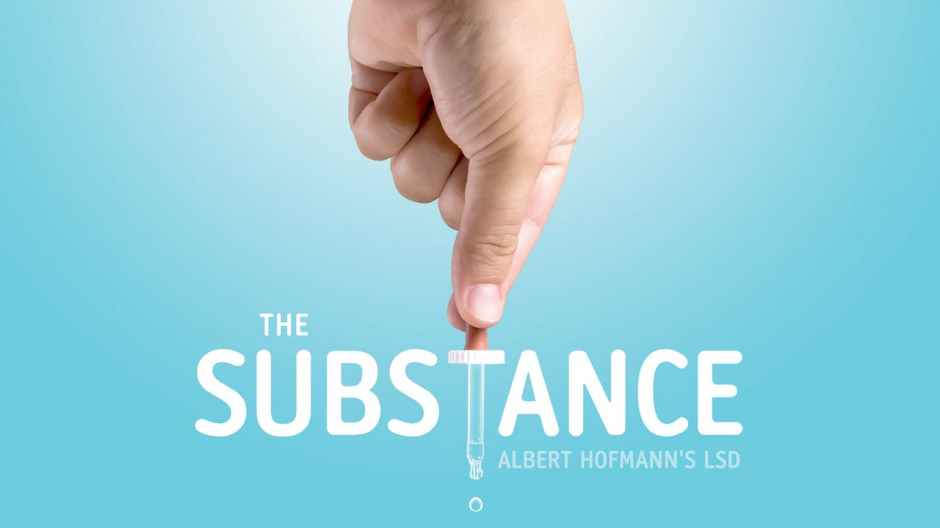
The Substance: Albert Hoffman’s LSD (2011)

Introduction

The Substance: Albert Hofmann’s LSD is a 2011 documentary film directed by Martin Witz.

The film documents the coincidental discovery of the drug LSD by the Swiss chemist Albert Hofmann in 1943.

Outline

In 1943, the year in which the first A-bomb was built, Albert Hofmann discovered LSD, a substance that was to become an A-bomb of the mind. Fractions of a milligram are enough to turn our framework of time and space upside down. The story of a drug – its discovery in the Basel chemistry lab, the first experiments by Albert Hofmann on himself, the 1950s experiments of the psychiatrists, the consciousness researchers, the artists. Could it actually be possible to find a path to the core of our human existence by means of a chemical? Spirituality at the flick of a switch? Do the enigmatic effects of this drug really help us to better understand the human soul? Could LSD be an instrument of contemporary psychiatry? Of modern brain research?

Production & Filming Details

  • Narrator(s): Trevor J. Roling (English), Hanspeter Muller (German), and Mario Scarabelli (Italian).
  • Director(s): Martin Witz.
  • Producer(s):
    • Elda Guidinetti … producer.
    • Peter Luisi … co-producer.
    • Andres Pfäffli … producer.
    • Carl-Ludwig Rettinger … co-producer.
  • Writer(s): Martin Witz.
  • Music: Marcel Vaid.
  • Cinematography: Pio Corradi and Patrick Lindenmaier.
  • Editor(s): Stefan Kalin.
  • Production:
    • Ventura Film (presents).
    • RSI-Radiotelevisione Svizzera (in co-production with).
    • Teleclub AG (in co-production with) (as Teleclub).
    • Lichtblick Film- und Fernsehproduktion (I) (in co-production with) (as Lichtblick Filmproduktion).
    • Spotlight Media Production AG (in co-production with) (as Spotlight Media Productions).
  • Distributor(s):
    • Officine UBU (2012) (Italy) (all media).
    • Cinema Delicatessen (2012) (Netherlands) (theatrical).
    • I Wonder Pictures (2013) (Italy) (theatrical).
    • Mindjazz Pictures (2012) (Germany) (theatrical).
    • Film1 Sundance Channel (2015) (Netherlands) (TV) (limited).
    • Frenetic Films (2011) (Switzerland) (all media).
    • Icarus Films (2012) (USA) (all media).
    • Soda Pictures (2011) (UK) (DVD).
    • Yleisradio (YLE) (2012) (Finland) (TV).
  • Release Date: 07 August 2011 (Locarno Film Festival, Switzerland).
  • Running Time: 90 minutes.
  • Rating: 15.
  • Country: US.
  • Language: English.

Video Link