Posts

Book: Mental Health Journal: Anxiety and Depression Journal

Book Title:

Mental Health Journal: Anxiety and Depression Journal. Mental Health Journal & Mood Tracker – Thoughts and Feelings Tracker – PTSD and Depression … Goals, Promote Positive Thinking & Gratitude.

Author(s): R. Roslinda.

Year: 2020.

Edition: First (1st).

Publisher: Independently Published.

Type(s): Paperback.

Synopsis:

This Mental Health Journal & Mood Tracker is designed to help you keep track of your mental and emotional wellbeing. Ideal for anyone struggling with anxiety and mood disorders: depression, ADHD, Bipolar etc. The journal features a 12 monthly daily mood tracker, pages for you to write down your feelings and thoughts. Keep notes on things you are grateful for and your achievements. There are also spaces for you to jot down stuff like, things you did well at today, things that made you smile, things that you had fun doing and enjoyed, things you did that made you feel proud. You can also make notes on goals you want to accomplish.

Features:

  • Mood Tracker For 12 Months: Angry, Ashamed, Confused, Excited….
  • Anxiety Levels Chart-Mood Chart-Section with writing prompts: How do I feel?, Today I am grateful for…, Something I did well today, I felt proud when…
  • and many more!

Book: Mental Health and Well-being in Primary Education

Book Title:

Mental Health and Well-being in Primary Education: A Practical Guide and Resource.

Author(s): Laura Meek, Jo Phillips, and Sarah Jordan.

Year: 2020.

Edition: First (1st).

Publisher: Luminate.

Type(s): Paperback and Kindle.

Synopsis:

Good mental health is much more than the absence of mental illness – it also means having self-belief and the resilience to cope with stress and change. In order to teach such skills, teachers and other education professionals must equip themselves and their workplaces with the procedures, understanding and confidence required to monitor mental health, share concepts effectively, identify warning signs and act appropriately if issues arise.

Written by an author team combining clinical and teaching expertise, Mental Health and Wellbeing in Primary Education puts all the information you need at your fingertips with detailed guidance on creating a culture of wellbeing, overviews of how a wide variety of common mental health problems including anxiety, anger and ADHD are typically diagnosed and managed, warning signs to look out for, and a range of ready-made forms, exercises and lesson plans.

On This Day … 20 November

People (Births)

  • 1916 – Charles E. Osgood, American psychologist (d. 1991).
  • 1920 – Douglas Dick, American actor and psychologist (d. 2015).

Charles Osgood

Charles Egerton Osgood (20 November 1916 to 15 September 1991) was an American psychologist and professor at the University of Illinois.

He was known for his research on behaviourism versus cognitivism, semantics (he introduced the term “semantic differential), cross-culturalism, psycholinguistic theory, and peace studies.

He is credited with helping in the early development of psycholinguistics.

Charles Osgood was recognised distinguished and highly honoured psychologist throughout his career.

Douglas Dick

Douglas Harvey Dick (20 November 1920 to 19 December 2015) was an American actor and occasional screenwriter.

His most famous role came in the 1948 film Rope.

In 1971, Dick left the entertainment industry to work as a psychologist.

Military Service

Dick did patrol duty with the United States Coast Guard and served as an aviator in the United States Navy, receiving a medical discharge from the latter.

Film

Dick’s film debut was in The Searching Wind (1946). Producer Hal B. Wallis met Dick in a Broadway agent’s office as Dick was waiting for an interview. Wallis had Dick make a screen test in New York City. The test, along with those of five other prospects, was shown to 300 women employees of Wallis’ studio. Dick was the clear favourite when the women were polled, and his role in The Searching Wind was the result. His best known film role is Kenneth Lawrence in the Alfred Hitchcock film classic Rope (1948). Among his other notable films are The Red Badge of Courage (1951) and Something to Live For (1952).

Creativity & its Role in the Treatment & Recovery of those with Mental Disorders

Research Paper Title

Creativity, mental disorders and their treatment: recovery-oriented psychopharmacotherapy.

Background

This paper discusses interrelations between creativity, mental disorders and their treatment.

The psychology of creativity is very important for successful psychopharmacotherapy, but our knowledge about creativity is still insufficient.

Even that which is known is not within the armamentarium of most practicing psychiatrists.

  • In the first part of this article creativity and possible associations between creativity, mental health, and well-being are described.
  • The second part deals with the intriguing relationship between creativity and mental disorders.
  • The third part emphasizes the role of creativity in the treatment of mental disorders.

This paper ends by underlining the importance of a creativity-enhancing oriented, and personal recovery-focused psychopharmacotherapy in helping psychiatric patients achieve fulfilled and purposeful lives.

Reference

Jakovljevic, M. (2020) Creativity, mental disorders and their treatment: recovery-oriented psychopharmacotherapy. Psychiatria Danubina. 25(3), pp.311-315.

Book: Everyday Mindfulness for OCD

Book Title:

Everyday Mindfulness for OCD: Tips, Tricks, and Skills for Living Joyfully.

Author(s): Jon Hershfield (MFT) and Shala Nicely (LPC).

Year: 2017.

Edition: First (1st).

Publisher: New Harbinger.

Type(s): Paperback and Kindle.

Synopsis:

If you have been diagnosed with OCD, you already understand how your obsessive thoughts, compulsive behaviour, and need for rituals can interfere with everyday life. Maybe you have already undergone therapy or are in the midst of working with a therapist. It is important for you to know that life does not end with an OCD diagnosis. In fact, it is possible to not only live with the disorder, but also live joyfully. This practical and accessible guide will show you how.

In Everyday Mindfulness for OCD, you will discover how you can stay one step ahead of your OCD. You will learn about the world of mindfulness, and how living in the present moment non-judgmentally is so important when you have OCD. You will also explore the concept of self-compassion; what it is, what it is not how to use it, and why people with OCD benefit from it. Finally, you will discover daily games, tips, and tricks for outsmarting your OCD, meditations and mindfulness exercises, and much, much more.

Living with OCD is challenging; but it does not have to define you. If you are tired of focusing on how you are living with OCD is and are looking for fun ways to make the most of your unique self, this book will be a breath of fresh air.

Book: Mindfulness for Everyday Living

Book Title:

Mindfulness for Everyday Living – A Guide for Mental Health Practitioners.

Author(s): Patrick R. Steffen (Editor).

Year: 2020.

Edition: First (1st).

Publisher: Springer.

Type(s): Paperback and eBook.

Synopsis:

This book presents practical approaches for integrating mindfulness principles into daily life. It examines how to incorporate mindfulness principles into interventions across various fields and with different client populations. In addition, the volume describes how to teach clients to integrate mindfulness techniques into daily living – from general stress reduction and compassionate positive living to working with children with medical conditions or autism to mindful parenting and healthy marriages.

The book explains key concepts clearly and succinctly and details practical daily approaches and use. Each chapter presents cutting-edge research that is integrated into effective, proven interventions that represent the gold standard of care and are simple and powerful to use, and concludes with recommendations on how each individual can create his or her own personalised mindfulness approach that matches his or her needs and situation.

This book is a must have resource for clinicians, therapists, and health professionals as well as researchers, professors, and graduate students in clinical psychology, psychotherapy/counselling, psychiatry, social work, and developmental psychology.

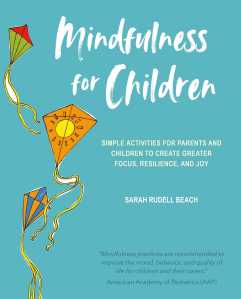
Book: Mindfulness for Children

Book Title:

Mindfulness for Children: Simple Activities for Parents and Children to Create Greater Focus, Resilience, and Joy.

Author(s): Sarah Rudell Beach.

Year: 2020.

Edition: First (1st).

Publisher: CICO Books.

Type(s): Paperback and Kindle.

Synopsis:

Simple and fun mindfulness activities to do with children up to age 11 to build beneficial life-long skills that promote resilience, joy, focus, and calm, and improve overall wellbeing.

Helping children to be more mindful is a powerful gift. By being mindful they will learn to recognize and manage their emotions, be more able to calm down when they are upset, become better at focusing on important tasks, and more able to interact with others with empathy and generosity. These are fundamental skills that children will need throughout their life, but that they often aren’t taught explicitly. Think of how often we demand that children “pay attention” or “calm down”, without ever having shown them how to do so. Now parents can with mindfulness expert Sarah Rudell Beach. Parents first learn how to be more mindful themselves before teaching their children basic mindfulness skills. With easy-to-follow activities, chapter by chapter children learn to Soothe, Focus, Feel, Pause, Appreciate, and Connect. Each activity includes variations for different age groups, along with “emergency” how-to’s for particularly stressful moments.

Book: Mental Toughness Training

Book Title:

Mental Toughness Training – How to be Emotionally Strong, Overcome Adversity and Start Controlling Your Life.

Author(s): Ian Tuhovsky.

Year: 2020.

Edition: First (1st).

Publisher: Independently Published.

Type(s): Paperback, Audiobook, and Kindle.

Synopsis:

The Secret To Mastering Your Emotions Is Finally Out There: Are You Ready To Take Control Of Your Emotions?

Did you know that your social, business, and romantic life are dictated and, in most cases, controlled by your emotions?

Did you know that mastering your emotions can lead to increased confidence, self-awareness, and self-motivation?

If you are looking for an easy way to develop emotional intelligence and reap its immense benefits, look no further.

“Mental Toughness Training” is Ian Tuhovsky’s latest mental toughness handbook that will take you behind the scenes of your mind and offer you an insight into your emotions.

Based on years of research, this eye-opening guide on controlling emotions, positive thinking, and emotional balance will help you deal with these stressful times and weather your emotional storm.

Top 5 Reasons Why You Should Master Your Emotions – Starting Today:

  • Observe & Understand Different Emotions: Learn How To Read Between The Lines & Read People Faster.
  • Tame Your Negative Emotions: Find Your Inner Balance & Learn How To Handle Fear, Anger, Envy & Stress.
  • Positively Channel Your Emotions: Rediscover Your Inner Strength & Develop Emotional Resilience.
  • Express Yourself: Unlock Your Emotional Safe & Discover Ways To Bring Your Emotions To The Surface.
  • Develop Mental Strength: Learn How Understanding Motivation And Emotion Will Lead To Happiness And Success.

What is In It For You?

Your emotions trigger your every decision and have a great impact on your mood. That’s why by learning how to master your emotions you will be able to

  • Build Stronger Relationships
  • Understand Emotional Reactions
  • Feel In Control & More Confident

On This Day … 19 November

People (Births)

  • 1833 – Wilhelm Dilthey, German psychologist, sociologist, and historian (d. 1911).
  • 1937 – Penelope Leach, English psychologist and author.

Wilhelm Dilthey

Wilhelm Dilthey (19 November 1833 to 01 October 1911) was a German historian, psychologist, sociologist, and hermeneutic philosopher, who held G. W. F. Hegel’s Chair in Philosophy at the University of Berlin.

As a polymathic philosopher, working in a modern research university, Dilthey’s research interests revolved around questions of scientific methodology, historical evidence and history’s status as a science.

He could be considered an empiricist, in contrast to the idealism prevalent in Germany at the time, but his account of what constitutes the empirical and experiential differs from British empiricism and positivism in its central epistemological and ontological assumptions, which are drawn from German literary and philosophical traditions.

Psychology

Dilthey was interested in psychology. In his work Ideas Concerning a Descriptive and Analytic Psychology (Ideen über eine beschreibende und zergliedernde Psychologie, 1894), he introduced a distinction between explanatory psychology (erklärende Psychologie; also explanative psychology) and descriptive psychology (beschreibende Psychologie; also analytic psychology, zergliedernde Psychologie): in his terminology, explanatory psychology is the study of psychological phenomena from a third-person point of view, which involves their subordination to a system of causality, while descriptive psychology is a discipline that attempts to explicate how different mental processes converge in the “structural nexus of consciousness.”

The distinction is based on the more general distinction between explanatory/explanative sciences (erklärende Wissenschaften), on the one hand, and interpretive sciences (beschreibende Wissenschaften or verstehende Wissenschaften, that is, the sciences which are based on the Verstehen method), on the other.

In his later work (Der Aufbau der geschichtlichen Welt in den Geisteswissenschaften, 1910), he used the alternative term structural psychology (Strukturpsychologie) for descriptive psychology.

Penelope Leach

Penelope Jane Leach (née Balchin; born 19 November 1937), is a British psychologist who researches and writes extensively on parenting issues from a child development perspective.

Leach is best known for her book Your Baby and Child: From Birth to Age Five, published in 1977, which has sold over two million copies to date and won the BMA award for “best medical book for general audiences” in 1998. Leach notes in the introduction to that book: “Whatever you are doing, however you are coping, if you listen to your child and to your own feelings, there will be something you can actually do to put things right or make the best of those that are wrong.”

Early Life and Education

Born in Hampstead, London, she is the daughter of the novelists Nigel Balchin and Elizabeth Ayrton. She graduated from Newnham College, Cambridge, with honours in 1959. After Cambridge, she attended the London School of Economics, where she received her PhD in psychology (1964) and lectured on child development.

Linking Brain Imagery, Brain Tumours, and Cognitive & Mental Disorders in Adults

Research Paper Title

Brain tumours, cognitive and mental disorders in adults.

Background

Cognitive and mental disorders are observed in 15-20% of brain tumours, and can be the first symptoms.

The severity of cognitive deficits varies from attention and reasoning disorders to major syndromes such as delirium, amnesic syndrome or dementia.

Mental disorders range from apathy, irritability to major depressive or psychotic symptoms.

Cognitive and mental disorders are related to many factors including the localisation and nature of the tumour, peritumoral and remote changes, and personal susceptibility.

The diagnosis of brain tumour is presently made by brain imagery, but the difficulty remains to determine when imagery is to be used in cognitive or mental disorders.

Reference

Derouesne, C. (2020) Brain tumors, cognitive and mental disorders in adults. Geriatrie et Psychologie Neuropsychiatrie du Vieillissement. 13(2), pp.187-194. doi: 10.1684/pnv.2015.0533.